Understanding Psychiatry as a Career: Why Pre‑Med Preparation Matters
Psychiatry is one of the few specialties that sits squarely at the intersection of medicine, neuroscience, and human behavior. As a psychiatrist, you diagnose and treat mental illnesses using a combination of psychotherapy, medications, and systems-level interventions. You’ll work with conditions such as major depression, bipolar disorder, schizophrenia, anxiety disorders, substance use disorders, and personality disorders, among others.
For pre-med students, early, intentional preparation for psychiatry residency and the psych match can pay off in several ways:
- You’ll build a realistic view of the field (beyond Hollywood stereotypes).
- You can tailor your premed requirements and extracurriculars to stand out later.
- You’ll be better prepared to talk insightfully about “why psychiatry” in personal statements and interviews.
- You’ll enter medical school already comfortable with patient communication and mental health topics.
Importantly, you do not need to decide on psychiatry before medical school. Many psychiatrists discover the specialty later. But if you’re even mildly curious, doing some targeted preparation now will expand—rather than restrict—your future options.
This guide walks through how to become a doctor with a focus on psychiatry, starting from the pre-med years: coursework, experiences, skills, and strategic planning that will serve you well in medical school and ultimately in psychiatry residency.
Academic Foundations: Building a Strong Pre‑Med Profile for Psychiatry
From an admissions standpoint, medical schools do not have separate “tracks” for psychiatry. You’ll apply like any other pre-med, and the core expectations are the same. However, you can weave in a mental health emphasis that enhances both your application and your future specialty fit.
Core Premed Requirements (and How They Relate to Psychiatry)
Most U.S. medical schools expect:
- Biology with lab (1–2 years)
- Foundation for understanding neurobiology, genetics, pharmacology, and pathophysiology of mental illness.
- General chemistry with lab (1 year)
- Essential for pharmacokinetics and pharmacodynamics of psychiatric medications.
- Organic chemistry with lab (1 year)
- Mechanisms of drug interactions; also trains your analytical thinking.
- Physics with lab (1 year)
- Strengthens problem-solving; relevant to imaging (e.g., MRI, PET) and neuromodulation techniques (e.g., TMS).
- Mathematics (often through statistics or calculus)
- Critical for understanding psychiatric research, outcomes data, and evidence-based practice.
- English / writing-intensive courses
- Psychiatry is language-heavy: interviews, documentation, therapy notes, and communication with families and teams.
- Biochemistry
- Important for understanding neurotransmitters, receptors, and the biological basis of psychiatric medications.
As you complete these premed requirements, keep asking: “How does this relate to the brain, behavior, or mental health?” Making those connections early will give you a deeper, more integrated understanding once you reach medical school psychiatry clerkships.
Strategic Electives for Future Psychiatrists
Beyond the basics, select electives that will help you think like a psychiatrist and support a competitive psych match later:
Neuroscience and related courses
- Behavioral neuroscience
- Cognitive neuroscience
- Neuroanatomy or neurobiology
- Psychopharmacology (if available at the undergraduate level)
Psychology and social sciences
- Abnormal psychology
- Developmental psychology (lifespan perspective)
- Personality psychology
- Social psychology
- Health psychology
- Sociology of health and illness
- Anthropology (especially medical anthropology)
Stats, research, and methods
- Biostatistics or research methods
- Data analysis or R/Python for data science (if you’re research-inclined)
- Epidemiology (excellent primer for understanding mental health at a population level)
Ethics and humanities
- Medical ethics or bioethics
- Philosophy of mind or consciousness
- Narrative medicine or literature in medicine
These courses help you develop a nuanced view of mental illness as biopsychosocial: shaped by biology, personal psychology, and social context. That integrative thinking is at the heart of modern psychiatry residency training.
GPA, Rigor, and MCAT: What Matters for a Future Psychiatrist
Psychiatry is considered a “more attainable” specialty compared to ultra-competitive fields like dermatology or plastic surgery, but that’s relative. Medical school admissions remain highly competitive, and you’ll need:
Strong GPA
- Target: 3.6+ for MD, 3.4+ for DO (higher is better, especially in science courses).
- A few B’s won’t sink you, but consistent, strong performance counts.
Appropriate course rigor
- Take challenging science courses, but balance your load to maintain performance.
- Avoid overloading multiple upper-level labs and math-heavy courses in a single semester if it risks burning you out.
MCAT performance
- Psychiatry doesn’t demand a different MCAT score than other specialties; you still need to be competitive for medical schools in general.
- The MCAT’s Psychological, Social, and Biological Foundations section is particularly relevant—strong performance here can bolster a psychiatry-focused application narrative.
Practical tip: If your campus has a strong neuroscience, psychology, or cognitive science program, structure your major or minor there. Pair it with solid performance in hard sciences to show you can handle medical school rigor while maintaining a clear psychiatry interest.
Clinical and Shadowing Experiences with a Mental Health Focus
Your clinical exposure shows admissions committees that you understand what doctors actually do and that you’ve tested your motivation in real-world settings. For psychiatry, your goal is twofold:
- Demonstrate broad exposure to medicine.
- Show genuine engagement with mental health and psychiatric care.
Shadowing: Seeing Psychiatry Up Close
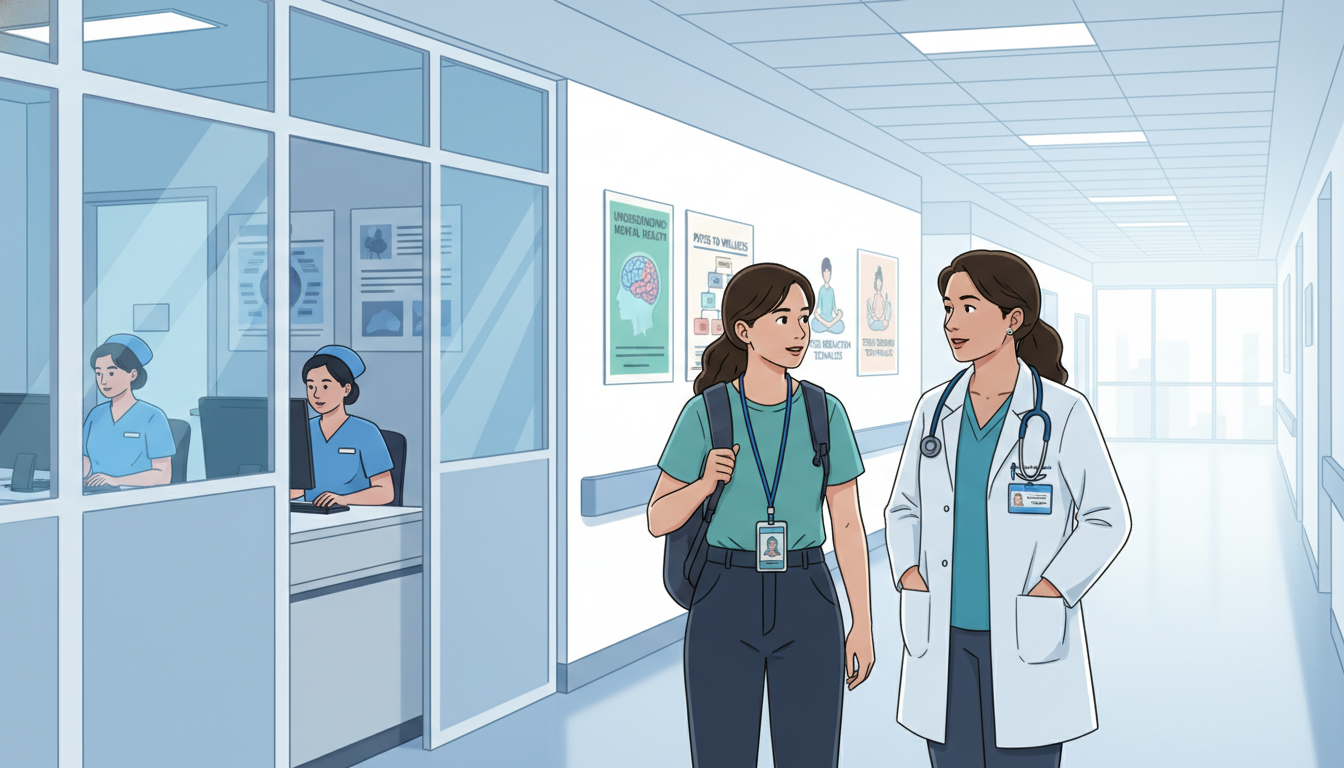
Shadowing a psychiatrist or other mental health clinicians can be eye-opening and clarifying. Target:
- Inpatient psychiatry units
- Observe team rounds, risk assessments, medication management, and crisis stabilization.
- Outpatient clinics
- More longitudinal care, medication follow-ups, and therapy integration.
- Consult-liaison psychiatry
- Psychiatrists consulting on patients in medical/surgical units—shows the intersection of mind and body.
- Subspecialty clinics (if possible)
- Child & adolescent psychiatry
- Addiction psychiatry
- Geriatric psychiatry
- Forensic psychiatry
Not every student will get all these, and that’s fine. Even one or two well-structured shadowing experiences, if well-reflected on, can be powerful.
How to make shadowing meaningful:
- Keep a reflection journal (de-identified) about what you observe: communication style, ethical dilemmas, interdisciplinary interactions.
- Ask focused questions when appropriate:
- “How do you balance medication and therapy in your practice?”
- “What misconceptions about psychiatry do you see in medical trainees?”
- “What skills should a pre-med cultivate if they’re considering psychiatry?”
Clinical Volunteering that Highlights Mental Health
General clinical volunteering (e.g., hospital volunteering, ED volunteer, hospice) is essential for all pre-meds. To align that with psychiatry, look for:
- Emergency department roles where you’ll see acute psychiatric presentations.
- General hospital volunteering plus occasional time on psychiatric units (if permitted).
- Primary care clinics with integrated behavioral health.
Additionally, consider mental health–specific roles:
- Crisis text line volunteer or helpline counselor (with training and supervision).
- Peer support groups (e.g., for students with depression/anxiety, substance use recovery).
- Volunteer roles in community mental health centers or residential facilities.
- Work with vulnerable populations: homeless shelters, domestic violence shelters, refugee support programs—many have strong mental health components.
These experiences help you:
- Build comfort discussing sensitive topics.
- Learn to manage emotional boundaries.
- Understand systemic barriers to mental healthcare.
Non-Clinical Mental Health Experience
Non-clinical mental health activities can be just as important:
- Leadership in campus mental health clubs or NAMI chapters.
- Organizing mental health awareness campaigns or destigmatization events.
- Creating educational content (blogs, podcasts, workshops) about evidence-based mental health information.
This shows initiative, advocacy, and a long-term commitment to psychiatric themes—all beneficial when you eventually apply to psychiatry residency.
Research, Leadership, and Extracurriculars that Support a Psychiatry Path
While psychiatry residency is not as research-heavy as some subspecialties, an early research foundation can separate you from peers and sharpen your critical thinking.
Research: How Much and What Kind?
You do not need a first-author publication to pursue psychiatry, but the following are valuable:
- Psychiatry or psychology research
- Mood disorders, psychosis, trauma, anxiety, eating disorders, addiction, etc.
- Neuroimaging, cognitive science, or basic neuroscience related to behavior.
- Public health and epidemiology
- Studies on mental health outcomes, access disparities, social determinants of mental illness.
- Medical education or health services research
- Projects on improving mental health training, integrated care models, telepsychiatry.
What matters more than prestige is:
- Consistent involvement over time.
- Understanding the study’s questions, design, methods, and implications.
- Ability to talk about your role and what you learned during medical school and psychiatry residency interviews.
Example: You join a lab studying the impact of early-life trauma on depression severity in adolescents. Even if you’re “only” doing data entry at first, you gradually help with literature reviews and attend lab meetings. By the time you apply to medical school, you can articulate:
- Why the study matters.
- The challenges of measuring trauma and mental health.
- How this shaped your understanding of psychiatric diagnoses and resilience.
Leadership and Advocacy
Psychiatrists often work at systems levels: advocating for policy change, improving care coordination, building collaborative teams. Start developing those skills now:
- Lead a student organization focused on mental health or health equity.
- Coordinate volunteering programs at local mental health clinics or shelters.
- Advocate for improved counseling services or crisis response protocols on campus.
- Participate in public policy internships or legislative advocacy related to mental health.
These experiences demonstrate:
- Maturity and responsibility.
- Comfort working with diverse groups.
- Commitment to improving mental health systems, not just individual care.
Well-Roundedness and Personal Interests
Psychiatry values curiosity about people, culture, and narratives. Seemingly “non-medical” interests can actually strengthen your profile and skills:
- Theater, debate, or improvisation—great for communication skills.
- Creative writing or storytelling—useful for narrative medicine and patient histories.
- Languages and cross-cultural experiences—psychiatry deeply involves understanding patients’ cultural contexts.
- Philosophy, religious studies, or ethics—relevant to meaning-making and existential aspects of illness.
These activities don’t replace core pre-med expectations; they complement them and may become compelling talking points in interviews for both medical school and later psychiatry residency.

Core Skills and Mindset: Preparing Psychiatrically Before Medical School
Pre-med preparation for psychiatry is not just about ticking boxes; it’s about cultivating specific competencies and habits that will serve you throughout your career.
Communication and Listening Skills
Psychiatry is arguably the most communication-intensive specialty. Start practicing:
- Active listening
- Paraphrase what someone says to ensure understanding.
- Notice nonverbal cues: posture, facial expressions, tone.
- Open-ended questioning
- “Can you tell me more about…” instead of “Did you feel sad?”
- Nonjudgmental stance
- Avoid expressing shock or moral judgment, especially when people disclose stigmatized experiences.
You can develop these skills in:
- Peer counseling or RA roles.
- Crisis hotline training.
- Tutoring, teaching assistant positions, or mentoring peers.
Emotional Resilience and Boundaries
Working with mental illness can be emotionally demanding. Pre-med years are an excellent time to learn:
- How to recognize your own stress, burnout, or compassion fatigue.
- When and how to seek support (counseling, peers, mentors).
- Setting boundaries—being empathic without over-identifying with every distressing story.
Many people drawn to psychiatry have personal or family experiences with mental illness. This can be a strength—offering empathy and motivation—but can also be emotionally activating. Working on your own mental health and coping strategies now will protect you long-term.
Actionable steps:
- Establish healthy routines: sleep, exercise, social connection.
- Consider therapy yourself if accessible; it can be personally beneficial and professionally enlightening.
- Learn basic evidence-based coping strategies (CBT techniques, mindfulness, behavioral activation).
Cultural Humility and DEI Awareness
Psychiatry is deeply impacted by culture, race, gender, sexuality, and socioeconomic status. Pre-med students aspiring to psychiatry should:
- Seek out courses or workshops on cultural competency/humility.
- Volunteer with diverse and underserved populations.
- Read about the history of psychiatry—both its advances and its misuses (e.g., pathologizing homosexuality, racial biases in diagnosis).
This background will help you approach future patients with humility and an awareness of how systemic factors shape mental health.
Planning the Long Game: From Pre‑Med to Psychiatry Residency and the Psych Match
Understanding the full training pathway early will help you make smarter choices at each step.
The Pathway: How to Become a Psychiatrist
- Undergraduate (or post-bacc) pre-med
- Complete premed requirements, MCAT, and build experiences.
- Medical school (MD or DO, typically 4 years)
- Years 1–2: Basic sciences + early clinical exposure.
- Years 3–4: Clinical clerkships (including psychiatry), electives, and USMLE/COMLEX exams.
- Psychiatry residency (4 years)
- PGY-1: Mix of medicine, neurology, and inpatient psychiatry.
- PGY-2–4: Increasing focus on psychiatry (inpatient, outpatient, consult-liaison, subspecialties).
- Optional fellowship (1–2 years)
- Child & adolescent, addiction, forensic, geriatric, consult-liaison, sleep medicine, etc.
Your pre-med years primarily influence:
- Getting into medical school.
- Establishing a compelling and authentic interest in mental health.
- Developing the skills and resilience that will help you thrive later.
How Pre-Med Activities Translate to Psychiatry Residency Competitiveness
When you eventually apply for psychiatry residency (the psych match), program directors will look at:
- Medical school performance, especially in clinical years.
- USMLE/COMLEX scores (thresholds vary, but psychiatry is moderately competitive).
- Letters of recommendation, especially from psychiatrists.
- Evidence of commitment to psychiatry (e.g., electives, research, advocacy).
Your pre-med background becomes indirect but still influential:
- Strong premed foundations → better performance in basic sciences and psychiatry clerkship.
- Early mental health exposure → more informed choices of medical school projects, mentors, and electives.
- Pre-med research and leadership → easier transition into psychiatry-related research or initiatives in med school.
Choosing a Medical School with Psychiatry in Mind
When you reach the point of selecting medical schools, consider:
- Strength of their psychiatry department and residency program.
- Availability of early psychiatry exposure (student interest groups, shadowing).
- Opportunities for mental health research.
- Emphasis on social determinants of health, primary care, and community engagement.
- Location and patient population diversity (urban/rural, underserved communities).
However, as a pre-med now, your focus should be on becoming a strong, well-rounded medical school applicant with a clearly articulated, but flexible, interest in mental health.
Frequently Asked Questions (FAQ)
1. Do I need to major in psychology or neuroscience to go into psychiatry?
No. Medical schools accept any major as long as you complete the required pre-med science courses. Majoring in psychology, neuroscience, or a related field can be helpful and thematically consistent with psychiatry, but it’s not mandatory. You could major in philosophy, English, or even economics and still match into psychiatry if you perform well academically and cultivate relevant experiences.
2. How important is research for matching into psychiatry residency?
Research is helpful but not absolutely required. Many strong psychiatry residents have limited or no publications. What matters more is demonstrating critical thinking, curiosity, and some exposure to how evidence is generated. If you have the opportunity, aim for at least one sustained research experience—preferably related to mental health, neuroscience, or public health—but don’t sacrifice your GPA or MCAT prep for research at the pre-med level.
3. Can I talk about my own mental health history in applications if I’m interested in psychiatry?
Yes, but with caution and intention. Some applicants successfully and powerfully describe how personal experiences with mental illness (their own or family’s) motivated them toward medicine and psychiatry. If you choose to share:
- Focus on insight, healing, and what you’ve learned.
- Emphasize resilience, professional readiness, and healthy coping.
- Avoid overly detailed or graphic descriptions of crises.
If you’re unsure, discuss with a trusted advisor, pre-health committee, or mentor to frame your story appropriately.
4. I’m not 100% sure I want psychiatry. Will early psychiatry-focused preparation hurt my options?
No. The steps recommended in this guide—strong premed requirements, solid GPA/MCAT, broad clinical exposure, communication skills, research—are valuable for nearly any specialty. A mental health emphasis (e.g., volunteering in crisis services, taking psychology courses) can complement future interests in pediatrics, family medicine, neurology, internal medicine, or emergency medicine. You can explore psychiatry now without locking yourself in; many students change their minds during medical school, and that’s expected.
By approaching your pre-med years with intentionality—integrating robust scientific preparation, meaningful mental health experiences, and personal growth—you’ll not only strengthen your chances of entering medical school, but also lay the groundwork for a fulfilling career in psychiatry, should you choose it.