


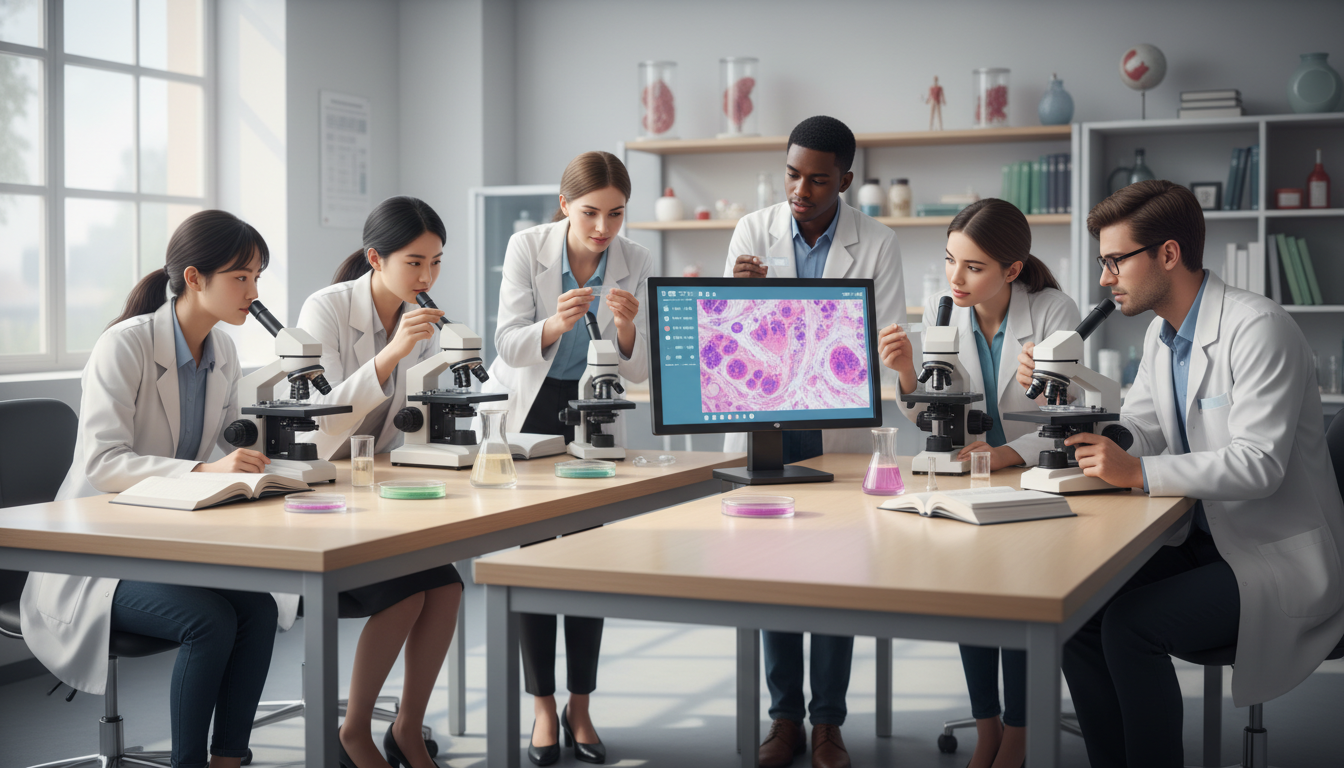
Understanding Pathology as a Pre‑Med Student
Pathology is the study of disease—what causes it, how it develops, and what it looks like at organ, tissue, cellular, and molecular levels. For many pre-med students thinking about how to become a doctor, pathology stays in the background until year two of medical school. That’s a missed opportunity.
If you’re even tentatively considering a pathology residency or just want a strong foundation in disease mechanisms, you can start preparing as a pre-med. Doing so will not only strengthen your medical school application but will also help you stand out later in the pathology match.
What Pathologists Actually Do
Pathology is often described as the “diagnostic backbone” of medicine. Pathologists:
- Diagnose cancers by examining biopsies and surgical specimens
- Interpret Pap smears and cytology samples
- Run and oversee clinical laboratories (chemistry, hematology, microbiology, transfusion medicine)
- Guide patient management through molecular and genetic testing
- Participate in autopsies to determine cause of death and understand disease
- Serve as consultants to other physicians (oncologists, surgeons, internists, etc.)
Broadly, the field splits into:
- Anatomic Pathology (AP): Tissues, organs, cytology, autopsy
- Clinical Pathology (CP) (also called Laboratory Medicine): Lab tests, blood banking, microbiology, coagulation, molecular diagnostics
- Most U.S. residents train in combined AP/CP, but programs and tracks vary.
As a pre-med, you do not need to lock this in now. But understanding the field will help you frame your interests, choose courses and experiences wisely, and write more compelling applications.
Pre-Med Requirements and Coursework for Future Pathologists
You must first meet the standard premed requirements expected for medical school. But if you’re path‑curious, you can strategically add courses and experiences that mirror what you’ll do in a pathology residency.
Core Premed Requirements (for Any Future Physician)
Most U.S. medical schools expect:
- Biology (with lab): 1–2 years
- General Chemistry (with lab): 1 year
- Organic Chemistry (with lab): 1 year
- Biochemistry: 1 semester (often strongly recommended if not required)
- Physics (with lab): 1 year
- Math: At least statistics; sometimes calculus
- English / Writing: 1 year
- Social/Behavioral Sciences: Psychology, sociology, etc.
These lay the foundation for MCAT content and satisfy standard premed requirements regardless of specialty.
Pathology-Relevant Coursework to Consider
Pathology sits at the intersection of basic science, lab medicine, and clinical reasoning. Consider these as electives or advanced courses:
1. Advanced Cell Biology and Histology
- Why it matters: In residency, you’ll spend hours every day at the microscope, interpreting cells and tissues. Familiarity with normal histology accelerates your learning curve.
- What to look for:
- Courses titled Histology, Microanatomy, or Cell Biology with a microscopy component
- Lab time with glass slides or digital histology
Actionable tip: If your school has a digital slide repository, treat it like “early residency training”—practice recognizing normal tissues (liver, kidney, lung) before you ever learn pathology.
2. Immunology and Microbiology
- Why it matters: Many diagnostic pathways in pathology—particularly in microbiology, transfusion medicine, and molecular diagnostics—are grounded in immune mechanisms and host–pathogen interactions.
- What to prioritize:
- Immune system fundamentals (innate/adaptive, antibodies, complement)
- Bacteria, viruses, fungi, parasites, and diagnostic tests used to identify them
These courses will make infectious disease, serologies, and immunoassays in residency feel far more intuitive.
3. Genetics and Molecular Biology
Modern pathology is rapidly becoming molecular pathology:
- Tumor genotyping
- Next-generation sequencing panels
- Minimal residual disease testing
- Pharmacogenomics
As a pre-med considering pathology, prioritizing:
- Genetics and Genomics
- Molecular Biology / Molecular Diagnostics
- Bioinformatics or computational biology (if available)
will align closely with the cutting edge of pathology practice.
4. Biostatistics and Data Science
Pathology and lab medicine influence most clinical decisions through quantitative data:
- Reference ranges
- Sensitivity/specificity
- Predictive values
- ROC curves
- Quality improvement metrics
A course in biostatistics, epidemiology, or data science will be invaluable whether you later pursue research, quality improvement, or lab management. It also strengthens your profile for evidence-based medicine and clinical reasoning.
5. Anatomy and Physiology
You’ll encounter pathology of every organ system:
- Tumor staging depends on understanding organ anatomy
- Autopsy and surgical pathology require 3D spatial understanding
If you can take human anatomy (especially with lab or cadaver work) and physiology, you’ll be better prepared to connect structural disease with functional consequences.
6. Ethics and Health Systems
Pathology touches:
- Test utilization and cost-effective care
- Appropriate use of genetic sequencing and incidental findings
- Autopsy consent and communication
Courses in bioethics, health policy, or healthcare systems will help you understand how lab decisions affect patient care and resource use.
Clinical Exposure: Discovering Pathology Before Medical School
Because pathologists often work “behind the scenes,” pre-med students rarely encounter them organically. You’ll need to be intentional in seeking exposure.
How to Find Pathology Shadowing and Mentors
Start with Your Institution’s Pathology Department
- Check the medical school or hospital website for:
- Department of Pathology or Laboratory Medicine
- Faculty profiles (anatomic, clinical, molecular, forensic)
- Email the medical student education director or department coordinator. Briefly introduce yourself:
- Who you are (pre-med, year, school)
- Why pathology interests you
- What you’re asking for (shadowing, informational interview, lab visit)
- Check the medical school or hospital website for:
Use Professional Societies
- College of American Pathologists (CAP)
- United States and Canadian Academy of Pathology (USCAP)
- American Society for Clinical Pathology (ASCP) Many have student sections or outreach programs, sometimes listing mentorship opportunities.
Reach Out Through Pre-Med or Premed/Pre-health Offices
- Ask advisors if they have contacts in local hospitals’ pathology departments.
- Some schools have integrated “Pathology Interest Groups” linked to the medical school—ask if undergraduates can attend events.
What Shadowing in Pathology Looks Like
Shadowing in pathology is different from shadowing in a clinic:
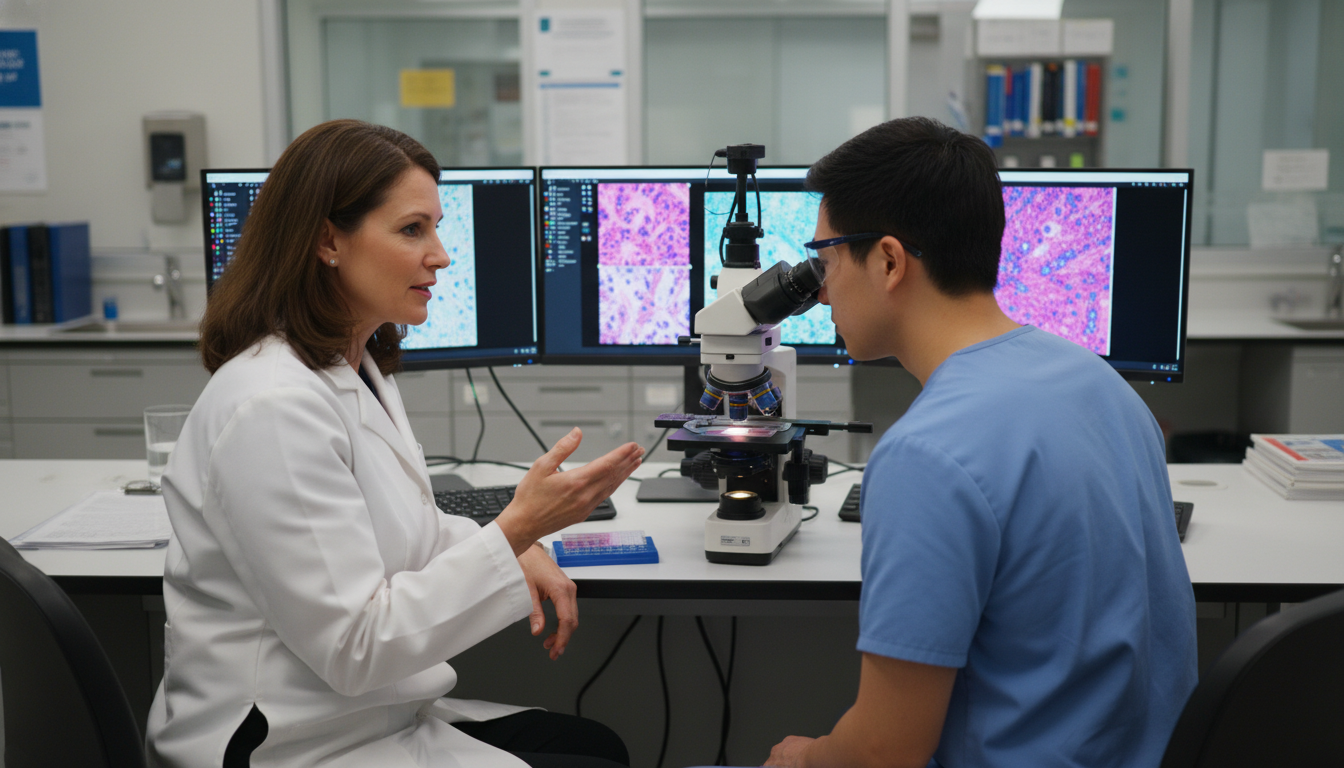
- Microscope sign-outs: Sit with a pathologist at a multi-headed microscope as they review biopsies and surgical specimens.
- Gross room observation: Watch how large surgical specimens or autopsy organs are examined, described, and sampled.
- Clinical lab tours: See hematology, chemistry, microbiology, blood bank, and molecular labs.
- Tumor boards: Observe multidisciplinary meetings where pathologists present diagnostic findings that guide treatment.
Example schedule (half-day shadowing):
- 8:00–9:00: Surgical pathology sign-out (biopsies)
- 9:00–10:00: Tour of clinical chemistry and hematology labs
- 10:00–11:00: Cytopathology review (Pap smears, FNA samples)
- 11:00–12:00: Tumor board discussion with oncology and surgery
Even 1–2 well-planned shadowing sessions can give you rich insight to write about in personal statements and to confirm your interest.
Volunteering and Part-Time Work Related to Pathology
Direct hands-on work in a pathology lab may be limited (due to CLIA and regulatory issues), but there are still options:
- Laboratory assistant roles (if permitted): Labeling specimens, transporting samples, data entry
- Volunteer roles:
- Non-clinical support in pathology offices
- Assisting with educational slide sets or digitization projects
- Undergraduate research positions: Particularly in pathology-affiliated labs (more on this below)
These experiences look strong on a medical school application regardless of your ultimate specialty, because they show commitment to understanding disease at a deeper level.
Research and Skill-Building for Future Pathologists
Many pathology residency applicants have at least some research experience. As a pre-med, you don’t need a first-author paper to keep pathology on the table, but you can position yourself well for future scholarship.
Types of Research That Align with Pathology
- Basic Science Research
- Cancer biology
- Immunology or autoimmunity
- Infectious disease
- Stem cell and developmental biology
- Molecular genetics and genomics
Even if the lab is housed in a biology department instead of pathology, the content is highly relevant.
Translational and Clinical Research
- Projects looking at biomarkers, diagnostic tests, or new lab methods
- Studies validating new stains, molecular assays, or algorithms
- Chart review projects correlating histologic features with outcomes
Quality Improvement in Lab Medicine
- Reducing pre-analytical or post-analytical errors
- Improving turnaround times for important tests
- Rational test utilization (minimizing unnecessary labs)
These kinds of projects also read well for residency applications later, as they show engagement with the “systems” side of pathology.
Finding Pathology-Related Research Opportunities
- Search your university’s faculty directories for:
- Pathology
- Cancer center
- Immunology
- Microbiology
- Molecular genetics
- Look for lab websites describing:
- Disease models
- Tumor biology
- Host–pathogen interactions
- Biomarker discovery
When emailing potential mentors:
- Mention your premed status and interest in pathology residency down the line.
- Highlight specific aspects of their work that interest you (“I was drawn to your work on molecular markers in colorectal cancer…”).
- Offer a realistic time commitment (e.g., 8–10 hours/week during the semester, full-time in summer).
Technical and Cognitive Skills to Develop Early
While some lab skills will be specific to each setting, future pathologists particularly benefit from:
- Microscopy comfort: Any course or research role involving microscopy (light, fluorescence, confocal) is a plus.
- Basic lab techniques:
- Pipetting, dilutions
- PCR basics
- Western blot, ELISA, flow cytometry (if available)
- Data literacy:
- Working with spreadsheets (Excel, Google Sheets)
- Basic coding (R, Python) if you’re inclined
- Understanding of error, variability, and reproducibility
Even if you never become a bench scientist, these experiences make it easier to interpret and evaluate lab tests and research studies throughout your career.

Shaping Your Application: From Premed Advice to Pathology Match
Pathology is not a “premed specialty” in the sense that most selection happens at the residency match stage, after medical school. But the preparation you do now influences:
- How competitive you are for medical school
- How effectively you can explore and commit to pathology in med school
- How strong your eventual pathology residency application will be
Building a Strong Premed Profile with a Pathology Lens
Your application should still be balanced:
- Clinical exposure with direct patient contact (shadowing primary care, internal medicine, surgery, etc.)
- Community service and non-clinical volunteering
- Leadership (clubs, campus organizations, mentoring roles)
- Academic rigor with strong GPA and MCAT scores
Pathology-specific experiences should be positioned as one component of your narrative, not the only one.
Personal Statement and Interviews
If pathology has already caught your attention, you can:
- Emphasize your interest in disease mechanisms:
- Enjoyment of understanding why illness happens, not just how to treat it
- Mention lab-based or pathology-adjacent experiences:
- “Through my histology course and research project on tumor markers, I became fascinated by how microscopic changes inform life-altering diagnoses.”
- Avoid locking yourself in too tightly:
- Medical schools like exploration; you can state pathology as an interest without making it seem like you’re unwilling to consider anything else.
Demonstrating Fit for Medicine, Not Just Pathology
Even if you ultimately match into a pathology residency, remember that every pathologist is a physician first. That means admissions committees will still look for:
- Comfort communicating with and about patients
- Empathy and professionalism
- Commitment to service
- Ability to collaborate in teams
Keep up your patient-facing experiences: work as a medical scribe, EMT, clinic volunteer, or patient navigator. This balances your lab-focused interests and supports your understanding of how lab results actually affect patient care.
From Medical School to Pathology Residency Match: How Premed Prep Helps
During medical school, you will:
- Take a dedicated pathology course (or integrated modules)
- Encounter pathology repeatedly in organ-system blocks
- Have opportunities to shadow, research, and rotate in pathology
Your premed preparation will help by:
- Making pathology coursework feel familiar instead of overwhelming
- Allowing you to participate in student pathology interest groups more meaningfully
- Positioning you to join research projects early in medical school
- Strengthening your foundation for:
- USMLE/COMLEX exams, where pathology is heavily tested
- Clinical reasoning, where understanding disease mechanisms is critical
By the time you apply for the pathology match, your premed choices won’t be the deciding factor, but they will have shaped:
- Your academic strengths (especially in pathology-heavy content)
- Your comfort with research and lab-based projects
- Your ability to articulate why pathology fits you
Practical Roadmap: Year-by-Year Premed Preparation for Pathology
Every student’s path is different, but here’s a suggested framework.
First Year (Freshman or Early College)
Focus on:
- Fulfilling basic premed requirements (general chemistry, introductory biology, math)
- Exploring campus resources:
- Pre-health advising
- Research office
- Nearby medical school or hospital connections
- Light, broad exposure:
- Shadow a primary care physician or internist
- Attend a campus lecture or grand rounds if available
Pathology-specific:
- Start reading about what pathologists do (CAP, ASCP websites, informational videos).
- If you have an opportunity, attend a general “What is Pathology?” talk at a med school.
Second Year
Academic:
- Take organic chemistry, biology II, and possibly statistics or intro biostatistics.
- If possible, start cell biology or genetics.
Experiences:
- Seek your first research position, ideally in a lab related to disease mechanisms.
- Begin shadowing in pathology:
- 1–2 half-days are enough to start
- Continue or begin patient-facing volunteering.
Third Year
Academic:
- Consider histology, immunology, microbiology, or molecular biology as electives.
- Take biochemistry (if not already completed) to prepare for the MCAT.
Experiences:
- Deepen research involvement; aim for:
- A poster presentation, abstract, or small contribution to a paper if possible.
- Shadow both:
- Pathology (to confirm interest)
- Other specialties (to keep perspective broad)
Preparation:
- Take the MCAT, with strong preparation in biology/biochemistry and pathology-heavy content.
- Start assembling a narrative that integrates your interest in disease mechanisms and patient care.
Fourth Year (and Gap Years, if any)
- Complete remaining premed requirements.
- Take advanced or capstone courses aligning with pathology (e.g., advanced histology, cancer biology, lab medicine if offered).
- Solidify your clinical and volunteering record.
- Consider additional research time if taking a gap year.
Application:
- When writing your medical school personal statement and secondaries:
- Use your pathology-related experiences to show depth in understanding disease.
- Emphasize that your interest in pathology complements—not replaces—your interest in practicing medicine broadly.
FAQs: Pre-Med Pathology Preparation
1. Do I need to decide on pathology before medical school?
No. You do not need to commit to a pathology residency as a pre-med. Many pathologists discover the specialty during or after second-year coursework in medical school. As a pre-med, your goal is to:
- Build a strong foundation in science and critical thinking
- Gain exposure to many specialties, including pathology
- Keep options open while developing a genuine interest in disease mechanisms
Pathology-relevant courses and experiences will never hurt you, even if you ultimately choose another specialty.
2. Will a heavily lab-focused profile hurt my chances of getting into medical school?
It could be a red flag if your application shows no patient-facing experience and only lab work. Admissions committees still expect you to understand:
- What physicians do in clinical settings
- How patient care works in real life
- The human impact of disease
Balance is key. Pair your lab experience with:
- Volunteering in clinics or hospitals
- Shadowing primary care or other frontline specialties
- Community service unrelated to medicine that shows empathy and service orientation
Framed correctly, lab work and pathology exposure can be a distinctive strength.
3. Are there specific premed requirements unique to future pathologists?
No. From an admissions standpoint, you follow the same premed requirements as any other applicant: biology, chemistry, physics, biochemistry, and so on. However, if you’re especially interested in pathology residency down the line, it’s wise to choose electives that:
- Develop comfort with histology and microscopy
- Strengthen your understanding of genetics, molecular biology, immunology, and microbiology
- Build skills in biostatistics and data interpretation
These will help in medical school and beyond, regardless of ultimate specialty.
4. How can pre-med students talk about pathology interest without sounding too narrow?
Frame it as part of a broader story:
- Emphasize curiosity about mechanisms of disease and desire to understand why patients get sick.
- Connect pathology exposure to better clinical reasoning and patient care, not just fascination with slides.
- Acknowledge that you’re still open to other specialties:
- “While I’m particularly drawn to the diagnostic and analytical aspects of pathology, I look forward to exploring a wide range of fields in medical school.”
This shows maturity, self-awareness, and flexibility—qualities valued by both medical schools and, later, pathology residency programs.
By weaving pathology-relevant coursework, clinical exposure, and research into a well-rounded premed journey, you not only prepare for a potential future in pathology residency and the pathology match but also become a stronger, more thoughtful applicant to medical school itself. Your goal now is not to become a pathologist overnight, but to build the scientific depth, observational skills, and curiosity about disease that will serve you no matter where your medical career leads.




















