


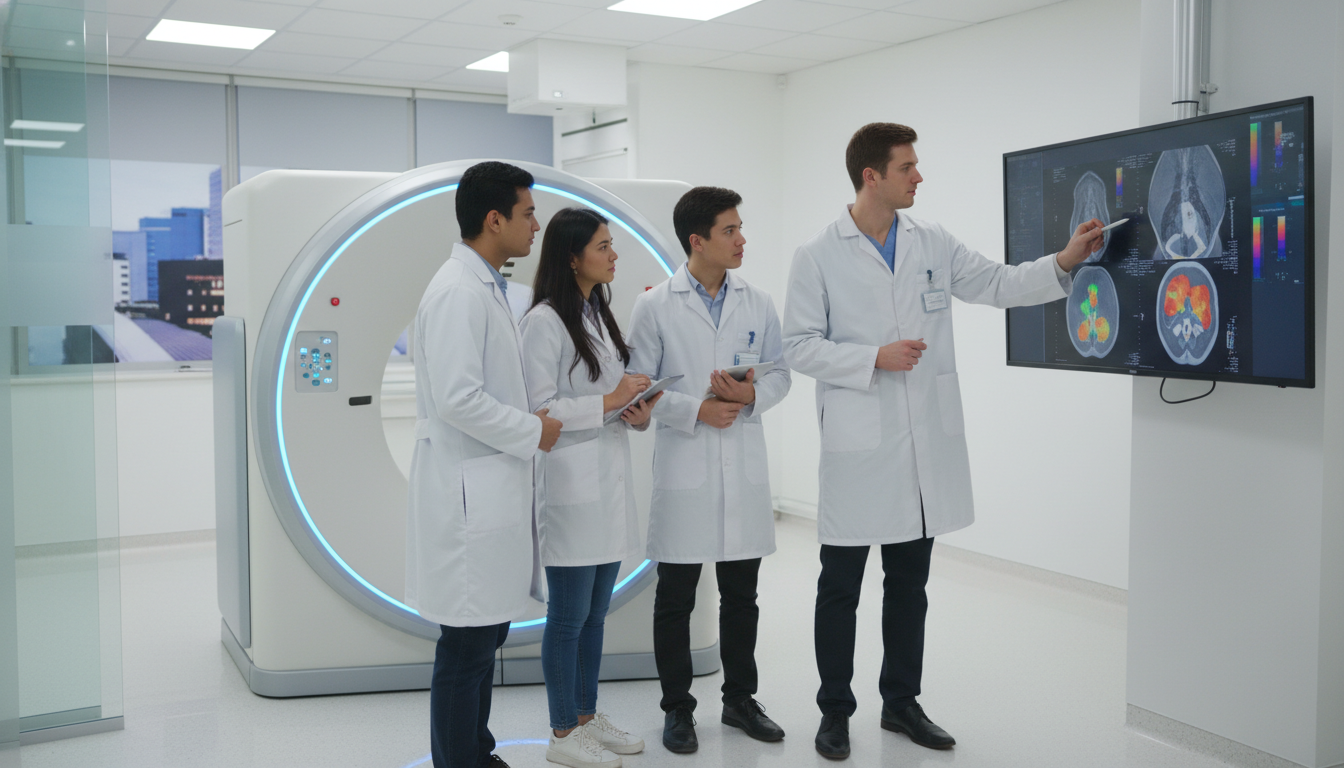
Nuclear medicine is one of the most technologically advanced and rapidly evolving fields in medicine. If you are early in your journey and wondering how to set yourself up for a future nuclear medicine residency and a career using PET, SPECT, and theranostic therapies, the pre-med years are an ideal time to start.
This guide walks you through how to become a doctor with a focus on nuclear medicine, from freshman year through the medical school application and beyond. We’ll cover coursework, experiences, research, and strategic planning tailored specifically to students considering this imaging-heavy, physics-driven specialty.
Understanding Nuclear Medicine as a Career Path
Before designing your premed preparation, you need a clear understanding of what nuclear medicine physicians actually do and how the training pipeline works.
What Nuclear Medicine Physicians Do
Nuclear medicine sits at the intersection of:
- Clinical medicine (seeing and managing patients)
- Radiology and imaging (interpreting PET, SPECT, and hybrid modalities like PET/CT and PET/MR)
- Physics and radiopharmacy (understanding radiotracers, decay, and dosimetry)
- Oncology, cardiology, neurology, and endocrinology (common clinical domains using nuclear techniques)
Common responsibilities include:
- Interpreting PET/CT scans for cancer staging and treatment response
- Reading SPECT myocardial perfusion studies, bone scans, and thyroid scans
- Managing theranostic treatments such as Lu-177 DOTATATE or I-131 for thyroid cancer
- Collaborating with oncologists, surgeons, and cardiologists in multidisciplinary clinics
- Overseeing radiation safety and radiopharmaceutical dosing
For many residents, the field’s appeal lies in:
- Highly advanced imaging technology
- Strong role in cancer care and precision medicine
- Mix of diagnostic and therapeutic work
- Daytime-focused schedules with generally manageable call (varies by practice)
Training Pathways to Nuclear Medicine
Your premed decisions will be clearer if you understand the different paths that eventually lead to the nuclear medicine match. In the U.S., the main paths are:
Diagnostic Radiology → Nuclear Medicine–heavy practice
- Complete a diagnostic radiology residency (4 years), often with integrated or additional nuclear medicine training
- Some residents do a nuclear radiology or nuclear medicine fellowship (1 year)
- This is currently the most common route
Dedicated Nuclear Medicine Residency
- Historically, there were stand-alone nuclear medicine residency programs (often 3 years, sometimes after a clinical year)
- The landscape is evolving, with many programs integrated into diagnostic radiology
- You’ll need to check current program structures when you apply
Internal Medicine or Other Specialty → Hybrid Roles
- Some internists, cardiologists, or endocrinologists with heavy nuclear training/board certification focus on nuclear cardiology or thyroid disease
- Pathway can include nuclear cardiology fellowships or focused imaging fellowships
As a pre-med, you don’t need to lock in a path yet. However, it helps to recognize that strong foundations in physics, imaging, and oncology will serve you well on any route.
Core Academic Preparation: Courses, Majors, and GPA Strategy
Your academic record is the backbone of your application to medical school and, eventually, to a nuclear medicine residency or diagnostic radiology program.
Choosing a Major with Nuclear Medicine in Mind
There is no required major for medical school, but some degrees align particularly well with nuclear medicine:
- Physics or Engineering (Biomedical, Electrical, Nuclear)
- Excellent grounding in radiation physics, instrumentation, and image reconstruction
- Attractive to later imaging research mentors
- Chemistry or Biochemistry
- Builds a strong foundation for understanding radiopharmaceuticals and tracer kinetics
- Biology or Neuroscience
- Strong for understanding disease processes and how imaging contributes to diagnosis
- Medical Imaging / Radiologic Science / Nuclear Medicine Technology (if available)
- Provides direct exposure to imaging and sometimes hands-on knowledge of nuclear medicine operations
- Be sure you still complete all premed requirements
You can major in anything, including humanities, as long as you meet premed requirements. However, if you already have a genuine interest in physics, imaging, or engineering, those can be a very natural fit for someone who might pursue nuclear medicine.
Premed Requirements: Getting the Fundamentals Right
Standard premed requirements for U.S. medical schools typically include:
- General Biology with labs (2 semesters)
- General Chemistry with labs (2 semesters)
- Organic Chemistry with labs (2 semesters)
- Biochemistry (often 1 semester)
- Physics with labs (2 semesters)
- Mathematics (1–2 semesters; calculus and/or statistics)
- English or writing-intensive courses (1–2 semesters)
- Social science / psychology courses (varies by school)
For aspiring nuclear medicine physicians, pay special attention to:
- Physics: Choose the most rigorous sequence you can handle. If there is a calculus-based option, consider taking it if your math preparation is strong. You’ll build intuition about forces, waves, and radiation, which later map directly to imaging and dosimetry.
- Math and Statistics: At least one course in statistics (or biostatistics) is invaluable for understanding imaging research, sensitivity/specificity, ROC curves, and evidence-based practice.
- Advanced Electives: Where possible, consider:
- Radiation physics
- Medical imaging or medical physics
- Radiobiology
- Advanced organic chemistry (helpful for radiotracer chemistry if you go into research)
These are not required for medical school, but they strengthen your preparation for a future in nuclear medicine and may stand out when discussing your long-term interests with mentors.
GPA Strategy and Course Sequencing
Your GPA remains one of the most important components of your med school application. Some tips:
- Plan realistically: Don’t overload with three lab sciences at once early on if your study skills are still developing.
- Front-load foundations: Try to complete general chemistry, biology, and at least one semester of physics by the end of sophomore year to be ready for the MCAT.
- Use summers wisely: If needed, take a difficult course (e.g., organic chemistry II or physics II) in the summer when you can focus on it.
If you struggle in physics or math at first, that doesn’t disqualify you from nuclear medicine. However, you should show:
- Upward trend (later improvements)
- Willingness to seek help (office hours, tutoring)
- Ability to master quantitative material by the time you hit the MCAT

Building a Nuclear Medicine-Oriented Premed Profile
Grades and MCAT scores get you in the door. Your activities and experiences explain why you’re heading toward a field like nuclear medicine and whether you understand what it entails.
Clinical Exposure: Shadowing and Volunteering
To explore nuclear medicine specifically:
Shadow a Nuclear Medicine Physician
- Ask your premed advisor or hospital volunteer office if they can connect you with:
- A nuclear medicine physician
- A radiologist with a strong nuclear medicine practice
- During shadowing, observe:
- How they interpret PET/CT and SPECT studies
- How they interact with technologists, nurses, and referring physicians
- Any patient counseling, especially for therapeutic nuclear medicine
- Ask your premed advisor or hospital volunteer office if they can connect you with:
Shadow Nuclear Medicine Technologists
- Technologists often spend more direct time with patients during imaging and therapy
- You’ll see the workflow of radiotracer administration, patient positioning, and scanner operation
General Clinical Volunteering
- Hospitals, free clinics, and hospice provide essential patient-facing experiences
- Medical schools care that you understand patient care realities, not just technology
As you log experiences, keep a reflection journal. Document:
- What surprised you about nuclear medicine workflows
- How imaging changed management for specific patients
- Ethical or communication challenges (e.g., dealing with incidental findings or bad news)
These reflections will help later in personal statements and residency applications.
Research Experience: Getting Close to the Technology
Research is especially valuable if you’re considering a competitive diagnostic radiology route or research-heavy nuclear medicine residency programs.
Look for opportunities in:
- Nuclear medicine or PET centers
- Radiology departments
- Medical physics or biomedical engineering labs
- Cancer centers with imaging research programs
Potential projects may involve:
- Quantitative PET imaging (SUVs, kinetic modeling)
- Development of new radiotracers
- Image reconstruction algorithms or noise reduction techniques
- Theranostic trials (e.g., PSMA or somatostatin receptor–targeted therapies)
- AI in imaging interpretation or segmentation
As a pre-med, your tasks may include:
- Data collection and database management
- ROI (region of interest) drawing on PET/CT studies
- Basic statistics and literature reviews
- Assisting with IRB submissions or protocol development
Even if the work is technical, always connect it to clinical questions:
- How does this imaging technique change treatment decisions?
- What patient outcomes are influenced?
- What are the trade-offs (radiation dose, cost, sensitivity, specificity)?
Premed Advice: Building a Balanced Activity Portfolio
While orienting your path toward nuclear medicine, remember that medical schools want well-rounded future physicians. Your activities should include:
- Clinical experience (shadowing + direct patient contact)
- Research (ideally imaging or oncology-related, but not required)
- Service and leadership (mentoring, health advocacy, community service)
- Non-medical interests (music, sports, arts, etc.)
For nuclear medicine–focused students, a strong example portfolio might look like:
- 150–250 hours of clinical volunteering in a hospital, including time in oncology or cardiology clinics
- 30–60 hours of direct nuclear medicine/radiology shadowing
- 1–2 years of part-time research in a PET imaging or oncology lab, potentially with a poster presentation
- Leadership in a premed, physics, or engineering student organization
- Tutoring for difficult courses (e.g., physics, chemistry)—demonstrating mastery and communication skills
MCAT Preparation with a Nuclear Medicine Lens
The MCAT is not nuclear medicine–specific, but several sections overlap with the foundations you’ll use later.
Key MCAT Domains That Support Future Nuclear Medicine Work
Chemistry and Physics Foundations
- Radioactive decay (half-life, types of radiation)
- Electromagnetic radiation (relevant for gamma rays, detectors)
- Basic atomic and nuclear structure
- Energy transitions, quantum phenomena (helpful conceptually)
- Dosimetry-related ideas (inverse square law, absorption)
Biochemistry and Biology
- Receptor-ligand interactions (key to radiotracer targeting)
- Metabolism and metabolic pathways (FDG-PET imaging of glucose metabolism)
- Cancer biology and cell signaling
- Endocrine systems (thyroid imaging and therapy, parathyroid imaging)
Psychological, Social, and Behavioral Sciences
- Patient communication, especially around complex technology
- Health literacy and explaining risks/benefits of radiation
- Ethical considerations in diagnostic testing and screening
Strategic MCAT Preparation
Specific premed advice for MCAT prep if you’re eyeing nuclear medicine:
- Don’t obsess about the “nuclear” content; focus on overall excellence. Competitive scores open doors to strong medical schools and later radiology programs.
- When studying physics, pay extra attention to:
- Radioactivity and nuclear phenomena
- Exponential decay and half-life problems
- Waves and electromagnetic spectrum
- When doing practice passages, give yourself an extra minute after each relevant question set and think:
“How might a nuclear medicine physician see this in practice?”
Aim for an MCAT that is at or above the median of matriculants at the medical schools you’re targeting, recognizing that many future radiologists/nuclear medicine physicians often fall in the upper score ranges.
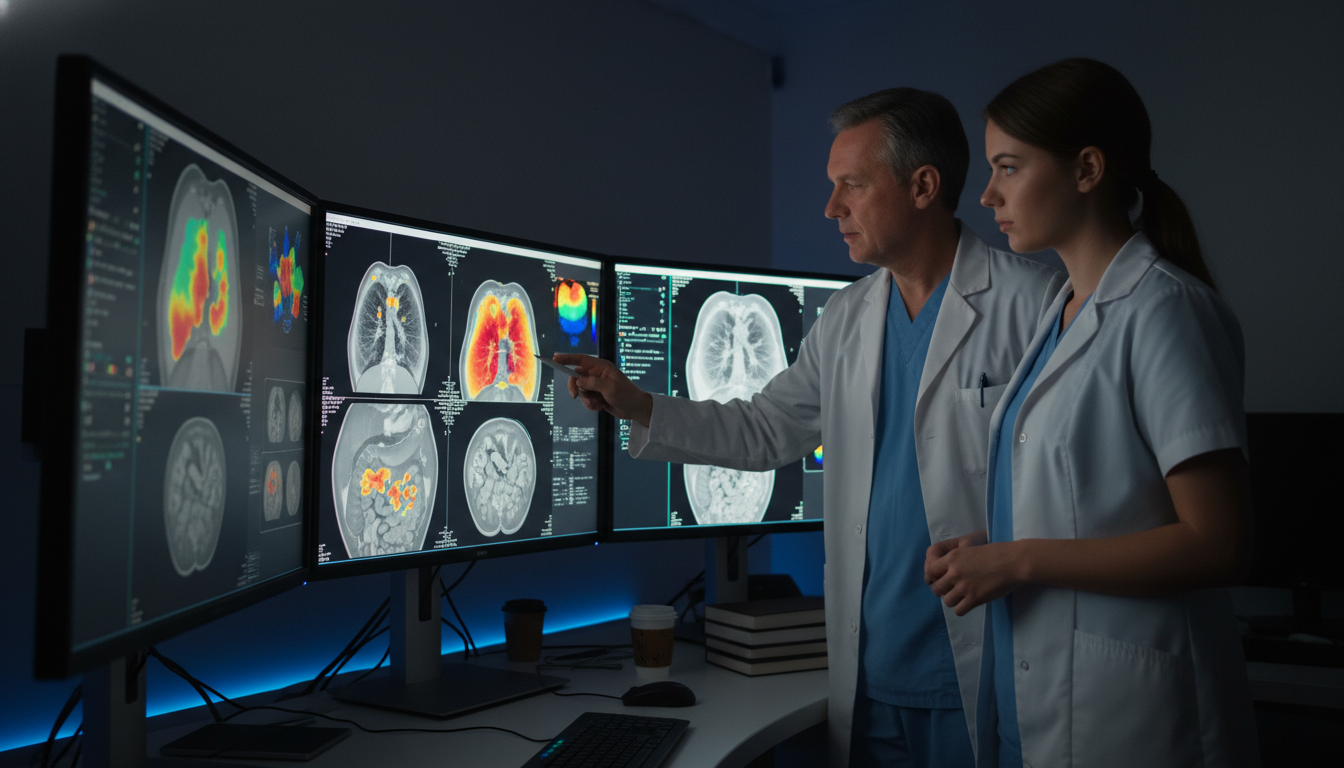
Transitioning from Premed to Medical School with Nuclear Medicine in Mind
Your premed years position you for medical school admission; the nuclear medicine residency decision emerges later. However, the choices you make as a premed can influence the opportunities you’ll have as a medical student.
Choosing Medical Schools Strategically
When you research where to apply, look for:
- Affiliated academic medical centers with:
- PET/CT and SPECT/CT scanners
- Active nuclear medicine or molecular imaging divisions
- Ongoing imaging or theranostic trials
- Strong radiology departments with:
- Electives in nuclear medicine
- Research opportunities for students
- A history of matching students into diagnostic radiology or nuclear medicine
Investigate:
- Radiology/nuclear medicine faculty profiles (Are there physician-scientists doing PET research or theranostics?)
- Student research opportunities in imaging, AI, oncology, or medical physics
- Availability of imaging electives during pre-clinical and clinical years
Medical School Activities That Build on Your Premed Foundation
Once in medical school, you’ll deepen your nuclear medicine interest through:
- Radiology and nuclear medicine interest groups
- Research projects building on your undergrad background (physics, engineering, chemistry)
- Elective rotations in:
- Diagnostic radiology
- Nuclear medicine
- Oncology, cardiology, or endocrinology with heavy imaging involvement
Your premed preparation helps here:
- Comfort with physics makes understanding imaging much easier
- Research experience enables you to contribute meaningfully to imaging studies
- Early exposure to nuclear medicine gives you a realistic sense of the field’s pros and cons
By your clinical years, you’ll be able to decide more confidently whether to pursue:
- A diagnostic radiology residency with a nuclear focus,
- A dedicated nuclear medicine residency, or
- Another specialty (e.g., internal medicine) with heavy imaging involvement.
Long-Term Planning: From Premed to Nuclear Medicine Match
Thinking several steps ahead can help you make the most of every phase: premed, medical school, and residency.
How Premed Choices Influence the Nuclear Medicine Match
The nuclear medicine match (usually via NRMP, depending on program structure) and radiology match look heavily at:
- Medical school performance (grades, clerkship evaluations)
- USMLE/board exam scores
- Letters of recommendation (especially from radiology/nuclear medicine faculty)
- Research productivity, especially in imaging or oncology
Your premed preparation feeds into this by:
- Establishing your ability to master difficult science (important for radiology programs)
- Giving you early exposure and motivation, which shows in interviews and personal statements
- Connecting you with a longer trajectory of research, potentially leading to multiple publications by the time you apply for residency
Example Timeline for a Nuclear Medicine–Interested Premed
Freshman Year
- Focus: Transition to college, master study skills
- Take: General chemistry, introductory biology, math
- Start exploring: Join premed and possibly physics/engineering clubs
- Shadowing: Begin general clinical volunteering
Sophomore Year
- Take: Organic chemistry, physics, further biology
- Identify research mentors in imaging, oncology, or medical physics
- Shadow: Try to schedule a few days in radiology or nuclear medicine
- Start MCAT planning (content review by end of year)
Junior Year
- Take: Biochemistry, upper-level electives (medical physics, imaging, statistics)
- Research: Increase involvement, aim for abstract or poster
- Clinical: Continue volunteering; expand shadowing, including nuclear medicine if possible
- MCAT: Take exam by spring/early summer
- Applications: Apply to medical school with essays that reflect genuine interest in imaging/technology/patient-centered care
Senior Year / Gap Year(s)
- Deepen research if taking a gap year; consider full-time research coordinator or imaging lab tech positions
- Maintain clinical engagement
- Prepare for interviews—be ready to discuss your path from early nuclear medicine interest to long-term plans
By approaching each stage intentionally, you don’t “lock” yourself into nuclear medicine, but you maintain a strong, coherent narrative that resonates with both medical schools and, later, residency programs.
FAQs: Pre-Med Preparation for Nuclear Medicine
1. Do I need to decide on nuclear medicine before starting medical school?
No. You do not need to commit to nuclear medicine as a premed. However, if you’re even moderately interested, it helps to seek experiences that expose you to imaging and radiation science. Many students discover or confirm their interest during medical school radiology rotations, and your early preparation simply gives you an advantage in understanding and research.
2. Is physics a required major if I want a nuclear medicine career?
Physics is not required. You must complete the standard premed requirements, including physics coursework, but your major can be anything—biology, chemistry, engineering, humanities, or social sciences. That said, if you genuinely enjoy physics or engineering, those majors can be particularly synergistic with nuclear medicine and may open more research doors.
3. How competitive is nuclear medicine compared with diagnostic radiology?
Dedicated nuclear medicine residency positions have historically been less competitive numerically than diagnostic radiology, but the job market and training structures are evolving. Many nuclear medicine–focused physicians still pursue diagnostic radiology residencies, which are competitive and benefit from high board scores, strong clinical evaluations, and robust research. As a premed, your focus should be on building a strong general foundation rather than worrying about competitiveness too early.
4. What’s the single most important step I can take as a premed interested in nuclear medicine?
Beyond maintaining a strong GPA and MCAT, the most impactful step is to seek direct exposure to imaging—through shadowing in nuclear medicine or radiology and, if possible, imaging-related research. Seeing PET/CT or SPECT cases, understanding how they change treatment, and interacting with mentors in the field will clarify whether this path fits your interests and help you craft a powerful, authentic narrative as you move toward medical school and, eventually, the nuclear medicine match.




















