Understanding the Road to Plastic Surgery: Big Picture First
Becoming a plastic surgeon is one of the most competitive and rewarding paths in medicine. Before you even think about the integrated plastics match, you need a solid pre-med foundation—academically, clinically, and personally.
Plastic surgery is uniquely broad and demanding. It includes:
- Reconstructive surgery (burns, trauma, cancer defects, congenital anomalies)
- Aesthetic (cosmetic) surgery
- Hand and peripheral nerve surgery
- Microsurgery and complex wound coverage
- Gender-affirming surgery and facial reconstruction
The premed years are your chance to build the skills and portfolio that will later make you a strong applicant for plastic surgery residency. You are not just checking boxes to satisfy premed requirements—you are building the habits and experiences that future residency programs will scrutinize closely.
Key goals in the pre-med stage for aspiring plastic surgeons:
- Master the academic fundamentals (especially sciences and anatomy-related coursework).
- Build early clinical and surgical exposure.
- Develop research productivity and scholarly curiosity.
- Cultivate technical skills, creativity, and fine motor control.
- Demonstrate maturity, grit, and professionalism over several years.
In other words, pre-med preparation is your “Phase 1” of how to become a doctor in a highly technical, creativity-driven specialty.
Academic Foundations: Premed Requirements with a Plastics Focus
Every medical school has its own prerequisites, but most premed requirements revolve around a consistent core. If you’re already drawn to plastic surgery, you can tailor that core to support your future goals.
Core Courses for Medical School Admission
Most U.S. medical schools expect:
- Biology (with lab) – 2 semesters
- General Chemistry (with lab) – 2 semesters
- Organic Chemistry (with lab) – 2 semesters (sometimes 1 orgo + 1 biochem)
- Physics (with lab) – 2 semesters
- Biochemistry – 1 semester (increasingly required, almost always recommended)
- English / Writing-intensive courses – 2 semesters
- Math – often at least 1 semester of statistics, sometimes calculus
- Social sciences – psychology, sociology (strongly recommended for MCAT)
These form the basic how to become a doctor prerequisites. But future plastic surgeons should go farther.
Strategic Electives for Aspiring Plastic Surgeons
You can differentiate yourself and prepare better for plastic surgery residency by adding electives that develop your visual–spatial reasoning, manual dexterity, creativity, and understanding of human form and healing.
Highly recommended electives:
Human Anatomy (with lab or cadaver)
- Gives you an early understanding of 3D relationships of structures.
- Will help in medical school and later in surgery rotations.
Physiology
- Critical for understanding wound healing, fluid shifts, and tissue perfusion.
Histology / Cell Biology
- Deepens your understanding of tissues—skin, nerves, vessels, cartilage—central in plastic surgery.
Neuroscience or Neuroanatomy
- Particularly relevant if you’re interested in facial reanimation, peripheral nerve surgery, or craniofacial surgery.
Art, Drawing, or Sculpture
- Underappreciated but highly valuable: trains your eye for symmetry, proportion, and spatial relationships.
- Great talking point on applications and interviews; aligns naturally with plastic surgery’s aesthetic dimension.
Engineering or Design Courses
- Biomechanics, biomedical engineering, 3D modeling, or CAD can support interest in devices, implants, and innovation.
GPA Strategy: Playing the Long Game
Plastic surgery residency is among the most competitive specialties. Programs will look back at:
- Undergraduate GPA (especially science GPA)
- Patterns: upward trend vs. scatter vs. decline
- Difficulty of your course load and institution
Aim for:
- Overall GPA ≥ 3.7 and science GPA ≥ 3.6 if possible
(not mandatory, but realistic for top programs and MD schools)
If you’re struggling:
- Prioritize fewer, higher-quality credits over overloaded schedules.
- Seek early tutoring and office hours.
- Don’t be afraid of a fifth year or lighter terms if needed to protect GPA while building experiences relevant to plastic surgery.
Building Experiences That Signal “Future Plastic Surgeon”
Your extracurricular choices during premed years can make your plastic surgery interest credible and distinctive. Programs later want to see that this is not a last-minute idea, but a sustained, informed commitment.

Clinical Exposure: Move Beyond Generic Shadowing
You should absolutely get broad exposure to medicine (primary care, internal medicine, emergency medicine), but add surgery-specific and plastics-specific experiences if possible.
Actionable ideas:
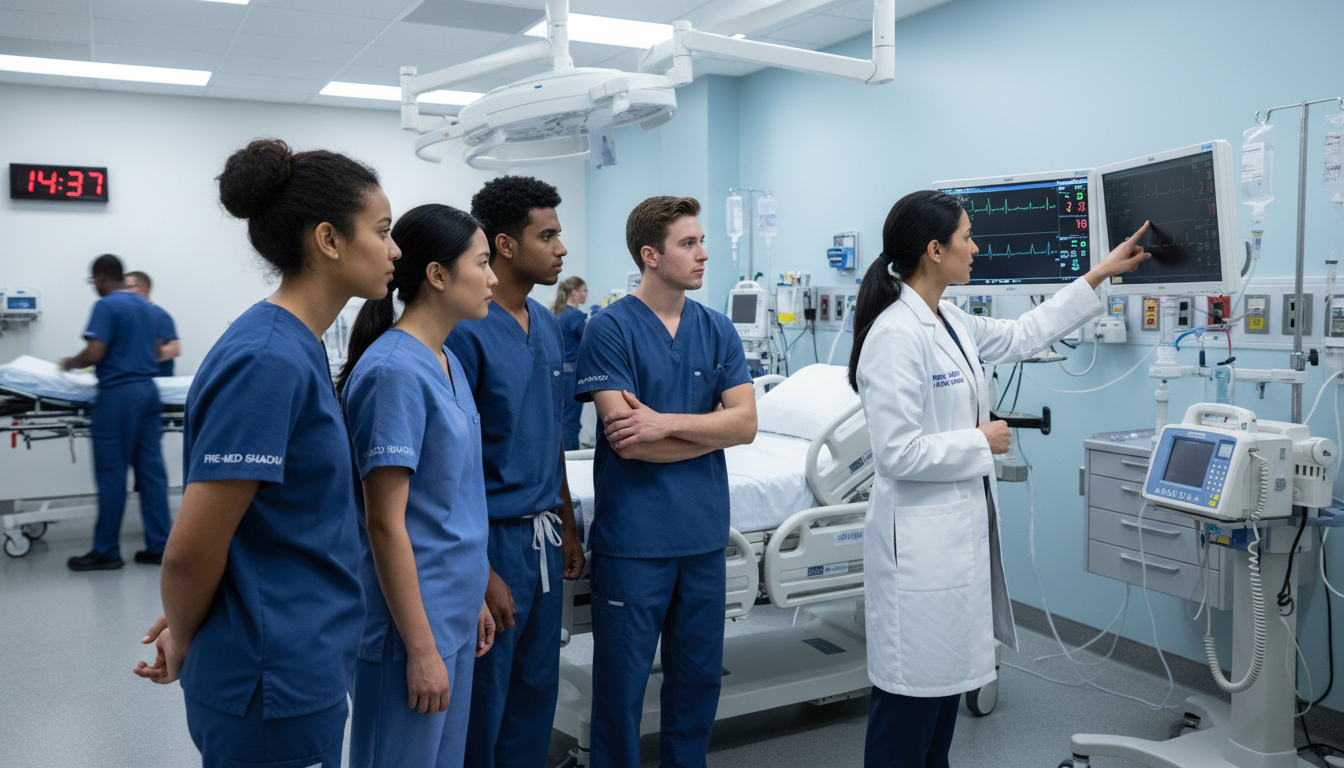
Shadow a plastic surgeon
- Both academic and community plastic surgeons if you can.
- See a mix of reconstructive (e.g., post-mastectomy breast reconstruction, hand trauma) and aesthetic (e.g., rhinoplasty, abdominoplasty).
- Keep a reflection journal—this will help you articulate your interest in secondaries and interviews later.
Hospital volunteering with surgical exposure
- Surgical waiting areas, post-op wards, burn units, or wound care clinics.
- Observe the patient journey from pre-op counseling to post-op recovery.
Operating room (OR) experience
- Many hospitals have formal observer programs for undergraduates.
- Always be humble and respectful of sterile technique and OR etiquette.
- Ask residents or nurses for guidance on behavior and learning in the OR.
What admission committees like to see:
- You understand the realities of surgery: long hours, physical demands, emergencies.
- You’ve seen the full spectrum of plastic surgery—not just cosmetic Instagram highlights.
- You can describe specific cases or moments that shaped your interest.
Research: An Early Investment That Pays Off Later
Plastic surgery residency programs are research-heavy, especially integrated plastics programs at academic centers. Starting research as a premed gives you time to:
- Learn the basics of study design and statistics.
- Produce posters, abstracts, and even publications before applying to medical school.
- Build relationships with surgeon-scientist mentors who can guide your career.
Best-case scenario: research in plastic surgery or surgical fields. Examples:
- Outcomes research on breast reconstruction techniques.
- 3D imaging or planning technologies in craniofacial surgery.
- Nerve regeneration, grafts, or wound healing studies.
- Quality-of-life outcomes after reconstructive or aesthetic procedures.
If you can’t access plastic surgery research:
- Join any clinical or translational research first (oncology, trauma surgery, dermatology, etc.).
- Seek out plastic surgery departments at nearby academic centers for summer research programs or remote involvement.
- Consider engineering or design research projects involving medical devices or biomaterials.
Aim for:
- At least 1–2 long-term research projects during college.
- Presentations at local or national conferences if possible.
- A growing understanding of methods: basic statistics, IRB, informed consent, data management.
Service and Leadership: Reflecting the Values of Plastic Surgery
Plastic surgeons often care for vulnerable and stigmatized populations: children with craniofacial differences, burn survivors, trauma victims, patients with cancer-related deformities, and more. Service and leadership should reflect empathy, resilience, and a desire to restore form and function.
Meaningful service activities:
- Work with patients who have visible differences or disabilities (burn centers, craniofacial support groups, amputee or limb-difference organizations).
- Global health or surgical missions (as a student observer or volunteer, if ethically and logistically sound; avoid “voluntourism”).
- Community education about safety (burn prevention, injury prevention, domestic violence awareness).
Leadership opportunities:
- Start or lead a Pre-Med Surgery or Surgical Interest Group on campus.
- Organize shadowing programs where undergrads can be paired with surgeons.
- Coordinate skills workshops (suture labs, knot tying, anatomy sessions) with local surgeons or residents.
Leadership shouldn’t be performative. Choose roles that:
- You actually care about.
- You can sustain for more than a semester.
- Show a progression: member → officer → president or founder.
Technical Skills and Manual Dexterity
Plastic surgery is extremely hands-on and detail-oriented; your early hobbies can matter more than you realize.
Activities that build fine motor skills:
- Drawing, painting, sculpture, photography
- Musical instruments (violin, piano, guitar, etc.)
- Crafts: sewing, knitting, model building, woodworking
- 3D printing, CAD, or model design
You can later highlight these in personal statements and residency applications as examples of your attention to detail, patience, and aesthetic sensibility—directly relevant to plastic surgery.
MCAT, Medical School Choice, and Positioning for Plastic Surgery
The integrated plastics match happens during your final year of medical school, but your chances are shaped long before that—starting with your MCAT and school selection.

MCAT Strategy with a Long-Term Surgical Lens
To be competitive for plastic surgery later, you first must be competitive for medical school now.
Target MCAT score:
- For MD programs: strive for at least 511–515+, higher for top-tier schools.
- For DO programs: mid-500s can be competitive, but higher is always helpful.
Please note: You can match into plastic surgery from either MD or DO schools, but integrated plastics from DO schools is still relatively rare; some DO students match into independent pathways after general surgery.
Study approach:
- Use a structured timeline (4–6 months) with full-length practice exams.
- Aim for strong performance especially in:
- Biology/Biochem (relevant to wound healing, tissue physiology).
- Psych/Soc (vital for understanding patients’ perceptions of self-image, trauma, and body dysmorphia).
A strong MCAT gives you more options to attend schools with:
- Home plastic surgery programs.
- Robust surgical departments and research infrastructure.
- Early exposure opportunities to the operating room and mentors.
Choosing a Medical School with Plastic Surgery in Mind
When possible, choose a medical school that increases your chances in the integrated plastics match.
Key features to look for:
An established plastic surgery residency program
- Having a home program dramatically improves access to mentors, research, and letters of recommendation.
- You can attend departmental conferences, grand rounds, and journal clubs as a medical student.
Strong surgery department overall
- Quality general surgery and subspecialty divisions (trauma, hand, craniofacial, transplant).
- High surgical volume and good resident culture.
Opportunities for early exposure
- First- or second-year shadowing.
- Student-run surgery interest groups with strong departmental support.
Robust research infrastructure
- Dedicated research years or funding for medical student research.
- Faculty whose work aligns with your interests (microsurgery, hand, craniofacial, aesthetics, etc.).
You won’t be shut out of plastic surgery without a home program, but you’ll need to be more proactive with away rotations and external research collaborations later.
Long-Term Strategy: From Premed to Integrated Plastics Match
Thinking ahead helps you reverse-engineer your pre-med years. The premed phase sets the foundation; medical school is where you build the structure that programs will judge when you apply for plastic surgery residency.
What Plastic Surgery Programs Eventually Look For
When you apply to the integrated plastics match, selection committees will review:
- USMLE Step scores / COMLEX scores (or their updated equivalents).
- Clerkship grades, especially surgery and surgical subspecialties.
- Research output: posters, publications, often in plastic surgery.
- Letters of recommendation from plastic surgeons who know you well.
- Performance on visiting/away rotations (mini-interviews in the OR and clinic).
- Personal qualities: work ethic, teamwork, teachability, resilience.
Premed years cannot check these boxes directly, but they can position you to excel later.
How Premed Activities Map Forward
Strong academic base →
- Easier time mastering pre-clinical content and doing well on Step 1/Step 2.
- Confidence managing heavy workloads.
Early research experience →
- Faster ramp-up into medical school research, leading to stronger CV by your 4th year.
- Familiarity with IRB, statistics, and manuscripts.
Clinical exposure and shadowing →
- More mature understanding of patient care and OR culture from day one.
- Stronger, more authentic personal statement and interview narratives.
Leadership and service →
- Demonstrated commitment over years, not months.
- A track record of being the kind of person people rely on—mirroring residency expectations.
Manual skills and artistic pursuits →
- Unique angle for essays and interviews.
- Genuine alignment with the visual and technical demands of plastic surgery.
Example: A Sample 4-Year Premed Plan for Plastics
Year 1 (Freshman)
- Complete Gen Chem, Intro Bio, Calculus/Stats, and a writing course.
- Join pre-med club and a surgery-interest or STEM group.
- Start hospital volunteering; explore various specialties.
- Seek a summer research opportunity (any field).
Year 2 (Sophomore)
- Take Organic Chem, Physics, and an intro psychology or sociology course.
- Shadow a surgeon; aim specifically to observe a plastic surgeon at least once.
- Join a lab more long-term (try for clinical or biomechanics/engineering related to surgery).
- Begin leadership roles in organizations.
- Summer: dedicated research, possibly at an academic medical center.
Year 3 (Junior)
- Take Biochem, Anatomy/Physiology, and an art or design elective.
- Ramp up research; aim for abstracts or posters.
- Prepare for and take MCAT (spring or summer).
- Shadow plastic surgeons more consistently; refine understanding of the field.
- Summer: apply to medical schools, continue research or clinical work.
Year 4 (Senior)
- Round out remaining premed requirements.
- Take advanced electives (Histology, Neuroscience, or Biomedical Engineering).
- Hold senior leadership positions; show sustained commitment.
- Stay engaged with research; push projects toward publication if possible.
- Finalize school list with preference for those with plastic surgery exposure and research opportunities.
This is only one template; your path may differ based on finances, school offerings, family responsibilities, and personal health. The key is intentional planning and continuous growth, not perfection.
Common Pitfalls and How to Avoid Them
Even motivated premeds who want plastic surgery can stumble into predictable traps.
Pitfall 1: Chasing “Plastic Surgery” Too Early at the Expense of Basics
Problem: Hyper-focusing on plastics at the expense of GPA, MCAT, or broad clinical exposure.
Solution:
- Treat your core role as a premed first: excellent student, solid MCAT taker, mature future physician.
- Make plastic surgery one of your guiding interests, not your only identity.
Pitfall 2: Superficial Cosmetic-Only Perspective
Problem: Being drawn purely to cosmetic surgery’s lifestyle, income, or aesthetics, with limited understanding of reconstructive work.
Solution:
- Intentionally seek reconstructive cases: craniofacial, trauma, post-oncologic, burn care.
- Read about the specialty (journals, textbooks, resident blogs, ASPS resources).
- Emphasize your interest in both function and form when you talk about plastic surgery.
Pitfall 3: Overloading with Activities and Burning Out
Problem: Stacking research, leadership, volunteering, clinical work, and 18+ credits every semester.
Solution:
- Prioritize depth over breadth and consistency over spectacle.
- Use each summer and gap year(s) strategically instead of cramming everything into term time.
- Protect your sleep, physical health, and mental health—burnout now can derail you long before residency.
Pitfall 4: Waiting Too Long to Seek Mentorship
Problem: Spending years “going it alone” and missing opportunities because you didn’t know they existed.
Solution:
- Reach out early to:
- Academic advisors and pre-health counselors.
- Plastic surgery departments at nearby hospitals.
- Alumni currently in medical school or surgical residencies.
- Be respectful, concise, and specific when asking for guidance or shadowing.
FAQs: Pre-Med Preparation for a Career in Plastic Surgery
1. Do I need to decide on plastic surgery as a premed, or can I wait until medical school?
You do not have to decide this early, and many residents switch into plastics interest later. However, deciding early can help you choose strategic experiences—especially research and school selection—that position you better for the integrated plastics match. The key is to maintain flexibility: build a strong general premed profile while exploring plastic surgery meaningfully.
2. I don’t have access to plastic surgeons to shadow. Will that hurt my chances?
Lack of direct plastics shadowing won’t block you from medical school. Focus on broad clinical experience and surgery shadowing if plastics is unavailable. You can often find plastic surgery exposure later in medical school via away rotations, conferences, and research collaborations. If possible, look into summer programs at larger academic centers that may offer limited plastic surgery exposure to undergraduates.
3. How important is plastic surgery–specific research during premed years?
It’s helpful but not mandatory. Any rigorous clinical, basic science, or engineering research will make you more competitive for medical school and build skills valued in plastic surgery. If you later secure plastic surgery research during medical school, the combination becomes very strong. The priority as a premed is to learn research methods, show persistence, and ideally produce some scholarly output.
4. Can I still aim for plastic surgery if my GPA or MCAT is not perfect?
Yes—but you’ll need to be strategic and honest with yourself. First, focus on getting into the best possible medical school you can; without that step, residency is a moot point. If your stats are more modest:
- Strengthen all other parts of your application: clinical work, service, letters, narrative.
- Once in medical school, you may consider a research year, high performance on boards and rotations, and strong mentorship to stay competitive for plastics.
- Keep an open mind about related fields (e.g., general surgery, ENT, orthopedics, hand surgery via ortho or plastics pathways) as you progress.
Pre-med preparation in plastic surgery is not about locking yourself into a rigid path at age 18. It’s about intentionally developing the academic foundation, clinical insight, research skills, and personal qualities that will serve you in any specialty—while keeping a special eye toward one of the most creative, intricate, and demanding fields in medicine. If you align your choices thoughtfully now, you’ll enter medical school not just as another applicant, but as a future surgeon already in the making.