


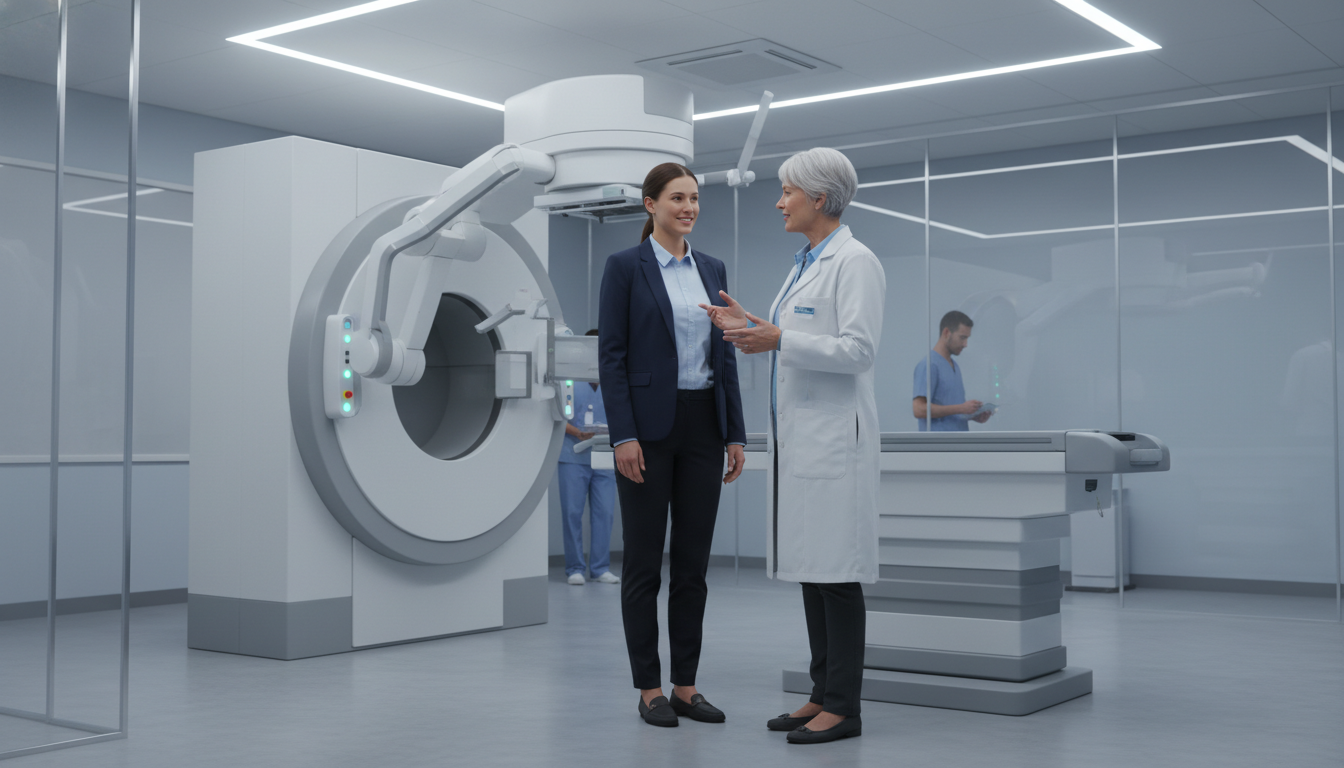
Understanding Radiation Oncology Early in Your Premed Journey
Radiation oncology is one of the most technology-driven, intellectually rich, and quietly impactful specialties in medicine. Yet many undergraduates—and even early medical students—barely know it exists. If you already have an interest in radiation oncology as a premed, you are ahead of the curve.
This guide is designed to walk you through pre-med preparation in radiation oncology: what to focus on as an undergraduate, how to meet typical premed requirements while building a competitive profile, and how to position yourself for success in the future radiation oncology residency and rad onc match.
We’ll cover:
- Core premed requirements and how they relate to radiation oncology
- Strategic coursework and skills for a tech-heavy oncology field
- Research, shadowing, and extracurriculars that actually matter
- Step-by-step planning from freshman to senior year
- How early preparation fits into the long pathway of how to become a doctor in radiation oncology
Whether you’re a first-year undergraduate or about to apply to medical school, you can use this as a roadmap.
Big Picture: Pathway to Radiation Oncology from Premed
Before we dive into tactics, it helps to understand the roadmap from premed to practicing radiation oncologist.
Undergraduate / Premed (you are here)
- Complete premed requirements (biology, chemistry, physics, etc.)
- Take the MCAT
- Gain clinical, research, and service experiences
- Apply to and enter medical school (MD or DO)
Medical School (4 years)
- Years 1–2: Preclinical sciences, USMLE/COMLEX Step exams
- Years 3–4: Clinical rotations, including (ideally) an elective in radiation oncology
- Build research and mentorship in rad onc
- Apply for radiation oncology residency via ERAS; participate in the rad onc match
Radiation Oncology Residency (typically 4–5 years, sometimes preceded by 1 preliminary year)
- Intense training in cancer biology, physics, treatment planning, patient care
- Board exams after residency
Fellowship (optional) and Independent Practice
- Subspecialize (e.g., brachytherapy, proton therapy, specific disease sites)
- Or enter community/academic practice
As a premed, your job is not to “lock in” radiation oncology forever—it’s to create a strong, flexible foundation that keeps radiation oncology open as a realistic option while still allowing you to pivot if your interests change.
Key concept: Almost everything you do now should make you a strong medical school applicant first; then, among those strong options, you’ll tailor toward rad onc later.
Core Premed Requirements and How They Map to Radiation Oncology
Every premed must satisfy certain academic requirements. If you’re interested in radiation oncology, you can use these courses more strategically to build skills you’ll actually use later.
Standard Premed Requirements (Typical U.S. Pattern)
Most medical schools require or strongly recommend:
- Biology (1–2 years) with lab
- General Chemistry (1 year) with lab
- Organic Chemistry (1 year) with lab
- Biochemistry (1 semester to 1 year)
- Physics (1 year) with lab
- Math – at least statistics; sometimes calculus
- English / Writing – 1–2 semesters
- Social Sciences / Behavioral Sciences – e.g., psychology, sociology
These are foundational for both the MCAT and later medical school coursework.
Why Physics and Math Matter More for Radiation Oncology
While all physicians benefit from a solid science foundation, radiation oncology is uniquely physics-heavy:
- Radiation oncologists collaborate daily with medical physicists to design treatment plans
- Understanding dose distribution, energy, beams, and imaging is central to the job
- The field relies on quantitative reasoning, data analysis, and technology
As a premed with rad onc interest, you should:
- Take calculus-based physics if available (even if not required)
- Consider additional physics electives:
- Modern physics
- Radiation physics / nuclear physics (if offered)
- Strengthen your math skills:
- One or two semesters of calculus
- A solid course in statistics or biostatistics
You do not need to be a physics major to become a radiation oncologist, but comfort with quantitative thinking will later help you stand out and feel more at home in the specialty.
Biology, Biochemistry, and Cancer-Relevant Courses
Radiation oncology lives at the intersection of cancer biology and clinical oncology. Use your biology courses intentionally:
Recommended beyond the basics:
- Cell biology – cell cycle, apoptosis, DNA damage and repair (central to radiation biology)
- Genetics / Molecular biology – understanding mutations, oncogenes, tumor suppressors
- Biochemistry – metabolism and signaling pathways targeted by modern oncology drugs
- Immunology – particularly important with the rise of immunotherapy combined with radiation
- Cancer biology (if your institution offers it)
These courses will later make your medical school oncology units feel more intuitive and will give you vocabulary to engage in meaningful research as early as M1 or even as a senior premed.
Behavioral, Social Science, and Communication Skills
Radiation oncology is not just about machines and physics; it’s deeply patient-centered, especially for people facing life-threatening or life-changing diagnoses.
Take seriously:
- Psychology and sociology – essential background for MCAT and for understanding patient behavior, adherence, distress
- Ethics or philosophy – useful foundation for cancer-care decision making, end-of-life discussions
- Writing-intensive courses – train you to explain complex ideas clearly, a must when counseling patients about benefits and risks of radiation
Premed advice here: Don’t only optimize for the MCAT. Optimize for being able to sit with a scared patient and explain hope, uncertainty, and choices clearly and compassionately.
Strategic Majors, Minors, and Skill Sets for Future Rad Oncologists
You can match into radiation oncology from any major, as long as you complete the premed requirements. Your major should match your genuine interests and allow you to excel academically. That said, some paths offer particular synergy.
Choosing a Major: Options and Trade-Offs
Traditional Life Sciences (Biology, Biochemistry, Neuroscience)
- Pros: Align well with premed requirements, easy to find research, straightforward connection to oncology
- Cons: Highly common among premeds; you’ll need other differentiators (e.g., research, leadership)
Physics or Engineering (Biomedical, Electrical, Nuclear)
- Pros: Deeply aligned with the technology of radiation oncology; distinctive background; close collaboration with medical physics departments possible
- Cons: Rigor can weigh down GPA if you’re not careful; you’ll need to proactively add biology/chemistry coursework
Interdisciplinary Majors (Public Health, Health Policy, Data Science)
- Pros: Great for future work in quality improvement, outcomes research, or health services in oncology
- Cons: May require careful planning to ensure all hard-science premed requirements are met
Humanities / Social Sciences (Philosophy, History, English)
- Pros: Excellent for communication, ethics, reflection; can be very appealing to admissions committees
- Cons: You must be highly organized to fit in all science prerequisites; may have fewer built-in research options in the sciences
The “best” major is the one where you can maintain a strong GPA, demonstrate intellectual curiosity, and still complete all required courses. Radiation oncology programs care far more about your medical school performance and fitness for oncology than whether your undergraduate major was “perfectly aligned.”
Skills That Give You an Edge in Radiation Oncology
Regardless of major, consider intentionally developing:
Technical and Computing Skills
- Basic coding (Python, R, or MATLAB) for data analysis
- Familiarity with image processing or data visualization
- Comfort with spreadsheets, databases, and statistical packages
These skills are extremely useful for oncology research and quality improvement projects.
Quantitative Analysis
- Strong statistics coursework
- Exposure to study design, clinical trials, or epidemiology
- Ability to interpret graphs, survival curves, hazard ratios
Communication and Counseling
- Courses in communication, narrative medicine, or medical humanities
- Experience with public speaking, teaching, or peer mentoring
- Volunteer work that exposes you to emotionally intense conversations
Teamwork and Leadership
- Radiation oncology is highly multidisciplinary: rad onc, med onc, surgeons, physicists, dosimetrists, nurses, social workers.
- Leadership in student organizations, research teams, or service projects shows you can function in complex teams.
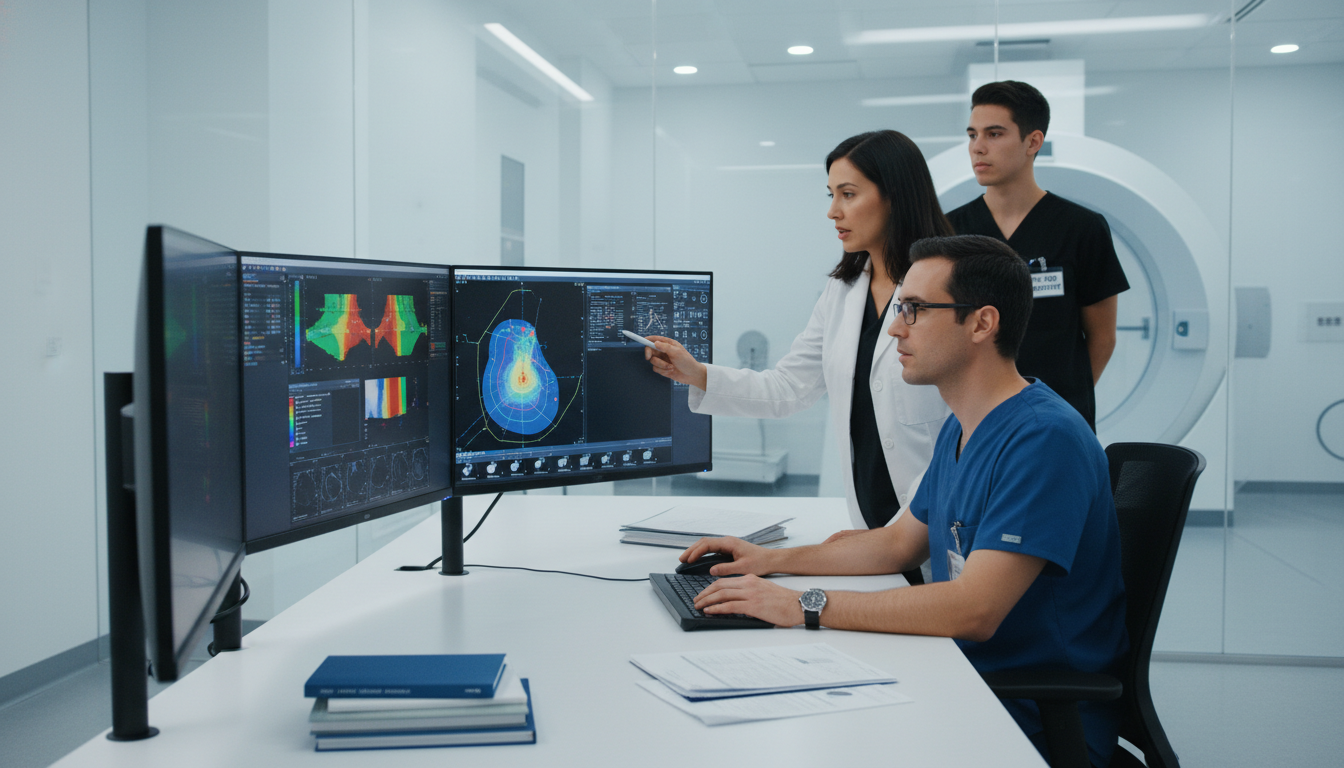
Clinical Exposure, Shadowing, and Early Oncology Experiences
Many premeds applying to medical school have never met a radiation oncologist. You can differentiate yourself—not necessarily by committing to rad onc early, but by showing genuine exploration of less-known fields.
How to Find Shadowing in Radiation Oncology
Start Locally
- Look up nearby cancer centers or hospitals with radiation therapy departments.
- Check their websites for “Radiation Oncology” or “Cancer Center – Radiation.”
- See if your university has a pre-health advising office with connections.
Professional, Concise Outreach
Email example:Dear Dr. [Name],
My name is [Your Name], and I am an undergraduate pre-medical student at [University]. I am very interested in learning more about oncology and, in particular, radiation oncology. I was wondering if you might be willing to allow me to shadow you for a few half-days, or if your department has any formal shadowing or volunteer opportunities for undergraduates.
I understand that your schedule is demanding and that patient privacy is paramount; I am happy to complete any necessary paperwork or training.
Thank you very much for considering my request.
Sincerely,
[Your Name]Be Flexible and Respectful
- Offer a wide range of availability.
- Be meticulous about HIPAA and institutional rules.
- Dress professionally and show up early.
Even a few days of shadowing can transform “radiation oncology” from an abstract term into something concrete you can discuss in personal statements or interviews.
What You’ll Actually See and Learn
On a typical shadowing day, you might:
- Sit in on consultations where a new patient hears about radiation options for the first time
- Observe simulation sessions where patients are positioned for treatment
- Watch the linear accelerator delivering radiation (from outside the treatment room)
- Listen in as the team reviews treatment plans and imaging
Pay attention to:
- How physicians explain complex risks and benefits
- The emotional tone of encounters: hope, fear, acceptance
- The collaboration between radiation oncologists, physicists, and nurses
Take mental (not written) notes during the day, then write reflections afterward. These reflections will serve you well for future personal statements about why oncology, why patient care, and how your experiences shaped your path.
Other Clinical and Service Experiences that Complement Rad Onc Interest
You don’t need all your exposure to be in radiation oncology specifically. Medical school admissions committees want to see that you grasp health care broadly and have demonstrated longitudinal service. Options include:
- Volunteering in oncology clinics or infusion centers
- Working as a hospice volunteer or in palliative care settings
- Hospital volunteer roles (transport, patient liaison, volunteer services)
- Scribing in primary care or emergency medicine (helps build general clinical fluency)
From a premed advice perspective, diversify enough so you understand medicine as a whole, while still creating a coherent thread that explains your draw to serious illness, patient counseling, or cancer care.
Research and Academic Projects: Building a Foundation for a Competitive Rad Onc Profile
Radiation oncology is an academic specialty. Most applicants to radiation oncology residency have research experience, often in oncology or related fields. You don’t need to be publishing as a premed—but laying groundwork now makes later success easier.

Finding Research Opportunities as a Premed
Start with Your Institution’s Research Portal
- Many universities list active faculty projects.
- Look for departments: Radiation Oncology, Medical Oncology, Radiology, Medical Physics, Biomedical Engineering, or Public Health with a cancer focus.
Email Targeted Faculty
- Read one or two of their recent papers (at least the abstract).
- Write a concise email indicating specific interest in their work.
- Offer to help with tasks like data collection, chart review, or analysis.
Cancer Center Programs
- Many NCI-designated cancer centers have summer undergraduate research programs.
- These often include seminars on cancer biology and clinical oncology.
Don’t be discouraged if your first research isn’t in a radiation oncology lab. Research in cancer biology, health services, quality improvement, bioinformatics, or medical imaging can all feed into a compelling future rad onc profile.
Types of Research Valuable for Future Radiation Oncologists
- Basic science: DNA damage repair, radiation response, tumor microenvironment
- Translational: Combining radiation with chemotherapy, immunotherapy, or targeted agents
- Clinical research: Retrospective chart reviews, outcomes studies, toxicity profiles
- Health services / outcomes: Disparities in cancer care, access to radiation therapy, cost-effectiveness
- Physics / engineering: Dose modeling, imaging optimization, machine learning for treatment planning
As a premed, you’re more likely to contribute at the level of data collection or basic analysis, but even that experience teaches you:
- How to formulate a research question
- How to handle data responsibly
- How to work in an academic team
- How to present findings (posters, talks, or manuscripts)
Presentations and Publications: Nice-to-Have, Not Must-Have (Yet)
For medical school admissions, the process matters more than the product:
- Having any substantial research experience (1+ year) is valuable
- Poster presentations at undergraduate or local conferences are a plus
- A publication is great but not mandatory at the premed stage
Later, during medical school, a strong research foundation will make it easier for you to engage in radiation oncology projects that will matter for the rad onc match. Think of premed research as “learning the language and habits of academic medicine.”
Four-Year Premed Roadmap Tailored to Future Radiation Oncologists
Timelines vary, but the following is a practical framework for a traditional 4-year undergraduate route.
First Year: Exploration and Foundations
Focus areas:
- Academics:
- Establish strong study skills; protect your GPA
- Begin general chemistry, biology, and calculus or statistics
- Exposure:
- Join premed and/or science clubs
- Start exploring oncology-related volunteer opportunities (general hospital roles are fine)
Radiation oncology–specific step:
- Attend any campus or hospital events on cancer research or oncology careers.
- Learn the basics of what radiation oncology is so you can intelligently seek out opportunities later.
Second Year: Deepen Academics and Start Clinical / Research Work
Focus areas:
Academics:
- Continue core sciences, including physics
- Add cell biology, genetics, or biochemistry as appropriate
Clinical Exposure:
- Begin consistent volunteering (few hours/week across the year)
- Attempt to arrange your first shadowing in radiation oncology if possible
Research:
- Reach out to labs or cancer centers for summer research
- Consider cancer-related projects, but at this stage, any rigorous scientific research is helpful
This is also a good time to think about premed requirements alignment: ensure your future course schedule can accommodate all required classes and MCAT prep.
Third Year: MCAT, Leadership, and Solidifying Your Narrative
Focus areas:
- MCAT Preparation:
- Typically taken late junior year or early senior year
- Physics, biochemistry, and psychology/sociology knowledge will all help
- Leadership and Service:
- Take on leadership in a club, service project, or research team
- Continue longitudinal clinical volunteering
Radiation oncology–aligned actions:
- If you enjoy your earlier oncology exposure, deepen it:
- More comprehensive shadowing in rad onc
- A project or poster under an oncology-related mentor
- Begin to articulate a nascent narrative:
- “I’m drawn to complex, technology-driven care for serious illness.”
- Or “I’m fascinated by how we use physics and biology together to treat cancer.”
You don’t have to write “future radiation oncologist” in your personal statement—but a consistent interest in cancer care or serious illness can naturally lead there later.
Fourth Year: Application Season and Strategic Positioning
Focus areas:
- Medical School Applications: AMCAS/AACOMAS, secondaries, interviews
- Continued Commitment: Don’t drop volunteering and research abruptly; admissions committees appreciate sustained involvement.
Radiation oncology–specific steps:
- If you have meaningful exposure to rad onc, you can:
- Mention it as an example of exploring diverse specialties, not as an irreversible commitment
- Ask a radiation oncologist who knows you well for a letter of recommendation (if appropriate)
- Use your experiences to speak intelligently about:
- Caring for cancer patients
- Handling emotionally heavy clinical scenarios
- Working with technology and data in service of patient care
Remember: the medical school stage—not the premed stage—is where you will make more focused decisions about radiation oncology, such as seeking formal rotations and rad onc research.
How All of This Pre-Med Preparation Sets You Up for the Rad Onc Match
You may be thinking: “Residency is a decade away. Why worry about the radiation oncology residency match now?” The answer is that you’re not planning the match now—you’re building the baseline competence that will make you a strong medical student, and therefore a competitive residency applicant in any field, including radiation oncology.
The long-term benefits of focusing your premed years as described include:
- Academic strength in the core sciences and quantitative reasoning
- Research literacy so you can quickly plug into oncology projects in medical school
- Comfort with technology and data, essential in a physics-driven specialty
- Mature clinical perspective on serious illness, palliative care, and shared decision-making
By the time you reach medical school and start thinking concretely about the rad onc match, you will:
- Be more prepared to excel in your preclinical curriculum
- Have an easier time understanding oncology and radiobiology content
- Be ready to meaningfully participate in research and electives that matter for residency applications
In other words, you’re not trying to plan the details of your future radiation oncology residency as a premed. You’re investing in the inputs—habits, knowledge, and experiences—that will give you real options when it’s time to choose.
Frequently Asked Questions
1. Do I need to major in physics or engineering to become a radiation oncologist?
No. You can match into radiation oncology from any undergraduate major, as long as you meet all standard premed requirements and are accepted into medical school. That said, comfort with physics, math, and technology is helpful. If you don’t major in a technical field, consider at least:
- Completing the full physics sequence (ideally calculus-based)
- Taking a solid statistics course
- Not shying away from quantitative work in research or electives
Admissions committees and residency programs primarily look at your medical school performance, research, and fit for oncology, not your specific undergrad major.
2. How early should I try to shadow in radiation oncology?
If possible, try for an initial experience by your second or third year of college, but it’s not mandatory. Shadowing is constrained by hospital policies, location, and faculty availability. More important than the exact timing is that you:
- Show genuine curiosity and professionalism
- Gain exposure to multiple clinical settings (not just rad onc)
- Reflect on what you observe and how it shapes your interest in medicine
If you can’t access radiation oncology specifically as a premed, shadow in other oncology disciplines (medical oncology, surgical oncology) or palliative care; these are also highly relevant.
3. Is oncology research required to match into radiation oncology later?
Oncology-focused research is very common among successful rad onc residency applicants, but it doesn’t have to start at the premed level. As an undergraduate:
- Any rigorous scientific or clinical research helps build your foundation
- Cancer-related projects are a plus but not mandatory
- Focus on learning skills: data handling, critical reading, teamwork
You can then seek more radiation oncology–specific research projects during medical school, when they will carry more weight for the rad onc match.
4. I’m interested in radiation oncology now, but what if I change my mind?
That’s completely normal—and expected. The premed pathway described here is fundamentally a roadmap for becoming a strong medical school applicant, not a binding contract with any one specialty. The coursework, clinical experiences, research, and skills you build are:
- Valuable for almost any specialty (internal medicine, surgery, radiology, etc.)
- Transferable into other areas of oncology or non-oncology disciplines
- Evidence that you’ve taken thoughtful steps to understand serious illness and high-stakes patient care
Think of radiation oncology interest as a lens, not a tunnel: it helps you choose meaningful opportunities now while preserving broad flexibility later.
By aligning your premed requirements, coursework, clinical exposure, and early research with the realities of oncology and technology-rich medicine, you’re not just preparing for a possible future in radiation oncology—you’re laying the groundwork to become a thoughtful, capable physician in any field.




















