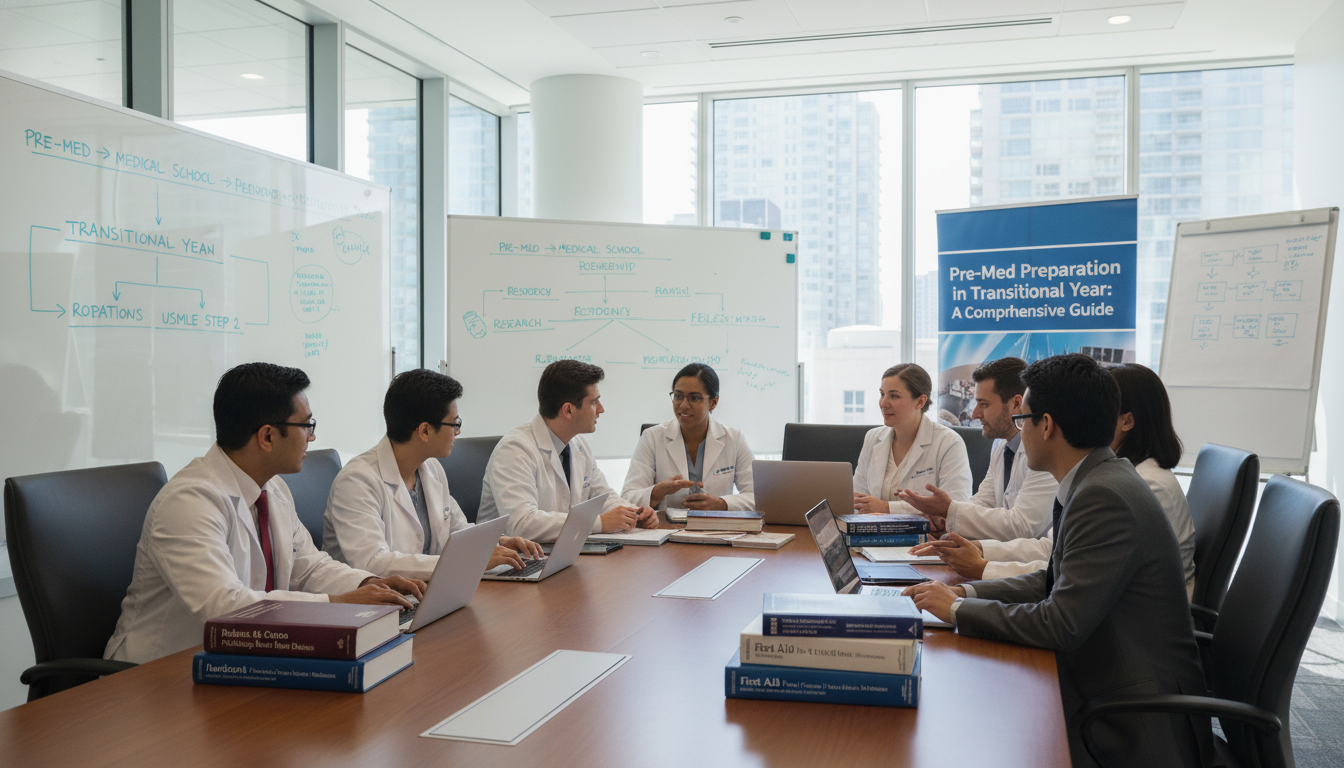
Understanding the Link Between Pre‑Med Preparation and the Transitional Year
A Transitional Year (TY) residency is often misunderstood as “just a gap year” between medical school and advanced training. In reality, a well-chosen and well-structured TY program can be a powerful extension of your pre‑med and medical school preparation, especially if you’re still refining your long‑term career plans or shoring up core competencies.
While pre‑med preparation formally happens before medical school, many of the same themes—foundational knowledge, professional identity formation, and strategic career planning—reappear during the Transitional Year. Think of a TY residency as Pre‑Med 2.0: a chance to correct earlier gaps, solidify essential skills, and position yourself more competitively for your ultimate specialty.
This guide focuses on how residency applicants and near‑graduates can use the Transitional Year strategically, while also giving targeted premed advice to undergraduates who already know they may pursue a TY program down the line.
We will cover:
- How the Transitional Year fits into the overall “how to become a doctor” pipeline
- What strong pre‑med preparation looks like (and how those habits transfer to TY)
- Choosing and using a TY program to compensate for or build on your pre‑med and med school background
- Practical strategies, rotations, and projects that turn a “generic” TY into a high‑yield springboard
- Common pitfalls and how to avoid them
From Premed to Transitional Year: Mapping the Training Pipeline
To understand how to use a Transitional Year effectively, you first need a clear view of the full training pathway and where each step fits.
The Standard Path: How to Become a Doctor
In the U.S., the path typically looks like this:
Premed (Undergraduate or Post‑Bacc)
- Complete core premed requirements (biology, chemistry, physics, math, etc.)
- Gain clinical exposure, research, and service experience
- Take the MCAT and apply to medical school
Medical School (MD or DO)
- Pre‑clinical (basic sciences + early clinical exposure)
- Clinical rotations (core clerkships, electives, sub‑internships)
- USMLE/COMLEX Steps/Levels
- Apply to residency
Residency (PYG1 and beyond)
- Includes Transitional Year residency, categorical programs, and advanced programs (e.g., Radiology, Anesthesiology, Dermatology)
- Progressive responsibility, focused specialty training
Fellowship (Optional)
- Further subspecialization
Independent Practice
Where Transitional Year Fits
A Transitional Year residency is a one‑year, broad‑based clinical training program—usually as PGY‑1—often linked to an advanced specialty that begins at PGY‑2. Common paths:
- TY → Radiation Oncology
- TY → Diagnostic Radiology / Interventional Radiology
- TY → Anesthesiology (for some programs)
- TY → Neurology, PM&R, Ophthalmology, Dermatology, or other specialties requiring a clinical base year
Unlike a categorical Internal Medicine or Surgery internship, a TY program is designed to offer maximum breadth across multiple disciplines, while still meeting ACGME requirements for a clinical base year.
Why Pre‑Med Preparation Still Matters by the Time You Reach TY
Premed is where you first learn to:
- Build scientific foundations
- Manage heavy workloads
- Communicate professionally
- Analyze your evolving interests and strengths
These same skills determine how effectively you can leverage a transitional year:
- Weak biology/physiology foundations? You’ll feel it in inpatient medicine and ICU rotations.
- Poor time management as a premed? TY’s rotating schedules and frequent transitions will expose this further.
- Vague career goals as an undergrad? TY can either crystallize or further fragment your trajectory.
So, even though you’re long past “premed” on paper when you hit residency, the quality of your pre‑med preparation significantly influences how much value you can extract from a TY program.
Core Premed Foundations That Power a Strong Transitional Year
If you are still in college, a post‑bacc, or early med school, you can deliberately shape your premed development to better support a future transitional year. If you’re already at the residency application stage, use this section as a diagnostic checklist to identify what you need to reinforce during TY.
1. Academic Rigor and Scientific Literacy
Premed requirements exist for a reason: they are the conceptual scaffolding for all of clinical medicine.
Key areas that will resurface during a TY program:
- General Biology & Cell Biology → Infectious disease, oncology, immunology
- General & Organic Chemistry → Pharmacology, metabolic diseases
- Physics → Radiology, cardiology procedures, ventilator mechanics
- Biochemistry → Endocrine disorders, metabolic syndromes
- Statistics/Epidemiology → Reading literature, QI projects, resident research
How this plays out in Transitional Year:
- On inpatient medicine, you’ll constantly apply acid–base, pharmacodynamics, and pathophysiology.
- On ICU rotations, understanding gas laws and ventilator physics (from physics premed coursework) gives you a head start.
- On electives like radiology or radiation oncology, physics and statistics literacy improves your ability to understand imaging and treatment planning.
Actionable advice (Premeds and Early Med Students):
- Choose upper‑level science courses (e.g., physiology, immunology, microbiology) if offered; they map directly to residency.
- Engage deeply with statistics; this is often the weak link and a limiting factor during resident‑level QI and research.
- Don’t just memorize for exams—practice explaining mechanisms to peers. This habit mirrors what you’ll do with patients in TY.
2. Clinical Exposure and Professionalism
Premeds often collect shadowing hours as a checkbox. A stronger mindset is to treat early clinical exposure as professional identity formation.
Transitional Year residency is where you:
- Take ownership of patients (under supervision)
- Handle pages, triage, and cross‑cover
- Navigate interprofessional communication with nurses, pharmacists, social workers
- Experience real‑world constraints (time pressures, systems issues)
Premed experiences that genuinely prepare you for this:
- Long‑term clinical volunteering (e.g., hospice, ED volunteer, clinic scribe)
- EMT, medical assistant, or scribing positions where you see workflows repeatedly
- Student‑run clinic roles with progressive responsibility
What this sets you up for in TY:
- Faster acclimation to hospital culture and communication norms
- Better bedside manner from day one
- Less emotional shock when confronted with patient suffering, dying, or complex family dynamics
3. Research, Quality Improvement, and Critical Thinking
Many TY programs value residents who can contribute to:
- Quality improvement (QI) initiatives
- Clinical research projects
- Educational curriculum development
Premed students who engage in research early build:
- Hypothesis‑driven thinking
- Comfort with IRB processes and data collection
- The habit of reading and critiquing medical literature
In TY, this translates to:
- Quickly generating feasible QI ideas (e.g., improving discharge summaries, handoff quality, vaccination rates)
- Writing IRB protocols with less hand‑holding
- Turning routine residency responsibilities into scholarly projects (case reports, retrospective studies)
4. Time Management, Study Skills, and Resilience
Premed is your first test of:
- Handling high‑volume content
- Balancing extracurriculars, studies, and personal life
- Recovering from setbacks (bad exam, rejected paper, MCAT score)
Transitional Year residency magnifies these pressures:
- Rotations change every 4–6 weeks (or sooner)
- You’ll juggle clinical work, exams (e.g., Step 3), and future applications (if re‑applying or entering an advanced match)
- Night float, call shifts, and circadian disruption challenge your coping mechanisms
Premed strategies that carry over:
- Using evidence‑based study methods (spaced repetition, active recall, interleaving)
- Time‑boxing and calendar blocking for tasks
- Building a realistic self‑care routine (sleep, exercise, mental health support)

Choosing a Transitional Year Program That Complements Your Premed Background
If you already know you’re headed toward a TY program—or you’re in the process of applying—strategic program selection is crucial. You want a TY that fills gaps and magnifies strengths rooted in your premed and medical school history.
1. Clarify Your Long‑Term Specialty Goals
Most applicants pursuing a transitional year residency do so because:
- Their advanced specialty requires a clinical base year (e.g., Radiology, Rad Onc)
- They want a broad base before committing (e.g., considering multiple competitive specialties)
- They need an internship year while re‑applying to a different specialty
Your specialty interests determine:
- Ideal rotation mix (more medicine vs. more surgery vs. more electives)
- Location priorities for networking in your target field
- The research and mentorship you should seek during TY
Examples:
- Future Radiologist
- TY with strong ICU and internal medicine to build clinical reasoning
- Electives in radiology and related fields (pulm/crit care, ED)
- Future Anesthesiologist
- TY that allows OR months, ICU, pain clinic exposure
- Undecided but leaning toward cognitive specialties
- TY with extensive internal medicine, neurology, outpatient continuity clinic
2. Evaluate Program Structure and Rotation Mix
Key factors to review on program websites and through current residents:
Required Rotations
- How many months of medicine? ICU? Emergency medicine?
- Are there surgery or subspecialty requirements?
Elective Time
- How many months are truly flexible?
- Can you tailor electives to your likely specialty (e.g., path, radiology, anesthesiology)?
Outpatient vs. Inpatient Balance
- If you had limited outpatient exposure in med school, choose a TY with strong ambulatory blocks.
- If your premed experience was outpatient heavy (e.g., clinic MA), you may prioritize inpatient skill‑building.
Call and Night Float
- Understand schedule intensity—this affects your ability to study for Step 3 or work on research.
Actionable checklist while researching TY programs:
- Download their block schedule (if available) and map it against your goals.
- Rank programs based on:
- Breadth of exposure you still need
- Opportunities for electives in your future specialty
- Reasonable balance of workload and academic opportunities
3. Academic vs. Community TY Programs: Which Is Better for You?
Academic TY Programs (university‑based):
Pros
- Stronger research infrastructure
- Easier access to subspecialists and mentorship
- More likely to be co‑located with advanced programs you may want
Cons
- Often more competitive
- Potentially higher workload and expectations
Community TY Programs:
Pros
- Often more hands‑on, with earlier autonomy
- May have a more collegial, close‑knit environment
- Sometimes more elective flexibility
Cons
- Less built‑in research support
- Fewer subspecialty services on site, depending on hospital size
Match your background:
- If you had limited research as a premed and medical student, but want to build a scholarly profile, an academic TY may open doors to projects.
- If you already have a strong academic portfolio but need robust clinical confidence, a busy community TY might be perfect.
Making the Most of Your Transitional Year: A Strategic Playbook
Once you’ve matched into a TY program, your challenge is to transform it from “a required year” into a launchpad year. The habits you cultivated as a premed—organization, initiative, curiosity—directly impact what you get out of TY.
1. Set Clear, Written Goals Before Day One
Create a concise Transitional Year Roadmap listing goals under four domains:
Clinical Skills
- Example: “By the end of TY, I will independently manage common inpatient issues (CHF exacerbation, COPD exacerbation, sepsis, DKA) with minimal prompting.”
Knowledge & Exam Prep
- Example: “Take and pass USMLE Step 3 by Month X, using Y resources.”
Career Development
- Example: “Secure 2–3 strong specialty‑specific letters of recommendation.”
Scholarly/Project Work
- Example: “Complete and submit one QI project for poster presentation.”
Revisit this roadmap every 2–3 months and adjust as needed.
2. Approach Rotations as “Premed Labs” for Specialty Choice
Premed labs give you small, structured experiments with science. Rotations during TY give you small, structured experiments with specialties.
On each rotation, ask:
- Do I enjoy the daily tasks (notes, procedures, patient types)?
- How do I feel about the work–life balance?
- Do I connect with mentors and the specialty culture?
- Can I realistically see myself doing this long‑term?
Take brief notes after rotations. This reflective practice mirrors the career exploration you should have done as a premed and helps refine your trajectory.
3. Build On and Repair Premed Weaknesses
Be honest about where your premed and med‑school preparation was thin:
Struggled with basic science?
- During medicine and ICU rotations, review physiology and pathophysiology in real time with patients you’re managing.
- Use cases to anchor learning: “What’s the biochemistry behind this electrolyte abnormality?”
Weak in statistics or research methods?
- Join a QI project; insist on handling data collection or basic analysis with guidance.
- Attend journal clubs and commit to presenting at least once.
Limited team communication skills as a premed?
- Actively practice closed‑loop communication on rounds, sign-outs, and nursing calls.
- Seek feedback from nurses and senior residents.
4. Develop Systems for Efficiency and Learning
Transitional Year will feel chaotic if you don’t establish systems early.
Practical systems:
Task Management
- Use a small notepad or digital task list for each patient (labs to check, orders, follow‑ups).
- Review your list mid‑day and before sign‑out to avoid missed tasks.
Study Integration
- Block 20–30 minutes after work (even on busy days) for high‑yield review questions or brief reading.
- Use real patients as anchors: “Tonight I’ll read about pancreatitis because I admitted one today.”
Knowledge Capture
- Keep a running “pearls” document (digital or small notebook) with concise points learned on rounds.
- Revisit this before end‑of‑rotation exams or when preparing for Step 3.
5. Cultivate Mentorship and Networking
Premed students who thrived often did so because they found mentors early. The same principle holds for TY.
How to find and use mentors:
Identify attendings whose careers align with your interests (specialty, research area, leadership roles).
Ask for a brief mentoring meeting:
- Come with focused questions: “I’m considering radiology after this TY. What would make me a strong applicant from here?”
- Request feedback on your CV and discuss project ideas.
Maintain the relationship:
- Update them once or twice a year or at key milestones.
- Offer to help with small projects; show reliability.

Premed Advice for Students Already Thinking About a Transitional Year
If you’re still premed (or early in medical school) and already curious about transitional year residency, you’re ahead of the curve. You can deliberately design your premed years to maximize your future flexibility and TY readiness.
1. Choose Experiences That Develop Breadth, Not Just Depth
Since TY programs are inherently broad, aim for broad premed experiences:
- Work or volunteer in both inpatient and outpatient settings
- Explore multiple specialties through shadowing (hospitalist, surgeon, radiologist, anesthesiologist, psychiatrist)
- Join interprofessional teams (e.g., public health projects with nursing or social work students)
This breadth prepares you not only for medical school but also for making wise elective choices during TY.
2. Prioritize Foundational Skills Over “Shiny” Accomplishments
Premeds often obsess over building a perfect application. For a future TY, the following durable skills matter more:
- Clear writing and oral communication (helpful for residency applications, presentations, consults)
- Teamwork and leadership in real clinical or service settings
- Reliability and accountability (letters from premed supervisors that describe these traits still shape your professional identity)
These competencies will show up again when program directors for TY and advanced specialties read your residency application and talk to your references.
3. Learn How to Learn Medicine—Not Just How to Pass Exams
Adopt methods that align with how residents learn:
- Practice active recall (flashcards, questions) instead of re‑reading notes.
- Engage in case‑based learning (e.g., read UpToDate on conditions you see while volunteering or shadowing).
- Start reading primary literature and commentaries to build comfort with medical journals.
By the time you reach your transitional year, you’ll already think like a self‑directed learner rather than someone who only performs when a syllabus tells them what to study.
4. Understand the “Why” Behind Transitional Year Programs
Ask residents, advisors, or mentors:
- Why did they choose a TY over a categorical internship?
- What were the benefits and drawbacks?
- How did their premed and med‑school preparation affect that choice?
This qualitative knowledge helps you avoid mythology and misinformation about TY programs and align your long‑term planning realistically.
FAQ: Transitional Year Residency and Premed Preparation
1. Is a Transitional Year residency easier than a categorical internship?
Not necessarily. Some TY programs are lighter in call or have more elective time, but many are as demanding—or more demanding—than categorical prelim years. The “ease” depends on the specific program’s structure, patient volume, and call schedule. Always research rotation schedules and speak with current residents.
2. Do premed requirements matter once I’m at the Transitional Year stage?
Formally, no one will ask what your premed major was. Informally, the habits and foundations you built—scientific literacy, time management, resilience—directly influence how comfortable you feel managing patients, learning quickly, and contributing to research or QI during TY.
3. Can a Transitional Year help if I’m unsure about my specialty?
Yes, especially if you select a TY program with broad rotation options and thoughtful electives. Use your TY as a structured exploration phase: pay close attention to what you enjoy on each rotation, seek mentorship in prospective specialties, and reflect regularly on your experiences.
4. How can I use my TY year to strengthen a weak residency application?
Focus on what program directors value: clinical excellence, reliability, teachability, and evidence of growth. During TY you can:
- Earn strong, recent letters of recommendation
- Complete research or QI projects with your attendings
- Demonstrate improved exam performance (e.g., Step 3)
- Show leadership on the wards and in educational activities
When framed thoughtfully in your personal statement and interviews, a well‑utilized TY year can transform your overall trajectory.
By viewing your premed years and your Transitional Year residency as connected chapters in the same story—rather than separate, unrelated stages—you can make more intentional decisions, avoid common pitfalls, and enter your ultimate specialty with greater poise, competence, and clarity.