Medical shadowing in diagnostic radiology is one of the most efficient ways to confirm your interest in the field, understand the day-to-day workflow, and build relationships that can ultimately support your diagnostic radiology match. This guide walks you through everything you need to know: why radiology shadowing matters, how to find shadowing, what to do while you’re there, and how to turn those shadowing hours into a compelling part of your residency application.
Why Shadowing in Diagnostic Radiology Matters
Shadowing is often less visible in radiology than in other specialties—no stethoscopes at the bedside, fewer “dramatic” patient encounters—but it’s incredibly high-yield for students considering a radiology residency.
1. Clarifying whether radiology is right for you
Diagnostic radiology attracts students for many reasons—pattern recognition, technology, problem-solving, work-life balance—but the reality of the specialty is not always what people expect.
During radiology shadowing you will:
- See the actual daily workflow: image interpretation, protocoling studies, consulting with clinicians, and performing image-guided procedures (e.g., biopsies, drain placements).
- Experience the cognitive load required: simultaneously reviewing multiple imaging modalities, prioritizing STAT exams, and making time-sensitive decisions.
- Understand the interpersonal component: frequent curbside consults, multidisciplinary conferences, interaction with technologists, and occasional direct patient contact.
Many students imagine radiologists as “isolated in dark rooms.” A dedicated shadowing experience reveals a very team-based, consultative role that’s central to patient care.
2. Strengthening your radiology residency application
While the diagnostic radiology match is competitive, a thoughtful portfolio of clinical exposure, including shadowing, can distinguish you from other applicants.
Shadowing can:
- Demonstrate genuine interest in radiology in your personal statement and interviews (“I first appreciated the impact of timely radiology reports when…”).
- Provide concrete stories for interviews about teamwork, diagnostic reasoning, and communication with other specialties.
- Lead to mentorship and sometimes letters of recommendation from radiology faculty who get to know you through consistent presence.
Programs know that students have variable access to formal radiology electives early on; shadowing is often the first sign of early commitment to the field.
3. Building foundational imaging literacy
Even brief exposure can help you:
- Learn basic imaging terminology (e.g., attenuation, T1/T2, consolidation, enhancement).
- See how imaging findings shape clinical decisions in real time.
- Recognize the limitations of imaging, which is crucial when you eventually order studies as a resident in any specialty.
This foundation will make your future radiology rotation, away electives, and sub-internships more productive—and gives you a head start for residency.
How to Find Radiology Shadowing Opportunities
Many students know they “should” shadow but aren’t sure how to find shadowing in radiology specifically. Because the radiology reading room is a controlled, often high-stakes environment, you may need to be strategic and proactive.
1. Start with your home institution
If you’re at a medical school with an affiliated hospital, this is usually the best place to begin.
Steps:
Check your school’s policies
- Look on the Office of Student Affairs or Clinical Education website for “medical shadowing” guidelines.
- Many institutions have a standard form for shadowing requests, HIPAA training requirements, and badge access.
Identify the right contact
- Department of Radiology website → look for:
- Vice Chair for Education
- Diagnostic Radiology Residency Program Director
- Medical Student Clerkship Director (if applicable)
- These individuals often know how to plug you into structured and unstructured shadowing options.
- Department of Radiology website → look for:
Send a concise, professional email
Include:- Your year in training and school
- Your interest in diagnostic radiology
- Goals (e.g., “to understand the day-to-day workflow of diagnostic radiologists and the role of imaging in patient care”)
- Availability (specific days/times)
- Any institutional requirements (forms, modules you’ve completed)
Example email snippet:
I am a second-year medical student at [School] with a growing interest in diagnostic radiology. I’m hoping to arrange several half-days of medical shadowing in the radiology department to better understand the daily workflow, the role of imaging in patient care, and the breadth of the specialty. I have completed current HIPAA and institutional training modules and would be happy to follow any departmental guidelines for shadowing.
2. Ask radiology-interested peers and mentors
If you know a 4th-year student who matched into radiology—or a resident from your school—ask them:
- Who did you shadow in radiology?
- How did you get access to the reading room / procedures?
- Are there radiologists who particularly enjoy teaching medical students?
These informal leads often get you more targeted, rewarding shadowing experiences than cold emails alone.
3. Use professional and local networks
If your school doesn’t have a large radiology department, you may need to be more resourceful.
Options:
Community hospitals or imaging centers
Some radiology groups are affiliated with medical schools, others are independent. Look for:- Hospital radiology departments with academic ties
- Large outpatient imaging centers with fellowship-trained radiologists
Alumni networks
Your school’s alumni office or online portal may list physicians by specialty. Reach out to radiology alumni who might be open to hosting students for medical shadowing.National organizations
Consider:- ACR (American College of Radiology) state chapters
- RSNA (Radiological Society of North America) local contacts
Sometimes regional radiology societies have educational committees that can suggest how to find shadowing within your area.
4. Clarify logistics and expectations early
When you find a willing radiologist or department, clarify:
- Dates and duration: Single day? Multiple recurring half-days?
- Location: Reading room? Interventional radiology suite? Breast imaging center?
- Dress code: Usually business casual with a white coat; ask if scrubs are preferred in IR or procedural areas.
- Access needs: Badge, temporary login (often not needed for pure shadowing), or orientation requirements.
Being organized shows you’re serious and makes faculty more willing to invest time in you.

What to Expect: Inside a Diagnostic Radiology Shadowing Day
Radiology is diverse; your experience depends heavily on which section you’re in (neuroradiology, body imaging, musculoskeletal, pediatrics, emergency, or interventional). Still, many elements are common across shadowing experiences.
Typical daily flow
A diagnostic radiology day often includes:
Pre-rounding on worklists
Radiologists open multiple worklists: ER, inpatient, outpatient, STAT. As a shadower, you may:- Watch how they triage cases by urgency.
- Hear their reasoning for reading certain studies first (e.g., rule out stroke, suspected PE).
Case reading and dictation
This is the core of diagnostic radiology:- Radiologist reviews images (CT, MRI, X-ray, ultrasound, etc.).
- Verbalizes key findings, which the system turns into a draft report via dictation software.
- Edits and finalizes the report.
You might hear them discuss:
- “Search patterns” they use to avoid missing findings.
- How they phrase levels of certainty (“consistent with,” “suspicious for,” “cannot exclude”).
Communication with clinicians
- Phone calls from ED physicians, internists, surgeons, etc.
- Urgent findings communicated as “wet reads” before the final report.
This helps you see how imaging directly affects patient care decisions—for instance, a CT confirming appendicitis or ruling out aortic dissection.
Teaching moments
Many radiologists enjoy teaching:- Quick mini-lessons on basic anatomy on CT/MRI.
- Review of classic pathologies (“This is a typical pulmonary embolism on CT angiography…”).
- Board-style clinical correlations (“How would this change management for the admitting team?”).
Conferences and multidisciplinary meetings
You may be invited to:- Tumor boards
- Neuroradiology case conferences
- Quality/safety conferences
These are excellent to understand how radiologists collaborate with oncologists, surgeons, neurologists, and others.
Direct patient contact: Where it fits
Diagnostic radiology itself has limited direct patient contact, but you might observe:
- Ultrasound exams with technologists and radiologists occasionally scanning directly.
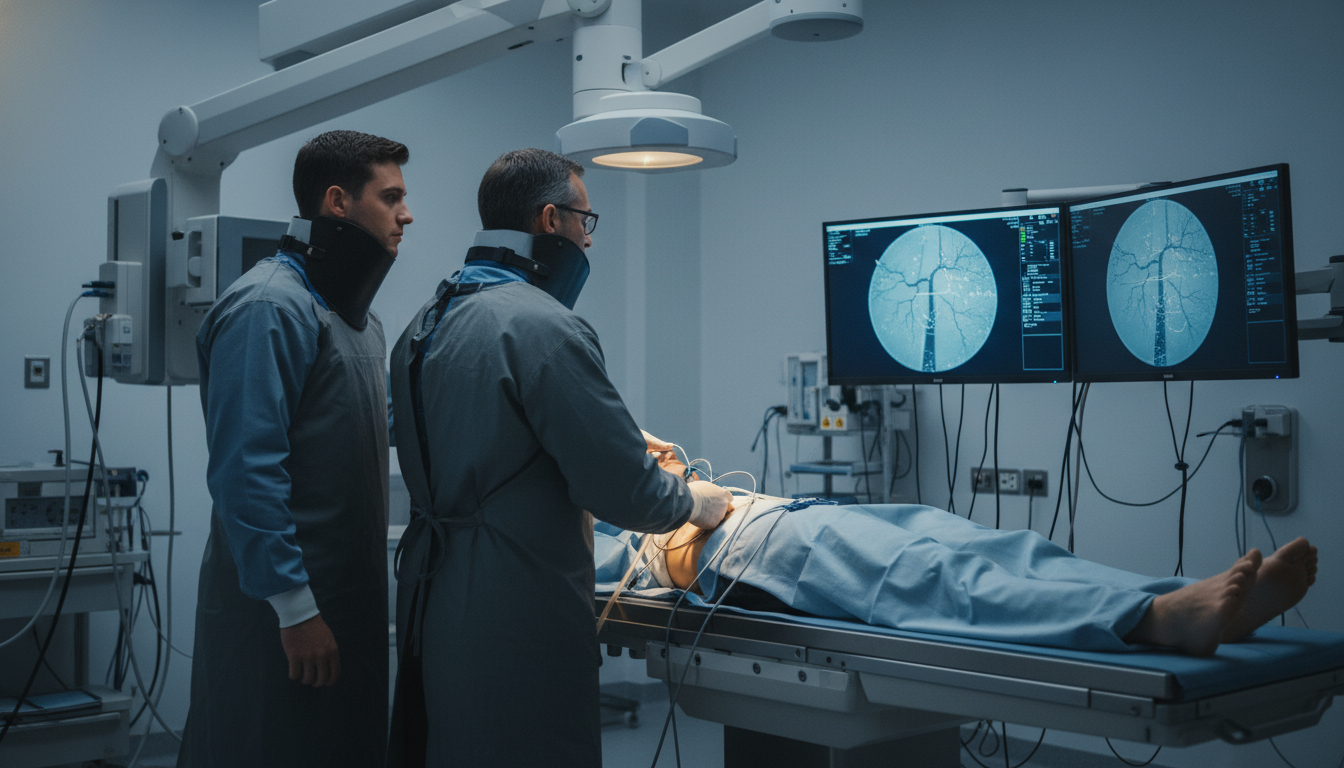
- Procedures in interventional radiology (if arranged): biopsies, drain placements, vascular interventions, etc.
- Fluoroscopy studies (e.g., barium swallow, GI studies) with real-time interaction.
Shadowing across both diagnostic and interventional settings can give you a broader perspective of the field.
Balancing observation and engagement
Shadowing is primarily observational, but radiology lends itself well to active cognitive participation, even if you’re not touching patients.
You can:
- Look at the images before the radiologist dictates and think:
- What organ system is affected?
- What are the most likely diagnoses?
- Ask to practice forming a very basic differential aloud, then compare your thinking to the final report.
Being mentally engaged—not just physically present—is what makes shadowing impactful.
How Many Shadowing Hours Do You Need—and How to Use Them Strategically
Students often ask about shadowing hours needed for radiology residency. There’s no official minimum, but patterns exist among successful applicants.
1. Shadowing vs. formal electives
Programs care more about:
- Strong radiology elective performance
- Radiology-related research or scholarly work
- Well-supported letters of recommendation
However, shadowing is very useful early (M1/M2, early M3) to:
- Confirm interest before you commit to away rotations.
- Build relationships with radiologists who can later help you get projects or electives.
A reasonable goal:
- 15–40 hours of radiology shadowing across the pre-clinical and early clinical years, ideally in several settings (emergency, inpatient, outpatient, possibly interventional).
This could be:
- Four 4-hour half-days over a semester
- A 1-week pre-clinical elective that’s primarily observational
The quality and consistency are more important than the absolute number of hours.
2. Documenting your shadowing experience
Even if your school doesn’t require formal logs, keep track of:
- Dates and locations (e.g., “Spring 2024, 3 half-days in neuroradiology, University Hospital”).
- Sections observed (e.g., MSK, chest, IR).
- Specific learning moments or impactful cases.
Later, this helps you:
- Describe your exposure accurately in ERAS when asked.
- Recall meaningful stories for your personal statement and interviews.
- Demonstrate longitudinal interest in radiology rather than a last-minute decision.
3. Converting hours into application value
Shadowing by itself doesn’t automatically strengthen your application—you need to translate it.
Use your experience to:
Shape your personal statement
- Discuss how seeing the radiologist’s role influenced your choice.
- Reference specific patient care scenarios (de-identified) where imaging changed management.
Guide your specialty choices for more intensive experiences
- After shadowing, sign up for a dedicated diagnostic radiology elective or sub-internship.
- Pursue a research project in an area you found interesting during shadowing (e.g., stroke imaging, oncologic imaging).
Inform your letters of recommendation strategy
- If you returned multiple times to the same section, ask a radiologist who knows you to support you, especially if you later work with them on elective or research.
For the diagnostic radiology match, programs are looking for sustained, thoughtful engagement with the field. Shadowing is often the first building block in that narrative.
How to Be an Outstanding Radiology Shadower
Simply being physically present in the reading room is not enough. The students who make the strongest impressions—and who get the most signal for their diagnostic radiology match—approach shadowing deliberately.
1. Prepare before you arrive
Even if you’re early in training, a bit of preparation goes a long way:
- Review basic imaging modalities: X-ray, CT, MRI, ultrasound, nuclear medicine.
- Skim an introductory resource:
- A brief radiology orientation PDF from your school
- A medical student radiology handbook
- Refresh anatomy for the areas you’ll see (e.g., chest CT, brain MRI).
You don’t need deep knowledge; you just need enough context to follow what’s happening and to ask meaningful questions.
2. Practice professional behavior
The reading room is a clinical environment. Show that you understand that.
Do:
- Arrive early; introduce yourself to the radiologist and staff.
- Wear appropriate attire (business casual + white coat, or scrubs if requested).
- Keep your phone silent and out of sight.
- Observe patient privacy—never photograph screens, never remove written notes containing identifiers.
- Step aside respectfully if sensitive patient information is being discussed.
Don’t:
- Interrupt when the radiologist is on a critical call with a clinician.
- Ask to take screenshots of imaging for personal study without explicit permission and de-identification (usually discouraged).
- Dominate the conversation or “read over their shoulder” without giving space.
3. Ask high-yield questions
Well-timed, thoughtful questions show genuine interest and help you learn more deeply. Some examples:
- “When you look at a chest CT, do you have a specific search pattern?”
- “What are the most common types of emergent findings you see overnight?”
- “How do you decide whether to recommend further imaging vs. clinical follow-up?”
- “What do you enjoy most about diagnostic radiology? What are the biggest challenges?”
- “For a student interested in radiology residency, what would you recommend I prioritize over the next two years?”
Try to group questions during natural pauses—between cases or after a phone call—not while they’re dictating critical findings.
4. Engage with the images actively
When appropriate and if invited, you can:
- Look at the images before hearing the final read and quietly identify:
- Obvious abnormalities
- Anatomy you recognize
- Ask, “Could I try to describe what I see, then hear how you would phrase it?”
This doesn’t need to be perfect. Radiologists often appreciate your effort and will teach you how they structure impressions and differentials.
5. Follow up and maintain relationships
After your shadowing experience:
- Send a brief thank-you email within 24–48 hours:
- Mention 1–2 specific things you learned or appreciated.
- Express interest in future opportunities (electives, research, conferences) if appropriate.
Over time, you might:
- Attend a radiology departmental talk or grand rounds.
- Ask about joining a small research project if you can commit.
- Request advice on selecting away rotations or planning your application timeline.
These relationships are often how students transition from simple medical shadowing to more substantive involvement that supports their diagnostic radiology match.
Common Pitfalls and How to Avoid Them
Even well-intentioned students can make missteps during shadowing. Being aware of them helps you avoid problems.
1. Treating shadowing as a checkbox
If your mindset is “I just need X shadowing hours needed for my application,” you’ll likely:
- Be passive in the reading room.
- Miss opportunities to build real mentorship.
- Struggle to generate sincere, specific stories for application materials.
Instead, approach each shadowing day as a chance to test your fit with the specialty and learn something concrete.
2. Overstepping in clinical spaces
Examples of overstepping:
- Speaking with patients or families as if you are part of the care team.
- Interfering with technologists or nurses who are trying to work quickly.
- Asking to perform hands-on tasks when you are there purely to observe.
Radiology has particular sensitivity around safety (contrast, radiation exposure, sterile fields in IR), so err on the side of watching and asking before doing.
3. Ignoring the broader context of patient care
Sometimes, radiology can feel like “just pictures.” Don’t let that happen.
Ask questions like:
- “How will this finding likely change what the ED team does next?”
- “What would you communicate differently if this patient were unstable vs. stable?”
Seeing imaging in the context of clinical decision-making is what makes the experience relevant, even if you ultimately choose another specialty.
4. Failing to leverage what you’ve seen
If you don’t reflect and record what you learn, your shadowing experience blurs into a vague memory.
Consider a simple post-shadowing reflection:
- What surprised me about the workflow?
- What did I enjoy the most and least?
- How did radiologists interact with other specialties?
- Does this align with how I want to spend my day as a physician?
Those notes become valuable raw material when you write your personal statement or prepare for interviews.
FAQs about Radiology Shadowing and the Diagnostic Radiology Match
1. How many radiology shadowing hours do I need to be competitive for a radiology residency?
There is no formal minimum number of shadowing hours needed for diagnostic radiology. Most successful applicants have:
- Some early shadowing exposure (often 15–40 hours)
- At least one formal radiology elective (home or away)
- Potentially a radiology research or quality project
Programs care more about the depth and continuity of your interest than the exact number of hours. Focus on meaningful, recurring experiences and clear reflection, rather than chasing a specific number.
2. I don’t have a radiology department at my school. How can I find shadowing opportunities?
You can still build experiences by:
- Contacting nearby community hospitals or imaging centers and asking if they host medical students for medical shadowing.
- Using your school’s alumni network to locate diagnostic radiologists within driving distance.
- Reaching out to regional ACR or radiology society chapters for advice on how to find shadowing locally.
Be explicit that you’re a medical student, clarify your school’s insurance/affiliation status, and be prepared for additional paperwork (HIPAA, institutional approval).
3. Do I need radiology shadowing if I’ve already done a full radiology elective?
If you’ve completed a well-structured, hands-on radiology elective relatively early, additional shadowing may be less critical. However, shadowing can still be useful to:
- Sample other subspecialties (e.g., neuroradiology vs. MSK vs. IR).
- Maintain connections with faculty in the months or years before you apply.
- Explore different practice settings (academic vs. community vs. outpatient imaging centers).
Shadowing is usually more relevant pre-elective; after that, prioritize electives, research, and strong letters of recommendation.
4. Can shadowing alone get me a strong letter of recommendation for the diagnostic radiology match?
Typically not. Shadowing alone provides limited opportunity for a radiologist to evaluate your clinical skills, work ethic, or teamwork. Strong letters usually come from:
- A formal radiology elective where you read cases, present at conferences, or attend regularly.
- A research or quality improvement project that you complete with a radiology mentor.
Shadowing is a starting point—a way to meet potential mentors and show early interest—rather than the sole basis for a letter.
Medical shadowing in diagnostic radiology can be transformative when approached thoughtfully. By proactively finding opportunities, engaging actively in the reading room, reflecting on what you see, and building lasting relationships, you can turn shadowing from a box to check into a cornerstone of your journey toward a successful diagnostic radiology match.