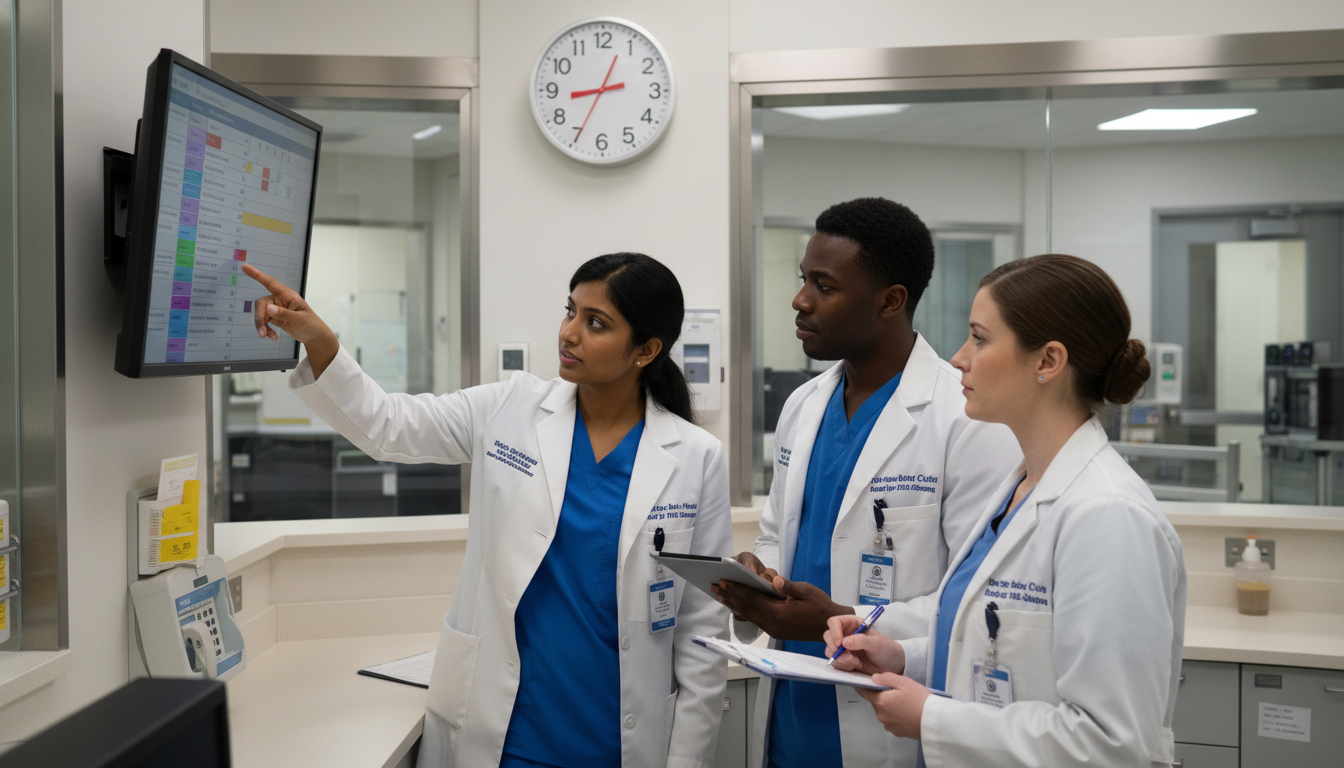
Understanding the Research Year as a Caribbean IMG
For a Caribbean IMG, a well-planned research year can be the difference between a marginal application and a truly competitive one. Used correctly, taking a research year can:
- Strengthen a Caribbean medical school residency application
- Offset weaker areas (e.g., exam attempts, limited US clinical experience)
- Build US-based academic connections and mentorship
- Open doors to competitive specialties and better programs
However, a research year is not a magic fix. Poorly chosen or poorly executed research can cost time and money without meaningfully improving your residency prospects. This article will walk you step-by-step through how to plan, execute, and leverage a research year strategically as a Caribbean IMG.
We’ll focus on practical strategies, examples, and timelines that have helped many Caribbean graduates—including those from SGU, AUC, Ross, Saba, and others—successfully match into US residency programs.
When a Research Year Makes Sense (and When It Doesn’t)
Before committing to a gap year research plan, you need to answer one core question:
Will a research year change how program directors perceive my application?
Strong Reasons to Take a Research Year
You are a strong candidate for a research year if one or more of these applies:
Aiming for competitive specialties
- Dermatology, radiology, anesthesiology, ophthalmology, ENT, EM, some IM subspecialty tracks, etc.
- For these, program directors often expect US-based research, especially from IMGs.
You have exam or academic red flags
- Step 1 fail or multiple attempts
- Lower-than-average Step 2 CK score
- Course failures or leaves of absence
- A serious, productive research year can:
- Demonstrate maturity and resilience
- Show academic productivity and discipline
- Provide strong letters that reframe your narrative in a positive light
Limited US clinical exposure
- If your CV has:
- Few or no US clinical rotations
- Minimal US letters of recommendation
- A research year at a US institution helps:
- Build US contacts
- Get faculty who know you well to vouch for you
- Increase your visibility with specific departments
- If your CV has:
You want to pivot specialties
- Example: You initially aimed for surgery but now want internal medicine subspecialty → research in cardiology, pulmonary, or oncology can support that change.
- Example: You realized late that you love psychiatry → a research year shows commitment to the new field.
You have a clear opportunity
- You have:
- A mentor willing to take you on
- A funded research position
- A connection through alumni or previous rotations
- You have:
In these cases, a research year is often a good investment.
When a Research Year May Not Be Worth It
Consider not taking a research year if:
You already meet your target specialty’s typical standards
- Strong Step 2 CK score (for your specialty range)
- Solid US clinical rotations + letters
- No major red flags
- For primary care fields (FM, peds, some IM programs), a research year may not significantly boost your match chances compared to:
- More US clinical rotations
- Strengthening letters
- Applying broadly and strategically
You can’t realistically secure meaningful research
- You only have access to:
- Unsupervised projects without mentorship
- Low-impact, non-structured, or purely administrative “research”
- Program directors can distinguish between:
- Real research experiences with clear outcomes
- “CV fillers” that don’t show real academic engagement
- You only have access to:
Your primary issue is unaddressed exams
- If Step 2 CK is not yet taken or is very weak, your top priority often should be:
- Retaking/strengthening exams
- Securing more clinical performance data
- A research year will not compensate for persistently poor exams without improvement.
- If Step 2 CK is not yet taken or is very weak, your top priority often should be:
Financial and visa realities make it unsustainable
- Research years can be unpaid or low-paid
- As a Caribbean IMG, you may already be carrying significant loans
- If a research year forces you into severe financial strain or unstable living conditions, it may not be the best next step.
Choosing the Right Type of Research Year
Not all research years are equal. Your goal is to design a purposeful, aligned year that clearly supports your Caribbean medical school residency goals.
Clinical vs. Basic Science vs. Outcomes Research
Clinical Research (Most Valuable for Many Caribbean IMGs)
- Involves direct patient-related data:
- Chart reviews
- Prospective clinical trials
- Observational cohort studies
- Advantages:
- Often performed within clinical departments (internal medicine, surgery, etc.)
- Greater visibility to attendings who may influence residency selection
- Easier to connect clinical performance + research productivity
- Best if:
- You want letters from clinicians
- You aim for internal medicine, surgery, EM, neurology, etc.
- Involves direct patient-related data:
Outcomes / Quality Improvement (QI) / Health Services Research
- Focus on:
- Patient outcomes
- Hospital systems
- Process improvement (e.g., readmission reduction, guideline adherence)
- Advantages:
- Highly relevant to residency training and hospital priorities
- Often produces posters and abstracts quickly
- Seen favorably in almost all specialties
- Ideal for:
- Family medicine, internal medicine, pediatrics, psychiatry
- Caribbean IMGs who want quicker, tangible outputs
- Focus on:
Basic Science / Bench Research
- Lab-based:
- Cells, animals, molecular biology, genetics
- Advantages:
- Can be highly impactful at high-tier academic centers
- Disadvantages:
- Longer timelines to publication
- Less obviously connected to clinical skills
- Best if:
- You have a strong science background and genuine interest
- You aim for specialties where basic science is valued (e.g., oncology, some surgical subspecialties)
- Lab-based:
How to Align Research with Your Target Specialty
Ask yourself:
“If a program director in my target specialty looks at this research, will they see it as evidence of my commitment and potential?”
Examples:
- Internal Medicine (general or hospitalist track)
- Choose: cardiology, nephrology, pulmonary, infectious disease, hospital medicine, QI projects (e.g., sepsis bundle compliance).
- Psychiatry
- Choose: studies on mood disorders, psychosis, addiction, neurocognitive disorders, health disparities in mental health.
- Family Medicine
- Choose: preventive medicine, chronic disease management, community medicine, health disparities, telehealth.
- General Surgery
- Choose: trauma, acute care surgery, surgical oncology, perioperative outcomes, ERAS (enhanced recovery after surgery) protocols.
If you are still unsure about your final specialty choice, lean toward broad, high-relevance areas (e.g., internal medicine or QI projects) that fit multiple paths.

How to Find and Secure a Research Position as a Caribbean IMG
This is one of the most challenging steps for Caribbean graduates, especially if you lack existing academic connections. Persistence and strategy are critical.
Step 1: Clarify Your Target Location and Specialty
You will be more effective if you start with a focused list:
- 10–20 institutions (mix of academic and community programs)
- 1–2 specialties of interest
Consider:
- Places with a history of SGU residency match or other Caribbean IMG matches
- Programs where your school’s alumni are currently residents or faculty
- Cities where you can realistically live for 1–2 years
Step 2: Build a Professional Outreach Package
Prepare:
Academic CV
- Include:
- USMLE scores (if comfortable)
- Clinical clerkships
- Any prior research or QI
- Skills (Excel, SPSS, R, basic statistics, RedCap, etc.)
- Include:
One-page Cover Letter Template
- Tailor for each email:
- Why their specialty/department
- Your background as a Caribbean IMG
- Your willingness to work hard, learn fast, and commit for 12 months
- Tailor for each email:
Brief Email Script
- Example structure:
- One-line introduction (who you are, where you studied)
- One line: your Step 1/Step 2 status (optional but often helpful)
- 2–3 lines: why you’re specifically interested in their research
- 1–2 lines: what you can offer (full-time availability, data work, literature review, QI)
- Attach CV; offer to meet via Zoom.
- Example structure:
Step 3: Systematic Cold Emailing
Effective cold emailing for a gap year research position is a numbers game.
- Target: 100–200+ personalized emails over 4–8 weeks
- Prioritize:
- Program directors
- Associate program directors
- Faculty with “research,” “Q.I.,” “outcomes” in their bios
- Hospitalist and subspecialty groups (IM, FM, peds, psych, surgery)
Track your outreach in a simple spreadsheet (name, institution, specialty, date emailed, response, follow-up date).
Response expectations:
- Many won’t reply. That’s normal.
- Some will say no due to funding or visa constraints.
- A small fraction will open doors if you are persistent, polite, and clearly motivated.
Step 4: Use Your Caribbean School’s Network
As a Caribbean IMG, you may underestimate one of your biggest assets: alumni.
- Reach out to:
- SGU, AUC, Ross, Saba alumni in residency or attending roles
- Clinical rotation preceptors with academic ties
- Ask specifically:
- “Do you know anyone who might be willing to take on a motivated research assistant/volunteer for 6–12 months?”
- “Is there a QI lead in your department who allows student involvement?”
Caribbean graduates tend to be very supportive of those a few years behind them. Use that culture to your advantage.
Step 5: Evaluate Offers Carefully
When you do get possible positions, ask:
- Who will supervise you? (name, title, role)
- What type of projects? (chart review, clinical trial, QI, database)
- Expected time commitment (hours/week, on-site vs remote)
- Is it paid or unpaid? (stipend, visa sponsorship if needed)
- Evidence of prior student productivity:
- Have previous students published?
- Do they routinely get letters from this mentor?
- Any prior IMGs matching into residency from this position?
Structuring Your Research Year for Maximum Impact
Merely “taking a research year” isn’t enough. You need a clear strategy and timeline from day one.
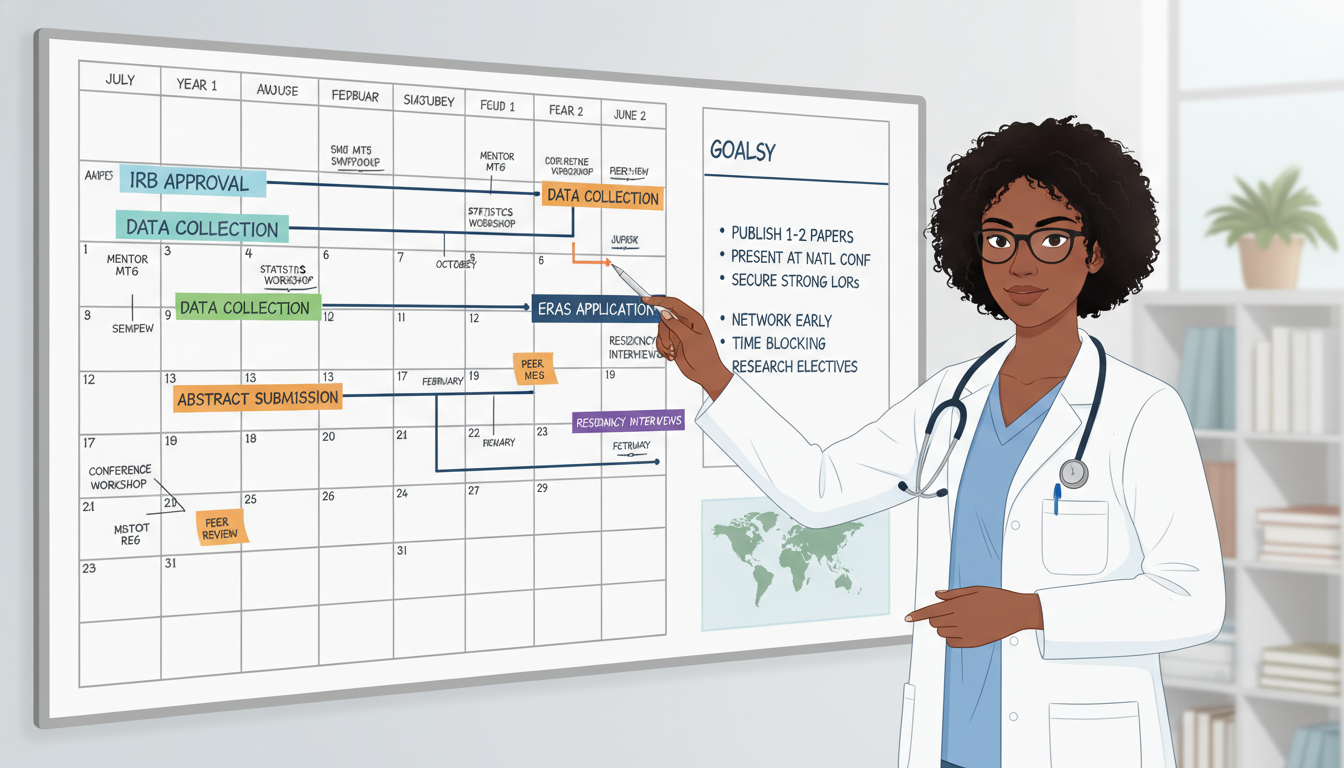
Big-Picture Timeline for a Research Year
Assuming you start July–September and apply next ERAS cycle:
Months 1–2: Onboarding and Foundation
- Learn:
- Study protocols
- Data systems (RedCap, EHR)
- IRB processes and basic stats
- Shadow your mentor in clinic if possible → start building your clinical/research identity.
- Learn:
Months 3–6: High-Volume Contribution
- Take ownership of specific subprojects:
- A defined dataset
- A case series
- A QI project (audit, intervention, reassessment)
- Aim to:
- Submit at least 1 abstract or poster
- Draft at least 1 manuscript or major section
- Begin conversations about letters of recommendation.
- Take ownership of specific subprojects:
Months 7–9: ERAS Application Season
- Update CV with:
- “Submitted,” “accepted,” or “in-progress” works
- Work with your mentor to:
- Write strong, personalized letters
- Align your personal statement with your research & specialty
- Continue contributing to projects to show ongoing commitment.
- Update CV with:
Months 10–12: Interview Season and Continuation
- Maintain active involvement (even if part-time during travel)
- Stay in contact with your research team
- Use interviews to:
- Highlight your role
- Communicate what you learned and how it shapes your future
Daily and Weekly Habits That Differentiate You
Program directors and mentors remember Caribbean IMGs who are:
- Consistently reliable
- Proactive, not passive
- Solution-oriented, not excuse-focused
Practical habits:
Weekly email to your mentor:
- 3–5 bullet points on what you did this week
- Any challenges and proposed solutions
- Next week’s goals
Own your learning:
- Take short online courses in:
- Basic biostatistics
- Research methods
- Reference management (EndNote, Zotero)
- Read 1–2 landmark papers per week in your field.
- Take short online courses in:
Volunteer for visible tasks:
- Present data at lab meetings
- Draft IRB amendments or abstracts
- Help organize journal clubs or QI meetings
The goal is to become someone your mentor wants to advocate for when residency programs ask, “Who are your strongest candidates this year?”
Leveraging Your Research Year in the Residency Application
Your research only helps if it is clearly and effectively communicated in your residency application and interviews.
Translating Research into CV Value
On your ERAS application, emphasize:
- Your role:
- “Primary data collector and first author”
- “Co-investigator responsible for X”
- Your skills:
- Data analysis, critical appraisal, literature review, patient recruitment
- Your outcomes:
- “First-author abstract accepted at [conference]”
- “Co-author on manuscript submitted to [journal]”
For program directors, this shows:
- Discipline and consistency
- Ability to see projects through
- Capacity to think analytically about clinical problems
Letters of Recommendation from Research Mentors
Aim for at least one strong letter from your research supervisor, preferably a clinician in your target specialty.
A powerful letter should:
- Comment on:
- Your work ethic and reliability
- Your initiative and problem-solving
- Your communication skills and professionalism
- Explicitly support you for:
- “A residency position in [specialty] in the US”
- Include:
- Specific examples of your contributions
- Any leadership roles you took in projects
Before letter writing, give your mentor:
- Your updated CV
- A draft of your personal statement
- A brief bullet list of projects and your roles
How to Talk About a Research Year in Interviews
Program directors often ask:
- “Tell me about your research experience.”
- “Why did you take a research year?”
- “How has this made you a better future resident?”
Your answers should:
Connect the dots
- From: Caribbean medical school → research year
- To: Clear, focused interest in your chosen specialty and patient population.
Show maturity
- If you took a research year partly due to exam struggles or a failed match:
- Acknowledge it briefly
- Emphasize what you learned and how you improved:
- Time management
- Structured studying
- Resilience
- If you took a research year partly due to exam struggles or a failed match:
Highlight transferable skills
- Teamwork and communication
- Handling large data sets and complex information
- Turning questions into actionable QI or studies—exactly what good residents do on the wards.
Example interview framing:
“After completing my core clerkships as a Caribbean IMG, I realized I wanted to deepen my understanding of outcomes in heart failure, especially in underserved populations. I took a structured research year in a US internal medicine department, where I worked full-time on outcomes projects, presented at a regional conference, and helped implement a small QI initiative. This experience not only improved my research skills but, more importantly, taught me how to ask better clinical questions, work in multidisciplinary teams, and manage complex tasks—skills I’m eager to bring to residency.”
Common Pitfalls and How to Avoid Them
Pitfall 1: Unstructured “Gap Year Research”
If you treat it as “time off” or casual volunteering, it will show.
Avoid this by:
- Having specific goals:
- X abstracts
- Y manuscripts
- Z letters
- Setting regular check-ins with your mentor
- Keeping a log of your activities and accomplishments
Pitfall 2: Overemphasis on Publications at the Expense of Everything Else
Publications help, but program directors still care more about:
- US clinical performance
- Letters that speak to you as a clinician
- Professionalism and communication
Balance your research year with any possible:
- Observerships
- Clinics with your mentor
- Exposure to the local healthcare system
Pitfall 3: Misalignment with Intended Specialty
If your ultimate goal is psychiatry but all your research is in orthopedic surgery, you will need to work harder to connect your story.
Try to:
- Seek at least one project that overlaps your intended specialty
- Or clearly explain the pivot and what you learned from your previous field
Pitfall 4: Ignoring Logistics (Visas, Finances, Timing)
As a Caribbean IMG, you must be realistic and proactive:
Visa:
- Many unpaid or volunteer roles can be difficult if you are not already in the US on a valid visa.
- Explore:
- J-1 research visas (less common but possible)
- Positions that explicitly sponsor visas.
Finances:
- Calculate:
- Living costs
- Potential income/stipend
- Loan payments
- Have a backup plan if funding falls through.
- Calculate:
Timing:
- Ensure your research year aligns with ERAS timelines so your experience and letters are ready when applications open.
FAQs: Research Year Strategy for Caribbean IMGs
1. Is a research year absolutely necessary for a Caribbean IMG to match?
No. Many Caribbean IMGs match without a research year, particularly in primary care specialties (family medicine, internal medicine, pediatrics, psychiatry) if they have:
- Solid Step 2 CK scores
- Strong US clinical rotation performance
- Good letters of recommendation
A research year becomes more important if you:
- Have red flags
- Want a more competitive specialty or academic program
- Lack US-based experiences and mentorship.
2. Can I do a research year after graduating from a Caribbean medical school?
Yes. Many Caribbean graduates do a research year after graduation as a formal “gap year research” period. When taking a research year post-graduation, be mindful of:
- Maintaining clinical relevance (e.g., shadowing, clinics, observerships)
- Avoiding long gaps with no clinical activity
- Clearly explaining your timeline on ERAS and in interviews.
3. Does it matter if my research doesn’t get published before I apply?
No, not all projects need to be fully published before your application. Program directors understand timelines. What matters is:
- You can clearly articulate your role and what you learned
- You have:
- Abstracts submitted or accepted
- Manuscripts in progress
- Concrete deliverables (posters, presentations)
List works as “submitted,” “in progress,” or “in preparation” on your application honestly and accurately.
4. How does a research year compare to doing additional US clinical rotations?
Both are valuable but serve different purposes:
Additional US clinical rotations:
- Directly strengthen your clinical performance and letters
- Essential if you have limited US experience
- Often more impactful for community-based programs and primary care specialties.
Research year:
- Adds academic depth and scholarly productivity
- More important for academic or competitive specialties
- Can compensate somewhat for exam red flags or a weaker initial Caribbean medical school residency profile.
For many Caribbean IMGs, a hybrid approach is ideal: a research year based in a clinical department where you can also gain some clinical exposure and strong letters.
Strategically taking a research year is about far more than adding lines to your CV. When done well, it can reshape your narrative as a Caribbean IMG—from someone who simply “needs a spot” to someone who has deliberately invested in skills, scholarship, and service that will make you a valuable resident.
Plan it. Structure it. Execute it with intention. Then make sure the story of your research year is clearly told in every part of your residency application.