



Understanding Residency Burnout in Preliminary Surgery
Residency burnout is common across all specialties, but preliminary surgery residents face unique pressures that can amplify risk. A preliminary surgery year often feels like a high‑stakes “audition” for categorical positions, with heavy workloads, uncertainty about the future, and limited control over rotations. Recognizing these dynamics is the first step toward medical burnout prevention.
What is residency burnout?
Burnout is a work-related syndrome characterized by three core elements:
- Emotional exhaustion – feeling drained, overwhelmed, “nothing left to give”
- Depersonalization – cynicism, irritability, or emotional distancing from patients and colleagues
- Reduced sense of personal accomplishment – feeling ineffective, inadequate, or like your work doesn’t matter
In the context of a prelim surgery residency, this might look like:
- Dreading going to the hospital, even on interesting surgical rotations
- Becoming numb to patient stories or frustrated more quickly than before
- Feeling like no matter how hard you work, evaluations never feel “good enough”
- Questioning your decision to pursue surgery or even medicine altogether
Burnout exists on a spectrum; it’s not an all‑or‑nothing diagnosis. Early recognition is key to preventing progression to severe physician burnout, depression, or impairment.
Why preliminary surgery residents are uniquely vulnerable
The structure and culture of preliminary surgery amplify burnout risk:
Role ambiguity and status uncertainty
- You often function like categorical interns but without a guaranteed long‑term spot.
- You may be trying to impress multiple services or programs for potential future positions.
- This “constant audition” mindset intensifies stress and perfectionism.
Heavy workload and limited control
- Long hours, frequent call, and large patient lists are common.
- Prelim residents may be assigned more “scut work,” fewer OR opportunities, or less schedule flexibility.
- Limited choice in rotations or electives reduces autonomy—one of the strongest predictors of burnout.
Career uncertainty
- Not knowing whether you’ll match into a categorical surgery position—or what you’ll do if you don’t—creates chronic background anxiety.
- Planning Step/COMLEX exams, applying for categorical openings, or considering alternative specialties compounds stress.
Stigma and isolation
- In some programs, prelims are unintentionally treated as “temporary” or peripheral.
- Limited access to mentorship and exclusion from program planning or resident social events can reinforce isolation.
Perfectionistic culture of surgery
- Surgical training often equates self‑worth with performance, resilience, and endurance.
- Asking for help or setting boundaries may feel risky or “weak,” making it harder to access support early.
Understanding these forces does not mean accepting burnout as inevitable. It provides a roadmap for targeted, realistic prevention strategies during your prelim year.
Recognizing Early Warning Signs of Burnout
Preventing residency burnout starts with being able to recognize subtle changes in yourself before a crisis emerges. Many preliminary surgery residents normalize distress because “everyone is struggling,” but ignoring early signs can be costly.
Emotional and cognitive signs
- Loss of enthusiasm for surgery or learning
- Irritability, impatience, or frequent frustration with patients, nurses, or colleagues
- Increased cynicism (“What’s the point?” “No one appreciates this.”)
- Difficulty concentrating, forgetting tasks, or feeling mentally “foggy”
- Rumination about mistakes or minor critical feedback long after shifts end
- Persistent dread before work, particularly on certain services
Physical and behavioral signs
- Chronic fatigue not relieved by post‑call or days off
- Insomnia or non‑restorative sleep despite exhaustion
- Headaches, GI issues, or recurrent minor illnesses
- Emotional eating, loss of appetite, or significant weight changes
- Increased reliance on caffeine, alcohol, or other substances to get through or recover from shifts
- Neglecting basic self‑care: skipping meals, no exercise, ignoring medical appointments
Professional and relationship signs
- Growing detachment from patients; seeing them as tasks rather than people
- Reduced empathy or reduced patience with families
- Procrastinating on notes, consults, or studying
- More frequent conflicts or miscommunications with teammates
- Withdrawing from friends, family, or partner due to exhaustion or irritability
- Feeling isolated even when surrounded by colleagues
When stress becomes dangerous
Warning signs that stress has progressed beyond typical residency strain and may require urgent attention:
- Persistent thoughts of worthlessness, hopelessness, or feeling trapped
- Thoughts of self‑harm, not wanting to wake up, or imagining “disappearing”
- Escalating substance use
- Inability to perform essential duties safely (e.g., near‑misses, serious errors, unsafe driving after call)
These are not personal failures—they are clinical red flags. Seeking professional help promptly in these situations is a sign of responsibility, not weakness.
Individual Strategies: Building a Personal Burnout Prevention Plan
While systemic change is crucial, you have more influence over your daily experience than it may seem. A structured, realistic self‑care plan can significantly reduce residency burnout, even in a demanding prelim surgery residency.

1. Protecting sleep as a non‑negotiable
You cannot “tough out” chronic sleep deprivation without consequences. Sleep is one of the most powerful tools for medical burnout prevention.
Actionable strategies:
- Aim for a core sleep window most nights (e.g., 10:30 pm–5:30 am on non‑call days).
- Use 15–30 minute power naps before or after call when possible; even brief sleep improves cognitive function.
- Create a rapid “off‑shift” routine:
- Shower immediately after getting home
- Light snack, no screens, no email
- Dark, cool room; white noise for daytime sleep
- Avoid stacking unnecessary obligations (social events, side jobs) right after overnight calls. Protect recovery days when you can.
2. Energy management vs. time management
In a prelim surgery residency, you have limited control over your schedule—but you can control how you use your limited energy.
- Identify your natural high‑energy periods (often 1–2 hours after waking) and reserve them for complex tasks: reading for cases, board review, or complex notes.
- Use micro-breaks (60–90 seconds) between tasks: slow breathing, stretching, step into the stairwell, brief mindfulness.
- Standardize low‑energy activities: pre-made templates for notes, checklists for sign‑out, standardized to‑do lists.
Example:
On call days, decide in advance: “I’ll spend 10 focused minutes reviewing key topics (e.g., fluids, electrolytes, sepsis) right after sign‑out, not scrolling my phone. Then I shut the books and prioritize rest.”
3. Physical health as a buffer against burnout
Physical health practices do not need to be elaborate to be effective.
Simple nutrition strategies
- Keep “grab-and-go” hospital staples: protein bars, nuts, string cheese, fruit, Greek yogurt.
- Aim for one real meal per shift: actual protein + complex carbs + vegetables.
- Set a hydration cue: drink water at the start of rounds, mid‑shift, and before sign‑out.
- Limit sugary drinks and excessive caffeine late in the shift to protect post‑call sleep.
Practical movement strategies
- 10 minutes of light exercise 3–4 times per week is enough to improve energy and mood.
- Integrate activity into your routine:
- Use stairs instead of elevators when feasible.
- Do brief stretching or shoulder mobility while dictating notes.
- If you have a few minutes before sign‑out, walk one loop around the hospital.
Think in terms of “minimum effective dose,” not perfection. Something is far better than nothing.
4. Mental skills: reframing, boundaries, and realistic self‑talk
Surgical culture often promotes self‑criticism as a performance tool. Over time, it becomes a driver of physician burnout.
Cognitive reframing
Instead of: “I’m a terrible resident; I forgot to follow up on that lab.”
Try: “I made a mistake; what system can I build so it’s harder to miss this next time?” (e.g., lab follow‑up checklist)
Instead of: “Everyone else is ahead; I’m behind.”
Try: “Everyone’s rotation mix and prior exposure is different. My job is to learn steadily and take care of patients safely.”
Boundaries in a hierarchical environment
You may not be able to refuse tasks, but you can set boundaries around how and when you do some things.
- Use clarifying questions:
- “To make sure I prioritize correctly: is it more important to do this consult now or finish discharges?”
- “I’m at task saturation; can we decide what can safely wait until tomorrow?”
- Protect minimal personal time: a weekly dinner with a friend, a call home, religious or spiritual practice, or a single hobby you refuse to abandon.
5. Intentional social connection
Isolation accelerates residency burnout. Many prelim surgery residents feel like “short‑term contractors” and withdraw socially. Resist that impulse.
- Cultivate at least 2–3 “safe” colleagues you can speak honestly with.
- Use brief shared rituals: post‑call breakfast, pre‑round coffee, quick check‑ins on tough patients.
- If your program has wellness events or resident retreats, attend when feasible—they are not just “nice extras”; they’re part of medical burnout prevention.
System-Level Strategies: Navigating Your Program and Advocating Safely
Burnout is not solved by yoga alone. System and culture play a huge role, especially for those in a prelim surgery residency who may feel least empowered to speak up. Still, there are practical approaches to navigating the system more effectively.
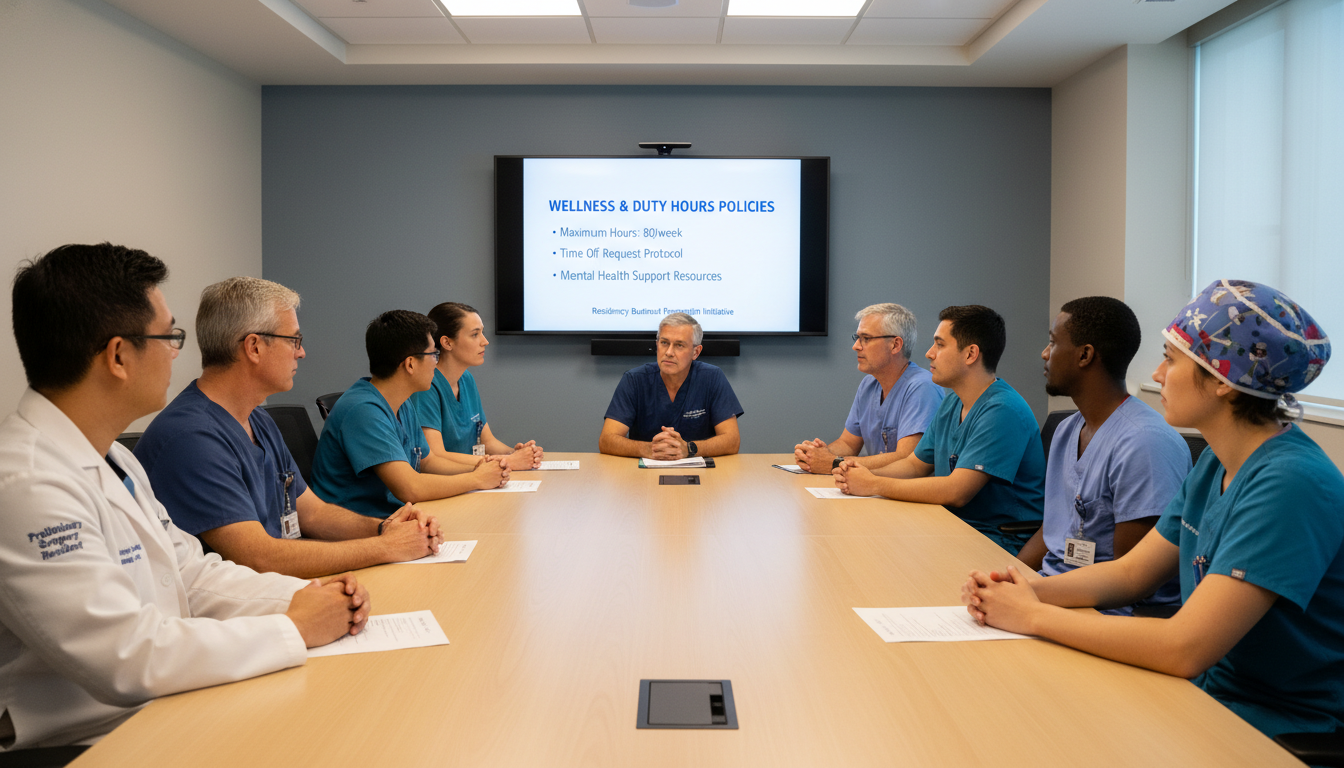
1. Understand your program’s wellness and support resources
Many residents are unaware of what’s actually available to them.
Ask your chief residents, program coordinator, or orientation materials about:
- Confidential mental health services or employee assistance programs
- Peer support or mentoring initiatives
- Wellness half‑days or retreat days
- Policies regarding sick days and coverage
- Lactation support, parental leave, or disability accommodations if relevant
Knowing these ahead of time makes it easier to use them when needed rather than in a crisis.
2. Use duty hour policies strategically—not adversarially
Duty hours exist for patient safety and to reduce dangerous physician burnout, not to test loyalty.
- Track your hours honestly and consistently, including work done from home (notes, patient calls).
- If you are consistently over hours:
- Bring specific examples to your chief or attendings.
- Frame the conversation around patient safety and sustainability:
- “We’re regularly staying until 9 pm post‑call to complete notes and discharges. Could we trial adjusting census caps or redistributing patients to keep us within safe hours?”
This isn’t about complaining; it’s about aligning practice with national safety standards.
3. Build mentor relationships—even as a prelim
Mentorship is protective against residency burnout, particularly during a preliminary surgery year full of uncertainty.
Seek at least two types of mentors:
Career mentor – usually a faculty surgeon:
- Discuss career goals, whether to reapply to surgery or pivot to another specialty, and how to use your prelim year strategically.
- Ask directly: “Would you be open to meeting briefly every 1–2 months to discuss my progress and options?”
Process mentor – often a senior or chief resident:
- Ask about workflow, managing consults efficiently, organizing lists, studying efficiently for the ABSITE or Step exams.
- These residents can also validate that your struggles are normal and share practical survival tips.
Even one committed mentor can drastically reduce the sense of isolation that fuels burnout.
4. Navigating toxic microcultures and difficult rotations
Some services are simply harder—and some are unhealthy.
If you’re on a difficult rotation:
- Identify one ally: a fellow intern, senior resident, or nurse you can debrief with.
- Clarify expectations early: “What are the 3 most important things for me to do well on this rotation?”
- Use institutional structures: rotation evaluations, CCC (Clinical Competency Committee) feedback, and resident representatives on wellness or GME committees.
If you witness or experience harassment, discrimination, or unsafe behavior:
- Document specific incidents (dates, people, what occurred, how it affected care or learning).
- Know your reporting channels: program director, GME office, ombudsperson, or anonymous reporting systems.
- Seek support from trusted seniors or faculty before and after reporting.
You are not responsible for fixing your program’s culture—but you can protect yourself within it and contribute small, targeted improvements.
Career Uncertainty, Identity, and Long-Term Prevention
Medical burnout prevention in a preliminary surgery year must also address the looming question: What happens next? Uncertainty itself can be exhausting.
1. Reframing the preliminary year as an asset, not a failure
A common narrative is: “I’m only a prelim; I didn’t match,” which can fuel shame and burnout. That narrative is incomplete.
Your prelim surgery year can:
- Demonstrate resilience, maturity, and real surgical experience to future programs.
- Clarify what you value in a career: operative time vs. clinic, acute care vs. longitudinal relationships, academic vs. community practice.
- Strengthen core skills transferable to other fields: critical care, procedures, emergency response, team coordination.
Residents who pivot after a prelim year often emerge with a stronger sense of self and clearer priorities—which is a long‑term protective factor against physician burnout.
2. Structuring your year with your future in mind
Instead of passively enduring the year, build a simple plan:
Quarter 1 (first 3–4 months):
- Learn hospital systems and establish baseline competence.
- Identify two potential mentors.
- Start a brief reflection habit (“What did I enjoy this week? What drained me?”).
Quarter 2:
- Decide whether you are committed to pursuing categorical surgery vs. exploring other specialties (e.g., anesthesia, radiology, EM, IM).
- Begin researching programs and reaching out for advice or letters if pursuing a new match cycle.
Quarter 3–4:
- Solidify applications or next‑step plans.
- Focus on consolidating skills and leaving each rotation with strong relationships and evaluations.
- Reflect consciously on what you’ve learned about your work style and needs to prevent future residency burnout.
3. Identity beyond your white coat
A powerful antidote to burnout is maintaining an identity that is larger than “surgery resident.”
Ask yourself:
- Who am I outside of medicine?
- What relationships matter most to me long‑term?
- What core values do I want my career to serve: service, innovation, financial stability, family time, teaching?
Try to maintain at least one dimension of your non‑medical identity throughout the year: musician, spouse, parent, friend, athlete, faith community member, volunteer. You may scale down the time commitment, but don’t abandon it entirely.
FAQs: Residency Burnout Prevention in Preliminary Surgery
1. How do I know if what I’m feeling is “normal residency stress” or actual burnout?
Look at duration, severity, and impact:
- If low mood, exhaustion, or cynicism persist for weeks, are worsening, and begin to affect your patient care, relationships, or safety, you’re likely beyond “normal stress.”
- If you feel detached from patients, hopeless about your future, or chronically ineffective despite effort, these are hallmarks of burnout.
- Screening tools like the Maslach Burnout Inventory or brief wellness checklists (often available through GME) can provide additional clarity. When in doubt, talk to a trusted mentor or mental health professional.
2. Is it safe to seek mental health help as a prelim surgery resident, or will it hurt my chances of getting a categorical spot?
Seeking help is generally protected and confidential. In most institutions:
- Mental health treatment is private and not shared with your program unless you authorize it or there is a clear safety concern.
- Many residency leaders now explicitly encourage residents to get help early, recognizing that unmanaged burnout and depression compromise performance and patient safety.
- For future licensing or credentialing, the trend (increasingly) is to ask about current impairment, not past treatment.
If you’re worried, you can:
- Use off-site or telehealth providers not connected to your institution.
- Ask about confidentiality policies directly when you schedule.
Getting help typically improves your performance and trajectory—not the opposite.
3. Can I prevent residency burnout while still being competitive for surgery?
Yes. In fact, sustainable performance is more competitive than self-destructive overwork.
Program directors increasingly look for:
- Consistent, reliable clinical performance
- Professionalism and teamwork
- Ability to learn from feedback without defensiveness
- Long-term viability as a colleague
Residents who chronically exceed safe duty hours, neglect self-care, or deteriorate emotionally are more likely to make errors, damage team relationships, or burn out before completing training. Setting modest boundaries, seeking mentorship, and preserving your health signal maturity—not lack of commitment.
4. What should I do if I already feel burned out midway through my preliminary surgery year?
You are not alone, and it is not too late to change course. Consider a stepwise approach:
- Name it: acknowledge to yourself and a trusted person that you are experiencing burnout.
- Get an urgent check‑in with:
- A mental health professional (through your institution or externally), and
- A trusted mentor or chief resident who can help you assess your workload and options.
- Simplify:
- Temporarily reduce non‑essential commitments (extra committees, moonlighting, over‑ambitious research).
- Focus on safe patient care, sleep, food, and minimal connection.
- Rebuild with intention:
- Integrate 1–2 small, consistent wellness habits.
- Reassess your career goals and consider whether a different specialty or environment may ultimately serve you better.
Burnout during a prelim surgery residency is common and understandable. With honest reflection, structured support, and realistic adjustments, you can finish the year safely and move toward a career path that is both meaningful and sustainable.
Residency burnout prevention is not about being less ambitious; it’s about protecting the only instrument you have for a lifetime of patient care—yourself. As a preliminary surgery resident, you are operating under intense pressure, but you are not powerless. Small, deliberate choices in how you work, rest, connect, and plan your future can make the difference between barely surviving your prelim year and using it as a springboard to a durable, fulfilling career in medicine.




















