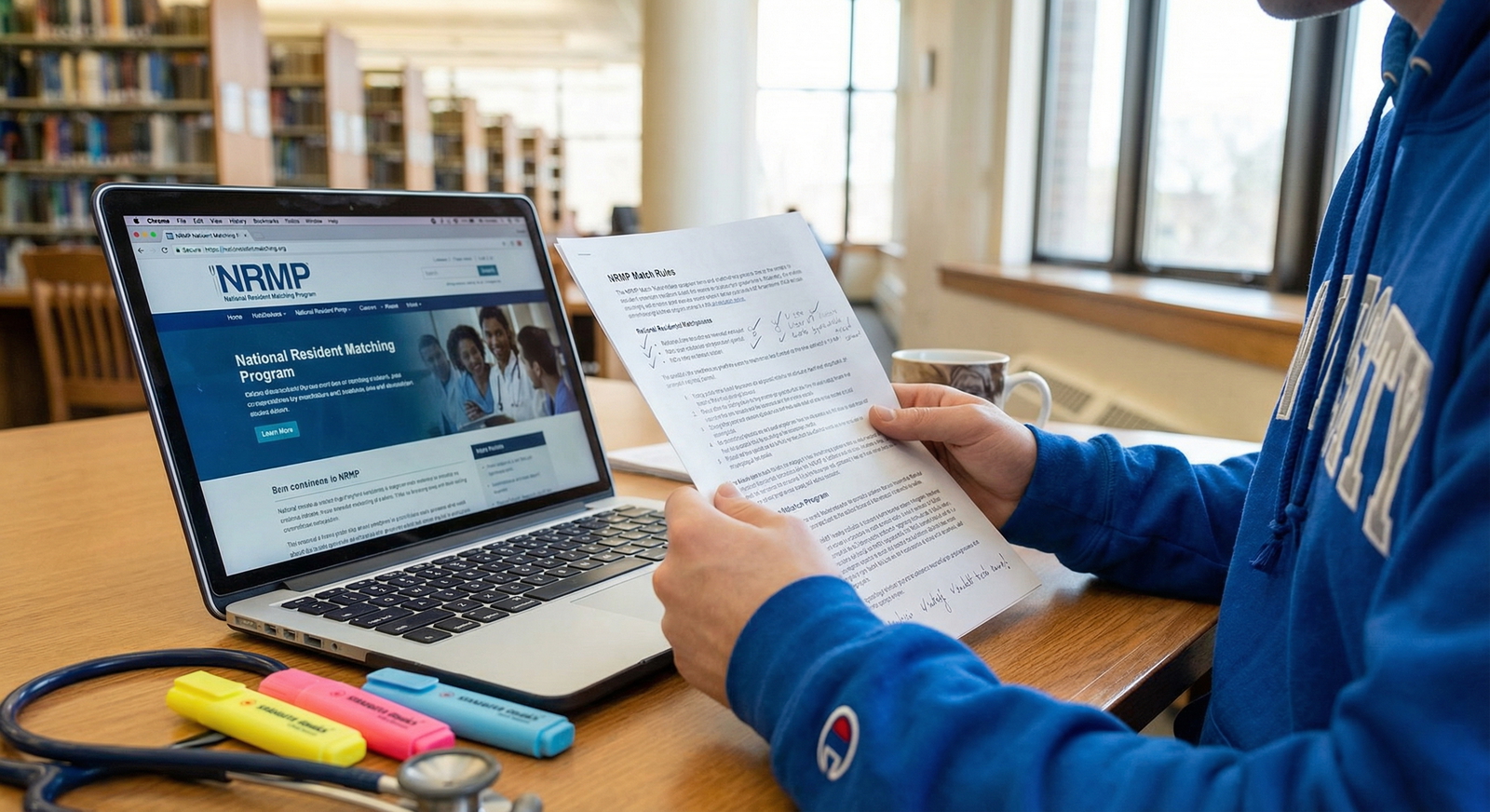
Understanding Signaling & Preference Systems as a Non-US Citizen IMG
As a non-US citizen IMG (international medical graduate), you already face unique challenges: visa requirements, limited program lists, and additional scrutiny of your application. The ERAS signaling system and broader preference signaling residency tools (gold signal silver signal, supplemental applications, etc.) are now critical levers you can use to stand out—if you use them strategically.
This guide explains how signaling works, what it means practically for a foreign national medical graduate, and how you can design a high-yield signaling strategy that maximizes interviews and improves your odds of matching.
We’ll focus on:
- What ERAS and specialty-specific signaling systems are—and are not
- How non-US citizen IMGs should prioritize programs for signals
- How to integrate visa policies, exam scores, and clinical experience into your signaling plan
- Examples of signaling strategies across different profiles
- Common mistakes and FAQs
1. What Is Preference Signaling in Residency Applications?
1.1 Core Concept
Preference signaling allows applicants to send a limited number of “signals” to residency programs to indicate genuine interest. Since programs receive thousands of applications, signals help them identify applicants for whom they are especially meaningful.
Important points:
- You get a small, fixed number of signals (varies by specialty).
- You choose which programs receive them.
- Programs interpret a signal as: “This applicant is especially interested in us.”
- A signal is not a guarantee of an interview.
- Not all specialties or all programs use signaling (but more adopt it each year).
For many specialties, signaling is now integrated into ERAS via the ERAS Supplemental Application. Some specialties also distinguish “tiers” of signals (e.g., gold signal silver signal systems), which reflect degrees of interest.
1.2 Why Signaling Matters More for Non-US Citizen IMGs
As a non-US citizen IMG, your application is often filtered more aggressively:
- Some programs do not sponsor visas.
- Others only sponsor J-1 (via ECFMG) but not H-1B.
- Some programs rarely interview IMGs, even if they technically “accept IMGs.”
In this context, a strong, clearly targeted signal can:
- Move your file from “maybe” or “low priority” to “review for interview.”
- Differentiate you from a large pool of IMGs with similar scores.
- Compensate partially for lack of US MD/DO school affiliation.
However, because your pool of realistically attainable programs is already narrower, a misplaced signal is much more costly. You cannot afford to waste a signal on a program that will not consider your visa type or rarely ranks non-US citizen IMGs.
2. How ERAS Signaling & Tiered Signals Work
2.1 ERAS Signaling Basics
Although implementation changes yearly, typical components include:
- Number of signals per applicant: Varies by specialty (e.g., 5, 7, 15).
- Program selection list: You must pick from programs participating in signaling.
- Timing: Usually during or shortly after ERAS opening; deadlines are strict.
Programs receive two major pieces of information:
- That you sent a signal to them.
- In some specialties, which tier the signal belongs to (e.g., higher- vs lower-priority signal).
Some programs state publicly how they use signals (websites, webinars); many use them as a positive filter when selecting for interviews.
2.2 Gold Signal vs Silver Signal (Tiered Signaling)
In some specialties (and in evolving pilots), you may see tiered language such as:
- Gold signal: Highest priority; you are telling the program: “You are one of my top choices.”
- Silver signal: Second-tier, but still above a non-signaled program: “I’m seriously interested, but not in my absolute top tier.”
Not all specialties or application cycles use explicit gold/silver terminology, but the underlying idea is common: tiers of interest.
Implications for a foreign national medical graduate:
- Use your highest tier (gold signals) for:
- Programs that are both realistic and top-choice.
- Programs that are visa-friendly for your situation.
- Programs where your profile matches their typical resident (scores, research, IMGs).
- Use lower-tier (silver) signals for:
- Solid, realistic programs that are somewhat less competitive or slightly lower on your personal list.
- Programs where you have some connection but not as strong as gold-tier targets.

3. Building a Signaling Strategy as a Non-US Citizen IMG
3.1 Step 1: Define Your Realistic Program Universe
Before deciding where to signal, you must define where you could actually match.
Filter programs using:
Visa Policy
- Check if they sponsor visas.
- Confirm which type:
- J-1 only
- J-1 and H-1B
- “Must have Green Card/US Citizenship” (these are effectively closed to you).
- Look at:
- FREIDA
- Program websites
- Program coordinator emails (brief, polite inquiry if unclear).
IMG-Friendliness
- Check whether:
- Current residents include IMGs (ideally non-US citizen IMGs).
- Past match lists show IMGs and where they came from.
- Signals are more effective where IMGs are actually welcome.
- Check whether:
Competitiveness vs Your Profile
- USMLE/COMLEX scores vs typical residents.
- Research portfolio vs research-heavy institutions.
- US clinical experience (USCE), letters of recommendation, and gaps.
Sort programs into broad categories:
- High reach: Very competitive; might be realistic only if you have exceptional scores/research.
- Target: Reasonably aligned with your profile.
- Safety/solid: Slightly less competitive; historically take more IMGs or lower scores.
Your signal list must come from this filtered, realistic universe.
3.2 Step 2: Clarify Your Personal Preferences
Signaling is about preference, not only probability. Consider:
- Geographic priorities (where you can live for years).
- Family considerations (spouse, children, support systems).
- Program characteristics:
- Academic vs community.
- Fellowship pathways (important for specialties like internal medicine, pediatrics).
- Workload, call schedule, wellness culture.
- Long-term goals (fellowship, academic vs private practice, research).
Make a ranked personal list of programs (even a rough one). This will help decide which programs deserve gold and silver signals.
3.3 Step 3: Allocate Your Signals by Tier
Assume (for illustration) a specialty allows:
- 5 “gold” signals
- 10 “silver” signals
You might allocate as follows:
Gold signal:
- Top 5 programs that:
- Sponsor your required visa.
- Are IMG-friendly or at least IMG-accepting with a history of foreign graduates.
- Are truly your top choices by preference and fit.
- Top 5 programs that:
Silver signal:
- Next 10 realistic programs:
- Good fit but maybe less ideal location or slightly lower priority personally.
- Programs where you’d be happy to train, but they’re not in your absolute top 5.
- Next 10 realistic programs:
For specialties without explicit gold/silver tiers and only a single signal type, think of your signals as “gold” by default—each one is valuable and should be used similarly to the highest-tier examples above.
3.4 Step 4: Align Signals with the Rest of Your Application
If you signal a program, your entire application should reinforce that interest:
Personal Statement
- Tailor or semi-tailor where possible.
- Mention region, type of program, or features that overlap with the signaled program’s strengths.
- Avoid generic statements that could apply anywhere if you claim special interest.
Letters of Recommendation
- If you have a letter from a faculty member with a connection to the signaled program, even better.
- Emphasize US clinical experience in similar clinical environments (e.g., community vs academic).
Experiences & Activities
- Highlight research or volunteer work that resonates with the program’s stated mission (e.g., underserved care, global health, quality improvement).
Signals work best as part of a coherent story, not random flags.
4. Strategic Considerations Unique to Non-US Citizen IMGs
4.1 Don’t Waste Signals on Non-Visa or Non-IMG Programs
If a program:
- Explicitly states “We do not sponsor visas,” or
- Has never—or almost never—matched non-US citizen IMGs,
then do not signal them, even if they’re prestigious or attract you academically. Your signal is extremely unlikely to convert into an interview.
Instead:
- Prioritize programs that consistently sponsor J-1 visas and have at least a few foreign national medical graduates in their current or past classes.
4.2 Balancing Reach vs Safety in Signals
For non-US citizen IMGs, the typical risk is being too aspirational with signals.
Consider this structure:
Gold signals:
- 2–3 ambitious but realistic programs (e.g., strong academic centers that sponsor visas and occasionally match IMGs).
- 2–3 strong but more IMG-friendly programs (your high-probability, high-interest choices).
Silver signals:
- Mix of target and safety programs that:
- Sponsor visas.
- Have multiple IMGs.
- Align with your personal priorities (location, training type).
- Mix of target and safety programs that:
Avoid using all gold signals on “dream” programs that rarely, if ever, rank non-US citizen IMGs.
4.3 Signals and Multiple Specialties
If you’re a non-US citizen IMG applying to two specialties (e.g., internal medicine and family medicine):
- Each specialty’s signaling system is independent.
- However, your overall story must remain coherent:
- Are you applying “primary” to one specialty and “backup” to another?
- Make sure your experiences and personal statements are logically aligned.
Do not waste signals in a specialty where you will only apply to a very small number of programs or where your profile is extremely weak.
5. Sample Signaling Strategies by Applicant Profile
These scenarios are simplified but illustrate how to adapt preference signaling residency strategies based on your strengths and constraints as a non-US citizen IMG.
5.1 Applicant A: Strong Scores, Good USCE, Needs J-1
- USMLE Step 2 CK: 248
- Recent graduate, 1 year US clinical experience (externships, observerships)
- Strong letters from US academic faculty
- Requires J-1 visa
Goals:
- Internal Medicine, academic program with fellowship prospects.
Signal Strategy:
Gold signals (5): 1–2: Strong university-based programs that:
- Consistently sponsor J-1 visas.
- Have matched IMGs historically. 3–5: Large community academic affiliates with:
- Robust fellowship placement.
- Several current non-US citizen IMGs.
Silver signals (10):
- Mix of:
- Mid-tier university-affiliated community programs.
- Well-structured community programs in less competitive regions (Midwest, South).
- All must list J-1 sponsorship and have a visible IMG presence.
- Mix of:
This applicant can afford a slightly more ambitious strategy but still balances risk.
5.2 Applicant B: Mid-Range Scores, Limited USCE, Strong Home-Country Experience
- Step 2 CK: 225
- Graduation 4 years ago
- 1 month US observership, several years of clinical work in home country
- Requires J-1; prefers Family Medicine
Signal Strategy:
Gold signals (5):
- 1–2: Strong but IMG-welcoming academic FM programs with observable non-US citizen IMGs.
- 3–5: Community FM programs in less competitive states that:
- Explicitly state they sponsor J-1.
- Have several current IMGs.
Silver signals (10):
- Primarily community FM programs in non-coastal regions (Midwest, rural South).
- Program websites indicating:
- Focus on underserved care (align with applicant’s home-country work).
- History of supporting IMGs.
Here, most signals go to realistic, IMG-friendly community programs rather than highly competitive university programs.
5.3 Applicant C: Research-Heavy, Aiming for Competitive Specialty
- Specialty: Neurology or possibly Psychiatry
- High Step scores, research publications, US PhD or postdoc
- Requires H-1B, willing to accept J-1 but prefers H-1B where possible
Signal Strategy:
Gold signals:
- Primarily academic programs with:
- Neurology or psychiatry research infrastructure.
- Clear record of sponsoring H-1B or at least J-1 for researchers.
- Prioritize where your publications or mentors have connections.
- Primarily academic programs with:
Silver signals:
- Mix of:
- Mid-tier academic centers with some research.
- Strong community programs known to support IMGs and flexible about visa types.
- Mix of:
This applicant may successfully use signals in highly competitive programs, but must still filter by visa feasibility.
6. Common Mistakes and How to Avoid Them
6.1 Using Signals on Prestige Alone
Signaling a top-10 academic program that:
- Rarely sponsors visas and
- Has no non-US citizen IMGs in the last several years
is unlikely to be productive. Prestige is not enough; look at actual match patterns and visa policies.
6.2 Ignoring Geography
If you cannot realistically live in a certain region (e.g., due to spouse’s job or family responsibilities), do not waste a signal there. Programs appreciate authentic interest, which usually includes geographic feasibility.
6.3 Sending Mixed Messages in Your Application
If you signal a small community program in a rural location but your personal statement only talks about wanting to be a “leading physician-scientist in a major academic medical center,” programs may doubt your sincerity.
Align your:
- Signals
- Personal statement themes
- Activities descriptions
so they tell a consistent story.
6.4 Not Researching Program Policies Early Enough
Visa policies and IMG stance can change. Waiting until the last minute to check will:
- Increase errors in your signal list.
- Cause you to miss better opportunities.
Create your filtered program list early (ideally 2–3 months before ERAS opens) and update it as you gather new information.
7. Practical Tips for Non-US Citizen IMGs Using the Preference Signaling System
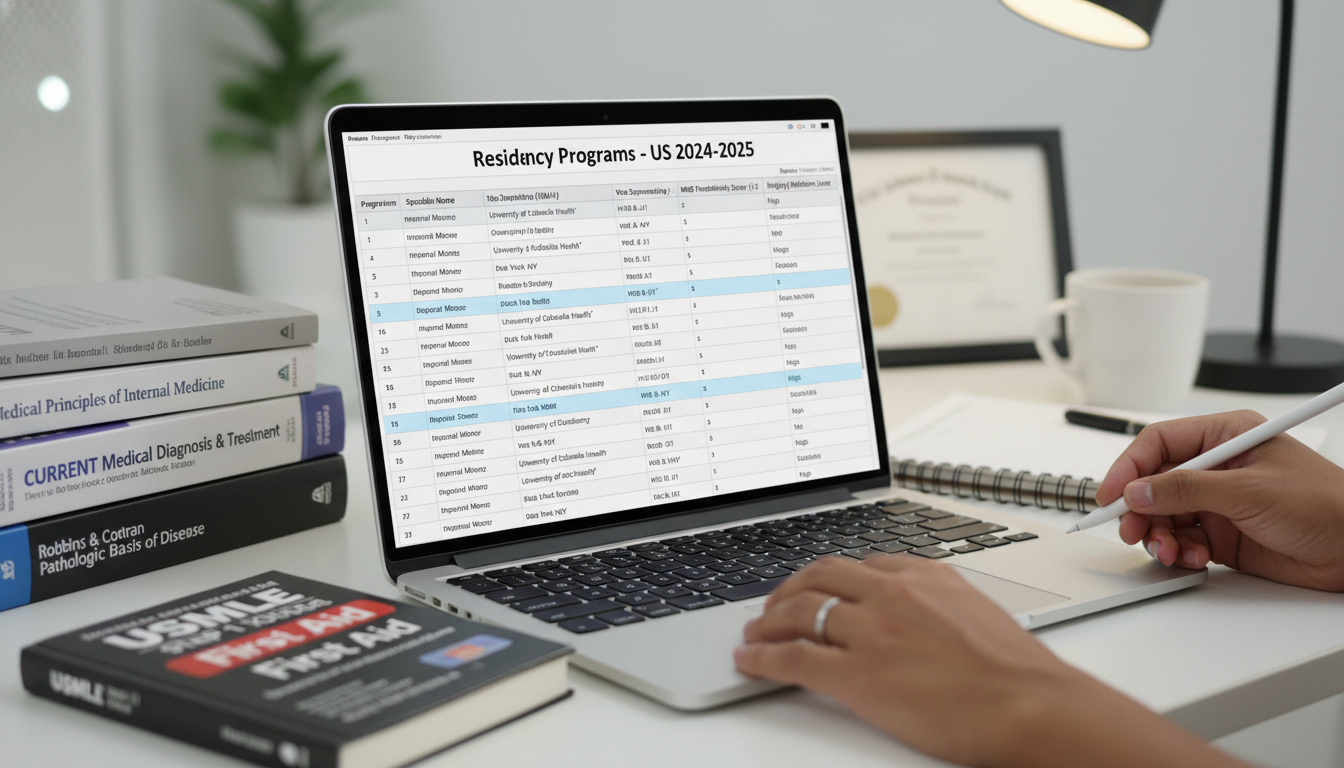
Track Everything in a Spreadsheet
- Columns for: program name, state, visa type, IMG-friendliness score (subjective), competitiveness, personal interest level, signal tier.
- Helps you see patterns and allocate signals rationally.
Look for Program-Specific Statements on Signaling
- Some programs publish how they treat signals:
- “We prioritize applicants who signal us.”
- “Signals are a positive factor but not required.”
- Use this information to favor programs where your signal is more likely to matter.
- Some programs publish how they treat signals:
Leverage Connections Carefully
- If you have a mentor or attending with ties to a program:
- Ask whether the program is realistically open to your visa and background.
- If yes, that might be a good candidate for a higher-tier signal.
- If you have a mentor or attending with ties to a program:
Respect the Limitations of Signals
- A signal cannot rescue an otherwise non-viable application (very low scores, red flags without explanation).
- But it can be the tiebreaker between you and other similar applicants.
Reassess After Interview Invitations Start
- If a signaled program offers you an interview early:
- Great—your strategy may be working.
- If weeks go by and none of your signaled programs respond:
- You may have overestimated your competitiveness or misjudged program policies.
- Consider reaching out to other programs or preparing for SOAP as a contingency.
- If a signaled program offers you an interview early:
FAQ: Signaling & Preference System Strategies for Non-US Citizen IMGs
1. Does sending a signal guarantee an interview?
No. A signal only indicates strong interest; it does not guarantee an interview. Programs still evaluate your academic metrics, clinical experience, and fit. However, signals often increase your chances of being reviewed and invited, especially at programs that actively use signals in selection.
2. Should I signal programs where I have done an observership or rotation?
In many specialties, the guidance is:
- If you have substantial, formal connection (e.g., home program, away rotation), some systems or specialties may treat these separately from signals.
- Always check each specialty’s official instructions.
- If in doubt and the system allows it, signaling a program where you have a strong existing connection can be highly effective for a non-US citizen IMG, especially if they sponsor your required visa.
3. How do I know if a program is truly IMG-friendly and visa-friendly?
Use multiple sources:
- Program website (FAQ, “International Medical Graduates” or “Eligibility” sections).
- FREIDA (filter by “Accepts IMGs” and “Visa sponsorship”).
- Current resident lists and alumni pages (look for foreign medical schools).
- Forums and reputation (with caution).
- Direct, polite emails to program coordinators asking specifically:
- Whether they sponsor J-1/H-1B.
- Whether they consider non-US citizen IMGs.
4. If I don’t get many interviews from my signaled programs, did I waste my signals?
Not necessarily. Signals are probabilistic tools, not contracts. They:
- May still have helped you get closer to the interview threshold.
- Could influence waitlist decisions later in the cycle.
However, if most of your signals yielded no interviews, use that as feedback:
- Re-examine your assumptions about competitiveness and visa policies.
- If reapplying, shift your signal list more heavily toward verified IMG- and visa-friendly programs where your profile aligns closely with current residents.
As a non-US citizen IMG, the signaling and preference systems in ERAS are powerful—but only if you apply them with careful research and realistic self-assessment. Treat each gold signal silver signal decision as a high-stakes investment: prioritize visa feasibility, IMG-friendliness, and genuine fit, and ensure your entire application consistently supports the message your signals are sending.