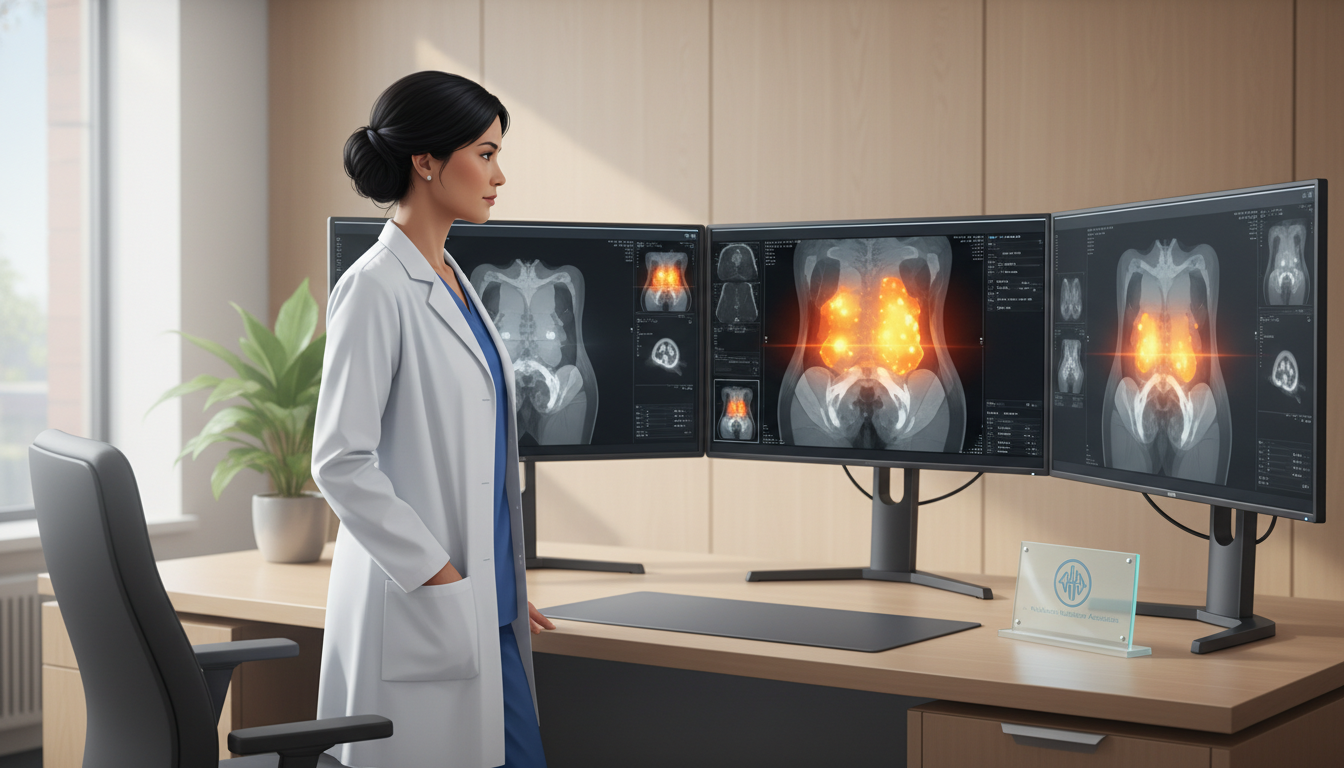
Understanding the Landscape: Nuclear Medicine, Training, and the Match
Starting a private practice in nuclear medicine is both an entrepreneurial and clinical decision. Before thinking about office space and SPECT cameras, you need a firm grasp of how your training, credentials, and local market position you for success.
Training Path and the Nuclear Medicine Match
Most U.S. practitioners who eventually open a nuclear medicine private practice have taken one of two paths:
Dedicated Nuclear Medicine Residency
- Typically 3 years after at least 1 year of preliminary training.
- Focused training in diagnostic nuclear medicine, PET/CT, therapy (I‑131, Lu‑177, etc.), and radiation safety.
- Participation in the nuclear medicine match (NRMP) or institutional match processes depending on the program.
Diagnostic Radiology Residency + Nuclear Medicine/Nuclear Radiology Fellowship
- Offers broad imaging experience plus specialized nuclear skills.
- Often advantageous if you intend to integrate nuclear services into a broader imaging practice or multidisciplinary group.
From a private practice perspective, both paths can work, but:
- A radiology background may make it easier to:
- Read cross-sectional imaging in addition to nuclear exams.
- Partner with radiology groups or imaging centers.
- A dedicated nuclear medicine background may:
- Offer more depth in radionuclide therapy, dosimetry, and research collaborations.
- Position you as “the” nuclear expert in your region.
Strategic Mindset: Plan During Residency
Use residency and fellowship years strategically if you aspire to eventually open a nuclear medicine practice:
Seek rotations in different practice models:
- Academic nuclear medicine divisions.
- Hybrid imaging centers (PET/CT, SPECT/CT embedded in outpatient centers).
- Private groups that offer oncology-focused PET/CT or therapy clinics.
Develop relationships with referrers-in-training:
- Oncology, cardiology, endocrinology, neurology, and surgery residents will later become your potential referral base. Maintain professional contact.
Learn non-clinical skills early:
- Ask attendings who are in private practice about:
- Billing and coding basics.
- How they negotiated hospital or imaging-center contracts.
- How they navigated regulatory requirements (NRC, state, CMS).
- Ask attendings who are in private practice about:
Thinking about private practice as early as the nuclear medicine residency or fellowship gives you a multi-year runway to prepare rather than scrambling after graduation.
Should You Choose Private Practice vs Employment?
Before making plans for opening medical practice facilities, be very clear on why you want to start a private practice in nuclear medicine and whether it fits your goals, tolerance for risk, and lifestyle.
Benefits of Starting Private Practice in Nuclear Medicine
Clinical Autonomy
- You decide:
- Which modalities you offer (e.g., PET/CT, SPECT/CT, targeted therapies).
- How much time is allocated for complex cases and consultations.
- Protocol standardization and quality-control thresholds.
- You decide:
Business and Income Potential
- You retain technical and professional fees (depending on contracts and ownership of equipment).
- Over time, if you scale the practice, you may:
- Add partners or employed physicians.
- Bring in advanced practitioners (NP/PA) for follow-up visits.
- Offer subspecialty niche services (e.g., theranostics) where margins may be higher, if carefully managed.
Strategic Positioning
- Become the regional center for specific nuclear services:
- Oncology PET/CT.
- Lu‑177 peptide receptor radionuclide therapy (PRRT).
- Radium-223, I‑131 for thyroid cancer, or complex dosimetry for individualized therapies.
- Build strong relationships with large oncology groups or hospital systems while maintaining your independent status.
- Become the regional center for specific nuclear services:
Drawbacks and Challenges
Financial Risk
- Nuclear medicine equipment and facility build-out are expensive.
- Cash flow can be highly variable in the first 1–3 years.
- Reimbursement is subject to payer policy changes and prior-authorization hurdles.
Administrative and Regulatory Burden
- Radiation safety compliance, NRC or Agreement State regulations.
- Licensing for radioactive materials, facility design, and waste management.
- HR management, billing/collections, credentialing, and contract negotiations.
Market Competition
- Hospital-based imaging departments may already control the local referral stream.
- Large corporate imaging entities may have economies of scale and marketing budgets.
Private Practice vs Employment: Key Considerations
| Factor | Private Practice | Employment (Hospital/Group) |
|---|---|---|
| Income Potential | Higher upside, more variability, delayed ramp-up | More predictable, often lower ceiling |
| Autonomy | High (clinical + business) | Limited by institutional policies |
| Risk | High—personal guarantees, capital investment | Lower—paid salary without capital risk |
| Workload Control | You set clinic hours, staffing—but must meet overhead | Defined schedule, but less control over volume |
| Non-clinical Work | Significant (HR, marketing, contracts, compliance) | Often offloaded to admin staff |
| Exit Options | Sell practice, bring in partners, or merge | Change employers or negotiate new role |
If your priority is stability and fewer headaches, starting in a hospital or large group may be wiser. But if you are drawn to entrepreneurship, are comfortable with complexity, and want to shape the direction of your nuclear practice, private practice can be rewarding.

Step-by-Step Roadmap to Starting a Nuclear Medicine Private Practice
The logistics of opening medical practice facilities in nuclear medicine are more complex than for many other outpatient specialties, due to radiation and equipment needs. A structured roadmap helps prevent costly mistakes.
Step 1: Clarify Your Practice Model and Services
First, define your core practice model. Common options include:
Outpatient Nuclear Medicine Clinic with Imaging + Interpretation
- Own or lease:
- SPECT or SPECT/CT.
- PET/CT (if demand and financing allow).
- Provide:
- Cardiac stress SPECT.
- Bone scans, V/Q scans, HIDA, renal scans, etc.
- PET/CT for oncology and neurology.
- Own or lease:
Theranostics / Nuclear Therapy Center
- Focus on radionuclide therapies:
- Lu‑177 DOTATATE, Lu‑177 PSMA agents.
- I‑131 for Graves’ disease and thyroid cancer.
- Ra‑223 for metastatic disease.
- Often ideal in partnership with oncology or endocrinology practices.
- Focus on radionuclide therapies:
Hybrid Model with Multidisciplinary Services
- Nuclear imaging + therapy.
- Possibly combined with general radiology or cross-sectional imaging.
- Can be part of a larger imaging center or multi-specialty group.
Consultative/Interpretation-Only Practice
- You don’t own equipment; instead:
- Provide professional interpretation of PET/CT and SPECT studies for hospitals or imaging centers.
- May involve teleradiology services.
- Lower capital risk, but also lower control and margins.
- You don’t own equipment; instead:
Define:
- Which studies and therapies you will definitely provide in year 1–2.
- Which services you’ll plan to add in year 3–5 if growth supports it.
This clarity drives all subsequent decisions: facility size, location, staffing, licensing, and capital needs.
Step 2: Conduct Market and Feasibility Analysis
Before you sign any lease or purchase a camera, perform a local market analysis:
Referral Landscape
- Count the number of:
- Oncology practices (medical and radiation).
- Cardiology groups.
- Endocrinologists, neurologists, orthopedists, urologists, and primary care clinics.
- Evaluate:
- Where they currently send patients for nuclear imaging or therapy.
- Wait times and service complaints (e.g., long scheduling delays, lack of PET capacity).
- Count the number of:
Competition and Differentiation
- Identify:
- Hospital-based nuclear departments.
- Freestanding imaging centers with PET/CT or SPECT.
- Ask:
- What can you do better or differently? (faster scheduling, subspecialty expertise, advanced therapy offerings, better patient experience).
- Identify:
Payer Mix and Contracts
- Assess local payer landscape:
- Major commercial plans.
- Medicare Advantage penetration.
- Medicaid and self-pay volumes.
- Early conversation with a healthcare attorney or consultant can help you estimate expected reimbursement rate ranges and coverage policies for specific tracers and therapies.
- Assess local payer landscape:
Volume Projections
- Using data from referrers, estimate:
- Baseline monthly PET/CT volume.
- Cardiac SPECT and general nuclear scan volume.
- Potential therapy cases.
- Build conservative, moderate, and optimistic scenarios to see if your model remains viable under each.
- Using data from referrers, estimate:
A basic feasibility study may use 3–5-year projections for:
- Study volume.
- Revenue per study.
- Operating costs and capital repayment.
This step ensures your passion for nuclear medicine private practice is anchored in realistic numbers.
Step 3: Entity Formation, Legal Structure, and Licensing
Once you have a feasible concept, move to legal and regulatory setup.
Business Structure
Work with a healthcare-savvy attorney and accountant to choose an entity type, typically:
- Professional Corporation (PC) or Professional Limited Liability Company (PLLC) for clinical activities.
- Sometimes a separate entity for equipment ownership or real estate, to isolate liability and maximize tax planning flexibility.
Key tasks:
- File articles of incorporation/organization.
- Obtain an Employer Identification Number (EIN).
- Register for state and local business licenses.
Professional Licenses and Accreditation
- State medical license (and additional state licenses if you plan regional tele-interpretation).
- Nuclear Regulatory Commission (NRC) or Agreement State License:
- For possession and use of radioactive materials.
- Requires designation of an Authorized User (AU) and Radiation Safety Officer (RSO) (can sometimes be the same person if qualified).
- CLIA certificate, if applicable (for labs performing certain tests).
- Decide whether to pursue:
- ACR (American College of Radiology) or ICANL (Intersocietal Commission for the Accreditation of Nuclear Medicine Laboratories) accreditation.
- Many payers and referrers value or require accreditation.
Step 4: Facility Planning, Construction, and Equipment
This is one of the most capital-intensive aspects of opening medical practice space in nuclear medicine.
Site Selection and Layout
Consider:
- Proximity to key referrers (oncology centers, cardiology groups).
- Parking and patient access (mobility-impaired, radiation safety considerations).
- Zoning regulations permitting radiation facilities.
Work with an architect familiar with radiation facilities to design:
- Hot lab and radiopharmacy area (shielding, storage, dose calibrators, fume hoods if needed).
- Imaging suites (PET/CT and/or SPECT/CT rooms with shielding requirements).
- Injection/waiting rooms with appropriate distancing and shielding.
- Secure waste-storage areas for decay-in-storage.
- Patient flow that separates “hot” and “non-radioactive” areas to meet regulatory and patient comfort needs.
Engage a medical physicist early to calculate:
- Structural shielding.
- Appropriate wall/door materials and thickness.
- Dose rate expectations.
Equipment Selection
Key decisions:
PET/CT vs SPECT/CT vs Both:
- PET/CT:
- Essential for oncology-focused practices.
- Higher cost but greater demand in many markets.
- SPECT/CT:
- Critical for cardiac nuclear, bone scans, parathyroid, and other general NM studies.
- Many successful centers eventually offer both, but you may start with one modality based on local demand.
- PET/CT:
New vs Refurbished Equipment:
- New:
- Higher upfront cost.
- Longer vendor support and warranty.
- Latest tech (time-of-flight PET, advanced reconstruction software).
- Refurbished:
- Lower capital outlay.
- Requires careful due diligence, especially for tube life and detector condition.
- New:
Ancillary Equipment:
- Dose calibrator, survey meters, well counter, thyroid probe (if doing I‑131 therapy or uptake studies).
- Infusion pumps if needed.
- Backup power considerations.
Vendor Negotiations
When negotiating with equipment vendors:
- Request multiple bids and detailed total cost of ownership:
- Purchase price or lease terms.
- Service and maintenance contracts.
- Software upgrades and training.
- Consider financing options:
- Capital loan, equipment lease, or vendor-provided financing.
- Include:
- On-site applications training for technologists.
- Interfaces with your RIS/PACS and EMR.
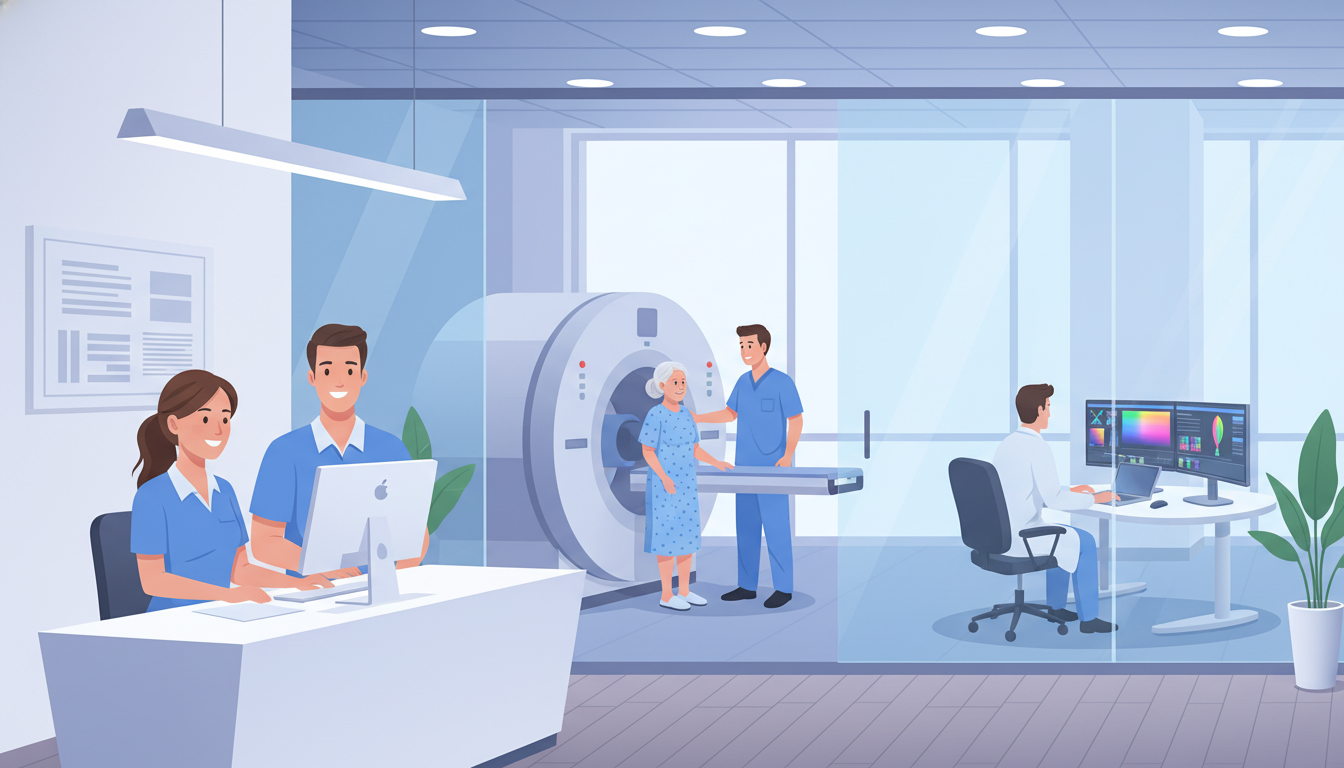
Operations, Staffing, and Financial Management
Once your facility is built and licensed, the daily realities of running a nuclear medicine private practice begin.
Building Your Core Team
Staffing depends on practice size, but a typical initial team may include:
Nuclear Medicine Physician (You)
- Clinical care, supervision, image interpretation.
- Oversight of radiation safety policies (sometimes as RSO).
Nuclear Medicine Technologists
- At least 1–2 technologists to cover:
- Scanning.
- Radiopharmaceutical handling.
- QC and equipment maintenance routines.
- Certification: CNMT or ARRT (N).
- At least 1–2 technologists to cover:
Radiation Safety Officer (RSO)
- May be the physician, a medical physicist, or an experienced technologist, depending on qualifications and state rules.
Medical Physicist (consultant or part-time)
- Commissioning of equipment, calibration, annual testing.
- Shielding verification and regulatory documentation.
Front-Office/Administrative Staff
- Scheduling, pre-authorization, insurance verification.
- Patient check-in and communication.
Billing and Coding Staff
- May be in-house or outsourced to a specialized billing company.
- Essential to understand nuclear medicine codes, modifiers, and payer-specific policies.
Consider starting lean, then scaling with volume.
Clinical and Administrative Workflows
Design clear workflows for:
Scheduling and Pre-Authorization
- Nuclear studies often require prior authorization.
- Build protocols and scripts for staff to:
- Gather clinical indications and previous imaging.
- Communicate with payers efficiently.
- Have standardized forms and EMR templates to support medical necessity documentation.
Radiopharmaceutical Ordering and Logistics
- Decide between:
- On-site radiopharmacy.
- Contract with an external commercial radiopharmacy.
- Manage delivery windows, cut-off times, and contingency plans for no-shows or delayed deliveries.
- Decide between:
Radiation Safety Procedures
- Written policies for:
- Dose administration and verification.
- Spill management.
- Personnel monitoring (badges, rings).
- Waste storage and disposal.
- Regular drills and training for staff.
- Written policies for:
Reporting and Communication
- Standardized structured report templates that highlight:
- Clear impressions and management recommendations.
- Comparison with prior imaging.
- Rapid turnaround times as a competitive advantage.
- Secure, easy-to-access portals or integrations for referrers.
- Standardized structured report templates that highlight:
Financial Management: Revenue, Costs, and Key Metrics
At the heart of starting a successful nuclear medicine private practice is effective financial management.
Revenue Streams
Professional Fees:
- Interpretation of images and clinical consults.
- Billed under professional CPT codes.
Technical Fees:
- Use of equipment, radiopharmaceuticals, staff, and facility.
- Higher share of total revenue but come with higher costs.
Consultative Services:
- Dosimetry planning, tumor boards, multi-disciplinary conferences.
- Interpretation services to external imaging centers (teleradiology).
Major Expense Categories
- Lease or mortgage for the facility.
- Equipment financing and service contracts.
- Radiopharmaceuticals and consumables.
- Salaries and benefits.
- Malpractice insurance (often higher for interventional/therapy services).
- IT systems (EMR, RIS/PACS, cybersecurity).
- Marketing and outreach.
Important Financial Metrics
Track:
- Volume per modality (PET/CT, SPECT/CT, therapies).
- Collection rate:
- Payments collected vs. billed charges.
- Denial rates and reasons.
- Cost per study:
- Radiopharmaceutical cost.
- Staffing and overhead allocation.
- Contribution margin by service line:
- Some therapies may appear lucrative but can have high costs and complex coverage policies.
Regular financial reviews, ideally monthly in the first year, help you adjust pricing, contracts, and operations.
Marketing, Growth, and Long-Term Strategy
Even the best-equipped nuclear medicine practice won't thrive without a steady referral stream and ongoing adaptation to a changing healthcare environment.
Building Your Referral Network
Your primary referrers will likely be:
- Medical oncologists.
- Radiation oncologists.
- Cardiologists.
- Endocrinologists.
- Neurologists.
- Orthopedic surgeons and rheumatologists.
- Primary care, internal medicine, and family medicine.
To build relationships:
Visit practices personally:
- Introduce yourself, explain your training, capabilities, and turnaround times.
- Provide cell/email for direct consultation on complex cases.
Offer educational sessions:
- Tumor boards and case conferences.
- CME-accredited talks on:
- New PET tracers.
- Theranostics.
- Appropriate-use criteria in cardiac nuclear imaging.
Communicate clearly and consistently:
- Produce concise, referrer-friendly reports.
- Provide same-day or next-day availability for urgent studies when feasible.
Branding and Patient Experience
Though your primary customers are referrers, patient perception matters:
- Professional, calming environment:
- Nuclear procedures can cause anxiety; focus on clear explanations, privacy, and courtesy.
- Educational materials:
- Simple handouts or website pages explaining:
- What PET/CT is.
- Radiation safety.
- What to expect during nuclear therapies.
- Simple handouts or website pages explaining:
- Online presence:
- A professional website highlighting:
- Your background, board certification, and areas of expertise.
- Services offered, hours, and referral instructions.
- Basic SEO so patients and physicians find your nuclear medicine private practice when searching locally.
- A professional website highlighting:
Strategic Growth and Exit Planning
From the outset, think beyond the first 1–2 years:
Growth Options:
- Add new tracers and therapies as they receive regulatory approval and coverage.
- Expand to additional locations or mobile services.
- Hire associate physicians or partner with other imaging specialists.
Partnerships and Alliances:
- Co-branding or joint ventures with hospital systems or large groups.
- Shared services agreements (e.g., remote interpretation, shared PET/CT time).
Exit Strategy:
- Private practice vs employment often feels like a binary choice early in your career, but many independent nuclear practices ultimately:
- Merge with larger imaging groups.
- Sell to hospitals or corporate entities.
- Keeping clean financial records, robust compliance programs, and well-documented policies enhances the value of your practice if you later decide to exit or take on partners.
- Private practice vs employment often feels like a binary choice early in your career, but many independent nuclear practices ultimately:
FAQs About Starting a Nuclear Medicine Private Practice
1. How soon after completing a nuclear medicine residency can I realistically start a private practice?
You can start directly after training, but practically, many physicians spend a few years in employment first. This offers:
- Exposure to different operational models.
- Time to build referrer relationships.
- Opportunity to repay some educational debt and build savings.
If you plan to transition to private practice, use employed years to learn about billing, contracts, and radiation regulations, and to solidify your reputation with local oncologists and cardiologists.
2. Is it better to own imaging equipment or partner with an existing imaging center?
Owning equipment offers greater control and potential financial upside, but also demands higher initial investment and risk. Partnering with an existing imaging center can:
- Reduce capital burden.
- Provide immediate infrastructure and staff.
- Limit your autonomy over protocols, pricing, and scheduling.
A hybrid model is common: start by providing professional services only, then gradually acquire or co-own equipment once your referral base and finances justify the investment.
3. What are the biggest regulatory hurdles unique to nuclear medicine practices?
The main hurdles are:
- Radiation materials licensing (NRC or Agreement State).
- Radiation safety program requirements, including RSO designation, staff training, and monitoring.
- Facility shielding and design standards.
- Radiopharmaceutical storage, handling, and waste disposal regulations.
Working early with a qualified medical physicist, RSO, and healthcare attorney with radiation experience greatly streamlines compliance.
4. How does private practice in nuclear medicine compare financially to being employed?
Financially, private practice vs employment is a trade-off:
Employment:
- Predictable salary and benefits.
- Minimal financial risk.
- Less upside and little equity in the enterprise.
Private practice:
- Higher potential income, especially if you own technical components and grow volume.
- Substantial capital requirements and exposure to market and regulatory changes.
- Equity value that can be monetized later (sale or partnership).
Your personal risk tolerance, desire for independence, and interest in business will heavily influence which path is right for you.
Starting a private practice in nuclear medicine is ambitious, but with deliberate planning, a clear understanding of your market, and strong operational and regulatory foundations, it can offer a uniquely rewarding blend of subspecialty expertise and entrepreneurial control over your career.