
Understanding the Unique Landscape of Pediatrics-Psychiatry Private Practice
Pediatrics-psychiatry sits at a powerful intersection of child health, development, and mental health. Whether you trained in a peds psych residency or a triple board program (Pediatrics–General Psychiatry–Child & Adolescent Psychiatry), you are uniquely positioned to meet a massive unmet need: integrated care for children and adolescents whose physical and mental health challenges are deeply intertwined.
As you approach graduation or complete fellowship, it’s natural to start thinking beyond residency applications and the match and envision your long-term career. For many, that vision includes starting a private practice. Yet, questions quickly arise:
- How do I actually go from resident to practice owner?
- What’s different about opening medical practice in a niche like pediatrics-psychiatry?
- How does private practice vs employment play out financially and lifestyle-wise?
- Can I combine outpatient medical management, psychotherapy, and complex developmental care in one setting?
This guide walks step-by-step through the process of starting a private practice in pediatrics-psychiatry: from early planning during residency to your first year seeing patients as a business owner. It’s written with residents, fellows, and early-career attendings in mind, especially those from peds psych residency or triple board backgrounds.
Clarifying Your Clinical Vision and Career Strategy
Before you pick a location or buy furniture, you need a clear, concrete idea of what you are building. Your clinical vision will shape almost every operational and financial decision that follows.
Define Your Clinical Niche
Pediatrics-psychiatry is already a niche, but you can refine further. Examples:
Developmentally complex kids
- Focus on autism, intellectual disability, genetic syndromes, neurodevelopmental disorders
- Heavy interface with IEPs, school systems, and therapies
Medically complex children with mental health comorbidity
- Epilepsy, diabetes, cystic fibrosis, congenital heart disease
- Somatic symptom disorders, anxiety around chronic illness, adherence difficulties
Adolescent mental health and transition-age youth
- Depression, anxiety, ADHD, substance use, self-harm
- Focus on transition to adult care, college, and vocational functioning
Early childhood and family-focused work
- Regulation difficulties, attachment concerns, feeding issues
- Parent–child psychotherapy, dyadic work, early intervention collaboration
You may start broader and niche down over time, but an initial focus helps you:
- Target your referral network (e.g., pediatric subspecialists vs school systems)
- Decide what diagnostic and therapy tools you need
- Shape your scheduling model (longer evaluations vs shorter med follow-ups)
Choose Your Clinical Scope
Decide which services you will actually provide in your private practice:
Psychiatric/behavioral health
- Diagnostic evaluations
- Psychopharmacology
- Psychotherapy (CBT, DBT skills, family therapy, parent training, etc.)
- Coordination with therapists, schools, PCPs
Pediatric medical care (if you are also a pediatrician)
- Routine pediatric follow-up vs only consultative roles
- Integrated mental health in pediatric visits
- Medical monitoring for psychotropic side effects (growth, labs, ECGs)
Consultative and systems-focused services
- School consultations and IEP involvement
- Pediatric hospital or practice consultation (e.g., integrated behavioral health support)
- Forensic/independent evaluations (with caution and extra training)
Your triple board or peds psych residency background allows you to blend roles. But blending is only viable if you design a schedule and billing structure that supports it.
Decide on Your Practice Model: Solo vs Group vs Hybrid
Your structure heavily influences workload, income, and autonomy.
Solo private practice
- Pros
- Maximum autonomy in scheduling, culture, and clinical approach
- Low interpersonal complexity; you’re in charge
- Easier to pilot new ideas (telehealth, group visits, parent workshops)
- Cons
- You carry all administrative and financial risk
- Limited coverage for vacations/leave
- More vulnerable to referral swings
Group practice (mental health or multidisciplinary)
- Pros
- Shared overhead (rent, staff, EHR, marketing)
- Built-in peer consultation and coverage
- Potential to supervise/mentor and expand services (psychologists, therapists, NPs)
- Cons
- Less autonomy; you must align with group policies and culture
- Income-sharing and partnership terms can be complex
- Potential for interpersonal conflict
Hybrid models
- Independent contractor within an existing practice while slowly building your own brand
- Joint venture with a pediatric group to provide on-site or closely affiliated pediatric-psychiatric services
Early in your career, you might deliberately choose a lower-risk form of “semi-private practice” (e.g., 1–2 days/week independent work plus part-time employment or academic appointment) while you build a caseload and refine your model.

Private Practice vs Employment in Pediatrics-Psychiatry
Deciding between private practice vs employment is not purely financial; it is fundamentally about control, lifestyle, and professional identity.
Key Differences
Employment (hospital, large health system, university, or corporate outpatient)
- Predictable salary, benefits, malpractice covered
- Infrastructure in place (billing, EHR, admin support)
- Reduced autonomy in scheduling, documentation, and clinical policies
- Productivity metrics and RVU targets may drive care models
- Limited or no equity accumulation in a business
Private practice
- Income potential is higher but variable
- Full control over schedule (visit length, number of patients/day, virtual vs in-person)
- You directly choose your clinical population and practice philosophy
- You assume business risk, must handle or oversee operations, and secure your own benefits and malpractice
- Equity and brand ownership—your practice can become an asset with resale value
In pediatrics-psychiatry, where complex evaluations and coordination are time-intensive and reimbursed inconsistently, private practice can allow you to:
- Set longer visits than large systems allow
- Bill appropriately for time-intensive coordination and psychotherapy
- Consider cash-pay or hybrid models to avoid under-compensation for long visits
Hybrid Career Strategies
Many early-career pediatric-psychiatry physicians choose a hybrid:
- 0.5–0.7 FTE employed (salary, benefits, stable income)
- 0.3–0.5 FTE private practice (slow, deliberate growth, more flexibility in clinical focus)
This can be particularly attractive during the first 2–3 years after training while you:
- Pay down loans more aggressively with stable income
- Learn business skills with a safety net
- Test your market and refine your offerings
Core Steps to Opening a Pediatrics-Psychiatry Private Practice
Once you’ve clarified your vision and model, you can move into the concrete steps of opening medical practice in this specialty.
1. Market Research and Location Selection
Your practice viability depends on both demand and payer mix.
Assess local need
- Identify:
- Number and type of child psychiatrists and triple board or peds psych providers in your region
- Wait times for child psychiatry appointments (often 3–9 months; if so, demand is high)
- Pediatric subspecialty clinics without integrated mental health
- Talk to:
- Local pediatricians and family medicine physicians
- School counselors and psychologists
- Therapists who work with children and adolescents
Evaluate payer environment
- Are most families:
- Commercially insured? (Which plans dominate?)
- On Medicaid/CHIP? (Reimbursement and credentialing can be more complex but need is huge.)
- Consider telehealth laws and cross-state practice possibilities, especially if you live near state borders.
Choose your practice location
- Physical accessibility:
- Proximity to schools and pediatric practices
- Public transportation options and parking
- Psychological safety:
- A non-intimidating, family-friendly space
- Separate waiting areas or flexible scheduling to avoid crowding anxious kids
- Telehealth emphasis:
- If you plan a largely telehealth-based practice, physical location matters less for patient traffic but may still determine licensing and telehealth regulations.
2. Legal and Structural Foundations
Select a legal business structure
Work with a healthcare-savvy attorney and accountant. Common structures in the U.S.:
- Professional Limited Liability Company (PLLC) or Professional Corporation (PC): Most common for physician practices
- LLC for management entities (if you separate real estate or non-clinical operations)
Factors to consider:
- Liability protection (within limits of malpractice coverage)
- Tax treatment (S-Corp election for potential payroll tax optimization)
- Ownership rules for physicians in your state
Obtain necessary numbers and registrations
- Employer Identification Number (EIN)
- State and local business licenses (if required)
- NPI (Type 1 for you; Type 2 for your organization if billing as a group)
- DEA registration (and any state-specific controlled substance registrations)
3. Malpractice, Insurance, and Compliance
Malpractice insurance
- Choose a carrier experienced with child and adolescent psychiatry and pediatrics.
- Ensure:
- Adequate limits (often $1 million/$3 million, but confirm local norms)
- Tail coverage details (if switching jobs or carriers)
- Consider whether your practice mix (e.g., medically complex kids, high-risk adolescent populations) influences premiums or requires additional documentation and protocols.
Regulatory compliance
- HIPAA-compliant systems (EHR, email, telehealth platform, storage of notes)
- Informed consent procedures for:
- Telehealth
- Medication management (especially controlled substances)
- Psychotherapy
- Minor consent and custody issues
- Clear policies for:
- Emergency and after-hours coverage
- No-shows and late cancellations
- Communication (portals, email, texting limits)
For pediatrics-psychiatry, pay special attention to:
- Custody and guardianship: Who can consent to treatment? How will you handle divorced parents who disagree about treatment?
- School-related information sharing: Release of information forms for teachers, counselors, and school psychologists
4. Financial Planning and Budgeting
Start-up costs (rough estimates for a modest solo practice)
- Legal and accounting setup: $3,000–$7,000
- Malpractice (annual): $5,000–$15,000 depending on region and coverage
- EHR and practice management system: $250–$800/month
- Office lease and utilities (if in-person): $1,000–$4,000/month depending on market
- Furnishings and equipment:
- Basic office furniture, waiting room, exam table (if doing medical exams), toys and sensory items, printer/scanner: $5,000–$15,000
- Initial marketing and website: $2,000–$10,000
Aim to have at least 3–6 months of operating expenses saved or accessible via a line of credit when you open.
Revenue modeling
Estimate:
- Hourly and per-visit rates (cash vs insurance reimbursement)
- Number of patients per week at maturity vs during first 3–6 months
- Payer mix (commercial vs Medicaid vs self-pay)
Build different scenarios (conservative/realistic/optimistic) and stress-test:
- What if you only reach 40–50% of your target weekly volume by month 6?
- What if a major insurer denies credentialing or pays poorly?
A financially literate accountant who understands physician practices is invaluable here.
Clinical and Operational Design for a Pediatric-Psychiatric Practice
Once the structure and finances are in motion, you’ll focus on the day-to-day experience of care.
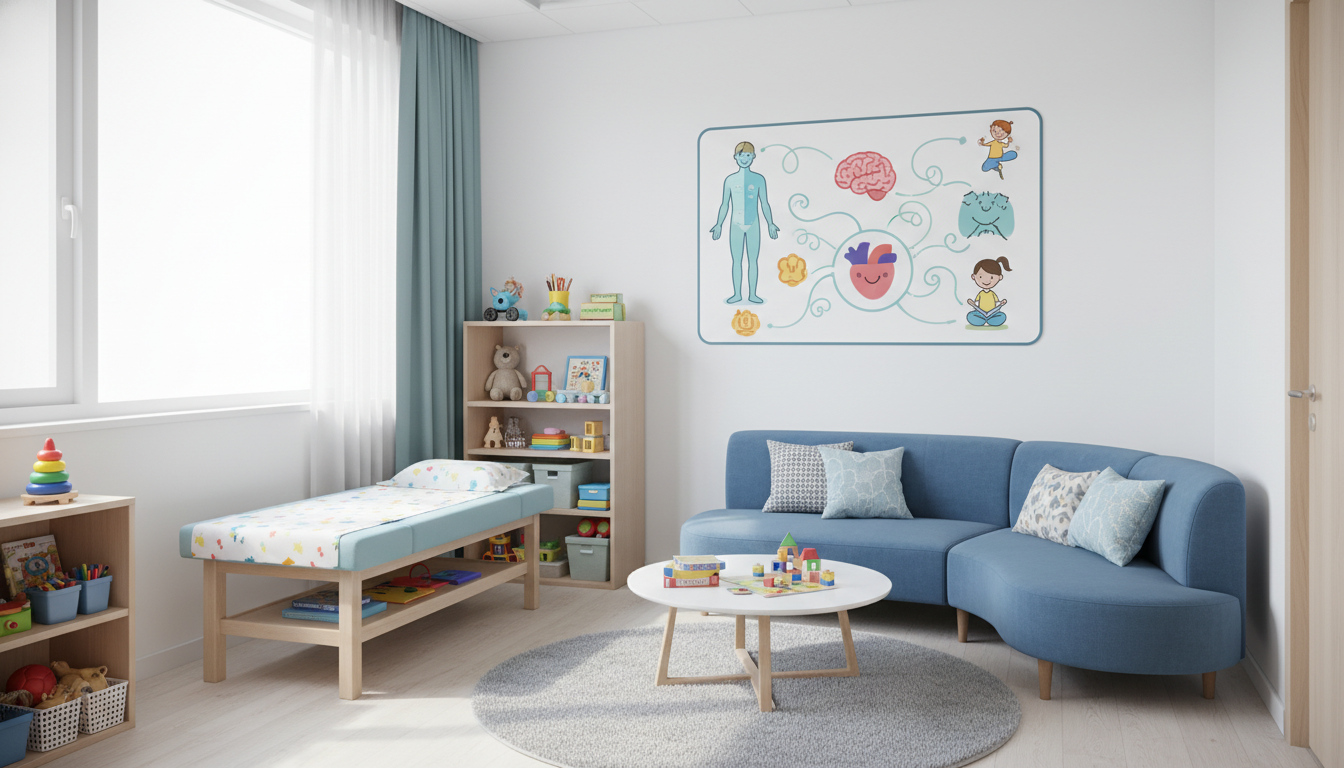
1. Clinic Space and Environment
A pediatrics-psychiatry clinic must be simultaneously:
- Child- and teen-friendly
- Professional and reassuring to parents
- Quiet and confidential
Physical design considerations
- Comfortable seating for at least 3–4 people in the visit room (child + parent(s) + sometimes sibling)
- Toys, fidgets, and art supplies that:
- Are easily sanitized
- Don’t create excessive noise or chaos
- Visuals that normalize mental health:
- Posters or diagrams about brain health, emotions, coping skills
- Inclusive and diverse representation in artwork
If you’re also providing pediatric medical care:
- A small exam table and basic medical equipment (stethoscope, otoscope, vitals station) integrated into the room design
- Storage solutions so medical tools don’t dominate the space or feel intimidating
2. Scheduling and Visit Types
Your schedule is your most important operational tool. For pediatric-psychiatry:
Typical visit templates (example for a solo physician)
- New patient evaluation: 90–120 minutes
- Medically complex or dual-diagnosis evaluation: up to 2 sessions of 90 minutes
- Follow-up visits:
- 25–30 minutes for stable med management with brief therapy
- 45–60 minutes for combined therapy and complex med adjustments
- Family or caregiver-only visits: 45–60 minutes
- School or team consultation (video or phone): 30–60 minutes, scheduled and billable when appropriate
You might start with:
- 4–6 patient slots per day, 3–4 days/week, plus:
- 1–2 half-days for notes, calls, school/home coordination
Over time, you can adjust as you learn your pace and complexity mix.
3. EHR, Billing, and Payment Models
EHR selection
Choose an EHR that:
- Is designed or easily configurable for behavioral health and/or small practices
- Allows separate pediatric vitals and growth charting if you’re doing medical care
- Includes:
- Secure portal for parents/guardians and, where appropriate, adolescents
- E-prescribing, including controlled substances
- Telehealth integration
Billing approach
You have three main models:
Insurance-based practice
- Pros: Broader access; can align well with medically complex populations and Medicaid
- Cons: Administrative complexity, lower reimbursement, delays, denials
- Requires:
- Credentialing with each insurer (can take 3–6 months)
- Robust billing workflow and/or billing service
Cash-pay (out-of-network) practice
- Pros: More predictable revenue, less admin burden, flexible visit lengths, easier to include non-traditional services (school consults, extended collateral calls)
- Cons: Limits access; may not be feasible in areas with lower average income; can conflict with your commitment to underserved populations
Hybrid
- In-network with select commercial plans or Medicaid
- Out-of-network for others
- Offer superbills and sliding scales strategically
For pediatrics-psychiatry, a hybrid model often balances access with sustainability. You can also:
- Set aside a small proportion of your panel for pro bono or reduced-fee cases
- Partner with community clinics or schools for targeted programs while maintaining your private practice
4. Integrating Pediatric and Psychiatric Care Safely
If you’re trained in both pediatrics and psychiatry, clarify for yourself and for patients:
- When you are acting as the primary pediatrician vs a consulting psychiatrist
- What medical services you will and will not provide in your practice
Common approaches:
- Consultative only: You provide psychiatric evaluations and recommendations but rely on the child’s primary care provider (PCP) to manage non-psychiatric medical issues.
- Shared care: For selected patients (e.g., medically complex youth you followed in residency), you offer both mental health and limited pediatric follow-up, with clear communication and boundaries.
- Separate roles: In some settings, you maintain a traditional pediatric panel (e.g., vaccines, sick visits) on certain days and psychiatric care on others, possibly even branding them as separate service lines within the same practice.
Clinical protocols you’ll want to standardize:
- Baseline labs and ECGs for specific psychotropic medications
- Growth and metabolic monitoring schedules
- Routine screening for suicidality, self-harm, and abuse/neglect, with clear crisis and reporting procedures
- Coordination templates for letters to schools and PCPs
Building Your Referral Network, Brand, and Long-Term Career
Starting a private practice in pediatrics-psychiatry is not just about opening your doors; it’s about becoming a trusted resource in your community and designing a sustainable career.
1. Building a Strong Referral Network
Your top referral sources:
- General pediatricians and family medicine physicians
- Pediatric subspecialists (neurology, endocrinology, cardiology, oncology, pulmonology)
- Schools and educational consultants
- Psychologists, therapists, and social workers
- Partial hospitalization or IOP programs for adolescents
Practical steps:
- Schedule brief, in-person or virtual introductions with local pediatric practices. Bring:
- A one-page summary of your services, referral process, and availability
- A clear description of which patients are your “sweet spot”
- Offer:
- CME talks for pediatric or primary care groups on topics like ADHD with co-occurring anxiety, psychotropics in medically complex kids, or suicide risk assessment in primary care
- Educational sessions for school counselors or special education staff
- Provide timely, concise feedback to referring clinicians (with consent), which builds trust and encourages ongoing referrals.
2. Developing a Professional Brand and Online Presence
Your brand should reflect your dual expertise and your values.
Website essentials
- Clear statement of who you are (e.g., “Triple board–trained pediatrician and child & adolescent psychiatrist”)
- Populations you serve and conditions you treat
- Services you offer (evaluations, medication management, family therapy, consultation)
- Insurance and payment policies
- New patient process (intake forms, waitlist policy)
- Easy, secure contact options
Online visibility
- Professional profiles:
- Psychology Today or similar directories (many parents search there)
- Local medical society directories
- Google Business Profile to appear in local searches for child psychiatry and pediatric mental health
- Thoughtful, periodic content:
- Short blog posts or videos on common topics (e.g., “ADHD vs anxiety in school-age kids,” “Supporting teens with chronic illness and depression”)
3. Planning for Growth and Sustainability
As your practice matures, consider:
Adding clinicians:
- Therapists (LCSWs, psychologists) to offer therapeutic services and groups
- Nurse practitioners or physician assistants, if allowed and well supervised
Group programs:
- Social skills groups for ASD
- Anxiety or mood disorder groups for teens
- Parent training series (e.g., behavioral strategies for kids with ADHD)
Community partnerships:
- Ongoing consultation contracts with schools or pediatric practices
- Collaborative clinics for specific populations (e.g., an “emerging psychosis” clinic in partnership with an academic center)
And personally, think about:
- How many hours/week you want to work clinically vs admin/teaching over the next 5–10 years
- Whether you eventually want to step back from direct care and focus on supervising, program development, or teaching
A private practice can evolve alongside your career—if you plan intentionally and reassess regularly.
FAQs about Starting a Private Practice in Pediatrics-Psychiatry
1. When is the best time after residency or a triple board program to start private practice?
Many physicians begin 1–3 years after completing training, once they’ve:
- Built additional experience in an employed setting
- Gained confidence managing complex cases independently
- Stabilized personal finances somewhat
However, it’s entirely possible—and increasingly common—to launch a small private practice sooner, even within the first post-graduate year, especially if:
- You start part-time while employed elsewhere
- You have mentorship and legal/financial support
- You are realistic about a gradual ramp-up, not an immediate full panel
2. Can I go directly from a peds psych residency or triple board program into full-time private practice?
Yes, but it requires careful planning:
- Start business and credentialing processes 6–9 months before finishing training.
- Secure supervision or peer consultation networks (e.g., group supervision with other child psychiatrists).
- Consider keeping a small employed role (e.g., 0.2–0.3 FTE) for income stability and benefits while your practice grows.
- Be conservative with your financial projections and maintain an emergency fund.
3. How do I decide between insurance-based and cash-pay models in pediatrics-psychiatry?
Ask yourself:
- What is the socioeconomic profile of the families you most want to serve?
- How important is flexibility in scheduling and visit length to your clinical model?
- Are you prepared for the administrative work and delayed payments associated with insurance?
Many pediatric-psychiatry physicians:
- Contract with at least one or two major commercial insurers to maintain accessibility.
- Consider limited participation in Medicaid if they’re particularly committed to underserved populations, or they partner with community agencies to serve that group.
- Maintain an out-of-network or cash option for families who prefer direct pay and for services insurers won’t adequately reimburse (e.g., extended school consultations).
4. What’s different about opening a medical practice in pediatrics-psychiatry versus general psychiatry?
Key differences include:
- Space and environment: You must accommodate children of various ages and their parents—more space, child-friendly design, and safety considerations.
- Visit structure: More collateral contact (parents, schools, therapists) and more complex developmental assessment.
- Integration with medical care: You may provide or coordinate pediatric medical monitoring, especially for psychotropic side effects, which requires equipment, protocols, and closer collaboration with pediatricians.
- Legal and consent complexity: Custody, school involvement, and minor consent laws play a larger role.
Your combined pediatrics and psychiatry training is a tremendous asset—but it also means operational planning and clinical protocols need to be more nuanced than in an adult-only psychiatric practice.
Starting a private practice in pediatrics-psychiatry is ambitious and deeply rewarding. By clarifying your clinical vision, understanding the trade-offs of private practice vs employment, and systematically planning your operations, you can build a practice that not only sustains you financially and professionally, but also fills a critical gap in child and adolescent mental health care in your community.