
Launching a private practice in radiation oncology is both exciting and daunting. You’re not just treating cancer—you're building a complex technical enterprise that blends high‑end equipment, multidisciplinary care, and a sustainable business model. This guide walks you through the key steps, decisions, and pitfalls, with a focus on transitioning from residency and the rad onc match into independent practice.
Understanding the Landscape: Is Private Practice Right for You?
Radiation oncology is uniquely capital-intensive. Before you commit to starting a private practice, you need a realistic understanding of what it entails—financially, professionally, and personally.
Private practice vs employment in radiation oncology
Most graduating residents in radiation oncology gravitate toward hospital-employed or large group positions. Comparing private practice vs employment will help clarify whether ownership aligns with your goals.
Hospital / employed model:
- Pros:
- Salary and benefits are predictable
- No responsibility for capital equipment purchases
- Malpractice, billing, HR, and IT handled by the institution
- Easier early-career work–life balance
- Cons:
- Less control over clinical protocols, technology acquisition, and scheduling
- Limited say in hiring, staffing, and strategic direction
- Compensation may not track closely with productivity
- Vulnerable to administrative changes (service line reorganization, mergers)
Independent private practice model:
- Pros:
- Autonomy in clinical decision-making and practice culture
- Control over technology strategy (e.g., when to add SBRT, SRS, MR-guided RT)
- Potential for higher long-term income if the practice is successful
- Ability to shape patient experience and referral relationships
- Cons:
- Massive upfront and ongoing capital needs (linear accelerator, CT sim, build-out)
- Personal financial risk and potential guarantees
- Need to manage business operations, HR, compliance, and marketing
- Vulnerable to payer contracting shifts and hospital competition
For many physicians, a hybrid route—joining a physician-owned group first and learning the ropes—is the best bridge between residency and ultimately opening medical practice on your own.
How your residency experience impacts feasibility
Your preparation starts before you graduate:
- Case mix exposure: Training in a center with diverse disease sites and techniques (IMRT, IGRT, SBRT, brachytherapy, SRS) prepares you to design a versatile community practice.
- Operational awareness: Residents who participate in QA, linac commissioning discussions, or tumor board leadership are better equipped to oversee a practice.
- Mentorship: During residency, seek mentors in private practice who can later advise you on contracts, equipment decisions, and staffing.
- Networking: Your rad onc match cohort becomes a peer network. Former co-residents can share contracts, payer strategies, and lessons learned from their first jobs.
If you’re still early in training and already thinking about starting a private practice, intentionally seek electives and mentorship that expose you to the business and operational side of radiation oncology.

Strategic Planning: From Vision to Viability
A strong vision is necessary, but not sufficient. You need a plan that makes sense clinically, demographically, and financially.
Step 1: Clarify your practice model and scope
First, decide what type of radiation oncology residency graduate you want to be in terms of practice style:
- Standalone radiation oncology practice
- You own and operate the radiation center
- May lease space or partner with a hospital for imaging, OR, or inpatient services
- Joint venture with a hospital system
- Shared ownership of the center and technology
- Hospital may finance and own the building and equipment; you manage clinical and/or medical components
- Group practice with multiple radiation oncologists
- Spreads call, vacation coverage, financial risk, and leadership responsibilities
- May allow sub-specialization (e.g., dedicated brachy, CNS, or pediatric focus)
Scope questions to answer:
- Will you offer only external beam RT initially, or also:
- HDR/LDR brachytherapy?
- SRS/SBRT?
- Intraoperative radiation (IORT)?
- Will you offer consult-only services in rented space before acquiring a linac (a staged approach)?
- Will you be affiliated with or independent from local medical oncology groups?
Your answers will determine capital needs, staffing, and revenue timelines.
Step 2: Market analysis and location selection
Before opening medical practice of any kind, you need to understand your market. For radiation oncology, analysis is more specific:
Patient demographics and cancer incidence
- Use state cancer registries, hospital discharge data, and tumor registry reports.
- Look at:
- Population size and growth
- Age distribution (oncology volume rises with age)
- Existing cancer centers and travel patterns
Competitor analysis
- Inventory all radiation oncology sites within a 30–60-mile radius.
- Identify:
- Number of linacs and their age/technology level
- Subspecialty offerings (SRS, proton, brachy)
- Academic vs community centers
- Consider:
- Are there access gaps (e.g., rural areas with >60-minute travel times)?
- Are wait times long at existing centers?
Referral landscape
- Map medical oncology, surgery, and primary care practices.
- Identify independent groups vs those owned by large health systems.
- Assess political dynamics: Are key referring groups tightly aligned with a competitor hospital?
A realistic rule of thumb often cited is that a single full-time linac in community practice generally requires a catchment of ~150,000–250,000 people, though this varies with demographics and competition.
Step 3: Building a business plan
Your business plan is essential for bank financing and potential partners. It should include:
Executive summary
- Mission: e.g., “Provide high-quality, accessible radiation oncology care with modern techniques in [region].”
- Ownership structure (solo, partnership, joint venture)
Services and technology
- Planned modalities (3D-CRT, IMRT/VMAT, IGRT, SBRT, SRS, brachy)
- Phasing plan: e.g., Year 1: external beam; Year 3: add HDR brachy
Market analysis
- Local cancer incidence estimates
- Competing centers, their capacity, and your differentiators
Operations
- Staffing model (FTEs for RD/RTTs, physicists, dosimetrists, nurses)
- Clinic hours, anticipated patient volumes over 3–5 years
Financials
- Start-up and build-out costs
- Equipment purchases vs leases
- Payer mix estimates (Medicare, Medicaid, commercial, self-pay)
- Pro-forma income statements for 3–7 years
- Break-even analysis and sensitivity scenarios
Risk analysis and mitigation
- Payer contract risk (e.g., losing a key commercial payer)
- Technology obsolescence
- Hospital competition
Engage a health care consultant or accountant with radiation oncology experience to validate your assumptions.
Financial, Legal, and Regulatory Foundations
Radiation oncology is one of the most regulated, scrutinized domains in medicine. Getting your structure right from the outset is critical.
Choosing the right legal and ownership structure
Common structures for radiation oncology private practice include:
Professional Corporation (PC) or Professional Limited Liability Company (PLLC)
- Physician-ownership as mandated by state laws
- Offers liability separation between business and personal assets (except for malpractice)
Partnership or Group PLLC
- Multiple physicians share ownership
- Terms for buy-in, buy-out, and governance must be clearly defined in an operating agreement
Joint Venture Entities
- You may form an LLC or similar structure with a hospital or health system
- Carefully navigate Stark Law, Anti-Kickback Statute, and state self-referral laws
Key legal documents:
- Operating agreement or shareholder agreement
- Physician employment agreements (even for owners)
- Call coverage policies
- Non-compete and non-solicitation clauses (where legal and enforceable)
Engage a health care attorney with radiation oncology or imaging center experience—not a general business lawyer.
Financing and capital planning
Launching a radiation oncology clinic is not like opening a small primary care office. Major cost components include:
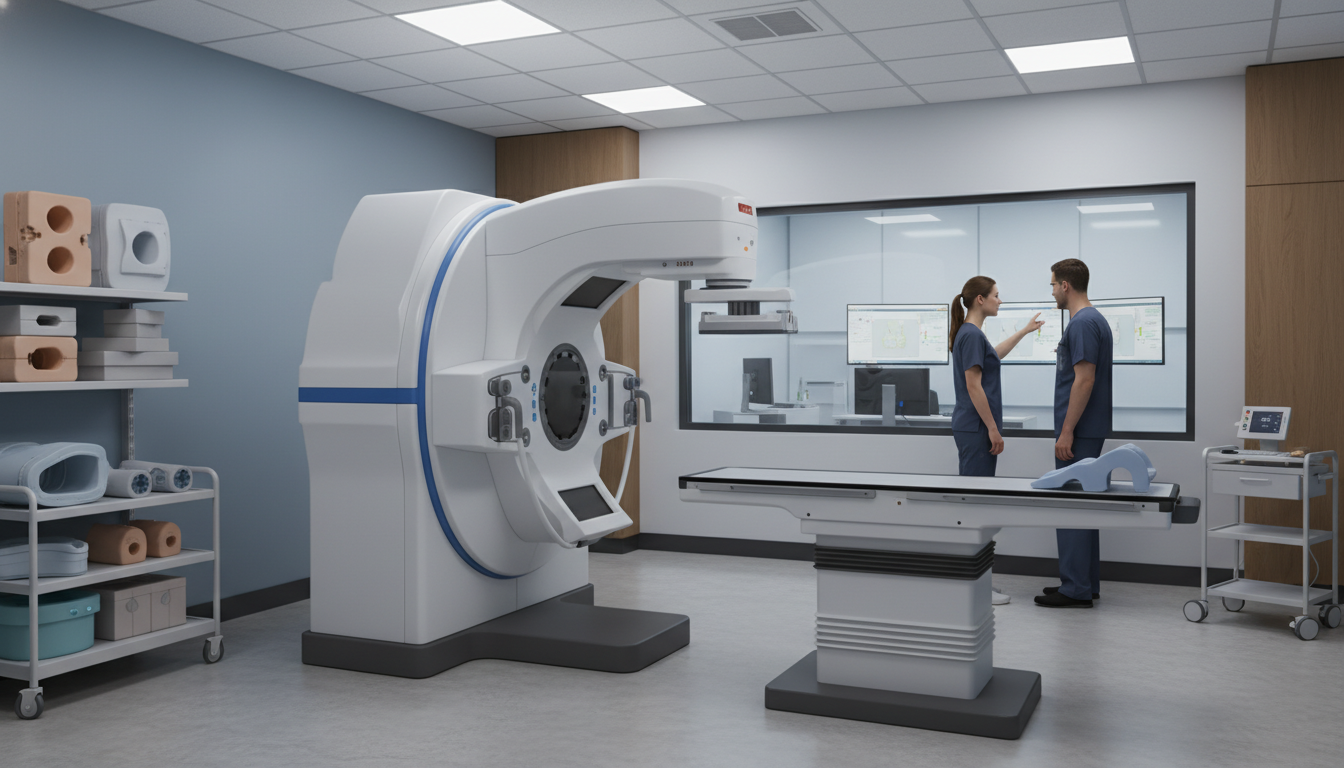
- Facility build-out
- Vault construction with shielding (concrete thickness, door design)
- CT simulation room with necessary shielding
- Clinic space: exam rooms, nursing, dosimetry/physics offices
- Equipment
- Linear accelerator (often $2–6M depending on capabilities)
- CT simulator
- Treatment planning system (TPS)
- Oncology information system (OIS) / EMR
- QA equipment, immobilization devices
- Pre-opening costs
- Architectural and engineering fees
- Licensing and accreditation fees
- Pre-opening staff training
- Initial marketing
Funding sources may include:
- Bank loans (often requiring personal guarantees)
- Equipment leasing via vendors or third parties
- Hospital or health system capital (in joint ventures)
- Private investors (complex in a regulated space—requires expert counsel)
Run conservative estimates:
- Assume slower referral ramp-up than ideal
- Build in reserves for 6–12 months of operating expenses
- Consider staged growth: start with single linac and add tech as volume supports it
Regulatory, licensing, and compliance
Radiation oncology private practices must comply with:
Federal and state radiation control regulations
- Licensing for radiation machines
- Shielding design approvals
- Registrations for radioactive materials (if brachy)
Medicare and Medicaid enrollment
- Provider numbers and facility certification
- Compliance with billing and documentation regulations (e.g., NCDs/LCDs)
Accreditation
- Optional but highly recommended:
- ASTRO APEx
- ACR Radiation Oncology Practice Accreditation
- Accreditation can support quality, marketing, and sometimes payer contracts
- Optional but highly recommended:
Safety and quality programs
- Radiation Safety Officer designation
- Written directives, QA policies, incident reporting mechanisms
- Regular physics QA, MLC QA, and end-to-end testing
Non-compliance can shut down your ability to operate or bill. Factor compliance infrastructure into your design from day one.
Designing and Staffing Your Radiation Oncology Practice
The patient experience, staff culture, and daily operations will determine if your practice thrives.
Facility design: marrying function, safety, and patient experience
Key principles:
- Efficient patient flow
- Clear path from check-in → changing rooms → treatment → exit
- Separate areas for simulation and treatment if possible
- Privacy and dignity
- Gender-neutral or flexible changing areas
- Secure storage for personal belongings
- Team collaboration
- Proximity of physician offices to dosimetry and physics
- Conference or tumor board space if feasible
Invest in:
- Comfortable waiting room design—with attention to oncology-specific needs (family seating, hydration station, educational materials)
- Wayfinding signage that’s clear and accessible for older or visually impaired patients
- Thoughtful ambient design in treatment rooms to reduce anxiety (lighting, ceiling art, sound systems)
Core staffing model
At minimum, an independent radiation oncology private practice will need:
Radiation Oncologist(s)
- Owner-physicians and/or employed colleagues
Medical Physicist(s)
- Board-certified (ABR or equivalent) preferred
- For a single-linac clinic, at least 1 FTE physicist, with contingency coverage
Dosimetrist(s)
- 1 FTE for typical single-linac volume (may be shared with remote or centralized planning service initially)
Radiation Therapists (RTTs)
- Typically 2 per operational linac at any given time
- Plan for coverage of vacations and sick leave
Nursing
- Oncology-experienced RN(s) for assessments, symptom management, and patient education
Front office / administrative staff
- Scheduler, receptionist, and billing/authorization personnel
Practice manager / administrator
- Oversees HR, vendor management, scheduling systems, and financial performance
Consider outsourcing some roles (e.g., billing, remote dosimetry, IT) initially, then bringing them in-house as you grow.
Culture and quality
Even small clinics must embody high-reliability principles:
- Regular multidisciplinary QA rounds involving MD, physics, RTTs, and nursing
- Dose and plan peer review conferences (virtual or in-person)
- Incident learning system with non-punitive reporting
- Ongoing education and training for staff
Patient-centered touches—like rapid access to consultations, easy phone access, and proactive toxicity management—differentiate your practice from large hospital systems.
Payer Contracting, Billing, and Referral Development
Even the best clinical operation fails without sustainable revenue and referral volume.
Understanding billing in radiation oncology
Radiation oncology involves complex bundling of professional and technical components. You’ll navigate:
- Professional fees (physician work)
- Technical fees (equipment and facility use)
- Global billing when you own both components
Key tasks:
Obtain payer contracts with:
- Medicare and Medicaid
- Major commercial insurers in your region
- Managed care organizations
Ensure:
- Correct CPT coding for simulation, planning, treatment delivery, and special procedures
- Prior authorizations are obtained and tracked
- Denials are appealed systematically
Hiring or contracting with a billing company experienced in radiation oncology is crucial. Misbilling can easily cost hundreds of thousands of dollars annually.
Payer contracting strategy
Approach payers with:
- Data on local access needs (e.g., long travel distances to existing centers)
- Quality metrics or accreditation plans
- Competitive but realistic rate expectations
Be prepared for:
- Narrow network plans that may initially exclude new entrants
- Tiered contracting where you might receive lower rates until you demonstrate volume or quality outcomes
Monitor payer mix:
- A heavy Medicare/Medicaid mix may require careful cost control
- Commercial contracts often subsidize lower-fee programs
Building and maintaining referral relationships
A radiation oncology private practice lives or dies on referral patterns, especially early on.
Strategies:
Direct outreach to medical oncology practices
- Offer to participate in tumor boards
- Provide fast turnaround on consults (e.g., within 48 hours)
- Demonstrate willingness to co-manage toxicity and urgent issues
Engagement with surgeons and primary care providers
- Educational sessions on indications for radiotherapy
- Simple referral pathways (direct phone line, secure portal, or email)
Community presence
- Community talks about cancer prevention and treatment
- Collaboration with local cancer support groups and nonprofits
Maintain a professional, non-predatory posture. Emphasize quality, accessibility, and patient-centered care rather than financial incentives.
Career Planning: From Residency to Ownership
If you’re currently in the radiation oncology residency phase or just through the rad onc match, the path to private practice requires deliberate steps over several years.
Early career: employed or group practice positions
Your first post-residency job is where you learn practical skills not covered in training:
- Reading and negotiating contracts
- Understanding productivity measures and wRVUs
- Managing a clinic schedule and supervising staff
- Dealing with payers and prior authorization workflows
- Participating in or observing capital equipment decisions
Actionable advice:
- If you’re considering eventual ownership, tell your mentors and future employers—they may structure opportunities for leadership or future partnership.
- Join committees related to:
- Quality improvement
- Technology assessment
- Cancer service line planning
Preparing for ownership while employed
Use this time to:
- Build a robust professional network—medical oncologists, surgeons, hospital administrators
- Learn from private practice colleagues:
- Ask about their governance, compensation models, and challenges
- Develop non-clinical skills:
- Basic finance (P&L statements, balance sheets)
- Leadership and conflict management
- Negotiation and contracting
Keep your personal finances in order:
- Minimize high-interest debt where possible
- Build savings that can support income variability during your early ownership years
- Protect your credit score for future bank financing
Transitioning to starting a private practice
Timeline considerations:
12–24 months before opening:
- Begin detailed site and market evaluation
- Engage legal and financial advisers
- Explore joint venture options with hospitals
- Start discussions with potential referring partners
9–18 months before opening:
- Secure financing
- Finalize facility lease or construction plans
- Order major equipment (linac, CT sim) after vendor comparisons
- Begin payer enrollment processes
3–6 months before opening:
- Hire initial staff and begin training
- Finalize policies and procedures
- Perform commissioning and acceptance testing of equipment
- Launch marketing and outreach efforts
Expect delays and build flexibility into your plans. Credentialing, construction, and equipment delivery can all slip.
Frequently Asked Questions (FAQ)
1. How soon after residency can I realistically start a private practice in radiation oncology?
Most physicians do not go directly from residency to solo ownership due to the complexity and risk. A more realistic path is:
- 3–7 years in an employed or group setting, gaining clinical breadth and operational experience
- Parallel development of relationships with future partners, hospitals, and potential referrers
- Only then moving into starting a private practice, possibly first via a group practice or joint venture rather than pure solo ownership
However, if you have strong mentors, a willing hospital partner, and a particularly under-served region, an earlier move may be possible with careful planning.
2. What is the biggest barrier to starting a private radiation oncology practice?
The largest barrier is capital intensity—the cost of building and operating a radiation facility, particularly the vault and linear accelerator. This is compounded by:
- Payer contracting challenges as a new entrant
- Regulatory complexity and need for specialist staff (physicists, dosimetrists)
- Competing with entrenched hospital systems
Joint venture models or partnering with existing groups can mitigate some of these barriers.
3. Should I join a group practice first if my long-term goal is ownership?
Yes, for most radiation oncology residency graduates, joining a physician-owned group practice is the most practical route. You can:
- Learn the business side under lower personal financial risk
- Understand local market dynamics
- Potentially buy into ownership in a structured manner
- Decide whether private practice vs employment truly fits your risk tolerance and lifestyle preferences
This experience is invaluable before attempting to open your own center from scratch.
4. How does private practice income compare to hospital employment in radiation oncology?
There is wide variability. In general:
- Early years in private practice may yield lower income as the clinic ramps up and loan/debt service is high.
- Mature, well-run practices can generate higher compensation than typical hospital-employed positions, but with greater volatility and ongoing business responsibilities.
- Hospital employment tends to offer more predictable income, benefits, and fewer business headaches, at the cost of autonomy and upside.
Choosing between private practice vs employment is less about absolute income and more about whether you enjoy entrepreneurship, leadership, and managing risk.
Starting a private practice in radiation oncology is a multi-year journey that blends your clinical training with business acumen, strategic planning, and community engagement. With careful preparation—beginning as early as residency—you can build a practice that not only delivers outstanding cancer care but also reflects your values, leadership, and vision for how radiation oncology should be practiced.