
Understanding Step 2 CK as a DO Graduate Aiming for Emergency Medicine
USMLE Step 2 CK has become one of the most important components of your residency application—especially for a DO graduate targeting an emergency medicine residency. With Step 1 now pass/fail, your Step 2 CK score carries greater weight in the EM match, often functioning as the primary objective metric programs use to compare applicants.
As a DO graduate, you bring unique strengths: a holistic approach, OMM training, and often robust clinical skills. Your challenge is to translate those strengths into a strong Step 2 CK performance that aligns with expectations in the allopathic-dominated EM match environment.
This article will walk you through:
- How Step 2 CK fits into the osteopathic residency match and EM match landscape
- Score targets and timing strategy for EM-bound DOs
- A detailed 8–10 week Step 2 CK preparation plan
- Emergency-medicine–specific content and clinical reasoning skills to prioritize
- Study resources, test-taking strategies, and practical tips tailored to DO graduates
Throughout, the focus is on efficient, high-yield USMLE Step 2 study that also makes you a stronger future emergency medicine physician.
Step 2 CK in the EM Match for DO Graduates
Why Step 2 CK Matters So Much in Emergency Medicine
Emergency medicine residency programs—both ACGME and historically osteopathic programs—have traditionally leaned heavily on board scores because:
- EM is high-volume, high-acuity: programs want evidence you can process information quickly and accurately.
- There’s wide variability in medical school grading, especially in clinical years.
- Step 2 CK is clinically focused and more predictive of in-training and board exam performance.
With Step 1 now pass/fail, PDs (program directors) increasingly emphasize:
- Step 2 CK score
- SLOEs (Standardized Letters of Evaluation)
- Clinical performance (especially EM rotations)
For a DO graduate, Step 2 CK offers a chance to:
- Demonstrate readiness in a common metric across MD and DO applicants
- Offset perceived “bias” or unfamiliarity some programs may have with COMLEX-only scores
- Strengthen your application to more competitive EM programs or geographic regions
How Step 2 CK Interacts with COMLEX for DO Graduates
Most DO graduates take both COMLEX Level 2-CE and Step 2 CK. Consider this interplay:
- Many ACGME EM programs are more comfortable interpreting USMLE Step 2 CK than COMLEX scores.
- Some programs require USMLE for ranking, even if they accept COMLEX for application.
- A strong Step 2 CK score can compensate for:
- A lower COMLEX Level 1/2 score
- A pass-only Step 1 with few other objective metrics
If you’ve already taken Level 2-CE:
- Use your COMLEX prep as a foundation; Step 2 CK will feel content-overlapping but more vignette- and management-heavy.
- Identify gaps (e.g., less emphasis on OMM, more on risk stratification and guidelines).
If you haven’t taken Level 2-CE yet:
- Coordinate your timelines to avoid burnout.
- Ideally, study once with a strong, unified clinical knowledge plan, then fine-tune for each exam’s style.
Score Targets for DO Graduates in Emergency Medicine
Exact cutoffs change over time and differ by program, but for EM-bound DO graduates, general guidance:
Step 2 CK ≥ 245:
- Strong for many EM programs, including mid-to-upper tier.
- Helps significantly if coming from a less-known DO school or with average preclinical metrics.
Step 2 CK 235–244:
- Competitive for a broad range of EM programs, especially with strong SLOEs and solid clinical evaluations.
- Emphasize EM-specific strengths and performance on rotations.
Step 2 CK 225–234:
- Still viable, especially for DO graduate residency pathways, community EM programs, and if you have:
- Excellent SLOEs
- Strong EM rotations
- Clear commitment to EM (EM interest group, research, extracurriculars)
- Still viable, especially for DO graduate residency pathways, community EM programs, and if you have:
Below ~225:
- Not impossible to match, but you must be strategic:
- Apply broadly
- Highlight clinical excellence
- Strong EM letters and rotations are critical
- Consider additional evidence of competency (subsequent strong in-training scores if applicable, research or quality improvement projects, etc.)
Remember: numbers open doors, but once you’re above a certain threshold, programs heavily weigh non-numeric elements (SLOEs, interviews, rotations).
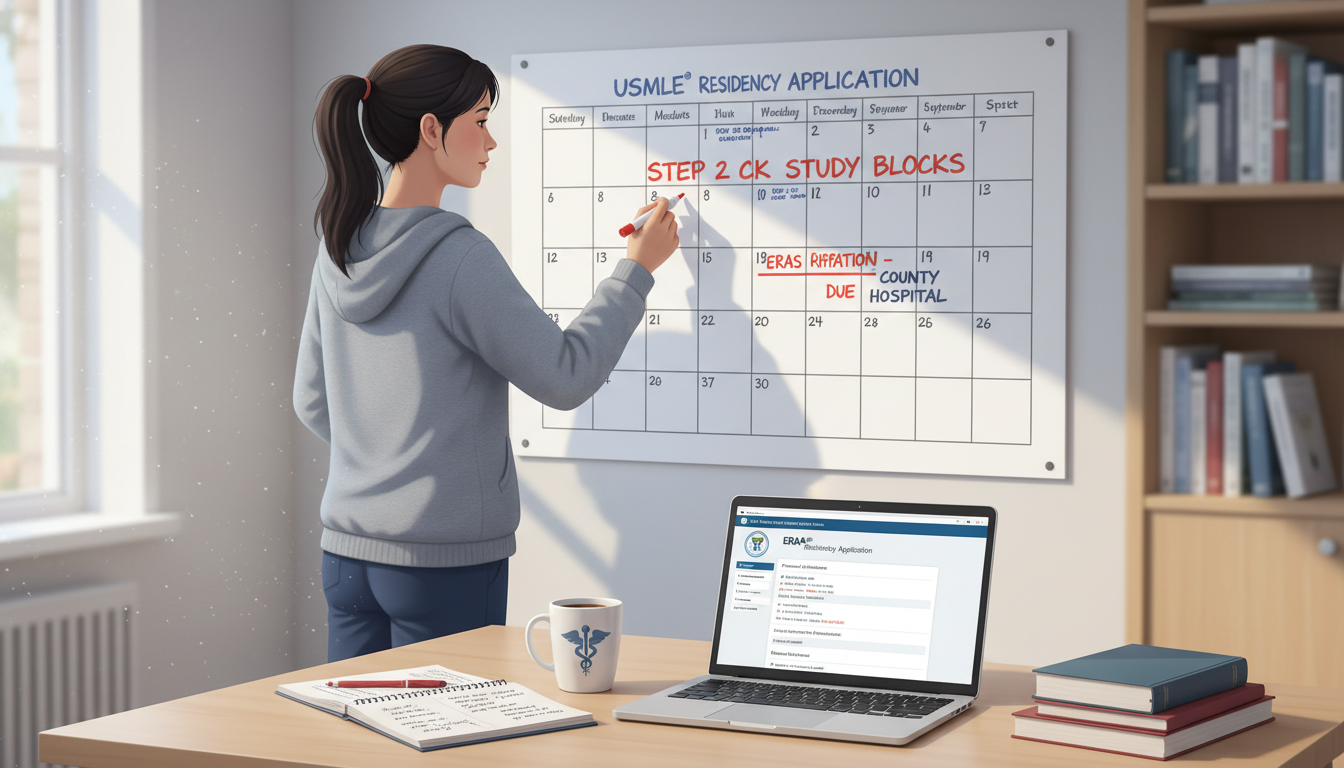
Timing Strategy: When and How to Take Step 2 CK for EM
Ideal Timing Relative to the EM Match
For most DO graduates aiming for an emergency medicine residency, ideal timing:
- Take Step 2 CK between the end of core clerkships and the start of key EM audition rotations, often:
- Late 3rd year to early 4th year (or DO-year equivalent)
- At least 6–8 weeks before ERAS submission if you want the score on your initial application.
Why this timing works well:
- You benefit from fresh clinical knowledge from rotations.
- You can use a strong Step 2 CK score to strengthen your initial application and signaling strategy.
- You avoid significant overlap between audition rotations/SLOE-building and intense exam prep.
If you’re later in the cycle:
- Taking Step 2 CK after applications open can still help:
- You can update programs with a strong score.
- It may influence rank list decisions even if not visible at application submission.
Balancing Step 2 CK With EM Rotations and SLOEs
As a DO graduate in EM, you have three parallel priorities:
- A strong Step 2 CK score
- Outstanding EM rotations and SLOEs
- A coherent application (personal statement, CV, letters)
To balance:
- Avoid scheduling Step 2 CK directly in the middle of a critical EM audition rotation.
- If possible:
- Schedule a lighter rotation or a short break for your dedicated Step 2 CK preparation (4–8 weeks, depending on your baseline).
- Do major EM rotations either:
- Just before Step 2 (you’ll reinforce clinical reasoning while studying), or
- Immediately after Step 2, once you’re freed from exam stress.
If your schedule is inflexible:
- Use “micro-studying” strategies:
- 20–40 UW or Amboss questions per day during EM rotations
- Weekend mini-blocks
- Focus on EM-relevant topics that support both your rotations and exam.
Building a High-Yield Step 2 CK Study Plan (8–10 Weeks)
Assume you have 8–10 weeks of serious prep time (full-time or near full-time). Adjust intensity based on your available hours.
Core Resources for DO Graduates
For a DO graduate, you want overlap between USMLE Step 2 study, COMLEX prep, and EM practice. Solid core resources:
Question Banks (Primary Engines of Learning)
- UWorld Step 2 CK (non-negotiable primary Q-bank)
- Optional second Q-bank if time allows:
- Amboss or Kaplan for extra volume and explanations
Rapid-Review References
- OnlineMedEd videos and notes
- Divine Intervention podcasts for high-yield topics and test-taking strategy
- A concise text (e.g., Step-Up to Medicine or similar) if you learn well from reading
Self-Assessment Exams
- NBME Step 2 CK forms (at least 2–3 exams)
- UWorld Self-Assessment (UWSA1 & UWSA2)
EM-Focused Supplements (Optional but Helpful)
- EMRA pocket guides (for real-life practice and reasoning)
- Rosh Review EM questions (if you want extra EM-specific practice; also helpful for later in training)
Week-by-Week Structure (Example 8-Week Plan)
Weeks 1–2: Foundation and Systems Review
Focus: Build a strong baseline and identify weaknesses.
Daily:
- 40–80 UWorld questions (timed, random, or system-based depending on comfort)
- Review all explanations thoroughly—both right and wrong answers.
1–2 hours/day content review:
- OnlineMedEd (or equivalent) by system (e.g., cardiology, pulmonology)
- Make concise notes or flashcards on:
- Key management steps
- Risk stratification scores
- Red flags and indications for admission/intervention
End of Week 2:
- Take your first baseline self-assessment (e.g., NBME or UWSA)
- Adjust focus: emphasize weak systems (e.g., pediatrics, OB, psych).
Weeks 3–5: Intensive Question-Driven Phase
Focus: Turn knowledge into test-taking skill.
Increase to:
- 60–100 UWorld questions/day in timed, random blocks to mimic test conditions.
- Mix of 40-question blocks and shorter review sessions.
Add:
- Systematic review of incorrect questions (flag repeat offenders).
- “One-pager” summaries for recurring themes:
- Chest pain workup
- Abdominal pain by quadrant and red flags
- Altered mental status differential
- Shortness of breath and hypoxia management
Weekly:
- One self-assessment every 1.5–2 weeks
- Track performance by subject (internal medicine, surgery, pediatrics, OB/GYN, psychiatry, neurology, EM-relevant presentations).
Weeks 6–7: Refinement and High-Yield Integration
Focus: Close gaps and sharpen strategy.
Maintain high question volume:
- Finish UWorld at least once; consider selectively redoing missed/flagged questions.
Targeted review:
- Weakest specialties (e.g., OB emergencies, neonatal care, psych emergencies)
- Cross-cutting topics: sepsis, shock, fluids/electrolytes, acid-base.
Practice full-length exam stamina:
- Simulate at least one full 8-block day (7 x 40-question blocks + 1 review block or break).
- Arrange similar nutrition, breaks, and timing as the real day.
Take final self-assessments:
- UWSA2, often the best predictor of your actual Step 2 CK score.
- One NBME close to the exam (7–10 days before).
Week 8: Polishing, Light Review, and Test Readiness
Focus: Confidence and consolidation—not cramming.
- Decrease new content intake; focus on:
- Reviewing flashcards and concise notes.
- Revisiting high-yield topics and your most common error patterns.
- The final 3–4 days:
- 40–60 questions/day at most, mainly for rhythm and confidence.
- Solid sleep schedule; no all-nighters.
- Day before exam:
- Very light review (or none).
- Prepare logistics: ID, testing center location, snacks, hydration, comfortable clothing.
EM-Focused Step 2 CK Content: What a Future Emergency Physician Must Master
As a future EM physician, Step 2 CK is more than just a hurdle—it’s an opportunity to build the clinical reasoning skills you’ll rely on in the ED.
High-Yield EM Clinical Presentations on Step 2 CK
Prioritize mastery of common emergency medicine presentations that frequently appear on Step 2 CK:
Chest Pain and Cardiac Emergencies
- Differentiating ACS, PE, aortic dissection, pericarditis, pneumothorax, musculoskeletal pain
- Appropriate use of:
- ECG
- Troponin
- CT-angiography
- D-dimer
- Initial stabilization, aspirin, nitrates, beta-blockers (indications/contraindications)
Shortness of Breath and Respiratory Distress
- Asthma vs COPD exacerbation vs pneumonia vs PE vs CHF
- Oxygen escalation strategies: nasal cannula, non-rebreather, BiPAP, intubation timing
- Sepsis and pneumonia bundles, when to admit to ICU
Shock and Sepsis
- Types of shock: hypovolemic, cardiogenic, distributive, obstructive
- Fluid resuscitation strategies, vasopressors, lactate interpretation
- Sepsis criteria, source control and antibiotic selection
Abdominal Pain
- Appendicitis, cholecystitis, pancreatitis, SBO, mesenteric ischemia, ectopic pregnancy, ovarian torsion
- Imaging choices: ultrasound vs CT vs no imaging
- Red flags and “do-not-miss” diagnoses
Neurologic Emergencies
- Stroke (ischemic vs hemorrhagic), TIA, subarachnoid hemorrhage
- Status epilepticus management
- Head trauma: CT indications, C-spine rules
Trauma and Orthopedic Emergencies
- ABCs and ATLS principles
- Fracture/dislocation emergencies (hip fracture, compartment syndrome, open fractures)
- Spinal cord injuries, cauda equina
OB/GYN and Pediatric Emergencies
- Ectopic pregnancy, placental abruption, preeclampsia/eclampsia, postpartum hemorrhage
- Pediatric respiratory distress, bronchiolitis, croup, epiglottitis
- Pediatric sepsis and dehydration
Toxicology and Environmental Emergencies
- Common overdoses: acetaminophen, opioids, salicylates, TCA, benzodiazepines
- Heat stroke, hypothermia, burns
- Envenomations, bites, and stings (high-yield patterns)
Integrating Osteopathic Principles With EM-Relevant Knowledge
While Step 2 CK does not explicitly test OMM, as a DO graduate, your osteopathic training can benefit you indirectly:
- Systems-based thinking helps with multi-organ failure, sepsis, and complex ED presentations.
- Holistic assessment supports better recognition of psychosocial crises (e.g., suicidality, domestic violence).
- Your physical exam strength helps reason through questions with subtle clinical clues.
Use your OMM and osteopathic mindset as a conceptual advantage, even though exam questions won’t ask directly about manipulative techniques.
Practical Example: EM Clinical Reasoning Applied to a Step 2 CK Question
Imagine a question:
A 54-year-old man presents with sudden onset chest pain radiating to the back, blood pressure 190/110, unequal pulses in the arms. What is the next best step?
An EM-focused approach:
- Differential includes ACS, PE, pneumothorax, aortic dissection.
- Dissection clues: tearing pain, radiation to back, pulse deficit, severe hypertension.
- Best next step: CT angiography of the chest (if stable) or TEE (if unstable).
- Avoid anticoagulation until dissection is ruled out.
Learning to recognize these red-flag patterns and choose immediate, life-saving next steps is both high-yield for Step 2 CK and foundational for EM practice.
Test-Taking Strategy, Mindset, and DO-Specific Considerations
Optimizing Your Performance on Exam Day
Step 2 CK is a long exam (8 blocks of up to 40 questions). Performance is not just about knowledge; it’s about endurance and decision-making under pressure—skills you’ll use daily in emergency medicine.
Practical tips:
Practice timed blocks regularly: At least four full 40-question blocks in a row during prep.
Develop a consistent approach:
- Read the last line of the question first to orient (What are they asking?).
- Skim the stem focusing on differentiating features and red flags.
- Eliminate clear wrong answers early.
Mark questions wisely:
- Don’t mark everything. Reserve marks for:
- Complex multi-step reasoning questions
- Ambiguous labs/imaging you might want to revisit
- But remember: Your first instinct is often correct.
- Don’t mark everything. Reserve marks for:
Manage breaks:
- Pre-plan when to take breaks (e.g., after every 2 blocks).
- Bring familiar snacks and hydration.
Common Pitfalls for DO Graduates and How to Avoid Them
Over-relying on COMLEX-style prep
- COMLEX emphasizes different question style and includes OMM.
- Step 2 CK questions are often longer, more detailed vignettes; management nuance matters more.
- Solution: Spend substantial time in USMLE-style Q-banks (UWorld) and NBMEs.
Underestimating the importance of Step 2 CK score in the EM match
- Some DO graduates think strong clinical skills and COMLEX alone will carry them.
- In a competitive EM match, programs frequently use Step 2 CK score as a quick screen.
- Solution: Treat Step 2 CK as a central pillar of your EM application, on par with SLOEs.
Not leaving enough time for dedicated USMLE Step 2 study
- Trying to cram Step 2 CK around packed audition rotations risks underperformance.
- Solution: Advocate early for your schedule; carve dedicated time and protect it as much as possible.
Burnout and fatigue
- Balancing EM rotations, audition anxiety, and exam prep is draining.
- Solution: Build sustainable routines:
- Daily exercise (even 20 minutes)
- Sleep hygiene
- Planned rest days or half-days off
Using Step 2 CK Prep to Strengthen Your Future ED Practice
Approach Step 2 CK preparation as the first stage of your emergency medicine training:
Use each UWorld block as a simulated “minishift”:
- How would you stabilize this patient?
- What’s the first imaging or lab you’d order?
- Who needs to be admitted, and where?
Build mental algorithms for:
- Chest pain
- Dyspnea
- Fever and sepsis
- Syncope
- Trauma
- Altered mental status
The same frameworks that raise your Step 2 CK score will later guide your real-time decisions in the ED.
FAQs: Step 2 CK Preparation for DO Graduates in Emergency Medicine
1. As a DO graduate, do I really need Step 2 CK if I have COMLEX for an EM match?
In most cases, yes, taking Step 2 CK is strongly recommended if you are serious about matching into emergency medicine, particularly in ACGME programs. Many EM programs:
- Are more familiar with interpreting USMLE scores
- May prefer or require Step 2 CK for ranking
- Use Step 2 CK to compare DO and MD applicants directly
A solid Step 2 CK score will enhance your competitiveness and broaden your list of programs where you’re a realistic candidate.
2. What Step 2 CK score should I aim for as a DO graduate targeting emergency medicine?
While there are no universal cutoffs:
- ≥245: Strong for a wide range of EM programs, including competitive ones.
- 235–244: Competitive for many EM programs with solid SLOEs and clinical performance.
- 225–234: Still workable, especially with excellent EM rotations, strong letters, and a thoughtful application strategy.
Your goal should be to maximize your personal potential rather than chase a single number. Use self-assessments to set a realistic but ambitious target and adjust your USMLE Step 2 study accordingly.
3. How long should I study for Step 2 CK if I’ve already taken COMLEX Level 2-CE?
Many DO graduates find that 6–8 weeks of focused Step 2 CK preparation is sufficient after Level 2-CE, assuming:
- You have a solid clinical foundation from rotations.
- You commit to daily question blocks (UWorld) and review.
If your COMLEX performance was weaker than you hoped, you may benefit from 8–10 weeks of structured Step 2 CK prep to shore up content gaps and test-taking strategy.
4. How do I balance Step 2 CK preparation with EM audition rotations and SLOEs?
Options depend on your schedule, but general advice:
- Ideally, schedule Step 2 CK before your most important EM audition rotations.
- If that’s not possible, maintain “maintenance studying” during rotations:
- 20–40 questions/day
- Focus on EM-relevant topics and internal medicine
- Use weekends for longer study sessions
Communicate early with your advisors and rotation coordinators to avoid overload. Protect your sleep and mental health—you need to be sharp both for the exam and in the ED.
By approaching Step 2 CK preparation as both a strategic piece of your osteopathic residency match and a core part of your emergency medicine training, you set yourself up not only for a strong EM match outcome, but also for success as a physician who can confidently manage the high-stakes, high-acuity environment of the emergency department.