



Understanding Step 2 CK as a DO Graduate Targeting Family Medicine
As a DO graduate aiming for a family medicine residency, your USMLE Step 2 CK performance can significantly influence your competitiveness in the osteopathic residency match and, if you’re dual‑applying, the broader NRMP match. With COMLEX scores already on your record, you might be wondering how much Step 2 CK really matters—and how to prepare efficiently without burning out during fourth year.
For many DO graduates, Step 2 CK has become:
- A key objective metric for program directors
- An opportunity to demonstrate strength in evidence‑based medicine and clinical reasoning
- A way to offset a weaker COMLEX Level 1/2 CE or gaps in your application
Family medicine programs often emphasize holistic review, but they still rely on board scores to ensure residents can pass in‑training exams and boards on their first attempt. A strong Step 2 CK score can:
- Open doors at more competitive family medicine residency programs
- Compensate for a modest Step 1/COMLEX Level 1 result
- Help you stand out as a DO graduate in primarily MD‑heavy programs
- Support future subspecialty interests (sports medicine, geriatrics, palliative care, etc.)
In this guide, you’ll find a step‑by‑step, practical USMLE Step 2 study and exam strategy tailored specifically to DO graduates pursuing family medicine.
How Important Is Step 2 CK for DO Graduates in Family Medicine?
1. The evolving role of Step 2 CK in residency selection
With Step 1 now pass/fail, many program directors have shifted toward Step 2 CK as the primary standardized metric. For family medicine residency, especially in competitive regions (West Coast, Northeast, big academic centers), Step 2 CK has become:
- A screening tool: Some programs set informal “soft cutoffs” (e.g., 225–230+)
- A predictor of board passage: Programs want residents who pass ABFM exams on the first attempt
- A tiebreaker between otherwise similar applicants
As a DO graduate, you also bring COMLEX scores; however, not all allopathic programs are equally comfortable interpreting COMLEX. A solid Step 2 CK score translates your performance into a metric they know well.
2. Step 2 CK vs COMLEX Level 2 CE: What DOs should know
Most DO graduates take COMLEX Level 2 CE, and many also sit for Step 2 CK, especially if applying broadly:
- Overlap in content: Both exams test clinical reasoning, diagnosis, and management
- Differences in emphasis:
- Step 2 CK: Evidence‑based guidelines, biostatistics, ethics, critical care, and nuanced medication/dosing details
- COMLEX Level 2: OMT, osteopathic principles, and some unique style of questions
If you have already prepared well for COMLEX Level 2, you’re partway there for Step 2 CK—but not all the way. The USMLE question style, emphasis on guidelines, and more detailed vignettes demand specific practice.
3. What Step 2 CK scores do family medicine programs expect?
There is no universal cutoff, but approximate ranges for many FM programs:
- 200–215: Risky; some community programs may still consider you if the rest of the application is strong, but this may limit options
- 215–225: Acceptable for many community FM programs, especially if your application story, letters, and clinical performance are robust
- 225–240: Competitive for a wide range of family medicine residency programs, including some academic centers
- 240+: Strong for family medicine, opening doors at top academic departments, dual accreditation programs, and selective geographic areas
These are guidelines, not rules. As a DO graduate, program directors often look at your performance trend:
- Improvement from COMLEX Level 1 → Level 2 CE → Step 2 CK
- Strong clinical evaluations and letters in core fields (internal medicine, pediatrics, OB/GYN, emergency medicine, psychiatry)
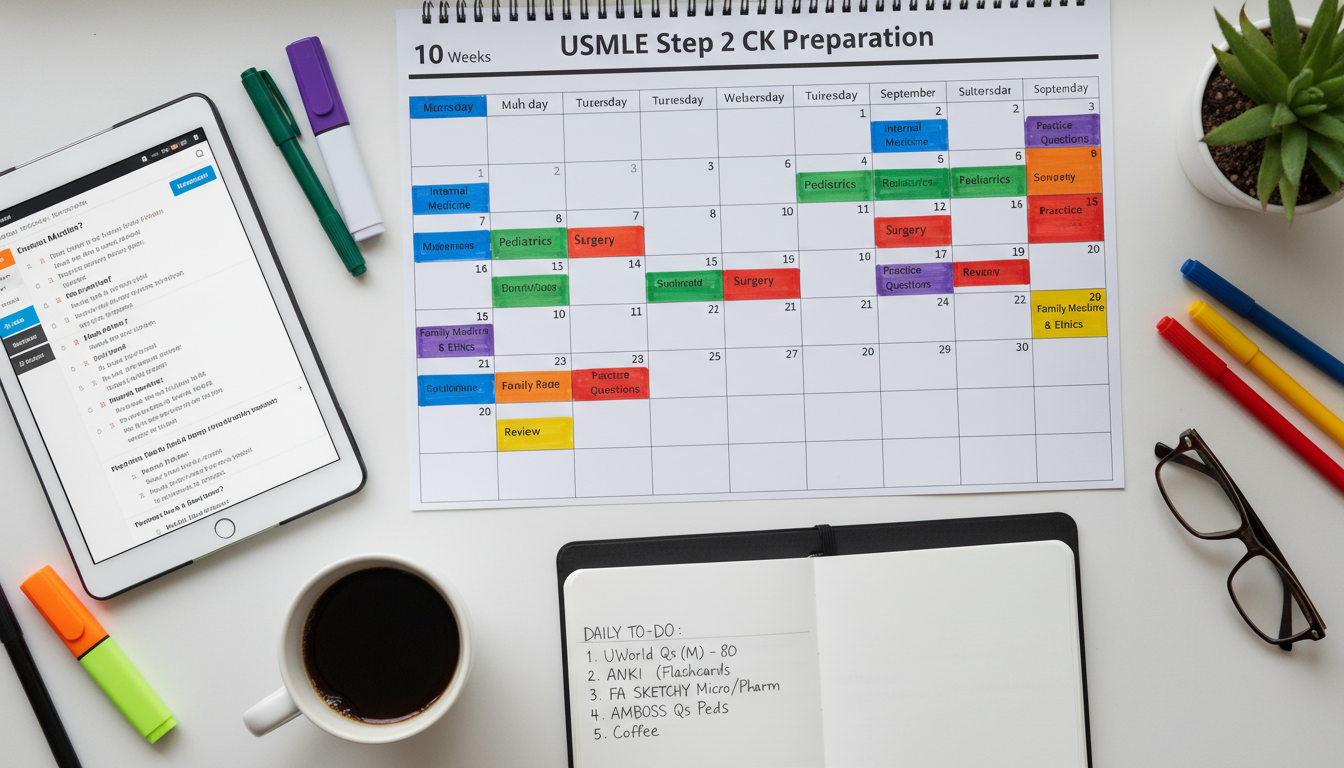
Building an Efficient Step 2 CK Study Plan as a DO Graduate
1. Clarify your time frame and commitments
Your USMLE Step 2 study plan must account for:
- Ongoing rotations (sub‑I, electives, acting internship in family medicine)
- Residency application season (ERAS, personal statement, LORs)
- COMLEX Level 2 CE timing (if not already completed)
- Personal responsibilities (family, finances, wellness)
Common time frames:
- 6–8 weeks dedicated: Ideal if you can schedule a lighter elective or dedicated board prep block
- 10–12 weeks part‑time: More realistic when you’re on clinical rotations, studying ~2–4 hours on weekdays and more on weekends
A DO graduate targeting family medicine often cannot afford a long, purely dedicated block; fortunately, Step 2 prep can be effectively integrated into rotations.
2. Establish baseline and goals
Before committing to a schedule:
- Take an early self‑assessment:
- NBME Comprehensive Clinical Science Self‑Assessment (CCSSA) – NBME 10/11/12/13
- Compare to your goal:
- If you’re aiming for a broadly competitive family medicine residency, a goal score in the 225–235+ range is reasonable for most applicants
- You may aim higher (235–245+) if:
- You’re targeting highly academic FM programs or combined FM/psychiatry, FM/preventive, or FM/sports med tracks
- You had weaker earlier scores and want to show a strong upward trend
Use your baseline to determine:
- How many dedicated weeks you need
- Which subjects are most deficient (e.g., OB, pediatrics, biostats)
3. Core resources for Step 2 CK (and how to use them)
For a DO graduate, resource overload is a common risk. Focus on a lean, high‑yield set:
A. Question Banks (Qbanks)
These are non‑negotiable for serious USMLE Step 2 preparation.
UWorld Step 2 CK (primary resource)
- Aim to complete 100% of questions, preferably in timed, random mode
- Target 40–80 questions/day depending on your schedule
- Review each question thoroughly: even correctly answered ones
AMBOSS (optional secondary Qbank)
- Useful if:
- You finish UWorld early
- You want more practice in weaker areas (e.g., OB/GYN, pediatrics)
- Don’t feel obligated to complete 100%; focus on targeted blocks
- Useful if:
B. Comprehensive Content Review
- Online MedEd (OME) or Boards & Beyond (Step 2):
- Excellent for structured review of core clinical concepts
- Use early in your study block or during rotation downtime
- Step‑Up to Medicine (for IM) or similar text:
- Good reference if IM is a known weakness, but don’t turn it into a cover‑to‑cover project
As a DO graduate, you may also have COMLEX‑focused resources; keep those primarily for Level 2 CE and avoid duplicating content for Step 2 CK.
C. High‑Yield Supplements
- Anki decks (e.g., AnKing Step 2, or a smaller curated deck):
- Use sparingly to reinforce high‑yield facts and algorithms
- Biostatistics/Epidemiology:
- USMLE’s own biostatistics review materials
- UWorld biostats questions + explanations
- Ethics and patient safety:
- UWorld + any institution resources
- Pay particular attention to questions involving consent, confidentiality, and error disclosure
4. Sample 8‑week study schedule for a DO FM applicant
Weeks 1–2: Foundation & Early Question Work
- 40–60 UWorld questions/day (timed, subject‑wise first if very weak), then transition to random
- OME or Boards & Beyond videos for weakest rotations (e.g., OB, peds)
- Anki/notes review for 30–45 mins/day
- By end of Week 2:
- Take a baseline NBME if you haven’t already
Weeks 3–5: High‑Intensity Question Practice
- 60–80 UWorld questions/day, fully random/timed blocks
- Focus on:
- Reading explanations in depth
- Making brief, targeted notes of recurring errors
- One NBME every 1.5–2 weeks to track progress
- Integrate learning with your rotation:
- On OB: prioritize OB/GYN questions that month
- On peds: do more peds questions those weeks
Weeks 6–7: Refinement and Weakness Targeting
- Finish remaining UWorld questions
- Return to low‑performance subjects using QID filters (e.g., cardiology, nephrology, OB)
- Daily targeted review:
- Biostatistics/ethics questions
- Algorithms for chest pain, shortness of breath, altered mental status, abdominal pain, etc.
Week 8: Final Review and Exam Readiness
- Reduce Qbank volume (40–60 questions/day)
- Two key tasks:
- NBME or UWorld Self‑Assessment early in the week
- Focused review of:
- Mistake notebook/marked questions
- Algorithms, guidelines, and must‑know differentials
- One light review day right before the exam (not heavy new learning)
Adjust this schedule if you are also preparing for COMLEX Level 2 CE; try to align study topics (e.g., do OB weeks that cover high‑yield OB for both exams).
Clinical Content Priorities for Step 2 CK (Family Medicine Lens)
As a future family physician, you already think in terms of comprehensive, longitudinal care. Step 2 CK reflects that mindset: diagnostics, first‑line management, preventive care, and when to refer.
1. Internal Medicine and Ambulatory Care
This is the single biggest content area, and it strongly overlaps with family medicine residency.
High‑yield IM/ambulatory topics:
- Cardiology: chest pain, ACS, hypertension management, heart failure, valvular disease, atrial fibrillation anticoagulation decisions
- Pulmonology: COPD and asthma management, pneumonia, pulmonary embolism, pleural effusions
- Endocrinology: diabetes diagnosis and management, thyroid disorders, adrenal insufficiency, DKA/HHS
- Nephrology: AKI vs CKD, electrolyte disturbances, acid‑base disorders, glomerulonephritis, nephrotic syndrome
- GI/Hepatology: GI bleeding workup, cirrhosis complications, pancreatitis, hepatitis workup
- Rheumatology: RA, SLE, vasculitis, gout, pseudogout, septic arthritis
- Infectious Disease: empiric antibiotics, HIV management basics, TB screening and treatment
Practical strategy:
- Prioritize management steps (“next best step,” “most appropriate medication,” “best diagnostic test”).
- Create quick “cheat sheets” for chronic disease guidelines (BP targets, statin indications, diabetes treatment ladder).
2. Pediatrics
Family medicine residents must be comfortable with newborns, children, and adolescents.
High‑yield pediatric Step 2 CK topics:
- Well‑child visits: vaccination schedule, growth charts, developmental milestones
- Common pediatric infections: otitis media, bronchiolitis, pneumonia, meningitis, UTI
- Congenital heart disease basics
- Neonatal jaundice, sepsis workup in neonates
- Pediatric emergencies (e.g., epiglottitis, croup, foreign body aspiration)
Use your pediatrics rotation shelf experience and AAP/CDC guidelines to reinforce patterns.
3. Obstetrics and Gynecology
OB/GYN often feels more challenging to DO students with limited exposure, yet it is crucial for family medicine.
High‑yield OB/GYN issues for Step 2 CK:
- Prenatal care: initial visit workup, prenatal screening tests, gestational diabetes screening
- Hypertensive disorders of pregnancy: gestational HTN vs preeclampsia vs eclampsia
- Third trimester bleeding: placenta previa vs abruption
- Labor management, fetal heart rate interpretation basics
- Postpartum complications: hemorrhage, endometritis, mastitis, postpartum depression
- GYN topics: abnormal uterine bleeding, cervical cancer screening guidelines, contraception
Develop a simple framework for pregnancy timelines (e.g., what to do in each trimester, red‑flag symptoms, timing of key tests).
4. Psychiatry and Behavioral Health
Behavioral health is integral to family medicine; Step 2 CK frequently tests these areas.
High‑yield psych content:
- Major depressive disorder, GAD, panic disorder, PTSD, bipolar disorder, schizophrenia
- Substance use disorders and withdrawal syndromes
- Pharmacology: SSRI side effects, choice of antidepressant in comorbid conditions
- Suicide risk assessment and management
- Delirium vs dementia
Focus on differentiating diagnoses based on key timeframes and symptom clusters.
5. Emergency Medicine and Acute Care
Family physicians often staff urgent care and ED shifts; Step 2 CK tests acute presentations heavily.
Typical acute scenarios:
- Chest pain, shortness of breath, abdominal pain, altered mental status
- Sepsis recognition and initial management
- Trauma basics, shock types and fluid resuscitation
- Stroke recognition and time‑sensitive interventions
Use UWorld vignettes to build stepwise thinking:
- Stabilize ABCs
- Identify life‑threatening differentials
- Order the most appropriate initial test and management

Exam Strategy: Test‑Day Skills, Question Approach, and Time Management
Even with strong clinical knowledge, Step 2 CK demands efficient test‑taking strategies.
1. Develop a consistent question‑answering method
For each question:
- Scan the last line first: Identify what is being asked (diagnosis? next step? most appropriate test?)
- Read the stem actively:
- Look for age, setting (clinic vs ED vs inpatient), vitals, chronic conditions
- Pick up key adjectives (“severe,” “sudden,” “gradual,” “recurrent”)
- Form a provisional answer before reading options
- Use options to refine: Rule out clearly wrong answers, avoid distractors that are less safe/evidence‑based
Practice this systematically during your Qbank blocks so it’s automatic on exam day.
2. Time management on Step 2 CK
The exam typically consists of:
- 8 blocks
- 40 questions per block
- 1 hour per block
Target pacing:
- ~80–85 seconds per question
- Mark and move on if you’re stuck after 60–90 seconds; avoid spending 3+ minutes on a single item
- Finish each block with at least 5–7 minutes left to review marked questions
Simulate this pacing at least weekly during your USMLE Step 2 study:
- Timed, random 40‑question blocks
- Practice taking 2–3 blocks back‑to‑back to build stamina
3. Handling biostatistics and ethics
These are often disproportionately feared but very learnable.
Biostatistics tips:
- Memorize common formulas: sensitivity, specificity, PPV, NPV, NNT, NNH
- Practice interpreting:
- Confidence intervals
- P‑values
- Kaplan–Meier curves
- Forest plots
- Do the dedicated biostatistics sections in UWorld twice if needed
Ethics tips:
- Always prioritize:
- Patient autonomy (when capacity is intact)
- Beneficence and nonmaleficence
- Confidentiality (with known exceptions: harm to self/others, child/elder abuse, certain reportable illnesses)
- Remember guardianship and consent rules for minors, emergencies, and impaired patients
4. Test‑day logistics and mindset
The day before:
- Light review only (notes, algorithms, summary sheets)
- Prepare clothing, snacks, water, IDs, Prometric directions
- Sleep hygiene: aim for a full night’s rest
Day of exam:
- Eat a familiar, balanced breakfast
- Plan short breaks between blocks:
- A quick snack
- Hydration
- Brief stretch or breathing exercises
- Avoid overanalyzing previous blocks; focus only on the block in front of you
Integrating Step 2 CK Prep with Family Medicine Career Goals
As a DO graduate committed to family medicine, you can use Step 2 CK preparation to enhance not only your score but also your readiness for internship.
1. Use clerkships and sub‑internships intentionally
On family medicine, internal medicine, pediatrics, and OB rotations:
- Keep a running list of “clinic questions” you miss or feel unsure about
- Look up answers using UpToDate or guidelines at the end of each day
- Turn high‑yield topics into Anki cards or quick notes that also serve your Step 2 review
This transforms Step 2 CK prep from a parallel track into something integrated with your clinical growth.
2. Reflect Step 2 CK strengths in your application
If you achieve a strong Step 2 CK score:
- Highlight your commitment to evidence‑based medicine in your personal statement
- Request letters from attendings who can speak to both your clinical acumen and your board‑level knowledge
- When asked in interviews about your exam performance:
- Emphasize consistency or upward trend
- Connect it to your readiness for the rigorous learning environment of residency
3. When to delay or move forward with the exam
You may consider postponing Step 2 CK if:
- Your NBME practice scores are consistently well below your target (e.g., < 205–210) close to exam day
- You have not yet finished a significant portion of your primary Qbank
On the other hand, do not chase perfection:
- If your practice scores stabilize around or slightly above your target, and you’ve done the majority of UWorld, taking the exam on schedule is usually best.
- Delaying repeatedly can interfere with your ERAS application, especially if programs want to see a Step 2 CK score before ranking.
FAQs: Step 2 CK Preparation for DO Graduates in Family Medicine
1. As a DO graduate, do I really need Step 2 CK if I already took COMLEX Level 2 CE?
Not always—but often it helps. Many family medicine programs, especially those historically allopathic, are more comfortable using USMLE scores to compare applicants. If you’re applying only to osteopathic family medicine residencies and your COMLEX scores are solid, you may choose to skip Step 2 CK. However, taking Step 2 CK can broaden your options, especially if you’re interested in larger academic centers or competitive geographic areas.
2. How does a strong Step 2 CK score help if my COMLEX Level 1 or Level 2 CE scores are average?
A higher Step 2 CK score can demonstrate an upward trajectory and reassure programs of your clinical knowledge and board exam readiness. Program directors often appreciate improvement over time; for instance, a modest COMLEX Level 1 followed by a stronger Level 2 CE and solid Step 2 CK suggests that you adapted and grew clinically, which is highly valued in family medicine.
3. How many UWorld questions should I aim to complete before Step 2 CK?
Aim to complete 100% of UWorld Step 2 CK, ideally once in timed, random mode. That’s usually around 3,000+ questions. Some DO graduates add a second pass of selected weak areas or supplement with AMBOSS if time permits, but a thorough single pass—with deep review of explanations—is more valuable than a rushed double pass.
4. What if my practice NBME scores are below my goal close to the exam date?
First, analyze your weak areas: are you missing more questions in OB, peds, or biostats? Devote 1–2 weeks of focused study to those domains. If your scores are far below your minimum acceptable range (e.g., <205 when aiming for 225+) just weeks before the exam, discuss with your dean’s office or advisor whether postponing is wise. However, small fluctuations of 5–10 points are expected; don’t reschedule based on a single low‑outlier practice test if your overall trend is stable or rising.
By building a focused, realistic USMLE Step 2 study plan; leveraging your DO background and clinical rotations; and aligning your exam strategy with your family medicine goals, you can turn Step 2 CK into a strength of your application. Your performance will not define your entire candidacy, but it can significantly enhance your position in the family medicine residency and osteopathic residency match—and help you step into intern year confident and well‑prepared.




















