Understanding Surgical Fellowship Pathways in Plastic Surgery
Choosing a surgical fellowship after plastic surgery residency is one of the most important career decisions you will make. Whether you’ve completed an integrated plastics match or an independent track, the fellowship landscape can feel crowded and confusing: microsurgery, hand, craniofacial, aesthetic, surgical oncology fellowship paths, and more.
This guide walks you through the major surgical fellowship pathways in plastic surgery, how they fit into your long‑term career goals, and how to strategically plan for fellowship from medical school through residency.
We’ll focus mainly on U.S. training structures, but much of the framework and advice is applicable internationally.
1. Big-Picture Overview: Do You Need a Fellowship?
Before diving into individual pathways, start with the key question: Do you actually need a fellowship after plastic surgery residency?
1.1 The Core Training Foundation
A standard plastic surgery residency—especially an integrated plastics residency—already provides broad exposure to:
- General reconstructive surgery (trunk, extremity, breast, head and neck)
- Basic to intermediate microsurgery
- Acute and elective hand surgery
- Craniofacial trauma and basic congenital work
- Aesthetic surgery (variable by program)
- Oncologic reconstruction (breast, melanoma, sarcoma, head and neck)
Graduates of strong programs can often go directly into practice and perform a wide range of procedures safely, especially in community or smaller-market settings.
1.2 When Fellowship Makes Clear Sense
Fellowship is particularly valuable (and sometimes expected) if you:
- Want to work in a highly specialized academic practice or tertiary referral center
- Plan to build a super‑subspecialty focus, such as:
- Complex microsurgical breast or extremity reconstruction
- Advanced limb salvage
- Pediatric craniofacial surgery
- Complex hand and peripheral nerve
- High-volume aesthetic surgery
- Intend to pursue a research‑heavy or NIH‑funded academic career
- Are seeking a very competitive urban or coastal market, where advanced fellowship training can differentiate you
- Trained in a residency with limited volume/exposure in your area of interest and need added case logs and confidence
1.3 Common Plastic Surgery Fellowship Categories
Most surgical fellowship pathways within plastic surgery fall into the following groups:
- Microsurgery fellowship
- Hand and upper extremity fellowship
- Craniofacial and pediatric plastic surgery fellowship
- Aesthetic (cosmetic) surgery fellowship
- Breast reconstruction & oncoplastic / surgical oncology–related fellowships
- Burn, trauma & reconstructive fellowships
- Research-focused (T32, basic science, outcomes) fellowships
Some are under the umbrella of plastic surgery; others cross traditional boundaries and may be housed in orthopedic surgery, general surgery, or surgical oncology fellowship programs.
2. Microsurgery Fellowships: The Workhorse Subspecialty
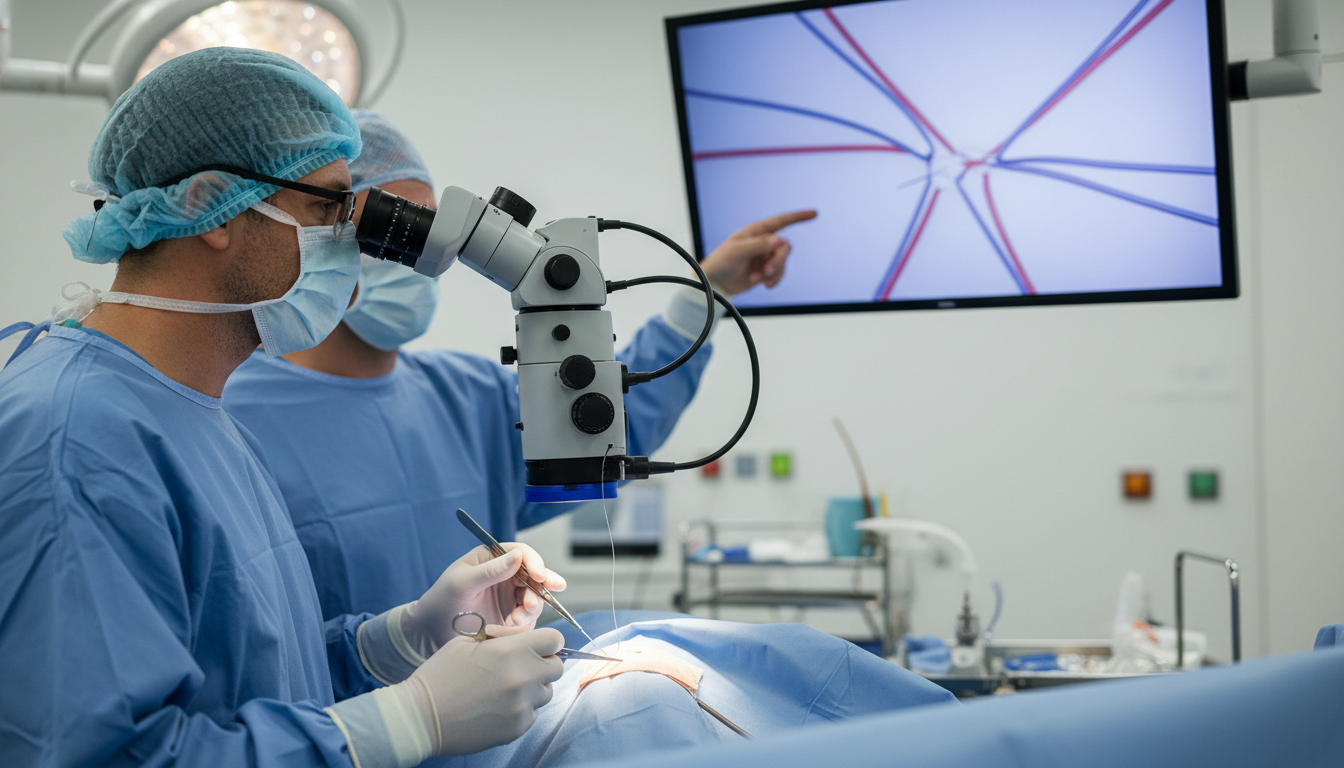
Microsurgery is one of the most common and influential surgical fellowship choices for plastic surgeons, especially those planning an academic or tertiary-level reconstructive practice.
2.1 Scope of Practice
Microsurgery fellowship typically focuses on advanced free tissue transfer and complex reconstruction, including:
- Breast reconstruction
- DIEP, PAP, TUG, and other perforator flaps
- Re-do reconstruction, salvage, and lymphedema procedures
- Head and neck reconstruction
- Mandibular and maxillary reconstruction
- Tongue, pharyngeal, and composite soft tissue flaps
- Extremity reconstruction
- Limb salvage, post-traumatic defects, chronic wounds
- Nerve transfers and targeted muscle reinnervation (TMR)
- Lymphedema surgery
- Lymphovenous bypass (LVB)
- Vascularized lymph node transfer (VLNT)
- Oncologic reconstruction
- Sarcoma defects, trunk and pelvic reconstruction
- Thoracic, spine, and abdominal wall free flap reconstruction
2.2 Where Microsurgery Fits in the Fellowship Landscape
Microsurgery sits at the intersection of reconstructive plastic surgery and surgical oncology fellowship pathways. Many centers with strong breast surgical oncology or head and neck cancer programs have robust microsurgery fellowships, often embedded in NCI‑designated cancer centers.
In practice, microsurgery fellows work closely with:
- Breast surgical oncologists
- Surgical oncologists (melanoma, sarcoma)
- Head and neck surgeons
- Orthopedic oncologists
- Trauma and orthopedic surgeons
2.3 Training Structure and Duration
Typical features:
- Duration: 1 year (most common), occasionally 2 years with research
- Positions per year: Often 1–3 per program
- Accreditation: Many are non‑ACGME but well‑recognized; some offer CAST-like or institutional certificates
- Call: Heavy operative responsibility with call for complex reconstructions and flap take-backs
2.4 Ideal Candidates
Microsurgery fellowships are particularly well‑suited for residents who:
- Enjoy long, complex, technically demanding operations
- Thrive in multidisciplinary oncology or trauma teams
- Want to build a niche as a reconstructive expert in:
- Academic medical centers
- High-volume cancer centers
- Regional limb salvage or lymphedema centers
2.5 How to Prepare During Residency
To be a competitive microsurgery fellowship applicant:
- Seek high microsurgical volume rotations as a junior and senior resident
- Track your microsurgical case logs and outcomes
- Get involved in research related to:
- Breast reconstruction outcomes
- Lymphedema surgery
- Limb salvage and trauma reconstruction
- Attend and present at:
- American Society for Reconstructive Microsurgery (ASRM)
- Plastic Surgery The Meeting (PSTM)
- Specialty microsurgery courses
- Build close mentorship with microsurgeons who can advocate for you
3. Hand, Upper Extremity, and Peripheral Nerve Fellowships
Hand surgery bridges multiple disciplines. Plastic surgeons, orthopedic surgeons, and even general surgeons in some settings pursue hand fellowships.
3.1 Pathways into Hand Surgery
There are two main pathways for plastic surgery residents:
- ACGME-accredited hand surgery fellowship
- Accepts applicants from plastic surgery, orthopedic surgery, and sometimes general surgery
- Leads to eligibility for the CAQ in Surgery of the Hand (Certificate of Added Qualification)
- Non‑ACGME hand and upper extremity fellowships
- Often more plastic surgery–focused, sometimes combined with microsurgery or peripheral nerve
- May not confer CAQ eligibility but can provide excellent training
3.2 Scope of Practice
Hand and upper extremity fellowship typically includes:
- Acute trauma:
- Tendon and nerve injuries
- Fractures and dislocations
- Replantation and revascularization
- Chronic conditions:
- Carpal tunnel syndrome, cubital tunnel
- Dupuytren’s disease
- Tendinopathies and arthritis
- Congenital hand differences
- Nerve surgery:
- Brachial plexus reconstruction
- Nerve transfers
- TMR and RPNI procedures (often overlapping with microsurgery)
- Elbow and sometimes shoulder work, depending on the program
3.3 Choosing Between Ortho-Dominant vs Plastics-Dominant Programs
As a plastic surgery resident, consider:
- Ortho-dominant hand fellowships
- Often more focus on bony and joint pathology, arthroscopy, and elbow/shoulder
- May have less focus on soft tissue coverage and free flaps
- Plastics-dominant fellowships
- Greater emphasis on soft tissue, microsurgery, and complex reconstruction
- Often more brachial plexus and peripheral nerve work
Your ideal choice depends on whether you see yourself as:
- A comprehensive upper extremity surgeon (favor ortho‑heavy)
- A nerve and soft tissue reconstruction expert (favor plastics‑heavy)
- Somewhere in the middle, with balanced exposure to bones/joints and soft tissue
3.4 Career Destinations
Hand surgeons can practice in:
- Academic centers (often jointly appointed in plastics and orthopedics)
- Large multispecialty orthopedic groups
- Community hospitals with a high trauma caseload
- Private practice groups focused on hand and upper extremity
A hand fellowship is especially valuable if you want:
- A high-volume surgical practice with a strong mix of elective and trauma cases
- A pathway to be the go‑to surgeon for nerve injuries and upper extremity trauma
4. Craniofacial, Pediatric, and Aesthetic Fellowships
If your passion lies in facial form and function—whether congenital deformities, trauma, or high-end cosmetic surgery—there are focused fellowships for you.

4.1 Craniofacial and Pediatric Plastic Surgery Fellowship
These fellowships center on:
- Congenital craniofacial anomalies
- Cleft lip and palate
- Craniosynostosis
- Hemifacial microsomia
- Syndromic craniofacial disorders
- Pediatric plastic surgery
- Congenital hand differences (in some programs)
- Vascular anomalies
- Pediatric trauma reconstruction
- Adult craniofacial
- Post-traumatic deformity
- Orthognathic surgery
- Secondary cleft and orthognathic procedures
Training Features
- Duration: 1 year (commonly)
- Environment: Pediatric hospitals, craniofacial centers, multidisciplinary cleft teams
- Partners: Oral and maxillofacial surgery, neurosurgery, ENT, pediatrics, genetics, speech therapy
Who Should Consider This Pathway?
- Those motivated by long-term relationships with patients and families
- Surgeons who like team-based, multidisciplinary care
- Residents drawn to facial skeletal surgery and complex 3D planning
- Applicants seeking an academic, referral-based practice in children’s hospitals or craniofacial centers
4.2 Aesthetic (Cosmetic) Surgery Fellowships
Aesthetic fellowships provide intensive exposure to cosmetic procedures that may be less robust in some residency programs.
Core Training Areas
- Facial aesthetics
- Facelifts, neck lifts, blepharoplasty, brow lifts
- Rhinoplasty and revision rhinoplasty
- Breast and body contouring
- Augmentation, mastopexy, reduction
- Abdominoplasty, liposuction, body lifts
- Non-surgical and minimally invasive
- Injectables, lasers, energy-based devices
- Practice management and patient selection
Fellowship Models
- ASAPS/ASERF-recognized aesthetic fellowships
- Private practice fellowships
- Often in high-volume cosmetic practices
- Can be extremely busy with strong exposure to real-world practice building
- Academic aesthetic fellowships
- May integrate aesthetic training with some reconstructive and teaching responsibilities
Who Benefits Most from Aesthetic Training?
- Those planning a primarily cosmetic private practice
- Residents whose plastic surgery residency had limited aesthetic case volume
- Surgeons wanting to enter competitive urban cosmetic markets and differentiate themselves
5. Oncoplastic, Breast, Burn, and Trauma Fellowships
Not all reconstructive fellowships fit neatly into “microsurgery” or “hand.” Some programs blend plastic surgery with other surgery subspecialty areas, especially in oncology and trauma.
5.1 Breast Reconstruction and Oncoplastic Fellowships
Some programs emphasize breast reconstruction and oncoplastic techniques at the intersection of plastic surgery and breast surgical oncology.
Training Focus
- Implant-based and autologous breast reconstruction
- Oncoplastic reshaping techniques
- Revisional and symmetry procedures
- Lymphedema surgery in select programs
- Integration with breast cancer care pathways and multidisciplinary tumor boards
These fellowships might be housed within plastic surgery or in combined breast surgical oncology fellowship environments where you interact closely with breast surgeons, radiation oncologists, and medical oncologists.
They’re ideal for surgeons planning:
- Specialized breast reconstruction practices
- Academic roles within comprehensive breast centers
- Strong involvement in clinical trials and outcomes research in breast cancer care
5.2 Surgical Oncology–Adjacent Fellowships
While plastic surgeons do not typically complete a full surgical oncology fellowship meant for general surgeons, many plastic surgery fellowships are highly integrated with:
- Head and neck surgical oncology (complex free flap reconstruction)
- Sarcoma and trunk reconstruction
- Melanoma and advanced skin cancer reconstruction
In these settings, you’re a core reconstructive partner to surgical oncologists and radiation oncologists. If you’re drawn to cancer work but want to remain within plastic surgery, a microsurgery or oncoplastic fellowship at a major cancer center is often the closest analogue to a surgical oncology fellowship pathway.
5.3 Burn, Trauma, and Acute Reconstruction Fellowships
Burn and trauma reconstruction fellowships emphasize:
- Acute burn care and resuscitation
- Critical care principles (sometimes including ICU time)
- Excision and grafting, dermal substitutes, and allografts
- Reconstruction of severe soft tissue loss, contractures, and complex wounds
- Post-trauma limb salvage, soft tissue coverage, and scar management
Surgeons on this track often:
- Work in regional burn centers or level I trauma centers
- Maintain a mix of acute care and delayed reconstructive work
- Collaborate with general surgery, trauma surgery, and critical care teams
These fellowships are particularly attractive if you:
- Enjoy high-acuity patients and intensive care settings
- Want a role that combines surgery with longitudinal wound and scar management
- Appreciate mission‑driven work, often caring for underserved populations
6. Planning Your Fellowship Strategy: From Medical School to Senior Residency
With so many options, you need a structured approach to planning your surgical fellowship journey.
6.1 Early Exploration (Medical School and Early Residency)
If you’re still a medical student or a junior resident:
- Learn the landscape
- Understand the difference between integrated plastics match vs. independent pathways
- Shadow in clinics and ORs across multiple subspecialties: hand, micro, craniofacial, aesthetics, burn
- Keep an open mind
- Interests often shift as you gain real OR experience
- Start basic research in any area that genuinely interests you; early publications show academic engagement, even if you later pivot subspecialties
6.2 Mid-Residency: Narrowing Your Focus
In PGY3–4 of an integrated plastics residency or early in an independent plastics track:
- Identify what energizes you:
- Long complex micro cases or shorter high-variation cases?
- Pediatrics vs. adults?
- Elective cosmetic vs. trauma/oncology?
- Arrange strategic rotations/electives
- High-volume micro, hand, craniofacial, or aesthetic services based on your emerging interests
- Connect with mentors in each field
- Ask how their practice has evolved
- Inquire realistically about lifestyle, job market, and call burden
6.3 Late Residency: Application and Match Strategy
Most plastic surgery fellowships have formal or semi-formal application cycles (often through SF Match or specialty societies). Timelines vary by subspecialty, so verify details early.
General advice:
- Start 12–18 months before your intended start date
- Prepare an updated CV and case log
- Clarify your goals in a focused personal statement
- Secure strong letters of recommendation
- Ideally from recognized leaders in your target subspecialty
- Ask mentors who truly know your work ethic, technical ability, and professionalism
- Be honest about your geographic and lifestyle priorities
- Some programs are intense but provide unparalleled exposure
- Others offer more balanced schedules but narrower case mix
6.4 Fellowship vs. Immediate Practice: Pros and Cons
Benefits of fellowship:
- Increased technical expertise and confidence
- Stronger academic credentials and research network
- More competitive in subspecialized or saturated markets
- Potentially higher case complexity and professional satisfaction
Potential downsides:
- Additional years of training and delayed full earnings
- Geographic and lifestyle constraints during fellowship
- Risk of over‑subspecialization in certain markets (e.g., highly niche practice with limited demand in small communities)
Weigh these carefully against your long-term goals and personal situation (family, finances, desired location).
FAQs: Surgical Fellowship Pathways in Plastic Surgery
1. Is fellowship training mandatory after plastic surgery residency?
No. Many plastic surgeons enter practice directly after residency and build broad reconstructive and aesthetic practices, especially in community settings. Fellowship becomes more important if you want to work in a highly specialized academic center, focus on very complex microsurgery, craniofacial, or pediatric work, or differentiate yourself in competitive markets.
2. Which fellowship is most in demand: microsurgery, hand, or aesthetics?
Demand varies by region and market type:
- Microsurgery is highly valued at cancer centers and academic hospitals, especially for breast and extremity reconstruction.
- Hand surgery has consistent demand in many regions, particularly through orthopedic groups and trauma centers.
- Aesthetic surgery demand is high in affluent urban markets but also highly competitive.
Your optimal choice should reflect your skills, personality, and preferred practice setting more than perceived “market trends” alone.
3. Can I combine interests—for example, microsurgery and hand or craniofacial and aesthetics?
Yes. Some programs intentionally blend:
- Hand + microsurgery (strong for brachial plexus, nerve, replantation)
- Craniofacial + aesthetic (robust facial aesthetic training with complex skeletal surgery) You can also sequence fellowships (e.g., microsurgery followed by aesthetic), though this extends training time. When interviewing, ask explicitly about the case mix and opportunities to shape your experience around combined interests.
4. How does my choice of residency program affect fellowship options?
Residency reputation and case volume matter, but they are not everything. Programs with:
- High microsurgical volume and established research often pipeline graduates into leading micro fellowships.
- Strong hand, craniofacial, or aesthetic faculty can open doors and provide powerful letters.
However, applicants from less well-known programs match into excellent fellowships every year, particularly if they have:
- Strong mentorship and letters
- Solid research productivity
- Clear, focused career goals articulated in their applications and interviews
By understanding the full range of surgical fellowship pathways in plastic surgery—and how they align with your interests, strengths, and desired lifestyle—you can approach your career planning with intention rather than default. Start exploring early, seek honest mentorship, and remember that the “best” fellowship is the one that supports the kind of surgeon and person you want to become.