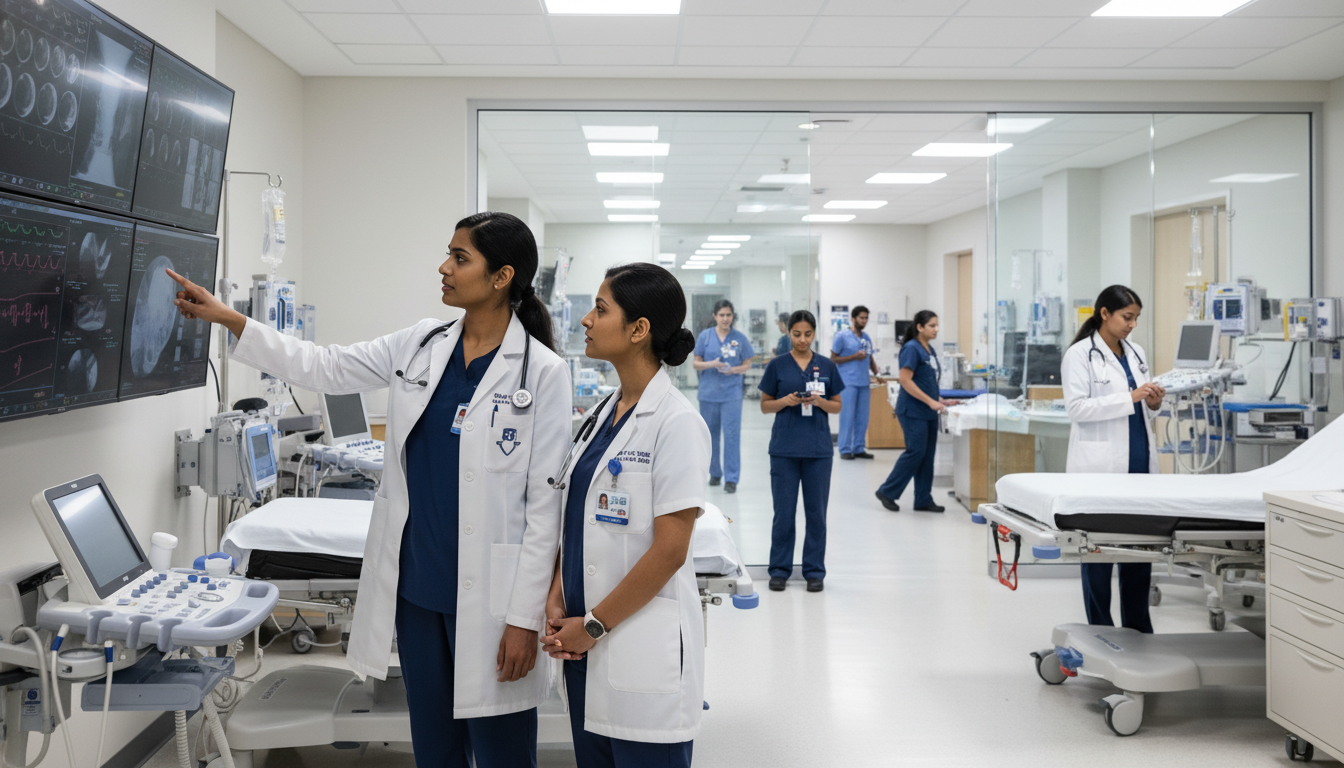
Understanding the Big Picture: M1 Year and a Future in Diagnostic Radiology
The first year of medical school is a shock to almost everyone—even students who “always loved science” or cruised through undergrad. If you’re already thinking about a radiology residency or curious about diagnostic radiology from day one, you’re actually ahead of the game. But first-year (M1) survival comes before the diagnostic radiology match, and that survival requires strategy.
You’re juggling:
- A completely new volume and pace of information
- High-stakes exams every few weeks
- Transitioning from “what do I need for the test?” to “what do I need to be a safe physician?”
- Trying to explore specialties (like radiology) without burning out
This guide is designed to help you survive and thrive in first year medical school while quietly laying the groundwork for a strong future application in radiology residency, especially diagnostic radiology. You’ll get concrete M1 tips, examples, and realistic expectations—not just motivational slogans.
1. Resetting Expectations: What Surviving Medical School Really Means
Before we talk study strategies or radiology exposure, you need a realistic mental framework for your first year of medical school.
The Volume Shock Is Real—Plan for It
In M1, you’ll hear variations of: “It’s like drinking from a firehose.” That cliché is true for most students. The key mindset shifts:
- You won’t know everything. Even your top-of-the-class classmates don’t.
- Perfection is not the goal. Consistent, sustainable effort is.
- Survival = Adaptation. The students who do well aren’t necessarily the smartest; they’re the fastest to adapt their strategies.
A helpful rule of thumb:
Expect to feel 2–3 weeks behind for most of the year. The goal is to keep that feeling mild and controlled, not crippling.
“But I Want Radiology—Don’t I Need Straight Honors?”
For diagnostic radiology, programs are competitive, but not in the same way as derm or plastics. Radiology programs care about:
- Solid pre-clinical performance (you don’t have to be #1 in your class)
- Strong Step scores (or equivalent if your school uses another metric)
- Evidence of interest in radiology (research, electives, mentoring)
- Thoughtful, professional behavior and teamwork
First year is about foundations, not perfection. Surviving medical school as an M1 means:
- Pass everything on time
- Build strong study systems
- Protect your mental and physical health
- Start light, low-pressure exposure to radiology—not a second full-time job in specialty exploration
If you’re putting your entire self-worth in your M1 grades, you’re misallocating energy you’ll need over a four-year marathon.
2. Building a Survivable Study System in M1
Your study system is your life support in first-year medical school. Throw in an early interest in radiology residency, and organization becomes non‑negotiable.
Step 1: Decide What Kind of Learner You Want to Be
Despite endless debates:
- Active recall (quizzing yourself)
- Spaced repetition (revisiting information over time)
…are the most evidence-based strategies in medical education.
For most M1s, this usually means:
- A question bank or in-house quiz system
- Anki or similar flashcard platform
- Short, focused review sessions instead of passive rereading
If you want radiology, especially diagnostic radiology, you’re signing up for a visual, pattern-recognition-heavy career. M1 is the time to:
- Get excellent at systematically learning complex volumes of content
- Practice pattern recognition in basic sciences (e.g., recognizing classic pathology clues, not just memorizing bullet points)
Step 2: Create a Weekly Structure (With Example)
Here’s a sample week during a heavy block (e.g., anatomy + biochemistry):
Monday–Friday (Lecture Days)
- 8:00–12:00: Lecture / small group / lab
- 12:00–1:00: Lunch, break, short walk
- 1:00–3:00: Review the same day’s material (don’t let it pile up)
- 3:00–4:30: Make or review Anki cards / spaced repetition
- 4:30–6:00: Question practice (school-provided questions or relevant board-style questions, if appropriate for your curriculum)
- 6:00 onward: Dinner, light review or personal time
Saturday
- Morning: Focused review of the week’s highest-yield, highest-confusion topics
- Early afternoon: Question block (timed, exam-like)
- Late afternoon: Radiology‑oriented enrichment if you have capacity (e.g., 1–2 hours of anatomy correlated with imaging; more on this below)
- Evening: Off
Sunday
- Light catch‑up on Anki/cards
- Plan the week ahead
- Rest early—fatigue makes Monday exponentially harder
The keys:
- Same-day review: The longer you wait, the more painful the re-learning.
- Daily questions: Even 10–20 questions/day beats cram-style question marathons right before an exam.
- Protected rest blocks: Burning out in M1 is a long-term liability, especially if you want to be sharp and motivated when radiology opportunities arise in M2–M3.
Step 3: Make Preclinical Content Work for Future Radiologists
You can’t change your curriculum, but you can interpret it through a radiology lens:
Anatomy
- Think in 3D: “How would this look on CT in axial, coronal, sagittal?”
- Use imaging atlases along with anatomical atlases.
- When you learn a structure, imagine where it sits in relation to common pathology you’ll see on imaging (e.g., location of the pancreas relative to surrounding vasculature on CT).
Physiology
- Understand flows and gradients—these become visible on imaging: pressure gradients in cardiac disease, ventilation-perfusion issues in lung imaging, etc.
- Think, “How does this dysfunction ultimately show up on CT, MRI, or ultrasound?”
Pathology
- Ask: “Is this something a radiologist would help diagnose or monitor?”
- If yes, mentally attach a visual cue to the disease. (Later, you can confirm that cue with real images.)
You don’t need to do full image interpretation in M1, but this habit of attaching concepts to visual mental models will help you tremendously as a future radiology resident.

3. Early Radiology Exposure Without Overloading Yourself
The biggest mistake early radiology-hopefuls make in M1 is overcommitting: too many projects, shadowing every week, trying to do research before understanding basic pathophysiology. That’s how interest turns into exhaustion.
You can absolutely explore radiology and help your future radiology residency application without sabotaging your core M1 responsibilities.
Low-Intensity Ways to Explore Diagnostic Radiology in M1
Join (but don’t run) the Radiology Interest Group (RIG)
- Attend a few talks per semester—especially ones on “Introduction to Diagnostic Radiology” or “Day in the Life of a Radiology Resident.”
- Ask for a list of faculty who are open to M1 shadowing later in the year.
Occasional Shadowing (1–2 times per block at most)
- Aim for a half-day in the reading room to observe:
- Workflow (inpatient vs outpatient cases)
- Interaction with referring physicians
- How radiologists systematically review images
- Timing: Avoid the week before major exams. Protect your bandwidth.
- Aim for a half-day in the reading room to observe:
Radiology-Flavored Self-Study (Optional)
- Once every couple of weeks, spend 1–2 hours on:
- An introductory radiology textbook chapter or online module focused on anatomy
- Free online repositories of curated teaching cases (e.g., fundamentals of chest X‑ray interpretation)
- Skip advanced interpretation for now. Focus on basic, consistent orientation: “What organ is that?” “Which side is left vs right?”
- Once every couple of weeks, spend 1–2 hours on:
Anatomy Imaging Correlation
- When you study head/neck, chest, abdomen, or pelvis anatomy, pull up:
- A few sample CT or MRI images
- Standard radiology teaching diagrams showing cross-sectional anatomy
- The goal is not to “master radiology.” The goal is to wire your brain to naturally pair structure with image.
- When you study head/neck, chest, abdomen, or pelvis anatomy, pull up:
Early Radiology Research: When and How to Start
M1 is not the ideal time for most students to do heavy research, especially if they’re just trying to survive medical school and pass every course. But:
- If your course load is manageable
- Your mental health is stable
- You genuinely have free capacity
…you can start light:
- Express interest to a radiology mentor:
- “I’m an M1 interested in diagnostic radiology. Once I’ve settled into my coursework, I’d love to help with a small-data or chart-review project if there’s anything appropriate for a beginner.”
- Be honest about limits: “I can commit 2–4 hours/week” is better than overpromising.
- Expect your main role early on to be:
- Literature searching
- Data entry
- Basic figure preparation
For many students, the more realistic—and just as effective—plan is:
- Focus on being solid in M1
- Begin research in the summer between M1 and M2 when you have more bandwidth
4. Mental Health, Burnout Prevention, and Sustainable M1 Habits
“Surviving medical school” is not a trivial phrase. Burnout in M1 can reverberate through your clinical years, Step exams, and even your residency match. Radiology residency programs increasingly value resilience and emotional stability because diagnostic radiology involves high responsibility and complex decision-making.
Recognize the Early Warning Signs of Burnout
Common early red flags in M1:
- Persistent dread or anxiety before going to class or opening your notes
- Sleep disruption (trouble falling or staying asleep) most nights of the week
- Loss of enjoyment in anything outside of school
- Increasing irritability or withdrawal from friends
- Passive thoughts like “I’ll never catch up” or “Everyone else is doing better than me”
You won’t be happy all the time in M1. That’s normal. But if these signs last for weeks, it’s time to proactively intervene.
Protecting Your Mental Health While Staying Competitive
Some practical, doable changes:
Non-Negotiable Sleep Routine
- Target 7 hours minimum; 8 is ideal. Chronic 4–5 hour nights do not make you “hardcore”—they make you less efficient.
- Set a “digital sunset” 30–60 minutes before bed (no Anki, no messages, no notes).
Micro‑Recovery During the Day
- 5–10 minute breaks every 60–90 minutes of study: stand, stretch, walk, hydrate.
- Accept that breaks protect performance; they don’t waste time.
Scheduled, Guilt‑Free Time Off
- At least half a day per week with no serious studying (post-exam days are ideal).
- Use this time for something active: cooking, walking, sports, hobbies, faith activities, etc.
Talk to Someone Early
- If mood, anxiety, or motivation feel unmanageable:
- Reach out to student wellness services
- Use free or reduced‑fee counseling offered by your school
- Speak with a trusted faculty advisor
- Seeking help early is a sign of maturity, not weakness—something residency programs quietly respect.
- If mood, anxiety, or motivation feel unmanageable:
Lean on Peers Wisely
- Join a small, stable study group if it helps you stay engaged and accountable.
- Avoid groups that devolve into anxiety spirals (“We’re all failing” sessions).
- Share resources, but don’t compare raw grades obsessively.
Radiology is an analytical, often quiet specialty, but the emotional load—missed diagnoses, high-stakes emergent reads, dealing with uncertainty—is nontrivial. Learning to manage your own mental bandwidth begins now, in M1.
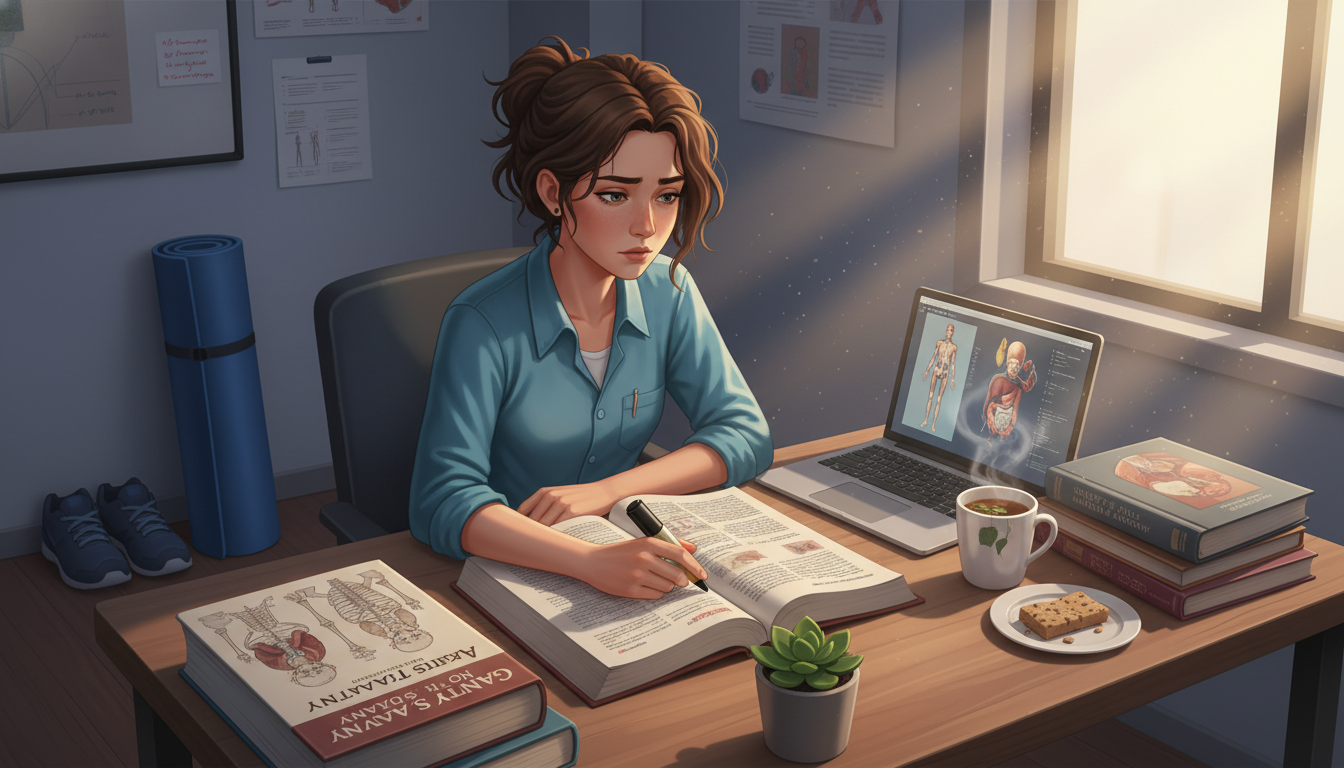
5. Strategic Planning for the Future Radiology Residency Applicant
You do not need to “lock in” radiology as an M1. Many excellent radiologists discovered the field later. But if you’re already leaning strongly toward diagnostic radiology, you can quietly prepare during first year without overwhelming yourself.
M1 Priorities for a Future Diagnostic Radiology Match
Organize your priorities into tiers:
Tier 1 (Non‑Negotiable)
- Pass all your courses—ideally with solid performance, but passing is the minimum
- Build robust study habits you can scale up for boards
- Protect your mental and physical health
Tier 2 (Strongly Recommended)
- Familiarize yourself with radiology as a field:
- Attend a handful of RIG events
- Shadow once in a while
- Talk with at least one radiology faculty member or senior resident about the specialty
- Develop strong relationships with at least 1–2 faculty in any field who can speak to your character and work ethic later
Tier 3 (If Bandwidth Allows)
- Start a very small radiology-related research or QI project
- Help with RIG event organization (light involvement)
- Begin curating a list of questions you want answered about radiology lifestyle, subspecialties (e.g., neuro, MSK, IR), and practice settings
What Radiology Programs Will Care About Later
By the time you apply for a radiology residency, programs will typically consider:
- Academic record: preclinical + clinical evaluations
- Step scores or equivalent standardized exams
- Letters of recommendation, ideally including at least one from a radiologist
- Evidence of interest: radiology electives, research, presentations, RIG involvement, away rotations (if applicable)
- Professionalism: no major red flags; responsible behavior in clinical settings
Nothing about this requires you to win radiology as an M1. It does require that you:
- Stay eligible by passing everything
- Avoid disciplinary issues
- Treat people well—classmates, staff, faculty—consistently
Using Summer After M1 Wisely
The summer after your first year medical school is prime time for radiology exploration:
Options include:
- Radiology research (often chart review, image-based projects, or educational projects)
- Formal summer research programs with radiology tracks
- Anatomy or imaging teaching assistant roles that interface with radiology faculty
- Or, if you’re burnt out: a low-research-load summer with light shadowing and wellness focus
If radiology is your leading interest:
- Email 3–5 radiology faculty in late winter or early spring, expressing your interest in a summer project
- Include:
- One-paragraph intro (who you are, M1 status, your interest in diagnostic radiology)
- A brief, honest description of your skills (basic statistics? prior research? none yet?)
- A clear time frame: “I’m available full-time from June to August.”
That one summer won’t make or break your diagnostic radiology match, but it can:
- Get you your first radiology mentor
- Expose you to real-world imaging questions
- Potentially produce a poster or small publication by M3–M4
6. Day-by-Day Survival: Concrete M1 Tips You Can Use Tomorrow
To tie everything together, here are actionable M1 tips for surviving medical school while keeping radiology in view:
Academic Survival Checklist
- For each new lecture, ask: “What are the 3–5 things I’m most likely to be tested on?”
- Translate complex pathways into summaries and flowcharts, then use questions to test recall.
- Start every study block with 5–10 old Anki cards to warm up your brain.
- Do at least a small number of practice questions 5–6 days per week (even if it’s just a few).
- Conduct a weekly “systems check”:
- What went well?
- What took too long?
- What needs tweaking next week?
Radiology-Focused Micro‑Habits
- When studying anatomy, quickly Google a CT or MRI image of the region.
- Once per month, ask a radiology resident or faculty member one thoughtful question about their work.
- Keep a small running document titled: “Why Radiology?” and jot short reflections of what attracts you to the field—this will help later with personal statements and interviews.
- Save any particularly interesting radiology images or cases you see (following all privacy rules) in a secure, de-identified teaching folder for future teaching or presentations.
Wellness and Longevity Habits
- Schedule sleep, not just study. Treat it like a mandatory meeting.
- Keep at least one physical activity you do weekly. Even a 20-minute walk counts.
- Eat something real at least once a day (not just vending machine food or coffee).
- Talk to classmates about things other than exams at least a couple times a week.
- If you feel yourself sliding into constant anxiety, low mood, or hopelessness, reach out early—for most students, things are much more fixable in M1 than they seem in the moment.
Surviving first year of med school is not about heroics. It’s about small, repeatable decisions that maintain your forward progress, protect your health, and leave the door open to a competitive diagnostic radiology match later on.
FAQ: Surviving M1 with an Eye on Diagnostic Radiology
1. Do I need to know for sure I want radiology in my first year of medical school?
No. Many successful radiologists decide in M2 or even M3. As an M1, it’s enough to be curious and explore radiology a bit while staying open to other specialties. Your main job now is to build strong study habits and pass your courses.
2. How much radiology shadowing should I do in M1?
A reasonable target is a few half-days per semester, especially once you’ve adjusted to the workload. Shadow enough to understand the work environment and daily routine, but not so much that it interferes with studying or recovery. Over-shadowing in M1 doesn’t significantly improve your residency application.
3. Will one or two bad exams in M1 ruin my chance at a radiology residency?
Almost certainly not. Programs look at your overall trajectory, not individual stumbles. If you struggle on an exam, debrief honestly: adjust your study methods, seek help, and show improvement over time. That pattern—struggle, reflection, improvement—is valued in residency training.
4. What’s the single most important thing I can do in M1 for a future diagnostic radiology match?
The single most important thing is to build a sustainable, effective learning system so you thoroughly understand anatomy, physiology, and pathology, and can later do well on board exams and clinical rotations. Radiology is built on these foundations. Everything else—research, shadowing, RIG involvement—comes second to being a strong, healthy, adaptive learner.
Surviving first year of med school in the context of a future radiology residency is about balance: balancing ambition with realism, specialization with foundational learning, and hard work with self-preservation. If you can do that in M1, you’ll be in an excellent position when it’s finally time to enter the diagnostic radiology match.