Understanding the M1 Year Through a Neurology Lens
First year of medical school can feel like trying to drink from a firehose, and if you’re already thinking about neurology residency or the neuro match, that pressure can feel even greater. The good news: you don’t need to have everything figured out in M1, but you can make choices now that will pay off when you apply for neurology later.
M1 is usually dominated by:
- Foundational sciences: anatomy, physiology, biochemistry, neuroscience
- Clinical skills: interviewing, physical exam basics
- Professional identity formation: learning how to think like a physician
For students considering neurology, there are three big realities to keep in mind as you approach and survive first year:
Your main job is still to pass and ideally do well in your coursework. Nothing helps your neurology residency application more in the long run than solid academic performance and a strong foundation in neuroanatomy and physiology.
You don’t have to “declare” neurology in M1, but exploring early helps you test your interest, strengthen your story, and build a network.
Habits you build now will determine how sustainable your journey will be. Surviving medical school is as much about systems, sleep, and support as it is about study resources.
In other words: think of M1 as the year you learn how to be a professional learner—one who just happens to gravitate toward the brain and nervous system.
Building a Study System That Actually Works (and Lasts)
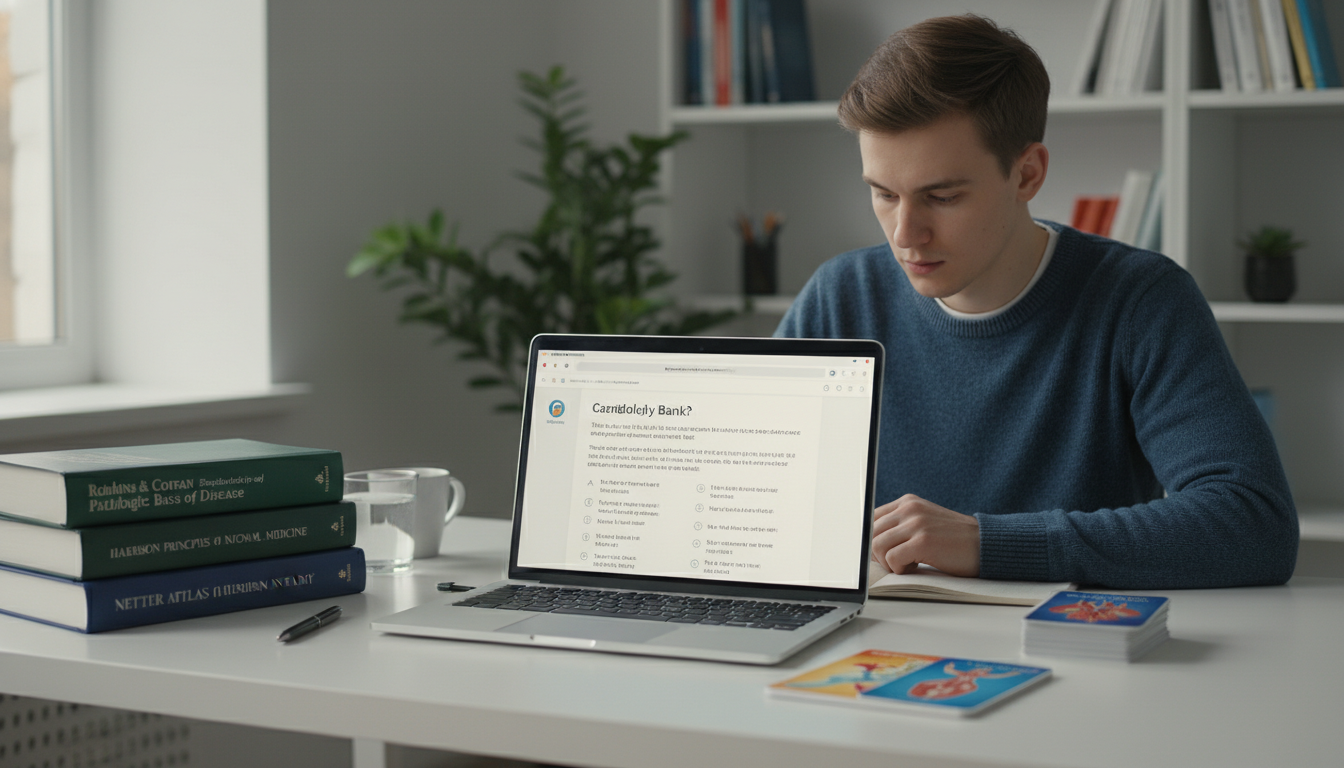
The biggest mistake many M1s make is focusing on what resources to use instead of how they will use them consistently. For neurology-focused students, the volume of neuro content later will be intense, so building good systems now is essential.
Step 1: Create a Weekly Structure, Not a Daily Fantasy
Overly idealistic daily schedules (“I’ll study 12 hours every day and run 5 miles!”) usually collapse within a week. Instead, build a flexible weekly framework:
- Class/mandatory sessions
- Block these out first.
- Content blocks (2–3 hours each)
- Lecture review
- Anki/flashcards
- Question banks (as they become relevant)
- Admin blocks (30–60 minutes)
- Email, forms, scheduling meetings, organization tasks
- Life blocks
- Sleep, exercise, meals
- Social time, hobbies, family/friends
Example weekly layout during a neuro-heavy unit:
- Mon–Fri:
- 8–12: lectures/anatomy lab
- 1–3: active review of that morning’s content (notes → flashcards → concept map)
- 3:30–5: Anki / spaced repetition
- 5–7: exercise + dinner
- 7:30–9: practice questions or group study
- Sat:
- 9–12: weekly review of neuroanatomy (big-picture integration)
- Afternoon/evening: off
- Sun:
- 2–4: light review + planning the week
The goal is not perfection; it’s reliability. A “B+” system used every week beats an “A+” schedule followed for three days.
Step 2: Use Active Learning from Day One
Passive strategies (re-watching lectures, re-reading notes) feel comforting but are inefficient. For neurology, which is conceptually dense and spatial (tracts, nuclei, pathways), you especially need active methods:
- Teach-it-back: Explain Parkinson’s disease to a classmate as if they were a patient, then again as if they were a neurologist colleague.
- Concept maps: Draw pathways—visual, motor, sensory. Add lesions and predict deficits.
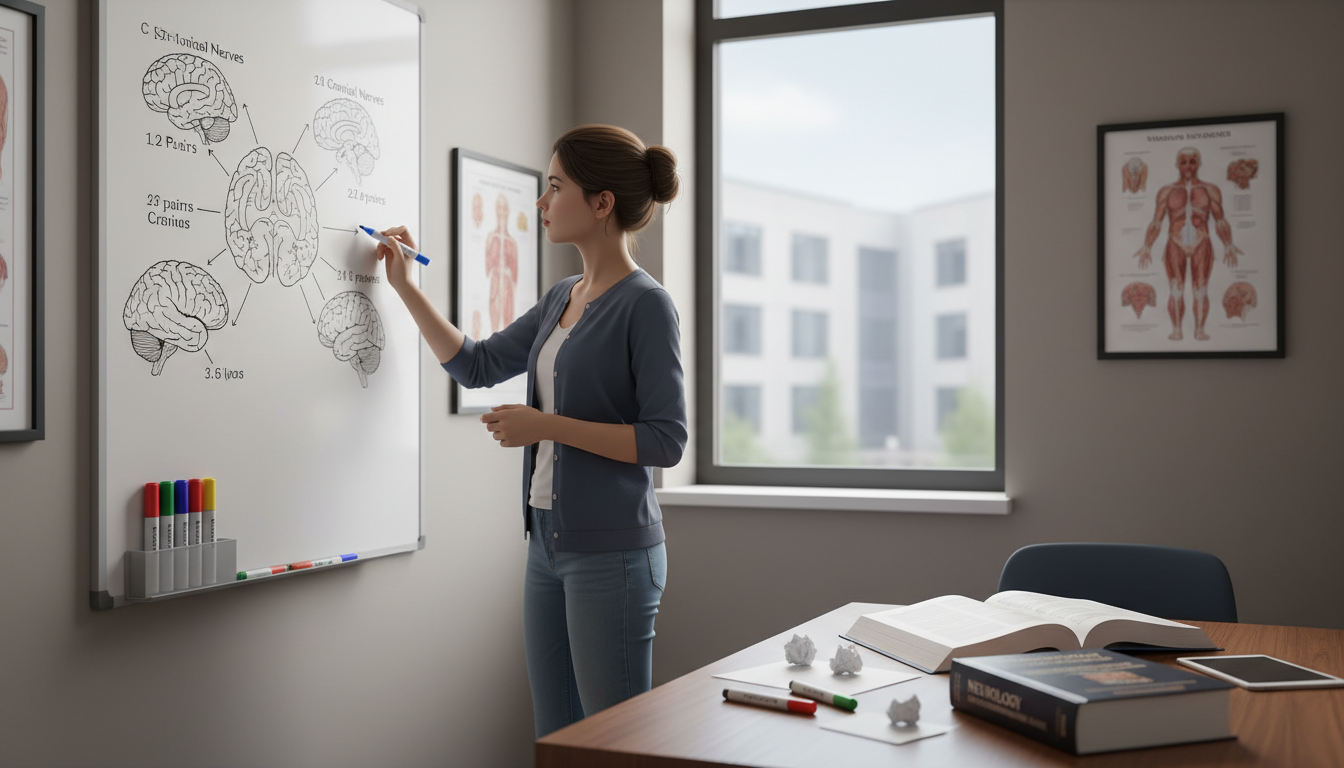
- Whiteboard sessions: Reconstruct the brachial plexus, cranial nerves, or basal ganglia loops from memory.
Ask yourself after each study block: “What did I produce?” (diagram, summary, explanation, set of flashcards) rather than “How long did I sit here?”
Step 3: Make Spaced Repetition Your Default
Spaced repetition isn’t optional in medical school—it’s survival gear.
Most students use tools like Anki, but the underlying principle is what matters:
- Review material right after you learn it.
- Then review again at increasing intervals (1 day, 3 days, 1 week, 2 weeks, etc.).
- Use cloze deletions and simple, focused cards (especially for neuroanatomy, pharmacology, and key concepts like neurotransmitter systems).
For neurology-oriented content during M1:
- Make cards for:
- Cranial nerve functions and nuclei
- Major ascending and descending tracts
- Neurotransmitter systems and associated pathologies
- Classic lesion syndromes (Weber, Wallenberg, Brown-Séquard)
- Mix boards-style questions with class-specific facts.
The payoff: when you hit dedicated neuro blocks later (or step exams), you’re reviewing and integrating—not relearning from scratch.
Step 4: Adjust Strategy by Block
Different blocks need different tactics:
Anatomy (especially neuroanatomy)
- Heavy on diagrams and 3D thinking.
- Use atlases and 3D apps regularly.
- Physically draw cross-sections and label structures.
Biochemistry & Molecular
- Focus on pathways, but more importantly, on clinical relevance (e.g., metabolic disorders with neurologic manifestations).
Physiology
- Integrate neurophysiology with systemic understanding: autonomic nervous system, neuromuscular signaling, sleep, pain pathways.
When you see anything that touches the nervous system, pause and connect it to your growing “neurology map.”
Making the Most of Early Neurology Exposure in M1
You don’t need to commit to a neurology residency in your first year of medical school, but you can start auditioning the specialty to see if it fits. The goal is exploration, not pressure.
Find Neurology in Your Preclinical Curriculum
Even before a dedicated neuro block, there are opportunities to lean into neurology:
- When you cover:
- Physiology: Pay extra attention to nerve potentials, neuromuscular junctions, autonomic nervous system.
- Anatomy: Head and neck, spinal cord, cranial nerves.
- Pathology/Foundations: Any mention of stroke, seizures, dementia, neuropathies.
Tactics:
- Add a “neuro note” next to relevant topics: how does this connect to neurologic disease?
- Keep a running “Neuro Journal” (digital or paper) where you:
- List conditions with neurologic manifestations (e.g., B12 deficiency, SLE).
- Write brief 2–3 line summaries of each (key features, why it happens).
This running log becomes a high-yield review tool for both exams and, later, for showing sustained interest in neurology.
Shadowing and Clinical Exposure in M1
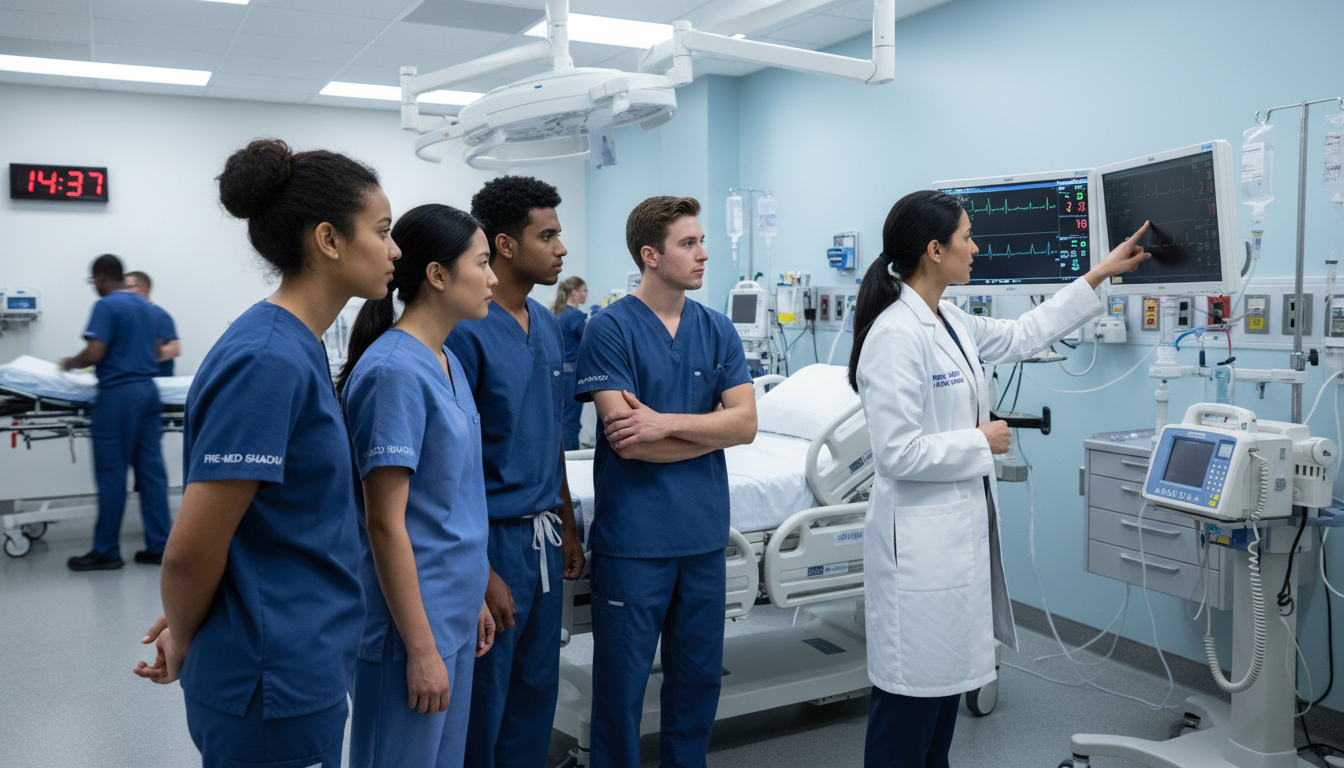
Most schools allow some form of shadowing or clinical volunteering in first year. For neurology:
- Start small and realistic:
- 2–4 hours per month with a neurologist is more sustainable than weekly commitments that tank your study time.
- Possible settings:
- General neurology clinic
- Stroke service
- Epilepsy monitoring unit
- Neuro ICU (sometimes more limited access, but extremely educational)
How to find opportunities:
- Email the neurology department’s education coordinator or clerkship director.
- Introduce yourself briefly:
- You’re an M1 interested in exploring neurology.
- Ask if any faculty take students for observational shadowing.
- Emphasize you’ll be respectful of time and patient care priorities.
Shadowing in M1 isn’t about getting letters of recommendation yet. It’s about answering key questions:
Do I enjoy the pace? Am I drawn to the diagnostic puzzle? Can I see myself explaining complex concepts to families?
Join Neuro-Related Student Groups (Strategically)
Student organizations can be valuable, but only if they don’t overrun your bandwidth.
Options might include:
- Neurology Interest Group
- Neurosurgery Interest Group (helpful for exposure to neuroanatomy/operative aspects)
- Brain injury, epilepsy, or stroke awareness groups
How to participate wisely:
- Aim for attendee/participant in M1; consider leadership later (M2 or M3).
- Use events to:
- Hear neurologists talk about career paths.
- Learn about summer research or clinical projects.
- Meet residents who navigated what you’re going through.
Remember: One well-chosen group you engage in fully beats five you sign up for and never attend.
Exploring Research Without Sacrificing Survival
Research is helpful (but not mandatory) for neurology residency. In M1:
- First priority: adjust to medical school.
- If you’re barely staying afloat academically, delay research.
- If grades are stable and stress is manageable:
- Look for:
- Simple chart reviews
- Case reports (especially interesting neuro or stroke cases)
- Small role on an existing lab or clinical project
- Look for:
Approach:
- Identify neurology faculty whose work genuinely interests you.
- Read 1–2 recent papers (at least the abstract and discussion).
- Send a brief, respectful email:
- Who you are (M1)
- That you’re interested in neurology and their work in particular
- Ask short-term: “Would it be possible to meet briefly to discuss whether there might be a small role for me in ongoing projects now or in the future?”
Be honest about time constraints. Overpromising on research and under-delivering burns bridges and adds stress.
Surviving the Neuro Content: M1 Tips for Brain-Heavy Blocks
Many schools cluster neuroanatomy and neuroscience in a particularly intense block. For someone interested in neurology residency, this block is both an opportunity and a stress test.
Understand How Neuro Is Different from Other Content
Neuro can feel uniquely overwhelming because:
- It’s 3D and spatial: pathways, tracts, and cross-sections.
- It’s syndrome-based: you must learn to localize lesions before naming diseases.
- It’s integration-heavy: anatomy + physiology + pathology all at once.
Approach neuro with these guiding principles:
- Always think localization first.
- Where in the nervous system is the lesion? Cortex? Brainstem? Spinal cord? Peripheral nerve?
- Link structure to symptom.
- “This patient has right arm weakness + left facial droop → what pathways run where these deficits could both occur?”
- Use repetition across multiple representations.
- Diagrams, cross-sectional images, 3D apps, physical models, and case vignettes.
High-Yield Strategies for the Neuro Block
1. Start with the Big Map
Before diving into details, ensure you grasp the major territories:
- Central vs peripheral nervous system
- Motor vs sensory systems
- Autonomic (sympathetic vs parasympathetic)
- Supratentorial vs infratentorial vs spinal localization
Spend 1–2 sessions just making and revisiting a “big map” diagram of the nervous system.
2. Learn Cranial Nerves as Living Systems, Not Just a List
Instead of memorizing “III: oculomotor – eye movement,” think:
- Nucleus location
- Pathway
- Function
- Damage presentation (clinical pearls)
- Common exam scenarios (e.g., CN III palsy from posterior communicating artery aneurysm)
Generate mini “profiles” for each nerve with drawings and a few key pathologies.
3. Pair Every Structure With a Clinical Story
For example:
- Internal capsule:
- Structure: dense white matter fiber bundle.
- Clinical: pure motor stroke with face, arm, and leg weakness on one side, but preserved cortical functions like language and vision.
- Basal ganglia:
- Structure: caudate, putamen, globus pallidus, subthalamic nucleus, substantia nigra.
- Clinical: Parkinson’s (bradykinesia, rigidity, rest tremor, postural instability), hemiballismus after stroke in subthalamic nucleus.
Write these as short 3–4 line vignettes. This is exactly how neurology residents and attendings think, and it will serve you later in neuro match interviews when you need to show clinical reasoning.
4. Use Board-Style Questions Early (But in Moderation)
For neuro, question banks help you:
- Practice localization.
- See how test writers phrase neurologic findings.
- Get used to the pattern-recognition that underlies stroke, seizure types, movement disorders, etc.
However:
- Don’t ignore your school-specific material.
- Use questions as assessment and application, not as your only learning method.
A reasonable target during neuro block: 10–15 quality questions per day, reviewed carefully, focusing on why each answer is right or wrong.

Protecting Your Mental Health, Energy, and Life Outside School
Surviving medical school—especially M1—is not just about grades. Burnout, anxiety, and imposter feelings are common, and students eyeing competitive fields or the neurology residency landscape can feel extra pressure.
Normalize the Struggle
Almost everyone:
- Feels behind.
- Worries they don’t belong.
- Second-guesses their specialty interest.
But you typically only see classmates’ polished surface, not their stress and doubt. Reminding yourself this is normal can reduce self-criticism.
If neurology is your interest, you may also worry:
- “What if my grades aren’t good enough for the neuro match?”
- “What if I change my mind later?”
Healthy reframes:
- M1 grades matter, but a single exam or block does not define your career.
- Many neurologists decided later than M1 and still matched well.
- Your job now is to build skills and resilience, not to script the next 10 years.
Core Habits That Help You Survive (and Not Just Survive)
1. Sleep Like It’s Part of the Curriculum
Chronic sleep deprivation:
- Impairs memory consolidation (exactly what you need for neuro and other content).
- Increases anxiety and depression.
- Decreases efficiency, leading to longer, less effective study sessions.
Aim for:
- 7–8 consistent hours per night.
- Minimal all-nighters (reserve only for true emergencies, not routine exams).
Treat sleep as a performance tool, not a luxury.
2. Move Your Body Regularly
You don’t need intense workouts, but regular physical movement:
- Improves mood and focus.
- Mitigates the sedentary nature of studying.
- Gives natural “bookends” to your day.
Examples:
- 25–30 minutes of walking, 4–5 days/week.
- Short bodyweight routine after a long study block.
- Biking or walking to campus if feasible.
3. Protect Non-Medical Identity
You are more than a future neurology resident or physician. Maintain:
- One non-medical hobby (music, art, gaming, reading, sports).
- At least one relationship you nurture intentionally (family, partner, close friend).
Schedule small, regular doses rather than waiting for rare “free” weekends that never come.
When to Reach Out for Help
If you notice:
- Persistent hopelessness or inability to feel pleasure.
- Escalating anxiety or panic interfering with sleep or study.
- Thoughts of self-harm or feeling like you’d be “better off gone.”
Reach out immediately:
- Student health/mental health services.
- A trusted faculty member, dean of students, or advisor.
- A friend or family member who can help you access support.
Seeking help is not a sign of weakness; it’s practicing exactly the kind of health-seeking behavior you’ll advise your own patients someday.
Positioning Yourself Early for a Future Neurology Residency
Even as an M1, you can lay groundwork that will help when you eventually apply for neurology residency through the neuro match process (e.g., ERAS + NRMP).
You do not need to “optimize” everything now. Instead, think about setting general direction and habits.
Build Relationships Gradually
People who will one day write strong letters of recommendation often first meet you in roles like:
- Shadowing student
- Small group learner
- Research team member
- Interest group participant
Practical steps:
- After a neuro lecture you enjoyed, send a short email:
- Thank them for a specific point that helped your understanding.
- Ask 1–2 thoughtful, concise follow-up questions.
- Meet with an assigned faculty advisor or learning community mentor at least once per semester.
- Ask residents you meet:
- What would they do differently if they were back in M1?
- How they ultimately decided on neurology.
You’re not aiming to impress constantly; you’re trying to be engaged, prepared, and respectful over time.
Keep Light, Ongoing Documentation
You’ll be surprised how quickly details blur by MS3–MS4. Start a simple “Residency/Neurology Log” now:
Include:
- Clinical experiences: brief notes on interesting neuro patients or shadowing days (de-identified).
- Research: project titles, mentors, your specific role, dates.
- Service: any neuro-related campus events, volunteering, outreach.
- Reflections: what aspects of neurology draw you in (or turn you off).
This log later becomes:
- Raw material for your personal statement.
- Reminder of who you could ask for letters.
- Evidence of longitudinal interest without scrambling to remember details.
Understand the Big Picture (But Don’t Obsess)
Broadly, neurology residency selection tends to value:
- Solid board scores (if still applicable at your stage) and coursework performance.
- Strong clinical evaluations, especially during neurology rotations.
- Genuine interest demonstrated through:
- Some neuro-oriented activities (research, shadowing, interest group).
- Thoughtful reasons for choosing the specialty.
- Professionalism, communication, and teamwork.
As an M1, that translates to:
- Focus on building a strong foundation in the preclinical years.
- Show curiosity about the nervous system where natural opportunities arise.
- Maintain your well-being so you have the capacity to excel later, especially during clinical clerkships.
FAQs: Surviving M1 with an Eye on Neurology
1. Do I need to decide on neurology in first year of medical school to match successfully later?
No. Many neurology residents decide in MS2 or even early MS3 after core rotations. What helps most is being open and curious early, so if neurology does feel right later, you already have some exposure and connections. For now, focus on solid academic performance, exploring interests, and staying healthy.
2. How important is neuroanatomy performance in M1 for a neurology residency application?
You won’t be accepted or rejected purely based on one neuroanatomy grade, but understanding neuroanatomy well is crucial for becoming a good neurologist and for doing well on boards and clerkships. If you struggle early, it’s worth investing extra time, seeking tutoring, and reviewing the basics until they become more intuitive.
3. Should I start neurology research in M1 to be competitive for the neuro match?
Research is helpful but not mandatory. If you’re still adapting to medical school, prioritize learning how to study and protecting your mental health. If your grades are stable and you have interest and time, a small, manageable project under a supportive mentor is ideal. Quality and completion matter more than sheer volume.
4. What are the best M1 tips for surviving medical school if I’m already worried about residency?
Anchor your efforts in what you can control now:
- Build a realistic, consistent study system (with active learning and spaced repetition).
- Maintain sleep, movement, and at least one non-medical interest.
- Explore neurology gradually through lectures, shadowing, and interest groups.
- Form relationships with mentors and peers. Instead of constantly projecting into MS4 applications, measure success in weeks and months: “Am I learning more efficiently and living more sustainably than I was last month?” Over time, that’s exactly what prepares you for a strong neurology residency application.