Understanding the M1 Year When You’re Aiming for Neurosurgery
The first year of medical school (M1) is challenging for everyone, but if you’re already eyeing a neurosurgery residency or brain surgery residency, the stakes can feel even higher. You’re learning how to be a doctor while also trying to build a foundation for one of the most competitive specialties in medicine.
You will hear a lot of advice about “just survive M1,” but if you’re thinking about neurosurgery, survival alone isn’t your only goal. You want to:
- Build strong habits that will carry into clerkships and residency
- Learn enough basic science to make neuroanatomy and neurology feel intuitive later
- Begin exploring neurosurgery without burning out
- Position yourself for research and mentorship opportunities
This guide focuses on surviving first year of med school while laying realistic, sustainable groundwork for a potential neurosurgery residency.
Foundations: How M1 Differs When You’re Neurosurgery-Inclined
The core requirements of M1 are the same for everyone: anatomy, physiology, biochemistry, histology, etc. The difference is how you approach these courses and strategically layer on neurosurgical interests.
1. Your Real Job in M1: Become Excellent at the Basics
Neurosurgery is built on fundamentals:
- Anatomy (especially neuroanatomy and spine)
- Physiology (neurophysiology, hemodynamics)
- Pathology (tumors, vascular lesions, trauma)
- Pharmacology (antiepileptics, anticoagulants, ICU meds)
Strong M1 performance does two things:
- Keeps residency options open (including neurosurgery)
- Makes Step/Level exams and later neuro rotations significantly easier
Actionable approach:
- Prioritize course mastery first, then neurosurgery extras.
- Do not sacrifice passing or strong grades in core courses for early research or shadowing. Those can wait weeks; remediation will follow you for years.
- Use neurosurgery interest as motivation, not as a source of pressure. Tell yourself: “If I understand physiology well now, neurocritical care will feel much more natural later.”
2. Mindset: Explore, Don’t Lock Yourself In
You don’t need to swear a lifelong oath to neurosurgery in the first semester of M1. What you need is:
- Curiosity about the nervous system
- Willingness to explore neurosurgery in an informed way
- Openness to the possibility that your interests may evolve
Healthy M1 mindset:
- “I’m seriously exploring neurosurgery”
instead of
“If I don’t match neurosurgery, I’ve failed.”
This reduces anxiety and burnout while still allowing you to build a competitive profile.

Academic Strategy: Studying Smarter in M1 with Neurosurgery in Mind
To survive first year of med school while setting up for a potential brain surgery residency, you need a repeatable, efficient academic system. Neurosurgery demands consistency more than heroics.
1. Build a Weekly Study Framework
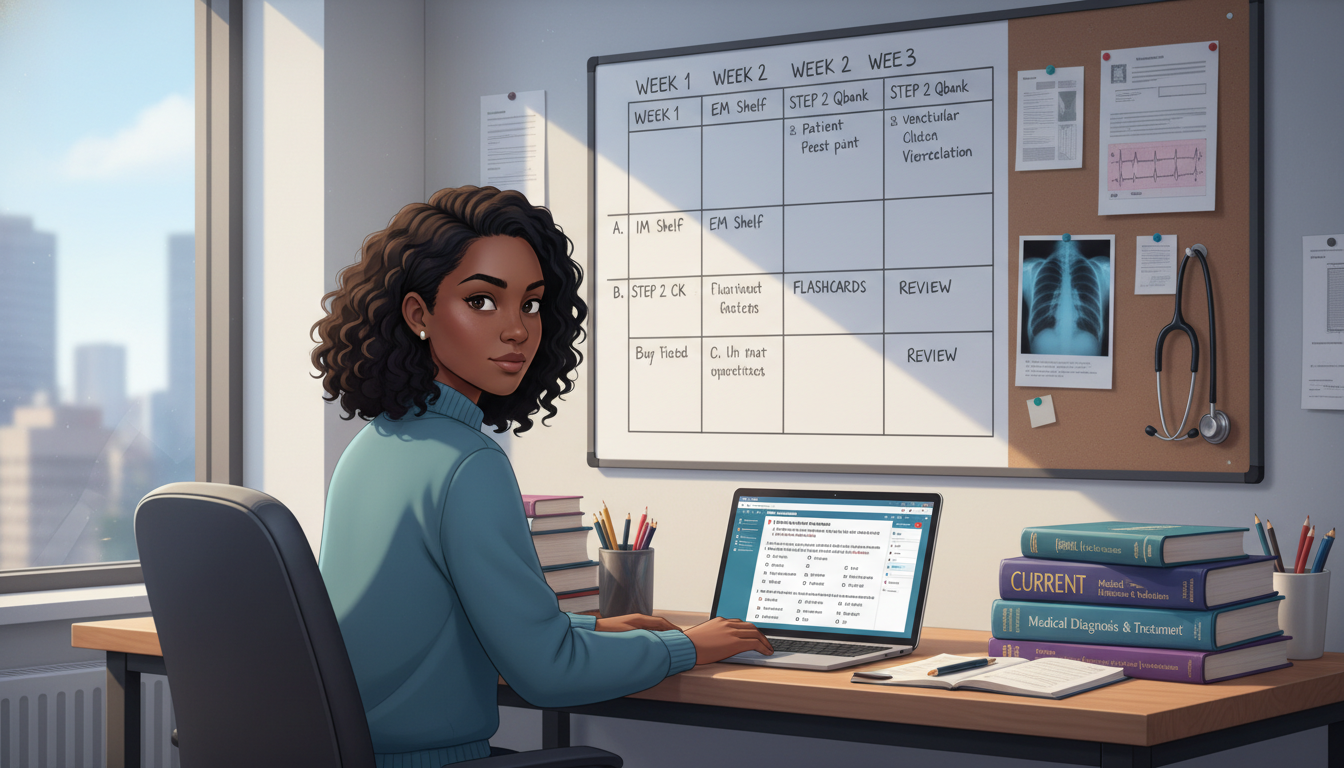
A realistic weekly structure during pre-clinical years might look like:
- Monday–Friday (Daytime):
- Lectures, labs, required sessions
- 2–3 hours post-class review
- Weeknights:
- 1–2 hours of active recall (Anki, practice questions)
- Brief preview of next day’s content
- Saturday:
- 4–6 hours: consolidation, practice questions, group review
- Sunday:
- 2–3 hours of light review
- Plan for the week, adjust Anki and schedule
You are not trying to study every waking hour. You are trying to win small, consistent victories every day.
2. Use Active, Not Passive, Study Methods
Neurosurgery physicians are decision-makers; they retrieve and apply information under pressure. Start training that in M1.
Core tools:
- Spaced repetition (e.g., Anki)
- Make or use decks for anatomy, biochemistry, and physiology.
- Aim for daily reviews; don’t let cards pile up.
- Active recall
- Close your notes and ask: “Explain this process from memory.”
- Teach a friend how the corticospinal tract works or how action potentials are generated.
- Practice questions
- Use course-provided practice questions or early board-style questions when appropriate.
- Start with concepts, not overcomplicated Step-style blocks.
Example: Neuroanatomy module
- Morning: lecture on brainstem and cranial nerves.
- Afternoon: label diagrams from memory, then check.
- Evening: Anki cards + brief self-quizzing: “Name all cranial nerves and one function each.”
You’re training your brain to retrieve information the same way you’ll need to during exams and, later, during patient care.
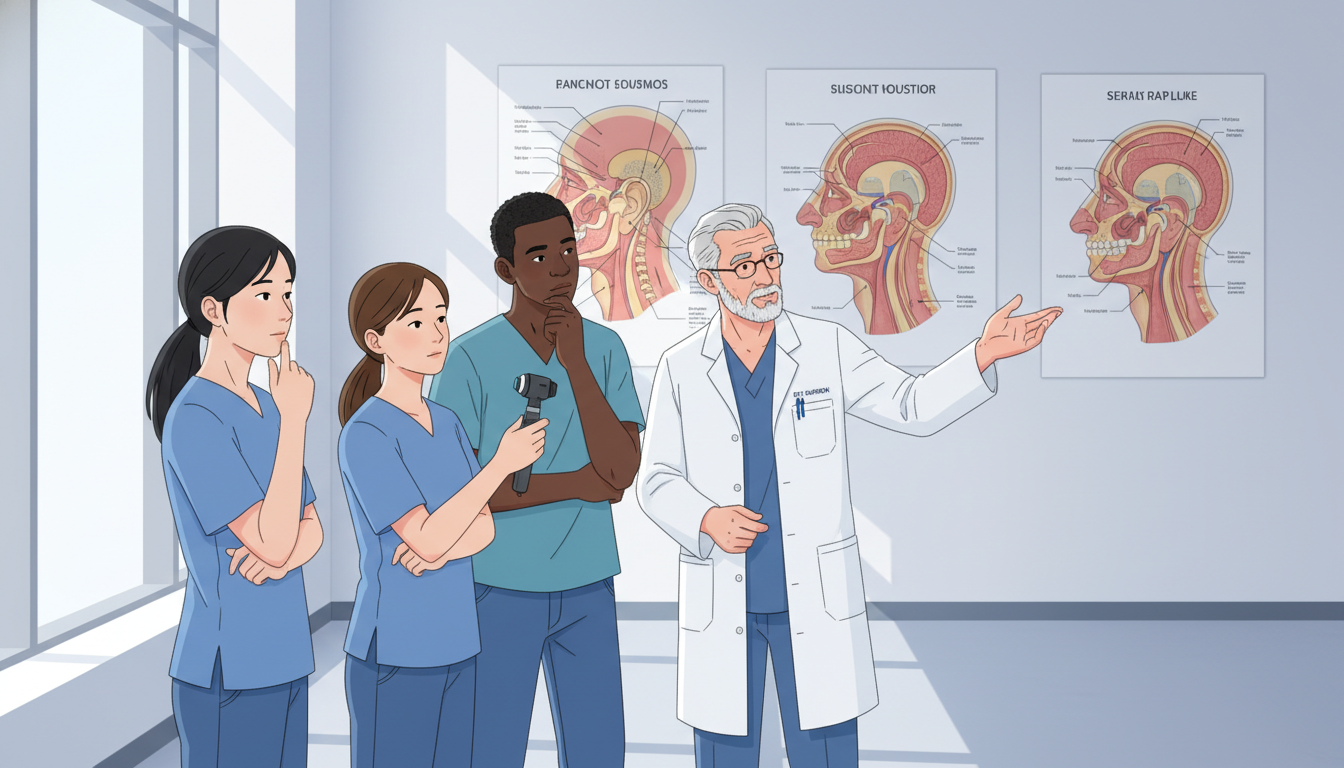
3. Anatomy: Your First Neurosurgical Playground
Anatomy, particularly head and neck and neuroanatomy, is your early opportunity to shine and to test whether neurosurgery genuinely interests you.
Approach:
When you hit head, neck, and neuroanatomy, lean in:
- Spend extra lab time with brain and spine specimens.
- Use 3D apps (e.g., Complete Anatomy, 3D4Medical) to visualize structures.
- Correlate with imaging: MRI, CT of the brain and spine.
Try to connect structure to clinical relevance:
- “If this artery is occluded, what deficits would I expect?”
- “If this nerve root is compressed, what dermatomes are affected?”
This builds an early “neurosurgical lens” without requiring extra hours of unrelated work.
4. Avoiding Academic Overload
You’ll feel pressure to do everything:
- Every optional lecture
- Multiple research projects
- Every neurosurgery interest meeting
- Perfect notes and every resource
You can’t. And you don’t need to.
Practical guardrails:
- Pick one primary learning resource per subject (e.g., lecture + a single textbook or video series).
- Add others only when truly necessary.
- If your grades are slipping, cut back on extras until you stabilize.
- Remember: Your core job in M1 is to pass and learn well, not to be an M1 neurosurgeon.
Early Neurosurgery Exposure: Smart, Sustainable Steps in M1
You do not have to “live in the OR” in your first year. In fact, your program may not even permit much OR time in M1. But you can still begin exploring neurosurgery strategically.
1. Identify Neurosurgery Faculty and Residents
Early in M1:
- Check your school’s neurosurgery department website:
- Faculty profiles
- Research interests
- Resident lists
- Note people working in:
- Tumor/neuro-oncology
- Spine surgery
- Functional neurosurgery (epilepsy, movement disorders)
- Vascular neurosurgery
- Pediatric neurosurgery
Goal in M1: Get to know 1–2 neurosurgeons and at least one resident well enough that they recognize you by name and face.
How to start:
- Attend neurosurgery grand rounds when your schedule allows.
- Join the neurosurgery or neurology interest group.
- Introduce yourself briefly after a talk:
- “I’m an M1, very interested in learning more about neurosurgery over time. I’m primarily focused on mastering my coursework now, but I’d love to learn what students can do in the next year or two to explore the field responsibly.”
This communicates maturity and respect for your current stage.
2. Shadowing: Minimal but Meaningful in M1
Shadowing in M1 should be occasional, not weekly.
Reasonable goal:
1–2 half-days per month during less intense blocks once you’ve found your rhythm.
Tips:
- Start after you’re academically stable (often mid–late first semester or early second).
- Choose varied experiences: clinic, OR, possibly ICU rounds.
- Before shadowing, review:
- Basic neuroanatomy
- Common conditions (e.g., brain tumors, aneurysms, traumatic brain injury)
- After the day, jot:
- What interested you?
- What seemed challenging or draining?
- How did the lifestyle look in reality?
You’re collecting data about fit, not building a CV line.
3. Research: When and How to Begin
Neurosurgery is research-heavy, especially at academic centers. But you do not need multiple first-author neurosurgery publications in M1.
Timeline:
- First semester: Focus on adapting to school and identifying department contacts.
- Late first year / early summer after M1: Start or join one realistic project.
Types of beginner-friendly projects:
- Retrospective chart reviews (e.g., outcomes in spine surgery, brain tumors)
- Case reports and small case series
- Bibliographic or systematic literature reviews with guidance
How to ask for opportunities:
- Email a neurosurgeon or research-oriented resident:
- Brief intro (name, M1)
- Genuine interest in neurosurgery
- Emphasis on understanding that academics come first
- Ask if they have any project suitable for a beginner with limited time
Example:
“I am an M1 interested in exploring neurosurgery over the next several years. My priority right now is performing well in my coursework, but I’m hoping to get early research exposure in a way that’s sustainable. If you are aware of any small project I could contribute to—such as data collection or a case report—I’d be grateful to discuss whether I might be helpful.”
This signals that you are ambitious and realistic—a combination neurosurgeons respect.

M1 Tips for Surviving Medical School Without Burning Out
Neurosurgery attracts high-achieving, driven people—exactly the type most vulnerable to overwork, self-criticism, and burnout in M1. “Surviving medical school” is not just about passing; it’s about preserving the physical and psychological capacity to train in a demanding field long-term.
1. Protect Sleep as Non-Negotiable
Memory, attention, and mood all collapse without sleep. Neurosurgery residency will involve sleepless nights; M1 does not need to.
Targets:
- 6.5–8 hours per night for most students
- Consistent sleep and wake times, even on weekends
Practical tips:
- Set an absolute cutoff (e.g., 11:30 PM). When it hits, you stop.
- Accept that sometimes going to bed is more productive than forcing another hour of low-quality studying.
- Use short 20–30 minute naps when needed, but avoid long late-afternoon naps that wreck nighttime sleep.
Students often believe they’re gaining hours by staying up late; in reality, they’re sacrificing comprehension, recall, and mood—all fatal to neurosurgical ambitions.
2. Exercise as a Performance Tool, Not a Luxury
Neurosurgeons spend long hours standing and operating. Starting in M1, you want a baseline of physical resilience.
- Aim for 3–4 sessions per week:
- 20–40 minutes of cardio (running, cycling, brisk walking)
- 2 short strength sessions (bodyweight, light weights, resistance bands)
Use exercise as:
- A stress outlet
- A way to clear your mind between study blocks
- Discipline training (showing up even when you’re tired)
Block it into your schedule like a class. You wouldn’t skip a mandatory lab; think of your 30-minute run the same way.
3. Build a Supportive Peer Network
You don’t need dozens of friends in M1, but you do need a few reliable people:
- One or two classmates you can:
- Study with
- Share resources with
- Vent to after a rough exam block
- A peer or senior student who’s neurosurgery-inclined to share perspective
Avoid:
- Constantly comparing grades and study hours
- “Toxic competitiveness”
- People who brag about never sleeping or always studying—this is not sustainable.
Instead, build a small group committed to getting everyone through M1 with kindness and honesty.
4. Managing Imposter Syndrome and Self-Doubt
Almost every neurosurgeon you admire has lived through intense self-doubt, especially early in training. First year of medical school can amplify this.
When you feel behind or inadequate:
- Normalize it: “Of course this feels hard; it’s supposed to.”
- Zoom out: One exam or block will not make or break your match chances.
- Talk to someone:
- A trusted classmate
- A student affairs dean
- A mental health professional (most schools have access)
Red flags to take seriously:
- Persistent hopelessness
- Thoughts of self-harm
- Inability to function despite effort
Seeking help is not weakness; it’s what you would want your future neurosurgical patients to do when they’re struggling.
Long-View Planning: Positioning for a Future Neurosurgery Residency
Even though you’re in M1, it’s natural to think ahead to neurosurgery residency. The key is to align your present actions with long-term goals, without letting the future overwhelm you.
1. What Neurosurgery Programs Ultimately Care About
While exact criteria vary, most neurosurgery residency programs value:
- Strong academic performance (pre-clinical and clinical)
- Solid Step/COMLEX scores (or equivalent performance on pass/fail systems via shelf exams, MSPE, etc.)
- Sustained neurosurgery interest and exposure
- Research (especially neurosurgery or neuroscience-related)
- Meaningful letters of recommendation from neurosurgeons
- Professionalism, resilience, teamwork
M1 can contribute to:
- Academic performance and basic science foundation
- Early mentorship connections
- The initial stages of a research trajectory
- Habits that support long-term consistency
2. Year-by-Year View (So You Don’t Overload M1)
M1:
- Adapt to medical school
- Perform solidly in courses
- Explore neurosurgery lightly
- Begin or plan a manageable research project (often toward end of the year or for summer)
M2:
- Strengthen neurosurgery exposure
- Deepen research involvement
- Prepare intensely for Step/Level exams
M3:
- Excel in core clerkships (not just neurology)
- Complete neurosurgery rotations/ electives
- Solidify letters of recommendation
M4:
- Sub-internships (away rotations if applicable)
- Finalize application and interview strategy
This perspective lets you recognize that you don’t have to accomplish everything neurosurgery-related in M1—you just need to start on a sustainable path.
3. When to Reassess Your Fit for Neurosurgery
As you move through M1 and M2, pay attention to:
- Do you feel energized or drained by neuroanatomy and neurology content?
- How do you react to long hours in the hospital or OR (during shadowing)?
- What do you admire about neurosurgeons beyond the technical skill—are you drawn to the lifestyle, the decision-making, the types of patients?
It’s entirely acceptable to:
- Enter M1 believing you want neurosurgery
- Explore it honestly
- Eventually choose a different field that aligns better with your values and preferences
This is not failure; it’s good judgment.
Putting It All Together: A Sample 4-Week Plan for an M1 Interested in Neurosurgery
Here’s how you might structure a month during a moderately intense block (e.g., systems-based course with some neuro content), balancing surviving medical school with exploring neurosurgery.
Week 1–2: Stabilize Academics
- Daily:
- Attend required sessions
- 2–3 hours post-class review
- 1–2 hours Anki + practice questions at night
- Two 30–40 minute workouts each week
- One social event or relaxed evening with friends each week
- No research or shadowing commitments yet (or very minimal)
Week 3: Light Neurosurgery Exposure
- Continue same academic routine
- Attend one neurosurgery grand rounds or interest group meeting
- Send one email to a neurosurgeon or neurosurgery resident to introduce yourself
- Consider scheduling one half-day of shadowing for the next month
Week 4: Research Exploration
- Maintain academic schedule
- Meet (in person or virtually) with a neurosurgery faculty member or resident:
- Discuss research options
- Clarify expectations and time commitment
- Decide whether to:
- Start a small research task (e.g., paper collection, data entry)
- Or simply plan to begin in the summer after M1
At the end of the month, reflect:
- Are my grades strong or improving?
- Am I sleeping, exercising, and reasonably functional?
- Do I still feel curious about neurosurgery?
Adjust based on the answers.
FAQs: Surviving M1 with Neurosurgery in Mind
1. Do I need to decide on neurosurgery during first year of medical school?
No. You do not need to make a final decision in M1. It’s helpful to explore neurosurgery early—especially through anatomy, shadowing, and meeting mentors—but many residents decide in M2 or even early M3. Your priority in M1 is building a strong academic foundation and healthy habits.
2. How important is M1 performance for a future neurosurgery residency?
M1 grades matter, but they are just one piece. They contribute to your class rank and demonstrate your ability to handle rigorous basic science. However, neurosurgery programs will ultimately weigh your clinical grades, Step/COMLEX performance, research, and letters of recommendation more heavily. Think of M1 as setting the stage rather than defining the whole play.
3. Should I start neurosurgery research immediately in first semester?
Usually, no. It’s often smarter to spend your first semester understanding medical school, building effective study systems, and stabilizing your performance. Once you feel comfortable (often in the second semester or for the summer after M1), you can look for a manageable project. A small, well-executed research project is better than multiple rushed, neglected ones.
4. How much shadowing is enough in M1 for someone considering brain surgery residency?
Shadowing in M1 should be occasional: perhaps 1–2 half-days a month once your academics are stable. The aim is to gain a realistic sense of the neurosurgeon’s daily work and demands, not to accumulate massive hours. More intensive exposure to neurosurgery typically comes in the clinical years through electives, sub-internships, and away rotations.
Surviving first year of med school as a neurosurgery-minded student is about balance: mastering the basics, cautiously layering in specialty exploration, and fiercely protecting your health and resilience. If you treat M1 as the time to build durable habits and a solid foundation, you’ll be far better prepared for the demanding—but deeply rewarding—path toward a neurosurgery residency.