Surviving first year of med school (M1) is challenging no matter what specialty you’re considering—but if you’re already drawn to nuclear medicine, you have unique opportunities and pressures from day one. This guide will walk you through how to survive and thrive in your first year while quietly positioning yourself for a competitive nuclear medicine residency and a successful nuclear medicine match later on.
Understanding M1 in the Context of Nuclear Medicine
First year of medical school is about foundations: anatomy, physiology, biochemistry, histology, and early clinical skills. None of these are labeled “nuclear medicine,” but all of them are directly relevant to a future career in imaging, radiopharmaceuticals, and molecular diagnostics.
How M1 Connects to Nuclear Medicine
Even before you step into a nuclear medicine department, M1 content helps you:
Interpret images:
- Anatomy → localizing lesions on PET/CT or SPECT
- Physiology → understanding tracer uptake patterns
- Pathology → recognizing how disease alters normal structures and functions
Understand radiotracers and radiopharmaceuticals:
- Biochemistry → receptor-ligand interactions, metabolism, transporters
- Pharmacology (often late M1 or early M2) → kinetics, distribution, clearance
Talk the same language as nuclear medicine specialists:
Nuclear medicine attendings love students who can connect basic science (e.g., mitochondrial function, receptor binding) to tracer behavior on scans.
Setting Expectations: What Survival Really Means
“Surviving medical school” in M1 is not just about passing exams. It means:
- Academic survival – learning how to efficiently master large volumes of dense material.
- Personal survival – protecting your physical and mental health.
- Professional survival – building early habits and relationships that will pay off when you apply to nuclear medicine residency programs.
Think of M1 as your on-ramp to the long road toward the nuclear medicine match. You don’t need to do everything nuclear-right now—but you do want to move steadily in that direction.
Academic Survival: Study Strategies That Actually Work
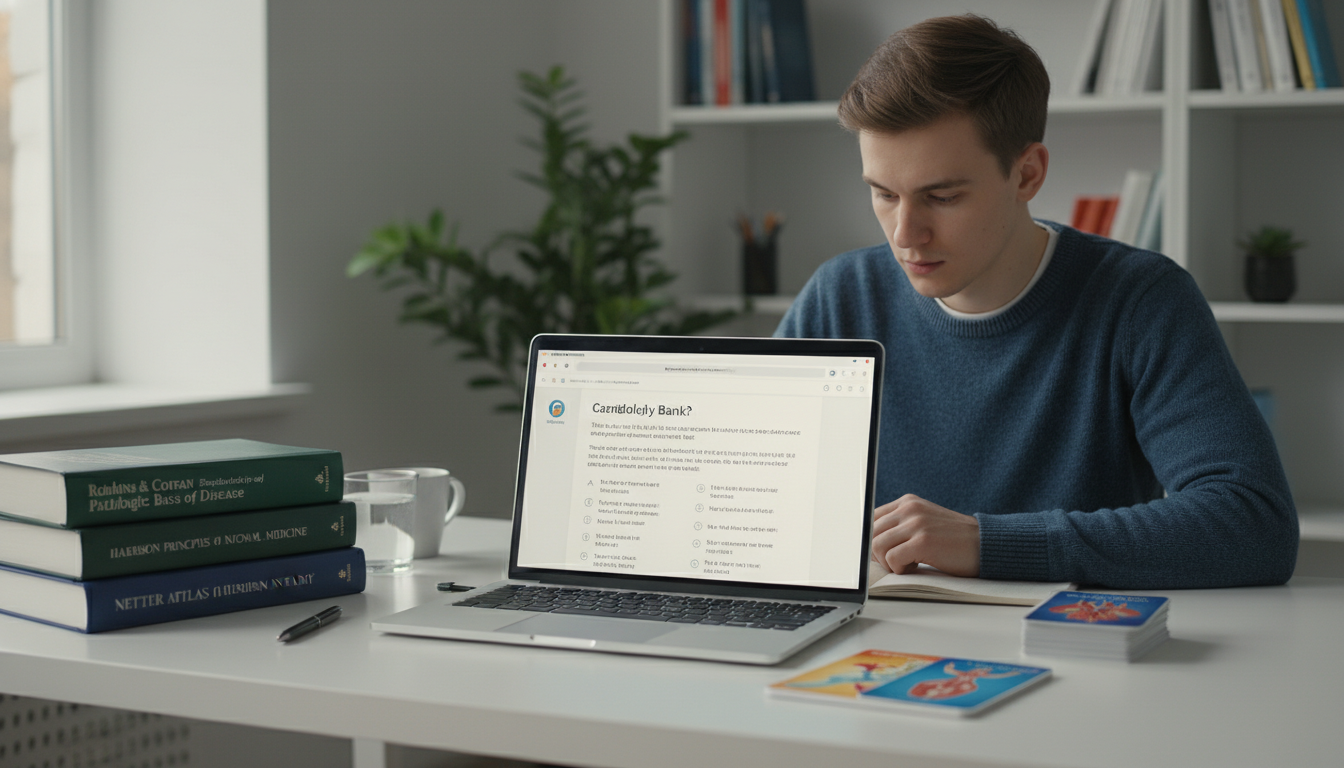
First year can feel like “drinking from a firehose.” A smart strategy is more important than raw effort.
Choose a Study System and Stick to It
The fastest way to burnout is experimenting endlessly with study techniques. Pick a basic framework and refine it, instead of reinventing it every block.
A practical M1 system:
Preview → Learn → Review → Test
- Preview (10–15 min per lecture)
Skim slides or syllabus. Note key headings/diagrams. - Learn (during/after lecture)
Listen actively, annotate slides, and identify high-yield points. - Review (same day)
Summarize core concepts in your own words. Create or tag relevant Anki cards. - Test (daily/weekly)
Use spaced repetition (Anki, Firecracker, etc.) plus practice questions.
- Preview (10–15 min per lecture)
Use Active Learning Tools
- Anki or similar spaced repetition for facts (enzymes, pathways, anatomy landmarks).
- Concept maps for integrating physiology, pathophysiology, and imaging correlations.
- Practice questions early and often—especially important if your school is preparing you for board-style exams.
Avoid Passive Cramming
- Re-reading, highlighting, and endless note-taking feel productive but are low yield.
- Replace “I’ve reviewed that chapter three times” with “I can teach it back in two minutes.”
Applying This to High-Yield Nuclear Medicine-Related Topics
While all M1 content matters, some areas are particularly useful if you’re thinking about a future nuclear medicine residency:
Anatomy
- Focus: cross-sectional anatomy, thorax/abdomen/pelvis, brain.
- Tip: when learning anatomy, always ask, “How would this look on CT or PET/CT?” Use radiology atlases alongside your dissection or prosections.
Physiology
- Focus: organ systems where nuclear imaging is common—cardiology (perfusion, viability), endocrinology (thyroid), nephrology (renal scans), oncology.
- Tip: relate physiologic flows and receptor distributions to how tracers might behave: perfusion, uptake, retention, and clearance.
Biochemistry
- Focus: metabolism (glycolysis, oxidative phosphorylation, nucleotide synthesis), receptor-ligand binding, transporters.
- Tip: when you learn about glucose metabolism, tie it to FDG-PET; when you learn about bone metabolism, tie it to bone scans.
Example Week: Structuring Your Time
Monday–Friday (Regular Week)
- 8:00–12:00 – Classes/Labs
- 13:00–15:00 – Watch/review lectures at 1.25–1.5x speed; summarize notes.
- 15:00–16:00 – Anki/spaced repetition.
- 16:00–17:00 – Practice questions or case-based learning.
- 17:00–19:00 – Gym, dinner, break.
- 19:00–20:00 – Light review / preview next day.
Weekend
- Saturday AM – Consolidated review of the week’s content.
- Saturday PM – Practice questions; short research reading if you’re exploring nuclear medicine.
- Sunday – Largely off; 1–2 hours of Anki to keep spaced repetition intact.
This structure gives you both consistency and recovery time—key ingredients for surviving medical school.

Building Early Exposure to Nuclear Medicine (Without Burning Out)
You do not need to commit to nuclear medicine in your first year—but early exposure helps you confirm your interest and stand out later when you apply for nuclear medicine residency positions.
Low-Effort Ways to Explore Nuclear Medicine in M1
These activities fit into a busy M1 schedule without overwhelming you:
Attend a Departmental Noon Conference (Occasionally)
- Aim for 1 conference per month, not every week.
- Introduce yourself briefly to the attending or fellow afterward:
“I’m an M1 interested in imaging and nuclear medicine; I’m just starting to explore the field.” - This plants a seed for future mentorship.
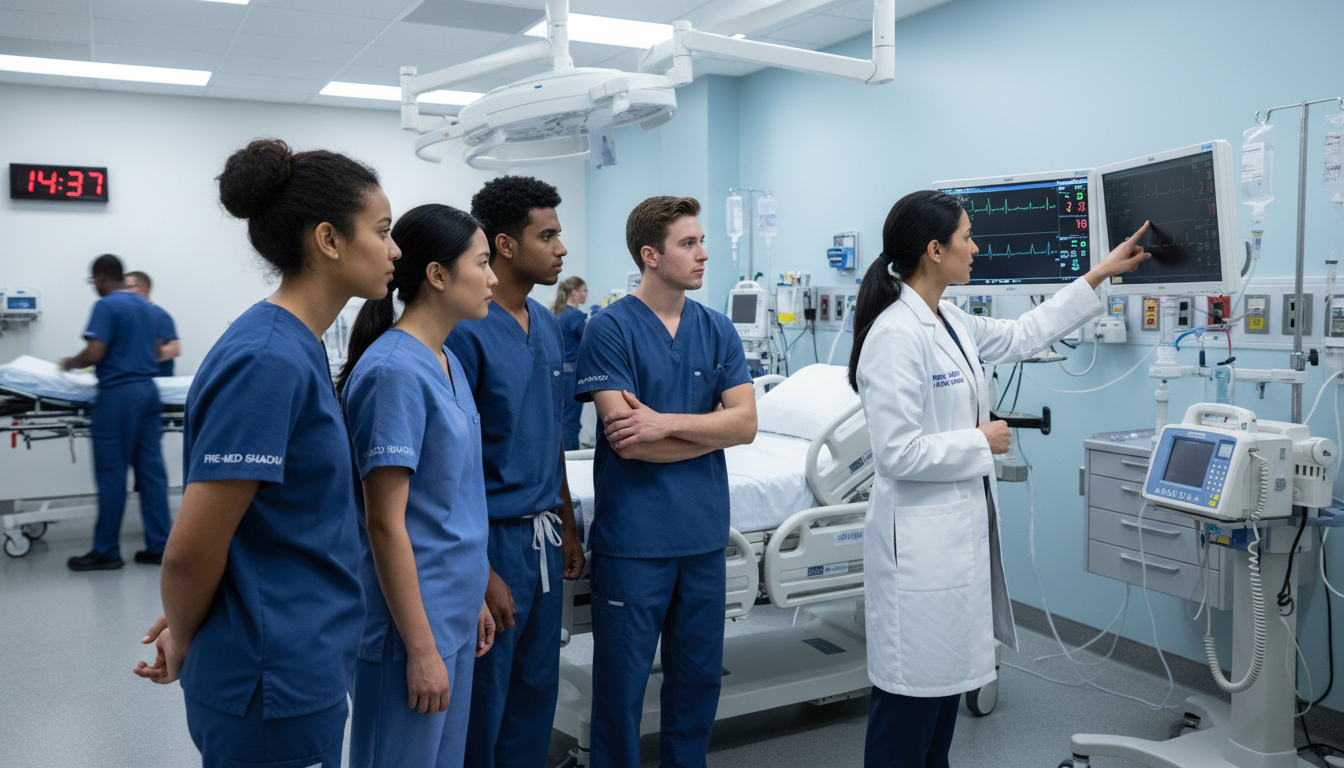
Shadowing, Once in a While
- 1 half-day every 4–6 weeks is enough in M1.
- Focus on:
- How the team reads studies (PET/CT, bone scans, myocardial perfusion).
- Interactions with referring clinicians.
- Workflow in the radiopharmacy and scanner suite.
Join Radiology or Nuclear Medicine Interest Groups
- Attend introductory talks.
- Volunteer for small, low-commitment tasks (e.g., helping with set-up for events, social media, or newsletters).
- Ask about student-friendly research opportunities.
Research During M1: How Much Is Realistic?
Research can help you when it’s time for the nuclear medicine match, but overcommitting M1 is a common mistake.
Realistic goals for M1:
- Be involved in 1 modest project, not 3–5 large ones.
- Target:
- A case report or image-based teaching case.
- A retrospective chart review supervised by a nuclear medicine or radiology attending.
- A small QI (quality improvement) project in imaging workflow.
Criteria for a good M1 research project:
- Clear scope and timeline (e.g., data collection in 2–3 months).
- An engaged mentor who understands M1 time constraints.
- Natural tie to imaging or nuclear medicine, even if not labeled “nuclear” from the start (e.g., oncology imaging patterns, cell metabolism, radiology-embedded QI).
Sample email to reach out to a potential mentor:
Dear Dr. [Name],
My name is [Your Name] and I am a first-year medical student at [School]. I’m very interested in imaging and nuclear medicine and am hoping to gain early exposure to research in this area.
I have a basic science background in [brief area, if applicable] and am comfortable with [skills: data entry, literature review, basic stats]. I’m looking for a small, well-defined project that would be realistic alongside my M1 coursework.
If you have any ongoing projects where a motivated student could help with data collection or literature review, I would be grateful for the opportunity to talk further.
Sincerely,
[Your Name]
Notice the emphasis on realism and supporting existing work, rather than designing a major project from scratch.
Personal Survival: Protecting Your Health and Sanity in M1
You cannot become a nuclear medicine specialist if you burn out before Step/Level exams or residency applications. Surviving first year of med school requires deliberate self-management.
Sleep: Non-Negotiable for Surviving Medical School
Aim for 7–8 hours/night. Chronic sleep deprivation will:
- Worsen your memory and concentration.
- Amplify anxiety and imposter syndrome.
- Make you less efficient, so you paradoxically lose study time.
Practical habits:
- Fixed wake time, even on weekends.
- Stop serious studying 30–60 minutes before bed.
- Avoid the “doom-scrolling” trap after late-night Anki.
Physical Health: Small Investments, Big Returns
You don’t need to train for a marathon. You do need consistent movement.
- 3–5 sessions/week, 30–45 minutes each:
- Brisk walking, cycling, or jogging.
- Light resistance training or bodyweight exercises.
- Treat it as part of your schedule, not an optional luxury.
Nutrition basics:
- Keep snacks simple and predictable: nuts, yogurt, fruit, granola bars.
- Avoid relying on pure caffeine and sugar; they fuel a boom-bust energy pattern.
- Batch-cook 1–2 simple meals on weekends to avoid food stress during exam weeks.
Mental Health: Normalize Asking for Help
M1 is often the hardest psychological year:
- New environment and expectations.
- Constant, high-stakes comparisons.
- Fear of underperforming and “ruining” your future specialty prospects.
Key strategies:
- Use your school’s counseling or wellness services early, not after a breakdown.
- Create a small, trusted peer circle where you can be honest about struggles instead of pretending everything is fine.
- Set social media boundaries—especially with high-achieving classmates posting study setups and “perfect” routines.
If you find yourself thinking, “I’m failing at this” daily, or your sleep and appetite are consistently off, that’s a signal, not a personal failure. Talk to someone.
Positioning Yourself for a Future Nuclear Medicine Residency
You don’t match into nuclear medicine from M1—but what you do in M1 can make your later path smoother.
Clarify the Nuclear Medicine Training Path Early
In the U.S. and many other systems, nuclear medicine can be pursued via:
- Diagnostic Radiology residency with additional nuclear medicine or molecular imaging training.
- Dedicated Nuclear Medicine residency in some institutions.
- Hybrid pathways (e.g., radiology + nuclear medicine combined programs).
As an M1, you don’t need to choose yet, but you should:
- Learn how your institution structures nuclear medicine training.
- Ask mentors, “What path did you take, and what would you recommend now?”
- Keep an open mind about diagnostic radiology vs dedicated nuclear medicine; both can lead to strong imaging careers.
Building a Competitive Profile Starting in M1
For a strong eventual nuclear medicine match, you’ll want to accumulate:
Solid Academics
- Pass all M1 courses without remediation.
- Build habits that will help with Step/Level exams later (spaced repetition, early question practice).
Evidence of Interest in Imaging/Nuclear Medicine
- Membership and active participation in radiology or nuclear medicine interest groups.
- Occasional shadowing or conference attendance.
- At least one project (research, QI, or educational) touching imaging.
Mentorship and Letters of Recommendation
- You don’t need letters in M1—but you can start:
- Identifying approachable attendings.
- Contributing meaningfully to a project.
- Staying in occasional contact (brief email updates, end-of-year thank-you).
- You don’t need letters in M1—but you can start:
Example: A “Nuclear-Friendly” M1 Portfolio
By the end of first year, a realistic, strong foundation might look like:
- Academics:
- Passed all courses, mid-to-upper range of the class (exact rank matters less than solid performance).
- Activities:
- Member of Radiology or Nuclear Medicine Interest Group.
- Attended 3–6 imaging-related lectures or noon conferences.
- Shadowed in nuclear medicine twice (half-day sessions).
- Scholarship:
- Contributed to one small case report or imaging-based teaching module, with your name on an abstract/poster by M2.
This is enough to show genuine, sustainable interest without sacrificing your sanity or grades.
Practical M1 Tips: Day-to-Day Survival With a Nuclear Medicine Mindset
To bring it all together, here are concrete M1 tips framed specifically for future imagers and nuclear medicine applicants.
M1 Tips for Daily Study
Integrate Imaging Early
- While learning anatomy, keep a CT or MRI atlas open in parallel.
- When you study cancer biology, ask: “How would this tumor be staged and followed with imaging?”
Make “Why” a Habit
- Nuclear medicine is all about function, not just structure.
- When you learn a pathway, ask: “Why would this alter tracer uptake? Why would a lesion be ‘hot’ or ‘cold’ on a given scan?”
Practice Clinical Reasoning Early
- In case discussions, don’t wait to be asked:
- “What imaging modality would be best here and why?”
- “Is there a nuclear medicine study that would help answer this question?”
- In case discussions, don’t wait to be asked:
Time Management for Surviving Medical School
Use Block-Based Planning
- Instead of hour-by-hour micromanaging, plan your week in blocks:
- Study blocks, wellness blocks, admin/email, research/interest group.
- Protect at least one half-day per week as “no school” time.
- Instead of hour-by-hour micromanaging, plan your week in blocks:
Pre-Plan for Exam Weeks
- Two weeks before your exam:
- Decrease extracurricular commitments temporarily (including research).
- Increase question volume and targeted review.
- Let any mentors know in advance you’ll be lighter on project-related communication around exam periods.
- Two weeks before your exam:
Red Flags and Course Corrections
Pay attention if:
- You’re consistently behind on lectures and Anki by more than 1–2 weeks.
- You’re skipping meals, sleep, or exercise regularly “just for this block.”
- You haven’t had time for any imaging exposure at all by late spring and still think you might want nuclear medicine.
Corrective steps:
- Meet with an academic advisor or learning specialist for a customized plan.
- Trim or pause non-essential commitments; it’s okay to slow research temporarily.
- Schedule at least one low-stress shadowing session or conference to reconnect with your motivation.
Frequently Asked Questions (FAQ)
1. Do I need to know in M1 that I want a nuclear medicine residency?
No. M1 is early; many students don’t finalize specialty plans until clinical years. However, if you already have an interest in imaging or nuclear medicine, light early exposure (shadowing, interest group attendance, a small project) can help you confirm that interest and make later steps easier. Just don’t sacrifice your core M1 performance to “chase” a specialty too soon.
2. How much research do I need in nuclear medicine to be competitive?
Quality matters far more than quantity. For most applicants, a handful of meaningful projects with clear roles—ideally including at least one imaging or nuclear-related publication, poster, or abstract—is sufficient. Starting in M1 with one manageable project is usually better than juggling multiple large projects you can’t fully support. You can expand your research involvement in M2 and beyond as your study efficiency improves.
3. Will struggling in first year ruin my chances at a nuclear medicine match?
Not usually. Many excellent residents had rocky transitions in M1. The key is trajectory: do you identify your challenges early, seek help, and improve over time? A single rough block or even a course remediation is not an automatic barrier, especially if you demonstrate subsequent academic strength, clinical performance, and genuine commitment to nuclear medicine or radiology.
4. What are the most important M1 courses for a future in nuclear medicine?
All M1 courses contribute, but particularly valuable for a future nuclear medicine specialist are:
- Anatomy (especially cross-sectional and neuroanatomy)
- Physiology (cardiac, endocrine, renal, and pulmonary systems)
- Biochemistry and cell biology (metabolism, receptors, membrane transport)
- Early pathology or pathophysiology (if introduced in M1)
Treat these as the language and logic behind the scans you’ll one day interpret. Strong foundations now will make your later imaging education far more intuitive.
Surviving first year of med school while keeping an eye on a future nuclear medicine residency is absolutely possible—if you balance academic discipline with self-care, curiosity with realism, and ambition with sustainable effort. Focus on building solid habits, staying healthy, and taking small but consistent steps toward imaging exposure. The nuclear medicine match is years away; M1 is about making sure you’re still energized, capable, and motivated when you get there.