
Understanding the Telemedicine Landscape
Telemedicine has shifted from a niche service to a mainstream component of healthcare delivery. For medical students, residents, and early-career physicians, it now represents a real and expanding career pathway—not just a side gig.
Telemedicine typically refers to clinical care delivered remotely using telecommunications technology (video, phone, chat, and secure messaging). Telehealth is a broader term that can include non-clinical services like education, care coordination, and remote monitoring.
Key drivers of telemedicine growth:
- COVID-19 acceleration: The pandemic catalyzed rapid adoption of virtual care, changed patient expectations, and forced systems to build robust telehealth infrastructure.
- Technology readiness: Widespread broadband access, smartphones, secure EHRs, and integrated video platforms make remote physician work feasible and scalable.
- Policy and payer shifts: Medicare, Medicaid, and commercial insurers have expanded telemedicine coverage, including parity for many services.
- Workforce and lifestyle trends: Physicians are increasingly seeking flexibility, geographic mobility, and reduced burnout—needs that telemedicine jobs can help meet.
As a residency applicant or trainee, you’re entering at a time when telemedicine is no longer an experiment. It’s part of core clinical operations—and a legitimate axis along which you can build a career.
Telemedicine vs. Traditional Practice: What Actually Changes?
While the clinical thinking is the same, several aspects differ in telehealth physician roles:
- Modality of interaction: Video, phone, and text replace in-person encounters. This requires deliberate communication skills and creative approaches to physical assessment.
- Scope of services: Many telemedicine roles focus on low-acuity, episodic care, but others now cover chronic disease management, specialty consults, and longitudinal primary care.
- Work environment: You may work from home, from a centralized telehealth hub, or a hybrid environment within a health system.
- Scheduling and autonomy: Many remote physician work roles offer more schedule control (fixed shifts, part-time, per diem, or asynchronous work).
- Documentation and workflow: Telemedicine platforms typically integrate scheduling, video, notes, and e-prescribing; learning these tools is part of the job.
Understanding these differences will help you evaluate which telehealth physician opportunities actually match your skills, values, and career stage.
Major Types of Telemedicine Jobs for Physicians
The telemedicine market is diverse. “Telemedicine jobs” can mean anything from answering after-hours calls to delivering complex subspecialty care or leading digital health strategy. Below are the main categories and how they typically function.
1. Direct-to-Consumer (DTC) Telemedicine
These are often what people think of first: on-demand virtual visits for acute or minor conditions, typically paid by insurers or directly by patients.
Typical employers:
- Large telemedicine companies (e.g., Amwell, Teladoc, MDLIVE, etc.)
- Retail clinics and pharmacy chains with virtual care arms
- Employer-sponsored virtual clinics
Common clinical scenarios:
- Upper respiratory infections, UTI, skin rashes
- Contraception management, refills of stable medications
- Basic behavioral health check-ins (for some roles)
- Follow-up visits after in-person encounters
Pros:
- High schedule flexibility (evenings, weekends, part-time)
- Clear, time-limited encounters (often 10–15 minutes)
- Straightforward workflows, standardized protocols
- Easier entry point for residents and early-career physicians
Cons:
- Can feel repetitive and transactional
- Limited continuity of care
- Pressure for rapid throughput
- Restricted ability to examine patients physically
Best suited for: EM, FM, IM, Med-Peds, and Urgent Care–trained physicians who enjoy problem-solving, clear algorithms, and lower-acuity care.
2. Tele-Primary Care and Longitudinal Virtual Clinics
A step beyond episodic DTC visits, these roles involve ongoing care relationships with panels of patients.
Typical employers:
- Virtual-first primary care startups
- Health systems expanding telehealth clinics
- Medicare Advantage and value-based care organizations
- Concierge medical groups with hybrid models
Clinical focus:
- Chronic disease management (HTN, DM, CHF, COPD)
- Preventive care, wellness, and annual visits
- Medication management and refills
- Care coordination with in-person services as needed
Pros:
- Opportunity for continuity and relationship-building
- Larger impact on population health and chronic disease outcomes
- Multidisciplinary teamwork with nurses, health coaches, dietitians
- Often mission-driven models with value-based care incentives
Cons:
- Requires robust communication and coordination skills
- Documentation and messaging load can be heavy (e.g., asynchronous inbox work)
- Must navigate what can and cannot be safely managed remotely
- Longer-term emotional investment in patients
Best suited for: FM, IM, Med-Peds, and Geriatrics physicians interested in longitudinal care, prevention, and integrated team-based practice.

3. Tele-Specialty Care (Tele-Consults and e-Consults)
Telemedicine is expanding across virtually all specialties, including:
- Psychiatry and Behavioral Health
- Dermatology
- Endocrinology
- Cardiology, Pulmonology, Nephrology
- Infectious Disease
- Neurology (e.g., telestroke services)
- Oncology follow-ups
- Allergy/Immunology, Rheumatology, and more
Models of care:
- Synchronous video visits with referred patients
- Store-and-forward (e.g., teledermatology reviewing images and notes)
- e-Consults where specialists advise PCPs asynchronously within the EHR
- Acute tele-specialty services (e.g., telestroke within hospital networks)
Pros:
- Leverages deep specialty expertise across wide geographies
- High impact on access in rural and underserved areas
- Allows specialists to reduce travel between sites
- Often integrates into existing health system jobs (hybrid roles)
Cons:
- Requires detailed protocols for what can be safely done remotely
- Licensing and credentialing can be complex across multiple states
- Requires strong documentation and consultation skills
- Technology integration varies by institution
Best suited for: Board-certified specialists who want to extend their reach, improve access, and potentially reduce physical clinic time.
4. Tele-Psychiatry and Behavioral Health
Tele-psychiatry deserves separate mention because it is one of the most mature and in-demand telehealth services.
Settings include:
- Outpatient clinics (community and private)
- Hospital EDs and inpatient consults
- Integrated primary care models
- Digital mental health startups and apps
Role types:
- Scheduled psychiatric evaluations and follow-ups
- Collaborative care consultation for primary care teams
- Crisis evaluations in EDs or mobile crisis teams
- Prescription management for depression, anxiety, ADHD, etc.
Pros:
- Strong evidence base for effectiveness via telehealth
- High patient acceptance, especially for younger populations
- Geographic flexibility and reduced need for in-person infrastructure
- Significant need in both urban and rural markets
Cons:
- High demand can mean heavy caseloads
- Burnout risk if boundary-setting and time management are poor
- Prescribing controls and regulations vary by state
- Must master building therapeutic rapport via video
Best suited for: Psychiatrists, child and adolescent psychiatrists, psychiatric NPs, and psychologists who prefer talk-based and cognitive work and appreciate flexible, remote physician work models.
5. Teleradiology and Telepathology
These fields were “tele” long before telemedicine became a buzzword.
Teleradiology:
- Radiologists read imaging (CT, MRI, X-ray) remotely.
- Commonly covers night reads, overflow, small hospitals, and subspecialty reads.
- Often high-compensation shift-based work, sometimes with international time zone leverage.
Telepathology:
- Remote slide reading via digital pathology systems.
- Increasing adoption in academic centers and multi-hospital networks.
Pros:
- High degree of location flexibility
- Clearly defined work units (studies, cases)
- Often premium compensation for odd-hour coverage
Cons:
- Sedentary, screen-intensive work
- IR and procedures still require in-person presence
- Malpractice and QA oversight still significant
Best suited for: Radiologists and pathologists comfortable with high-volume image or slide interpretation, who value independence and flexible living arrangements.
6. Non-Clinical and Hybrid Telemedicine Careers
Beyond direct patient care, telemedicine growth has created new roles for physicians in:
- Medical leadership: Chief Medical Officer (CMO), medical director, clinical operations lead for telehealth companies or health systems.
- Product and design: Clinical input for digital health products, apps, and platforms.
- Quality and safety: Designing telehealth protocols, outcomes tracking, and improvement initiatives.
- Education: Teaching telemedicine best practices, supervising residents in virtual clinics.
These roles may be part-time alongside clinical telehealth or fully non-clinical. For residents and early-career physicians, initial involvement might look like:
- Serving on a telehealth steering committee at your institution
- Being a resident champion for virtual care workflows
- Participating in pilot programs or QI projects related to telehealth
Preparing in Residency for a Telehealth Physician Career
Residency is an ideal time to build foundational skills for future telemedicine jobs. Even if you plan to start in traditional practice, telehealth will almost certainly become part of your work.
1. Seek Out Telemedicine Rotations and Clinics
Many programs now offer:
- Telehealth continuity clinics
- Structured telemedicine rotations (e.g., urgent telehealth, tele-geriatrics)
- Electives in digital health or informatics with a telemedicine component
If these don’t exist formally:
- Ask program leadership whether you can pilot a telehealth clinic session with supervision.
- Join or help create a resident-led Telemedicine Interest Group.
- Propose scholarly projects that evaluate telehealth outcomes or patient satisfaction.
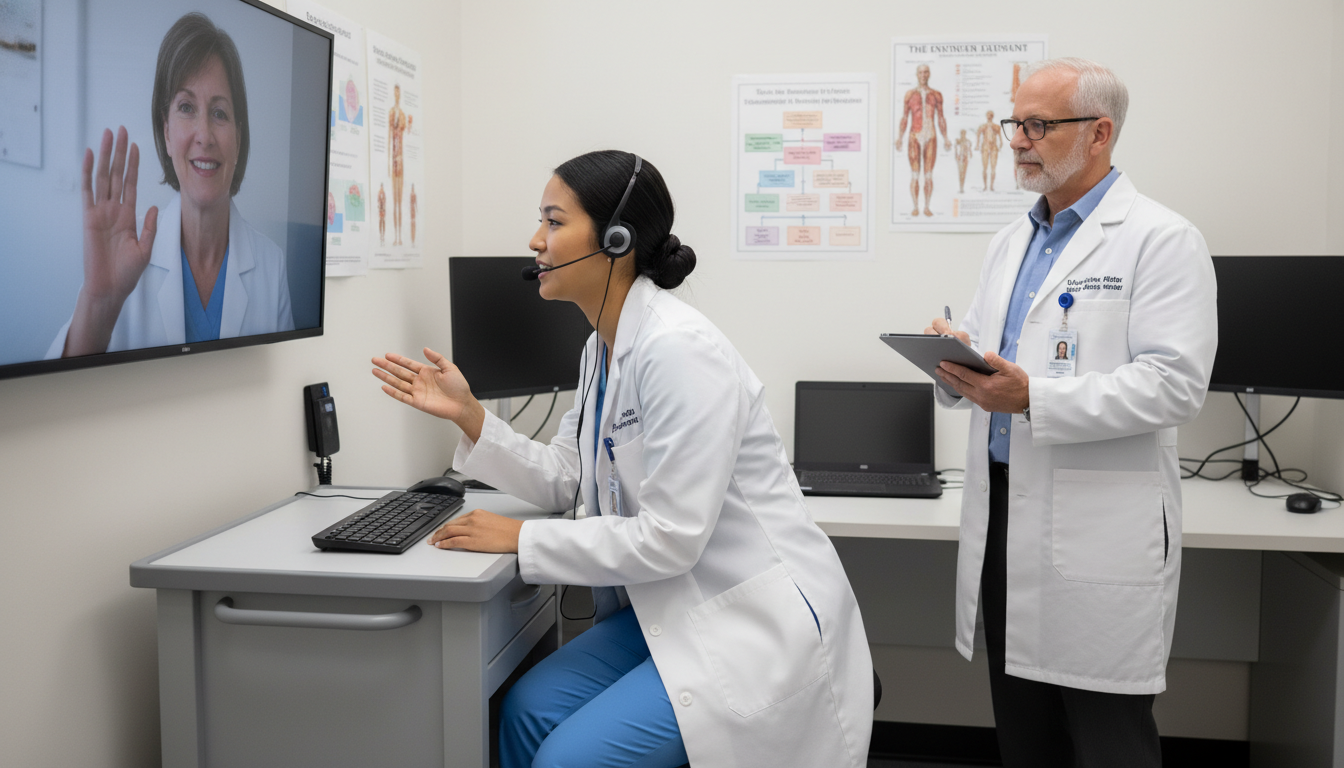
2. Master the Skills of the Virtual Encounter
Telemedicine is not just “clinic via Zoom.” It requires specific competencies:
Technical and environmental setup:
- Reliable internet connection and backup plan (hotspot).
- Neutral, professional background, camera at eye level, adequate lighting.
- Familiarity with platform features (screensharing, chat, breakout, documentation windows).
Clinical communication skills:
- Clear introductions and consent for telehealth.
- Checking patient location and emergency backup plan at the start of the visit.
- Intentional eye contact (looking at the camera, not just the screen).
- Verbalizing your thought process more explicitly than in person.
Remote physical exam techniques:
- Guided self-exam (e.g., palpating abdomen, checking for edema).
- Observation-based assessments (gait, breathing, rashes).
- When to escalate to in-person evaluation or ED.
Ask attendings for feedback on your telemedicine style, just as you would for bedside manner in clinic.
3. Build a Telemedicine Portfolio for Residency Applications
If you’re still applying to residency, highlighting your telehealth interest can differentiate you:
In your personal statement:
- Describe a meaningful telehealth experience (e.g., as a medical student during COVID rotations, student-run free clinic telehealth program).
- Articulate what you learned about access, communication, or health systems.
In your CV:
Include:
- Telehealth-focused research or QI projects.
- Leadership roles in digital health initiatives.
- Relevant certifications or coursework (e.g., AMA or specialty society telehealth training, informatics electives).
In interviews:
Be prepared to discuss:
- How you see virtual care integrating with traditional care.
- Ethical, equity, and quality issues in telemedicine.
- How you would handle challenging telehealth scenarios (e.g., safety concerns, poor technology).
Residency programs increasingly value applicants who understand modern care delivery models and can help shape their telehealth services.
Practical Realities of Remote Physician Work
Once you complete training—or for moonlighting during senior residency—telemedicine can become a significant or primary part of your clinical practice. Understanding the logistics will help you make informed decisions.
Licensing and Credentialing
State licensing:
- Telemedicine is usually regulated by where the patient is located, not the physician.
- To see patients in multiple states, you typically need multiple state licenses, unless your role is limited to one state.
- The Interstate Medical Licensure Compact (IMLC) can streamline multi-state licensing for eligible physicians.
Credentialing and privileging:
- Hospitals and telehealth companies will credential you, verify training, board status, malpractice history, etc.
- Expect a similar (sometimes more complex) process as for in-person positions.
Practical advice:
- During late residency, consider applying for at least one extra state license if you already know where you might work remotely.
- Keep your Board certification, CME, and documentation meticulously organized; telemedicine employers rely heavily on clean, verifiable records.
Malpractice and Risk Management
Telemedicine has its own risk profile:
- Misdiagnosis due to limited physical exam.
- Delayed care escalation if concerning symptoms are underappreciated.
- Documentation risks when protocols are not followed.
Mitigation strategies:
- Ensure your position includes telemedicine-specific malpractice coverage.
- Use well-defined clinical protocols and decision trees.
- Clearly document patient instructions, red-flag warnings, and follow-up plans.
- When in doubt, consider a lower threshold for in-person referral or ED evaluation.
Compensation Structures
Telemedicine compensation varies by specialty, setting, and employer:
- Per-visit or per-encounter pay (common in DTC urgent care models).
- Hourly or shift-based pay (popular for tele-urgent care, teleradiology).
- Salary plus RVU or productivity bonuses (tele-primary care within health systems).
- Panel management models in longitudinal primary care (incentives tied to quality metrics, patient retention, or clinical outcomes).
Factors influencing pay:
- Your specialty (e.g., psychiatry and radiology often command higher rates).
- Board certification and years of experience.
- Number of state licenses held.
- Willingness to work nights/weekends.
As a new attending, compare telemedicine job offers with in-person roles not only on rate per hour but also:
- Benefits (health insurance, retirement, CME)
- Administrative support
- Technology quality
- Workload expectations and metrics (avg. patients/hour, messaging inbox expectations)
Lifestyle, Wellness, and Boundaries
Remote physician work can enhance work-life balance—but only if you intentionally design boundaries.
Advantages:
- Elimination of commute time.
- Potential to live in lower-cost or preferred locations.
- Flexibility to adjust schedule around family or other commitments.
- More control over your work environment.
Challenges:
- Blurred lines between work and home life.
- Isolation from colleagues, reduced informal peer support.
- Risk of back-to-back screens without movement.
- “Always on” culture if asynchronous messaging is not well-managed.
Practical strategies:
- Create a dedicated workspace and “commute ritual” (e.g., short walk) to start and end your workday.
- Use scheduled breaks and micro-exercise or stretching routines between visits.
- Maintain regular communication channels with colleagues (Slack, virtual huddles, case conferences).
- Clarify availability expectations with your employer for messages and follow-ups.
Evaluating and Choosing Telemedicine Opportunities
When you’re ready to explore telemedicine jobs, approach the search as you would any major career decision: systematically and with clarity on your priorities.
1. Clarify Your Goals
Ask yourself:
- Do I want telemedicine as a full-time career, a hybrid mix, or a side gig?
- Am I seeking flexibility, geographic freedom, higher earning potential, or better work-life balance?
- Do I prefer episodic care or longitudinal relationships?
- Am I more energized by primary care, urgent care, or subspecialty practice?
Your answers will narrow the universe of remote physician work options considerably.
2. Assess Potential Employers
When considering an employer or platform, investigate:
- Clinical autonomy: Are you free to practice according to your judgment, or are scripts excessively rigid?
- Clinical support: Is there backup for difficult cases, access to on-call specialists, or a way to escalate high-risk patients?
- Technology: Is the platform intuitive? Does it integrate documentation, ordering, and communication seamlessly?
- Quality and safety culture: Are protocols evidence-based? How are adverse events handled?
- Reputation: Talk to current or past physician employees; explore online forums and peer reviews.
3. Red Flags to Watch For
Be cautious about:
- Pressure to overprescribe antibiotics, controlled substances, or requested meds without adequate evaluation.
- Unrealistic productivity demands (e.g., extremely high visit quotas with minimal time per encounter).
- Ambiguity about malpractice coverage, licensing reimbursement, or tax classification (W-2 vs. 1099 contractor).
- Poor clarity regarding data privacy, documentation quality, and patient follow-up responsibilities.
If something feels ethically uncomfortable during interviews, assume it will be worse on the job.
Frequently Asked Questions (FAQ)
1. Can I do telemedicine work during residency?
Sometimes, but with important caveats. Many residency programs have policies about outside clinical work (“moonlighting”):
- You must have a full, unrestricted medical license, not just a training license.
- Program approval is required, and duty hour rules still apply.
- You’ll need your own malpractice coverage unless the telemedicine employer provides it.
If allowed, telehealth can be a relatively flexible moonlighting option. Discuss plans with your program director early and ensure you stay within ACGME and institutional rules.
2. Which specialties are best positioned for telemedicine careers?
Currently, strong demand exists in:
- Family Medicine, Internal Medicine, and Med-Peds
- Psychiatry and Behavioral Health
- Emergency Medicine and Urgent Care
- Dermatology
- Endocrinology, Cardiology, Nephrology, and other consultative subspecialties
- Radiology and Pathology (especially for fully remote roles)
Surgical specialties are less telemedicine-focused but still use virtual visits for pre-op counseling, post-op follow-ups, and chronic management.
3. Will telemedicine limit my procedural or hands-on skills?
If you pursue telemedicine as a full-time long-term path, procedural skills may indeed atrophy. Many physicians therefore choose:
- Hybrid careers, combining in-person clinics, ED shifts, or procedures with remote care.
- Term-limited telemedicine roles (e.g., during early parenthood, relocation, or burnout recovery) while planning to re-engage with procedural work later.
If procedural competence is important to you, explicitly design your career to maintain regular hands-on practice.
4. How can I signal telehealth interest when applying to residency programs?
You can:
- Highlight any digital health or telemedicine experiences in your personal statement and CV.
- Select programs that advertise telehealth clinics or digital innovation tracks.
- Ask interview questions about how the program incorporates virtual care and how residents are trained in telemedicine.
- Consider scholarly work or QI projects related to virtual care quality, access, or equity during medical school.
Programs increasingly recognize that future-ready physicians must be comfortable practicing both in-person and via telehealth, so your interest is likely to be viewed positively if framed thoughtfully.
Telemedicine is no longer a side note in medical careers—it’s a core channel of care delivery with its own skill set, workflows, and opportunities for innovation. Whether you envision a full-time remote physician work lifestyle, a hybrid practice, or leadership in digital health, engaging with telemedicine thoughtfully during your training will position you well for the evolving landscape of modern medicine.