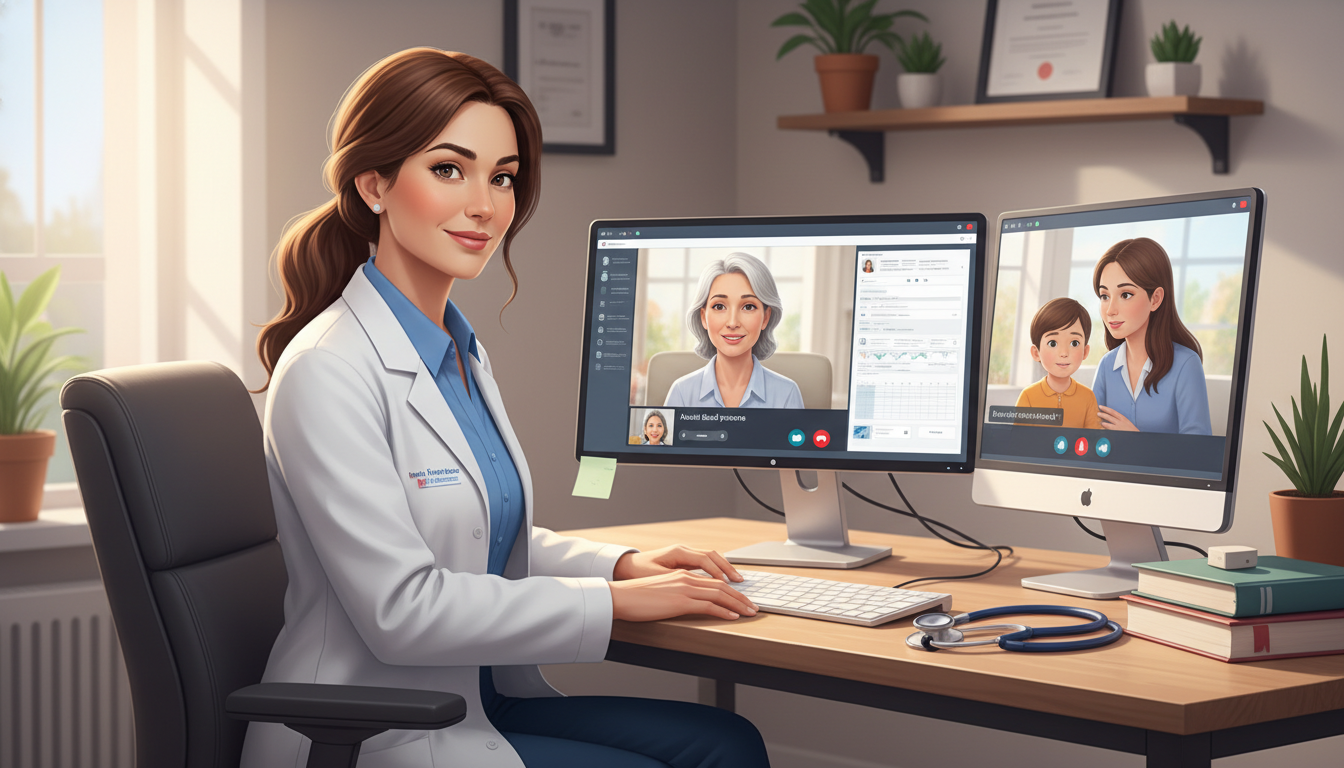
Why Medicine-Pediatrics Is Perfectly Positioned for Telemedicine
Medicine-Pediatrics (Med-Peds) physicians are uniquely suited for telehealth. Trained in both internal medicine and pediatrics, you can see patients across the lifespan—from newborns to older adults—making you exceptionally valuable for virtual care models that prioritize continuity and access.
Telemedicine isn’t just a side gig anymore. It is a rapidly expanding ecosystem of care that includes:
- Synchronous video visits
- Asynchronous e-consults and message-based care
- Remote patient monitoring (RPM)
- Teletriage and urgent care
- Hybrid “click-and-brick” primary care models
For Med-Peds residents, fellows, and early-career physicians, understanding the landscape of telemedicine jobs and remote physician work can directly shape your career trajectory, geographic flexibility, and lifestyle.
This guide will walk you through:
- How telemedicine fits into a Med-Peds career
- The most common telehealth physician roles for Med-Peds graduates
- Skills, tools, and training that make you competitive
- How telemedicine influences the medicine pediatrics match strategy
- Compensation models, lifestyle trade-offs, and long-term career planning
The Telemedicine Landscape for Med-Peds Physicians
Telemedicine is not one job type; it’s an umbrella term covering many clinical and non-clinical roles. As a Med-Peds physician, you can mix and match these over your career.
1. Pure Telehealth Clinical Roles
These are positions where nearly 100% of your clinical work is done remotely.
Common models include:
Direct-to-consumer urgent care platforms
- Patients self-schedule or on-demand video visits
- Presenting problems: URI, UTI, skin infections, COVID, minor injuries, medication refills
- Age range: often all ages—perfect for a Med-Peds clinician
Virtual primary care
- Panel-based care with continuity
- Annual wellness visits, chronic disease management, preventive care
- Often integrated with local labs and imaging centers
Tele-psychiatry-adjacent primary care (e.g., ADHD, anxiety/depression in primary care)
- Some telehealth companies hire Med-Peds physicians to manage behavioral health within primary care scope, especially for adolescents and young adults
How your Med-Peds background helps:
A single physician who can see a 4-year-old with asthma and a 54-year-old with hypertension in the same morning’s panel is exceptionally efficient for telehealth groups. Many platforms explicitly prefer or recruit Med-Peds because they can flexibly schedule across age groups as demand shifts.
2. Hybrid Roles: Clinic Plus Telemedicine
Many health systems and group practices now expect physicians to provide a mix of in-person and virtual care. A common structure:
- 2–3 days in clinic (adult internal medicine, pediatric clinic, or combined practice)
- 1–2 days remote (video visits, refill and results management, chronic care follow-ups)
Hybrid roles may also include:
- Telehospitalist “swing” coverage for smaller community hospitals from a central hub
- Specialty teleconsults for inpatient or ED teams (e.g., complex care pediatrics, transition-of-care consults for young adults with childhood-onset conditions)
These roles preserve physical examination opportunities and office-based procedures while providing lifestyle flexibility.
3. Remote Physician Work Beyond Direct Care
Med-Peds physicians can also leverage telemedicine-related expertise in:
- Utilization management and payer-side telehealth review
- Virtual quality improvement (QI) and population health roles
- Telehealth operations leadership in large systems
- Digital health startups (clinical strategy, medical director roles, product design)
These may be combined with telehealth physician duties or exist as separate, fully remote positions.
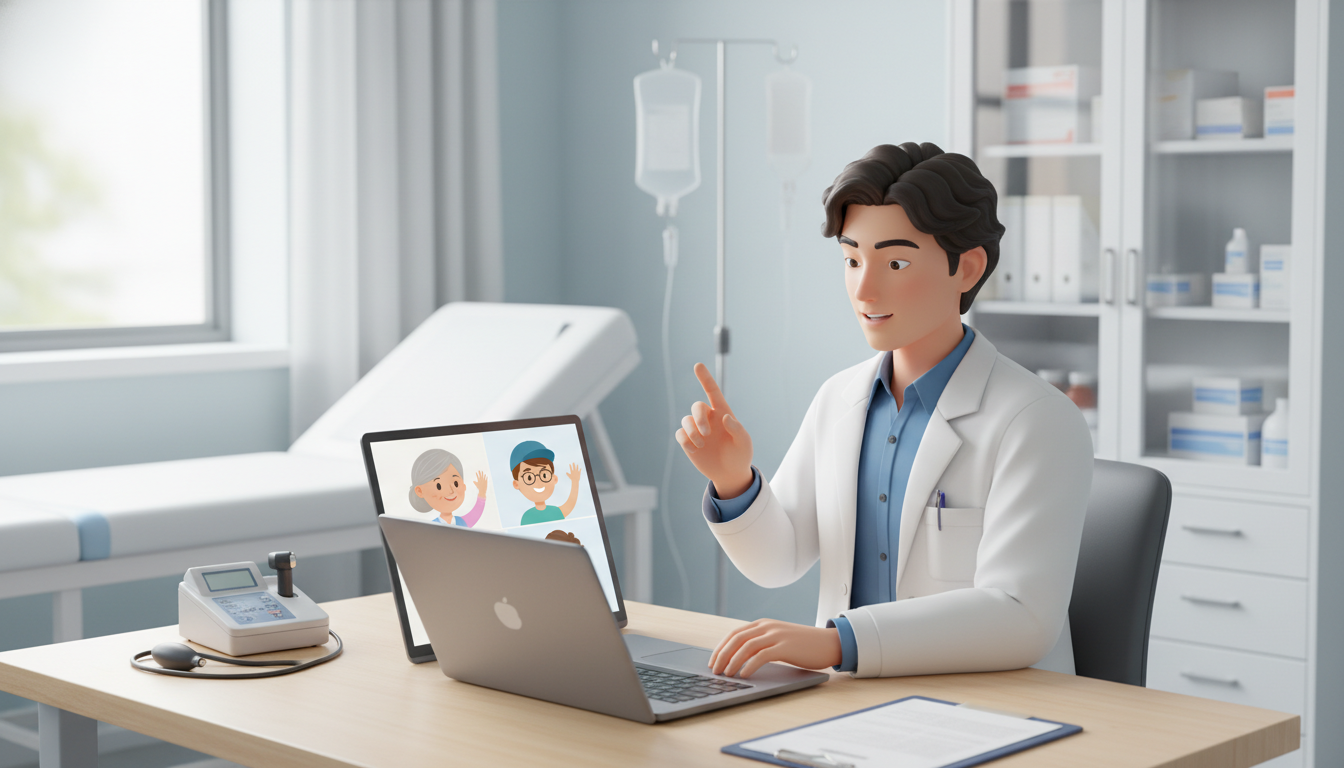
Types of Telemedicine Jobs for Med-Peds Graduates
When you start exploring telehealth physician roles as a Med-Peds graduate, you’ll encounter several common job categories. Each has distinct workflows and lifestyle implications.
1. Tele-Urgent Care and On-Demand Visits
What it looks like:
- Short, focused encounters (5–15 minutes)
- High visit volume; strong protocols and decision trees
- Symptom-based: fevers, respiratory infections, rashes, minor injuries, travel medicine, medication refills
Pros:
- Flexible scheduling, including evenings and weekends
- Often “work-from-anywhere” within licensed states
- Relatively straightforward documentation
Cons:
- Limited continuity and relationship-building
- Variable patient expectations and satisfaction pressures
- Risk of scope creep (e.g., requests for controlled substances)
Fit for Med-Peds:
You are well-trained to rapidly triage across all ages, recognizing red flags in infants and vulnerable adults. Your breadth is an asset in tele-urgent care.
2. Virtual Primary Care and Longitudinal Panels
What it looks like:
- Panel of patients for whom you provide comprehensive primary care
- Mix of scheduled video visits, secure messaging, and asynchronous follow-up
- Emphasis on preventive care, chronic disease management, and integrated behavioral health
Pros:
- Continuity: you build durable therapeutic relationships
- Better ability to manage complex patients over time
- Often team-based (NP/PA, RN, health coach, pharmacist)
Cons:
- Requires robust infrastructure for labs, imaging, referrals, and RPM
- High messaging volume; risk of “invisible work”
- Sometimes more challenging boundaries between work and home life
Fit for Med-Peds:
Excellent for those who love continuity across the lifespan—caring for children, their parents, and even grandparents through a single virtual practice.
3. Remote Specialty and Niche Telemedicine Roles
Over time, many Med-Peds physicians develop niche expertise suited for virtual care:
- Transition medicine for youth with special healthcare needs
- Adult congenital heart disease co-management (with cardiology)
- Chronic disease management (e.g., diabetes, asthma, obesity)
- Telecomplex care for medically fragile children and adults
Examples:
- Partnering with a tertiary care center to provide virtual co-management visits for adolescents with cystic fibrosis transitioning to adult care
- Running virtual multidisciplinary clinics with dietitians, social workers, and specialty consultants
These roles often arise in academic or large integrated delivery systems but are increasingly offered by telehealth-forward organizations.
4. Remote Physician Work: Non-Clinical or “Light Clinical”
Beyond direct patient care, telemedicine expansion has created adjacent opportunities:
Telehealth medical director
- Oversight of clinical protocols, quality metrics, clinician training
- Involvement in vendor selection and platform design
Clinical informatics and EHR optimization
- Workflow design for telehealth scheduling, documentation, and billing
- Building decision support for virtual visits and RPM
Medical content and guideline development for digital health platforms
- Writing protocols, triage algorithms, and patient education content
These can be part-time side roles or full-time remote physician work, often paired with a smaller clinical FTE.
Training, Skills, and Tools: How to Prepare During Residency
If you’re still in training or early in practice, you can intentionally prepare for a telemedicine-oriented career.
1. Clinical Skills That Translate Best to Telemedicine
Telemedicine demands a slightly different skill mix than traditional clinic visits:
Verbal physical exam skills
- Coaching patients/parents on self-exam (e.g., palpating abdomen, assessing respiratory effort, checking pulse rate)
- Guiding caregivers to position the camera, show rashes, or assess gait and behavior
Risk stratification and triage
- Clear thresholds for “safe to manage virtually,” “needs in-person evaluation,” and “send to ED now”
- Familiarity with pediatric and adult red-flag symptoms
Communication and rapport-building via video
- Clear introductions, eye contact with camera, structured agendas
- Managing expectations about what telemedicine can and cannot provide
As a Med-Peds resident, actively practice:
- Explaining exam maneuvers verbally before performing them
- Thinking through how you might manage a given complaint if only telemedicine were available
- Discussing return precautions clearly and specifically in both adults and children
2. Technical Competencies
You don’t need to be an IT expert, but you do need to be comfortable with:
- Telehealth platforms and EHR integration
- Secure messaging and e-consults
- Documentation optimized for telehealth billing (time, complexity, modality)
Ask during residency:
- Can you join your program’s telemedicine efforts (e.g., COVID-era video clinics, after-hours virtual triage)?
- Are there institutional trainings or QI projects around telehealth?
3. Licensure, Credentialing, and Regulatory Awareness
Telemedicine changes the geography of your practice:
- Licensure: For most telehealth physician roles, you must be licensed in the state where the patient is physically located during the visit.
- Interstate Medical Licensure Compact (IMLC): If your state participates, this can streamline multi-state licensure.
- Pediatric nuances: For minors, consent laws and adolescent confidentiality rules vary by state.
As you plan your career:
- Prioritize licensure in larger-population states or regions targeted by employers (e.g., CA, TX, FL, NY, IL).
- Ask potential employers if they sponsor additional state licenses (many do, especially large telehealth companies).
4. Telemedicine-Focused Experiences to Pursue Now
Actionable ideas during residency:
- Electives in telemedicine or digital health (if available)
- QI projects:
- Improving telehealth access for medically complex children
- Designing a workflow for virtual transition-of-care visits
- Academic projects:
- Research on telemedicine outcomes in chronic pediatric conditions
- Evaluating satisfaction or access disparities in virtual primary care
These experiences not only build your skills, but also differentiate you in the telehealth physician job market.
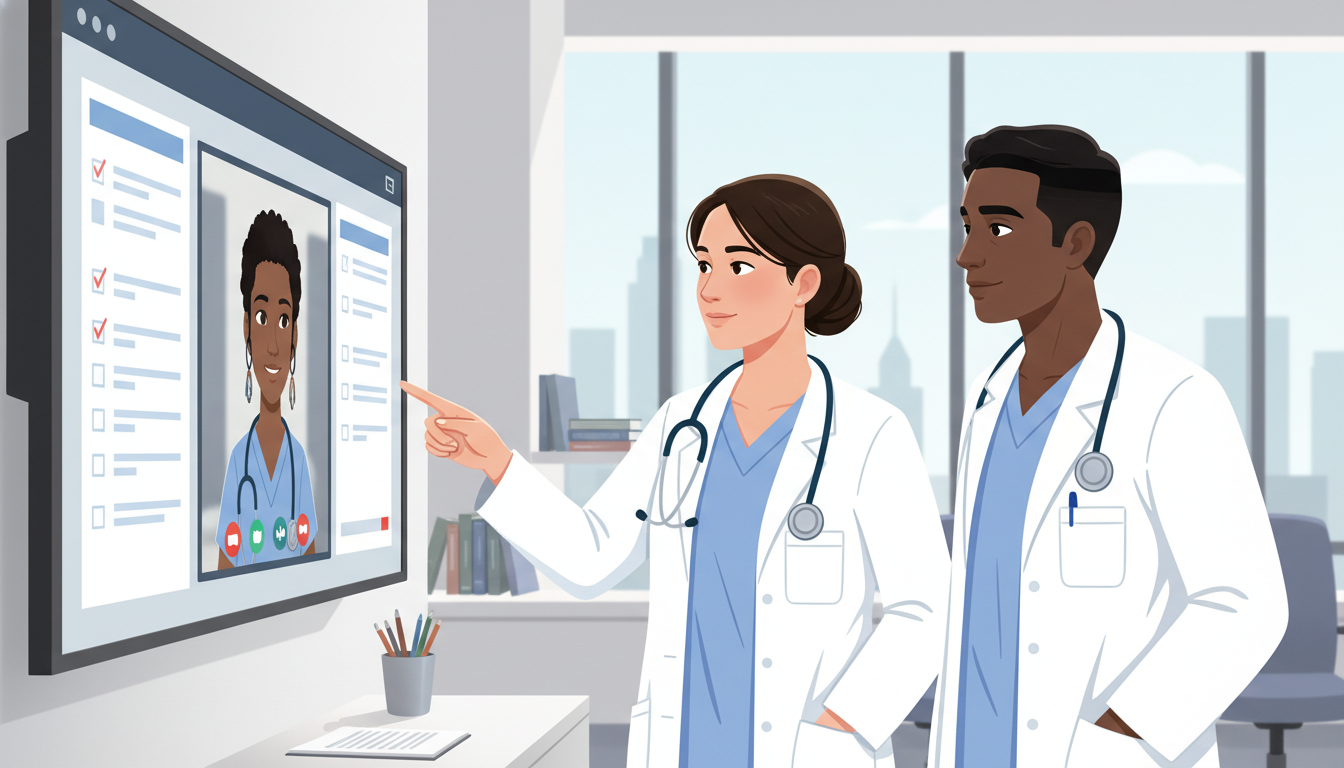
How Telemedicine Influences Your Med-Peds Residency and Match Strategy
Interest in telemedicine should factor into how you approach the medicine pediatrics match and how you design your four years of training.
1. Program Selection: Questions to Ask During the Medicine Pediatrics Match Process
When interviewing—or emailing programs after interviews—consider asking:
Telemedicine infrastructure
- “How does your institution use telemedicine in adult and pediatric care?”
- “Do residents participate in virtual clinics or e-consult services?”
Education and supervision
- “Are there formal telehealth curricula, including teaching virtual exam skills and documentation?”
- “Do attendings directly observe resident telehealth encounters?”
Innovation and digital health alignment
- “Is there a digital health or telemedicine task force that residents can join?”
- “Are there opportunities to work with health IT or informatics teams?”
Programs that integrate telemedicine into the core training experience better prepare you for future telehealth physician roles.
2. Rotations and Electives to Prioritize
To set yourself up for flexible telemedicine jobs:
Continuity clinic:
- Seek experiences that include virtual follow-up visits.
- Advocate to schedule part of your panel as telehealth encounters.
Subspecialty rotations with strong telemedicine components:
- Endocrinology (diabetes telemanagement)
- Pulmonology (asthma, cystic fibrosis virtual monitoring)
- Adolescent medicine (behavioral health, transition care)
Community and rural medicine rotations:
- Exposure to telehealth bridging urban tertiary centers and rural clinics
3. Mentorship and Networking
Identify mentors who:
- Are involved in telemedicine operations or QI projects
- Sit on hospital telehealth or digital health committees
- Work as hybrid clinicians with partial remote physician work
Ask them:
- How telemedicine is changing primary care and complex care services
- What skills they wish they had developed earlier
- Which employers are building sustainable, physician-friendly telemedicine models
These relationships can lead to post-residency opportunities in both clinical and non-clinical telehealth roles.
Compensation, Lifestyle, and Career Sustainability in Telemedicine
Telemedicine can profoundly affect your lifestyle and earning potential. Understanding the trade-offs helps you plan a sustainable Med-Peds career.
1. Compensation Models in Telehealth Physician Roles
Common models:
Hourly or shift-based pay
- Frequent in tele-urgent care and on-demand platforms
- Pros: Predictable income per shift
- Cons: Less upside with increased volume or panel building
RVU-based or productivity models
- Often in health systems with integrated telehealth
- Similar to in-person work, but requires efficient teleworkflows
Panel-based or value-based models
- In virtual primary care, compensation may be tied to panel size, quality metrics, and patient outcomes
- Encourages continuity and preventive care
Hybrid compensation
- Base salary plus bonus for productivity, quality, or patient satisfaction
Med-Peds physicians often find that:
- Pure tele-urgent care roles may pay well per hour but can be unpredictable in volume and long-term stability.
- Virtual primary care roles can be competitive with brick-and-mortar salaries, especially when paired with multi-state licensure and extended panels.
2. Lifestyle Considerations
Potential advantages:
- Geographic flexibility—live where you want if licensure and employer policies allow
- Commute elimination—more time for family, research, or side projects
- Schedule flexibility—part-time or non-traditional hours are often easier to arrange
Potential downsides:
- Blurring of boundaries—home becomes workplace; messages and portal tasks can spill into evenings
- Professional isolation—less spontaneous peer interaction and bedside teaching
- Screen fatigue—long days on video can be cognitively draining
Strategies for sustainability:
- Establish a dedicated, ergonomic home workspace
- Define hard stop times and protected off-screen breaks
- Build intentional collegiality (virtual case conferences, informal online meetups with peers)
3. Career Progression and Long-Term Growth
Telemedicine is not necessarily a career “dead-end.” You can grow through:
- Leadership roles—telehealth medical director, virtual care line chief, digital health VP
- Academic pathways—research in virtual care outcomes, implementation science, health disparities
- Entrepreneurial routes—joining or founding startups addressing pediatric chronic disease, family health platforms, or adolescent telehealth
Your Med-Peds foundation is particularly valuable in:
- Designing virtual models that span transitions from NICU to adult care
- Integrating pediatrics and adult chronic care for genetic and congenital conditions
- Addressing family-centered care as a single clinical unit
Practical Steps to Launch a Telemedicine-Focused Med-Peds Career
To translate interest into action, consider this stepwise plan.
During Residency (PGY-1 to PGY-4)
Seek telehealth exposure early.
Volunteer for any hospital or clinic telemedicine initiatives.Develop population health thinking.
Participate in QI or panel management projects for both adult and pediatric panels.Build your telemedicine toolbox.
- Practice tele-exam techniques
- Learn to write concise, telehealth-appropriate notes
- Understand billing documentation for virtual visits
Network with digital health stakeholders.
- Attend local or national digital health conferences (even virtually)
- Join relevant sections of professional societies (e.g., AAP Section on Telehealth, ACP telehealth interest groups)
Late Residency / Early Attending (PGY-3–4 and beyond)
Clarify your ideal mix.
Decide what balance of:- In-person vs telemedicine
- Adult vs pediatric
- Clinical vs non-clinical (e.g., informatics, QI)
works best for you.
Explore multiple employer types.
- Academic centers
- Large health systems
- Pure-play telemedicine companies
- Hybrid digital-first primary care startups
Optimize your CV for telemedicine.
Highlight:- Telehealth experiences and QI projects
- Comfort with remote physician work
- Experience managing both adult and pediatric populations virtually
Pilot part-time telemedicine.
If your primary job is in-person, consider:- Moonlighting in tele-urgent care
- Joining a virtual primary care panel for a few half-days per month
This allows you to test workflows, platforms, and your own preferences before committing fully.
FAQs: Telemedicine Careers in Medicine-Pediatrics
1. Can I do a fully remote Med-Peds career, or will I always need some in-person work?
Fully remote physician work is possible, especially in tele-urgent care and virtual primary care roles. However:
- Some clinicians maintain limited in-person sessions for procedures and hands-on exams.
- Many employers still prefer or require some physical presence for credentialing, team integration, or hybrid care models.
That said, a significant proportion—or even 100%—of your clinical FTE can be telemedicine in the right role.
2. Do telemedicine jobs pay less than traditional Med-Peds positions?
Compensation is highly variable:
- Some tele-urgent care shift work pays competitively on an hourly basis, especially nights and weekends.
- Virtual primary care salaries can be similar to or slightly below traditional primary care, but often come with lifestyle advantages (no commute, flexible location).
- Panel-based and value-based models may provide bonus upside for high-quality, efficient care.
Evaluate total compensation (salary + benefits + flexibility) rather than just base pay.
3. How can I make myself competitive for telemedicine jobs as a new Med-Peds graduate?
Key steps:
- Gain real telehealth experience in residency (even if informal).
- Learn multi-state licensure pathways and start with one or two high-yield states.
- Highlight your comfort caring for all ages and managing complex transitions.
- Demonstrate interest in population health, QI, or digital health innovation.
Employers value Med-Peds physicians who understand both pediatric and adult care pathways and can flex quickly across age groups.
4. Is telemedicine a good long-term choice if I want to stay academically active or teach?
Yes—if you’re intentional:
- Academic centers increasingly incorporate telemedicine into resident clinics, inpatient consults, and fellowship programs.
- You can teach residents and students via tele-precepting, virtual case conferences, and telehealth OSCEs.
- Telemedicine research (access, equity, outcomes) is a growing academic field, especially in Med-Peds-relevant areas like transitions of care and chronic pediatric conditions in adulthood.
Combining a Med-Peds academic appointment with substantial telemedicine responsibilities is becoming more common and can be highly rewarding.
Telemedicine is reshaping the practice of Med-Peds—not as a temporary pandemic response, but as a core component of how family-centered, lifespan care is delivered. Whether you envision yourself as a virtual primary care physician, a hybrid clinician-innovator, or a telehealth leader, your Med-Peds training gives you a uniquely adaptable foundation to thrive in this evolving landscape.