


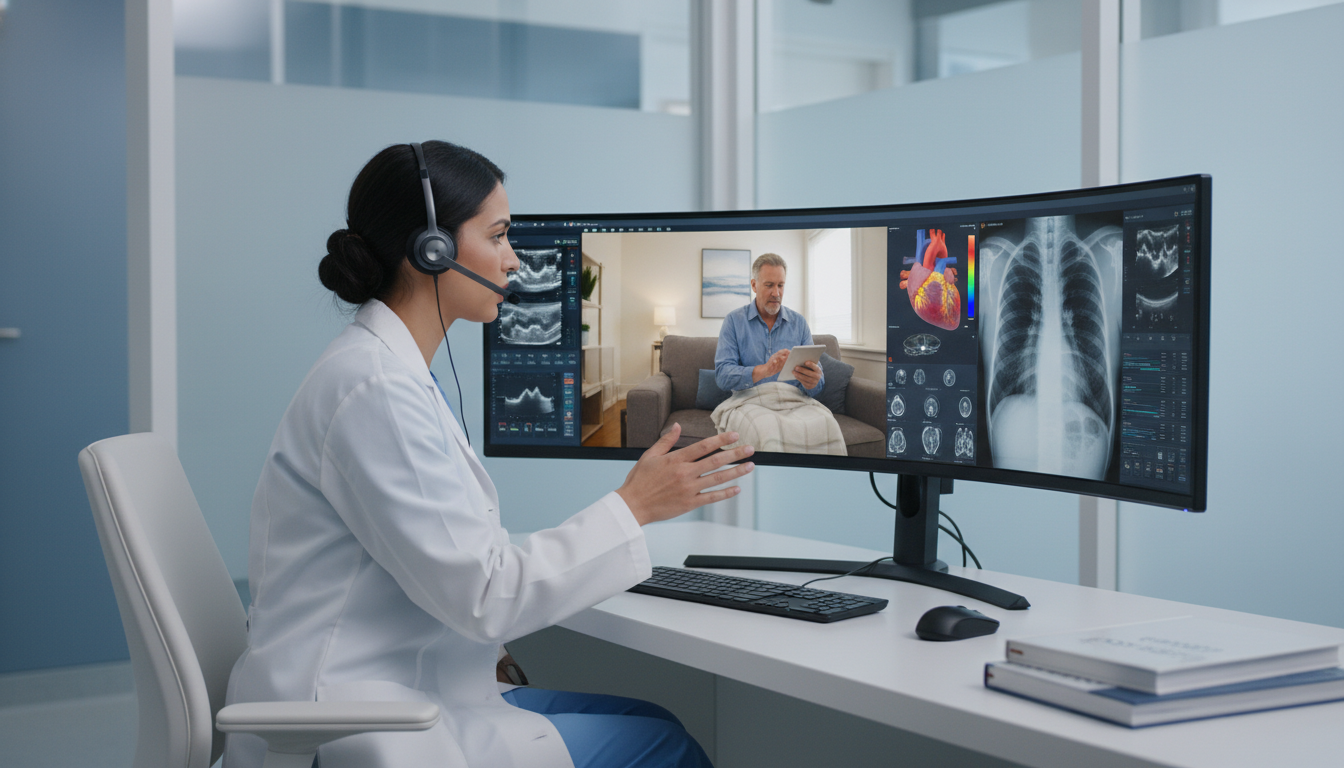
Telemedicine is reshaping how cardiothoracic surgeons deliver care, follow patients, and build parallel career paths that go far beyond the traditional operating room. For residents and early-career surgeons, understanding telemedicine career opportunities is now as important as knowing the steps of a CABG or valve replacement. This guide explores how telehealth intersects with cardiothoracic surgery, where the real opportunities lie, and how you can prepare during training.
Understanding Telemedicine in Cardiothoracic Surgery
Telemedicine is no longer limited to simple video visits. In the cardiothoracic space, it spans the continuum of care—from preoperative evaluation and risk stratification to long-term survivorship and complex multidisciplinary management. For trainees, it also opens doors to flexible telemedicine jobs, part-time telehealth physician roles, and structured remote physician work that can supplement or diversify your practice.
Why Telemedicine Fits Cardiothoracic Surgery
Cardiothoracic surgery uniquely benefits from virtual care because:
Patients are high-risk and often fragile
Postoperative and advanced heart or lung disease patients may struggle with travel. Virtual visits reduce exposure risk and burden.Chronic, lifelong follow-up is routine
Valve replacements, aortic repairs, LVADs, transplant, and congenital repairs require long-term surveillance—an ideal setting for remote monitoring.Data-rich specialty
Telemedicine can integrate ECGs, remote vitals, imaging review, and lab data into virtual visits, improving efficiency and clinical decision-making.Multidisciplinary coordination is essential
Coordination among cardiologists, pulmonologists, oncologists, and PCPs is easier and faster when done virtually.
Core Telemedicine Modalities Relevant to CT Surgeons
Synchronous video visits
- Pre- and postoperative consultations
- Second opinions and shared decision-making
- Complication triage (e.g., dyspnea, wound concerns, arrhythmia symptoms)
Asynchronous e-consults
- Reviewing external imaging, ECGs, and clinical summaries
- Providing recommendations to referring cardiologists or intensivists without real-time interaction
Remote patient monitoring (RPM)
- Postoperative vitals, weight, symptom questionnaires
- Monitoring heart failure patients, transplant recipients, thoracic oncology patients post-resection
Tele-ICU and intra-hospital teleconsulting
- Remote consultation for community hospitals without in-house CT coverage
- Advice on stabilizing acute aortic syndromes, post-op complications, or ECMO candidates
Tele-education and tele-mentoring
- Virtual surgery case conferences and morbidity & mortality (M&M)
- Remote proctoring or mentoring for complex minimally invasive or robotic cases
Telemedicine does not replace core heart surgery training or operative expertise. Instead, it layers over existing clinical pathways and creates new roles where your specialized knowledge becomes more accessible and scalable.
Types of Telemedicine Career Paths for Cardiothoracic Surgeons
There is no single blueprint for telemedicine in cardiothoracic surgery. Most roles fall into overlapping categories that you can mix and match over the course of your career.

1. Telehealth Within an Academic or Large Health System
Many academic centers and integrated health systems have robust telemedicine programs in which cardiothoracic surgeons participate as part of their standard clinical duties.
Common roles:
Virtual preoperative clinics
- Reviewing history, imaging, and labs from referring centers
- Discussing risks, benefits, and alternatives via video
- Sharing screen to review CT scans or echocardiograms with patients
Postoperative tele-follow-up
- Wound checks via video or photo
- Assessment of functional status and symptom progression
- Medication reconciliation and anticoagulation management in collaboration with cardiology
Regional teleconsult services
- Being on tele-call for regional hospitals to review emergent imaging (e.g., type A/B dissections, massive PE requiring surgical or catheter-directed therapy, post-CABG complications)
- Advising on transfer necessity and timing
How this fits a cardiothoracic surgery residency graduate:
- Telemedicine becomes an integrated part of your cardiothoracic surgery residency to attending transition.
- You retain a full operative schedule while dedicating half-days or specific blocks to tele-clinic.
- Compensation is often RVU-based or salaried, just like in-person clinics.
2. Remote Second-Opinion and Expert Review Services
High-stakes cardiac and thoracic decisions are increasingly made after patients seek second opinions—often remotely.
Possible practice models:
- Hospital-affiliated second-opinion programs where patients upload records and imaging for your review.
- Private or platform-based expert networks that contract with institutions, employers, or payers.
- Direct-to-patient services (depending on regulations, credentialing, and liability policies).
Typical workflow:
- Patient or referring physician uploads operative notes, cath reports, imaging, and prior consultations.
- You review asynchronously, sometimes with a radiologist or cardiologist.
- You conduct a scheduled video visit to explain findings and recommendations, including whether surgery is indicated, and if so, where and how soon.
Benefits for surgeons:
- High intellectual engagement with less physical strain.
- Flexible scheduling—often evenings or weekends as a complement to your OR time.
- Allows you to build a national or even international reputation in a niche (aortic surgery, complex redo sternotomies, minimally invasive mitral repair, thoracic oncology, etc.).
3. Tele-ICU and Remote Critical Care Support
Some cardiothoracic surgeons, especially those with critical care training, participate in tele-ICU programs that support:
- Community hospitals with post-cardiac surgery patients
- Mixed ICUs that occasionally receive acute aortic dissections, complex chest trauma, or ECMO candidates
- Heart transplant or LVAD programs with satellite ICUs
Responsibilities may include:
- Reviewing hemodynamic data, ventilator settings, and imaging remotely
- Recommending adjustments in inotropes, vasopressors, and mechanical support
- Helping determine when to transfer a patient to a tertiary center
This type of remote physician work can be structured as:
- Part of your employment contract with a major health system
- A separate tele-ICU contract (usually after showing solid post-op ICU management expertise)
4. Telemedicine in Thoracic Oncology and Lung Transplant
Thoracic oncology and transplant rely heavily on multidisciplinary decision-making and long-term follow-up—both very amenable to telehealth.
Thoracic oncology:
- Initial virtual consultations for newly diagnosed lung cancer, mediastinal masses, chest wall tumors
- Reviewing PET-CT and biopsy results with patients and families across wide geographies
- Staging and treatment planning boards that include medical oncology, radiation oncology, pulmonology, and radiology via teleconference
Lung transplant & advanced lung disease:
- Pre-transplant evaluations, especially for out-of-state or international candidates
- Longitudinal follow-up with frequent tele-visits to monitor symptoms, adherence, and complications such as rejection or infection
- Collaborative virtual check-ins with local pulmonologists
These roles often grow naturally from an in-person practice but can include dedicated telemedicine jobs as programs expand.
5. Non-Clinical Telehealth Roles for CT Surgeons
Beyond direct patient care, cardiothoracic surgeons can leverage their expertise in non-clinical telehealth roles:
- Medical leadership in telehealth companies (Chief Medical Officer, clinical advisor)
- Clinical content development for remote triage platforms or decision-support tools
- Product design and testing for remote monitoring devices (wearables, implantable hemodynamic monitors, home spirometry)
- Education and training platforms for residents, fellows, and international surgeons using virtual simulation and case-based learning
These paths are attractive for surgeons seeking reduced clinical time, a later-career pivot, or a portfolio career combining surgery, leadership, and innovation.
Remote Work Options for Cardiothoracic Surgeons and Trainees
Many residents and early attendings are surprised to discover that not all telemedicine roles require full-time commitment or complete departure from the OR.

Balancing OR and Remote Work
You can structure your week in multiple ways:
Traditional OR-centric practice with telehealth blocks
- 3–4 OR days, 1–2 half-days of tele-clinic
- Tele-visits slot into times when you’d otherwise be in clinic physically.
Hybrid practice with external telemedicine contracts
- Full-time employment at a hospital
- Additional compensated telehealth physician work (often in the evenings) for second opinions or expert panels, subject to non-compete and conflict-of-interest policies.
Reduced-schedule clinical practice plus telehealth
- Part-time operative schedule (e.g., 0.5–0.7 FTE)
- Remainder filled with tele-ICU, consulting, or leadership roles with telehealth companies.
Fully Remote Physician Work: Is It Realistic in CT Surgery?
For purely operative specialties like cardiothoracic surgery, completely remote practice is not feasible if you want to maintain an active surgical caseload—someone must perform the operation. However, fully remote physician work is possible in carefully defined contexts:
- Retired or semi-retired CT surgeons providing second opinions, teleconsults, or educational services.
- Surgeons between jobs or relocating who temporarily shift focus to telemedicine.
- Surgeons with health or personal constraints that limit OR time but allow cognitive clinical contributions.
Examples of fully remote roles:
- Tele-consulting for national referral programs (e.g., large health systems or virtual specialty platforms)
- Full-time tele-ICU or remote critical-care oversight (for those with dual training)
- Telehealth leadership and strategic roles at digital health startups or device companies
The trade-off is that you may gradually lose operative currency and board recertification eligibility if you move entirely away from surgery, so planning is essential.
How to Prepare During Cardiothoracic Surgery Residency
If you’re currently in a cardiothoracic surgery residency or about to apply, you can intentionally build skills and experiences that position you for future telemedicine roles.
1. Seek Exposure to Telehealth During Training
- Ask your program director or faculty if you can observe or participate in tele-clinics for pre-op, post-op, or transplant patients.
- Request involvement in regional teleconsult services, even initially as an observer.
- If your institution has a tele-ICU, attend virtual rounds to understand workflow and documentation.
Document these experiences; they show adaptability and digital fluency on your CV.
2. Learn the Technical and Regulatory Basics
Understanding telemedicine basics will serve you well in any practice environment:
Licensing
- Learn state-by-state requirements and the implications of multi-state telemedicine practice.
- Explore the Interstate Medical Licensure Compact if you’re in the U.S.
Reimbursement
- Familiarize yourself with billing codes for telehealth visits, e-consults, and remote monitoring.
- Understand differences between Medicare, Medicaid, and private payers.
Liability and documentation
- Learn institutional policies for telehealth documentation, informed consent, and emergency escalation.
- Practice thorough, structured tele-visit notes—especially for high-risk surgical patients.
You don’t need to be an expert as a resident, but a working knowledge will make you more effective and employable.
3. Develop Strong Communication and “Webside Manner”
Telemedicine amplifies the importance of communication. Fine-tune:
- How you explain complex heart surgery options and risks using visual aids on screen.
- Techniques for engaging patients and family members remotely (eye contact via camera, pacing, summarizing key points).
- Strategies for managing emotionally charged discussions, such as high operative risk or poor prognosis, via video.
Ask mentors who use telemedicine for feedback or invite them to observe your early tele-visits when possible.
4. Get Comfortable With Digital Tools and Data Integration
Modern telehealth for CT surgery will increasingly rely on:
- Integration of telemetry, home blood pressure, wearables, and pulse oximetry into your tele-visit workflow.
- Secure image sharing and DICOM viewers for CT, MRI, TTE/TEE, and angiography.
- Hospital telehealth platforms, EMR-integrated video platforms, and remote monitoring dashboards.
During residency, volunteer for projects that involve virtual case conferences, remote educational sessions, or telemonitoring initiatives.
5. Build a Niche That Fits Telemedicine
Some niches in cardiothoracic surgery are particularly telemedicine-friendly:
- Aortic disease and aortopathy surveillance
- Long-term valvular disease and prosthetic valve follow-up
- Lung cancer survivorship and surveillance
- Advanced heart failure and mechanical circulatory support coordination
- Congenital cardiothoracic disease transition-of-care (pediatric to adult)
Align your heart surgery training with one or two of these areas by choosing relevant research, electives, and mentors; later, this allows you to offer specialized tele-consulting and second-opinion services.
Practical Steps to Enter the Telemedicine Space After Training
Once you are transitioning from residency or fellowship to practice, you can take concrete steps to secure telemedicine-related opportunities.
1. Evaluate Telemedicine Infrastructure When Interviewing
When considering jobs, ask:
- Does the institution have established telemedicine programs for cardiac and thoracic surgery?
- How are tele-visits scheduled and supported (nursing, coordinators, IT)?
- Are telehealth activities recognized in RVU calculations or salary models?
- Is there potential to help build or expand telehealth services in your division?
You want an environment that values and operationalizes telemedicine, not one that views it as an afterthought.
2. Consider Side Telemedicine Jobs Carefully
Many platforms advertise telemedicine jobs to physicians; for cardiothoracic surgeons, these might be:
- General medical telehealth roles (urgent care-style)
- Specialty consult platforms needing surgical expertise
- Remote case review services
Before signing:
- Check that the scope of practice aligns with your expertise and licensure.
- Understand malpractice coverage, documentation requirements, and minimum time commitments.
- Ensure no conflict with your main employer’s policies or non-compete agreements.
3. Build a Professional Online Presence
If you anticipate a major telemedicine component to your career:
- Maintain a professional profile highlighting your cardiothoracic subspecialty and telehealth interest.
- Contribute to online patient education (articles, recorded talks) to develop trust and visibility.
- Network through professional societies that are building digital health working groups (STS, AATS, EACTS, etc.).
This presence can feed into referral streams for virtual second opinions and remote consulting engagements.
4. Monitor Regulatory and Market Changes
Telemedicine regulations and payment policies continue to evolve, especially post-COVID. Stay updated on:
- Changes in cross-state practice rules and waivers
- Long-term reimbursement decisions for video visits and RPM
- Payer policies for virtual preoperative evaluations and post-op check-ins
Being informed lets you help shape your institution’s strategy—or pivot if certain models (e.g., pure video-only platforms) become less viable.
Frequently Asked Questions (FAQ)
1. Can a cardiothoracic surgeon realistically have a largely telemedicine-based career?
Yes, but with caveats. You can build a career heavily weighted toward telemedicine—especially in second-opinion services, tele-ICU, remote consulting, and leadership roles in digital health. However, if you want to maintain an active operative practice, you cannot be 100% remote; the OR still requires your physical presence. Many surgeons adopt hybrid models: robust operative practice supplemented by structured telehealth blocks and selective remote physician work.
2. Are there telemedicine jobs suitable for current cardiothoracic surgery residents?
Residents generally face restrictions on moonlighting, both from training programs and licensing limitations. That said, some senior residents and fellows with independent licensure may qualify for:
- Limited telehealth physician work in general medical telemedicine platforms (if permitted and within scope).
- Participation in institutional tele-clinics or tele-ICU shifts under faculty supervision.
Always confirm with your program director, GME office, and malpractice carrier before pursuing any external telemedicine work.
3. How does telemedicine impact the quality and safety of cardiothoracic care?
When implemented thoughtfully, telemedicine can improve safety by:
- Catching complications earlier through remote monitoring and quick virtual triage
- Reducing delays in second opinions and specialty referrals
- Minimizing travel and exposure risks for frail patients
However, it requires clear protocols for escalation to in-person evaluation or emergency care, robust documentation, and close collaboration with local providers. Telemedicine should augment—not replace—essential in-person exams, imaging, and procedures.
4. Will focusing on telehealth limit my chances in cardiothoracic surgery residency or fellowship?
No—if anything, demonstrating informed interest in telehealth can be a strength. Programs increasingly recognize that future cardiothoracic surgeons must adapt to digital care models. Emphasize that your primary goal remains strong operative and clinical training, and that telemedicine is a complementary skill set. Highlight experiences that show you understand both the promise and limitations of virtual care in a high-acuity surgical specialty.
Telemedicine is rapidly becoming part of the standard toolkit for cardiothoracic surgeons. Whether you envision a traditional OR-heavy practice with virtual follow-up, a hybrid role integrating tele-ICU and second-opinion services, or a later-career pivot into remote physician work and digital health leadership, starting to plan during your cardiothoracic surgery residency will give you a decisive advantage.




















