The Rise of Telemedicine in Diagnostic Radiology
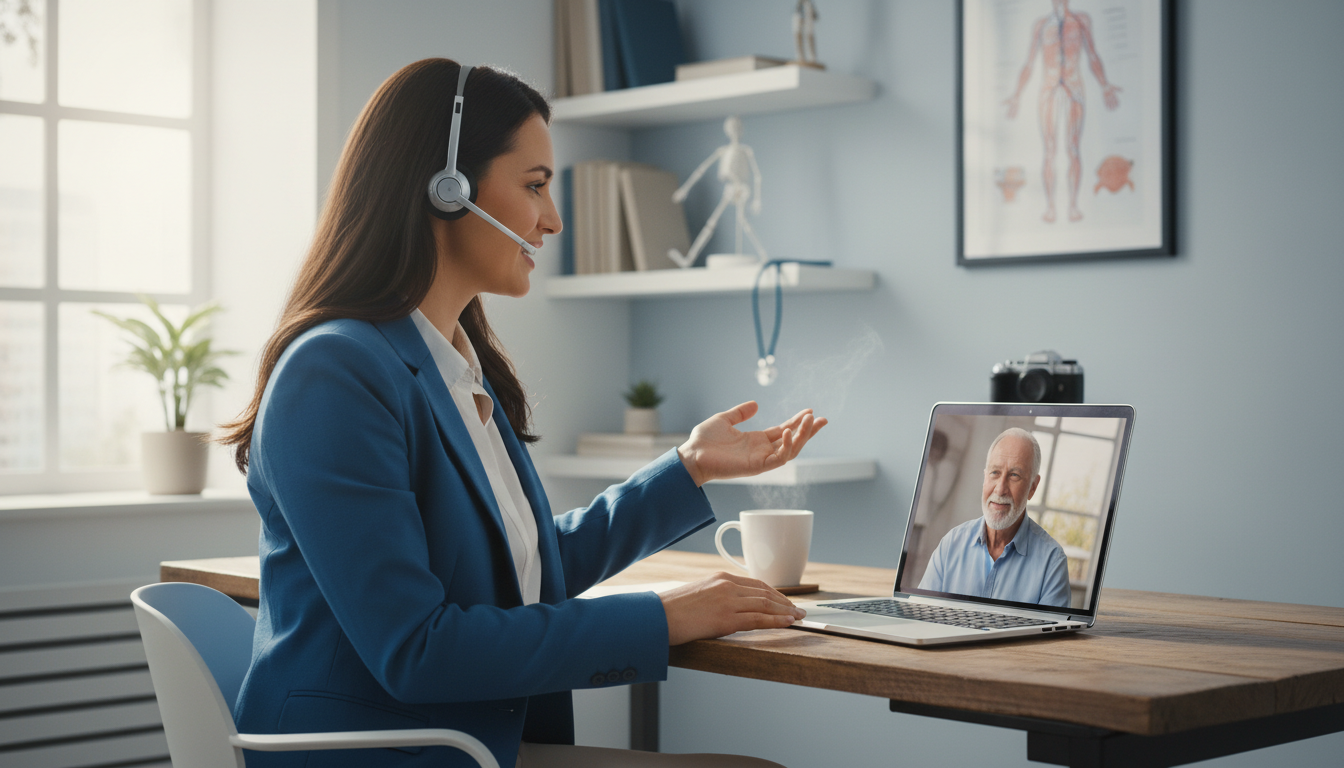
Telemedicine has quietly been part of diagnostic radiology for decades—long before virtual visits became mainstream in other specialties. What’s changed dramatically in the last few years is the scale, sophistication, and variety of telehealth physician roles available to radiologists and trainees.
As imaging volumes grow and health systems struggle to provide 24/7 coverage, remote physician work in radiology has become a central part of care delivery. For residents and early‑career radiologists, understanding telemedicine career opportunities is now essential for planning a sustainable, flexible, and future‑proof career.
This guide will walk you through:
- How telemedicine fits into modern radiology practice
- The main categories of remote radiology jobs
- Workflow, lifestyle, and compensation considerations
- Training and skill-building during radiology residency
- Practical steps to position yourself well for telehealth roles after the diagnostic radiology match
Whether you’re still contemplating a radiology residency or already planning your first post‑residency job, this article will help you understand the telemedicine landscape in diagnostic radiology.
1. Why Telemedicine Is Inseparable from Modern Diagnostic Radiology
Telemedicine and diagnostic radiology are naturally aligned. Radiology is inherently digital: images can be acquired in one location, stored in the cloud or local PACS, and interpreted anywhere with appropriate hardware, software, and licensure.
1.1 Historical roots: teleradiology before “telemedicine” was a buzzword
Long before video visits became common, radiologists were already:
- Reading overnight studies from off-site call rooms
- Providing subspecialty reads for rural hospitals hundreds of miles away
- Sending neuroimaging to stroke centers for emergent decisions
This is classic telemedicine — just without the label.
What changed recently:
- Faster networks & cloud PACS: Reliable high‑speed connections make real‑time, high‑volume image transfer routine.
- Regulatory shifts: During and after COVID‑19, many telehealth rules were relaxed or reformed, normalizing remote reading.
- Hospital economics: Health systems can use telemedicine to fill coverage gaps (nights, weekends, subspecialty reads) cost‑effectively.
1.2 Why residents and fellows must understand tele‑radiology
Telehealth is no longer a niche option. For residents entering the job market:
- Many large private practices and academic groups expect some level of remote or hybrid work.
- A growing number of radiologists choose fully remote careers through teleradiology companies.
- International telemedicine (reading for providers in other countries or time zones) is expanding, with complex regulatory layers.
If you are applying for radiology residency or planning your first attending job, you should think deliberately about how telemedicine may fit into your short‑ and long‑term career.
2. Types of Telemedicine Career Paths in Diagnostic Radiology
Telemedicine opportunities in radiology span multiple practice models, time zones, and clinical roles. Below are the major categories of remote work available to diagnostic radiologists.
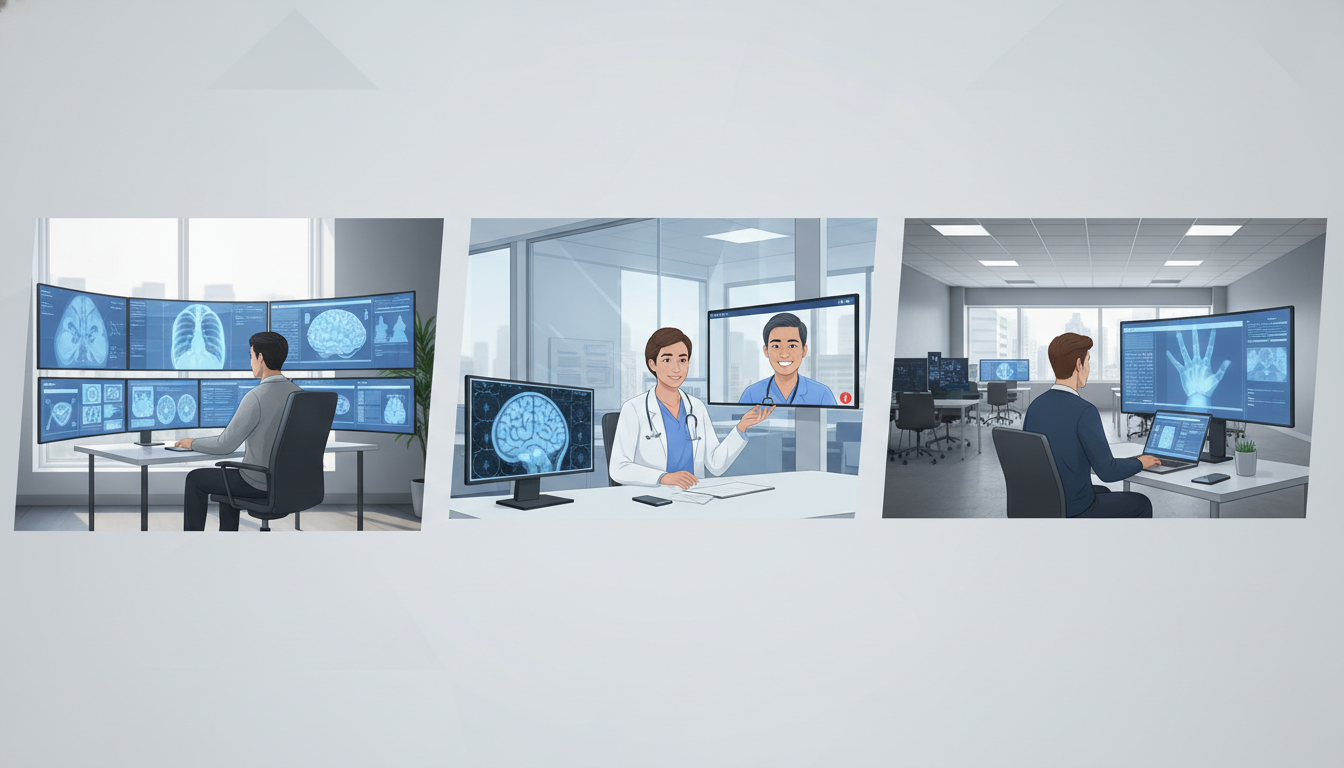
2.1 Full‑time teleradiology (remote-only practice)
What it is:
Radiologists employed (or contracted) by teleradiology companies or large groups, reading studies from multiple client hospitals and imaging centers, typically entirely from home or remote offices.
Key features:
- High‑volume reading—often focused on emergent CT, MRI, X‑ray, and sometimes basic ultrasound.
- Work across different geographies and hospital types (rural critical access, community hospitals, EDs).
- Minimal direct patient interaction; communication is usually with referring clinicians and technologists.
Pros:
- Maximum flexibility in location (sometimes even international if licensure and company policy allow).
- Ability to structure schedules (e.g., nights, evenings, or daytime) around personal or family needs.
- Strong compensation potential, especially for high‑productivity readers.
Cons:
- Interpretation can become relatively narrow or repetitive depending on study mix (e.g., heavy ED).
- Potential for professional isolation if not balanced with professional engagement elsewhere.
- Need to manage licensure in multiple states and maintain compliance with various site policies.
2.2 Hybrid on‑site and remote radiology roles
Many private practices and academic departments now offer:
- Several on‑site days (e.g., 2–3 days/week)
- Several remote days (e.g., 1–3 days/week, sometimes more)
Hybrid models may include:
- Remote reading of outpatient or overflow imaging.
- On‑site procedural or interventional days.
- On‑site academic or multidisciplinary conference days if you are in an academic setting.
Who this suits:
- Radiologists who want the flexibility and convenience of remote physician work but value in-person collegiality, teaching, and procedural practice.
- Fellows and junior attendings seeking a gradual transition into more remote work.
2.3 Subspecialty tele‑radiology
Subspecialists (neuroradiology, MSK, body, cardiac, pediatrics, etc.) can leverage telemedicine in different ways:
- Providing subspecialty overreads for community hospitals.
- Participating in remote tumor boards and multidisciplinary clinics via video.
- Contracting with telehealth companies that specifically market subspecialist coverage.
Examples:
- A pediatric neuroradiologist providing second reads for complex pediatric brain MRI from multiple states.
- A cardiac imager reading CT coronary angiography for smaller centers that lack in‑house expertise.
Advantages:
- Strong demand for subspecialists, especially in underserved regions.
- Ability to maintain a high level of clinical complexity and intellectual engagement while working remotely.
2.4 Tele‑stroke and emergency teleradiology
In many systems, tele‑stroke services combine:
- Remote neurologist consultation, and
- Rapid radiology interpretation (CT/CTA head & neck) supporting tPA/thrombectomy decisions.
Radiologists working nights or evenings for teleradiology groups frequently participate in:
- Emergent CT and CTA head for stroke.
- Rapid interpretation of trauma imaging.
- Stat MRI for cord compression or acute neurological deficits.
For residents interested in acute care radiology or neuroimaging, this can be an appealing niche within telemedicine.
2.5 Nonclinical and hybrid telemedicine‑adjacent roles
Not all telemedicine jobs involve pure image interpretation. Radiologists can also:
- Serve as clinical consultants for AI imaging startups remotely.
- Work as telehealth physician advisors for utilization management, prior authorization, and appropriateness criteria for imaging.
- Provide remote education (webinars, virtual conferences, online fellowships).
- Participate in international tele‑radiology collaboration (global health, capacity building).
These roles can complement a clinical tele‑radiology position or evolve into alternative careers over time.
3. Daily Life and Workflow in Remote Radiology Practice
Before pursuing telemedicine opportunities, you need a realistic sense of what day‑to‑day life looks like for remote radiologists.
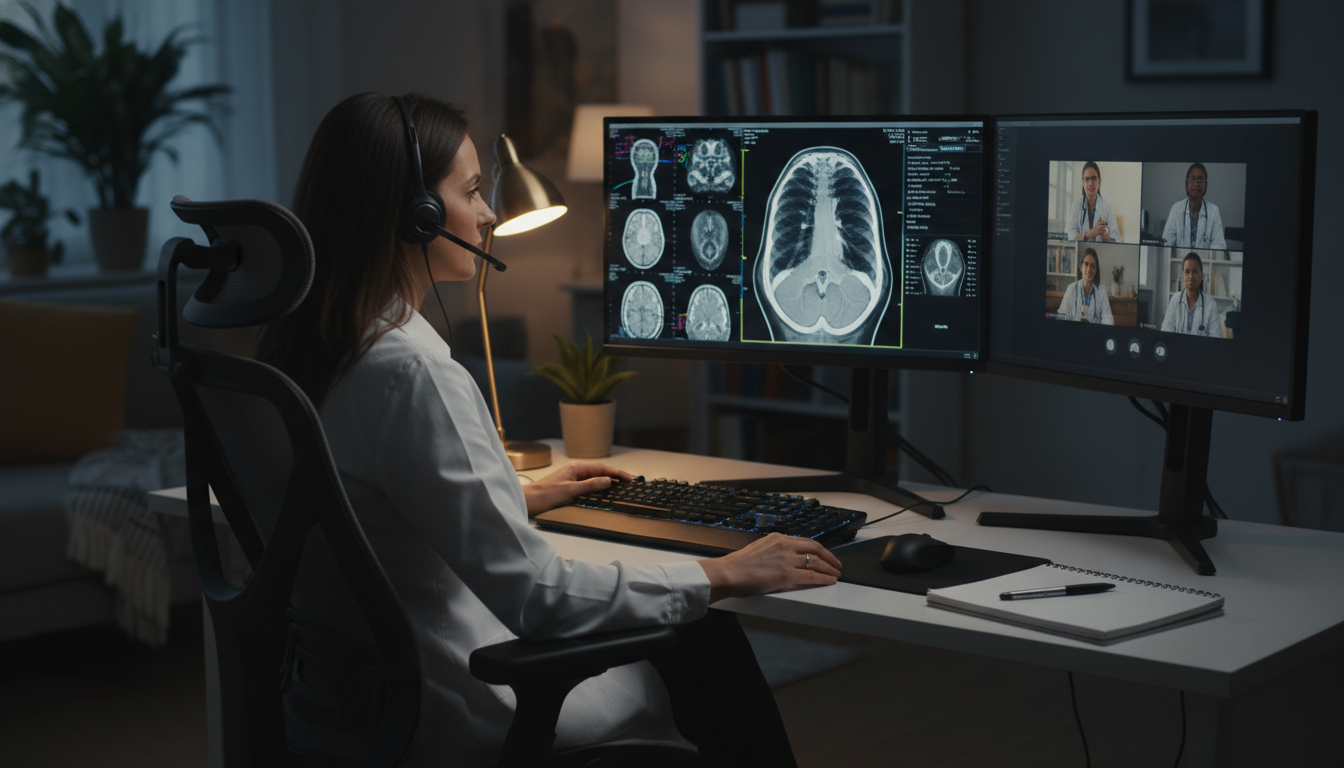
3.1 Technical setup and environment
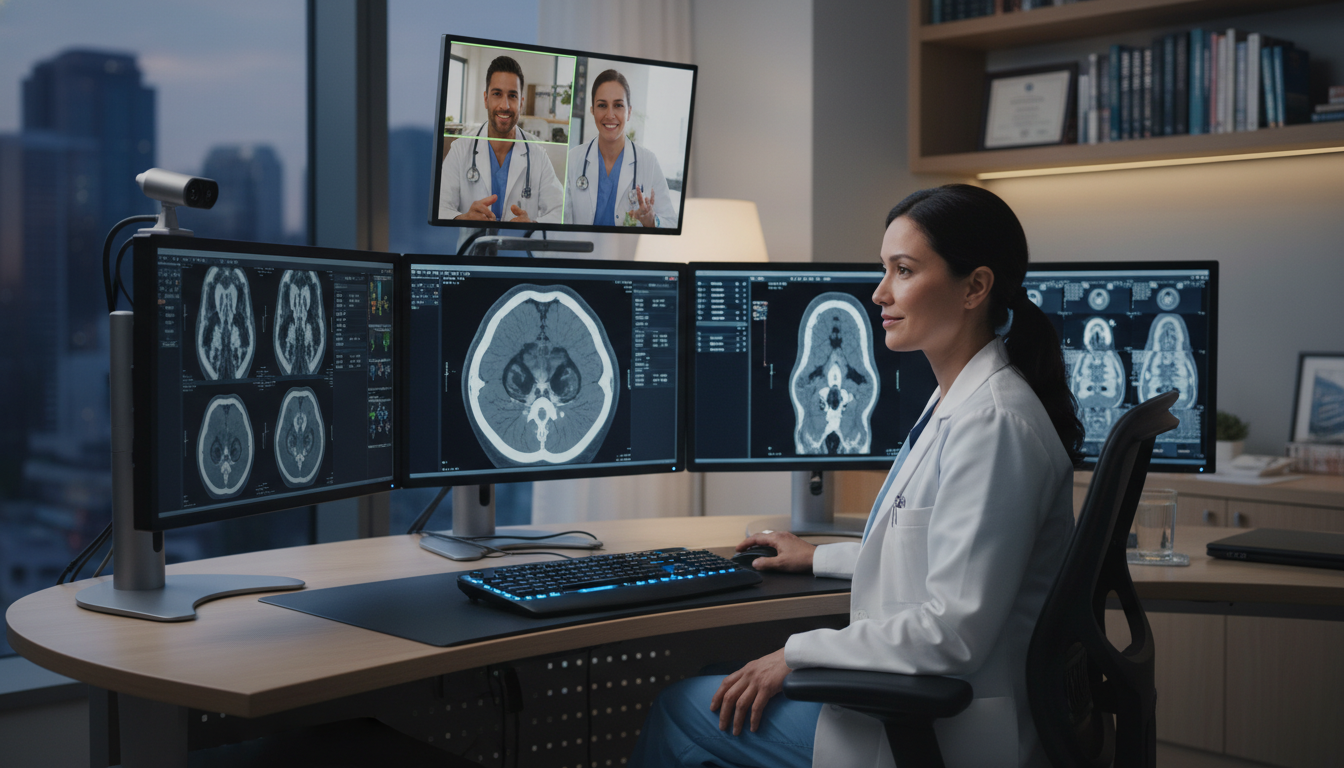
A professional tele‑radiology workstation typically includes:
Medical‑grade monitors with proper resolution and calibration, especially for mammography and neuroradiology.
A secure VPN or direct PACS access to client or employer systems.
High‑speed, stable internet with backup options (e.g., secondary ISP or hotspot).
A quiet, ergonomically optimized workspace with:
- Proper monitor height and eye distance
- Adjustable chair and desk
- Controlled ambient lighting to reduce eye strain
Actionable tip for residents:
During residency, pay attention to reading room layout and what makes a good workstation (monitor placement, lighting, keyboard/mouse setup). These details matter even more when you design your own home setup later.
3.2 Workflow differences: on‑site vs remote
While image interpretation skills are identical, workflow differs in several ways:
On‑site:
- More informal curbside consults with clinicians stopping by.
- In‑person technologist interactions for protocoling or troubleshooting.
- Greater involvement with procedures, fluoroscopy, and hands‑on tasks.
Remote:
- Structured communication via secure messaging, phone calls, or teleconferencing.
- Fewer interruptions in some settings; in others, more digital message “pings.”
- Studies may come from multiple institutions with different protocols and reporting norms.
Example:
A remote night teleradiologist might read for 10–15 hospitals, each with its own order entry conventions. Learning to rapidly interpret context from limited clinical info and variable protocols is a specific skill set you develop over time.
3.3 Scheduling and lifestyle patterns
Telemedicine roles are often built around:
- Shift work (e.g., 8-, 10-, or 12‑hour blocks).
- Coverage of specific time windows (US daytime, US overnights, or international time zones).
Common models include:
- 7 on / 7 off: Intense work weeks followed by full weeks off.
- Evening-only shifts: Ideal for radiologists coordinating with family schedules or different time zones.
- Partial telehealth days: Mix of regular shifts plus admin, education, or research.
Lifestyle considerations:
- You may have more control over where you live, but shifts can anchor you to specific hours, sometimes at odd times for your location.
- Night work can yield higher compensation but may affect sleep, health, and social life.
4. Training for Telemedicine During Radiology Residency
Although there is no “Tele‑radiology” ACGME subspecialty, you can deliberately prepare for telemedicine careers during your diagnostic radiology residency and fellowship.
4.1 Residency experience that translates well to tele‑radiology
During residency, pay particular attention to:
- High‑volume emergency imaging (ER/trauma rotations)
- Night float and independent call experience
- Cross-sectional imaging (CT, MRI) across multiple organ systems
- Bread-and-butter chest and abdominal radiography
These experiences build:
- Pattern recognition skills under time pressure.
- Comfort handling incomplete or limited clinical information.
- Ability to prioritize STAT vs routine studies efficiently.
Programs with strong night float systems and graded independence prepare you very well for teleradiology’s real‑time demands.
4.2 Developing cross‑institutional adaptability
Tele‑radiologists must adapt to:
- Different PACS, EMR, and voice recognition systems.
- Varied report templates and documentation expectations.
- Heterogeneous exam protocols and imaging quality.
Residents can prepare by:
- Seeking exposure to multiple hospital sites within your residency system (tertiary center, VA, community hospital).
- Learning to navigate new systems quickly and documenting your workflow adaptations.
- Volunteering for QI projects that standardize or compare workflows across sites.
4.3 Building communication skills for remote work
Effective telehealth physician practice in radiology isn’t just about reading images; it requires:
- Clear, concise verbal communication on the phone or via video.
- Structured written reports that answer the clinician’s question directly.
- Professional email and message etiquette across institutions.
Practical steps in residency:
- Present regularly at multidisciplinary conferences (tumor boards, stroke conferences).
- Practice closing the loop: calling critical results yourself instead of delegating.
- Get feedback on your reports from both radiology attendings and referring clinicians.
4.4 Technological literacy and informatics
Tele‑radiology sits at the intersection of medicine and IT. Residents can add value by:
- Learning basics of PACS, RIS, and EMR integration.
- Participating in AI and decision‑support projects.
- Understanding data security, HIPAA, and remote‑access policies.
If your program offers electives in imaging informatics or AI research, these can be especially helpful for future telemedicine roles and leadership positions.
5. Navigating the Job Market: Finding and Evaluating Telemedicine Roles
Once you complete diagnostic radiology residency and possibly fellowship, the job market opens to a wide variety of telemedicine and hybrid roles. Being systematic in your approach can help you match your job to your personal and professional priorities.
5.1 How telemedicine features in the diagnostic radiology match and beyond
While the diagnostic radiology match itself doesn’t directly assign you to telemedicine roles, your residency choice influences:
- Your exposure to high‑volume emergency imaging and night work.
- Opportunities to train in advanced subspecialty imaging (which is often in high demand remotely).
- Networking with alumni and faculty who practice teleradiology or hybrid models.
When comparing programs during the residency application phase, consider asking:
- “What proportion of your recent graduates are in remote or hybrid radiology positions?”
- “Do faculty practice tele‑radiology, and can residents learn from their workflow and setups?”
- “Are there opportunities for home‑PACS or remote read electives during senior residency?”
These questions help you assess how future‑oriented and flexible a program may be with respect to telemedicine.
5.2 Where to find telemedicine and teleradiology jobs
Common sources:
- Major physician job boards (e.g., specialty‑focused platforms, professional society listings).
- Teleradiology company websites and recruiters.
- Large health system postings that specifically mention remote physician work or hybrid options.
- Networking at radiology conferences (RSNA, ARRS, AUR, subspecialty meetings).
Actionable approach:
- Make a spreadsheet of potential employers that offer telemedicine or hybrid models.
- Note key attributes: shift structure, subspecialty needs, states of practice, benefits, and tech support.
- Reach out to recent graduates or mentors who can give unfiltered insight into specific groups.
5.3 Key questions to ask about tele‑radiology positions
When you interview or negotiate, clarify:
Workload and expectations
- Average RVUs per shift or per year
- Case mix (ER vs outpatient; CT/MR vs radiographs; mammography or not)
- Expectations for prelim vs final reports
Schedule and flexibility
- Fixed or rotating shifts?
- Nights, evenings, weekends, holidays distribution
- Options to modify schedule after 6–12 months
Licensure and malpractice
- Which state licenses are required, and who pays for them?
- Who covers malpractice premiums and tail coverage?
- How are credentialing and privileging handled at client sites?
Technical and administrative support
- 24/7 IT support availability
- Dictation and voice recognition quality, scribe options
- Help with protocoling and handling noninterpretive tasks
Professional development
- CME support, conference time
- Opportunities for teaching (e.g., remote resident teaching, webinars)
- Pathways to leadership (section chief, QA lead, medical director roles)
Having a structured list elevates your interviews and clarifies which jobs are sustainable long‑term.
5.4 Compensation and contracts in telemedicine radiology
Tele‑radiology compensation can be structured as:
- Salary-only
- RVU-based or per‑click payment
- Hybrid models (base + productivity bonus)
Variables influencing pay:
- Night vs day shifts
- Volume requirements
- Subspecialty (e.g., neuroradiology, IR call)
- Academic vs private/teleradiology company practice
When reviewing contracts:
- Ensure clarity on non‑compete clauses, particularly regarding remote work from your home location.
- Understand expectations for minimum volume, performance metrics, and QA.
- Review what happens if technology fails (downtime policies, backup systems).
It’s wise to involve a lawyer familiar with physician contracts, especially when the role involves multiple jurisdictions and telemedicine‑specific issues.
6. Advantages, Challenges, and Future Directions of Telemedicine in Radiology
Telemedicine is reshaping diagnostic radiology, but it’s not universally ideal for everyone. Understanding both the upsides and the trade‑offs will help you choose wisely.
6.1 Advantages of telemedicine careers for radiologists
- Geographic freedom: You can live in a location based on family, lifestyle, or cost of living, not just hospital proximity.
- Flexible career paths: Mix of remote and on‑site work, or transitions between outpatient imaging, emergency teleradiology, and subspecialty practice over time.
- Expanded reach: You can serve rural or underserved populations who don’t have access to on‑site radiologists.
- Potential work‑life balance: For some, eliminating commute and tailoring shifts improves personal well‑being.
Telemedicine also supports career sustainability—for example, providing options for radiologists who:
- Need to relocate frequently (e.g., military spouses).
- Have health or family constraints that make full‑time on‑site work difficult.
- Want to gradually reduce or adjust hours later in their career.
6.2 Challenges and pitfalls of remote radiology work
- Isolation and burnout risk: Working alone from home can be socially isolating, especially without deliberate community and professional engagement.
- Ergonomics and health: Long hours at a desk can aggravate musculoskeletal issues; remote workers must be proactive about ergonomics and exercise.
- Boundary management: Work may bleed into personal time if you are constantly “near your workstation.”
- Professional visibility: It can be harder to build reputation and leadership opportunities if you are rarely or never on‑site.
Mitigation strategies:
- Schedule regular in‑person or virtual professional interactions (conferences, virtual case conferences, journal clubs).
- Invest in ergonomic equipment and build movement into your day (timed breaks, standing desk).
- Set clear work/home boundaries (defined working hours, a separate room for your workstation if possible).
6.3 Telemedicine, AI, and the future of radiology
Telemedicine and AI are often discussed in the same breath:
- Tele‑radiology companies are early adopters of AI triage tools (e.g., flagging intracranial hemorrhage, PE, and pneumothorax).
- Remote radiologists may help monitor AI performance, validate algorithms, and refine workflows integrating AI.
- Future roles may blend human oversight of AI‑generated preliminary reads with expert problem‑solving for complex cases.
Rather than replacing radiologists, AI is more likely to:
- Help manage increasing volumes.
- Enhance triage and quality control.
- Free radiologists to focus on high‑value interpretations and consultative work.
Radiologists who are comfortable with technology and telemedicine workflows will be well positioned as AI tools become standard across remote and on‑site practice settings.
FAQs: Telemedicine Careers in Diagnostic Radiology
Q1. Can new graduates work fully remote right after residency or fellowship?
Yes, many teleradiology companies hire new graduates straight out of training, especially for emergency imaging roles. However, it’s beneficial to have:
- Strong independent call experience during residency.
- A clear understanding of your comfort level with high‑volume, high‑acuity reading.
Some radiologists prefer starting in a hybrid or on‑site role for a year or two to consolidate skills and develop in‑person professional relationships before transitioning to fully remote work.
Q2. What state licenses do I need for tele‑radiology jobs?
It depends on:
- Where you physically sit (your “home state” license is always required).
- Where the hospitals or imaging centers are located (you generally must hold licenses in each state where patients are imaged).
Tele‑radiology employers often help with licensure, prioritizing states where they have the most volume. Multi‑state licensure can be time‑consuming but increases your job flexibility and earning potential.
Q3. Are there telemedicine jobs in radiology outside of pure image reading?
Yes. Radiologists can work remotely as:
- Physician advisors for payers or health systems on imaging utilization.
- Consultants for AI and imaging technology companies.
- Educators for online courses, virtual fellowships, or global tele‑education projects.
These roles may be part‑time adjuncts to clinical work or eventually become primary careers, depending on your interests and opportunities.
Q4. How should I signal interest in telemedicine when applying for radiology residency?
In your application and interviews, you can:
- Highlight interest in informatics, digital health, and remote care models.
- Ask programs how graduates integrate telemedicine into their careers.
- Emphasize your motivation to serve rural or underserved populations through innovative care models.
You don’t need to commit exclusively to telemedicine, but showing that you understand and are curious about this evolving aspect of radiology can differentiate you as a forward‑thinking applicant.
Telemedicine is no longer an optional add‑on in diagnostic radiology; it is a core component of how imaging care is delivered worldwide. By understanding the range of telemedicine career opportunities, actively shaping your training experiences, and strategically evaluating remote roles, you can build a radiology career that is clinically rewarding, flexible, and resilient in a rapidly changing healthcare landscape.