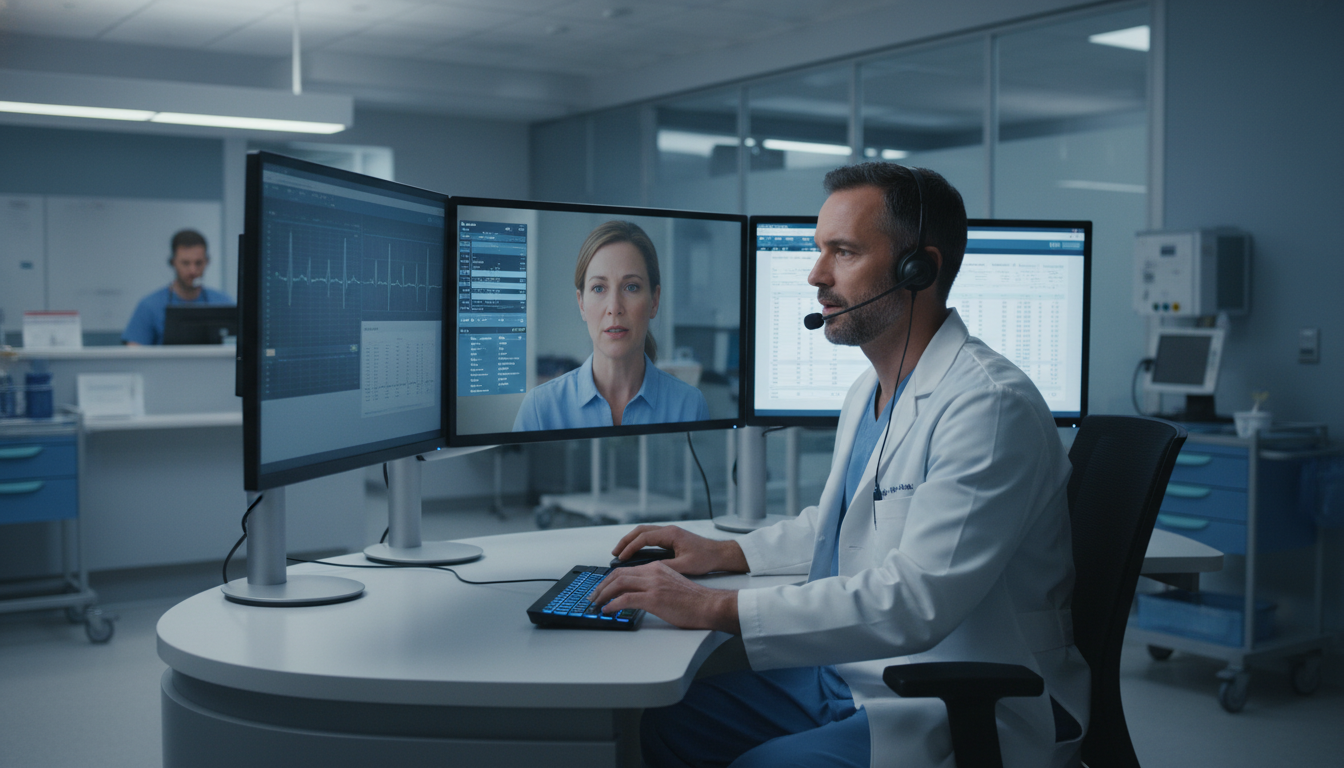
Telemedicine is reshaping what an emergency medicine (EM) career can look like. Once synonymous with crowded emergency departments, night shifts, and in-person resuscitations, the specialty now includes a fast‑growing spectrum of virtual care roles—some fully remote, some hybrid, and many highly flexible.
For medical students and residents considering an emergency medicine residency, it’s no longer enough to ask, “What kind of ED do I want to work in?” A better question might be, “How do I want to practice emergency care—on‑site, online, or both?”
This guide walks you through the landscape of telemedicine career opportunities in emergency medicine, how they intersect with the EM match and training, and what you can do now to position yourself for a future that includes telehealth physician work and remote physician jobs.
The Rise of Telemedicine in Emergency Medicine
Telemedicine was gaining ground in EM before COVID‑19, but the pandemic acted as a massive accelerator. Virtually overnight, just about every hospital, health system, and urgent care network had to build or expand telehealth services.
Why EM is uniquely suited to telemedicine
Emergency medicine is naturally aligned with telehealth:
- 24/7 availability needs: Patients need acute care at all hours; telemedicine expands access when clinics are closed or EDs are overwhelmed.
- Rapid triage and decision-making: EM physicians are trained to quickly assess undifferentiated complaints—ideal for initial virtual triage.
- Breadth of expertise: EM training covers nearly all organ systems and age ranges, making emergency physicians versatile telehealth providers.
- Comfort with uncertainty and risk: EM physicians are skilled at working with incomplete data, limited history, and time pressure—similar to many telemedicine encounters.
How telemedicine is integrated into emergency care
Telemedicine is not a single job type; it’s a range of services that touch different parts of the acute care continuum:
- Virtual urgent care / low‑acuity emergency care
- Tele‑triage prior to ED arrival
- In‑ED teleconsults (e.g., tele‑stroke, tele‑psych, tele‑ICU)
- Hospital-at-home and remote monitoring programs
- Post‑ED discharge virtual follow‑ups
Many of these roles are filled by emergency physicians, especially where undifferentiated acute complaints are the norm.
Core Telemedicine Career Paths for Emergency Physicians
Emergency physicians now have access to a spectrum of telehealth roles, from moonlighting opportunities to full‑time remote physician work. Below are the main categories, with examples of responsibilities, work patterns, and pros/cons.
1. Virtual Urgent Care / On‑Demand Telehealth
This is the most common telemedicine job for emergency physicians and aligns closely with the EM skill set.
What it looks like
- On‑demand or scheduled video visits for low- to moderate-acuity complaints:
- Upper respiratory infections, minor injuries, rashes, UTIs, mild GI symptoms
- Medication refills, basic mental health concerns (if comfortable)
- Short, focused visits (often 8–15 minutes)
- Documentation in a telehealth EHR platform, e‑Rx, and basic care coordination
- Often done from home using your own secure workstation setup
Typical employers
- Large health systems and academic centers
- National telemedicine companies
- Insurance or employer-based virtual care platforms
- Retail clinics and pharmacy‑affiliated telehealth programs
Pros
- High flexibility in scheduling (nights/weekends at your discretion)
- Excellent option for EM residents and attendings to supplement income
- Lower physical and emotional intensity than many ED shifts
- Can be done from anywhere with a strong and secure internet connection
Cons
- Repetitive case mix at times
- Lower pay per hour than high‑acuity ED shifts in some markets
- Risk of cognitive “downshift” if over‑relied on compared with high‑acuity EM
Example:
A PGY‑3 EM resident picks up 6–8 hours of virtual urgent care shifts on a free weekend each month with a national telehealth company, evaluating minor complaints via video. They gain experience in virtual workflows, patient counseling, and risk management in telemedicine while still primarily training in a brick‑and‑mortar ED.
2. Tele‑Triage and ED Front‑Door Services
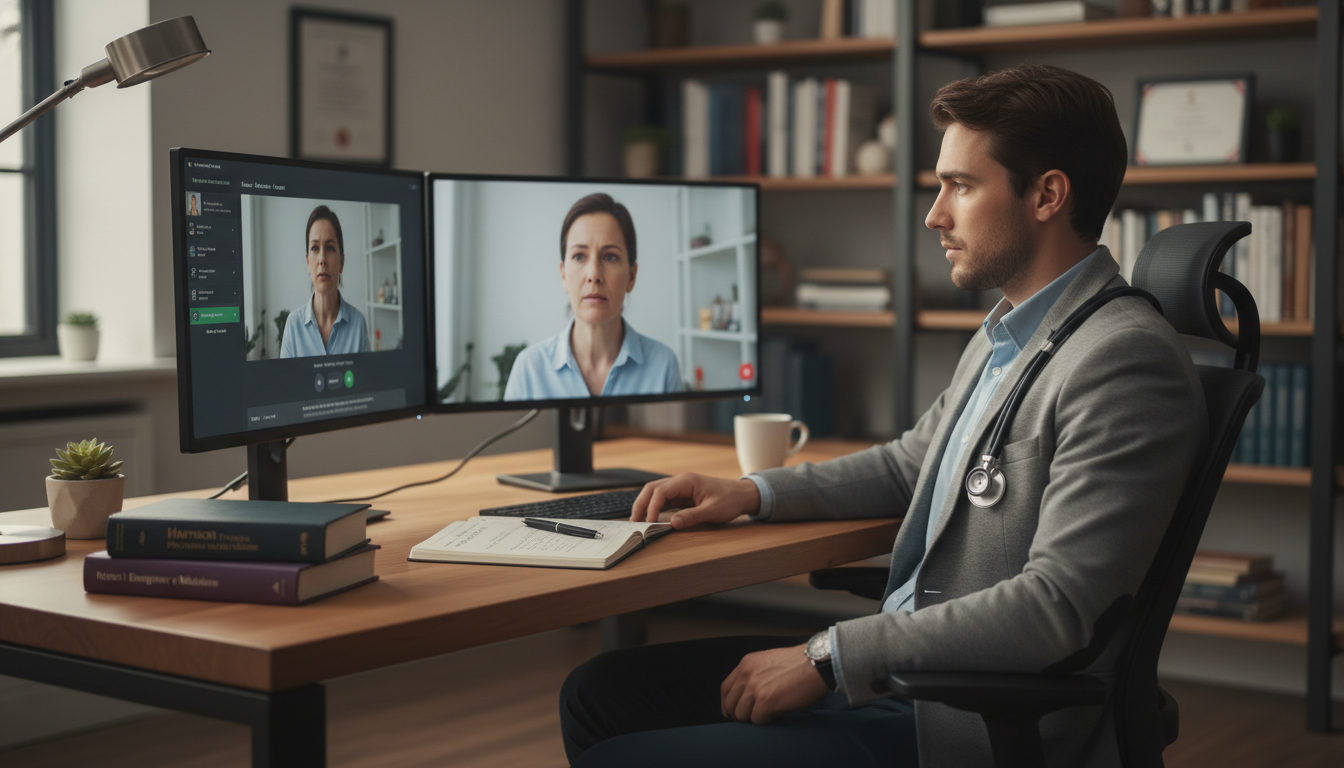
Tele‑triage services aim to direct patients to the most appropriate level of care before they arrive physically anywhere.
What it looks like
- Rapid video or phone assessments of patients who initiate contact via:
- Health system nurse hotlines
- Employer or payer telehealth platforms
- Direct “ED front door” virtual portals
- Sorting patients into:
- Manage at home with virtual care only
- Same‑day or next‑day outpatient visits
- In‑person urgent care
- Go directly to the ED or call EMS
Why EM physicians fit well
- Familiarity with risk stratification and red-flag identification
- Ability to recognize when “low‑risk” complaints hide serious disease
- Comfort with giving clear safety‑net instructions
Pros
- High cognitive engagement—similar to triage attending or intake roles
- Meaningful impact on ED crowding and patient safety
- Often compatible with flexible or part‑time arrangements
Cons
- High medico‑legal responsibility with limited data
- Requires meticulous documentation and clear patient instructions
- May be more mentally taxing than routine low‑acuity tele‑urgent care
Example:
A telehealth physician working for a large integrated health system spends 10‑minute video or phone encounters with patients who request same‑day virtual care. For each encounter, they decide whether the patient can be managed at home, should see a primary care clinic, or needs urgent or emergent in‑person evaluation.
3. Specialized Tele‑Consult Services (Tele‑Stroke, Tele‑ICU, Tele‑Psych, etc.)
Many academic and large community hospitals now run specialized telemedicine programs to extend subspecialty expertise to smaller or rural facilities. While many are staffed by neurologists, intensivists, or psychiatrists, EM physicians can be involved, especially in tele‑ICU, tele‑ED consultation, or as the initial triage physician.
Roles for EM physicians
- Tele‑ED consults for critical access hospitals:
- Helping smaller EDs manage complex cases without immediate subspecialty support
- Guiding stabilization, imaging, transfer decisions
- Tele‑ICU / eICU roles (for EM/critical care trained physicians):
- Continuous remote monitoring of ICU patients
- Providing overnight coverage and rapid response guidance
- Behavioral health / tele‑psych integration:
- EM physicians coordinating with tele‑psychiatrists for ED patients
- Some EM physicians become medical leaders in tele‑psych workflows
Pros
- High impact on rural and underserved patients
- Work closely with multidisciplinary teams
- Strong fit for EM + fellowship‑trained physicians (e.g., EM/CCM)
Cons
- Often requires significant experience or fellowship training
- May have limited opportunities for junior attendings without subspecialty credentials
- Variable scheduling flexibility depending on program size
Example:
An EM/critical care dual‑trained physician splits time between an academic ED and a health‑system tele‑ICU hub, monitoring ICU beds in multiple regional hospitals and providing nighttime critical care oversight entirely via telemedicine.
4. Telemedicine in Hospital-at-Home and Observation Care
Hospital-at-home programs offer acute‑level care in a patient’s home, often supported by telemedicine and intermittent in‑person nursing visits. Emergency physicians are natural fits for leading admission decisions and episodic acute management.
Typical duties
- Tele‑admission assessments for patients being diverted from the ED or inpatient wards to home‑based programs
- Daily tele‑rounds to monitor symptom progression, review labs, and adjust treatment
- Determining thresholds for escalation (e.g., return to ED or hospital admission)
- Collaboration with in‑home nursing, paramedic teams, and remote monitoring services
Why EM fits
- Experience with short‑stay and observation medicine
- Familiarity with risk stratifying conditions like heart failure, COPD, low‑risk chest pain
- Comfort making time‑sensitive decisions with limited information
Pros
- Excellent for EM physicians who enjoy systems design and quality improvement
- Can often be done from home or hybrid
- Builds leadership experience in a rapidly growing care model
Cons
- Limited geographic availability; still emerging in many markets
- Requires comfort with longer time frames than typical ED encounters
5. Telemedicine Leadership, Administration, and Innovation Roles
As telehealth matures, systems increasingly need leaders who understand both emergency care and virtual platforms.
Potential roles
- Director of Tele‑Emergency Medicine within a health system
- Chief Medical Officer (CMO) or Medical Director for telemedicine companies
- Quality and Safety leads for virtual acute care programs
- Clinical informatics / digital health innovation roles, often in collaboration with IT
Responsibilities
- Building and refining telehealth workflows
- Setting clinical protocols, safety standards, and documentation guidelines
- Overseeing credentialing, training, and performance evaluation for telehealth physicians
- Collaborating on EHR integration and telemedicine platform selection
Fit for EM physicians
- EM physicians often thrive in operational, systems‑oriented work
- High tolerance for complexity and cross‑department collaboration
- Excellent step for those interested in non‑clinical career growth while maintaining a clinical footprint

Integrating Telemedicine into Your Emergency Medicine Residency Path
Since you’re likely thinking about the EM match and residency applications, the key question is: how can you prepare now for a future in telemedicine?
Choosing an Emergency Medicine Residency with Telehealth Exposure
When evaluating emergency medicine residency programs, ask specifically about telehealth opportunities:
- Does your ED have a telemedicine program?
- Virtual urgent care
- Tele‑triage
- Tele‑consults with affiliate hospitals
- Can residents moonlight in telemedicine during senior years (if allowed)?
- Are there faculty actively practicing as telehealth physicians or in telemedicine leadership?
- Is there a digital health or telemedicine track, elective, or scholarly focus?
Residency programs with a strong telehealth footprint will give you:
- Early exposure to telehealth workflows and risk management
- Mentorship from attendings already working in remote physician roles
- Access to projects in quality improvement, operations, or research within telemedicine
Skills Residents Should Develop for Telemedicine Careers
Regardless of program, you can actively build skills that translate directly into telemedicine work:
Communication and “webside manner”
- Practice clear, concise explanations and safety‑netting language.
- Focus on how you would gather a history and provide reassurance with minimal physical exam.
Risk stratification with limited resources
- Be deliberate about how you decide who needs imaging, labs, or admission.
- Think through how you’d manage the same patient if you could only see and talk to them.
Documentation that supports virtual care
- Detailed safety‑net instructions and return precautions
- Clear descriptions of your decision‑making process
- Specific documentation of what could and could not be assessed
Comfort with digital tools
- Learn EHR shortcuts, telehealth platforms, and basic informatics.
- Engage with hospital IT or QI teams when new digital tools are rolled out.
Awareness of licensing, billing, and compliance
- Understand that telemedicine regulations and reimbursement can vary by state.
- Seek out resident lectures or online CME materials about telehealth law and policy.
Telemedicine Moonlighting During Residency
For many EM residents, their first experience as a telehealth physician comes through moonlighting opportunities:
- Pros
- Flexible, often from home
- Builds confidence in independent decision‑making
- Income that can fit between ED shifts
- Cons/Considerations
- Must comply with program rules and ACGME duty hour limitations
- Need secure, HIPAA‑compliant space and setup
- Must assess whether your training level is sufficient for safe telecare
If your program allows, consider starting with low‑acuity tele‑urgent care shifts in your PGY‑3 or later years, paired with strong supervision or mentorship from telehealth‑experienced attendings.
Practical Steps to Build a Telemedicine-Focused EM Career
If you’re interested in telemedicine jobs after residency, you can be intentional now about building that path.
1. During Medical School
- Electives
Choose EM rotations at institutions with established telehealth programs, if possible. - Projects
Join quality improvement or research projects on:- ED overcrowding and tele‑triage
- Virtual follow‑up for ED patients
- Patient satisfaction in tele‑urgent care
- Mentorship
Identify EM faculty who are involved in telehealth or digital health; ask them about career paths, skills, and pitfalls.
2. During Residency
- Select telehealth-heavy programs when possible
During the EM match process, weigh telehealth infrastructure alongside trauma volume and fellowship opportunities. - Elective time in telemedicine
Ask if you can spend an elective block:- Working with your institution’s telehealth service
- Shadowing tele‑ICU or tele‑stroke teams
- Participating in ED‑to‑home or hospital‑at‑home pilots
- Scholarly activity
Publish or present on:- Impact of tele‑triage on ED throughput
- Safety outcomes of virtual urgent care
- Implementation of telehealth in rural emergency departments
3. Early Attending Years
- Blend on‑site ED work with telemedicine shifts
Start with a hybrid model:- 0.5–0.8 FTE in a brick‑and‑mortar ED
- 0.2–0.5 FTE in telehealth (virtual urgent care, tele‑triage, etc.)
- Experiment with different employers
- Large health system vs. national telemedicine company
- Part‑time vs. full‑time remote
- Fixed schedule vs. per‑diem shifts
- Develop a niche
- Pediatric tele‑urgent care
- Geriatric virtual care
- Telehealth for rural and frontier communities
- Integration of point‑of‑care devices in telemedicine (e.g., home oximetry, BP cuffs)
4. Long‑Term Career Options
As you gain experience, your profile as a telehealth physician can open doors to:
- Medical directorship roles in virtual urgent care or tele‑ED programs
- Leadership positions in digital health startups
- Consulting work for health systems building new telemedicine workflows
- Academic careers focusing on telehealth research, policy, and education
Challenges, Ethics, and Risk Management in Tele‑EM
Telemedicine is not simply “ED care through a webcam.” It introduces distinct challenges that emergency physicians must actively manage.
Clinical Limitations
- Inability to perform a complete physical exam or point-of-care testing
- Dependence on patient‑reported vitals or home devices
- Risk of under‑ or over‑triage based on incomplete data
Mitigation strategies
- Use structured tele-exam techniques (e.g., having patients palpate, move, or demonstrate findings)
- Maintain a lower threshold for in‑person evaluation when red flags are present
- Provide explicit, written return instructions and time‑bound follow‑up options
Medicolegal and Regulatory Issues
- State-by-state licensing requirements for telehealth physician work
- Evolving rules around cross‑state practice and interstate licensure compacts
- Need to understand documentation, consent, and malpractice coverage specific to telemedicine jobs
Practical advice
- Verify that your telemedicine employer provides malpractice coverage that explicitly includes telehealth.
- Keep current on your license status in each state you practice virtually.
- Complete telemedicine‑specific training modules offered by employers or professional societies.
Professional Identity and Burnout
Telemedicine can be both a relief and a risk for EM physicians:
- Benefits
- Reduced physical fatigue and night shift burden
- Increased schedule autonomy
- Ability to live where you want, independent of hospital location
- Risks
- Isolation from colleagues and the ED team
- “Productivity pressure” from chat‑based or high‑volume telehealth models
- Loss of procedural skills or comfort with high‑acuity care if used exclusively
Many emergency physicians find the best balance in a hybrid model: maintaining ED shifts for high‑acuity skills and team dynamics, while adding remote physician work for flexibility and sustainability.
Frequently Asked Questions (FAQ)
1. Do I need a fellowship to work in telemedicine as an emergency physician?
No. Most telemedicine jobs for EM physicians—especially virtual urgent care, tele‑triage, and general tele‑ED—do not require fellowship training. However, certain niches, like tele‑ICU (for intensivist‑level roles) or some specialized consult services, may prefer or require fellowship training (e.g., critical care, toxicology, palliative care).
2. Can I do telemedicine work while still in emergency medicine residency?
Sometimes, but it depends on your program and institutional rules. Key considerations:
- ACGME duty hour restrictions must still be followed.
- Many programs require that any moonlighting (including telehealth) be approved and that you are performing at the level of an independent attending.
- Most telemedicine companies expect you to be fully licensed and board‑eligible/board‑certified, so many residents start telemedicine work in late PGY‑3 or after graduation.
Always discuss with your program director before accepting telemedicine jobs.
3. What equipment do I need for remote physician work in telemedicine?
Basic requirements usually include:
- A reliable high‑speed internet connection
- A private, quiet space with a neutral, professional background
- A high‑quality webcam and headset or microphone
- A secure computer that meets your employer’s cybersecurity standards (often with VPN and two‑factor authentication)
- Sometimes dual monitors to facilitate video visits plus charting
Employers may provide software, training, and occasionally hardware stipends.
4. Can I make a full-time career in telemedicine as an emergency physician?
Yes, many EM physicians now work primarily or entirely in telehealth roles, especially in virtual urgent care, tele‑triage, or as telehealth medical directors. However, you should consider:
- Your desire to maintain procedural and resuscitation skills
- The variability of telehealth reimbursement and regulations over time
- The impact of remote-only work on your professional satisfaction and sense of team belonging
For many, a blended model—part ED, part telemedicine—offers the best long‑term career sustainability.
Telemedicine will only become more integral to acute care delivery over the coming decade. By thoughtfully choosing your emergency medicine residency, seeking telehealth exposure early, and continuously refining your virtual care skills, you can position yourself at the forefront of this evolving field—whether your goal is a side stream of flexible telemedicine jobs or a full-fledged career as a telehealth physician and remote emergency medicine expert.