The Rise of Telemedicine in Medical Genetics
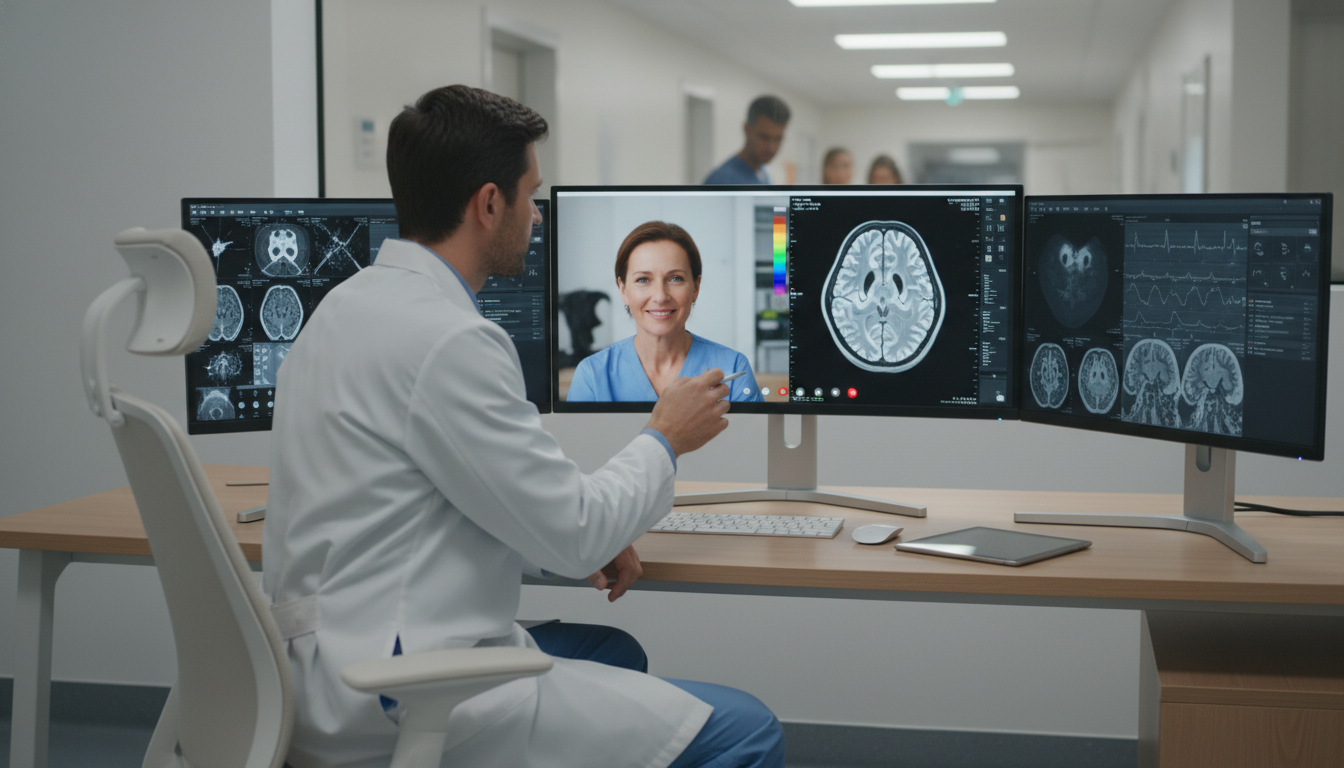
Telemedicine has transformed how patients access specialty care, and medical genetics is one of the fields most naturally suited to this shift. Because a large proportion of genetic consultations are history‑ and counseling‑based rather than procedure‑based, telehealth opens wide possibilities for flexible, intellectually rich careers that are not bound to a single clinic or hospital.
For medical students, residents, and fellows interested in medical genetics residency training, understanding telemedicine career opportunities is now an essential part of long‑term planning. The same is true for early‑career attendings exploring remote physician work, portfolio careers, or non‑traditional practice models.
This guide walks through how telemedicine integrates with clinical genetics practice, what kinds of telehealth physician roles exist, how to prepare during residency and fellowship, and how to position yourself competitively for this evolving landscape.
Why Medical Genetics Is Ideal for Telehealth
Care Model: Conversation‑Heavy, Procedure‑Light
Most encounters in medical genetics involve:
- Detailed personal and family history taking
- Phenotyping via observation and patient‑submitted photographs
- Explaining complex test options and implications
- Pre‑test and post‑test counseling
- Coordinating downstream referrals and surveillance
These components translate well to video visits. Unlike procedural specialties, the majority of clinical value in genetics derives from cognitive work and communication rather than in‑person interventions.
Examples of visits that work especially well via telemedicine:
- Cancer susceptibility counseling (e.g., BRCA1/2, Lynch syndrome)
- Cardiogenetics (e.g., long QT, HCM family screening)
- Reproductive genetics and preconception counseling
- Adult‑onset neurological or metabolic disorders with known genes
- Follow‑up visits after testing to review results and management
Alignment with Emerging Care Models
Key healthcare trends favor telemedicine in genetics:
- Decentralization of care: Community hospitals and primary care practices increasingly refer to remote genetics specialists rather than building in‑house programs.
- Population genomics: Large health systems and employers offering broad genetic screening require scalable, remote counseling services.
- Direct‑to‑consumer (DTC) testing: Patients often need independent professional interpretation of results they obtained outside traditional healthcare channels.
- Value‑based care: Early detection and risk stratification via genetics can reduce downstream costs—telehealth makes such services more accessible.
This means that as you move through the genetics match and into practice, your skill set will be in demand not just in academic centers but also in telemedicine‑first organizations, health tech startups, and national genetics service platforms.
Types of Telemedicine Roles in Medical Genetics
Telemedicine opportunities in medical genetics span a wide spectrum—from traditional hospital positions with hybrid remote work to fully virtual roles in non‑traditional settings.
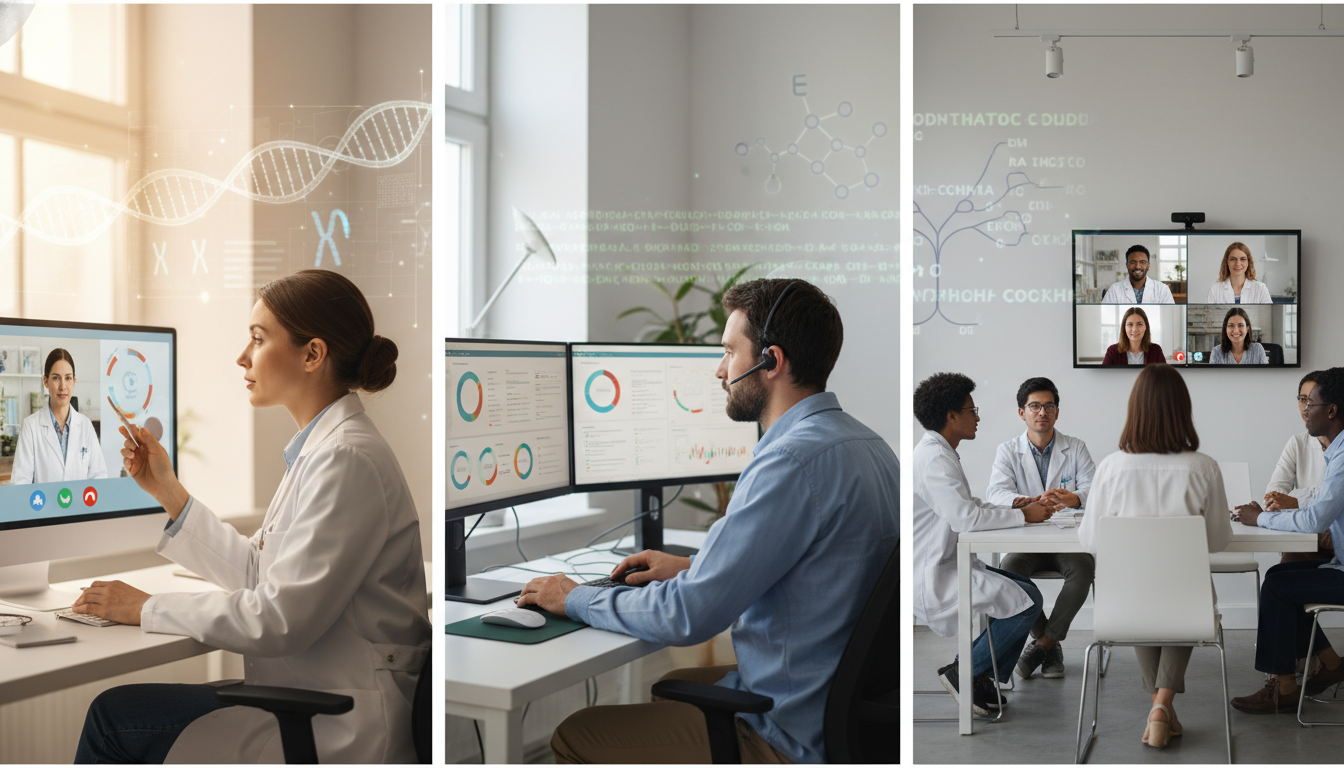
1. Academic and Hospital‑Based Telehealth Clinics
Many academic medical centers now offer:
- Hybrid on‑site/telehealth schedules: Certain clinic days are fully virtual, others on‑site.
- Regional tele‑genetics networks: Specialists at the main center see patients from rural clinics via telemedicine, sometimes supported by local telepresenters or advanced practice providers.
- Cross‑state teleconsultation partnerships: Especially in regions with limited genetics access.
Typical features:
- Standard employment by a hospital or university
- Mix of in‑person and telehealth visits
- Teaching, research, and multidisciplinary clinics often retained in‑person but with virtual options
For residents and fellows, these programs are often your first exposure to remote physician work and can provide a strong foundation in telehealth best practices.
2. Telehealth Physician Roles in National Genetics Networks
Several organizations run multi‑state or national networks of board‑certified medical geneticists and genetic counselors who provide care entirely by telemedicine. These may be:
- Standalone genetics practices
- Genetics divisions within larger telehealth platforms
- Contractor networks serving regional health systems
Role characteristics:
- 100% or majority remote
- Structured templates and workflows; strong administrative support
- Scheduled video visits across time zones
- Partnership with local labs for testing and with PCPs/specialists for implementation
These positions may be W‑2 salaried, 1099 independent contractor, or part‑time, making them appealing to physicians seeking flexibility or complementary income streams after finishing medical genetics residency or dual‑certified training (e.g., pediatrics + genetics).
3. Telemedicine in Specialty Clinics (Cancer, Cardiology, Neurology)
Many subspecialty programs now offer integrated genetics teleconsultation. For example:
- Cancer centers: Tele‑genetics for hereditary breast/ovarian cancer, colon cancer, polyposis syndromes
- Cardiology services: Remote assessment and family screening for inherited cardiomyopathies and arrhythmias
- Neurogenetics programs: Tele‑visits for inherited ataxias, muscular dystrophies, epilepsy syndromes
- Metabolic clinics: Remote follow‑up for stable inborn errors of metabolism with local labs handling monitoring
In these roles, you might be employed by the relevant specialty division but provide genetics‑focused telehealth care as part of an integrated team. This can be a rewarding path if you’re drawn to a particular disease area.
4. Industry and Digital Health Startup Roles
An expanding sector blends clinical genetics and digital health innovation. Common setups include:
- Telehealth physician roles at genomics startups offering population screening, pharmacogenomics, or rare disease programs
- Interpretive and consultative roles for DTC genetic testing companies that are moving toward more medically integrated services
- Leadership positions in virtual specialty clinics combining genetics, AI‑driven risk assessment, and remote monitoring
These jobs often include:
- Fewer direct patient visits relative to academic practice
- More involvement in protocol design, product development, and quality oversight
- Cross‑functional work with engineers, product managers, and data scientists
Physicians here typically still practice under a license and may be involved in clinical oversight, but the role may be broader than traditional clinic‑based work.
5. Part‑Time, Side, and Portfolio Careers
Telemedicine has enabled physicians—especially genetics subspecialists—to build “portfolio” careers:
- Primary academic or hospital appointment plus
- Supplemental telemedicine sessions for a national network or startup, or
- Consulting arrangements with health systems building genetics capacity
For early‑career geneticists, this can help:
- Pay down loans faster
- Explore different practice settings before committing long‑term
- Maintain a robust clinical volume even if your main institution has limited genetics referrals
Day‑to‑Day Practice: What Tele‑Genetics Actually Looks Like
While the setting changes, much of the clinical reasoning and patient interaction remains the same. However, some aspects of telehealth in medical genetics deserve special attention.
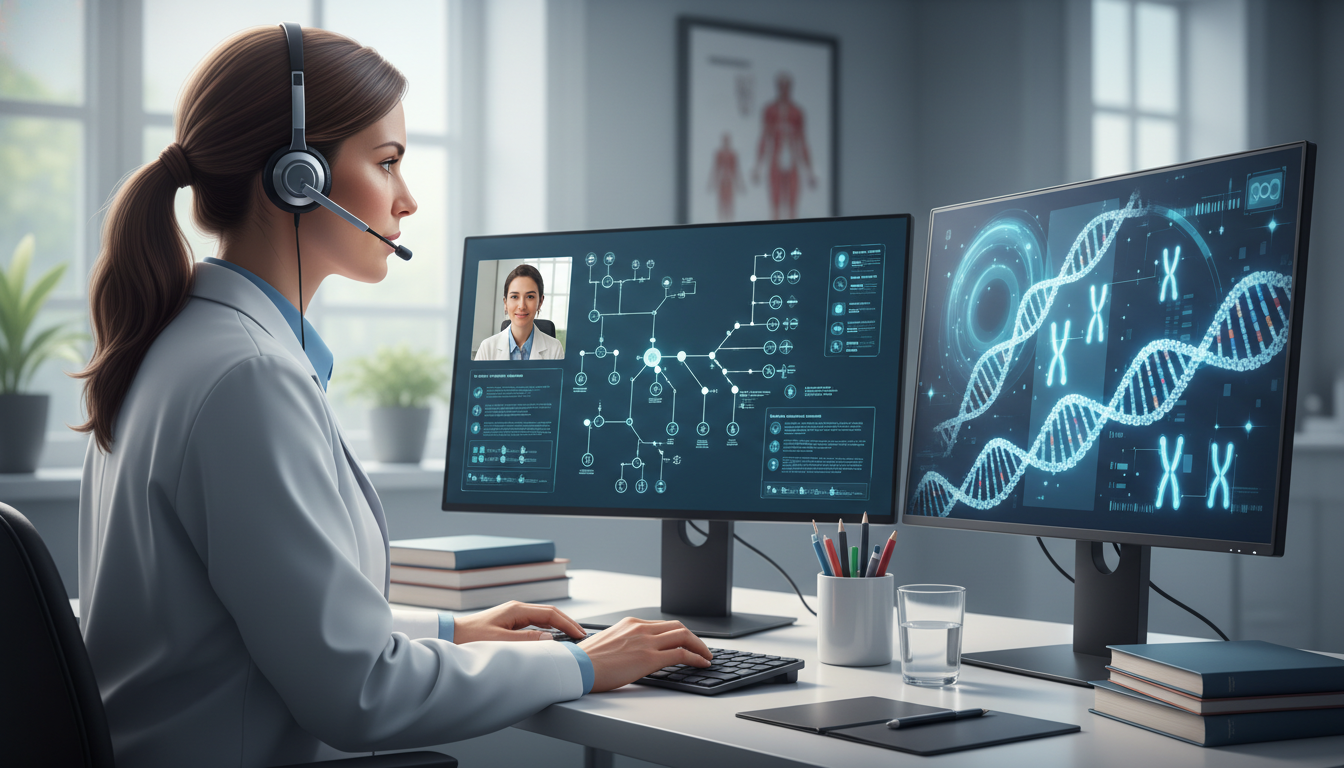
Clinical Workflow
A typical telehealth genetics visit often includes:
Pre‑visit preparation
- Reviewing referrals, prior notes, and lab results
- Checking family history questionnaires submitted via portal
- Identifying key differential diagnoses and necessary records
Virtual intake and history
- Verifying identity and consent for telemedicine
- Taking a thorough personal and family history (often with onscreen pedigree tools)
- Eliciting subtle phenotypic clues via targeted questions
Visual exam and phenotyping
- Assessing facial features, growth patterns, movement disorders via high‑resolution video
- Reviewing patient‑uploaded photos or previous imaging
Counseling and shared decision‑making
- Explaining inheritance patterns and risk
- Outlining genetic test options, limitations, and potential outcomes
- Discussing psychosocial and insurance/GINA considerations
Logistics and follow‑up
- Ordering testing through local or mail‑order phlebotomy
- Coordinating family member testing
- Scheduling result disclosure visits and long‑term surveillance
Many telehealth platforms streamline these steps with integrated EHRs, e‑consent tools, and automated reminders.
Physical Examination: What’s Possible and What’s Not
Certain exam components can be assessed reasonably well via video:
- Dysmorphic facial features
- Skin findings (if photo/video quality is high)
- Gross motor function and gait
- Certain neuromuscular signs (e.g., tremors, coordination tasks)
But limitations remain:
- No direct auscultation, palpation, or detailed neurologic exam
- Difficulty assessing subtle findings that require 3D visualization or tactile feedback
- Challenges with infants and very young children if caregiver is alone
Common solutions:
- Hybrid models: Initial in‑person evaluation followed by telehealth follow‑ups
- Local collaborations: Involving a local pediatrician or specialist to perform a focused exam guided remotely
- Strict triage: Determining which referrals absolutely require an in‑person visit before or after tele‑consultation
Patient Populations That Work Especially Well
Tele‑genetics is particularly powerful for:
- Rural and underserved populations far from tertiary centers
- Working adults and parents who struggle to take time off for appointments
- Patients with mobility limitations or chronic illness
- Family‑based counseling sessions where participants are in multiple locations
In the oncology and adult genetics space, telehealth has dramatically improved uptake of recommended genetic counseling and testing—an important public health impact.
How to Prepare During Medical Genetics Training
If you are planning for a medical genetics residency or already in training, there are concrete steps you can take to align your skills with telemedicine career opportunities.
1. Seek Telehealth Clinical Exposure
Where possible, ask your program leadership for:
- Rotation time in tele‑genetics clinics (cancer, prenatal, adult, or pediatric)
- Opportunities to co‑pilot virtual visits with attendings—ideally in multiple settings (academic, community, possibly industry collaborations)
- Participation in multidisciplinary virtual boards (tumor boards, cardiogenetics conferences, etc.)
During these experiences, focus not only on clinical content, but also on:
- Technology workflows
- Communication adaptations for video care
- How attendings handle consent, privacy, and documentation for virtual visits
2. Develop Strong Communication and Counseling Skills
Telemedicine magnifies the importance of clear, empathetic communication. Patients may have:
- Less nonverbal feedback from you
- More distractions at home
- Anxiety about technical issues
Key skills to practice:
- Summarizing complex risk information in plain language
- Using visual aids (shared screens, diagrams) effectively
- Checking for understanding frequently
- Managing group dynamics when multiple family members join a call
Participate in simulated telehealth OSCEs or standardized patient encounters if your institution offers them. Ask faculty experienced in tele‑genetics for targeted feedback.
3. Learn the Regulatory and Operational Basics
Understanding the operational side of telehealth will make you a more attractive candidate when you finish training. During residency/fellowship:
- Ask your institution’s telemedicine office about:
- Licensure requirements (especially multi‑state practice)
- Telehealth documentation standards
- Billing and coding for virtual visits in genetics
- Informed consent policies specific to telemedicine
- Attend workshops or grand rounds on:
- HIPAA and secure platforms
- Cross‑state telehealth rules and the evolving legal landscape
- Reimbursement changes and value‑based care models
This knowledge is critical if you later join a national telehealth network or help your future employer build or expand tele‑genetics services.
4. Build a Niche That Translates Well to Remote Practice
Certain niches within medical genetics are especially telehealth‑friendly. Consider deeper training or research in:
- Hereditary cancer genetics
- Cardiogenetics and arrhythmia syndromes
- Adult‑onset neurogenetic disorders
- Pharmacogenomics
- Reproductive and preconception counseling
You can pursue:
- Focused electives in these areas
- QI projects on telehealth workflows or access expansion
- Research on tele‑genetics outcomes, utilization, or patient satisfaction
Mentioning this focus in your CV, cover letters, and interviews—including during the genetics match process for fellowship or combined residencies—signals that you are aligned with where the field is heading.
Launching and Sustaining a Telemedicine Career in Genetics
Once you complete medical genetics residency or combined training, you’ll face practical career decisions that shape how telemedicine fits into your practice.
1. Choosing a Practice Environment
Consider these dimensions when evaluating job offers:
Mix of telehealth vs in‑person
- Do you want majority remote physician work, or a hybrid with some clinic and procedures?
- How comfortable are you with reduced physical examination?
Academic vs non‑academic
- Do you seek a scholarly career with research and teaching?
- Or are you more interested in high‑volume clinical telehealth or industry innovation?
Employment model
- Salaried hospital/university position
- Employed telehealth company role with benefits
- 1099 contractor flex work
- Combination of several part‑time roles
Scope and patient population
- Pediatric, adult, or mixed
- General vs niche (e.g., cancer, cardiogenetics)
- Local vs multi‑state/national
Bring specific telemedicine questions to interviews:
- What proportion of genetics visits are currently telehealth, and what is the long‑term plan?
- How is technology support handled (platforms, documentation, IT assistance)?
- Are there opportunities to lead or innovate in virtual care?
2. Licensing and Regulatory Strategy
Multi‑state licensure is often a prerequisite for national telehealth physician roles. Points to keep in mind:
- Interstate Medical Licensure Compact (IMLC): If your primary license is in a participating state and you meet criteria, you may be able to fast‑track additional licenses.
- Prioritization: Focus on states where your employer has the largest patient footprint.
- Maintenance: Budget time and money for renewals and CMEs meeting various state requirements.
If you plan a career heavily weighted toward telemedicine, it can be strategic to:
- Match into or practice in a state that participates in IMLC
- Obtain at least a few additional key state licenses early in your career
3. Technology, Workspace, and Ergonomics
Telemedicine becomes far more sustainable when you invest in:
- Reliable, high‑speed internet (wired if possible)
- Professional workspace that is private, well lit, and acoustically quiet
- Good audio/video equipment:
- HD webcam at eye level
- Quality microphone or headset
- Dual monitors for charting while seeing patient
Some employers provide equipment; others offer stipends. During contract negotiation, it’s reasonable to ask what telehealth support is available.
4. Burnout and Work‑Life Integration
Remote physician work can be double‑edged:
Advantages
- No commute
- Flexible scheduling
- Easier integration with personal responsibilities
Risks
- Blurring of work–home boundaries
- Isolation from colleagues
- “Zoom fatigue” from back‑to‑back video visits
Protect yourself by:
- Setting clear start/stop times and blocking administrative time
- Scheduling brief breaks between visits whenever possible
- Maintaining regular connection with peers (virtual case conferences, journal clubs, or in‑person meetups)
- Being deliberate about vacation use—even in flexible telehealth roles
Many telehealth physicians across specialties report higher satisfaction when they maintain at least a small in‑person component (e.g., one clinic day per week) to preserve team interaction and variety, though this is a matter of personal preference.
5. Long‑Term Career Growth
Telemedicine in medical genetics will continue to evolve. Long‑term, you may expand into:
Leadership roles
- Director of tele‑genetics services at a health system
- Medical director for a digital health or genomics company
Program development
- Designing tele‑genetics pathways for primary care, oncology, or cardiology partners
- Integrating AI‑driven decision support into virtual clinics
Education and advocacy
- Training residents and fellows in tele‑genetics
- Research on telehealth outcomes, equity, and access in genetics
- Policy work on reimbursement and licensure to expand access to hereditary risk evaluation
Developing skills in quality improvement, health services research, or informatics during or after training will position you strongly for these roles.
Frequently Asked Questions
1. Can I really do a full‑time career in medical genetics entirely via telemedicine?
Yes, especially in adult and cancer genetics, many physicians now have predominantly or fully remote schedules. That said:
- Some roles still expect a small amount of in‑person time (e.g., initial complex cases, multidisciplinary clinics).
- Employers may want you within commuting distance of a hub, even if visits are virtual.
- Pediatric and metabolic genetics often benefit from at least some in‑person examination.
If you prefer 100% telehealth, focus your job search on national telemedicine networks, digital health companies, and hospital systems that explicitly advertise fully remote physician work.
2. How does telehealth experience affect my competitiveness in the genetics match?
While the genetics match primarily evaluates your overall clinical performance, academic potential, and fit, prior telehealth exposure can be a plus:
- It signals that you understand modern care delivery realities.
- It reassures programs that you can adapt to virtual clinics they already run.
- It provides material for thoughtful discussion about access, equity, and innovation in your personal statement and interviews.
You do not need extensive telemedicine experience to match into medical genetics residency, but if you have it, highlight concrete examples of what you learned and how it informed your career goals.
3. Are telemedicine jobs in genetics stable, or are they mostly short‑term or startup‑dependent?
There is a mix:
- Hospital and academic tele‑genetics programs are generally stable, backed by large health systems.
- Established national telehealth groups with genetics divisions tend to offer reasonably stable positions, though pay structures may vary.
- Early‑stage startups can offer exciting roles but carry more risk (funding changes, pivots, or acquisitions).
When evaluating an offer, ask about:
- Funding sources and runway (for startups)
- Volume trends and institutional commitment to genetics services
- Contract length, termination clauses, and non‑compete language
Diversifying—e.g., a part‑time academic appointment plus a part‑time telehealth role—can also improve perceived stability.
4. How does reimbursement work for tele‑genetics visits?
Reimbursement varies by payer and region, but over the past several years:
- Many insurers reimburse synchronous video visits at rates similar to in‑person visits when specific criteria are met (platform, documentation, consent).
- Some payers also reimburse telephone‑only visits, though usually at lower rates.
- Billing is typically based on time or complexity, similar to in‑person E/M coding, with telehealth modifiers and place‑of‑service codes.
As a physician, you usually won’t manage the granular details day to day, but you should:
- Document clearly the location of patient and provider, modality used, and duration.
- Follow institutional templates for telehealth documentation.
- Stay aware of broad reimbursement changes, as they can influence job security and scheduling models.
Telemedicine has moved from an experiment to a central pillar of clinical practice in medical genetics. By understanding the landscape early—during the residency application process, throughout medical genetics training, and into early attending life—you can design a career that combines intellectual challenge, flexible work patterns, and broad impact on patient access to genetic care.