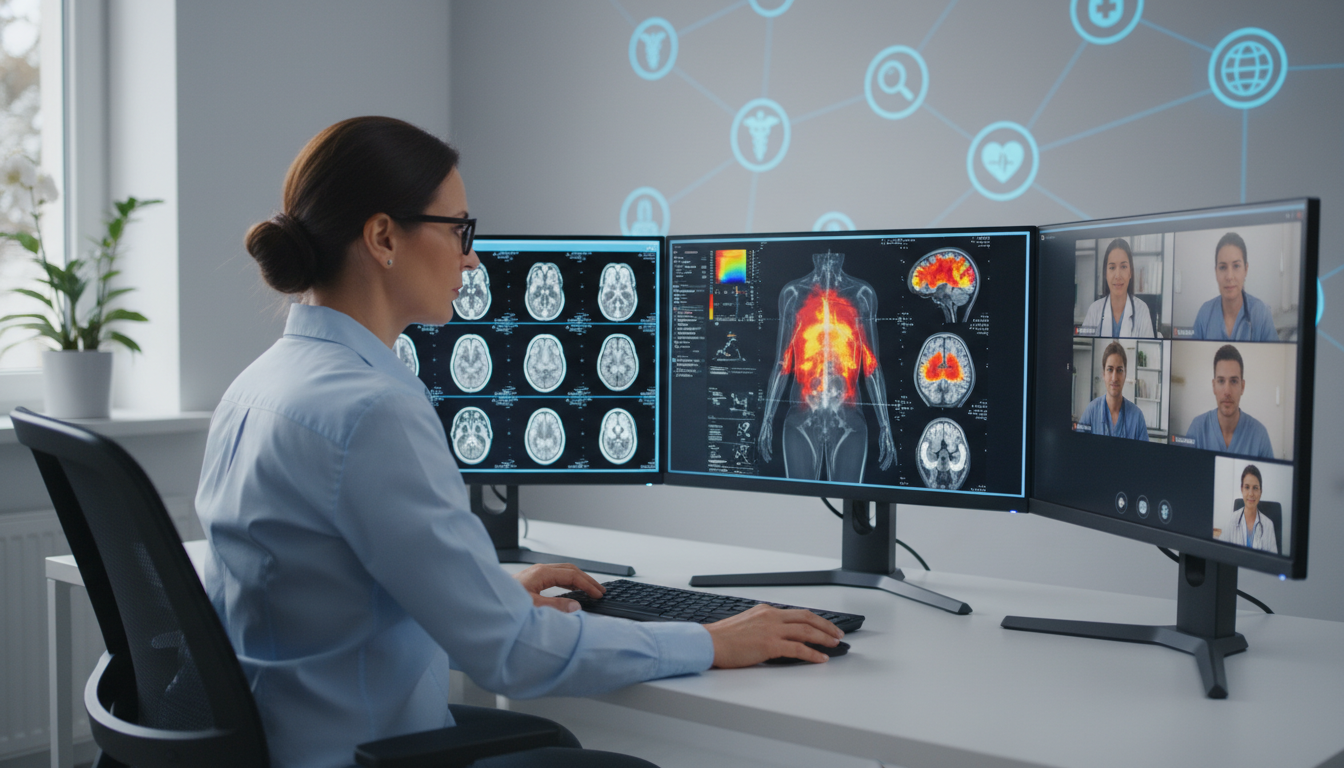
Telemedicine is reshaping how physicians practice across nearly every specialty, and nuclear medicine is no exception. While traditionally rooted in hospital-based imaging and in-person radiopharmacy, nuclear medicine is increasingly integrating remote workflows—from teleradiology-style image interpretation to virtual consults and multidisciplinary care. For residents, fellows, and early-career physicians, understanding these trends can open doors to flexible, high-impact career paths that barely existed a decade ago.
This guide explores telemedicine career opportunities in nuclear medicine, with a focus on how residents can prepare for the future, how telehealth intersects with the nuclear medicine match, and what types of remote physician work are realistically available now and emerging soon.
Understanding Telemedicine in Nuclear Medicine
Telemedicine in nuclear medicine doesn’t look exactly like telemedicine in primary care or psychiatry. Nuclear medicine is highly imaging-centric, regulated, and tied to radiation safety standards, which shapes what can and cannot be done remotely.
Core Concepts
Telemedicine in nuclear medicine typically encompasses:
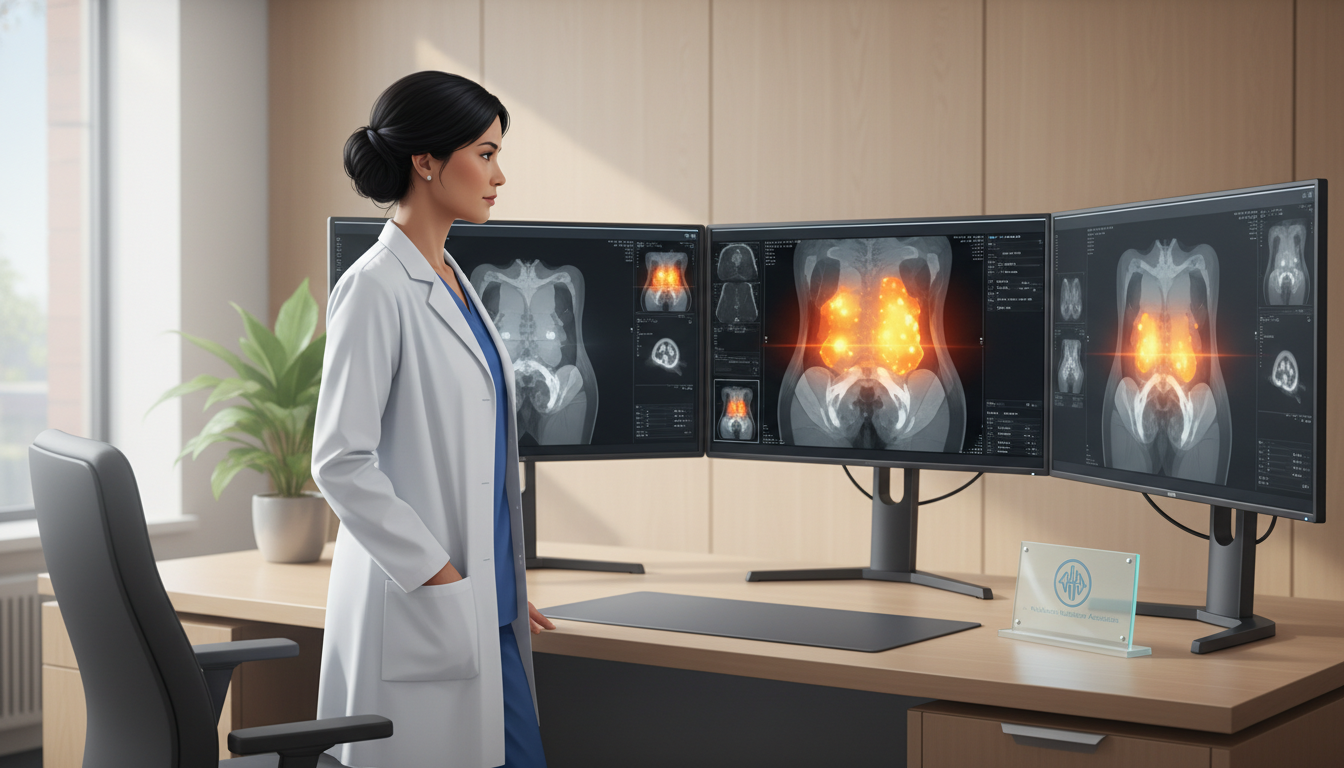
Teleradiology-style interpretation of nuclear imaging studies
- PET, PET-CT, PET-MRI
- SPECT, SPECT-CT
- Cardiac perfusion studies
- Thyroid uptake and scan, bone scans, V/Q scans, hepatobiliary, renal, and other organ-specific studies
Remote nuclear medicine consultation
- Second opinions for complex oncologic PET cases
- Pre-therapy consults for theranostics (e.g., Lu-177 DOTATATE, Lu-177 PSMA)
- Radiation safety and dosing guidance
- Multidisciplinary tumor board participation via video
Hybrid telehealth workflows
- In-person imaging at a local center combined with remote interpretation and video consults
- Telehealth physician roles guiding referring providers, patients, and technologists
Tele-supervision and protocol optimization
- Virtual oversight of scan protocols
- Remote QA/QC reviews of imaging and radiopharmacy processes (where regulations allow)
These workflows create distinct telemedicine jobs and career tracks that residents and applicants should factor into their long-term planning.
Why Telemedicine Matters for Nuclear Medicine Residents and Applicants
The Evolving Job Market
Nuclear medicine has traditionally been viewed as a smaller, niche specialty. However, growth in molecular imaging and theranostics is expanding both clinical relevance and demand. Telemedicine amplifies this trend by:
- Connecting subspecialty expertise to community and rural centers that lack on-site nuclear medicine physicians
- Enabling remote physician work from different states or even countries (subject to licensing and regulatory requirements)
- Supporting 24/7 or extended-hours coverage models for high-volume PET and SPECT centers
For residents and fellows, this means more diverse career options, including:
- Hybrid academic–telehealth roles
- Fully remote nuclear medicine interpretation positions
- Consulting positions tied to industry, startups, or health systems
Impact on the Nuclear Medicine Match
When considering the nuclear medicine residency and ultimate career opportunities, telemedicine has several implications:
Geographic flexibility:
You may not be permanently tied to the city or state where you train. As a remote-capable subspecialist, you can live in one location while reading studies for centers elsewhere.Program selection:
Competitive candidates increasingly look for programs that:- Provide exposure to teleradiology/telehealth workflows
- Have collaborations with remote imaging networks
- Offer training in informatics, PACS, and AI tools relevant to tele-interpretation
Career readiness:
When programs advertise their graduates’ outcomes, the ability to land telemedicine jobs (full-time or part-time) is an emerging marker of adaptability and market relevance.
If you’re about to enter the nuclear medicine match, it’s worth asking programs explicitly how they prepare graduates for telehealth and remote practice.
Types of Telemedicine Roles in Nuclear Medicine
Telemedicine in nuclear medicine spans more than just reading studies from home. Below are the main categories of roles and what they typically involve.
1. Remote Image Interpretation (Teleradiology-Style)
This is currently the most established category.
Typical responsibilities:
- Interpreting:
- Oncologic PET-CT
- Cardiac SPECT
- General SPECT/PET imaging
- Occasionally PET-MRI (in institutions that support it)
- Generating structured, timely reports
- Participating in virtual tumor boards or case conferences
- Providing preliminary reads followed by final reports for time-sensitive exams (e.g., acute PE V/Q scans in some settings)
Practice settings:
- Large radiology groups with nuclear medicine divisions
- Niche teleradiology companies that handle PET/SPECT
- Academic institutions providing coverage to outreach hospitals
- Private imaging centers contracting remote readers
Pros:
- High potential for remote physician work with flexible hours
- Often location-independent within licensure and credentialing limits
- Opportunities to subspecialize (e.g., oncologic PET, cardiac nuclear imaging)
Challenges:
- Need for multiple state licenses and hospital credentials
- Variable case-mix depending on the network
- May involve nights/weekends to cover different time zones or after-hours studies
2. Telehealth Consultative Roles
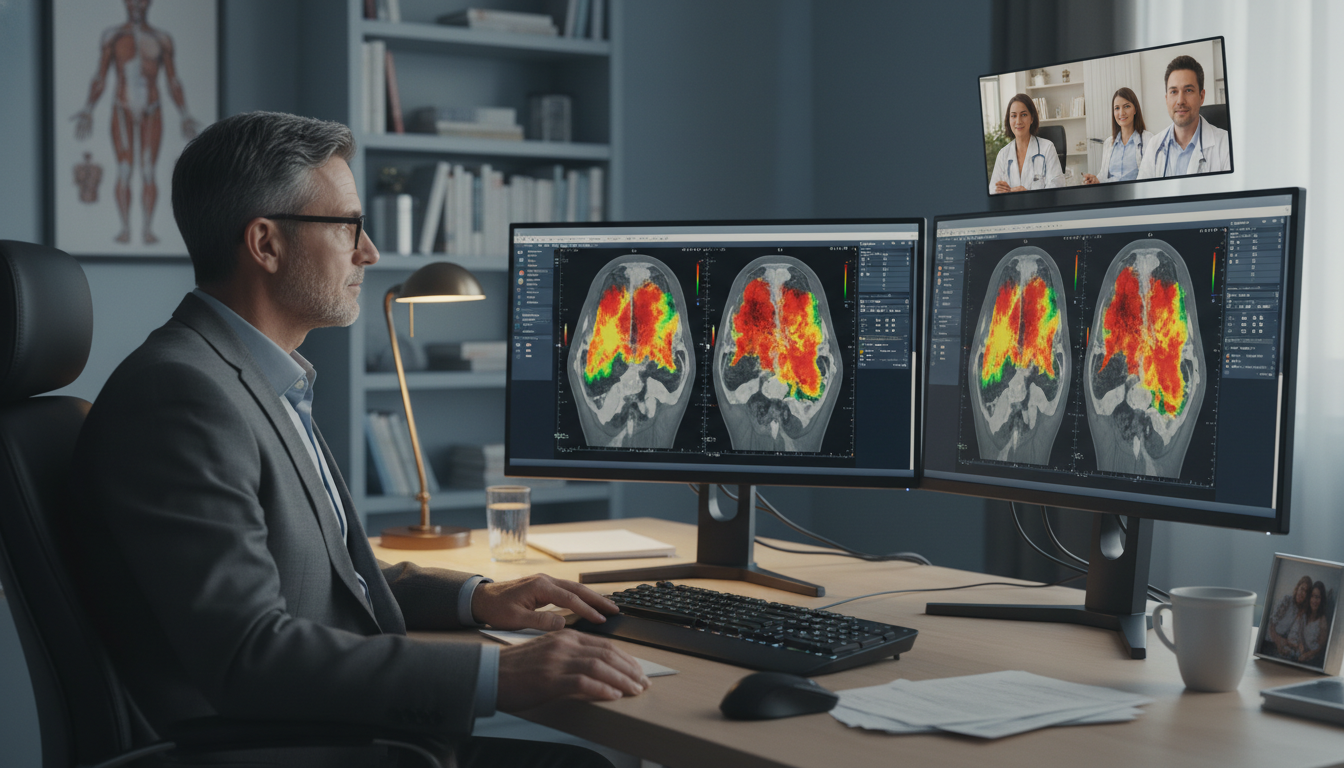
Here, the nuclear medicine physician acts more as a specialist consultant than just an image interpreter.
Clinical scenarios:
Theranostics consults
- Evaluating patients for Lu-177 PSMA, Lu-177 DOTATATE, I-131 therapy, and other radiopharmaceutical therapies
- Reviewing outside imaging and labs remotely
- Conducting pre-therapy counseling and post-therapy follow-up via video
Second-opinion services
- Patients or oncologists submitting previous PET studies and reports for expert review
- Telehealth physician providing a consult note rather than a primary diagnostic report
Referring physician support
- Virtual office hours for oncologists, surgeons, and cardiologists to discuss complex imaging findings or next-step imaging strategies
Pros:
- High degree of direct patient and clinician interaction, even while remote
- Builds personal reputation as a content expert in targeted niches
- Integrates clinical reasoning with imaging, which many physicians find more satisfying than pure “image factory” work
Challenges:
- Requires robust telehealth platforms and compliance infrastructure (HIPAA, secure communication)
- More complex billing and documentation than straightforward imaging reads
- Requires strong communication skills and comfort with video-based patient encounters
3. Remote Academic and Hybrid Positions
Many academic nuclear medicine physicians already practice in a semi-remote fashion, especially for outreach sites.
Role components:
- Reading cases remotely for affiliated hospitals or imaging centers
- Running or joining virtual tumor boards (oncology, neuro, cardiac)
- Providing remote teaching to residents and fellows through:
- Virtual readouts
- Online lectures
- Case conferences over video
Pros:
- Combines academic career progression (research, teaching) with telehealth flexibility
- Robust case-mix and access to complex, high-impact studies
- Opportunities to shape institutional telemedicine strategy
Challenges:
- Institutional policies may oblige some on-site presence
- Academic compensation models vary and may not fully reflect RVU generated via remote work
- Balancing clinical, teaching, and research expectations
4. Industry, AI, and Startup-Related Remote Roles
Beyond direct patient care, nuclear medicine physicians can leverage telemedicine infrastructure to work with:
AI and software startups
- Developing algorithms for PET quantification, segmentation, or response assessment
- Validating decision-support tools that integrate clinical and imaging data
Pharmaceutical and radiopharmaceutical companies
- Serving as remote medical monitors for clinical trials
- Reviewing imaging endpoints and advising on protocol design
Vendor-based tele-consulting
- Supporting adoption of new PET tracers or theranostics via remote teaching and case review
These roles may be part-time or mixed with clinical telehealth work, offering additional flexibility in career design.
Practical Steps to Prepare During Residency and Fellowship
If you’re currently in a nuclear medicine residency or considering the nuclear medicine match, you can start positioning yourself for telemedicine-integrated careers now.
1. Seek Programs That Embrace Telehealth
When researching programs or during interviews, ask:
- Do faculty currently interpret nuclear medicine studies remotely for other sites?
- Are residents exposed to:
- Multisite PACS environments?
- Virtual tumor boards?
- Remote readouts or off-site coverage?
- Are there any graduates currently working in teleradiology or full/part-time telehealth physician roles?
Programs with established telemedicine workflows are more likely to:
- Prepare you for cross-institutional reading
- Teach you about multi-hospital credentialing
- Offer experience with varied IT infrastructures and image-transfer workflows
2. Develop “Remote-Ready” Technical Skills
A remote nuclear medicine physician must be adept not only at image interpretation, but also at navigating technology. During training:
- Learn PACS and RIS at a superuser level
- Get familiar with:
- Different vendor platforms
- Cloud-based image sharing
- Remote desktop solutions
- Understand how to:
- Troubleshoot viewing issues
- Communicate effectively with IT and technologists
- Adjust workflows to maintain efficiency
If your institution offers exposure to AI tools or advanced post-processing, lean into that. These skills translate directly to telemedicine jobs that rely on digital-first workflows.
3. Build Outstanding Communication Habits
Telemedicine amplifies the importance of clear written and verbal communication. You will often:
- Never meet the referring physician in person
- Rely on structured reporting and messaging to convey nuanced findings
- Join team meetings exclusively via video
To prepare:
- Practice concise but rich reporting style
- Ask for feedback on your reports:
- Clarity
- Actionability
- Consistency
- Volunteer to present cases at multidisciplinary conferences—especially virtual ones—to hone remote presentation skills.
4. Understand Licensing, Credentialing, and Compliance
Remote practice does not mean “license-free.” You’ll need:
- A valid medical license in every state where:
- The patient is located (for telehealth consults)
- Or the imaging facility is based (for teleradiology-style reads), depending on local law
Become familiar with:
- Interstate Medical Licensure Compact (if applicable)
- Typical timelines and costs for additional state licenses
- Hospital credentialing processes for remote readers
Even as a trainee, you can:
- Ask faculty about their multi-state practice experiences
- Attend institutional or departmental talks on telehealth compliance, documentation, and billing
5. Consider Electives and Projects Aligned with Telemedicine
You can tailor your CV to highlight telemedicine relevance:
- Choose electives in:
- Teleradiology operations
- Digital health
- Informatics and AI
- Work on QI or research projects such as:
- Remote reading workflows and report turnaround times
- Comparing local vs. remote tumor boards
- Patient or referring-provider satisfaction with virtual nuclear medicine consults
These experiences will distinguish you in job applications that value telehealth capability.
Building a Telemedicine-Focused Nuclear Medicine Career After Training
Once you’ve completed residency/fellowship, you can intentionally shape your career around telemedicine.
Choosing the Right First Job
When evaluating positions, ask:
What percentage of imaging reads can be done remotely?
- Is there a fixed hybrid model (e.g., 2–3 days/week remote)?
- Any possibility of transitioning to mostly or fully remote over time?
Are there established telehealth physician workflows?
- Virtual consults with oncologists or surgeons
- Patient-facing tele-visits—are they supported, or will you be building them from scratch?
How do they handle out-of-state practice?
- Do they sponsor additional state licenses?
- Are there dedicated administrative staff to streamline credentialing and payer enrollment?
Is the compensation model fair for remote work?
- RVU-based vs. salary vs. hybrid
- Expectations around call, nights, and weekends in tele-coverage models
Example Career Paths
Path A: Hybrid Academic Tele-Nuclear Medicine
- 60% on-site at academic center (theranostics, teaching, research)
- 40% remote interpretation and virtual tumor boards for affiliated community hospitals
- Involvement in digital initiatives such as AI and telehealth program design
Path B: Full-Time Remote Nuclear Medicine Reader
- Employed or contracted by a large radiology group or a tele-imaging company
- Reading PET-CT, SPECT, and other nuclear exams for multiple hospitals nationwide
- Flexible schedule with some evenings or weekends, potential part-time or per-diem arrangements
Path C: Mixed Clinical-Consultative Telehealth Specialist
- Part-time reading for a regional PET network
- Part-time providing virtual theranostic consults across a health system
- Occasional industry consulting for radiopharmaceutical trials
Each path has different lifestyle implications, income variability, and degrees of location independence.
Telemedicine, Work–Life Balance, and Long-Term Career Sustainability
One of the biggest attractions of telemedicine jobs in nuclear medicine is the promise of better work–life balance. But that depends heavily on how you structure your work.
Potential Advantages
Geographic freedom:
Live where you choose and serve patients and centers in multiple regions.Flexible hours:
Ability to:- Work earlier or later days depending on your time zone
- Arrange schedules around family responsibilities or personal projects
Reduced commute and burnout risk:
Time saved on commuting can be reallocated to rest, exercise, or academic work.
Potential Pitfalls
Blurring of boundaries:
If you’re always reachable, you can end up “always on.” You need intentional boundaries:- Defined coverage hours
- Clear backup coverage for off-time
Professional isolation:
Less casual contact with colleagues and trainees. You’ll need proactive strategies to maintain:- Mentoring relationships
- Peer review and case discussion
- Participation in professional societies and conferences
Home office ergonomics and wellness:
Imaging work is sedentary and visually demanding. Invest in:- High-quality monitors
- Ergonomic chair and desk
- Regular breaks and eye care
Thoughtful planning can turn remote physician work into a sustainable, rewarding long-term career rather than a short-lived experiment.
Frequently Asked Questions (FAQ)
1. Can I really build a mostly remote career in nuclear medicine?
Yes, in many markets it is becoming increasingly feasible. Full-time remote interpretation roles are most common in large radiology groups and teleradiology companies that include nuclear imaging in their service lines. Hybrid roles that combine some on-site responsibilities (for theranostics, administration, or teaching) with significant remote work are also common. The exact feasibility depends on your licensure, the states/regions you want to serve, and how comfortable you are with a predominantly digital work environment.
2. How will telemedicine affect my choice of nuclear medicine residency program?
You don’t need a program that is “telemedicine-branded,” but you should look for evidence that the program is comfortable with modern, multi-site workflows. During interviews or research, ask whether residents see cases from off-site hospitals, whether faculty do any remote reading, and whether there are opportunities to participate in virtual tumor boards. Programs that engage with telehealth and digital tools are generally better positioned to prepare you for a future that includes telemedicine components.
3. What skills beyond clinical expertise should I develop for telehealth nuclear medicine jobs?
Beyond strong nuclear medicine fundamentals, prioritize:
- Technical fluency with PACS, RIS, and telehealth platforms
- Clear, structured, and efficient reporting skills
- Strong communication skills for video visits and interprofessional conferences
- Basic understanding of licensing, credentialing, and compliance for remote practice
- Comfort with digital collaboration tools (secure messaging, virtual whiteboards, shared case libraries)
Informatics, AI, or healthcare IT experience is a valuable differentiator but not mandatory.
4. Are telemedicine roles in nuclear medicine stable and financially viable?
Telehealth and remote imaging services are now deeply embedded in hospital and radiology operations, and demand for advanced nuclear imaging continues to grow. Most remote nuclear medicine roles are structured similarly to on-site radiology jobs, with competitive compensation—though specifics vary widely by group size, region, and call expectations. Long-term stability will depend on broader trends in imaging reimbursement and digital health policy, but the trajectory suggests that telemedicine will remain a central feature, not a passing phase.
Telemedicine is not replacing nuclear medicine; it is expanding where and how nuclear medicine expertise can be delivered. For residents, applicants in the nuclear medicine match, and early-career physicians, understanding these trajectories now will help you design a career that blends clinical excellence with flexibility, geographic freedom, and long-term sustainability. If you invest early in the skills and experiences that support remote physician work, you’ll be well-positioned to thrive in this evolving landscape.