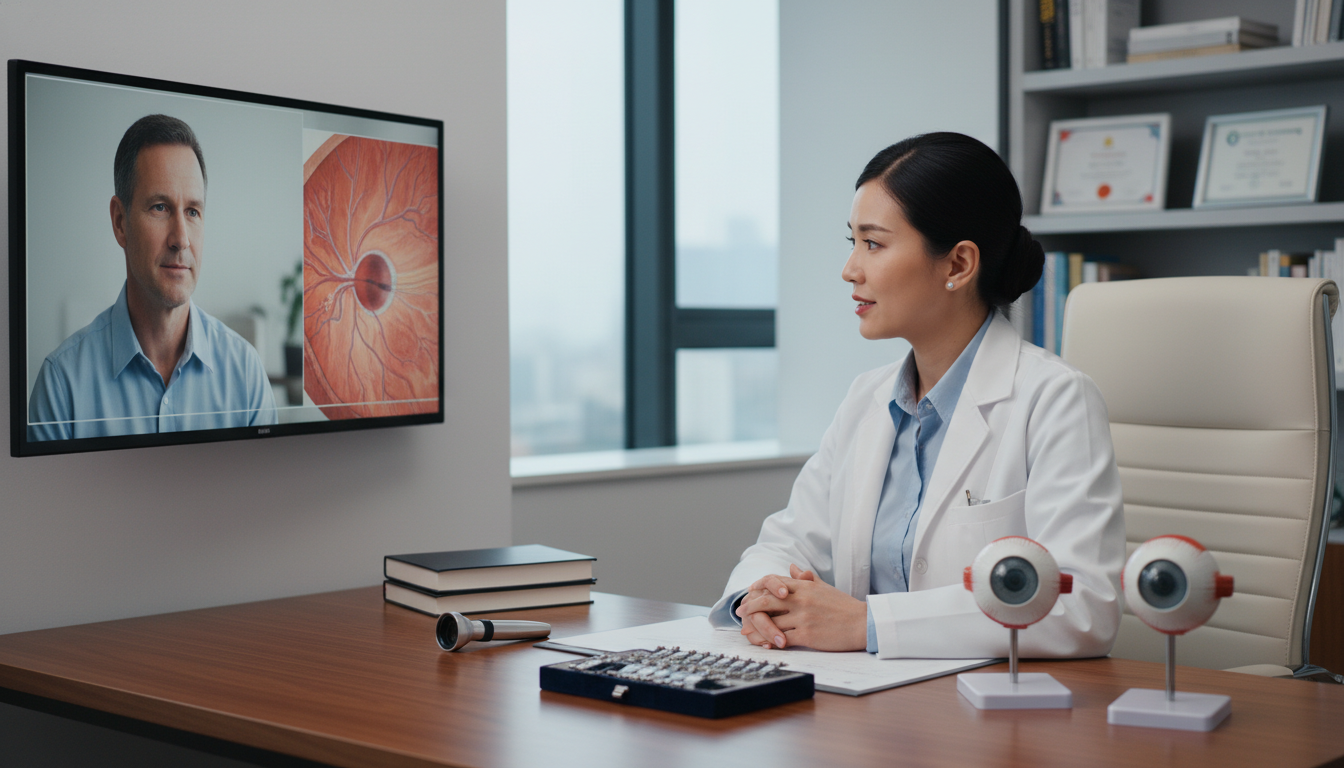
Telemedicine is transforming how ophthalmologists deliver care, expanding opportunities far beyond the traditional clinic. For residents, fellows, and early-career ophthalmologists, understanding telemedicine career pathways is now essential—both to stay competitive in the ophtho match and to design a flexible, future-proof career.
This guide explores telemedicine career opportunities in ophthalmology, how to build skills during training, and how to strategically position yourself for telehealth physician and remote physician work roles that actually align with your long‑term goals.
The Rise of Telemedicine in Ophthalmology
Telemedicine gained massive traction during COVID-19, but in ophthalmology, the groundwork was laid years before through store-and-forward imaging, teleretinal screening, and remote interpretation services. Today, teleophthalmology is an established and rapidly expanding field.
Why Ophthalmology Is Well-Suited to Telemedicine
Ophthalmology is particularly telemedicine-friendly due to:
Image-based diagnosis
- Fundus photos, OCT, anterior segment photos, external eye images
- Visual fields, topography, and other diagnostics can be captured and forwarded
Repeatable, standardized testing
- Teleretinal screening protocols for diabetic retinopathy
- Glaucoma monitoring with regularly scheduled imaging
- Age-related macular degeneration (AMD) follow-up
Asynchronous workflows
- Technicians capture images in primary care or optometry offices
- Ophthalmologists review and interpret remotely
- Reports integrate into EMRs without needing live video every time
High unmet need in underserved areas
- Rural and inner-city areas often lack ophthalmologists
- Telemedicine reduces travel burden for frail, elderly, or visually impaired patients
Implications for Residency Applicants
For medical students and residents targeting an ophthalmology residency, telemedicine literacy is no longer optional. Program directors increasingly look for:
- Comfort with digital health platforms
- Understanding of remote care workflows
- Interest or experience in population health, quality improvement, or informatics
- Ability to work efficiently and safely in hybrid care models
Demonstrated engagement with teleophthalmology—through research, electives, or QI projects—can give you a meaningful edge in the ophthalmology residency application process and set you up for diverse career options later.
Core Telemedicine Career Paths in Ophthalmology
For ophthalmologists, telemedicine is not a single job type but a spectrum of roles that can be combined or done full-time. Below are the major career pathways and how they actually look in day-to-day practice.
1. Teleretinal Screening and Image Interpretation
This is one of the most common and mature telemedicine models in ophthalmology.
Typical settings:
- Health systems and academic medical centers
- VA hospitals and federally qualified health centers (FQHCs)
- Commercial teleretinal screening vendors
- Payer-sponsored diabetic eye exam programs
How it works:
- Non-mydriatic fundus photos are taken in primary care clinics, endocrinology offices, or optometry practices.
- Images are uploaded to a secure platform.
- An ophthalmologist (often retina-trained, but not always) reviews and interprets the images remotely.
- A structured report is returned, indicating:
- No retinopathy
- Mild/moderate/severe non-proliferative DR
- Proliferative DR, macular edema, or other pathology
- Patients with concerning findings are referred for in-person evaluation.
Day-to-day workflow:
- Log into a platform and batch-review imaging cases
- Generate templated reports with brief free-text comments
- Collaborate asynchronously with PCPs, endocrinologists, or optometrists
- Participate in QA and protocol development
Pros:
- Highly compatible with part-time or remote physician work
- Predictable, focused review tasks
- Tangible population health impact by preventing vision loss
Cons:
- Limited direct patient interaction
- Repetitive at times; may feel less “procedural”
- Reimbursement and compensation models vary widely by employer
This type of telemedicine work is particularly attractive as an add-on to a traditional retina or comprehensive practice, or as a flexible role for ophthalmologists transitioning schedules or managing family obligations.
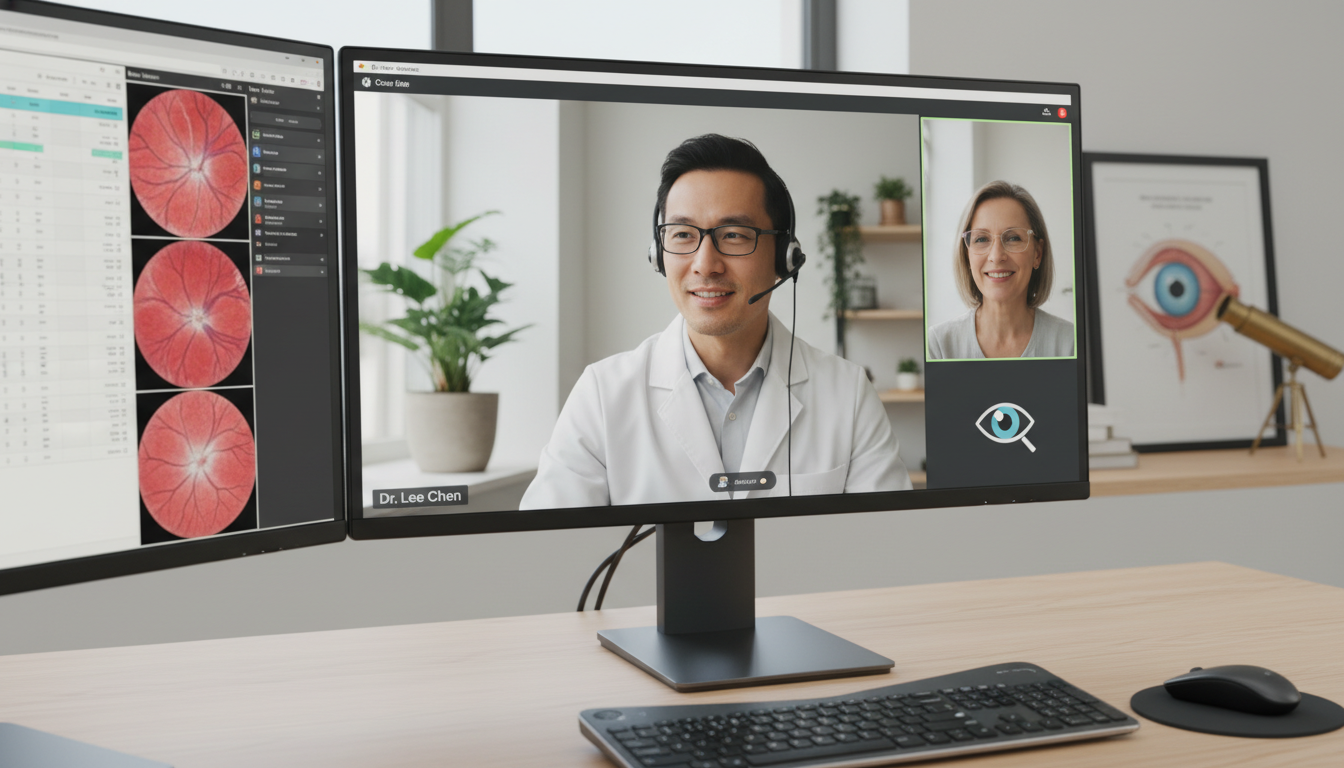
2. Synchronous Telehealth Visits (Video/Phone)
Video visits are becoming more common across all specialties, including ophthalmology, especially for:
- Triage of acute eye complaints
- Postoperative check-ins for straightforward cases
- Chronic disease counseling (e.g., glaucoma adherence, AMD lifestyle modification)
- Reviewing test results done locally
- Low-risk follow-ups where a full slit lamp exam is unlikely to change management
Example use cases:
- A cataract post-op day 1 patient in good condition reports stable vision and minimal pain; visual acuity can be checked locally or via validated tools, the incision can be examined visually, and instructions reinforced.
- A stable glaucoma patient has IOP and fields checked at a satellite or optometry office; you review the data and meet via video to adjust medication and counsel on compliance.
Typical employer types:
- Hospital or health system telehealth programs
- Large multispecialty groups using hybrid care models
- Academic centers piloting digital eye clinics
- Some commercial telemedicine platforms (often for triage or second opinions)
Billing and workflow considerations:
- Visits are typically billed under standard E/M codes with telehealth modifiers
- Requires documentation of time, complexity, or MDM per usual billing standards
- Must comply with telehealth consent, privacy, and security regulations
Skill set needed:
- Ability to conduct focused ocular history and external exam via video
- Familiarity with validated remote visual acuity tools and home monitoring devices
- Judgment about when to escalate to in-person care
For residents and fellows, shadowing or participating in these visits during rotations can provide a valuable foundation for future telehealth physician roles.
3. Hybrid In-Person + Telehealth Practice Models
Most ophthalmologists will not work 100% remotely. Instead, hybrid models are emerging as the norm:
- Certain visit types are default telehealth (medication counseling, result reviews)
- Diagnostics and procedures are performed in clinic
- Patients alternate between in-person and virtual check-ins, depending on disease status and needs
Examples:
Glaucoma care:
- In-person: IOP checks, optic nerve OCT, visual fields, gonioscopy
- Telehealth: medication adherence visits, reviewing test clusters, counseling before/after surgery
Retina care:
- In-person: OCT, injections, laser, detailed exam
- Telehealth: pre-injection counseling, treatment plan discussions, remote monitoring of home vision tests (e.g., Amsler grid apps or digital equivalents), second opinion visits
Oculoplastics / External disease:
- In-person: procedures, initial complex evaluations
- Telehealth: follow-ups after lid surgery, chalazion follow-up, some infectious conjunctivitis cases
Hybrid practice models are particularly attractive to young ophthalmologists, working parents, or those seeking flexible schedules. Learning how to design and document efficient workflows in residency can make you an asset to future employers.
4. Remote Specialist Consultation and Second Opinions
Many tertiary care centers and private groups now offer virtual second opinions for:
- Complex retinal diseases (e.g., inherited retinal dystrophies, uveitis)
- Refractive surgery candidacy and complications
- Corneal transplant or keratoconus management
- Complex glaucoma surgical planning
Key features of virtual second-opinion roles:
Often asynchronous or semi-synchronous:
- Patients or referring ophthalmologists upload records, imaging, and test results
- You review and generate a detailed consult note
- Video visit may be scheduled to discuss recommendations
Typically high cognitive complexity, low procedural component
May be part of academic roles, private subspecialty practices, or digital health startups
For residents with subspecialty interests, participating in virtual consult services at your institution (if available) can demonstrate both niche expertise and telemedicine fluency—two highly marketable skills.
5. Non-Clinical Telemedicine-Adjacent Roles
Telemedicine careers in ophthalmology are not limited to direct patient care. Increasingly, ophthalmologists are involved in:
Clinical leadership for digital health programs
- Teleophthalmology program director roles in academic centers
- System-wide telehealth governance committees
Health tech and AI development
- Working with companies building:
- AI-driven diabetic retinopathy screening algorithms
- Remote vision testing platforms
- Home OCT or fundus imaging devices
- Contributing to clinical validation, trial design, and regulatory strategy
- Working with companies building:
Quality, policy, and informatics
- Developing protocols and guidelines for safe remote eye care
- Collaborating with payers or governmental agencies on telehealth coverage policy
- Building integrated teleophthalmology workflows in EMR systems
These roles may be part-time or advisory, often complementing traditional clinical work. For residency applicants and trainees, research or quality improvement projects in these domains connect directly to future opportunities in telemedicine leadership.

Preparing for Telemedicine Careers During Ophthalmology Training
If you are aiming for an ophthalmology residency or already in training, you can intentionally build skills for future telemedicine opportunities.
1. Seek Out Teleophthalmology Experiences
Within your medical school or residency:
Electives or rotations in:
- Diabetic retinopathy teleretinal screening programs
- VA teleophthalmology services
- Community clinics using remote interpretation
Research projects on:
- Diagnostic accuracy of teleophthalmology
- Patient satisfaction with virtual eye care
- Health disparities and access improvements
- Cost-effectiveness of remote screening programs
Quality improvement initiatives, such as:
- Streamlining telehealth documentation templates
- Designing protocols to triage eye complaints between video and in-person visits
- Implementing standardized telehealth exam checklists
These experiences are excellent discussion points in your personal statement and interviews, showing that you understand where the field is heading.
2. Develop Practical Telehealth Skills
Beyond clinical acumen, telemedicine requires:
Technical fluency
- Navigating telehealth platforms confidently
- Troubleshooting basic audio/video issues
- Understanding integration with EMR and PACS systems
Communication skills adapted to video
- Clear, structured explanations of findings without relying solely on slit-lamp imagery
- Deliberate use of body language and eye contact through camera
- Extra emphasis on teach-back and confirming understanding
Remote exam technique
- Systematic tele-ophthalmic history-taking
- Coaching patients to self-assess and demonstrate findings (e.g., eyelid eversion, extraocular motility)
- Use of at-home tools (visual acuity charts, validated apps, Amsler grid)
Practicing these skills early makes you more comfortable and efficient in telehealth physician roles later.
3. Understand Regulatory and Ethical Basics
Even as a trainee, it is useful to understand high-level principles:
Licensure and location rules
- Generally, you must be licensed where the patient is physically located at time of visit (for independent practice)
- Cross-state care may require multiple licenses or participation in compacts (in the U.S.)
Privacy and security
- HIPAA-compliant or equivalent platforms
- Handling image data, screenshots, and messages securely
- Informed consent specific to telehealth visits
Scope and limitations of virtual eye care
- Which complaints are unsafe to manage exclusively via telehealth (e.g., sudden vision loss, suspected acute angle-closure glaucoma, significant trauma)
- How to document red-flag counseling and instructions for escalation
Familiarity with these concepts can set you apart during residency interviews and when negotiating future telemedicine roles.
Designing a Telemedicine-Flexible Ophthalmology Career
Once you complete residency (and fellowship, if applicable), there are several ways to integrate telemedicine into your career.
1. Negotiating Telehealth Time in Traditional Jobs
For ophthalmologists joining hospital systems or group practices:
Propose a hybrid schedule, such as:
- 3–4 days in clinic/surgery
- 1–2 half-days of telehealth focused on:
- Post-op follow-ups
- Low-risk chronic disease management
- Remote triage for satellite clinics
Define clear telehealth visit types and protocols up front to prevent overextension and ensure appropriate scheduling.
Discuss productivity metrics
- How are telehealth visits counted in RVUs or compensation formulas?
- Are there incentives for building teleophthalmology volume?
Telemedicine can be a strong negotiating point, especially if you bring relevant training or project experience from residency.
2. Part-Time or Fully Remote Telemedicine Roles
Some ophthalmologists pursue remote physician work more aggressively, especially for flexibility:
Contracting with telemedicine companies
- Providing remote image interpretation (teleretinal screening)
- Offering synchronous consults on eye complaints within broader telehealth platforms
- Serving as a subspecialty second-opinion expert
Creating your own remote consult service
- Particularly for niche subspecialties (e.g., complex uveitis, genetic retinal diseases)
- Requires attention to licensure, malpractice coverage, and marketing
Working with overseas or underserved populations
- Global teleophthalmology programs staffed by U.S.-based ophthalmologists
- NGO or academic partnerships where local staff capture images and you interpret remotely
When considering full-time telehealth physician work, weigh:
- Income stability and benefits
- Malpractice coverage and legal protections
- Career development opportunities (teaching, research, leadership)
3. Integrating Telemedicine with Non-Clinical Interests
Teleophthalmology blends naturally with:
Academic careers
- Building and studying novel telehealth models
- Training residents in digital care competencies
Entrepreneurship
- Founding or advising startups that:
- Develop remote ophthalmic devices
- Offer teleophthalmology platforms for primary care clinics or optometry offices
- Integrate AI triage and risk scoring tools
- Founding or advising startups that:
Policy and advocacy
- Working with professional societies on telehealth practice standards
- Advocating for sustainable reimbursement for teleophthalmology services
Thinking beyond “clinic vs telehealth” and instead designing a portfolio career can create resilience and satisfaction over the long term.
Practical Tips for Students and Residents Targeting Telemedicine-Forward Ophthalmology Careers
If you are still in the ophtho match pipeline or early in residency, you can start now:
Highlight telemedicine interest in your application materials
- Mention teleophthalmology projects in your personal statement, CV, and ERAS experiences
- If you have experience with other telehealth fields (e.g., internal medicine, pediatrics), connect the lessons learned to ophthalmology
Ask targeted questions during interviews
- “How is teleophthalmology integrated into your residents’ training?”
- “Do faculty participate in remote image interpretation or virtual eye clinics?”
- “Are there opportunities for research or QI in telehealth within the department?”
Build cross-disciplinary networks
- Collaborate with:
- Informatics teams
- Population health departments
- Endocrinology or primary care colleagues running diabetic care programs
- These connections open doors to joint telemedicine initiatives.
- Collaborate with:
Stay informed about evolving technologies
- AI diabetic retinopathy screening tools and their FDA clearances
- Home monitoring devices (e.g., home OCT prototypes, smartphone-based visual acuity tools)
- Integration of teleophthalmology in value-based care arrangements
Think about lifestyle and long-term goals
- Telemedicine can support:
- Geographic flexibility
- Reduced commuting
- Family or caregiving responsibilities
- Gradual retirement with ongoing remote consult work
- Clarify how much remote vs in-person care you ultimately want, and look for programs and mentors aligned with that vision.
- Telemedicine can support:
Frequently Asked Questions (FAQ)
1. Can an ophthalmologist realistically work 100% remotely?
It is possible but uncommon. Most fully remote ophthalmology jobs involve:
- Teleretinal screening interpretation
- Asynchronous image review and consults
- Limited or no procedural work
If you enjoy surgery and hands-on diagnostics, a hybrid model (some clinic/surgery, some telehealth) is more realistic. Fully remote roles are better suited for later-career ophthalmologists, those with non-clinical side interests, or individuals with specific lifestyle constraints.
2. Are telemedicine jobs in ophthalmology stable and well compensated?
Compensation varies widely:
- Health system telehealth visits often pay similarly to in-person visits, depending on reimbursement policies.
- Contract telemedicine work (especially per-case image interpretation) can be highly variable, depending on volume and contract terms.
Stability is increasing as telehealth becomes a routine part of care, but reimbursement regulations and payer policies still evolve. For long-term security, many ophthalmologists combine telemedicine work with traditional practice rather than relying solely on telehealth income.
3. Do residents and fellows get formal teleophthalmology training?
This depends on the program. Some academic centers and VA-affiliated residencies offer:
- Dedicated teleophthalmology rotations
- Experience with teleretinal screening programs
- Participation in virtual clinics and remote consults
Many programs, however, still have limited structured telemedicine curricula. If this is important to you, ask specific questions during the ophtho match interview process and look for mentors who are active in telehealth or digital health research.
4. How do telemedicine experiences help my ophthalmology residency application?
Telemedicine-related experiences can:
- Demonstrate that you understand modern healthcare systems and care delivery models
- Show initiative in areas like health equity, access, and population health
- Position you as someone who can help programs innovate in digital care
Examples include research on teleophthalmology outcomes, quality improvement projects involving remote screening, or work with digital health or AI tools. When framed effectively, these experiences can strengthen your narrative as a forward-thinking residency applicant.
Telemedicine is no longer a side project in ophthalmology—it is a core component of how eye care is delivered and will continue to evolve. By deliberately building telehealth skills and experiences during training, and by understanding the spectrum of telemedicine career options, you can design an ophthalmology career that is clinically robust, flexible, and aligned with the future of patient care.