



Understanding Telemedicine in Otolaryngology
Telemedicine has moved from a niche tool to a core component of clinical practice, and otolaryngology (ENT) is no exception. For residents, fellows, and early‑career otolaryngologists, remote physician work is no longer just a side option—it can be a strategic part of your career design.
Telemedicine in ENT typically includes:
- Synchronous video visits for new and established patients
- Telephone visits and follow‑ups
- Store-and-forward consultations (reviewing images, videos, audio, or home test results asynchronously)
- Remote monitoring and digital triage via apps or patient portals
Because many ENT conditions are visible (ear canal, external nose, skin lesions, oropharynx) or symptom‑based (vertigo, sinus pressure, tinnitus), a substantial portion of the clinical decision‑making can be done remotely—even if final diagnostic procedures or surgery require in‑person care.
For residents planning an ENT residency or graduating into practice, understanding where telehealth integrates with otolaryngology will help you position yourself as a versatile, future‑ready clinician.
Where Telemedicine Fits in ENT Practice
Telemedicine will not replace in‑person ENT care—otoscopy, endoscopy, and surgery are inherently hands‑on—but it complements it in important ways. Recognizing appropriate clinical use cases is the foundation for building a sustainable telehealth career.
Common ENT Conditions Suitable for Telehealth
These conditions are particularly well‑suited to virtual evaluation, triage, and follow‑up:
- Chronic rhinosinusitis and allergic rhinitis
- Symptom review, medication optimization, review of prior CT results or allergy testing, discussion of surgical vs medical management.
- Follow‑up after sinus surgery or nasal procedures
- Reviewing symptom control, healing course, adherence to saline rinses and topical steroids, reviewing images patients upload of anterior nasal cavity.
- Tinnitus and hearing loss counseling
- History, screening questionnaires, counseling on hearing aid options, cochlear implant expectations, and auditory rehabilitation.
- Vertigo and balance disorders
- Detailed history, Dix‑Hallpike test coaching via video (if safe and appropriate), review of outside vestibular testing or imaging.
- Voice and swallowing concerns (selected cases)
- Tele-evaluation with speech‑language pathologists, reviewing symptom diaries, therapy sessions; initial counseling before in‑person laryngoscopy.
- Sleep apnea and snoring
- Screening, reviewing sleep study results, CPAP adherence counseling, determining candidacy for upper airway surgery or alternative therapies.
- Pediatric ENT follow‑ups
- Post‑op check‑ins for tube placement or adenotonsillectomy, allergy and rhinitis follow‑up, reassurance and anticipatory guidance for families.
- Head and neck oncology survivorship
- Long‑term follow‑up, symptom management, survivorship planning, side‑effect monitoring in collaboration with oncology.
Many of these are perfect for remote physician work integrated into a hybrid model: initial or periodic virtual visits, with targeted in‑person appointments for procedures or diagnostics.
What Cannot (or Should Not) Be Done Remotely
Some ENT issues typically require an in‑person exam from the outset:
- Severe otalgia or suspected acute mastoiditis
- Acute airway compromise or stridor
- Unclear neck masses requiring palpation or FNA
- Active epistaxis requiring packing or cautery
- Sudden sensorineural hearing loss (urgent audiology + treatment)
- Any situation where delay for virtual triage might risk harm
One of your most medically important telehealth skills will be knowing when to convert a telehealth visit to urgent in‑person care or direct the patient to the ED.
Telemedicine in Different ENT Practice Settings
Academic centers
- Pre‑ and post‑operative visits; multi‑disciplinary tumor boards with remote patient participation; rural outreach clinics via telemedicine; resident and fellow involvement in virtual continuity clinics.
Private practice groups
- Flexible options for follow‑ups, allergy and sinus management, and post‑operative care; differentiator in patient marketing (“virtual visits available for established patients”).
Hospital‑employed ENT practices
- ED and inpatient teleconsults from regional hospitals without on‑site ENT; triage of urgent complaints; coverage of satellite clinics.
Cross‑state or national telemedicine platforms
- Visit‑based or part‑time work as a telehealth physician, largely symptom‑based ENT triage and medical management, often integrated with PCPs and urgent care lines.
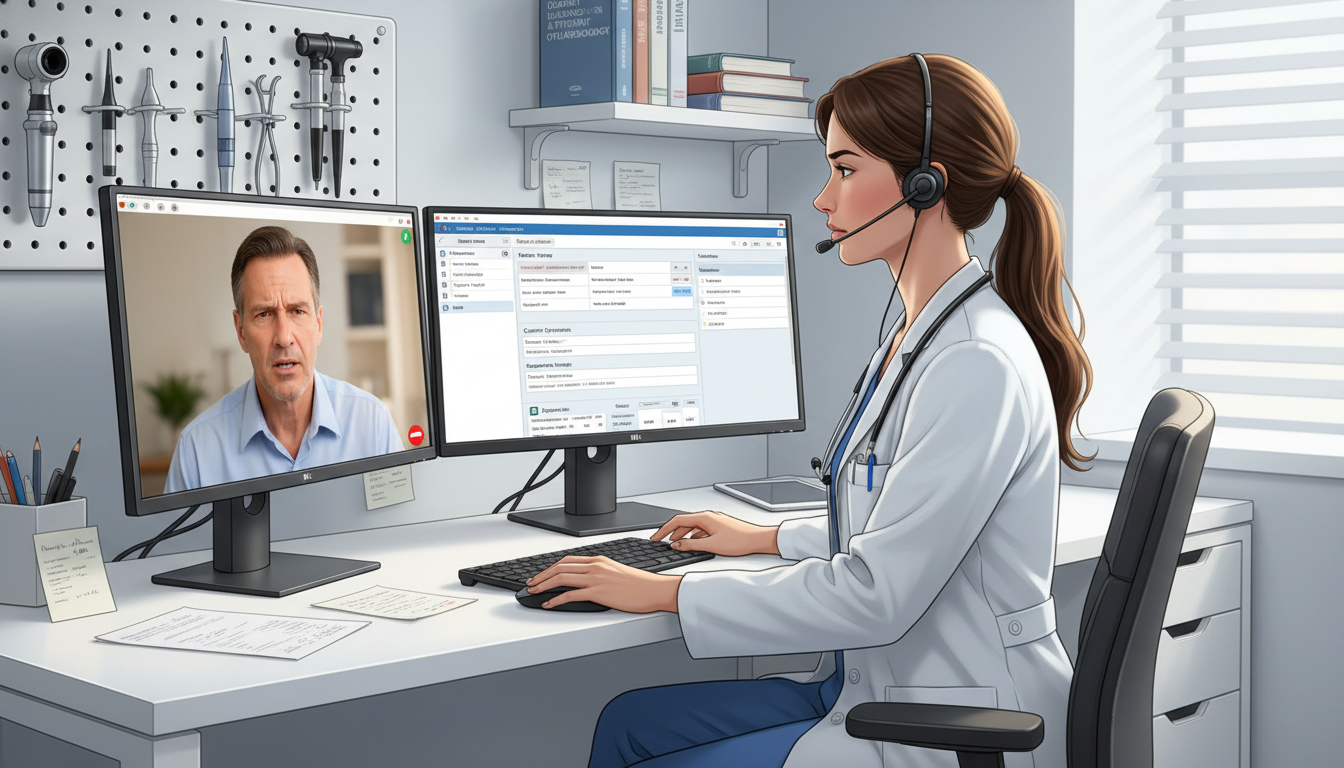
Career Pathways: Telemedicine Jobs for ENT Physicians
Physicians interested in the otolaryngology match often focus on surgical volume and academic productivity. Telemedicine may seem peripheral during training, but it is becoming a meaningful career pathway—whether as a primary focus or as part of a portfolio career.
1. Hybrid Clinical‑Telemedicine ENT Positions
Many large health systems and ENT groups now design roles with a hybrid schedule:
- 2–3 days/week of in‑person clinic and OR
- 1–2 half‑days/week of telehealth follow‑ups and new consults
- Optional remote call coverage (triaging post‑op calls via telehealth platforms)
Who this suits:
- Surgeons who still want procedures and OR time
- Early‑career ENTs building volume while maintaining balance or family flexibility
- Physicians in academic centers wanting time for research or teaching
How to position yourself:
- During residency, ask your program if you can participate in telehealth clinics.
- Get comfortable with video visit workflows, documentation, and billing.
- On interviews, specifically ask about telemedicine infrastructure and support.
2. Full‑Time Telehealth Physician in ENT or Multi‑Specialty Settings
A growing number of organizations hire full‑time telehealth physicians. In ENT, these roles are often:
- Part of large multi‑specialty telehealth platforms
- Integrated with primary care to triage ENT complaints and manage chronic conditions
- Focused on medical management, patient education, remote second opinions
You may:
- Review photos or smartphone otoscope images for otitis externa/media follow‑up
- Manage chronic sinusitis and allergic rhinitis medication plans
- Conduct virtual second opinions for elective ENT surgeries
- Collaborate asynchronously with local ENT surgeons for procedures
Pros:
- Location flexibility (often fully remote)
- More predictable schedule; less physical fatigue than OR days
- Good fit for physicians with health limitations or caregiving responsibilities
Cons:
- Less (or no) surgery; may feel distancing from hands‑on skills
- Compensation sometimes lower than high‑volume surgical jobs
- Need to manage productivity targets (visits per hour/day)
3. Rural Outreach and Hub‑and‑Spoke ENT Telemedicine
In regions with limited ENT coverage, academic or regional centers use telehealth to:
- Provide specialty consults to critical access hospitals
- Offer joint visits with local PCPs or PAs
- Manage post‑op patients who would otherwise travel hours for a 10‑minute visit
Career roles here:
- Academic ENT with a defined percentage of time in tele‑outreach
- Regional ENT medical director for tele-ENT services
- Consultant to smaller hospitals for protocol development and workflow design
This path can be clinically meaningful—expanding access to care—and appealing to residents passionate about health equity.
4. ENT Teleconsulting and Second‑Opinion Services
Many tertiary centers and private practices offer paid second‑opinion telemedicine services for complex ENT cases:
- Skull base tumors, advanced head and neck cancer, complex otologic disease
- Revision sinus or airway surgeries
- Complex laryngology or voice cases
As a mid‑ or late‑career ENT with strong expertise, you can:
- Develop a branded second‑opinion service (independently or affiliated)
- Review imaging, path, and prior operative notes remotely
- Provide detailed reports to patients and local treating physicians
This is a niche telemedicine job but can be professionally and financially rewarding.
5. Non‑Clinical Telehealth Roles for ENT Physicians
Because telemedicine is rapidly evolving, ENT physicians can contribute outside direct patient care:
- Medical director for tele-ENT programs
- Oversee quality metrics, protocols, licensing strategy across states.
- Clinical content and guideline development
- Write telehealth triage algorithms, ENT symptom pathways, and patient education materials.
- Health tech/startup consulting
- Help design ENT‑specific devices (e.g., smartphone otoscopes), AI triage tools, or remote monitoring apps.
- Telemedicine education and training
- Design curricula for residents, fellows, and practicing ENTs on best practices in telehealth.
These opportunities especially appeal to physicians who enjoy systems design, operations, and digital health innovation.
Building a Telemedicine‑Ready ENT Career During Training
If you’re still in medical school, considering an ENT residency, or currently a resident or fellow, you can intentionally cultivate telehealth‑related skills that increase your career options.
1. Participate in Telehealth Clinics During Residency
Where possible:
- Request to rotate through attending clinics that include telehealth days.
- Ask to lead parts of the telehealth encounter: history, counseling, follow‑up planning.
- Learn how your hospital bills and codes for telemedicine, and any documentation nuances.
Practical learning objectives:
- Documenting consent and location for telehealth.
- Confirming patient identity and emergency backup plans (e.g., local ED).
- Recognizing which ENT complaints are safe for telehealth vs need in‑person evaluation.
2. Develop Remote Examination Skills
Telemedicine demands a refined history and an adapted physical exam:
- Learn precise questioning for ear pain, hearing loss, vertigo, and sinus symptoms to compensate for limited physical exam.
- Practice guided self‑exam: teaching patients to palpate lymph nodes, inspect their own or their child’s oropharynx safely, or show nasal structures with smartphone lights.
- Understand what can and cannot be visualized with consumer tools (e.g., home otoscopes).
You can practice by:
- Role‑playing mock telehealth visits with co‑residents.
- Reviewing recorded (de‑identified) visits with faculty feedback, if your institution allows.
3. Get Comfortable With Telehealth Technology
During training, intentionally explore:
- Various EMR-integrated video platforms
- Standalone telehealth apps and their workflows
- Tools for screen sharing imaging with patients
- Secure messaging and asynchronous “e-visits”
As future employers may use different systems, what matters is your tech flexibility and your ability to adapt your bedside manner to “webside manner.”
4. Explore Licensure and Credentialing Requirements
Telemedicine lets you practice beyond your local area—but only with proper licensure:
- Learn about multi‑state licensure compacts (e.g., IMLC in the U.S.) and how they affect remote physician work.
- Understand basic telehealth regulations:
- Establishing a doctor–patient relationship via telemedicine
- Prescribing rules (especially for controlled substances)
- HIPAA and data security requirements
As you approach graduation, consider:
- Whether you want licenses in multiple states (especially if pursuing national telehealth jobs).
- How that affects your job search and credentialing timeline.

Practical Considerations: Lifestyle, Compensation, and Job Search
Telemedicine work can reshape your professional and personal life. When evaluating opportunities, consider more than just the hourly rate.
Lifestyle and Flexibility
Remote physician work offers:
- Reduced commute time and more geographic freedom
- Better accommodation for childcare, eldercare, or dual‑career households
- Potential to work for multi‑state organizations while living in a location of your choice
But also:
- Extended screen time can be mentally fatiguing.
- Blurred boundaries between home and work require conscious scheduling.
- You may miss collegial interactions and OR camaraderie.
When interviewing, ask:
- Are telehealth hours fixed or can you self‑schedule?
- Is there protected time between visits for documentation?
- Are you expected to take after‑hours telehealth calls?
Compensation and Productivity Models
Telehealth roles vary widely in pay structure:
Employed salary + RVU or bonus
- Common in hospitals and large groups.
- Telehealth RVUs may be lower; ensure volume expectations are realistic.
Per‑visit or per‑hour pay (common in national telemedicine companies)
- More flexible; can be part‑time or “extra shifts.”
- Ask about minimum visit guarantees and no‑show policies.
Independent contractor models
- Higher per‑visit rate but no benefits or malpractice covered by employer.
- You may need to handle your own taxes, licensure costs, and equipment.
Key questions:
- Are telehealth visits compensated the same as in‑person visits?
- How is time for pre‑visit chart review and post‑visit messaging accounted for?
- Does the employer cover multi‑state licensure, malpractice tail, and equipment?
Technology, Support, and Malpractice
Before signing a telemedicine contract, clarify:
Platform and technical support:
- Is IT support available during clinic hours?
- What backup is in place if the patient’s video doesn’t work?
Medical assistant/nurse support:
- Will staff help with intake, scheduling, orders, and patient education?
- Or are you expected to manage everything solo?
Malpractice and risk management:
- Is your coverage specific to telehealth?
- Are there clear policies about when to direct patients to the ED or in‑person clinic?
You need systems robust enough that you can safely deliver telehealth care without cutting corners.
Finding and Evaluating Telemedicine Jobs
As you complete residency or fellowship and start your job search:
Use specialty‑specific job boards: AAO‑HNS career center, academic ENT job boards, large multi‑specialty groups’ career pages.
Search with relevant keywords:
- “Otolaryngology telemedicine jobs”
- “ENT telehealth physician”
- “Remote physician work ENT”
Network intentionally:
- Ask recent graduates in your program who use telehealth.
- Join digital health and telemedicine interest sections within national ENT societies.
Evaluate red flags:
- Unrealistic visit expectations (e.g., 4–6 new ENT consults per hour).
- Vague answers about malpractice or licensure support.
- No apparent quality assurance, peer review, or ENT‑specific protocols.
Future Directions: Tele‑ENT Innovations You Should Watch
Telemedicine in ENT is still evolving. As you plan your career, these emerging trends may open new avenues:
Home‑Based Otoscopy and Endoscopy
- Consumer and clinic‑grade digital otoscopes that connect to smartphones are becoming more common.
- Some companies are exploring patient‑operated nasal or oropharyngeal imaging devices.
- ENTs may increasingly interpret patient‑submitted images or videos asynchronously (“store and forward”).
This could create roles similar to radiology over‑reads, where ENT physicians read batches of studies and issue reports.
AI‑Assisted Triage and Decision Support
- AI tools may screen symptom questionnaires, images of tympanic membranes, or nasal cavity for possible pathologies.
- ENT physicians will be needed to validate algorithms, oversee safety, and manage complex cases beyond algorithmic scope.
Physicians comfortable with digital health and data will be well‑positioned to contribute.
Integrated Multi‑Disciplinary Tele‑Clinics
Otolaryngologists may increasingly participate in:
- Virtual tumor boards with oncology, radiology, pathology.
- Remote craniofacial, sleep, or voice clinics with surgeons, SLPs, psychologists, and audiologists.
- Tele‑rehabilitation for cochlear implant users or post‑laryngectomy patients.
You can shape your career to include leadership in these integrated virtual services.
Frequently Asked Questions (FAQ)
1. Can I build an entire career in otolaryngology doing only telemedicine?
Yes, but with caveats. Full‑time telehealth ENT jobs exist, mostly in large telemedicine platforms or multi‑specialty systems. However, you will primarily handle medical management, triage, and second opinions; you generally won’t perform surgery. Many ENTs prefer a hybrid role, maintaining some OR days and in‑person procedures while dedicating a portion of their schedule to telehealth. If you want to stay surgically active long‑term, plan a career that preserves those skills.
2. How can I prepare for a telemedicine‑heavy career during ENT residency?
Seek exposure to telehealth clinics where possible; ask attendings to involve you in virtual visits. Focus on developing a strong, detail‑oriented history‑taking skill set, especially for ear pain, hearing loss, vertigo, sinus complaints, and sleep apnea. Learn documentation, billing basics, and telehealth‑specific consent and risk management practices. Finally, get comfortable with various video platforms and EMR workflows; this adaptability will translate well when you move into practice.
3. Are telemedicine jobs a good option for part‑time or flexible schedules?
Yes. Telemedicine is particularly well‑suited to part‑time work. Many organizations offer per‑shift or per‑visit arrangements that can supplement a traditional ENT practice or help during life phases where full‑time in‑person work is not feasible (e.g., early parenthood, caregiving, relocation). Carefully review contract terms, especially around minimum commitments, licensure requirements, and whether you can schedule visits at times that fit your life.
4. How does malpractice coverage work for ENT telehealth positions?
Malpractice for telemedicine should explicitly cover virtual care and all states where you’re licensed and seeing patients. Many employed positions include telehealth coverage as part of their group policy; independent contractor roles may require you to obtain your own policy. Ask whether your coverage includes tail coverage, whether telehealth‑specific risk policies (e.g., triage to ED) are in place, and how incident reporting and peer review work for virtual encounters. Never assume that standard malpractice automatically includes telehealth—verify it in writing.
Telemedicine is reshaping otolaryngology practice across academic centers, private groups, and national telehealth platforms. Whether you are just starting to consider an ENT residency or are a practicing otolaryngologist seeking new flexibility, understanding telehealth physician roles and remote physician work options gives you powerful tools to craft a career that aligns with your clinical interests, lifestyle priorities, and long‑term goals.




















