
Telemedicine is reshaping how pediatric care is delivered—creating new career paths for residents, early-career pediatricians, and seasoned clinicians. As you navigate the pediatrics residency and peds match process, understanding telemedicine career opportunities can help you plan strategically, build marketable skills, and position yourself for flexible, future-proof work options.
This guide explores how telehealth fits into a pediatrics career, what roles are available (including telehealth physician and remote physician work options), how to prepare during residency, and what to consider in terms of compensation, work–life balance, and long-term growth.
The Rise of Telemedicine in Pediatrics
Telemedicine moved from a niche service to a mainstream care model—especially during and after the COVID-19 pandemic. Pediatrics, in particular, has been a high-yield specialty for virtual care because:
- Many pediatric issues are history- and observation-driven.
- Parents appreciate convenient, low-disruption visits.
- Routine follow-up, chronic disease management, and behavioral health are often well-suited to video care.
- Home environment views give pediatricians additional context (safety, nutrition, family dynamics).
Why Pediatrics and Telemedicine Are Such a Good Match
Several core features of pediatric practice line up naturally with telehealth:
- High volume of low-acuity concerns: Rashes, mild viral illnesses, feeding issues, sleep concerns, constipation, behavioral questions—many can be safely evaluated or triaged via video or phone.
- Parental involvement: History is usually given by caregivers, who are present and engaged, making guided home exams feasible.
- Preventive and developmental focus: Many components of anticipatory guidance, mental health screening, and developmental follow-up can be handled remotely.
- Chronic disease management: For asthma, ADHD, anxiety, depression, and obesity, frequent shorter touchpoints via telemedicine can improve adherence and outcomes.
As a result, telemedicine is no longer just an “extra” skill for pediatricians—it is increasingly part of core practice and a driver of new career pathways.
Core Telemedicine Career Paths for Pediatricians
Telemedicine jobs in pediatrics span a spectrum from fully virtual telehealth physician roles to hybrid clinic-plus-remote setups. Understanding the options can help you decide how telemedicine should fit into your long-term career.
1. Full-Time Telehealth Pediatrician Roles
In these positions, you practice exclusively (or almost exclusively) via telehealth platforms, usually from home or a dedicated remote office.
Typical settings:
- National direct-to-consumer (DTC) telehealth companies
- Health system–based virtual clinics
- Pediatric urgent-care telemedicine services
- Virtual-only group practices
Common responsibilities:
- Conduct scheduled and on-demand video visits
- Provide asynchronous e-visits (e.g., reviewing questionnaires, photos, short videos)
- Triage and manage low- to moderate-acuity conditions
- Oversee chronic disease follow-up, medication management, and lab/radiology follow-up
- Document in EMR and comply with state licensing and telehealth regulations
Pros:
- High flexibility in schedule and location (remote physician work)
- No commute; reduced overhead and clinic interruptions
- Often lower exposure to infectious disease
- Can live in lower cost-of-living areas while serving higher-paying markets (with appropriate licensure)
Cons:
- Limited ability to perform physical exams or procedures
- Potential erosion of in-person skills if tele-only
- Sometimes unpredictable visit volumes (especially in DTC urgent care models)
- Reimbursement and job stability can be more sensitive to policy and payer shifts
2. Hybrid Pediatrics Positions (In-Person + Telemedicine)
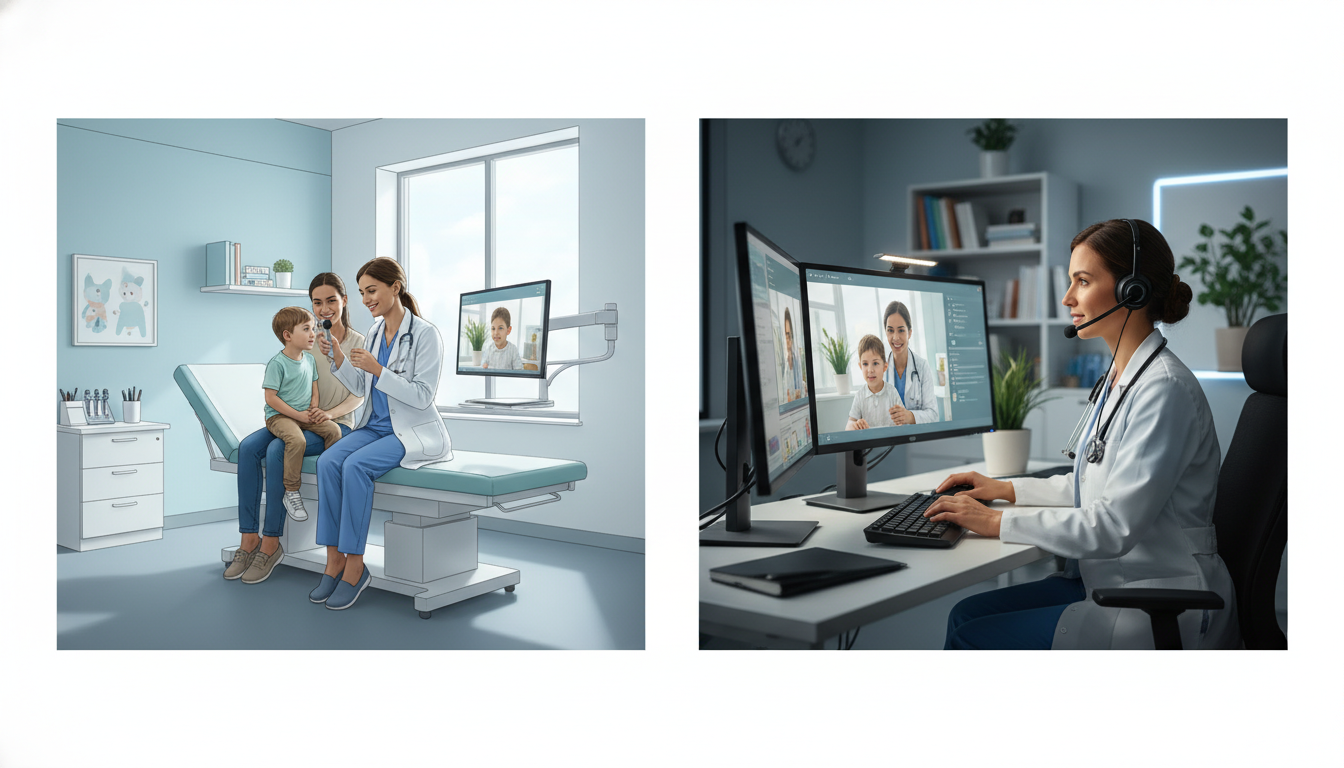
Many pediatricians work in blended roles where part of their week is telemedicine and part is in-person clinical care.
Examples:
- Employed pediatrician in a hospital system who works 3 clinic days in person and 2 half-days via telehealth.
- Private practice pediatrician who blocks specific telemedicine hours for follow-up, chronic disease management, or sick visits.
- Academic pediatrician with telehealth continuity clinics for residents and med students.
Pros:
- Maintains hands-on clinical and procedural skills.
- Offers some flexibility and can reduce burnout from full-time in-clinic work.
- May be more stable and better reimbursed if integrated into a health system.
- Strong continuity of care: same provider telehealth + in-person.
Cons:
- Still tied to geographic location of clinic or institution.
- Requires careful scheduling and workflow design to avoid overbooking.
- Some administrative complexity (different visit types, separate workflows).
For many pediatricians, especially early in their careers, hybrid arrangements offer an ideal balance of flexibility, professional development, and financial stability.
3. Subspecialty Telemedicine Roles in Pediatrics
Pediatric subspecialists are increasingly using telehealth to extend their reach, reduce wait times, and follow high-risk patients more closely.
Common subspecialties with robust telehealth use:
- Pediatric neurology (headache, epilepsy follow-up, developmental concerns)
- Pediatric endocrinology (diabetes, thyroid disease, growth concerns)
- Pediatric pulmonology (asthma, sleep-disordered breathing follow-up)
- Pediatric cardiology (post-op follow-up, stable congenital heart disease visits)
- Developmental-behavioral pediatrics
- Child and adolescent psychiatry
- Pediatric dermatology (often via store-and-forward teledermatology)
Career implications:
- Many subspecialty practices now build telehealth into job descriptions, creating recurring remote physician work days.
- Telemedicine can reduce outreach travel while still serving rural or underserved areas.
- For fellowship graduates, telehealth skills can make you more valuable to programs that span multiple satellite clinics.
4. After-Hours, Urgent, and Triage Telemedicine
Pediatric call and after-hours responsibilities are evolving with telemedicine. New telemedicine jobs focus on:
- Telephone or video triage for community pediatric practices
- Nocturnist-style telehealth coverage for hospital networks
- Pediatric urgent-care video visits evenings and weekends
- Nurse-led triage supported by telehealth pediatricians
For pediatricians who want supplemental income, evenings-only or weekend telemedicine can be a practical, flexible option.
5. Non-Clinical and Leadership Roles in Telehealth
Beyond direct patient care, telemedicine expansion has created non-clinical opportunities for pediatricians:
- Telehealth medical director or program lead
Designing workflows, setting clinical protocols, and overseeing quality metrics. - Clinical informatics and digital health roles
Integrating telehealth with EMRs, designing user-friendly patient pathways, and supporting digital triage tools. - Education and training
Teaching residents and other clinicians how to conduct safe, effective pediatric telehealth visits. - Quality and patient safety
Developing protocols for high-risk symptoms, escalation to in-person care, and monitoring outcomes.
These roles may combine with clinical time or serve as a path toward more administrative or leadership responsibilities.
Preparing for Telemedicine Careers During Pediatrics Residency
If you’re in medical school planning for the peds match or currently in a pediatrics residency, you can start building telehealth-specific competencies now—even before formal employment.
1. Seek Out Telehealth Experiences in Training
Ask your program leadership how telemedicine is integrated into your curriculum. Options may include:
- Telehealth continuity clinics (supervised video visits)
- Participation in subspecialty telemedicine sessions
- Virtual urgent-care shifts
- Tele-triage exposure via supervised phone or video call-backs
If your program has limited telehealth, propose:
- A mini-elective focused on pediatric telehealth.
- Quality improvement (QI) projects around telehealth access, no-show reduction, or outcomes.
- Participation in institutional telehealth committees.
2. Master Core Pediatric Telemedicine Skills
Telemedicine is not just “clinic via video.” It requires deliberate adaptations:
History-taking and communication:
- Learn to guide parents through a focused exam: checking for retractions, capillary refill, rash distribution, respiratory effort, and hydration status.
- Develop clear scripts for red-flag symptoms and safety netting.
- Use teach-back techniques to ensure parents understand plans and warnings.
Tech and environment:
- Understand basic troubleshooting: audio/video issues, bandwidth problems, and alternative workflows (phone-only if video fails).
- Learn how to set up a professional backdrop, lighting, and sound for virtual visits.
- Get comfortable documenting telehealth-specific elements (patient location, provider location, consent, modality).
Clinical judgment in a low-touch environment:
- Know your threshold for converting to in-person or ED evaluation.
- Learn which conditions are well-suited to telehealth vs not appropriate (e.g., high-risk febrile infants, respiratory distress).
These skills are becoming core competencies; being strong in them can differentiate you as you enter the job market.
3. Use Telemedicine for Scholarship and QI
Residency is an ideal time to explore scholarly work related to telehealth, such as:
- Telemedicine’s impact on no-show rates or access for underserved families.
- Outcomes of pediatric asthma or ADHD management with virtual visits.
- Parent satisfaction with telehealth vs in-person well visits (or hybrid models).
- Equity and language access challenges in pediatric telemedicine.
These projects can:
- Strengthen fellowship or job applications.
- Place you at the intersection of digital health and pediatrics, where innovation is robust.
- Provide talking points for interviews, especially with groups invested in telehealth.
Job Search, Licensure, and Compensation for Telemedicine Pediatricians
As telemedicine has expanded, hiring patterns, licensing norms, and compensation structures have evolved. For residents approaching graduation or early-career pediatricians considering a change, understanding these logistics is critical.
1. How Telemedicine Fits into Your Post-Residency Job Search
When evaluating positions during or after the peds match phase (for categorical pediatrics vs primary care tracks), ask:
Does this role include telemedicine responsibilities?
If so, what percentage of time? Are telehealth visits integrated into your daily schedule or clustered into specific blocks?What support exists for telehealth workflow?
Is scheduling coordinated? Is there tech support for families? Are telehealth visits no-show–prone, or well managed?How will telehealth impact your panel and compensation?
Are telehealth visits counted the same as in-person for RVUs or productivity measures?
If you’re specifically seeking remote physician work, you may instead target:
- National telehealth companies that recruit pediatricians.
- Large health systems advertising fully virtual positions.
- Pediatric-specific telemedicine startups (e.g., urgent care, nutrition, mental health).
2. State Licensure and Interstate Practice
State licensure is one of the biggest logistical factors for telehealth physician roles.
Key points:
- You must typically be licensed in the state where the patient is physically located at the time of the telehealth visit.
- Many remote positions prefer or require multiple state licenses to broaden patient reach.
- The Interstate Medical Licensure Compact (IMLC) can streamline additional licenses if your primary state participates and you meet eligibility criteria.
Practical advice:
- When negotiating telemedicine jobs, ask if the employer:
- Covers licensing fees.
- Manages paperwork and renewals.
- Has a strategic plan for target states to match patient demand.
New graduates may benefit from starting with a smaller group of states and expanding as needed.
3. Telemedicine Compensation Models for Pediatricians
Telemedicine compensation varies widely by employer type and job structure:
Common models:
- Hourly or per-shift pay
Typical for urgent telemedicine or part-time remote work. - RVU-based models
Similar to in-person, with telehealth visits generating RVUs (though rates can differ by payer). - Per-visit or per-consult rates
More common in DTC platforms or consulting services. - Salary plus productivity bonus
Particularly in health system–based hybrid roles.
Factors affecting pay:
- Experience level and subspecialty training.
- Number of state licenses you hold.
- Night/weekend coverage willingness.
- Visit volume and no-show rates.
- Whether you’re 1099 contractor vs W-2 employee.
In general, pure telemedicine positions may pay similarly to or slightly less than comparable in-person primary care roles, but with significant non-financial benefits:
- Geographic freedom.
- Reduced commute and overhead.
- Better control over schedule and work–life balance.
For many pediatricians, part-time telemedicine jobs function as supplemental income layered onto a core practice.
Practical Skills, Technology, and Daily Workflow
Thriving in telemedicine requires a blend of clinical judgment, communication finesse, and comfort with digital tools.
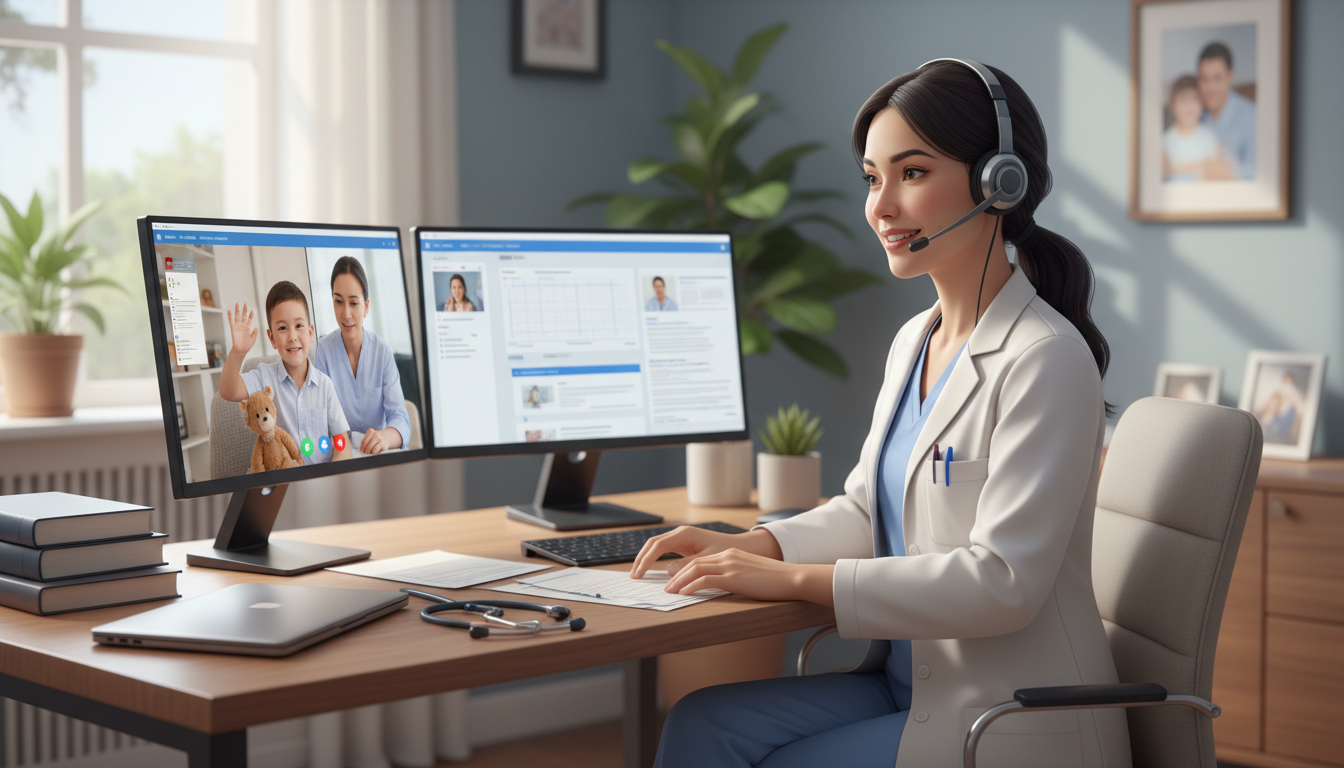
1. Setting Up a Professional Telehealth Workspace
Even if you’re doing remote physician work from home, your setup should project professionalism and privacy:
Environment:
- Neutral, uncluttered background (or branded virtual background if approved).
- Good lighting from in front, not behind you.
- Quiet space with a door; use a headset to enhance audio quality and privacy.
Technology:
- Reliable high-speed internet; consider wired Ethernet if video lags.
- Backup devices (laptop + smartphone or tablet) in case of technical failure.
- Familiarity with your platform’s features (screen sharing, group visits, waiting room, backup phone dial-in).
Security:
- HIPAA-compliant platforms and workflows.
- Avoid using personal devices without proper security and privacy configuration.
2. Conducting an Effective Pediatric Telehealth Visit
A structured approach improves safety and patient experience:
Pre-visit prep:
- Review chart and pre-visit questionnaires.
- Check for recent ED visits, lab results, or hospitalizations.
Opening the visit:
- Verify patient identity, location, and contact number.
- Confirm consent for telehealth and document it.
- Briefly explain limitations and when you might need to convert to in-person.
History and observation:
- Ask caregivers to adjust camera to see the full child, breathing pattern, and skin.
- Use parent-reported measures (temp, weight if available, home BP if appropriate).
- Watch for interaction level, play, and mental status.
Guided exam:
- Have parents show throat with flashlight if needed.
- Ask them to press on abdomen or check for tenderness where appropriate and safe.
- Observe respiratory effort, speech, and color.
Assessment and plan:
- Clearly outline differential and why telehealth is or is not sufficient.
- Provide explicit return/emergency instructions with red flags.
- Confirm pharmacy and method for sharing after-visit summary.
Documentation:
- Document modality (video vs audio), location, and time spent if relevant for billing.
- Note any limitations that affect clinical certainty.
3. Avoiding Pitfalls and Practicing Safely
Common risk areas include:
Under-triaging high-risk symptoms
Example: Not recognizing the severity of respiratory distress in a toddler with bronchiolitis. When in doubt, err on the side of in-person or ED referral.Equity and access issues
Some families lack high-speed internet, private space, or devices. Advocate for alternative workflows (phone visits with interpreter support, community hubs, or hybrid models).Documentation gaps
Telehealth notes should be as thorough as in-person visits, with added detail on limitations and safety netting.
Developing a low threshold for escalation and clear internal algorithms (febrile infant protocols, respiratory distress pathways, mental health crisis plans) is crucial.
Future Directions: Telemedicine and the Evolving Pediatrics Landscape
Telemedicine will continue to evolve, and pediatricians entering practice today will help shape that future. Anticipated trends include:
Expanded mental and behavioral health tele-services
Child psychiatry and behavioral pediatrics are already heavily telehealth-based in many regions.School-based and community telehealth programs
Virtual pediatric care coordinated through schools or community centers, helping children access care without disruption.Remote monitoring and digital therapeutics
Integration of wearables, home spirometry, glucometers, and behavioral health apps with pediatric telehealth workflows.Global and cross-border pediatric teleconsults
Collaborative telehealth between specialists and primary pediatricians in different regions or countries (subject to regulations).
For pediatrics residents and applicants considering their future, building telemedicine competencies now ensures flexibility and relevance as these trends mature.
FAQs: Telemedicine Career Opportunities in Pediatrics
1. Can new pediatric residency graduates go directly into full-time telemedicine jobs?
Yes, but it’s wise to weigh the trade-offs. Some telemedicine employers hire new grads, especially for urgent care or primary care roles. However, spending at least part of your early career in a traditional or hybrid setting can solidify hands-on skills, build procedural experience, and broaden your clinical judgment. A balanced approach is to combine an in-person position with part-time telemedicine until you’re confident in your readiness for telehealth-only work.
2. How do telemedicine jobs affect fellowship or subspecialty aspirations?
Telemedicine experience can actually strengthen your fellowship application, especially in subspecialties where virtual care is robust (e.g., endocrinology, pulmonology, neurology, developmental-behavioral). Highlight telehealth-related QI, research, or leadership roles. After fellowship, subspecialty telemedicine can expand your reach and offer more flexible work options; it rarely limits your opportunities as long as you maintain appropriate in-person experience where needed for your field.
3. Are telemedicine roles stable long-term, or are they a temporary trend?
Telehealth utilization surged during COVID-19, then partially leveled, but it remains far above pre-pandemic levels. Children’s hospitals, large health systems, and insurers have invested heavily in telehealth infrastructure. While reimbursement rules may shift over time, the overall trend is toward sustained integration rather than complete rollback. Pediatric telemedicine is likely here to stay, especially for chronic disease management, mental health, and follow-up care.
4. How can I find reputable telemedicine employers and avoid predatory arrangements?
Look for organizations that:
- Clearly outline pay structure, visit expectations, and scheduling.
- Provide malpractice coverage that explicitly includes telehealth.
- Offer training in their telehealth platform, workflows, and escalation pathways.
- Are transparent about no-show rates, average hourly visit volume, and support services (IT, scheduling, language services).
Ask to speak with current pediatric telehealth physicians at the organization. Be wary of unrealistic income promises, opaque contracts, or roles that pressure you to see unsafe visit volumes.
Telemedicine is no longer a side feature of pediatrics—it is a core part of modern practice and a powerful source of new career opportunities. Whether you envision yourself in a hybrid clinic, as a fully remote telehealth physician, or in leadership shaping digital pediatric care, building telemedicine skills during and after residency will position you at the forefront of the evolving pediatric landscape.