Understanding Telemedicine in Pediatrics-Psychiatry
Telemedicine has reshaped how mental health care is delivered, and pediatrics-psychiatry sits at the center of this transformation. For residents and early-career physicians coming from a peds psych residency, triple board program (pediatrics, psychiatry, and child & adolescent psychiatry), or traditional child & adolescent psychiatry training, telehealth opens up a wide range of flexible and rewarding career paths.
In pediatrics-psychiatry, telemedicine care can include:
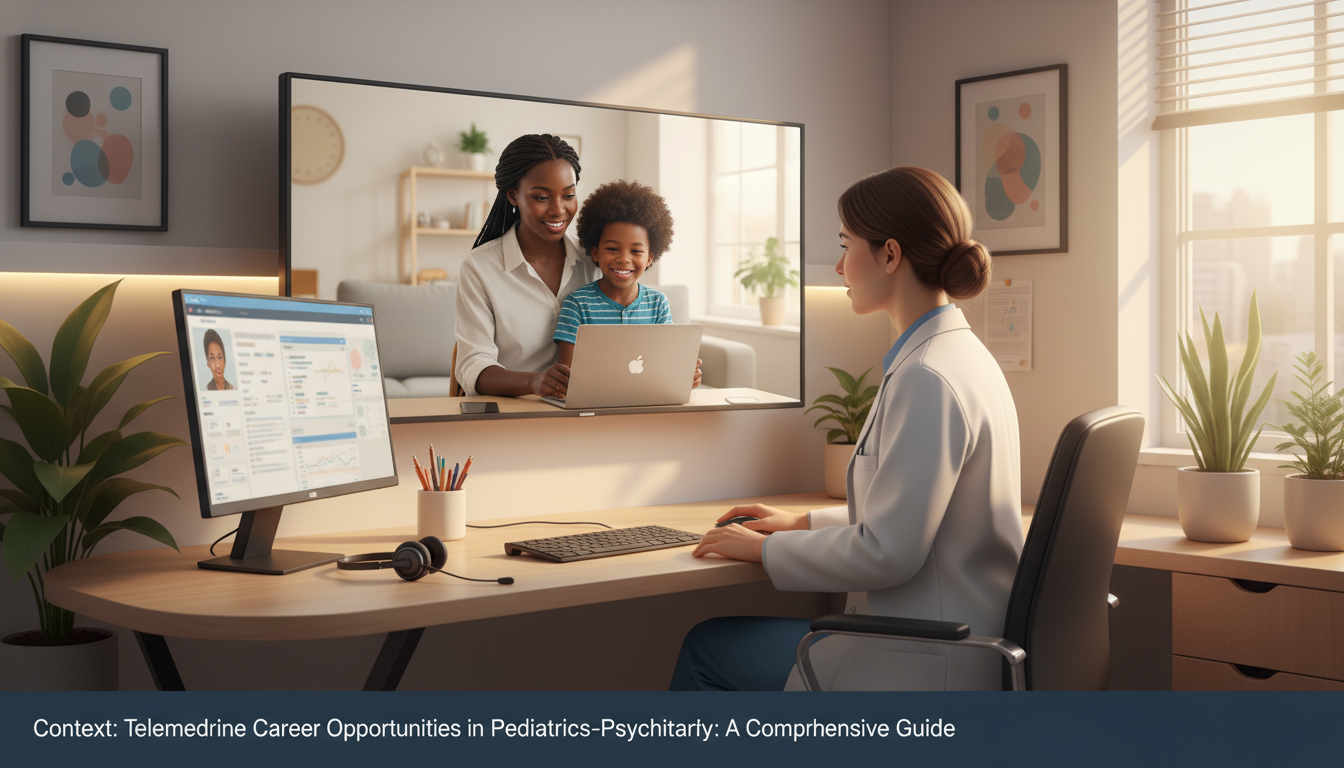
- Video-based psychiatric evaluations and medication management
- Collaborative visits involving parents, schools, and therapists
- Behavioral interventions for ADHD, anxiety, depression, and autism-related challenges
- Family therapy, parent coaching, and psychoeducation
- Follow-up visits for chronic mental health conditions
- Emergency or urgent telepsychiatry consults for pediatric units and EDs
Telehealth is not just a “stopgap” solution anymore. For many health systems, it is a core service line. For pediatric-psychiatry specialists, this means:
- Growing demand from hospitals, large health systems, and academic centers
- New hybrid and fully remote models of practice
- Flexible remote physician work opportunities, including part-time and per diem
- Expanded ability to serve underserved and rural communities
This guide walks you through the landscape of telemedicine jobs in pediatrics-psychiatry, from job types and practice models to licensing, billing, and lifestyle considerations—so you can strategically plan your post-residency career.
1. Why Telemedicine Fits Pediatrics-Psychiatry So Well
Telehealth aligns particularly well with the clinical realities of pediatric mental health. Understanding why can help guide your career decisions and how you present yourself as a candidate.
1.1 Clinical Advantages
1. Comfort for children and families
Many kids and teens feel safer and more relaxed in their home environments than in a clinic. You’ll see:
- More authentic behavior (especially in neurodivergent children)
- Less “white coat” anxiety
- Better engagement from anxious, oppositional, or withdrawn youth
2. In-home context
Video visits allow you to observe:
- Family interactions in real time
- The child’s bedroom, study space, and routines
- Environmental risk factors or supports (e.g., clutter, organization, safety hazards)
These insights can meaningfully inform diagnosis and treatment planning.
3. Better access for underserved communities
Telepsychiatry can bridge gaps for:
- Rural areas with no local child psychiatrists
- Families with transportation barriers
- Parents who cannot take time off easily
This is particularly important in pediatrics-psychiatry, where specialist shortages are acute.
1.2 System-Level Benefits
Health systems increasingly build telemedicine into pediatric behavioral health services because it allows:
- More efficient use of limited subspecialists (e.g., one telehealth physician supporting multiple clinics)
- Reduced no-show rates, especially in adolescent populations
- Integration with school-based services, primary care, and pediatric subspecialty clinics
As a graduate of a peds psych residency or triple board program, you bring added value: the ability to bridge pediatric and psychiatric perspectives, which is ideal for tele-consultation models.

2. Common Telemedicine Career Paths in Pediatrics-Psychiatry
Telemedicine is not a single job type. It cuts across many practice models and settings. Understanding these options will help you align your future job search with your long-term goals.
2.1 Hospital-Employed Telepsychiatry Roles
Many children’s hospitals and academic centers now offer:
- Outpatient telebehavioral clinics: Scheduled video visits for follow-ups and new intake evaluations.
- Tele-consults to community pediatric practices: You act as the remote consultant for complex psychiatric cases.
- ED and inpatient consults by video: Especially overnight or for satellite campuses.
You might work:
- On-site some days (seeing in-person patients) and remote others
- Fully remote, logging in to a hospital system with EMR access
- In a hybrid model shared between inpatient and outpatient telehealth
These positions often appeal to those who want to maintain academic engagement, supervise learners, or continue research while leveraging telehealth.
2.2 Multi-State Telehealth Companies
Several national or regional companies focus on telemedicine jobs in behavioral health, including pediatric mental health. They may offer:
- Direct-to-consumer child and adolescent psychiatry care
- Contracted services for school systems or pediatric clinics
- Integrated care platforms with therapists and coaches
Common features of such roles:
- High visit volume, shorter appointment times than traditional academic settings
- Evening/weekend options (can be a plus or minus depending on lifestyle)
- Extensive support staff for scheduling, prior auth, and billing
- Often fully remote physician work, as long as you hold the correct state licenses
For a pediatric-psychiatry physician, especially with triple board training, you can become a high-value hire thanks to your versatility: addressing developmental, medical, and psychiatric concerns through a single telehealth visit.
2.3 Integrated Primary Care and School-Based Models
Telehealth is increasingly used to:
- Embed child psychiatrists virtually in pediatric primary care practices
- Provide telepsychiatry access within school health centers
- Support collaborative care models where PCPs manage most medication, and you provide consultation
In these positions, your work may include:
- Brief consults to pediatricians (e.g., 15–30 minutes)
- Case conferences with school psychologists or counselors
- Short-term medication management before transfer back to primary care
This model particularly benefits from skills acquired in a peds psych residency, where you learn to bridge pediatrics and psychiatry care systems.
2.4 Private Telepsychiatry Practice
Some pediatric-psychiatry specialists build independent or small-group telehealth practices. This path offers:
- High autonomy in scheduling and patient selection
- Potentially higher income if you manage your own panel efficiently
- Freedom to define your niche (e.g., autism + anxiety, ADHD + learning disorders, medically complex youth)
However, it also requires:
- Comfort with business operations (billing, marketing, legal, EMR selection)
- Understanding of interstate licensing and telehealth regulations
- Investment in secure technology and HIPAA-compliant platforms
Many clinicians blend this with part-time in-person work for variety and local professional connections.
2.5 Academic and Research-Focused Telehealth Roles
Academic centers increasingly fund telehealth-based research and service innovation, creating opportunities such as:
- Designing and piloting telepsychiatry programs for high-risk youth
- Studying outcomes of remote vs. in-person pediatric mental health care
- Leading quality improvement projects on telehealth workflows
If you’re drawn to scholarship or education, you can build a career that uses telemedicine as a platform for research, resident education, and systems design.
3. Training Pathways and How Telehealth Fits In
Your residency or fellowship background can shape what telemedicine roles are open to you and how you market yourself.
3.1 Peds Psych Residency and Triple Board Training
Graduates of dedicated combined programs such as:
- Peds psych residency programs (combined integrated training)
- Triple board programs (pediatrics, psychiatry, and child & adolescent psychiatry)
are uniquely positioned for telehealth careers because they:
- Understand both pediatric and psychiatric workflows and documentation
- Are comfortable coordinating care among multiple stakeholders (PCPs, schools, therapists)
- Can address somatic and developmental aspects of psychiatric presentations
When applying to telemedicine jobs, explicitly highlight:
- Experience managing medically complex kids with psychiatric needs via telehealth
- Rotations where you used telepsychiatry tools (if applicable)
- Any QI or research work related to remote care delivery
3.2 Child & Adolescent Psychiatry Fellowship
Most child & adolescent psychiatry fellowships now include some telehealth exposure, especially post-2020. Emphasize:
- Experience conducting full diagnostic interviews by video
- Use of telehealth for family sessions and parent training
- Encounters with school collaboration or remote therapy integration
If your training center uses a large health system telehealth platform, ask:
- Can you get involved in workflow design or QI projects?
- Is there a faculty mentor focused on telehealth innovation?
These experiences become powerful talking points when seeking telehealth physician roles.
3.3 Building Telehealth Skills During Training
To strengthen your telemedicine portfolio:
- Seek telehealth electives in outpatient child psychiatry or pediatric behavioral health clinics.
- Practice remote rapport-building skills, especially with younger children and neurodivergent teens.
- Learn documentation templates optimized for telehealth, including risk assessment and safety planning.
- Participate in multidisciplinary telehealth case conferences, if your program offers them.
Document these experiences on your CV and during interviews to show you are “telehealth-ready” on day one.
4. Practical Considerations: Licensing, Billing, and Logistics
Telemedicine careers come with their own regulatory and logistical landscape. Understanding this early helps you avoid surprises and makes you more marketable to employers.
4.1 Licensing and Interstate Practice
For telehealth, the crucial rule is: you must typically be licensed in the state where the patient is physically located at the time of the visit.
Key points:
- If you treat patients in multiple states, you must hold multiple licenses unless specific compacts or waivers apply.
- Some telehealth companies will fund additional state licenses for you to expand your reach.
- The Interstate Medical Licensure Compact (IMLC) can speed licensing in participating states, but not all states or all physicians qualify.
If your career goal is broad remote physician work across the country, it’s strategic to:
- Start licensing in a few high-demand states (e.g., large, populous, or underserved ones).
- Ask potential employers: “Do you support multi-state licensing for telehealth roles?”
4.2 Telemedicine Credentialing and Privileging
When working for hospitals or health systems:
- You must be credentialed with the system, even if you never physically step into the building.
- Some systems use “credentialing by proxy” when telehealth services are provided through another institution.
Credentialing can take months, so:
- Begin early if you have a planned start date after fellowship.
- Provide clear, complete documentation to avoid delays.
4.3 Billing, Coding, and Reimbursement
Telehealth billing has stabilized since initial pandemic-era changes, but details vary by payer and state. As a telehealth physician, you should be familiar with:
- CPT codes commonly used for pediatric psychiatric visits (e.g., 99213–99215 with telehealth modifiers, or specific psychiatric codes where applicable).
- Requirements for documenting consent, location, duration, and modality (video vs. audio-only).
- Whether your practice requires patients to be in specific locations (e.g., home vs. clinical site) for reimbursement.
Even if your employer handles billing, basic literacy in these areas makes you a more efficient and dependable clinician.
4.4 Technology and Clinical Workflow
To provide safe, efficient telehealth:
- Use a HIPAA-compliant platform integrated with your EMR whenever possible.
- Ensure a private, quiet workspace with professional background, good lighting, and reliable internet.
- Learn backup procedures if video fails (e.g., switching to phone, re-scheduling, documenting technical issues).
For pediatrics-psychiatry specifically:
- Establish clear rules about who must be present (e.g., a parent or guardian for minors).
- Decide how you handle privacy with adolescents—when parents step away, how confidentiality is explained.
- Prepare digital handouts (safety plans, coping strategies, parent guides) you can share securely.
5. Day-to-Day Life and Lifestyle Considerations
One of the major draws of telemedicine is lifestyle flexibility. Understanding the real-world pros and cons will help you assess whether specific telemedicine jobs align with your priorities.
5.1 Advantages of Telehealth Work
1. Flexibility and Work–Life Integration
- Potential for part-time or non-traditional schedules (evenings/weekends)
- Reduced commute time, opening hours of your day for research, family, or side projects
- Ability to live in a different region than the system you work for (depending on licensing)
2. Control Over Work Environment
- Create a personalized, quiet home office space
- More control over interruptions than in busy clinic corridors
- For some, improved focus and reduced burnout from fewer in-person crises
3. Expanded Career Options
- You can combine telehealth roles: academic plus private telepractice, or hospital-based plus school-based teleconsultation.
- If you relocate for personal reasons, you may be able to keep your telehealth job, minimizing job transitions.
5.2 Challenges to Anticipate
1. Professional Isolation
- Less informal peer interaction than in a traditional clinic or hospital
- Need to intentionally seek out virtual peer supervision, case conferences, or journal clubs
2. Clinical Limitations
- Difficulty conducting parts of the physical or neurological exam
- Challenges with very young children, nonverbal youth, or highly dysregulated patients
- Limitations for high-acuity cases where immediate in-person intervention may be necessary
3. Administrative Load
- More messaging and portal interactions if not carefully managed
- Complex logistics around multi-state licensure and differing telehealth rules
Balancing these can involve:
- Scheduling regular case review with colleagues or mentors
- Clear boundaries on messaging and after-hours communication
- Intentional mix of telehealth and in-person roles, if feasible
5.3 Sample Weekly Schedules
To visualize how telemedicine can fit different career goals, consider these examples:
Example 1: Academic Triple Board Graduate
- 2 days/week: Telehealth outpatient pediatric psychiatry clinic from home
- 1 day/week: In-person pediatric continuity clinic and teaching residents
- 1 day/week: Research on telebehavioral interventions and QI projects
- 1 day/week: Administrative, supervision, and on-call responsibilities
Example 2: Community-Focused Telehealth Physician
- 4 days/week: Fully remote pediatric psychiatry visits for a multi-state telehealth company
- 1 day/week: Contracted tele-consults for a rural pediatric clinic network
- Optional: Evening hours twice a week for adolescent patients
Example 3: Private Telepsychiatry Practice
- 3 clinical days: Telepsychiatry visits for ADHD, anxiety, and mood disorders
- 1 day: Admin, billing review, collaboration with therapists and schools
- 1 flexible day: Local consulting, professional development, or personal commitments
6. Strategizing Your Career: From Residency to Telemedicine Roles
Planning ahead during residency or fellowship will help you enter the telehealth market with intention rather than by chance.
6.1 Building a Compelling Telehealth CV
Include:
- Telehealth-specific rotations, electives, or clinics
- Projects on telepsychiatry workflow, access, or quality improvement
- Experience with specific platforms or EMRs (e.g., Epic-integrated video, Zoom for Healthcare)
- Any teaching of medical students/residents in telehealth settings
In your personal statement or cover letter for telehealth physician positions, emphasize:
- Comfort managing complex pediatric cases remotely
- Understanding of safety planning and emergency protocols in telehealth
- Interest in working with underserved communities or special populations
6.2 Interviewing for Telemedicine Jobs
Expect questions about:
- How you build rapport with children and families via video
- How you handle safety concerns (e.g., suicidal ideation) when remote
- Experience collaborating with schools, therapists, and PCPs from a distance
Prepare specific examples, such as:
- A case where you successfully de-escalated a crisis remotely
- A scenario where telehealth enabled better family involvement or coordination with a school
You should also ask employers:
- “What percentage of visits are telehealth vs. in-person?”
- “What support systems exist for high-risk youth seen by telehealth?”
- “How is provider burnout addressed, particularly in high-volume remote roles?”
6.3 Long-Term Career Growth
Telemedicine opens doors for:
- Leadership of virtual care programs (Medical Director of Pediatric Telepsychiatry)
- Policy and advocacy roles related to digital health and youth mental health access
- Entrepreneurship (developing digital tools, apps, or care platforms for pediatric mental health)
As a pediatrics-psychiatry specialist, especially with a peds psych residency or triple board foundation, your skill set is highly aligned with these evolving opportunities.
FAQs: Telemedicine Careers in Pediatrics-Psychiatry
1. Do I need prior telehealth experience during training to get a telemedicine job?
No, but it helps. Many employers will provide onboard training. However, having documented experience from residency or fellowship—such as telepsychiatry clinics, telehealth QI projects, or participation in remote case conferences—will make you more competitive and ease your transition.
2. Can I work entirely as a remote physician, or should I plan to maintain some in-person practice?
Many pediatric-psychiatry clinicians work 100% remotely, especially with large telehealth companies. Others prefer a hybrid model to maintain in-person skills, local professional relationships, and access to multidisciplinary teams. Early in your career, some in-person work can be advantageous for mentorship and clinical breadth.
3. How many state licenses should I get for telemedicine work?
Start with your home state and any states where your employer has significant patient volume. For multi-state telehealth companies, they may request (and pay for) additional licenses in strategic states. Don’t overextend yourself; each license adds renewal fees and maintenance tasks. Aim for a small cluster of high-yield states and grow gradually.
4. Are telemedicine roles stable, or is there a risk they will disappear as regulations change?
Telemedicine has moved from an emergency measure to a core part of healthcare delivery. While some reimbursement policies may shift, the broad trend is toward sustained and expanded telehealth integration, especially in behavioral health and pediatrics—two areas with significant access gaps. Developing telemedicine competence now is a durable investment in your future career.
Telemedicine in pediatrics-psychiatry is no longer optional background knowledge—it’s a central career avenue. Whether you’re in a peds psych residency, a triple board program, or a traditional child & adolescent psychiatry pathway, thoughtfully integrating telehealth into your training and early career planning will open doors to flexible, impactful, and innovative roles across the evolving landscape of telemedicine jobs and remote physician work.