Residency applicants in combined Medicine-Psychiatry (med psych residency) are entering training at a time when telemedicine and digital care are reshaping how physicians work. For dual-trained medicine-psychiatry physicians, telehealth is not just an optional side gig—it can be a core component of a flexible, impactful, and sustainable career.
This guide walks you through how telemedicine intersects with Medicine-Psychiatry training and careers, what kinds of telehealth jobs exist, how to position yourself as a competitive telehealth physician, and what to consider as you plan your trajectory.
Understanding the Telemedicine Landscape for Medicine-Psychiatry
Telemedicine is no longer experimental. It’s a mainstream care modality that spans:
- Synchronous video visits (most common)
- Telephone visits
- Asynchronous care (e-consults, messaging, chart reviews)
- Remote patient monitoring
- Collaborative care and consult-liaison models delivered virtually
For dual-trained Medicine-Psychiatry physicians, the overlap with telehealth is especially strong in several domains:
- Integrated care (primary care + mental health)
- Chronic disease management with comorbid psychiatric conditions
- Addiction and recovery services
- Serious mental illness with complex medical comorbidities
- Digital IOP (intensive outpatient) and PHP (partial hospitalization) programs
- Hospital-at-home and virtual medical consults
Telemedicine allows you to use both sides of your training—internal medicine and psychiatry—in settings where most clinicians have only one of those skill sets. That differential makes you particularly valuable in:
- Health systems seeking integrated virtual care models
- Telehealth companies looking to offer comprehensive care rather than siloed services
- Rural and underserved communities where specialists are scarce but complexity is high
Why Medicine-Psychiatry Is Uniquely Suited for Telehealth
High comorbidity, high complexity
Many patients who end up in telehealth programs have both chronic medical issues and mental health conditions (e.g., diabetes + depression, COPD + anxiety, chronic pain + substance use). A medicine psychiatry combined background lets you address both in a single encounter.Systems thinking and interdisciplinary collaboration
Med-psych residency emphasizes working across teams—primary care, specialty medicine, psychiatry, social work, addiction services. That naturally fits digital, team-based, and remote physician work models.Comfort in multiple care environments
You train in inpatient medicine, inpatient psychiatry, consult-liaison, emergency settings, and ambulatory clinics. Telehealth is increasingly embedded in all of these, from ED telepsychiatry to virtual hospital consults.Broad licensing and credentialing appeal
Telehealth groups often prefer physicians who can cover multiple service lines (e.g., medical consults, psychiatric follow-up, collaborative care). Dual training maximizes your versatility.
Core Telemedicine Career Paths for Med-Psych Physicians
There is no single “telemedicine job.” Instead, think of a spectrum of telehealth physician roles. Below are the most common career paths where dual-trained med-psych physicians are particularly competitive.
1. Telepsychiatry with Medical Integration
Most telehealth positions in the behavioral space are framed as telepsychiatry, but med-psych physicians can often negotiate hybrid roles that acknowledge their internal medicine training.
Typical job structures:
- 100% outpatient telepsychiatry, with:
- Flexibility to order labs and basic medical workups
- Coordination with PCPs for ongoing medical management
- Roles in integrated care programs where:
- You support PCPs in managing psychiatric comorbidities
- You also weigh in on medical issues impacting mental health (e.g., hypothyroidism, cardiac risk with psychotropics)
- Tele-CL (consult-liaison) psychiatry for smaller hospitals lacking on-site coverage, where your medicine perspective is invaluable in understanding complex inpatients
Example:
A regional health system employs you remotely four days per week. You provide telepsychiatry to rural primary care clinics, but are frequently asked to:
- Review complicated psychotropic regimens in patients with CAD, CKD, or liver disease
- Help interpret abnormal lab results related to psych meds
- Advise on medical clearance for psychiatric admission—all via teleconsults
You are paid under a psychiatry contract, but your medicine skills markedly reduce the need for additional subspecialty consultations.
2. Integrated Virtual Primary Care and Behavioral Health
A growing sector involves virtual primary care practices that embed behavioral health. Here, your medicine psychiatry combined training is central—not peripheral—to the job.
Key elements of these roles:
- Panel-based or session-based telehealth primary care, often:
- Managing hypertension, diabetes, COPD, etc.
- Screening and treating depression, anxiety, ADHD, and substance use
- Close collaboration with:
- Therapists and case managers
- PharmDs and care coordinators
- Use of collaborative care models where:
- PCPs and BH care managers consult you for complex cases
- You flex between acting as a primary care physician and psychiatric consultant
Career impact:
- Excellent fit if you enjoy bread-and-butter internal medicine and outpatient psychiatry.
- Fast-growing space with robust opportunities for long-term remote physician work.
- Potential to evolve into medical director roles for virtual integrated care programs.
3. Telehealth in Addiction Medicine and Recovery Services
Many digital health companies and health systems are rapidly increasing virtual addiction treatment:
- MAT (medication-assisted treatment) for opioid use disorder
- Alcohol use disorder management
- Stimulant and polysubstance use treatment
- Virtual IOP/PHP for dual-diagnosis patients
Why med-psych skills are powerful here:
- You can manage LFTs, hepatitis, HIV, cardiac risk, and other medical comorbidities.
- You can assess and treat co-occurring psychiatric disorders without needing a second provider.
- You understand detox thresholds and medical risk (e.g., when home detox is unsafe).
Examples of roles:
- Telehealth physician providing MAT plus psychiatric follow-up for patients throughout a state or multi-state region.
- Clinical lead for a digital addiction startup, overseeing protocols for buprenorphine, naltrexone, and co-prescribed psychotropics while coordinating with primary care.
These positions can be part-time or full-time telemedicine jobs and often lend themselves to flexible schedules, which is ideal post-residency.
4. Tele-Consultation and Collaborative Care Models
Med-psych training makes you a natural consultant to both primary care and behavioral providers. Telehealth has enabled consultative roles that are scalable and not limited by geography.
Common models:
- E-consults on complex cases:
- PCP submits chart + questions
- You respond with recommendations asynchronously (no direct patient encounter)
- Virtual case conferences with clinics or health systems:
- Discuss high-risk, diagnostically unclear, or medically complex cases
- Collaborative care consulting psychiatrist roles:
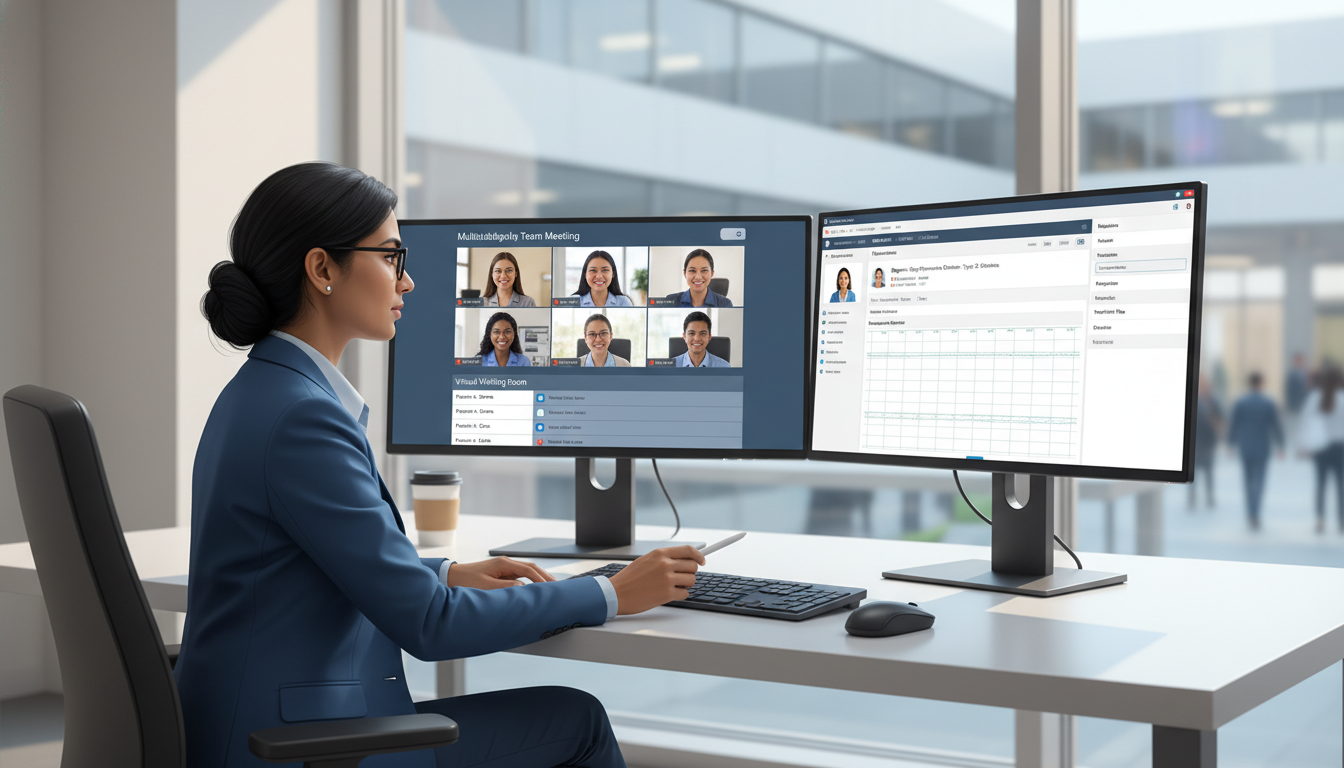
- More common in psychiatry, but med-psych physicians can address both medical and mental health aspects simultaneously
These positions may be part of academic centers, large health systems, or value-based care organizations.
5. Hospital-at-Home and Virtual Medical/Psychiatric Consults
As hospital-at-home and virtual wards grow, there is rising demand for physicians who can manage:
- Acute or subacute medical issues at home
- Simultaneous psychiatric and substance use complications
You might:
- Work with paramedics and home-visiting nurses who carry out physical exams and procedures
- Provide both hospital-level medical management and psychotropic/behavioral guidance via telehealth
- Support EDs with remote psychiatric evaluations and medical risk assessments for psychiatric hospitalization or discharge plans
This path is ideal if you like higher-acuity medicine and acute psychiatry but also want remote physician work and location flexibility.
Telehealth Jobs: Where and How to Find Opportunities

1. Types of Employers
You’ll see telehealth roles across multiple employer categories:
Large integrated health systems
- Telepsychiatry and remote internal medicine consults
- Virtual primary care with embedded mental health
- Hybrid positions with some in-person and some telehealth
Academic medical centers
- Tele-CL psychiatry
- Collaborative care programs
- Research and education on telemedicine in med-psych populations
Telehealth companies / digital health startups
- Direct-to-consumer telepsychiatry or primary care
- Specialized addiction treatment platforms
- Chronic disease + mental health management programs
- Productivity expectations may be higher; flexibility may also be greater.
Group practices and multi-specialty clinics
- Traditional groups that now support hybrid or fully remote schedules
- Opportunities to build your own virtual med-psych niche
Government and public sector
- VA systems with robust established telehealth infrastructure
- State or county mental health systems integrating telepsychiatry
2. Common Job Structures and Scheduling Models
Telemedicine jobs are often more flexible than traditional positions, but details matter. Typical structures include:
- Full-time remote (100% telehealth work)
- Hybrid roles (2–4 telehealth days/week + some in-person clinic or rounding)
- Part-time / per-diem (evenings, weekends, specific clinics only)
- Panel-based compensated models (monthly per-member payment)
- RVU-based virtual visit models
You may also see:
- Fixed shifts (e.g., 4-hour telepsychiatry blocks)
- “Anytime” asynchronous work windows (e-consults, message-based care)
- Cross-coverage or on-call telepsychiatry for emergency assessments
For many med-psych physicians, a common pattern is:
Full-time or 0.8 FTE in a health system job (with some telehealth component) +
Additional per-diem or part-time telemedicine jobs for supplemental income and diversification.
Preparing During Med-Psych Residency for a Telemedicine Career
Even if your residency is primarily in-person, you can deliberately build skills to become a strong candidate for telehealth physician roles.
1. Seek Telehealth-Heavy Rotations
Ask your program leadership about:
- Telepsychiatry rotations (outpatient clinics, rural health, VA)
- Virtual consult-liaison or collaborative care experiences
- Clinic blocks where attendings run primarily telehealth sessions
- Outpatient internal medicine blocks that incorporate video visits and remote monitoring
If formal rotations aren’t available, ask to:
- Join attendings’ telehealth clinics as a second provider
- Take part in pilot telemedicine projects within your system
2. Master Telemedicine Clinical Skills
Telehealth demands a slightly different skill set than in-person care. Focus on:
Efficient virtual interviewing
- Managing time, rapport, and sensitive topics through a screen
- Adjusting your style when video or audio quality is suboptimal
Remote safety assessments (especially important for psychiatry):
- Suicide risk evaluation and crisis planning via telehealth
- Ensuring knowledge of local emergency resources and escalation pathways
Physical exam adaptations for medicine telehealth:
- Knowing what is and is not safely evaluable via video
- Providing structured instructions to patients (e.g., checking for edema, orthostatics with home BP, CAP-related symptom checks)
- Recognizing low thresholds for in-person or ED evaluation
Documentation and medicolegal awareness:
- Clear documentation of safety assessments
- Informed consent for telehealth
- Explicit follow-up and contingency plans
3. Build Technical and Workflow Competence
Residency is the perfect time to become the person who is:
- Comfortable with digital tools, EHR telehealth modules, and remote workflows
- Able to troubleshoot basic teleconferencing issues
- Adept at keeping virtual visits organized and on schedule
This translates directly into productivity and reliability—two big things telemedicine employers value.
4. Emphasize Your Dual Training on CV and in Interviews
In the telemedicine space, many recruiters search simply for “psychiatrist” or “internal medicine physician.” It’s your job to highlight the added value of your medicine psychiatry combined background.
On your CV:
- Clearly label your program as a combined Internal Medicine–Psychiatry residency
- List rotations and experiences that show integrated care, telehealth involvement, CL-psych, addiction treatment, etc.
- Include any QI or research projects on telemedicine, integrated care, or behavioral health in medical populations.
In interviews:
- Give specific examples of cases where your dual training changed management (e.g., “I avoided an unnecessary hospital transfer by understanding both the psychotropic regimen and the patient’s heart failure status.”)
- Talk about your comfort with complex comorbidity and systems-level care in a remote environment.
Practical Considerations: Licensure, Logistics, and Lifestyle
Telehealth can bring major lifestyle advantages, but it also comes with logistical and regulatory complexities.
1. State Licensure and the Interstate Medical Licensure Compact (IMLC)
Most telehealth employers want multi-state coverage. Key points:
- The Interstate Medical Licensure Compact (IMLC) can accelerate licensing if:
- Your primary license is in an IMLC member state
- You meet eligibility criteria (board certification, no significant disciplinary history, etc.)
- Many large telehealth companies sponsor or reimburse additional licenses, especially in target states.
Tips as you approach graduation:
- Choose your first license state strategically (ideally an IMLC-participating state if you plan multi-state telehealth practice).
- Keep your record clean: no lapses in licenses, timely CME, and careful documentation to avoid disciplinary issues that can complicate future licenses.
2. Malpractice Coverage for Telemedicine
Key questions to ask any potential employer:
- Does the malpractice policy explicitly cover telemedicine, including cross-state practice?
- Are you covered for both internal medicine and psychiatry under one policy?
- Does coverage include:
- Controlled substances prescribing (e.g., stimulants, benzodiazepines, MAT medications)
- Work performed from your home office in a different state than the patient or employer?
For independent contractor roles (common in telemedicine jobs), confirm whether:
- Malpractice is employer-provided, or
- You must obtain and pay for your own policy
3. Technology and Home Office Setup
Even as a resident, you can begin to envision a professional remote work environment.
For long-term telehealth physician work, you’ll want:
- Reliable high-speed internet with backup (e.g., hotspot option)
- A private, soundproofed space with:
- Neutral background or virtual backdrop
- Good lighting (front-facing, non-harsh)
- HIPAA-compliant equipment and practices:
- Use employer-provided or encrypted devices if possible
- Avoid shared or unsecured networks
- Follow policies for storage and transmission of PHI
Ergonomics matter as well:
- Comfortable chair and desk for long blocks of video visits
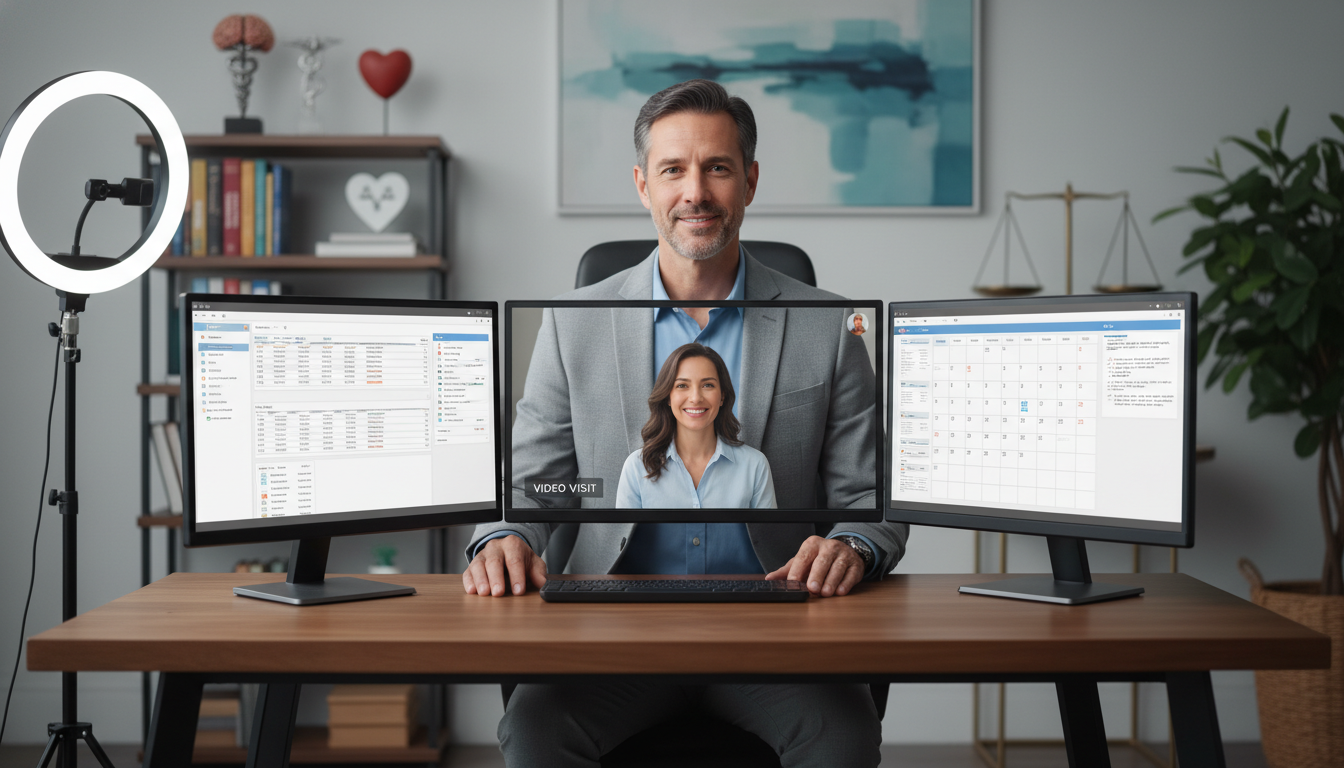
- Dual monitors (one for video, one for EHR) to optimize flow
- Headset or quality microphone for clear audio
4. Work-Life Balance and Burnout Risks
While telehealth can reduce commute time and allow flexible hours, it can also blur boundaries.
To protect yourself:
- Establish clear start and end times to your workday.
- Avoid constant after-hours portal messaging without compensation.
- Set up visual and psychological boundaries between your work area and your personal living space.
- Clarify expectations up front regarding:
- Asynchronous messaging
- Call responsibilities
- Weekend/evening work
- Expected visit volume per hour or per shift
Remember: telehealth is still clinical medicine. Burnout, moral distress, and over-scheduling can occur in virtual roles just as in in-person positions.
Strategic Career Planning: Combining Telehealth with Other Opportunities
Telemedicine does not have to be all-or-nothing in your career. Most med-psych physicians will build a portfolio of clinical and non-clinical activities.
Potential combinations:
Hybrid academic role
- 0.6 FTE at an academic center running CL-psych and teaching residents
- 0.4 FTE remote work as a telehealth physician in integrated primary care
Health system-based with telehealth leadership
- Clinical practice split between inpatient med-psych consults and telepsychiatry
- Administrative time as a telemedicine program director or quality lead
Flexible, fully remote
- Mix of telepsychiatry, virtual primary care, and remote addiction treatment
- Occasional locums or short-term on-site work to maintain hands-on skills
Over time, your med psych residency background may also position you for:
- Medical director roles in digital behavioral health or integrated care companies
- Clinical operations leadership for hospital-at-home or tele-CL programs
- Policy and advocacy work around telehealth access for people with serious mental illness or complex medical comorbidities
Being intentional early—during residency and early career—will help you align telehealth roles with your preferred clinical mix, lifestyle, and long-term goals.
FAQs: Telemedicine Careers in Medicine-Psychiatry
1. Can I do 100% remote work after finishing a med psych residency, or do I need an in-person job first?
It’s feasible to move directly into full-time telemedicine after residency, particularly in telepsychiatry or virtual integrated care. However, many program directors and senior physicians recommend at least 1–2 years of partly in-person practice to solidify physical exam skills, systems literacy, and professional networks. A hybrid schedule (some in-person, some telehealth) is a common and wise first step.
2. Are telemedicine salaries comparable to traditional in-person positions for medicine-psychiatry physicians?
Compensation depends on employer type, geographic region, and productivity expectations. Telepsychiatry roles are often competitive or even higher than some in-person jobs, especially for high-volume work. Telehealth primary care may range from moderate to high depending on panel size and value-based incentives. Dual-trained med-psych physicians may negotiate higher rates or leadership roles because they can cover multiple service lines, but this is highly organization-dependent.
3. How can I demonstrate telehealth readiness on my residency application or during interviews for med psych residency?
Mention any experiences with telehealth clinics, quality improvement projects related to virtual care, or research on telemedicine in psychiatry, primary care, or integrated settings. Express interest in population health, access to care, and digital innovation in your personal statement. During interviews, speak concretely about how you hope to leverage telemedicine to deliver integrated care to patients with complex medical and psychiatric needs.
4. What are the biggest challenges of telemedicine work as a med-psych physician?
Common challenges include limitations of the physical exam, occasional diagnostic uncertainty, network and technology issues, navigating multiple state licensures, and maintaining clear work-life boundaries when working from home. In psychiatry-focused roles, remote crisis management and ensuring patient safety can be complex. Mitigating these challenges requires deliberate workflows, strong institutional protocols, and continuous professional development in telehealth best practices.
Telemedicine is reshaping how medicine and psychiatry are practiced, and dual-trained Medicine-Psychiatry physicians are uniquely well positioned to lead this transformation. By understanding the landscape, deliberately developing telehealth skills during residency, and planning strategically for licensure, technology, and career structure, you can build a flexible, meaningful career that uses all aspects of your training—no matter where you are physically located.