Understanding Telemedicine in Pathology
Telemedicine has transformed many clinical specialties, and pathology is no exception. While pathologists do not typically conduct live video visits with patients the way a telehealth physician in primary care might, digital technology has opened a wide range of remote physician work opportunities that are uniquely suited to pathology.
At its core, telepathology refers to the practice of pathology at a distance, using digital imaging, telecommunications, and information technology to facilitate the transfer of pathology images and data between locations. It can be a powerful avenue both for day‑to‑day practice and for building a flexible, often home‑based, career.
For pathology residents and applicants considering the pathology residency pathway, understanding telemedicine opportunities early can help you:
- Shape your training experiences (e.g., seek out digital pathology exposure)
- Position yourself for emerging job markets
- Build skills that are increasingly valued in the pathology match
Why Pathology Is Well-Suited to Telemedicine
Pathology is inherently data- and image-driven. Key activities such as slide review, report generation, tumor board participation, and interdisciplinary consultation can increasingly be done remotely when the right infrastructure is in place:
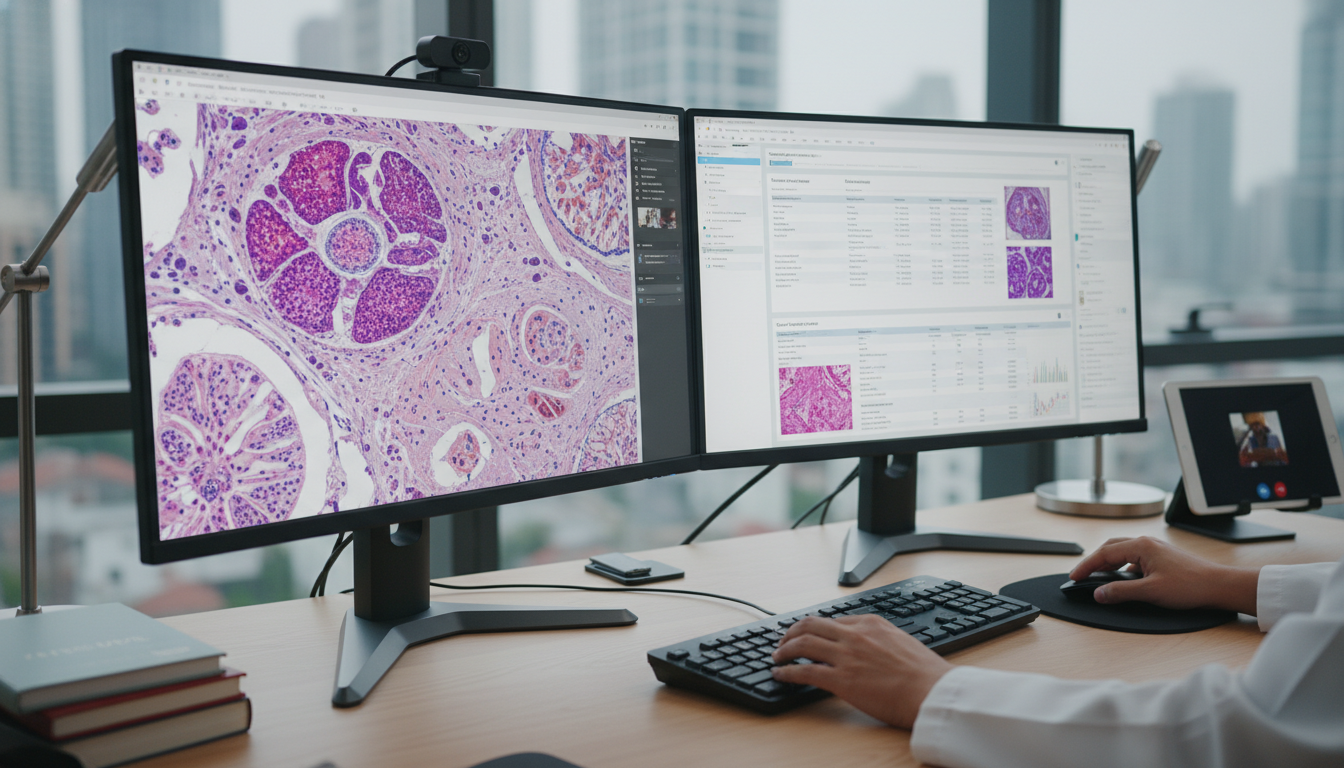
- Digital Whole Slide Imaging (WSI): Glass slides are scanned at high resolution and viewed on secure platforms.
- Cloud-based PACS and LIS: Enable remote access to pathology images, clinical information, and reporting tools.
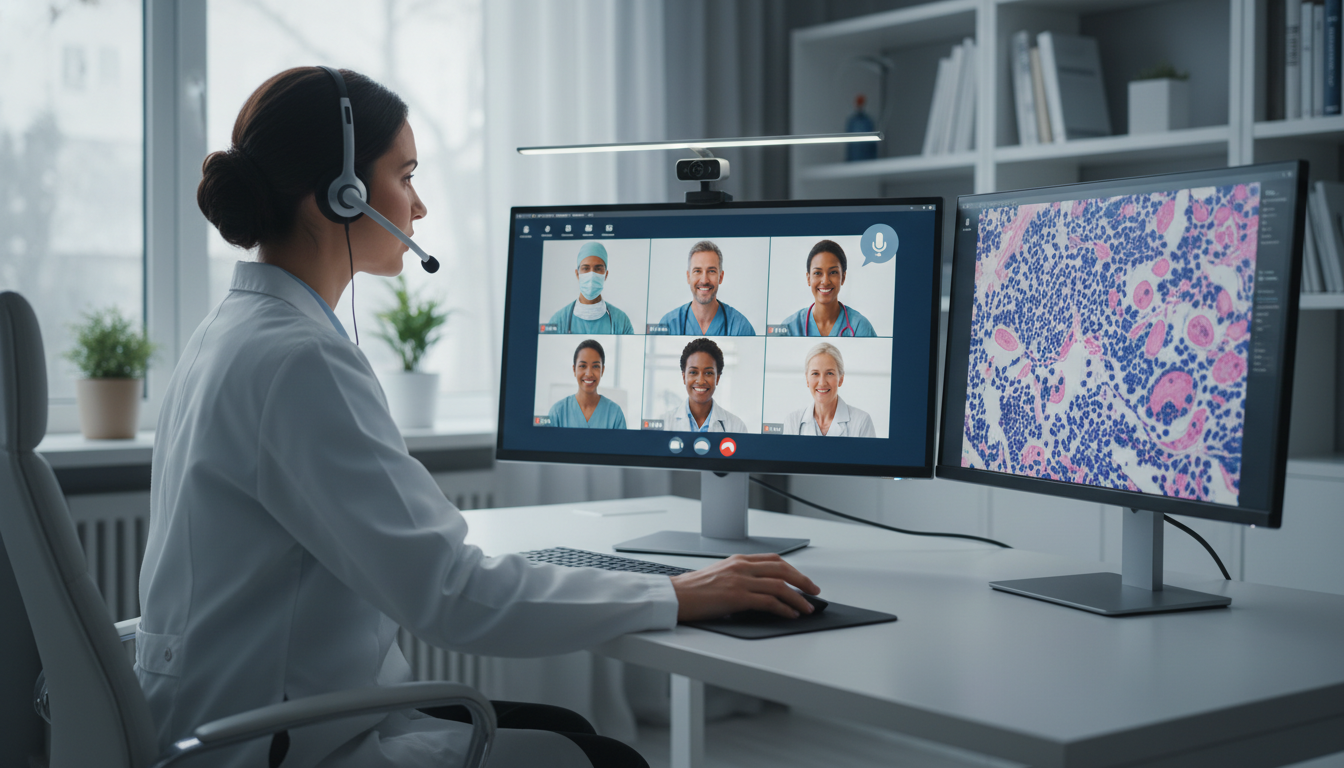
- Secure video conferencing: Facilitates remote tumor boards, multidisciplinary conferences, and even virtual teaching.
- AI-assisted diagnostics and quality control tools: Integrate into digital workflows that can be accessed from anywhere.
This makes pathology particularly amenable to telemedicine jobs and flexible arrangements like part-time remote physician work, multi-site coverage, and international consultative services.
Core Telemedicine Career Paths in Pathology
Telemedicine in pathology encompasses far more than a single job type. Below are the major categories of remote or telehealth-oriented roles you might encounter during or after pathology residency.
1. Remote Surgical Pathology Sign-out
In advanced digital environments, practicing pathologists can sign out cases remotely using whole slide imaging systems. Key features:
- Scope of work: Routine surgical pathology, second opinions, intraoperative consultations (frozen sections), and quality assurance review.
- Technology requirements:
- Validated WSI scanners at the originating site
- High-resolution monitors in the remote location
- Secure VPN and compliant telepathology platform
- Strong internet bandwidth
- Practice models:
- Full-time remote sign-out for a single health system
- Hybrid model (some on-site, some remote)
- Cross-covering multiple facilities that share a digital platform
Residents interested in this path should seek rotations or electives where digital pathology and remote sign-out are being piloted or fully implemented. Experience validating digital workflows is an asset on your CV when discussing future remote physician work roles in interviews.
2. Telepathology for Frozen Sections and Intraoperative Consults
Frozen sections traditionally require the pathologist and the specimen to be physically co-located. However, many hospitals—particularly smaller or rural centers—now use telepathology to obtain intraoperative consults from pathologists located off-site.
- Typical scenario:
- The specimen is frozen and sectioned in a community hospital.
- A technologist prepares and scans the slide (live robotic microscope or WSI).
- A pathologist at a distant site views the slide in real time and communicates with the surgeon by phone or video.
- Advantages:
- Extends subspecialty expertise to underserved hospitals.
- Improves night/weekend coverage without requiring physical presence.
- Opens part-time or off-hours telemedicine jobs for pathologists.
For residents, participating in tele-frozen pilot programs can demonstrate comfort managing high-acuity decisions remotely and understanding the workflow constraints.
3. Telecytology and Rapid On-site Evaluation (ROSE)
Telecytology allows pathologists or cytotechnologists to provide rapid on-site evaluation of FNA (fine-needle aspiration) and other cytology specimens from a distance.
- Use cases:
- Interventional radiology or pulmonology procedures (e.g., EBUS, EUS).
- ROSE to ensure adequacy of diagnostic material.
- Remote supervision of cytotechnologists.
Telecytology can combine well with other remote duties (e.g., signing out gynecologic cytology, reviewing Pap smears using digitally scanned slides), creating a more robust full-time telemedicine schedule.
4. Remote Clinical Pathology and Laboratory Management
Clinical pathology lends itself exceptionally well to remote physician work because much of the value lies in interpretation, oversight, and consultation rather than direct physical handling of specimens.
Potential telehealth physician-style activities for pathologists include:
- Reviewing and interpreting complex laboratory results remotely (e.g., coagulation, transfusion medicine, toxicology).
- Supervising multiple labs across a geographic region via teleconferencing and digital dashboards.
- Providing remote medical directorship services (quality, regulatory compliance, test utilization).
- Participating in virtual lab stewardship consults with clinicians:
- Advising on appropriate test ordering.
- Interpreting complex molecular or genomics panels.
- Optimizing antimicrobial stewardship or transfusion thresholds.
Pathology residents with strong interests in laboratory management, clinical informatics, or quality improvement will find these remote opportunities particularly aligned with their skill set.
5. Remote Subspecialty Consultation and Second Opinions
Highly subspecialized pathologists (e.g., dermatopathology, hematopathology, neuropathology) increasingly provide remote second-opinion services, either through academic centers or independent consultation platforms.
- Business models:
- Academic center remote consult service (institution-to-institution).
- Private group providing interpretations for community practices.
- Boutique consult practices working with international clients.
- Workflow:
- Slides are either physically shipped and scanned, or scanned locally and uploaded.
- Reports are delivered electronically, with optional virtual tumor board participation.
- Career implications:
- Flexibility in geographic location.
- Potential for partial remote schedules.
- Opportunity to build a subspecialty reputation beyond local institutions.
Residents should pay attention to how their training program structures complex case conferences and second opinions; being involved in case review and presentation is early exposure to the consultative mindset required for this work.
Emerging and Non-Traditional Telemedicine Roles for Pathologists
Beyond sign-out and lab supervision, there is a growing ecosystem of non-traditional, often fully remote roles where pathology expertise is highly valued.
1. Digital Pathology and AI Development
Healthcare AI and digital pathology startups—and increasingly, larger health-tech companies—need pathologists to:
- Curate and label training datasets.
- Define ground-truth diagnoses.
- Design clinically relevant performance metrics.
- Interpret model outputs and help optimize algorithms.
- Evaluate clinical validation studies and workflow impact.
These roles can be:
- Full-time telecommuting positions.
- Part-time consulting on evenings/weekends.
- Short-term contract work for specific projects.
For residents interested in this arena, consider:
- Doing research in computational pathology or image analysis.
- Gaining basic familiarity with Python or R, not as a programmer but as a domain expert who understands data workflows.
- Participating in digital pathology validation projects at your institution.
2. Telehealth Education and Virtual Teaching
Many academic pathologists now provide remote education:
- Virtual microscopy sessions for medical students and residents.
- Online CME courses or board review courses for practicing clinicians.
- Recorded or live interactive pathology conferences for international audiences.
Career opportunities include:
- Academic positions with significant remote teaching responsibilities.
- Contract work with CME companies or online education platforms.
- Creating your own branded educational content (courses, subscriptions).
This path often combines telemedicine tools (digital slides, video platforms) with strong communication skills. Residents who enjoy teaching can start by:
- Leading virtual slide review sessions.
- Creating brief educational videos or annotated digital slides.
- Presenting at virtual conferences and webinars.
3. Utilization Management and Population Health Roles
Health systems and payers are increasingly interested in optimizing test utilization and improving population-level outcomes. Pathologists—especially those comfortable with remote, dashboard-based work—can play critical roles:
- Designing and monitoring rules to reduce unnecessary testing (e.g., duplicate labs, low-yield panels).
- Building lab-based predictive models (e.g., sepsis alerts, AKI prediction).
- Interpreting and explaining lab-related quality metrics to administrators and clinicians via virtual meetings.
These functions often align with remote physician work patterns, with much of the day spent:
- Reviewing data on secure analytics platforms.
- Attending video conferences.
- Creating digital reports and recommendations.
4. Telemedicine Leadership and Strategy Roles
As telehealth expands, healthcare systems need leaders who understand both pathology and digital workflows. Potential leadership roles:
- Director of Digital Pathology or Telepathology Services.
- Enterprise Medical Director for Virtual Diagnostics.
- Telehealth strategic advisor for hospital networks.
These often involve:
- Cross-disciplinary collaboration with IT, radiology, informatics, and administration.
- Developing policies for remote sign-out, licensing across states, and quality assurance.
- Overseeing vendor selection and platform integration.
Senior pathologists may transition into these roles after years of practice; ambitious residents can prepare by:
- Getting involved in hospital telehealth committees or digital transformation projects.
- Completing electives in clinical informatics.
- Pursuing additional training (e.g., a clinical informatics fellowship, MPH, or MBA).
Training, Skills, and Preparation During Pathology Residency
If your career vision includes telemedicine-oriented practice, you can start preparing while still in training—even from the moment you’re planning your pathology residency and the pathology match.
Choosing a Program with Digital and Telepathology Exposure
When evaluating programs during the application and interview process, consider asking:
- Do you use digital pathology (WSI) for education, QA, or clinical sign-out?
- Are any faculty regularly signing out cases remotely?
- Does your institution provide telepathology coverage for satellite hospitals or frozen sections?
- Are there ongoing projects in AI, digital pathology, or informatics that residents can join?
Programs with strong digital infrastructure and telepathology workflows will better position you for future telemedicine jobs and remote practice flexibility.
Key Skills to Develop
Digital Slide Navigation and Interpretation
- Become comfortable reading cases entirely on a digital platform.
- Learn how digital artifacts differ from glass slides.
- Participate in validation studies or QC exercises when possible.
Clinical Informatics Basics
- Understand LIS, EMR integration, and digital image storage.
- Learn about cybersecurity and HIPAA aspects of remote access.
- Explore data analytics tools used in pathology (e.g., dashboards, BI tools).
Communication in a Remote Environment
- Practice clear, concise written communication in reports and emails.
- Hone your ability to explain pathology findings to non-pathologists in virtual meetings.
- Get comfortable presenting at virtual tumor boards and conferences.
Regulatory and Quality Awareness
- Familiarize yourself with CLIA, CAP, and other relevant guidelines related to digital pathology and telepathology.
- Learn how remote sign-out is validated and monitored for quality.
- Understand licensing requirements for practice across state or national borders.
Adaptability and Self-Management
- Remote work requires strong time management and self-discipline.
- Practice creating structured routines during independent sign-out or research time.
- Build habits around documentation, follow-up, and proactive communication.
Research and Scholarly Activities
Residents can align scholarship with telemedicine interests:
- Projects evaluating diagnostic concordance between digital and glass slides.
- Quality improvement initiatives in tele-frozen workflows.
- Studies on turnaround times or cost-effectiveness of remote consults.
- Educational research on virtual slide teaching or remote OSCEs.
Successful projects can help you:
- Stand out for fellowships and jobs with a digital or telehealth focus.
- Build connections with leaders in computational pathology and telemedicine.
- Demonstrate your ability to work at the intersection of technology and clinical care.
Practical Realities: Lifestyle, Compensation, and Logistics
Telemedicine-oriented pathology roles offer enticing benefits, but they also come with specific challenges. Understanding these realities early will help you plan a sustainable career.
Lifestyle Benefits of Remote Physician Work in Pathology
- Geographic flexibility: Live where you prefer (family, cost of living, lifestyle) while serving institutions elsewhere.
- Reduced commute time: More productive hours or improved work–life balance.
- Customizable schedule: Some remote roles offer flexible hours, particularly for consultative or after-hours coverage.
- Ergonomics and environment: Ability to design your own workspace, lighting, and equipment setup.
Many pathologists combine on-site and remote responsibilities, gradually shifting toward more remote practice as their careers evolve.
Challenges and Trade-offs
Licensing and credentialing:
- Multi-state licensure can be necessary if you cover multiple facilities.
- Credentialing processes may be more complex for remote positions.
Isolation and professional connection:
- Less informal interaction with colleagues; mentorship can be harder to find.
- Need to be intentional about joining virtual conferences, societies, and communities.
Technology dependence:
- Work stoppage risks if there are network or system outages.
- Need for robust IT support and backup plans.
Regulatory variability:
- Different jurisdictions have different standards for telepathology validation.
- Remote sign-out policies can change as regulations evolve.
Compensation Considerations
Compensation models for telemedicine roles in pathology vary:
Employed positions with hospital systems or large groups:
- Salary-based compensation with potential productivity or quality incentives.
- Benefits similar to on-site staff (health insurance, CME, retirement).
Contract or per-case arrangements:
- Payments per case, per hour, or per consult.
- Often more flexible but with less income predictability and fewer benefits.
Consulting for industry or startups:
- Hourly or project-based fees.
- Possibility of equity or bonuses tied to product milestones.
In negotiating telemedicine-oriented positions, consider:
- Reimbursement for home office equipment (monitors, ergonomic furniture).
- IT support and maintenance.
- Indemnity and malpractice coverage specific to remote work.
- Expectations for on-call or off-hours availability.
Getting from Residency to a Telemedicine-Forward Pathology Career
Residents and early-career pathologists can proactively shape their path toward telemedicine-oriented roles.
During Residency
- Seek out digital pathology and telepathology electives.
- Volunteer for remote tumor boards or virtual case conferences.
- Get involved in institutional telepathology pilot projects.
- Pursue research or QA projects related to digital workflows.
- Network with faculty engaged in telepathology, informatics, or AI.
During Fellowship
Subspecialty training can enhance your telemedicine value:
- Dermatopathology, hematopathology, GI, neuropathology, and GU are common subspecialties leveraged for remote consults due to high subspecialty demand.
- Transfusion medicine and clinical pathology lend themselves to remote lab oversight and management.
- Informatics fellowships can position you for leadership and industry roles in digital pathology and AI.
Use your fellowship to deepen relevant experiences:
- Participate in remote consult services.
- Build comfort with WSI platforms.
- Collaborate with industry partners on digital projects, if permitted.
Early Career Strategies
- Consider hybrid positions that include both on-site and remote components.
- Start with selective telemedicine responsibilities (e.g., remote consults a few days a month).
- Join professional organizations and working groups focused on digital pathology, informatics, and telehealth.
- Continue building expertise through CME on digital pathology, telemedicine regulations, and AI.
Over time, you can transition toward greater proportions of remote work if that matches your professional and personal goals.
Frequently Asked Questions (FAQ)
1. Can new graduates or recent pathology residency completers get fully remote jobs?
It is possible but less common for very new graduates to secure fully remote positions immediately. Many employers prefer some on-site experience first to:
- Ensure familiarity with traditional workflows and lab operations.
- Build trust in your diagnostic judgment and communication style.
A more typical trajectory is:
- Initial on-site or hybrid position for 2–5 years.
- Progressive inclusion of remote sign-out or telepathology responsibilities.
- Transition to predominantly remote or fully remote work once you have established experience and subspecialty expertise.
2. What equipment do I need to work effectively as a remote pathologist?
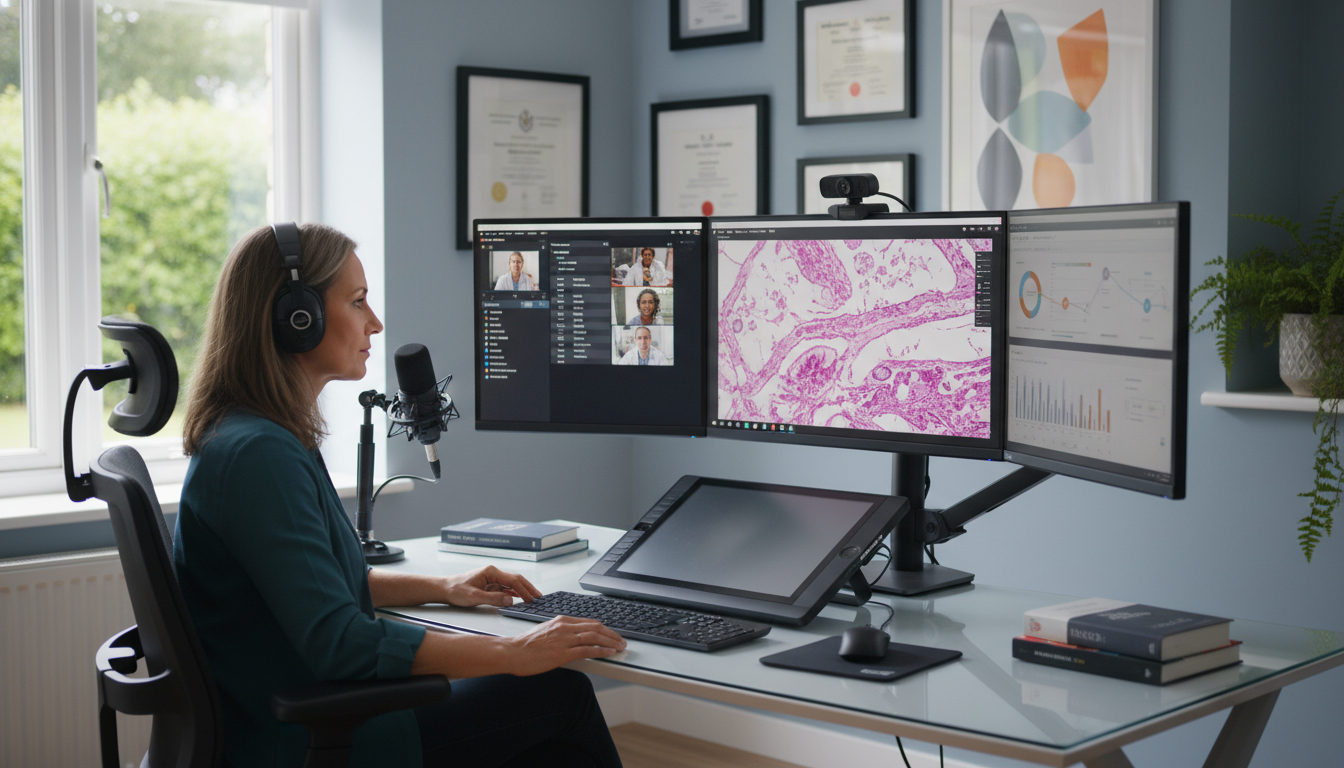
Core components of a home or remote workstation include:
- High-resolution, medical-grade monitors validated for digital pathology, if you are signing out from WSI.
- Secure computer with VPN access to institutional systems.
- Reliable, high-bandwidth internet connection with backup (e.g., secondary ISP or hotspot).
- Ergonomic chair, desk, and lighting suitable for long hours of image review.
- Headset or microphone and camera for video conferences and tumor boards.
Most institutions that support telepathology will guide you on specific equipment and may subsidize or provide hardware directly.
3. How is malpractice coverage handled for telepathology and remote work?
Malpractice coverage for telepathology typically mirrors that for on-site practice, but you must verify that your policy:
- Explicitly covers remote interpretation and telepathology activities.
- Addresses practice across state lines if applicable.
- Includes coverage for consultative services if you interpret cases from outside your primary institution.
When negotiating a telemedicine-related role, ask:
- Who provides malpractice coverage (employer vs. self-purchased)?
- Are all the states or countries you serve included in the policy?
- How are cross-institution or international consults addressed?
4. Does pursuing telemedicine opportunities limit my career options later?
In general, no—if anything, experience in telepathology and digital workflows can expand your options:
- You gain skills that are increasingly in demand across academic, community, and industry settings.
- Familiarity with digital tools can position you for leadership roles in telehealth, informatics, and quality improvement.
- Many telemedicine-related skills (communication, informatics, data literacy) are transferable to traditional practice settings.
However, it is important to maintain strong core diagnostic skills, remain engaged with in-person teams when possible, and continue professional development through conferences, CME, and collaboration—whether you are on-site or remote.
By understanding these telemedicine career opportunities early in your training and strategically shaping your experiences in pathology residency and fellowship, you can build a versatile, future-oriented career that leverages both your diagnostic expertise and the growing landscape of digital and remote physician work.