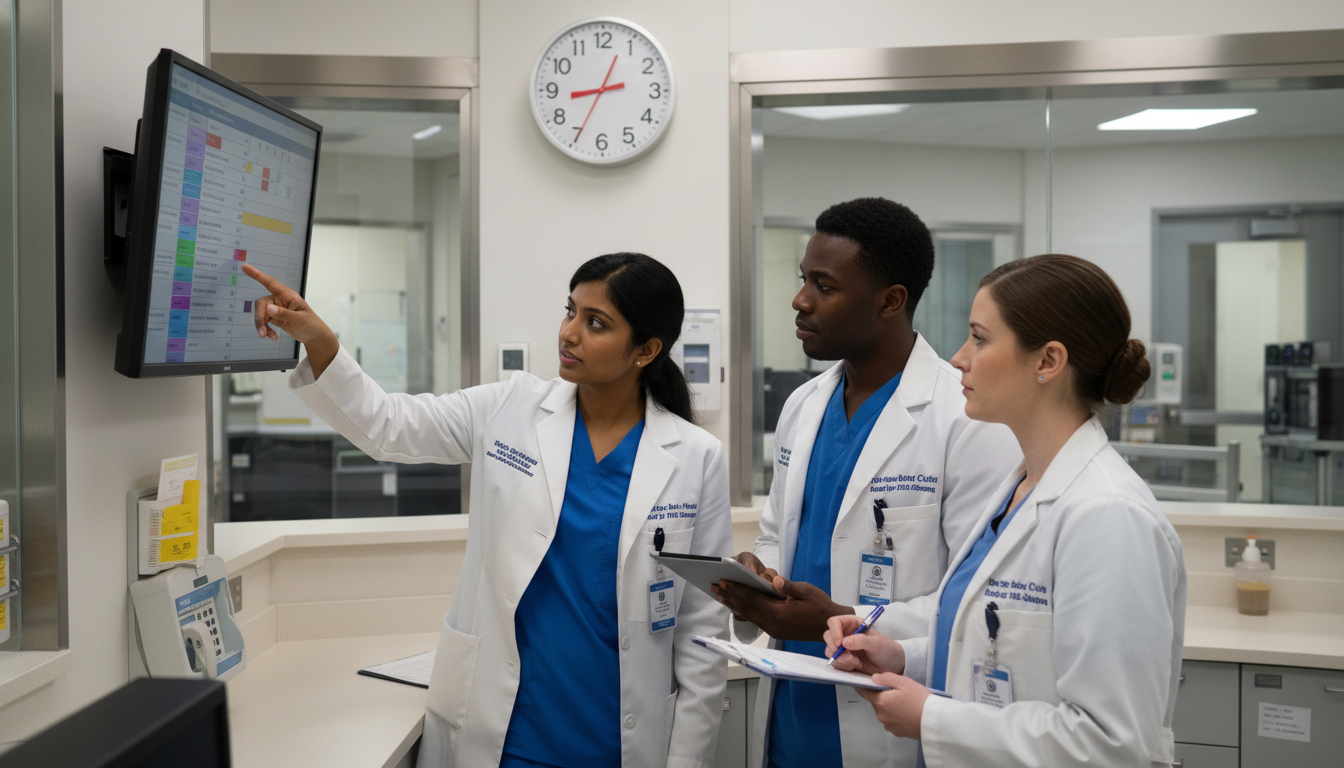
Understanding the Transitional Year and Why Clinical Rotations Matter
A transitional year residency (TY program) is often described as a “bridge year”—but it is far more than a holding pattern before advanced training. For many applicants heading into specialties like radiology, anesthesiology, dermatology, PM&R, neurology, or radiation oncology, this year establishes your professional reputation, clinical confidence, and core skills across multiple disciplines.
Unlike categorical programs that focus on a single specialty, a TY program combines diverse rotations—internal medicine, emergency medicine, surgery, ambulatory care, and electives. This makes excelling in clinical rotations especially critical: you’re expected to adapt quickly, perform well in unfamiliar settings, and demonstrate that you are a dependable, teachable physician ready for your advanced specialty.
During your transitional year:
- Clinical performance may influence letters of recommendation for fellowships and jobs.
- Word-of-mouth reputation spreads quickly among faculty and across departments.
- Strong performance in third year rotations and clerkship success during medical school helps, but expectations rise once you’re a resident.
Think of your transitional year as a capstone to your medical education and an on-ramp to independent practice. This guide outlines practical strategies to excel across clinical rotations—so you leave your TY program with strong skills, respect from colleagues, and confidence entering your chosen specialty.
Laying the Foundation: Core Principles for Excelling in Rotations
Regardless of the service—wards, ICU, ED, or ambulatory—certain behaviors consistently distinguish top residents. These principles apply across all clinical rotations and set the standard of professionalism expected in a TY program.
1. Reliability Is Your First Superpower
Attendings and senior residents will tell you the same thing: they’d rather work with a reliable intern than a brilliant but inconsistent one.
Concrete ways to demonstrate reliability:
- Be early, not just on time. Aim to arrive 10–15 minutes before sign-out or rounds to review overnight events, check labs, and update your patient list.
- Do what you say you’ll do. If you promise to follow up on a test, talk with a consultant, or call a family, document it and close the loop before you go home.
- Anticipate next steps. Don’t wait to be told to recheck a potassium, follow up blood cultures, or schedule a follow-up—learn the rhythms of common diagnoses and act proactively.
Clinical example:
On an inpatient medicine rotation, you notice a patient with new AKI on morning labs. Before rounds, you quickly review meds, I/Os, and vitals, hold nephrotoxic agents in the EMR (per protocol), and prepare a succinct summary and plan for the attending. You’ve anticipated the concerns and saved the team time.
2. Professionalism in Every Interaction
In a transitional year residency, you move between services; reputation follows you. Professionalism includes:
- Respecting everyone—nurses, techs, case managers, environmental services, consultants, and classmates.
- Owning your mistakes. If you missed a lab result or miscommunicated, acknowledge it, correct it, and describe how you’ll prevent recurrence.
- Maintaining boundaries. Keep social media, texting habits, and personal conversations aligned with hospital policies and patient privacy.
Small habits matter: responding promptly to pages, speaking calmly under pressure, and avoiding negative gossip contribute strongly to how others perceive you.
3. Maintain a Learning Mindset
Even if you feel “over-rotated” after third year rotations and sub-internships, residency rotations are different—more responsibility, less hand-holding.
- Ask yourself on every shift: “What did I learn today that I can apply tomorrow?”
- Keep a brief daily learning log (even 5 minutes) with:
- One interesting case or diagnosis
- One management pearl or guideline
- One skill or habit to improve
This not only accelerates your growth, it also strengthens your knowledge base for in-training exams and board preparation.

Service-Specific Strategies: Excelling Across Core Rotations
Each rotation in a TY program has its own workflow, culture, and expectations. Understanding these nuances helps you adapt quickly and consistently perform well.
Inpatient Medicine: Becoming the Patient’s Primary Physician
Internal medicine is often the backbone of a transitional year, with multiple weeks or months on ward teams.
Key goals on inpatient medicine:
- Learn to manage common diagnoses (CHF, COPD, pneumonia, DKA, sepsis, cirrhosis).
- Hone your daily management routines.
- Build skills in complex discharge planning and communication.
Clinical rotations tips for medicine:
Master the pre-round.
- Review vitals, I/Os, new labs, imaging, and overnight notes.
- See each patient briefly before rounds to assess symptoms, exam changes, and concerns.
- Update your problem list and prioritize issues before presenting.
Presentations: concise, organized, and plan-focused.
Use a problem-based structure:- Start with “one-liner” (age, key comorbidities, hospital day, main problem).
- Focus only on changes in the subjective/objective.
- Present assessment and plan by problem, with clear next steps.
Proactively coordinate care.
- Anticipate needs: PT/OT, social work, DME, home health services.
- Call families early in the day when complex decisions or discharges are planned.
Leverage nurses as allies.
- Ask for their input at the bedside.
- Address nursing concerns promptly (pain control, mobility, delirium risk).
Your aim is to function as the “go-to” intern for your team—someone both patients and staff see as dependable and organized.
Emergency Medicine: Developing Rapid Assessment and Prioritization
Many transitional year residencies include mandatory emergency medicine blocks. The ED environment emphasizes speed, triage, and succinct decisions.
Keys to excelling in ED rotations:
Learn a structured, rapid H&P.
Use frameworks like:- “OPQRST” for pain, “AMPLE” histories, and system-based ROS only as relevant.
- Quick but targeted physical exams aligned with the chief complaint.
Present with focused differentials.
For chest pain: ACS, PE, dissection, pneumothorax, GERD, musculoskeletal.
Briefly mention why each is more or less likely and which tests you’ll order.Be procedure-ready.
Notify seniors when:- A laceration needs repair
- An abscess needs I&D
- A patient may need central access, intubation, or procedural sedation
Close the loop on dispositions.
- Know who can go home safely and with what return precautions.
- For admissions, provide concise sign-out to the admitting team.
The ED is a high-yield environment for transitional year residents to build confidence in acute care and decision-making under uncertainty.
Surgery and Surgical Subspecialties: Owning Your Role on the Team
Even if you’re headed into radiology or dermatology, you will encounter surgery or procedural services during your TY program. Expectations focus on teamwork, reliability, and procedural fundamentals.
High-yield habits for surgical rotations:
Know your patients cold.
- Diagnosis, indication for surgery, key pre-op labs/imaging.
- Post-op day, drains, lines, diet status, DVT prophylaxis, pain plan.
Master pre-op and post-op routines.
- Ensure consents are signed and documented.
- Follow up on post-op orders, vitals, and early complications.
In the OR: be present and prepared.
- Review the case and anatomy beforehand.
- Introduce yourself to the OR team and help set up (positioning, prepping).
- Ask where you should stand, when you may assist, and what the key steps are.
Show initiative without overstepping.
- Volunteer to remove staples/sutures, change dressings, or update families.
- Read about typical post-op complications and discuss management with your senior.
Surgical rotations are often physically demanding. Good hydration, ergonomics, and pre-emptive rest make it easier to stay sharp and engaged.
ICU or Step-Down Units: Deepening Your Critical Care Skills
Some transitional year residencies include ICU rotations. These are intense but transformative experiences.
Focus on:
- Understanding ventilator basics (settings, modes, troubleshooting).
- Managing sepsis, shock, ARDS, and multi-organ failure.
- Collaborating with respiratory therapy, nursing, and pharmacy.
Strategies:
- Before rounds, quickly review each patient’s vasopressor requirements, ventilator settings, I/Os, labs, microbiology, and sedation.
- Use systematic frameworks (e.g., “FASTHUG BID” or “ABCDE” for ICU patients).
- Practice giving crisp, data-driven presentations and updating problem lists daily.
These skills translate strongly into any advanced specialty with critically ill patients.
Ambulatory and Elective Rotations: Efficiency and Patient-Centered Care
Ambulatory blocks and electives are ideal for refining outpatient skills, which are often under-emphasized compared to inpatient work.
Clerkship success in ambulatory settings—now as a resident:
Work on time management.
- Learn to complete notes in real time or shortly after visits.
- Use templates and smart phrases effectively while keeping notes meaningful.
Sharpen your counseling skills.
- Practice concise explanations of chronic disease management (HTN, DM, hyperlipidemia).
- Use teach-back techniques to ensure patient understanding.
Think longitudinally.
- Arrange appropriate screening, follow-up intervals, and chronic disease surveillance.
- Coordinate with specialists and primary care to avoid duplicative testing.
Ambulatory rotations are also a chance to tailor learning toward your future specialty—for example, focusing on preoperative assessments if you’re headed into anesthesiology, or neurological complaints if you’re entering neurology.
Day-to-Day Performance: Habits That Separate Top Residents
Transitioning from medical school to a transitional year residency is as much about workflow mastery as knowledge. These daily habits significantly boost your effectiveness.
Organizing Your Day and Your Patient List
A well-organized patient list is your daily roadmap.
- Track: diagnosis, hospital day, DVT prophylaxis, lines/drains, key labs, dispo status.
- Mark “must-do today” tasks (e.g., “call cardiology,” “arrange SNF,” “repeat troponin”).
- Re-prioritize at midday as new labs, imaging, or consult recommendations come in.
Aim to touch each task only once—when you see a new lab that changes management, act and document immediately rather than deferring.
Documentation That Works for You (and Your Team)
Effective notes balance thoroughness and efficiency:
- Use problem-based assessment and plan; orient each problem with a brief status update.
- Avoid copying forward outdated data; reconcile labs and problem lists daily.
- Make your plan understandable to the night team and consultants who may read your note.
Ask seniors or attendings to review a sample note and provide feedback early in each rotation.
Communication and Handoffs
Strong handoff skills are a hallmark of an excellent resident:
- Use standardized frameworks (“I-PASS” or similar).
- Highlight active issues, contingency plans (“If BP > X, do Y”), and pending results.
- Keep sign-out updated throughout the day, not just at the end of your shift.
Clear communication reduces errors and builds trust between teams.

Growing as a Clinician: Learning, Feedback, and Career Alignment
A transitional year residency is also a powerful professional development phase. You’re not only providing patient care—you’re shaping the physician you will be in your advanced specialty.
Turning Rotations into Deliberate Practice
Instead of passively “getting through” each block, approach rotations with targeted goals:
At the start of each rotation, ask yourself:
- What 2–3 clinical skills do I most want to improve?
- What procedures are realistic to practice here?
- What knowledge gaps (e.g., managing sepsis, ventilators, anticoagulation) can I close?
At the midpoint, review:
- Am I meeting those goals?
- What feedback have I received, and how can I apply it?
Keep a running list of “learning priorities” and bring challenging cases back to independent study or group discussions.
Seeking and Using Feedback Effectively
Attendings and senior residents are more likely to give meaningful feedback when you:
Ask specific questions:
“Could you give me feedback on my ICU presentations and diagnostic reasoning?”
“How can I structure my ED note better for clarity and billing?”Receive feedback non-defensively:
- Listen fully before responding.
- Ask clarifying questions.
- Summarize what you heard and propose a specific change.
Follow up:
“I tried the presentation style you suggested yesterday. Does this seem more focused?”
Over time, this makes you more coachable and accelerates your growth.
Connecting Your TY Rotations to Your Future Specialty
Even if you’re headed into a field that’s less inpatient-heavy, your TY experiences are highly relevant:
- Radiology: Focus on understanding clinical indications for imaging, contrast decisions, and how imaging changes management.
- Anesthesiology: Prioritize hemodynamics, fluid management, perioperative medicine, and airway considerations during surgery and ICU rotations.
- Dermatology: Use inpatient consults and clinic time to refine dermatologic descriptions and differential building.
- PM&R: Pay attention to functional status, mobility, and discharge planning; learn from PT/OT recommendations.
- Neurology: Emphasize neuro exams, stroke codes, and common inpatient neurology consults.
Frame your learning accordingly and let attendings know your career plans; they can tailor teaching to your future specialty and potentially write stronger, more targeted letters of recommendation.
Well-Being, Resilience, and Sustainable Excellence
Excelling in clinical rotations doesn’t mean burning out. Sustaining performance over an entire transitional year residency requires attention to energy, mindset, and boundaries.
Managing Cognitive Load and Fatigue
Common strategies:
- Micro-breaks: Even a 2-minute reset between tasks (deep breathing, brief stretching, stepping outside) can improve clarity and mood.
- Batching tasks: For example, place all non-urgent calls to families or consultants in defined windows to maintain focus.
- Cognitive offloading: Use checklists, note templates, and reminders instead of relying solely on memory.
When you’re tired, lean more on structured tools and double-check critical decisions, especially medication orders and discharges.
Building a Support System
Residency is a team sport:
- Connect with co-residents in your TY program; share quick tips for specific rotations.
- Identify at least one “go-to” senior or faculty mentor.
- Normalize discussing stress, imposter feelings, or difficult cases—peer support matters.
If you feel overwhelmed or notice signs of burnout, speak early with program leadership or wellness resources. Protecting your well-being is part of being a responsible physician.
FAQs: Transitional Year Clinical Rotations
1. How is performing in transitional year clinical rotations different from medical school clerkships?
As a resident, you carry more responsibility and are expected to be the primary point of contact for patient care. While third year rotations and clerkship success demonstrate potential, residency adds expectations around independent decision-making, task completion, handoffs, and leadership on the team. You’re evaluated less on basic knowledge and more on reliability, judgment, efficiency, and your ability to function as a physician rather than a student observer.
2. What are the most important rotations to focus on in a TY program if I’m going into a non-internal medicine specialty?
You should still take internal medicine seriously—it shapes your clinical reasoning and comfort with acutely ill patients. Beyond that, emphasize:
- ICU for critical thinking and hemodynamic management.
- Emergency medicine for rapid assessment and stabilization skills.
- Rotations most aligned with your future specialty (e.g., anesthesia-related electives, neurology, PM&R, dermatology clinic).
Strong performance across these rotations provides a broad foundation you’ll draw on repeatedly in advanced training.
3. How can I stand out to attendings during busy services without appearing pushy?
Be consistently prepared, reliable, and proactive in patient care rather than self-promotion. Volunteer for appropriate tasks (procedures, family meetings, discharge summaries), ask focused questions, and show that you reflect on feedback. A practical approach is: quietly do excellent work for a few days, then ask your attending, “Is there anything specific I can do to be more helpful to the team?” This shows initiative and humility simultaneously.
4. What should I prioritize studying during my transitional year to support clinical rotations?
Anchor your studying to what you’re seeing clinically. For example:
- On medicine wards: guidelines for CHF, COPD, pneumonia, sepsis, diabetic emergencies, anticoagulation.
- In the ICU: ventilator basics, shock management, sedation/analgesia, delirium.
- In the ED: risk stratification tools (HEART, Wells, PERC), common complaint algorithms (chest pain, abdominal pain, headache).
Aim for small, daily study sessions (15–30 minutes) focused on recent cases. This approach is more sustainable and yields better retention than sporadic, large study blocks.
Excelling in clinical rotations during your transitional year residency is less about innate brilliance and more about consistent habits, thoughtful reflection, and genuine teamwork. By mastering these skills now, you’ll not only succeed in your TY program but also enter your advanced specialty with a solid clinical foundation, strong professional reputation, and the confidence to care for patients at a higher level.