Telemedicine has moved from a niche service to a core part of modern healthcare—and transitional year residency is uniquely positioned at that intersection. If you’re in (or applying to) a Transitional Year (TY) program and wondering how to leverage telehealth for your career, you’re asking the right question at the right time.
This guide walks you through how telemedicine fits into a transitional year, how to build skills that matter for remote physician work, and what telemedicine jobs realistically look like for trainees, recent graduates, and attendings.
Understanding Transitional Year and Its Link to Telemedicine
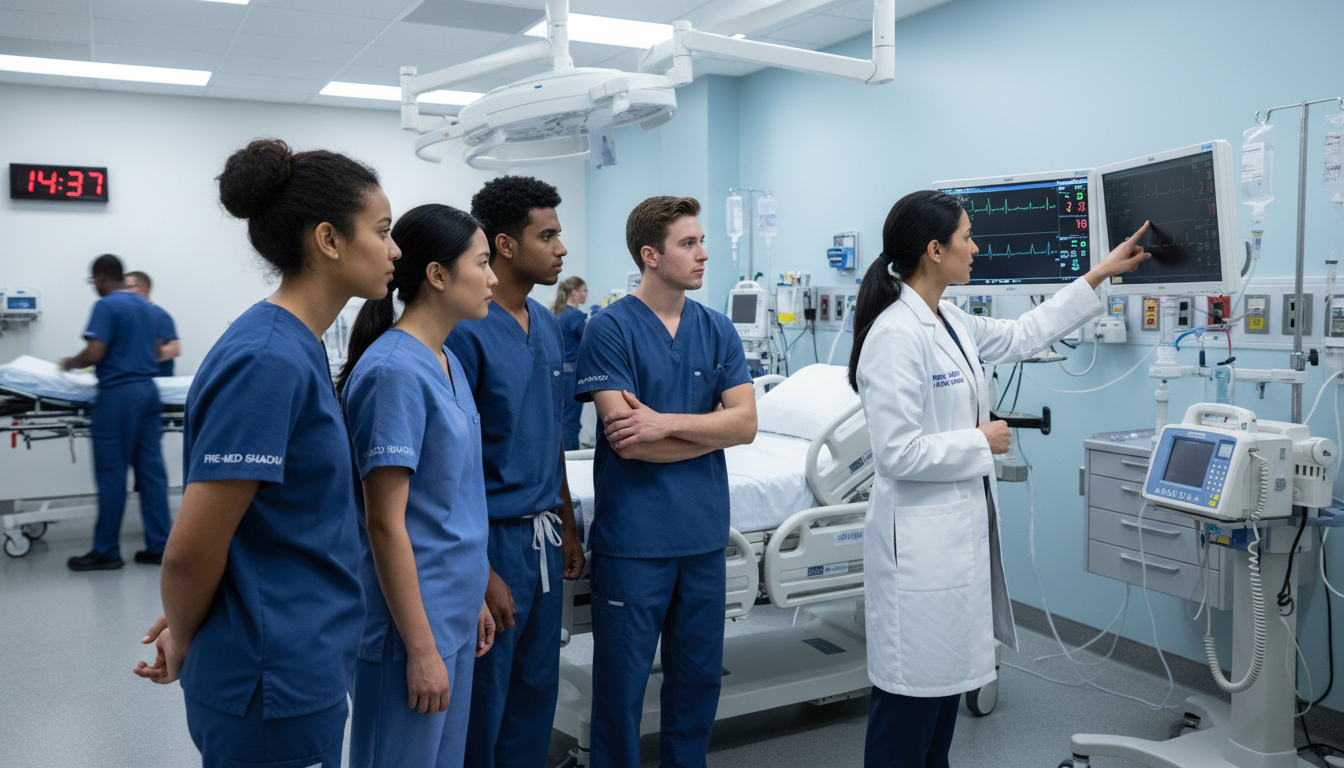
Transitional Year (TY) residency is a one-year, broad-based clinical training program that fulfills the PGY-1 requirement for multiple specialties (e.g., radiology, anesthesiology, dermatology, PM&R, neurology, ophthalmology). It typically includes:
- Rotations in internal medicine and/or family medicine
- Emergency medicine
- Surgery or surgical subspecialties
- Electives across various specialties
- Occasionally ambulatory clinic blocks
Why TY Residents Are Well‑Suited for Telemedicine
Telemedicine is fundamentally about:
- Managing undifferentiated complaints
- Efficient triage and decision-making
- High-yield communication and documentation
- Comfort with technology and remote workflows
Transitional year training naturally emphasizes:
- Broad exposure to common acute and chronic conditions
- Cross-specialty communication and coordination
- Systems-based practice and efficiency
- Adaptability to different clinical environments
This breadth gives you a strong foundation for many forms of telehealth practice—especially high-volume, low-acuity telemedicine jobs such as urgent care and primary care–style video visits.
Telemedicine in the Post‑Pandemic Era
Post–COVID-19, telehealth is no longer an experiment:
- Major systems now have established virtual care departments
- Many outpatient clinics blend in-person and telehealth visits
- States and payers have clearer coverage and billing rules
- Patients increasingly expect virtual options for care
For a TY resident, this means:
- More chances to participate in telehealth electives or projects
- Growing demand for physicians comfortable with virtual care tools
- A plausible pathway to future hybrid or fully remote physician work, once fully licensed and board certified
Types of Telemedicine Roles Relevant to Transitional Year
Not all telemedicine jobs are created equal—and your options will vary depending on your training level, specialty path, and licensure status. Below is a realistic landscape, focusing on what’s most relevant to someone in or near a transitional year program.
1. Telehealth Urgent Care and “On‑Demand” Care
This is one of the most common telehealth roles for generalists and some specialists.
Typical visit types:
- Upper respiratory infections, bronchitis, sinusitis
- UTIs in otherwise healthy patients
- Rash/skin concerns (with video/photo)
- Medication refills (when appropriate)
- Mild GI complaints (nausea, diarrhea)
- Simple eye complaints, minor injuries, and triage questions
Who usually does this work?
- Board-certified FM, IM, EM physicians
- Sometimes Med-Peds or urgent care physicians
- Occasionally APPs supervised by physicians
Relevance for TY residents:
- Your broad-based training directly mirrors these complaint categories.
- You’ll become skilled in rapid focused histories, safety-netting, and triage—core telehealth skills.
- While you typically cannot independently hold these telemedicine jobs during residency, you can build the skillset now and move into such roles more easily after finishing your full residency and licensing steps.
2. Chronic Disease Management and Virtual Primary Care
Organizations are increasingly building virtual-first primary care practices.
Clinical focus:
- Hypertension, diabetes, hyperlipidemia
- Depression/anxiety (often in collaborative care models)
- Asthma/COPD maintenance
- Lifestyle medicine and prevention counseling
Who usually does this work?
- FM and IM attendings (often with outpatient focus)
- Sometimes subspecialists in a related domain (e.g., endocrinology for diabetes-heavy panels)
Relevance for TY residents:
- Your internal medicine and ambulatory rotations are highly applicable.
- Knowledge of guidelines, medication titration, and follow-up intervals translates directly into telehealth chronic care.
- Participating in QI or population health projects during your TY year can position you for future remote physician work in chronic disease management.
3. Teledermatology, Teleradiology, and Other Image‑Driven Fields
These are typically asynchronous telemedicine roles—reviewing images and providing consults or reads.
- Teledermatology: Reviewing photos with brief histories; issuing differential diagnoses and management recommendations.
- Teleradiology: Reading imaging studies remotely, often for multiple hospitals or overnight coverage.
- Teleophthalmology: Retinal scans, diabetic eye screening, image-based consultations.
Who usually does this work?
- Board-certified subspecialists after completing full specialty training.
Relevance for TY residents:
- Many future radiologists, dermatologists, ophthalmologists, and other specialists begin with a transitional year.
- Understanding telehealth workflows and documentation now will be a major advantage in those tech-heavy, remote-friendly specialties later.
- You can use electives to shadow or study how your planned specialty is integrating telemedicine.
4. Behavioral Health and Collaborative Telepsychiatry
The mental health care gap and push for remote services has created:
- Virtual therapy and psychiatric med management
- Collaborative care models with primary care and psych prescribers
- Consultation-liaison psychiatry via telehealth in smaller hospitals
Who usually does this work?
- Psychiatrists, psychologists, licensed therapists
- Some FM/IM physicians with mental health focus (e.g., collaborative care)
Relevance for TY residents:
- You’ll frequently manage depression, anxiety, and substance use disorders across rotations.
- Learning safe prescribing of SSRIs, SNRIs, and basic psychotropic agents is critical for telehealth primary care roles.
- If you’re headed into psychiatry after a transitional year, early comfort with virtual patient interviewing is a big plus.
5. Triage and “Nurse Line Plus Physician Oversight” Models
Health systems and insurers often run care lines that include:
- Nurse-led triage protocols
- As-needed physician input, brief consults, or prescription approvals
- After-hours coverage for primary care practices
Relevance for TY residents:
- You’ll use similar triage skills during night float, cross-cover, and ED rotations.
- Learning structured telephone triage and clear documentation is highly applicable to future telehealth physician roles.
Building Telemedicine Skills During Your Transitional Year
Even if you’re not yet eligible for independent telehealth employment, you can deliberately build the skills that will make you highly competitive for future telemedicine jobs.
1. Clinical Skills Optimized for Remote Care
A. Focused, High‑Yield History Taking
In telehealth, you don’t have the safety net of a full physical exam. You need sharp history-taking.
During your TY rotations, practice:
- Asking clarifying questions that narrow differentials quickly
- Using structured approaches (e.g., OLDCARTS for pain, OPQRST, or advanced symptom-specific frameworks)
- Eliciting red flags explicitly (“Have you had any chest pain with this shortness of breath?”)
B. Visual and Verbal “Exam Substitutes”
You’ll often rely on:
- Patient-directed maneuvers: “Press gently here,” “Can you bend your neck like this?”
- Gait observation, speech, work of breathing via video
- Descriptions of rashes, swelling, or wounds if image quality is limited
Use your TY year to think consciously about what you must visualize in a complaint, and what can safely be deferred to in-person follow-up.
C. Strong Differential Diagnosis and Triage Judgment
Remote physicians must:
- Decide what’s safe to manage virtually
- When to send someone to urgent care or the ED
- When to request immediate imaging or labs
On call, in clinic, and in the ED, mentally ask yourself: “Would I be comfortable making this decision virtually with only history and limited visuals?” This mindset prepares you directly for telemedicine careers.
2. Communication Techniques Tailored to Remote Encounters
Telehealth magnifies communication strengths and weaknesses.
Key habits to build now:
- Verbal empathy: Patients can’t see your full body language. Say what you mean: “I can hear how frustrating this has been.”
- Expectation setting: “In a video visit, here’s what I can and can’t safely do today.”
- Safety-netting: Clear instructions about when to seek in-person or emergency care.
- Teach-back method: Ask patients to repeat back the plan in their own words.
Practice these skills in every patient interaction during your transitional year—they are equally valuable in in-person and virtual care.
3. Documentation and Risk Management
Telemedicine documentation must explicitly show:
- Why a virtual visit was appropriate
- Key negatives and red flags that were assessed
- Clear plan and return precautions
During your TY program, develop a documentation style that includes:
- Concise but detailed history and ROS focused on the presenting complaint
- Pertinent negatives tailored to the risk profile
- Clear rationale for your decisions (e.g., why you did not send the patient to the ED)
Ask attendings and chief residents for feedback specifically on your risk communication and documentation; this translates directly into safe telehealth practice and protects you medically and legally.
4. Technical and Workflow Proficiency
Telemedicine is not just clinical—it’s also about using tools efficiently.
During transitional year:
- Volunteer to help troubleshoot clinic telehealth workflows if your program uses virtual visits.
- Learn common platforms (Epic-integrated video, Zoom for Healthcare, Doximity, Amwell, Teladoc, etc., depending on your institution).
- Observe how attendings structure virtual clinics: scheduling, pre-visit chart prep, post-visit tasks.
These technical and workflow skills will make you far more attractive to employers seeking experienced telehealth physicians later.
Strategically Using Your Transitional Year to Prepare for a Telemedicine‑Friendly Career
Telemedicine opportunities will ultimately depend on your final specialty, but your transitional year is where you can deliberately set yourself up for success.
1. Align Electives With Telemedicine‑Heavy Specialties
Certain specialties lend themselves particularly well to remote physician work, including:
- Psychiatry
- Radiology
- Dermatology
- Pathology
- PM&R (especially pain and rehab consults)
- Endocrinology
- Allergy/Immunology
- Sleep medicine
If your post-TY path includes one of these, consider:
- Elective rotations in that specialty with a telehealth component
- Outpatient-heavy blocks that expose you to chronic disease management and remote-friendly workflows
- Shadowing any telehealth clinics your institution runs
2. Seek Out Telehealth‑Related Projects and Leadership Roles
Program directors and future employers value concrete evidence of your interest and capability.
Consider:
Quality improvement projects:
- Reducing no-shows via telehealth follow-up
- Optimizing documentation templates for virtual visits
- Standardizing triage criteria for virtual vs in-person care
Research or scholarly work:
- Studying patient satisfaction with telemedicine in a specific clinic
- Evaluating outcomes of virtual vs in-person follow-up for a condition
- Publishing commentary on telehealth in your chosen specialty
Educational roles:
- Creating a short resident guide to telemedicine best practices
- Leading a noon conference on virtual visit etiquette and safety
These activities both strengthen your CV for residency applications beyond TY and demonstrate readiness for telemedicine practice later.
3. Networking With Telehealth‑Engaged Faculty
Identify faculty who:
- Run telemedicine clinics
- Hold leadership roles in digital health or virtual care departments
- Participate in remote consulting models (e.g., eConsults, electronic curbside consults)
Ways to engage:
- Ask to observe their telehealth sessions if your institution allows it.
- Request mentorship on digital health career pathways.
- Seek their input on research or QI ideas.
Strong mentorship is invaluable when later pursuing telehealth physician or hybrid roles.
Telemedicine Jobs After Residency: What Transitional Year Alumni Can Expect
Once you complete your full residency (beyond the transitional year) and secure board certification and state licensure, your telemedicine options expand widely. Here’s how your TY foundation can translate into real-world remote physician work.
1. Telehealth as a Supplement to Traditional Practice
Many physicians use telemedicine to:
- Add extra shifts for supplemental income
- Offer evening or weekend virtual visits to their existing patient panel
- Work locum tenens–style remote assignments
Examples:
- A former TY + FM graduate working 0.8 FTE in a clinic and picking up 2–4 telehealth urgent care shifts per month.
- An internist seeing virtual chronic disease follow-ups on Fridays from home.
Your broad clinical base from transitional year, especially if followed by a primary care or EM residency, aligns perfectly with these telemedicine jobs.
2. Full‑Time Telehealth Physician Roles
Growing numbers of physicians work primarily or exclusively remotely as a:
- Telehealth urgent care physician
- Virtual primary care doctor for a health system or digital health startup
- Subspecialty consultant in an image- or data-heavy field
Advantages:
- Location flexibility (within licensure constraints)
- No commuting; often more predictable scheduling
- Potentially higher control over work environment
Considerations:
- Need multiple state licenses for some national telehealth platforms
- Potential isolation from in-person team culture
- Must be highly self-directed and comfortable with digital workflows
Your transitional year experience balancing inpatient, outpatient, and cross-specialty communication makes you well prepared to handle the variety and ambiguity of remote physician work.
3. Telemedicine Within Academic and Leadership Careers
If you’re interested in academic medicine, telehealth experience can be an asset.
Possible roles:
- Director of virtual care in a department
- Telehealth curriculum leader for residents and students
- Researcher in digital health outcomes, access, or health equity
Your early exposure during transitional year, plus any projects you initiate, can later evolve into leadership in residency program design and institutional telemedicine strategy.
4. Telehealth and Work–Life Balance
For many transitional year graduates, especially those balancing family responsibilities or dual-career households, telehealth is attractive as a way to:
- Reduce commuting and on-site overtime
- Gain flexibility in scheduling (particularly for part-time roles)
- Move geographically without completely changing employers (if telehealth contracts allow)
That said, telemedicine is still demanding clinical work, not an “easy” job. Remote physicians must manage:
- High patient volumes
- Emotional fatigue from screen-based encounters
- Continual adaptation to evolving regulations and platform changes
Your transitional year rotations in busy inpatient and ED settings will help you develop resilience and time management skills critical for sustaining long-term remote practice.
Practical Action Plan for TY Applicants and Residents Interested in Telemedicine
To convert interest into a concrete career advantage, follow a structured approach.
Step 1: During the Residency Application and Interview Phase
When researching transitional year residency programs, look for:
- Ambulatory rotations with telehealth integration
- Mention of digital health, virtual care, or remote monitoring in program descriptions
- Affiliation with health systems known for telemedicine innovation
During interviews, ask specific questions:
- “Do residents participate in telehealth clinics or virtual follow-up visits?”
- “Are there opportunities for QI or research related to telemedicine?”
- “How did your program adapt telehealth workflows during and after COVID?”
Programs with thoughtful answers are more likely to support your telemedicine interests.
Step 2: Early in Your Transitional Year
- Identify faculty and administrators involved in telehealth.
- Ask your chief residents about telehealth electives or continuity clinics.
- Start a small project if formal options are limited—for example, creating a resident telehealth tip sheet or proposing a simple workflow improvement.
Step 3: Mid-Year – Build Evidence and Skills
- Keep a running list of cases where you used “telemedicine thinking” even in person (triage, remote-safe vs unsafe scenarios).
- Present a brief talk at morning report or noon conference about telehealth best practices in your specialty of interest.
- If possible, get involved in data collection for any ongoing telehealth initiatives.
Step 4: Transitioning to Categorical Residency and Beyond
- In your applications to categorical programs, highlight:
- Specific telemedicine experiences (projects, electives, QI)
- Skills gained (virtual communication, documentation, workflow, research)
- Seek categorical programs that continue to offer telehealth participation.
- As you approach graduation from your full residency:
- Explore telemedicine companies and health systems offering remote physician work.
- Clarify requirements regarding board certification, state licensure, malpractice coverage, and expected case mix.
This staged approach lets you grow from a TY resident with interest in telehealth into a competitive candidate for a telehealth physician role.
FAQs: Telemedicine Careers and Transitional Year Residency
1. Can I work telemedicine jobs during my transitional year?
In most cases, no—not as an independent attending. During your transitional year residency you are still in training, practicing under supervision, and usually not fully licensed to practice independently. Some programs may allow supervised telehealth encounters as part of rotations, but true independent telemedicine jobs generally require completion of residency, full licensure, and often board certification.
2. Which specialties after a transitional year are best for a telehealth-focused career?
Family medicine, internal medicine, and emergency medicine offer the broadest access to telehealth urgent care and virtual primary care roles. Psychiatry, radiology, dermatology, pathology, endocrinology, and sleep medicine are also highly telehealth-friendly. The transitional year itself doesn’t define your telemedicine future—but it’s an excellent springboard into these fields.
3. How can I talk about telemedicine interest in my TY program interviews without sounding unfocused?
Frame telemedicine as one dimension of your broader interest in patient access, systems-based practice, or digital health quality improvement. For example: “I’m excited about how virtual care can expand access and improve continuity, and I’d like to be trained in both traditional and telehealth settings.” Emphasize that you still value core clinical training and see telehealth as a tool within that framework.
4. What concrete steps should I take now if I want a long-term telehealth physician career?
As a medical student or TY resident:
- Seek programs with telemedicine exposure.
- Get involved in QI or research projects focused on virtual care.
- Build strong generalist clinical skills, documentation, and communication habits.
- Network with faculty engaged in digital health.
During and after categorical residency: - Hone outpatient and triage skills.
- Obtain multi-state licensure if planning national telehealth work.
- Explore part-time telemedicine roles to build experience before going fully remote, if that’s your goal.
By intentionally aligning your transitional year experiences with the evolving world of telemedicine, you can position yourself for a flexible, impactful, and future-ready medical career.