



Understanding the Reality: Why Orthopedic Surgery Is Ultra-Competitive for US Citizen IMGs
Orthopedic surgery is one of the most competitive specialties in the Match—and that competitiveness is amplified when you are a US citizen IMG or an American studying abroad. Programs have more applicants than positions, and they tend to prioritize:
- US MD seniors
- US DO seniors (especially with strong ortho exposure)
- Select IMGs with exceptional metrics and strong US-based support
As a US citizen IMG, you are in a unique middle ground. You have the advantage of US citizenship (no visa issues) but the disadvantage of non–US MD training. That means every part of your application strategy has to be sharper, earlier, and more deliberate than an average orthopedics applicant.
Key realities to internalize:
- Orthopedic surgery is not “slightly competitive”—it is an ultra-competitive specialty.
- Matching ortho from an international school is possible but rare, requiring top-tier performance across multiple domains.
- Many applicants in your situation ultimately succeed via a multi-step path: preliminary or transitional year, research fellowship, or even matching into another specialty first and then re-applying.
This article will walk you through a realistic, high-yield strategy to maximize your chances at an orthopedic surgery residency as a US citizen IMG—and help you develop smart contingency plans.
Step 1: Build a Ruthlessly Strong Academic and Exam Profile
For ultra-competitive fields like orthopedic surgery or dermatology, numbers alone never guarantee success, but weak numbers almost guarantee failure. For a US citizen IMG, your academic profile must be indisputably strong to get past initial screening filters.
1.1 USMLE Strategy in the Era of Step 1 Pass/Fail
Step 1 is now pass/fail, but it still matters:
- You must pass Step 1 on the first attempt. Multiple attempts are often a hard screen-out for competitive specialty programs.
- A strong Step 1 foundation is still critical because it predicts how well you’ll do on Step 2 CK.
Actionable Steps:
- Treat Step 1 as if it were still scored—aim to master content, not just “pass.”
- Use high-yield resources (UWorld, NBME practice exams, Anki decks) and track your performance metrics.
- Take Step 1 at a time when you can comfortably exceed the passing threshold on multiple practice exams.
1.2 Step 2 CK: Your Primary Numerical Differentiator
For a US citizen IMG in orthopedic surgery, Step 2 CK is often the single most important standardized metric.
Competitive ortho programs will look for:
- High Step 2 CK scores, often well above national averages. While cutoffs vary, aiming for a score that would comfortably compete with US MD seniors (often 245+ in recent cycles) is prudent.
- First-attempt pass, with no remediation or irregularities.
Strategies to maximize Step 2 CK:
- Start UWorld early and track your performance by system.
- Study as if you’re targeting competitive specialties like matching derm or matching ortho; don’t aim for “just enough.”
- Schedule Step 2 CK so your score is available early in the application season (ideally before ERAS opens).
1.3 Class Rank, Honors, and Transcripts as an American Studying Abroad
International schools vary widely in grading and reputation. To compete in an ultra-competitive specialty:
- Aim for the top 10–20% of your class, if your school ranks.
- Pursue honors in clinical rotations, especially in surgery, orthopedics, and related fields (radiology, sports medicine, rehab).
- If your school uses narrative evaluations, request detailed, specific, achievement-focused comments from your clinical supervisors.
Practical Example:
- If your school allows electives in your 4th year, schedule orthopedics early and make it your strongest rotation—work harder, read more, and directly ask your attendings for feedback on how to improve in real time.

Step 2: Orthopedic Exposure, Sub-I’s, and Letters of Recommendation
Grades and scores get you past filters; clinical performance and letters make you stand out.
2.1 Maximize Orthopedic Exposure Early
To be credible as an ortho aspirant, you need meaningful, documented engagement with the field:
- Multiple orthopedics rotations (home institution if available, plus US-based).
- Participation in fracture conferences, journal clubs, and case discussions.
- Shadowing or assisting with cases at US hospitals whenever possible.
For an American studying abroad, this often means:
- Proactively reaching out to US orthopedic departments, especially those with a history of supporting IMGs.
- Leveraging any stateside connections: alumni, local ortho surgeons, family physicians with orthopedic contacts.
2.2 High-Yield US Rotations and Sub-Internships (“Away Rotations”)
Orthopedic surgery is a specialty where away rotations can make or break your application—especially as a US citizen IMG.
Key principles:
- Aim for 2–3 US ortho rotations at institutions that:
- Accept IMGs or have historically interviewed them.
- Have a culture of “audition rotations” where students are evaluated for residency spots.
- Treat each sub-I as a “month-long job interview.”
How to excel on an ortho sub-I:
- Be early, prepared, and visible: arrive before the residents, know the patients, anticipate needs.
- Learn common orthopedic conditions and basic radiograph interpretation before you arrive.
- Volunteer for tasks: write notes, call consults under supervision, help with discharge plans, check post-op patients.
- Ask for feedback mid-rotation: “I’m very interested in orthopedic surgery—what can I do in the next two weeks to perform at a residency level?”
2.3 Letters of Recommendation (LORs): The Ortho Core
For an ultra-competitive specialty, LORs can be decisive. You will want:
- 3–4 strong, specialty-specific letters, ideally:
- 2+ from US orthopedic surgeons who know you well.
- 1 from a surgical rotation director or subspecialist (e.g., trauma, sports, spine) who can comment on your OR and clinical skills.
- 1 from research or a mentor who can attest to your work ethic and intellectual curiosity.
Features of a powerful ortho LOR:
- Concrete examples: “She stayed late to help reduce fractures and followed up on every post-op patient.”
- Direct comparison: “Ranks in the top 5% of students I’ve worked with in the past decade.”
- Explicit endorsement: “I strongly recommend him for orthopedic surgery residency without reservation.”
Actionable Tip: Near the end of an outstanding rotation, ask directly:
“Do you feel you know me and my work well enough to write a strong letter of recommendation for orthopedic surgery?”
If there is any hesitation, consider asking someone else.
Step 3: Research and Academic Productivity Targeted to Orthopedics
Research is not optional for a US citizen IMG targeting orthopedic surgery—it is a key differentiator, especially when program directors triage large numbers of applicants.
3.1 What Kind of Research Matters Most?
For matching ortho, prioritize:
- Orthopedic surgery research in:
- Trauma
- Sports medicine
- Joint reconstruction
- Spine
- Hand or foot & ankle
- Clinical outcomes, retrospective studies, quality improvement, systematic reviews—anything that leads to posters, podium presentations, or publications.
If orthopedic-specific research is not immediately available, related fields can still help:
- Musculoskeletal radiology
- Physical medicine and rehabilitation with ortho overlap
- Sports medicine/family medicine with MSK focus
But your end goal should be to pivot into true ortho projects as soon as you gain a foothold.
3.2 Securing a Research Position as a US Citizen IMG
Because you trained abroad, you may not have built-in access to US research networks. Consider:
- Formal research fellowships in US orthopedic departments, often 1–2 years.
- Unfunded or volunteer research roles, if financially possible.
- Cold emailing faculty with:
- A concise introduction (US citizen IMG, long-term interest in orthopedic surgery).
- Attached CV highlighting any prior research or scholarly activity.
- A short, specific ask (e.g., “I would be grateful for the opportunity to assist with data collection, chart review, or manuscript preparation on any current orthopedic projects.”)
High-yield targets:
- Programs known to be more IMG-friendly.
- Faculty on ortho residency websites with titles like “Research Director” or “Fellowship Director.”
- Ortho trauma centers, academic institutions with high publication volume.
3.3 Building a Tangible Academic Portfolio
Your goal is not just “doing research,” but producing visible, citable output:
- Peer-reviewed publications (even as a middle co-author).
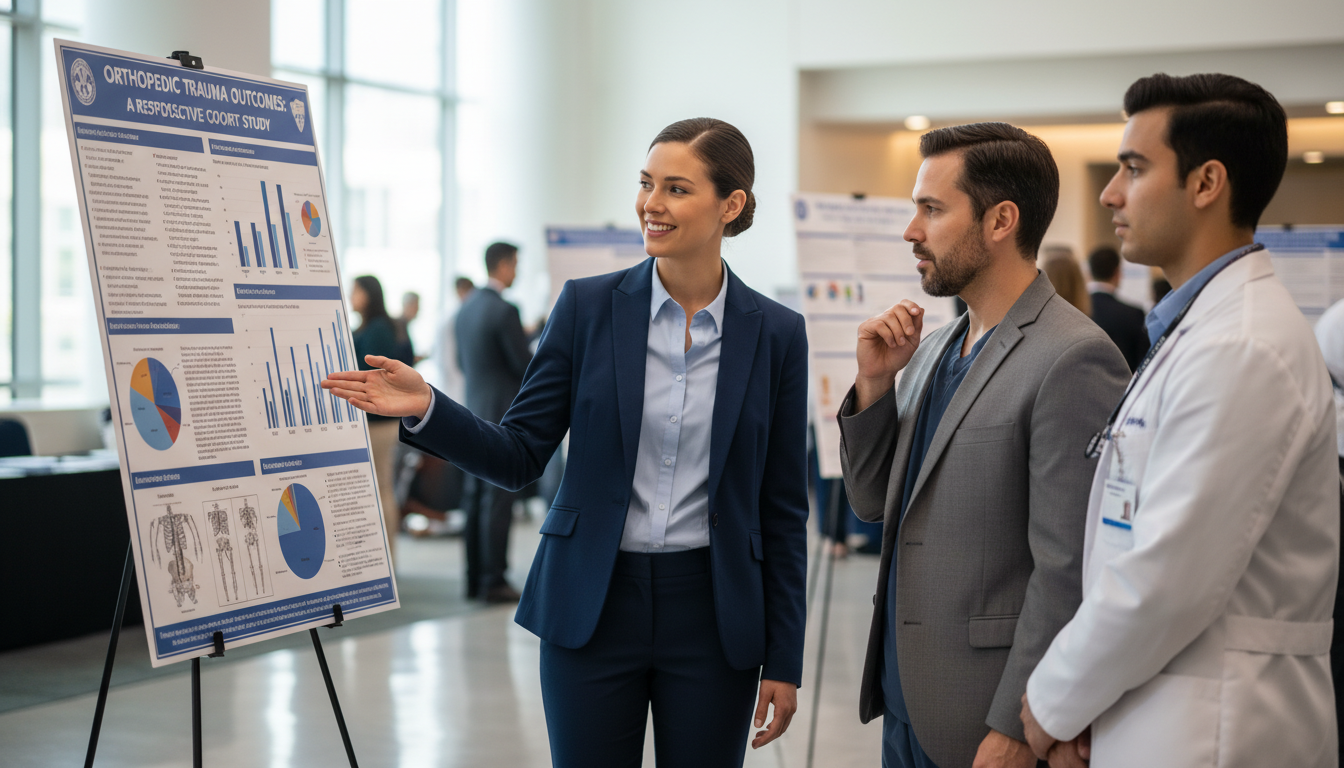
- National or regional presentations (AAOS, AOA, specialty meetings, state ortho societies).
- Posters or abstracts accessible via PubMed or conference proceedings.
Example of a strong early ortho portfolio:
- 1 first-author case report on a complex fracture.
- 2–3 co-authored retrospective studies on trauma outcomes.
- 2 posters and 1 podium presentation at a regional ortho meeting.
As an ultra-competitive specialty aspirant, the combination of a high Step 2 CK score and a credible research portfolio can help compensate for the IMG label.
Step 4: Strategic Application Planning and Program Targeting
Orthopedic surgery requires a strategic, not just broad, application approach for US citizen IMGs.
4.1 Building a Realistic Ortho Program List
You will likely need to apply very broadly (60–80+ programs), but not randomly. Consider:
- Programs with IMG-friendly history:
- Review current and recent residents.
- Look for any IMG or Caribbean grad—especially US citizen IMG—on their rosters.
- Geographic regions:
- Some regions (certain community or hybrid academic programs, some Midwest or South locations) may be more open to IMGs.
- Affiliation with your research or rotations:
- Programs where you did a sub-I, rotation, or research fellowship deserve top priority.
Categorize your list:
- “High reach” academic powerhouses (low probability as US citizen IMG unless you have a very strong profile).
- “Target” programs with some IMG precedent or medium-level competitiveness.
- “Safer” but still competitive community programs or newer programs where they may be more flexible.
4.2 Parallel Planning: Do You Need a Backup Specialty?
A crucial part of an ultra-competitive specialty strategy is having an honest conversation with yourself about risk.
For many US citizen IMGs targeting orthopedic surgery, a parallel or staged strategy is wise:
- Option A: Ortho-only first attempt, accept the risk of not matching, then consider research, prelim year, or re-application.
- Option B: Ortho + backup specialty (e.g., general surgery, internal medicine, PM&R, or transitional year), listing both on ERAS.
- Option C: Deliberate “Stepwise Path”:
- 1–2 years of US ortho research → improved profile → re-apply.
- Or prelim general surgery year with targeted ortho exposure → re-apply.
If you’re truly set on matching ortho and not, say, matching derm or another unrelated ultra-competitive field, your backup plan should be compatible with future ortho re-application:
- General surgery (particularly prelim positions) keeps you in an OR-heavy environment.
- PM&R with musculoskeletal focus may allow later transition to ortho-related fellowships (sports, spine), though direct transfer to ortho residency is rare.
4.3 Personal Statement and Application Framing
Your personal statement and ERAS entries should tell a coherent story:
Emphasize:
- Sustained interest in orthopedics over time.
- Concrete experiences: specific cases, mentors, and rotations.
- Your identity as a US citizen IMG who actively sought out US clinical and research experiences.
Avoid:
- Generic clichés (“I like working with my hands”) without depth.
- Overemphasizing income or lifestyle.
- Apologizing excessively for being an IMG; instead, show what you’ve done to bridge that gap.
Key theme to convey:
“I trained internationally, but I’ve worked deliberately to meet and exceed US standards in orthopedic surgery through research, US rotations, and exam performance.”
Step 5: Networking, Mentorship, and Interview Excellence
In an ultra-competitive specialty, who knows you often matters as much as what you’ve done.
5.1 Building a Mentor Network
As a US citizen IMG, your mentors may be your strongest advocates.
Aim for:
- 1–2 core ortho mentors in the US who:
- Know your work intimately.
- Are willing to email or call program directors on your behalf.
- Can advise on where to apply, how to rank, and whether you’re competitive.
How to cultivate these relationships:
- Be consistently reliable—respond promptly, meet deadlines, show up early.
- Ask for structured career meetings: “I’d love 20 minutes of your time to discuss my long-term goal of orthopedic surgery and get your honest assessment.”
- Follow up on projects and keep them updated on milestones (new publications, exam scores, rotations).
5.2 Professional Networking Tactics
Leverage:
- Conferences: AAOS, subspecialty meetings, regional ortho societies.
- Present if possible.
- Introduce yourself professionally to faculty whose work you know.
- Virtual grand rounds and webinars: Many departments continue to host online sessions you can join.
- Alumni networks from your medical school or prior US training.
You should be able to name:
- People who know you well enough to vouch for you.
- Departments where you’ve made a positive, lasting impression.
5.3 Interview Preparation for Ortho as an IMG
Once you secure interviews, your goal is to remove any lingering doubt: “Can this IMG perform at the same level as our US grads?”
Prepare for:
- Traditional questions:
- “Why orthopedic surgery?”
- “Tell me about a challenging case.”
- “What do you see yourself doing in 10 years?”
- Orthopedic-specific questions:
- Common fracture classifications.
- Basic principles of fracture management.
- Pre-op and post-op considerations for typical ortho procedures.
- IMG-specific questions:
- “Why did you choose to train abroad?”
- “How have you adapted to the US healthcare system?”
- “Why should we take a chance on an IMG when we have many US applicants?”
Interview excellence tips:
- Practice with mentors or mock interview programs; record yourself and review.
- Speak clearly about your journey as a US citizen IMG, focusing on resilience, adaptability, and deliberate effort to meet US standards.
- Prepare thoughtful questions about the program’s educational structure, call schedule, research support, and resident culture—especially any questions that show you understand the realities of orthopedic training.
Step 6: Contingency Planning and Long-Term Orthopedic Career Paths
Even with an excellent strategy, matching ortho from an IMG pathway is never guaranteed. A robust plan includes “what if” scenarios that still keep you in the orthopedic ecosystem.
6.1 If You Don’t Match on the First Attempt
As a US citizen IMG, the year after an unsuccessful ortho application should be maximally productive, not just “time off”:
Possible steps:
- Dedicated ortho research fellowship:
- Continue building publications and relationships.
- Possibly take on teaching responsibilities with students.
- Prelim general surgery year:
- Gain US clinical experience.
- Seek out orthopedic electives, call shifts, and networking.
- PM&R or other MSK-related specialties:
- Particularly if your long-term vision is broader musculoskeletal care rather than strictly OR time.
During this period, maintain:
- Ongoing contact with mentors and programs where you interviewed.
- Updated CV with every new paper, presentation, or project.
- Clarity about whether you will re-apply to ortho, shift to another surgical specialty, or pivot to a different field entirely.
6.2 Alternative but Related Career Paths
Your desire for an orthopedic-themed career does not have to be binary (match ortho vs. fail):
- PM&R with MSK and sports focus:
- Non-operative orthopedic care, interventional procedures, rehab leadership.
- Sports Medicine via Family Medicine or Internal Medicine:
- Team physician roles, clinic-based MSK practice, ultrasound-guided interventions.
- Radiology with MSK subspecialization:
- Musculoskeletal imaging, procedures like joint injections and biopsies.
- Non-clinical orthopedics-related roles:
- Industry (orthopedic devices, clinical research).
- Clinical trials, outcomes research, or healthcare consulting focused on orthopedic populations.
If matching derm or another ultra-competitive field is also on your radar, the same high-performance principles apply, but it’s generally better to commit deeply to one ultra-competitive specialty rather than split your focus.
FAQs: Ultra-Competitive Orthopedic Strategy for US Citizen IMGs
1. Is it realistic for a US citizen IMG to match into orthopedic surgery?
Yes, but it is uncommon and highly competitive. Realism is crucial: you must outperform many US MD and DO applicants on exams, research, and clinical performance. If you are a US citizen IMG with:
- A high Step 2 CK score
- Strong US ortho rotations and excellent LORs
- Orthopedic research output
- Supportive mentors in the US
…then your chances improve meaningfully. But you should always pair this with strong contingency planning.
2. How many ortho programs should I apply to as an American studying abroad?
Most US citizen IMGs targeting orthopedic surgery should apply very broadly—often 60–80+ programs—unless a mentor with deep experience in the Match advises otherwise. Focus on:
- Places where IMGs have matched or are currently residents.
- Programs connected to your rotations or research.
- A mix of academic and community or hybrid programs.
You may still receive relatively few interviews, so casting a wide, strategic net is key.
3. Do I need a dedicated ortho research year to match?
Not absolutely, but it significantly improves your chances, especially as an IMG. A dedicated research year (or more) can:
- Provide multiple publications and presentations.
- Integrate you into a US department, building trust and visibility.
- Generate strong letters and advocates who know you well.
If your scores or school reputation are not as strong, a research year can be critical to stay competitive.
4. Should I have a backup specialty if I’m aiming for matching ortho?
For most US citizen IMGs, the answer is yes—or at least a backup plan. That might mean:
- Applying to a backup specialty in the same cycle (e.g., general surgery, internal medicine, PM&R).
- Planning a research year or prelim year if your first ortho attempt is unsuccessful.
- Clarifying your acceptable alternatives: Would you be equally happy matching derm or another competitive but different field, or do you want to remain in the musculoskeletal/operative space?
Your decision should balance your risk tolerance, financial realities, and how strongly you are committed specifically to orthopedic surgery.
By approaching orthopedic surgery as the ultra-competitive specialty it is—rather than hoping that being a US citizen IMG will “even things out”—you give yourself the best possible chance. Focus on excellence in exams, targeted US clinical experiences, orthopedic research, strategic applications, and strong mentorship. Even if your path is not linear, you can build a robust, rewarding career in the musculoskeletal world with careful planning and persistence.




















