



Understanding the ENT Landscape for the US Citizen IMG
Otolaryngology–Head and Neck Surgery (ENT) is among the most competitive specialties in the NRMP. For a US citizen IMG or an American studying abroad, the bar is even higher because:
- ENT traditionally favors US MD seniors from highly ranked academic programs
- Many programs have never (or rarely) taken IMGs
- Application volumes are high, interview slots are limited, and filters are strict
That does not mean it is impossible. It does mean you need an “ultra-competitive specialty strategy” that is:
- Data-driven
- Ruthlessly realistic
- Laser-focused on fit, signal, and relationship-building
This article walks you through a step-by-step strategy specifically tailored for the US citizen IMG who is serious about an otolaryngology match, while also keeping eyes open to parallel pathways such as matching derm, matching ortho, or pursuing a staged route into ENT.
We’ll cover:
- What the ENT match really looks like for IMGs
- USMLE and academic benchmarks to be viable
- How to structure rotations, research, and home vs. away experiences
- Strategic networking, signaling, and program list building
- Risk management and backup plans for a competitive specialty
Step 1: Know Your Starting Point and the ENT Reality for IMGs
Before you invest time and money chasing an ENT residency as an American studying abroad, you must understand three realities:
1. Most ENT Programs Are Not IMG-Friendly
In many cycles, only a handful of IMGs (US and non‑US combined) match into otolaryngology nationwide. Within that small number, US citizen IMGs often fare slightly better than non‑US IMGs (shared language, cultural familiarity, clinical experience opportunities), but the baseline is still low.
Implications:
- Many ENT programs will automatically filter out IMGs or those without US MD degrees.
- You must prioritize IMG-friendly ENT programs and institutions with a track record of at least one IMG match in ENT or in other competitive specialties.
- You need to be far above average in metrics to earn a “second look.”
2. ENT Is a Relationship-Driven Specialty
Personnel, culture, and fit matter enormously. Programs are relatively small; faculty will spend 5+ years working closely with residents. So they:
- Prefer students they have seen in action on rotations
- Trust recommendations from known faculty
- Look closely at professionalism, coachability, and team fit
For a US citizen IMG, you have to bridge the credibility gap by:
- Doing US-based ENT electives where you can be observed
- Earning strong letters from well-connected ENT faculty
- Showing sustained commitment through research and involvement
3. Ultra-Competitive Specialty Strategy Requires Ruthless Self-Assessment
Ask yourself honestly:
- Are my USMLE Step 1 (Pass) and Step 2 CK competitive for ENT level programs?
- Can I realistically secure 2–3 US ENT letters from academic faculty?
- Do I have or can I develop a research portfolio in ENT or surgical subspecialties?
- Can I finance multiple visiting electives, research years, and reapplication if needed?
If the answer to several of these is “not yet,” your focus should be on building those pillars before you stake everything on an ENT-only application.
Step 2: Academic and Exam Strategy for ENT-Level Competitiveness
USMLE and Exams: How High Is “High Enough”?
For ultra-competitive fields, “good enough” is not enough. You are competing with top-quartile US MD applicants. While exact cutoffs vary by program and year, for a US citizen IMG aiming for ENT, aim for:
- Step 1: Pass on first attempt
- Step 2 CK:
- Target: ≥ 250
- Competitive: 245–249 (with strong other components)
- Below ~240: ENT match becomes significantly tougher; you must compensate strongly in research, connections, and performance on rotations.
Retakes, failures, or major score drops are major red flags in such a competitive specialty. If Step 2 CK is pending and you want ENT, consider delaying the exam until you’re fully ready to peak.
Medical School Performance: Standing Out as an American Studying Abroad
As a US citizen IMG, your medical school transcript and evaluations must convince programs that:
- You function at a level comparable to strong US MD students
- You are safe and reliable in clinical environments
Practical strategies:
- Maximize core clerkship grades, especially in surgery, internal medicine, and pediatrics.
- Secure detailed narrative comments highlighting work ethic, communication, and initiative.
- If your school offers ranking or honors, aim for top quartile or above.
If your school is less well-known, robust US clinical evaluations become even more important.
Timing, Gaps, and Extra Training
For ultra-competitive fields, some US citizen IMGs pursue:
- Dedicated research year(s) in ENT or surgical oncology
- Pre-residency research fellowships at academic US institutions
- Postgraduate degrees (MPH, MSc) with strong research output
These don’t guarantee a match but can:
- Build a stronger academic profile
- Generate ENT publications/posters
- Deepen relationships with faculty who can advocate for you

Step 3: Clinical Rotations, Letters, and ENT-Specific Exposure
US Clinical Experience: Non-Negotiable for ENT
To be a credible ENT applicant, you need:
- Hands-on US clinical experience with clear documentation
- Ideally, ENT-specific electives and at least one surgical rotation where you impressed attendings and residents
Target:
- 1–2 ENT away rotations at programs that:
- Have matched IMGs before, or
- Are mid-tier programs with slightly more openness to non-traditional backgrounds
- 1 home or affiliated ENT rotation, if your school has arrangements with US hospitals
If your school doesn’t offer ENT, prioritize:
- General surgery and surgical subspecialty electives at academic centers
- Head and neck oncology, plastic surgery, or neurosurgery where ENT faculty interact
Securing High-Impact ENT Letters of Recommendation
In ENT, letters of recommendation (LoRs) can make or break your application, especially as an IMG.
Ideal letters:
- From ENT faculty at US academic centers
- One from a department chair or program director (if possible)
- One from an ENT faculty who worked closely with you on rotations or research
- Optionally one from a surgical or medicine attending who knows you extremely well
High-impact letters describe:
- Specific examples of your work ethic, initiative, and clinical reasoning
- Performance in the OR, on rounds, and with interprofessional teams
- How you compare to US MD counterparts: “top 10% of students I’ve taught in 10 years”
Actionable steps:
- On rotation, act like a sub-intern: volunteer for tasks, follow patients, be early.
- Ask for mid-rotation feedback and incorporate it visibly.
- Near the end, ask:
- “Do you feel you know my work well enough to write a strong letter for ENT?”
If hesitant, pivot to another letter writer; weak letters can hurt you.
- “Do you feel you know my work well enough to write a strong letter for ENT?”
Making the Most of ENT and Surgical Rotations
Behavior that stands out in ENT:
- Showing up early to pre-round, knowing your patients intimately
- Reading about each case the night before; anticipating steps and instruments
- Talking through anatomy and indications rather than just watching passively
- Being professional, kind, and respectful to Nurses, OR staff, and physician extenders
Every interaction is a mini-interview in a small specialty.
Step 4: Research, Scholarly Productivity, and ENT Signaling
Why Research Matters More for Ultra-Competitive Specialties
Programs use research as a proxy for:
- Academic curiosity and persistence
- Ability to complete projects and publish
- Likelihood of contributing to the department’s academic mission
In ENT, research is highly valued, and top applicants often have multiple abstracts and publications.
For a US citizen IMG, research can:
- Compensate somewhat for a less-known school
- Build direct relationships with ENT faculty
- Provide content for your personal statement and interviews
How Much Research Is Enough for ENT?
There is no magic number, but for a US citizen IMG to be taken seriously in such a competitive specialty:
- Minimum to aim for:
- 1–2 ENT-related abstracts/posters or manuscripts (including case reports)
- Stronger profile:
- 3–6 ENT/surgical publications or presentations, ideally with at least one as first author
- Ultra-competitive profile:
- A research year or ongoing work leading to multiple ENT publications, ideally at a US academic center
If ENT projects are scarce, related areas like head and neck oncology, neurosurgery skull base, or maxillofacial surgery still show relevant commitment.
How to Find and Maximize ENT Research as an American Studying Abroad
Practical ways:
- Cold email ENT faculty at US institutions
- Attach a one-page CV
- Be explicit: “US citizen IMG, highly motivated, able to work remotely, seeking long-term involvement”
- Target departments with known IMG presence or historically active research programs.
- Be willing to start with chart reviews, database projects, or case reports; then scale up.
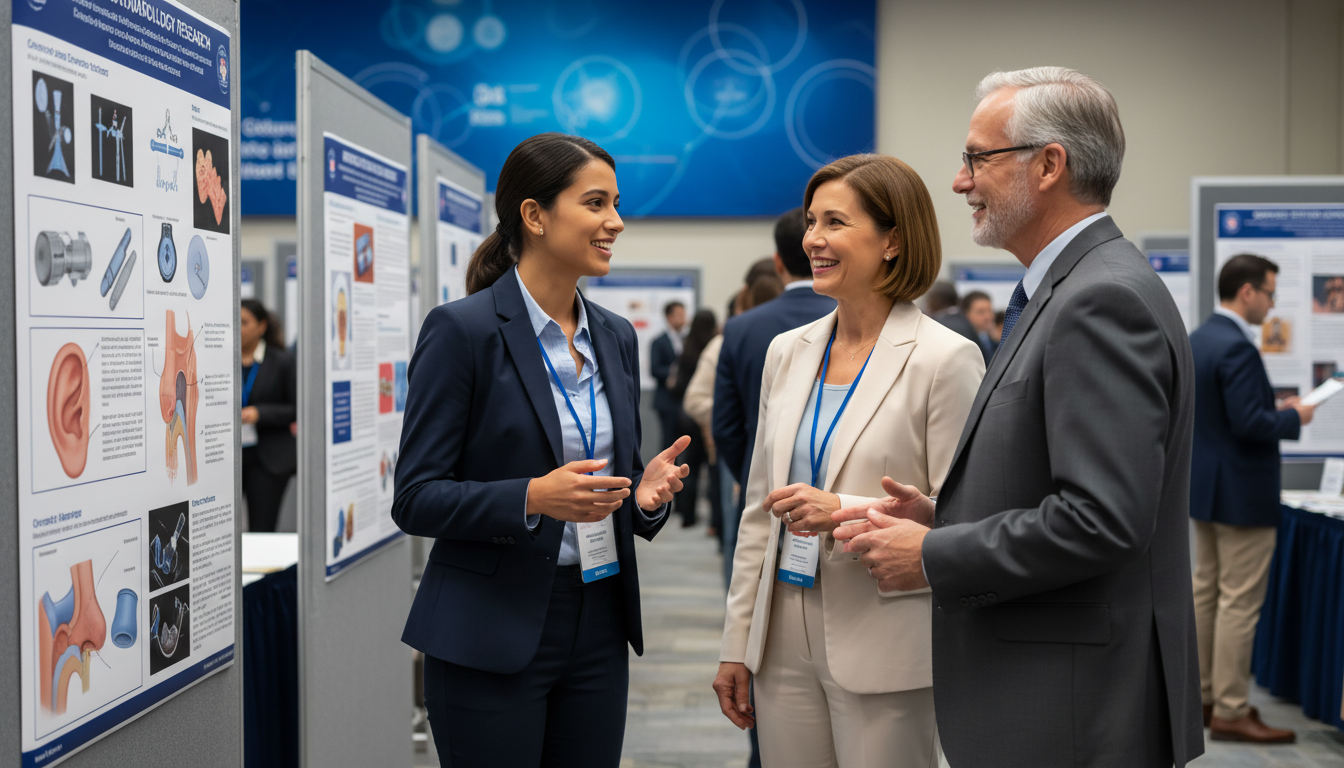
- Aim for presentations at national meetings (AAO-HNSF, subspecialty meetings) if possible.
Be reliable, responsive, and humble; the fastest way to lose ENT opportunities is to miss deadlines or go silent.
Step 5: Strategic Application Planning, Networking, and Program Targeting
Building a Smart, Data-Driven ENT Program List
Unlike less competitive fields, “apply everywhere” is neither financially feasible nor strategically sound for most US citizen IMGs.
Instead:
- Compile a master list of all ENT programs.
- Identify programs that:
- Have matched any IMG in the last 5–10 years
- Are mid-sized to larger academic centers (more spots, more flexibility)
- Do not explicitly state “US MD seniors only”
- Cross-check with:
- Program websites and social media
- PubMed: departments with busy research output may be more open to research-heavy IMGs
- Rank programs by:
- IMG-friendliness
- Geographic ties (where you have connections, grew up, went to college)
- Research alignment and subspecialties of interest
Aim to apply broadly across tiers within the subset that might realistically consider a US citizen IMG.
The Power of Networking and Mentors in ENT
Because ENT is small, personal advocacy can be transformative. For an American studying abroad:
- Identify at least one US ENT mentor early.
- Maintain regular contact (every 1–2 months) with progress updates.
- Ask for honest feedback on your competitiveness.
Mentors can:
- Advise you on program choices and timelines
- Introduce you (email or in person) to colleagues at other programs
- Put in a good word for you with PDs where you’ve rotated or done research
Attend:
- National and regional ENT meetings where possible
- Local grand rounds or virtual seminars open to students
Approach faculty professionally:
- “I’m a US citizen IMG with strong interest in ENT and current research in X. I’d value your advice on building a competitive application.”
Away Rotations and Signals: How to Use Them Strategically
In ENT, away rotations and signals (if used in your cycle) function as a “mini-match within the match.”
Principles:
- Treat every away rotation as a month-long audition.
- Prioritize programs where an outstanding month could realistically overcome IMG bias.
- If your year uses preference signals (like gold/silver signals), assign them to:
- Programs where you have rotated or will rotate
- Programs with known IMG flexibility and strong fit
- Institutions where you have genuine geographic/family ties
Don’t waste signals on programs that have never taken an IMG and openly state they rarely consider IMGs.
Crafting a Compelling ENT Personal Statement as a US Citizen IMG
Your personal statement should:
- Tell a coherent story of commitment to ENT, not just “I like surgery + I like clinic.”
- Reflect longitudinal exposure: shadowing, research, electives, mentors.
- Highlight translatable strengths from being an American studying abroad, such as:
- Adaptability in different healthcare systems
- Cross-cultural communication strengths
- Resourcefulness and independence
Avoid:
- Over-emphasizing how hard it is to be an IMG; focus on what you offer.
- Generic statements that could apply to any specialty.
Frame your IMG status as:
“My training abroad has given me X, Y, Z strengths that I now want to bring to an academic US ENT residency environment.”
Step 6: Risk Management, Backup Plans, and Parallel Strategies
Given the extreme competitiveness of ENT, especially for a US citizen IMG, risk management is critical.
Honest Risk Assessment: When ENT Alone Is Too Risky
Red flags for an ENT-only strategy:
- Step 2 CK < 240 or any exam failure
- No US ENT rotations or only very short observerships
- Lack of US ENT letters from academic faculty
- Minimal or no research
- Late application (after major deadlines) with incomplete components
If 2 or more of these apply, an ENT-only application is very high risk.
Parallel Planning: Other Competitive Specialties and Transitional Pathways
Some US citizen IMGs interested in surgical or procedure-heavy fields consider:
- Matching ortho (orthopedic surgery) or matching derm (dermatology)—though these are also ultra-competitive; realistically, ortho and derm are not “backup specialties” for ENT.
- General surgery or prelim surgery years, then trying to transition into ENT later (rare and uncertain).
- General internal medicine or family medicine with a plan to build a niche in allergy, sleep, or procedural practice if ENT doesn’t materialize.
A more realistic risk-mitigation tactic:
- Apply to ENT plus a more attainable but still procedural specialty, such as:
- Anesthesiology
- Diagnostic or interventional radiology (depending on competitiveness in your year)
- Transitional year + anesthesiology or radiology later
Be cautious about categorical general surgery as a backup if your sole long-term goal is eventual ENT—transfers into ENT are limited and very uncertain.
Considering a Dedicated Research Year or Reapply Strategy
If you do not match:
- Analyze your application honestly with ENT mentors.
- Consider:
- Taking a dedicated ENT research fellowship in the US
- Strengthening Step 2 CK (or Step 3 if already taken)
- Doing more US clinical rotations with the goal of stronger letters
However, you must weigh:
- Financial cost of another year without salary
- The emotional toll of another high-risk application
- Alternative fulfilling careers in less competitive but still meaningful specialties
A “reapply ENT” strategy should be deliberate, not automatic.
Frequently Asked Questions (FAQ)
1. As a US citizen IMG, is it realistically possible to match into ENT?
Yes, it is possible—but it is rare and requires a top-tier application. You’ll generally need:
- Strong Step 2 CK (ideally ≥ 245–250)
- Robust US ENT clinical exposure and letters
- Solid research portfolio in ENT or related surgical fields
- Deliberate networking and mentorship
Even then, the match is uncertain, so you must plan for risk and potential backup options.
2. How many ENT programs should I apply to as a US citizen IMG?
If you are a reasonably competitive applicant (good scores, US ENT letters, some research), you should plan to apply broadly across almost all programs that:
- Do not explicitly exclude IMGs
- Have any history of interviewing or matching IMGs
This might still be 30–60+ programs, depending on your year. Apply strategically rather than blindly: prioritize ENT programs with documented IMG-friendliness and realistic fit.
3. Do I absolutely need a dedicated research year to match ENT as an IMG?
Not absolutely—but a research year can significantly strengthen an IMG application, particularly when:
- Your Step 2 CK is good but not stellar
- Your medical school is less known to US programs
- You lack meaningful ENT research or US ENT connections
If you already have strong research, high scores, and excellent letters, you may not need a research year, but many successful IMG matches have leveraged one.
4. Should I apply to ENT only, or should I apply to a backup specialty?
For most US citizen IMGs, applying to ENT only is very high risk. Unless you have:
- Exceptional metrics (top scores, multiple ENT publications)
- Strong US ENT letters, and
- Mentors who believe you are truly competitive
…it is wise to pair ENT with a backup specialty that you could genuinely see yourself practicing. This doesn’t have to be primary care; many choose other procedural or hospital-based specialties, but those are also competitive, so plan carefully with your mentors.
An ultra-competitive specialty strategy for a US citizen IMG in otolaryngology (ENT) is not just about working harder; it’s about working strategically—choosing the right rotations, mentors, research opportunities, and application tactics, while staying realistic about risk and open to parallel paths. With deliberate planning and honest self-assessment, you can maximize your chances in ENT while protecting your long-term career trajectory.




















