
Preparing for USMLE Step 2 CK as a US citizen IMG with an eye toward a vascular surgery residency is a strategic challenge—but also a powerful opportunity. Step 2 CK is now the primary standardized academic metric programs use since Step 1 became Pass/Fail. For an American studying abroad who wants an integrated vascular program, a strong Step 2 CK score can validate your clinical readiness and help offset IMG-related biases.
Below is a comprehensive guide tailored to you: a US citizen IMG targeting vascular surgery, looking to optimize USMLE Step 2 study, build a high-impact application, and position yourself competitively in this small but demanding specialty.
Understanding the Role of Step 2 CK in Vascular Surgery Residency
Why Step 2 CK Matters So Much Now
With Step 1 Pass/Fail, program directors increasingly use Step 2 CK as:
- The main objective comparison tool across applicants
- A predictor of in-training exam performance and board passage
- A screen for interview offers, especially in competitive fields like an integrated vascular program
As a US citizen IMG, you have some advantages (no visa issues, cultural familiarity with US training) but still face:
- Skepticism about the rigor of overseas medical schools
- Limited home institutional network in the US
- Less organic exposure to US vascular surgery departments
A strong Step 2 CK score can:
- Demonstrate you are on par with – or better than – US MD/DO peers
- Reassure PDs about your clinical reasoning and knowledge base
- Compensate somewhat if you lack home institution vascular surgery rotations
What Score Range Should You Aim for?
Score targets change over time, but in recent years for competitive surgical fields:
- “Comfortable” competitive zone for strong programs: ~250+
- Reasonable target for solid interview chances: ≥245
- Minimum to remain viable at many integrated vascular programs: ≥240 (approximate, varies by program and full application)
For a US citizen IMG, think of your Step 2 CK score as one of your primary leverage points. If your school and experiences are less known, you ideally want to outperform the average US MD applicant numerically.
How Vascular Surgery PDs View Step 2 CK
Vascular surgery program directors often prioritize:
- Objective data: Step 2 CK score, clerkship grades, class rank
- Clinical performance: Letters from vascular and general surgery attendings, Sub-I performance
- Technical and cognitive potential: As reflected in surgical shelf scores, research productivity, and rotations
They don’t need you to be a vascular expert yet. They need evidence that:
- You have excellent general clinical reasoning
- You can handle a high-acuity, data-heavy environment (ICU, perioperative care, complex comorbidities)
- You are capable of digesting and applying large volumes of information under pressure
Step 2 CK preparation, when done well, directly builds these skills.
Building a Step 2 CK Study Plan as a US Citizen IMG
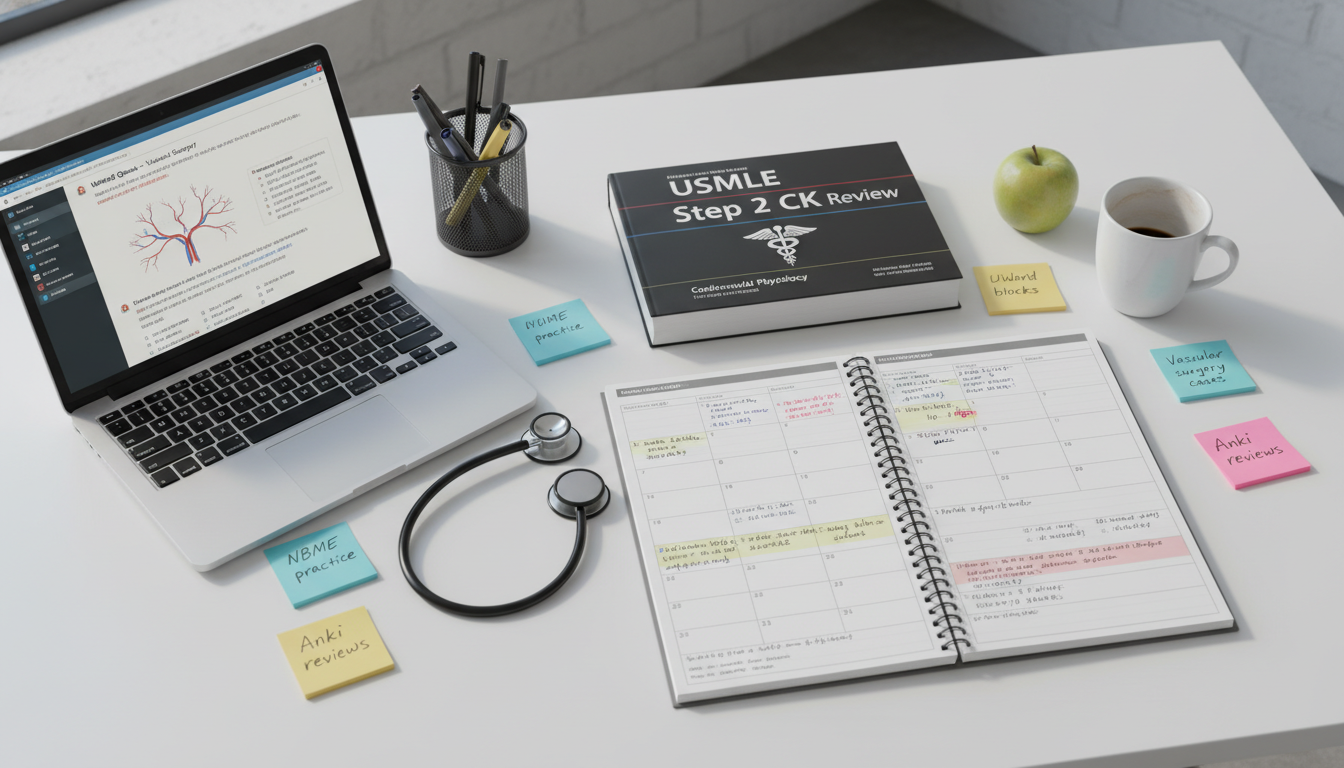
Step 1: Clarify Your Timeline Relative to Applications
You need to time your USMLE Step 2 study so that your score is available before programs download applications in ERAS (typically mid‑September).
Common scenarios for US citizen IMG applicants:
Taking Step 2 CK in April–June before application year
- Pros: Score ready by ERAS opening; allows retake if disaster
- Cons: Requires earlier prep; may intersect with core rotations
Taking Step 2 CK in July–August of application year
- Pros: More clinical experience beforehand; integrated with sub-internships
- Cons: Score may barely make ERAS deadline; limited retake options
For a vascular surgery–bound US citizen IMG, earlier is safer. Aim to:
- Finish Step 2 CK by June or early July of the year you apply
- Allow time to recover for vascular or general surgery sub‑Is and away rotations
Step 2: Assess Your Baseline Honestly
Before starting intensive USMLE Step 2 preparation:
- Review:
- Your Step 1 performance (even if Pass/Fail, consider NBMEs you took then)
- Basic science and core clinical exam performance
- Take a diagnostic NBME Step 2 CK practice test or a UWorld self-assessment (UWSA)
- Identify:
- Strengths: e.g., medicine, surgery
- Weaknesses: e.g., OB‑GYN, psychiatry, biostatistics
For vascular surgery applicants, strong performance in internal medicine, surgery, and emergency medicine–type questions is especially critical.
Step 3: Structure a 10–12 Week Intensive Plan (Example)
Assuming you have at least 10–12 dedicated weeks (full‑time or near full‑time), a basic framework could be:
Weeks 1–4: Foundation & Systems Review
- 1–2 timed UWorld blocks/day (40 questions each), random or by system
- Immediate, deep review of all questions (right and wrong)
- Read relevant sections from a core text (e.g., Step-Up to Medicine, Master the Boards, online Step 2 resources) for weak areas
- Start a dedicated review for high-yield non‑medicine content: OB‑GYN, Peds, Psych, Surgery, Ethics
Weeks 5–8: High-Yield Consolidation
- Increase to 2–3 UWorld blocks/day, all timed and random
- Add NBME or UWSA practice exams every 1–2 weeks
- Build an error log (spreadsheet or notebook of concepts you miss repeatedly)
- Focus on:
- Biostatistics and epidemiology (frequent high‑yield)
- Critical care topics (relevant for vascular surgery)
- Perioperative management (fluids, anticoagulation, infections)
Weeks 9–10 (or 11–12): Final Refinement & Simulation
- Complete second pass through your weakest systems in UWorld
- 1 full‑length NBME/UWSA each week under exam conditions
- Heavy emphasis on review notes, Anki cards, and error log
- Sleep- and health-optimized schedule simulating real test day (start practice exams at same time as your actual test appointment)
For US citizen IMG students still on rotations, you may need to stretch this across 14–16 weeks with fewer daily QBank questions but strict weekly goals.
Core Study Resources and How to Use Them Strategically
Question Banks: The Engine of Your Preparation
For Step 2 CK, UWorld remains gold standard.
How to use UWorld effectively:
- Primary mode: Timed, random blocks (once you’ve covered basics)
- Focus on explanation, not score: Your “learning-per-question” is what matters
- Carefully review:
- Why the correct option is right
- Why each distractor is wrong
- The underlying concept, not just the fact
- Tag or log:
- Questions representing weak concepts
- Classic vascular-relevant topics (e.g., acute limb ischemia, aortic dissection, carotid stenosis)
Consider adding a second QBank (AMBOSS, Kaplan, etc.) only if:
- You finish UWorld with time to spare
- You need more exposure to your weakest subjects
Practice Exams: Calibrate and Course-Correct
Use NBME Step 2 CK forms and UWorld Self-Assessments as benchmarks:
- Baseline: 1 NBME before starting intensive prep
- Mid‑prep: 1 NBME/UWSA at 4–6 weeks
- Late prep: 1–2 NBME/UWSA in last 3–4 weeks
Track:
- Predicted score trajectory versus your target
- Specific weak domains (NMBE score reports highlight these)
- Whether you are improving in timing and stamina
If your predicted score is still >10–15 points below your target 3–4 weeks out, you may need to:
- Delay your test (if feasible)
- Intensify USMLE Step 2 study
- Narrow focus to your highest-yield weaknesses
Written and Video Resources
While question banks should dominate, supplement with:
Medicine/Surgery Core Texts
- “Step-Up to Medicine” or “Master the Boards USMLE Step 2 CK”
- “Deja Review Surgery” or similar for quick surgery review
Online lecture series (e.g., OnlineMedEd, Boards and Beyond Step 2)
- Use selectively for weak topics like OB‑GYN or psych
Biostatistics/Ethics-specific resources
- Short PDFs or dedicated review chapters
- A few targeted UWorld blocks focusing solely on stats and ethics scenarios
As a vascular surgery–bound applicant, emphasize:
- Cardiovascular, endocrine, renal, and critical care content
- Postoperative complications, anticoagulation strategies, and vascular emergencies
Tailoring Step 2 CK Prep to a Vascular Surgery Career Path

Clinical Mindset: Think Like a Vascular Surgeon in Training
While Step 2 CK is broad, many high-yield topics align naturally with vascular surgery thinking:
Critical care principles:
- Shock (hemorrhagic, septic, cardiogenic)
- Management of hypotension, pressors, fluids
Atherosclerotic disease management:
- Risk factor modification
- Antiplatelet and statin therapy
- Diabetic foot ulcers, peripheral artery disease
Thromboembolic disease and anticoagulation:
- DVT/PE management (heparin, DOACs, warfarin, thrombolysis)
- Perioperative anticoagulation decisions
- IVC filter indications
Aortic and large-vessel pathology:
- Aortic dissection vs aneurysm
- Ruptured vs stable AAA
- Emergency vs elective repair indications
During your USMLE Step 2 study, pay extra attention to these topics in questions and explanations, not just for the exam but as preparation for vascular rotations and interviews.
Communicating Your Commitment in Your Application
A strong Step 2 CK score does more than boost your ERAS screening chances; it also supports your narrative:
- High score + strong medicine and surgery clinical performance suggests:
- Resilience, discipline, and technical reasoning
- Ability to manage complex, multi-morbid vascular patients
In your personal statement and interviews, you can highlight how:
- Your Step 2 CK preparation refined your understanding of:
- Perioperative medicine
- Managing patients with PAD, aneurysms, renal disease, and diabetes
- This made you more effective on your vascular and general surgery rotations
Programs like to see that your academic achievements are directly connected to real clinical growth.
Special Challenges and Advantages for US Citizen IMGs – And How to Leverage Step 2 CK
Unique Challenges as an American Studying Abroad
As a US citizen IMG (American studying abroad), you often face:
- Inconsistent clinical exposure compared with US schools
- Variability in:
- Access to high-quality question banks
- Structured test-prep support
- Mentorship from US-trained surgeons
You may also have:
- Fewer US‑based letters of recommendation
- Less access to integrated vascular program rotations before applying
Turning Step 2 CK Into a Strategic Asset
You can leverage your USMLE Step 2 study to mitigate these challenges:
Standardization of Knowledge
- A strong Step 2 CK score proves you have mastered the same clinical content as US MDs/DOs
- Programs see a recognizable, comparable metric
Bridge to US Clinical Rotations
- Use Step 2 CK–style reasoning on your US electives and sub‑Is
- Ask your attendings to quiz you; demonstrate well-structured differential diagnoses and evidence-based management
- Your test prep will show as confident, precise clinical decision making
Demonstrate Self-Directed Learning
- In your application and interviews, emphasize how you:
- Organized a rigorous USMLE Step 2 preparation plan despite limited institutional oversight
- Sought out remote resources (Qbanks, lectures, online mentorship)
- In your application and interviews, emphasize how you:
Practical Tips for US Citizen IMGs Abroad
Secure US-based clinical experiences (USCE) in general surgery, vascular surgery, or related fields before or around exam time:
- Helps connect your test knowledge to US practice
- Provides letter writers who can refer to your robust clinical reasoning (validated by your Step 2 CK score)
Network early with vascular surgery faculty:
- Email faculty at programs where you will rotate
- Mention your interest in vascular surgery and your commitment as reflected by intensive Step 2 CK preparation
- Ask for feedback on how to align your exam study with their clinical expectations
Protect your exam date:
- Arrange rotations and responsibilities so you can maintain your study schedule
- Avoid overloading yourself with night call close to the exam date
Test-Day Strategy and Post-Exam Planning
Fine-Tuning Your Last Two Weeks
In the final 10–14 days:
Stop adding new resources; focus on consolidation
Review:
- Your Anki decks or condensed notes
- UWorld-marked questions and error log
- High-yield lists: vaccines, screening guidelines, emergency algorithms
Do at least:
- 1–2 full-length practice exams under timed conditions
- Several blocks per day at the same time as your real exam
Adjust bedtime and wake-time to be fully alert at your test start hour.
Test-Day Tactics
On the day of your Step 2 CK exam:
- Arrive early and minimize logistical stress
- Use equally spaced breaks after every 1–2 blocks
- During blocks:
- Flag but move on from unusually long or confusing questions
- Aim to complete the block with 5–10 minutes left to review flagged items
- Be careful with biostatistics calculations—do them systematically
Remember, Step 2 CK is about pattern recognition and structured reasoning, not perfection on every obscure question.
After the Exam: Integrating Your Score Into Your Vascular Surgery Strategy
Once you receive your Step 2 CK score:
If your score meets or exceeds your goal (e.g., ≥250):
- Highlight it prominently on your CV and ERAS application
- Mention your performance when discussing your preparation in interviews
- Pair it with strong letters, research, and vascular exposure to target higher‑tier integrated vascular programs
If your score is solid but below your ideal target (e.g., 235–245):
- Focus on strengthening the rest of your portfolio:
- Vascular research, case reports, QI projects
- Exceptional performance on vascular or general surgery sub‑Is
- Seek programs more open to IMGs and strongly consider including independent pathways (general surgery first, followed by vascular fellowship)
- Focus on strengthening the rest of your portfolio:
If your score is significantly below expectations:
- Meet with mentors early to discuss:
- Realistic program list
- Whether to aim first for categorical general surgery
- Options to enhance your profile (research years, additional USCE)
- Meet with mentors early to discuss:
Regardless of the number, emphasize in interviews how your USMLE Step 2 study made you a better clinician prepared for the intensity of vascular surgery training.
Frequently Asked Questions (FAQ)
1. What Step 2 CK score should a US citizen IMG target for an integrated vascular surgery program?
For a US citizen IMG, a Step 2 CK score ≥245 is a reasonable target for competitive consideration, with 250+ providing a stronger buffer, especially at more academic or high-volume vascular centers. Programs consider the full application, but because integrated vascular slots are few and the field is selective, a higher score can help offset IMG status and lesser-known medical schools.
2. How early should I start USMLE Step 2 preparation if I am still on clinical rotations overseas?
Ideally, begin low-intensity prep 4–6 months before your planned exam date, integrating:
- 10–20 UWorld questions on weekdays
- Focused review of weak rotation topics in the evenings
Then move into a 10–12 week “ramp-up” period where Step 2 CK becomes your main academic priority. For US citizen IMGs with less structured clerkships, starting earlier allows more time to stabilize any weak subjects (like OB‑GYN or pediatrics) without sacrificing your stronger medicine and surgery foundations.
3. Are there any vascular surgery–specific topics I should prioritize in Step 2 CK study?
Yes. While Step 2 CK is generalist, focusing on the following will both improve your score and prepare you for vascular training:
- Peripheral artery disease: Diagnosis, claudication vs critical limb ischemia, medical management, indications for revascularization
- Aortic pathology: Dissection vs AAA, management algorithms, surgical/emergent indications
- Thromboembolic disease: DVT/PE, anticoagulation choices, and perioperative bridging
- Perioperative medicine: Fluid management, electrolyte disturbances, infection prevention, and early complication recognition
- Wound care and diabetic foot: Ulcer classification, osteomyelitis workup, offloading, and vascular referral thresholds
Mastering these themes through UWorld and practice exams will be reflected not just in your Step 2 CK score, but also in your clinical performance and interviews.
4. How can I explain in my application that my strong Step 2 CK score reflects readiness for vascular surgery?
In your personal statement and interviews, you can explicitly link your Step 2 CK preparation to vascular readiness by noting:
- You approached Step 2 CK with the mindset of someone preparing to care for high-acuity vascular patients
- Your study plan emphasized:
- Perioperative medicine
- Vascular emergencies
- Management of multi-morbid patients typical of vascular practice
- The discipline and structure of your USMLE Step 2 study mirror the self-directed learning and resilience required for vascular surgery training
When backed by a robust score, this narrative helps program directors see Step 2 CK not just as a number, but as evidence of your capability and commitment.
By approaching Step 2 CK preparation deliberately—as a US citizen IMG with a clear goal of matching into an integrated vascular program—you can transform the exam from a stressful hurdle into one of your biggest assets. A strong Step 2 CK score, combined with focused clinical experiences and mentorship, can powerfully support your path to a career in vascular surgery.