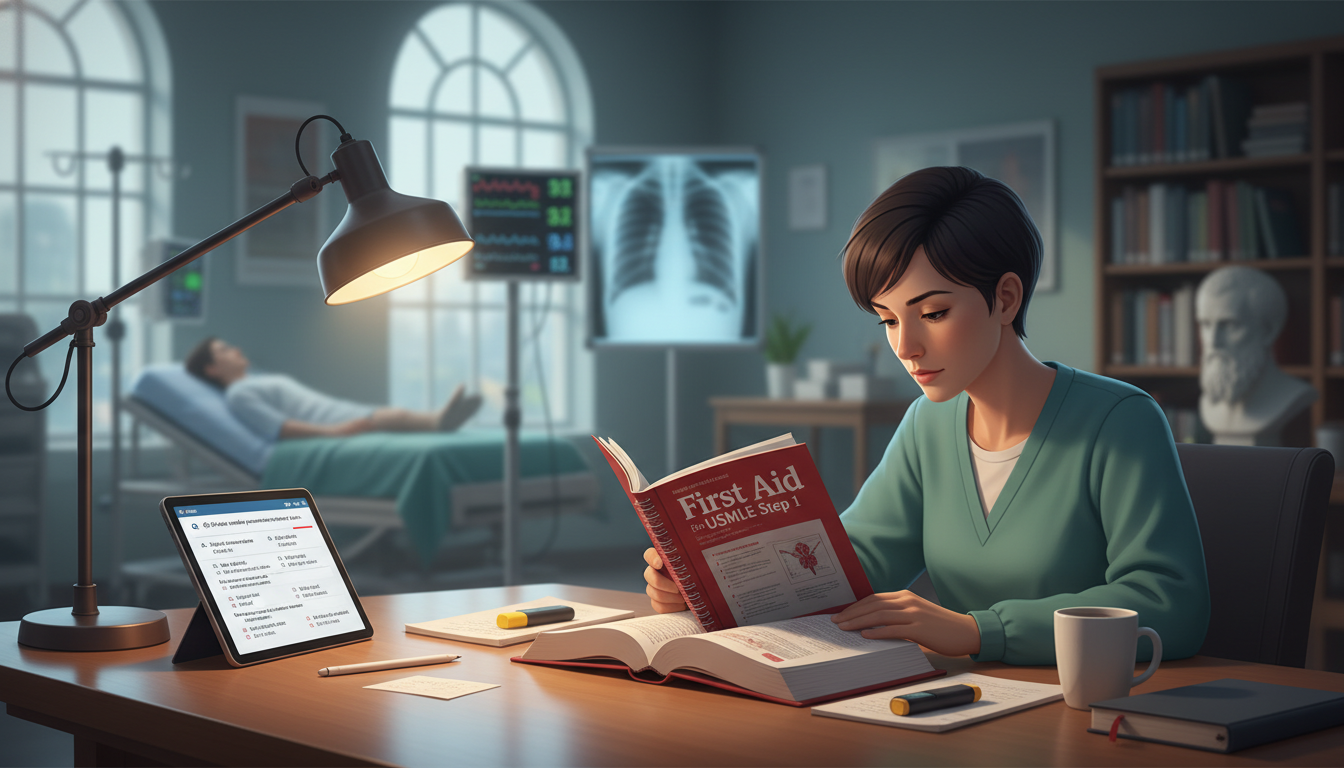
Understanding Step 1 in the Context of EM–IM Combined Training
If you are aiming for an Emergency Medicine–Internal Medicine (EM IM combined) residency, the way you approach USMLE Step 1 preparation matters—despite the exam now being Pass/Fail. Programs know that the skills you build for Step 1 directly translate to success on Step 2 CK, in residency, and in both high-acuity emergency and longitudinal internal medicine care.
Although EM–IM is a relatively small combined specialty, it attracts applicants who are:
- Comfortable with acute critical illness and resuscitation
- Interested in diagnostic reasoning and complex chronic disease
- Able to work under pressure and make decisions with incomplete data
Your USMLE Step 1 study is where you first build the cognitive framework that supports those skills. This guide will help you:
- Design a Step 1 preparation plan tailored to eventual EM–IM training
- Choose and use Step 1 resources efficiently
- Integrate high-yield content that is especially relevant to emergency medicine internal medicine
- Avoid common pitfalls that delay graduation or weaken your EM–IM application
Throughout, assume Step 1 is Pass/Fail, but treat it as the foundation for strong Step 2 CK performance, which EM–IM programs heavily scrutinize.
Strategic Role of Step 1 for EM–IM Applicants
Why Step 1 Still Matters for EM–IM in a Pass/Fail Era
Even without a numeric score, Step 1 has three critical functions for aspiring EM–IM residents:
Gatekeeper to Progression
- You must pass to advance and to sit for Step 2 CK.
- Failing Step 1 can delay your clinical rotations and your application timeline—serious drawbacks for any competitive pathway, especially EM–IM combined programs with limited spots.
Predictor of Clinical Knowledge for Step 2 CK
- Step 1 builds the pathophysiologic and mechanistic understanding that Step 2 CK repeatedly tests in clinical context.
- EM–IM programs will scrutinize Step 2 CK performance. The more solid your Step 1 prep, the more likely you are to excel on CK.
Signal of Reliability and Work Habits
- Passing Step 1 on the first attempt suggests you can handle the volume, pace, and complexity of EM–IM residency.
- A fail doesn’t disqualify you, but you’ll need to explain it and demonstrate a strong rebound, particularly with a high Step 2 CK score.
EM–IM–Relevant Competencies Built During Step 1 Prep
Emergency Medicine–Internal Medicine physicians need:
- Fast pattern recognition (e.g., meningococcemia vs viral exanthem vs drug reaction)
- Mechanistic understanding to prioritize differential diagnoses quickly (e.g., causes of shock, hypoxemia, metabolic acidosis)
- Risk stratification skills (who can go home, who needs ICU)
Step 1 mechanics (physiology, pathology, pharmacology) are the underlying “operating system” for these decisions. During your USMLE Step 1 study, deliberately emphasize content that clearly maps onto:
- Acute care scenarios you will later see in EM
- Complex chronic disease and multi-morbidity central to IM
Think of Step 1 not as an isolated hurdle, but as Phase 1 of your EM–IM clinical reasoning training.
Building an Effective Step 1 Study Strategy with EM–IM in Mind
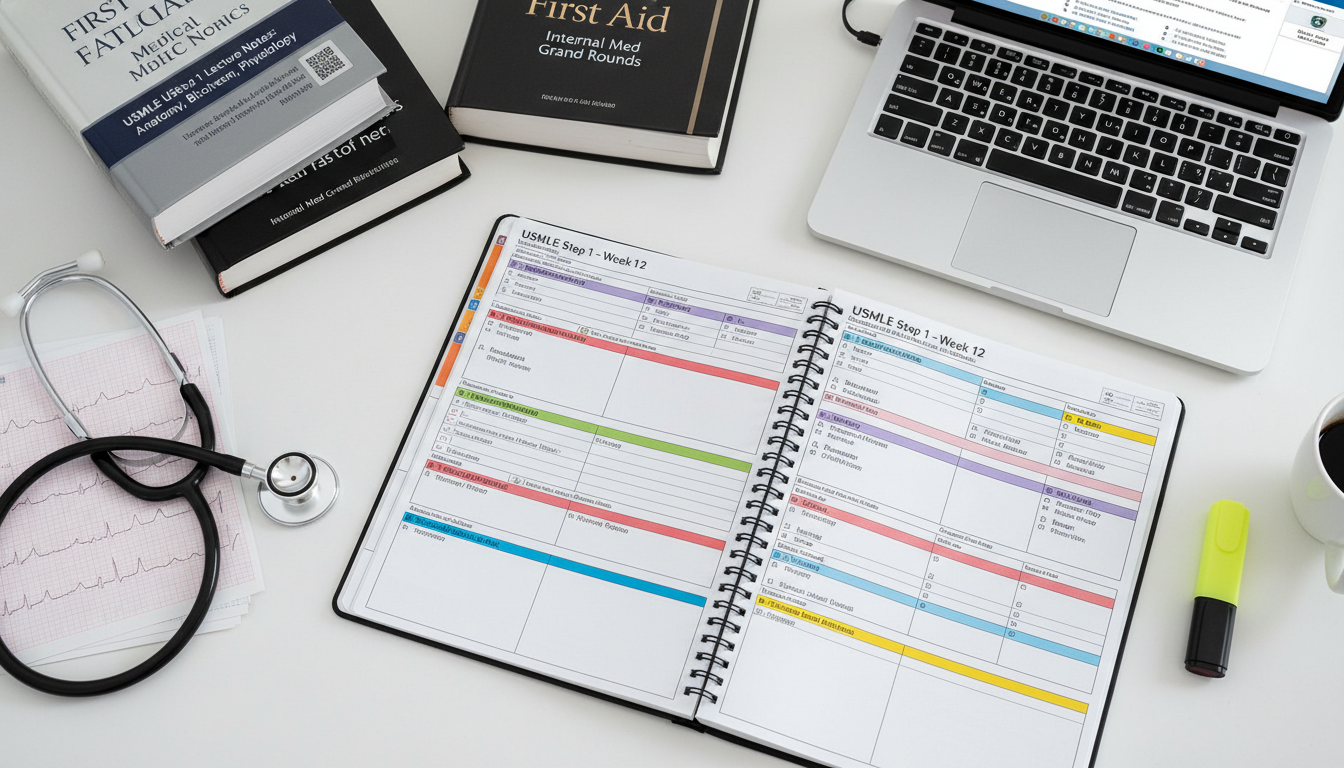
Step 1 Preparation Timeline: Preclinical to Dedicated
Most students planning for EM–IM will follow a standard structure, but with more intentional integration of clinical thinking:
Preclinical Years (MS1–early MS2)
- Focus: Course success + USMLE-aligned habits
- Actions:
- Add low-volume question practice (e.g., 5–15 questions/day) from a USMLE QBank aligned with your current systems.
- After each block (cardio, renal, neuro, etc.), review the relevant sections in First Aid or similar boards-style summary.
- EM–IM lens: Pay special attention to cardiology, pulmonary, renal, and infectious disease—these dominate acute and chronic care.
Ramp-Up Phase (3–6 months before Step 1)
- Increase QBank use to 20–40 questions/day, tied to organ systems or mixed blocks.
- Begin your first comprehensive pass of your main review book (e.g., First Aid).
- Start watching targeted videos (Boards & Beyond, Sketchy, Pathoma) in your weaker areas.
Dedicated Study Period (4–8 weeks before exam)
- Full-time Step 1 preparation: typically 8–10 hours/day, 6 days/week.
- Daily goals:
- 2–4 timed blocks of 40 questions (80–160 Qs/day), review every explanation.
- Ongoing spiral review via Anki or other spaced repetition.
- High-yield review of weak systems and EM–IM–relevant material (see below).
Choosing Step 1 Resources That Strengthen EM–IM Skills
You don’t need every resource; you need a coherent ecosystem that reinforces mechanisms, pattern recognition, and differential diagnosis.
Core Step 1 resources to consider:
Comprehensive Review Text
- First Aid for the USMLE Step 1 or equivalent: serves as your spine.
- Use it to anchor facts you learn from questions and videos, not as a passive reading textbook.
QBank(s)
- UWorld (or an equivalent premium QBank) as your primary.
- Consider a second QBank (Amboss, Kaplan) for extra practice if time allows.
- For EM–IM interest, pay close attention to:
- Arrhythmias and cardiac emergencies
- Shock types and resuscitation concepts
- Acid–base disorders and electrolytes
- Sepsis and infectious disease
Video & Conceptual Resources
- Boards & Beyond, Pathoma, Sketchy (micro/pharm), and similar:
- Pathoma for strong pathologic grounding (crucial for internal medicine).
- Sketchy Micro/Pharm for rapid recall of treatments, side effects, and organisms (highly relevant to EM empiric therapy).
- Use selectively for topics you don’t master via QBank and text alone.
- Boards & Beyond, Pathoma, Sketchy (micro/pharm), and similar:
Spaced Repetition
- Anki or a similar system (e.g., Lightyear, AnKing decks) to solidify:
- Drug mechanisms, side effects, contraindications
- Bacteria/viruses and their classic presentations
- Complications of common diseases
- Anki or a similar system (e.g., Lightyear, AnKing decks) to solidify:
Align your resource use with how EM–IM physicians think: mechanism → manifestation → management priority.
Daily Structure for EM–IM–Oriented Step 1 Study
A sample daily dedicated schedule:
- 08:30–10:30 – Timed QBank block (40 questions, mixed)
- 10:30–12:30 – Review every question:
- Understand why each wrong answer is wrong.
- Link questions to your outline (e.g., First Aid) and Anki cards.
- 13:30–15:30 – Second QBank block (40 questions, timed or untimed)
- 15:30–17:30 – Review of block + focused video review for weak concepts
- 17:30–18:30 – Anki/spaced repetition review
- Evening (flexible) – Light reading or review of high-yield topics (e.g., shock, arrhythmias, acid–base, sepsis)
EM–IM twist: At least several times per week, mentally “translate” questions into clinical vignettes as if you’re in the ED or on the wards:
- “If this vignette walked into triage, what would I do first?”
- “What would their vitals look like?”
- “What labs/imaging would I order initially and why?”
This habit trains you to bridge Step 1 content into EM–IM clinical reasoning.
High-Yield Step 1 Topics with Strong EM–IM Relevance
While you must know the full Step 1 universe, some areas have disproportionate value for an EM–IM future. Prioritize depth in these content zones.
1. Cardiovascular and Pulmonary: Core to Acute and Chronic Care
Why it matters: EM–IM physicians frequently manage dyspnea, chest pain, arrhythmias, heart failure, and shock—acutely in the ED and longitudinally in clinic/hospital.
Key Step 1 foundations:
Cardiac Physiology & Pathology
- Frank–Starling curves, pressure–volume loops (affect response to fluids/inotropes)
- Types of heart failure and compensatory mechanisms
- Ischemic heart disease, unstable angina vs NSTEMI vs STEMI
- Valvular diseases and murmurs (which can decompensate acutely)
Arrhythmias & Pharmacology
- Mechanisms and ECG patterns: Afib, Aflutter, AV blocks, SVT, VT, torsades
- Antiarrhythmic classes, uses, and toxicities (e.g., amiodarone, beta-blockers)
Pulmonary Physiology & Pathology
- V/Q mismatch vs shunt vs dead space
- Obstructive vs restrictive lung disease patterns
- Pulmonary embolism pathophysiology
- ARDS basic mechanisms and treatment rationale
EM–IM–focused practice tip: When reviewing a cardiology or pulmonary question, always ask yourself:
- What is this patient’s likely initial ED presentation?
- What interventions would be needed in the first 5–15 minutes?
- Which findings would push me to the ICU vs floor vs home?

2. Renal, Electrolytes, and Acid–Base: EM–IM Secret Weapon
Why it matters: Emergency Medicine and Internal Medicine both demand comfort with complex electrolyte issues, acid–base interpretation, and renal failure.
Step 1 must-knows:
Renal Physiology
- Nephron segments and their transporters (essential for diuretic pharmacology)
- RAAS system and its clinical implications (shock, heart failure, HTN)
Acid–Base Disorders
- Metabolic vs respiratory acidosis/alkalosis
- Anion gap vs non–anion gap metabolic acidosis
- Mixed disorders and compensation formulas (Winter’s formula etc.)
Electrolyte Disturbances
- Hyper/hyponatremia: pathophysiology and basics of correction
- Hyper/hypokalemia: mechanisms, ECG findings, emergency management rationale
- Calcium, magnesium, phosphate basics
Clinical exercise while studying: For each acid–base or electrolyte question, imagine:
- “If this lab panel came back in the ED, what would I do immediately?”
- “Which symptoms would make this an emergency vs outpatient problem?”
This thought process solidifies Step 1 mechanisms into EM–IM decision-making.
3. Infectious Disease and Sepsis: At the Crossroads of EM and IM
Why it matters: Infections range from simple outpatient issues to septic shock. EM–IM physicians must rapidly identify severity and choose appropriate empiric therapy, then manage long-term sequelae and comorbidities.
Foundational Step 1 infectious disease topics:
Microbiology & Immunology Basics
- Gram-positive vs gram-negative structure and implications (e.g., endotoxin)
- Common pathogens by organ system (pneumonia, meningitis, UTI, skin/soft tissue)
- Classic triads and buzzwords, but more importantly, pathogenesis
Pharmacology
- Antibiotic classes, mechanisms, and toxicities
- Coverage patterns: which drugs hit MRSA, Pseudomonas, anaerobes, atypicals
- Dosing rationale basics (renal adjustment concepts)
Sepsis & Shock
- Criteria for sepsis and septic shock (even if not explicitly tested by name)
- Mechanism of distributive vs hypovolemic vs cardiogenic vs obstructive shock
- Vasopressors: mechanism of action, receptors (NE, epi, dopamine, vasopressin)
As you do micro and pharm questions, always attach:
- A mental list of first-line, second-line, and contraindicated therapies
- An understanding of how comorbidities (renal failure, liver disease, pregnancy) shift your choices—highly relevant to IM practice.
4. Endocrine, Metabolism, and Hematology: Systems You’ll See Daily
EM–IM physicians frequently handle:
- DKA, HHS, adrenal crisis, thyroid storm (EM side)
- Longitudinal management of diabetes, thyroid disease, coagulopathies, anemias (IM side)
Step 1 grounding:
Endocrine
- Hormone synthesis, feedback loops (HPA, HPT, HPG axes)
- Diabetes pathophysiology and medication mechanisms (insulins, metformin, SGLT2i, etc.—even if some are more Step 2–oriented, the mechanisms are Step 1-level)
- Thyroid hormone synthesis and action, effects of hypo/hyperthyroidism
Metabolism
- Glucose, lipid, and amino acid metabolism basics
- Starvation, stress, and hormonal control of metabolism
Hematology
- Anemias (microcytic, normocytic, macrocytic)
- Coagulation cascade and pharmacology (heparin, warfarin, DOAC mechanisms)
- Hemolytic anemias, sickle cell disease pathophysiology
Turn hematology questions into a future EM–IM scenario:
- “If I see this patient with chest pain and sickle cell anemia in the ED, what pathophysiologic complications am I worried about (ACS, stroke, priapism)?”
- “How do the coagulation cascade and anticoagulant mechanisms explain bleeding risk on the wards?”
Maximizing Question Practice and Assessments for EM–IM Success
Using Question Banks as Your Primary Teacher
Your USMLE Step 1 study should be question-centered, not resource-centered. A practical approach:
Do questions early and often
- Even during preclinical courses, connect system blocks to 5–15 related questions/day.
- Treat each question as an opportunity to expand your knowledge, not just a score.
Review is where learning happens
- For each question, even if correct:
- Identify the key learning objective.
- Add 1–2 concise notes to your core review book or Anki.
- Tie the vignette to an EM–IM scenario (e.g., ED triage vs ward consult).
- For each question, even if correct:
Simulate exam conditions regularly
- During dedicated, use timed blocks with exam-like interface and limited breaks.
- Helps prepare for long shifts and decisions under pressure—themes in EM–IM life.
Practice NBME Exams and Self-Assessment
Though Step 1 is Pass/Fail, NBME self-assessments are still valuable:
- Aim to take at least 2–3 NBME practice exams during your dedicated period.
- Use score predictions not for anxiety, but to:
- Ensure you’re safely above passing thresholds.
- Identify weak systems or disciplines to target.
For EM–IM: pay special attention if your weakest areas are cardio, pulmonary, renal, or infectious disease—it’s worth over-correcting these even if that means trimming less clinically central topics at the margin.
Managing Stress and Avoiding Burnout
Resilience is tested throughout EM–IM training; Step 1 is an early stressor where you can begin building healthy habits:
- Set realistic daily goals and track them (Qs completed, cards reviewed).
- Schedule breaks and off-time deliberately—at least one low-work evening and one half-day/week to prevent burnout.
- Use brief high-yield exercise or mindfulness techniques to manage anxiety (e.g., 10-minute walks, short guided breathing).
- If you struggle with significant anxiety or depression, seek early support—these skills will serve you well through EM–IM residency.
Leveraging Step 1 Prep for Future EM–IM Application Strength
Translating Step 1 Habits to Step 2 CK and Clinical Rotations
Success in EM–IM programs is built on:
- Strong knowledge base
- Efficient clinical reasoning
- Professional work habits under stress
Your Step 1 preparation gives you:
A durable mental framework
- Mechanistic understanding that allows quick adaptation when guidelines and treatments evolve.
- Ability to connect a constellation of symptoms to underlying pathophysiology.
Proven study systems
- Effective use of question banks, spaced repetition, and time management.
- You can reuse these methods for Step 2 CK, EM rotations, IM clerkships, and in-service exams.
Narrative for your EM–IM application
- If you perform strongly, you can describe how early commitment to foundational knowledge positioned you for dual-residency training.
- If you struggle initially but improve dramatically on Step 2 CK, you can demonstrate resilience and growth—qualities EM–IM programs value.
What EM–IM Programs Care About Beyond Step 1
When it’s time to apply to EM IM combined residencies, program directors will especially look at:
- Step 2 CK score (numeric, compared with peers)
- Clinical grades, especially in EM, IM, ICU, and sub-internships
- Letters of recommendation from both EM and IM faculty
- Evidence that you understand the realities of dual training (through experiences, personal statement, and interviews)
Your current focus on USMLE Step 1 preparation is really about laying the groundwork for:
- High Step 2 CK performance
- Confident clinical work on EM and IM rotations
- The capability to manage the broader knowledge base required for combined training
Use Step 1 as an opportunity to practice the discipline, curiosity, and adaptability you will need as an EM–IM resident.
FAQs: Step 1 and the Path to Emergency Medicine–Internal Medicine
1. Does Step 1 still matter for EM–IM combined programs now that it’s Pass/Fail?
Yes, but in a different way. Programs won’t see your numeric Step 1 score, but they will see whether you passed on the first attempt. A clean pass signals reliability and a solid foundation. More importantly, the study habits and knowledge you build for Step 1 translate directly into your Step 2 CK performance, which is very important for EM–IM. A failure isn’t fatal, but you must show substantial improvement on CK and in clinical performance.
2. How should I adapt my Step 1 preparation if I already know I want EM–IM?
Cover all Step 1 content, but with extra emphasis on:
- Cardiovascular and pulmonary physiology/pathology
- Renal, electrolytes, and acid–base
- Infectious disease, sepsis, and antimicrobial pharmacology
- Endocrine emergencies and hematology basics
During question review, consistently imagine how each case would look in an ED or on an IM ward. Ask, “What is my first step in management? Who is sick vs not sick?” This mental practice makes your studying more clinically relevant and better prepares you for EM and IM rotations.
3. Which Step 1 resources are essential if I’m aiming for emergency medicine internal medicine?
The core toolkit is similar to other specialties, but how you use it should be EM–IM informed:
- A primary QBank (e.g., UWorld) as your main teacher
- A concise comprehensive review book (e.g., First Aid) to organize facts
- Conceptual video resources (Boards & Beyond, Pathoma, Sketchy) for weak areas
- Spaced repetition (Anki) for long-term retention of pharm, micro, and key physiology
You don’t need “EM–IM–specific” resources at this stage; instead, interpret general Step 1 content through an EM–IM lens by focusing on acute presentations and chronic disease mechanisms.
4. How can I avoid burnout during USMLE Step 1 study while staying competitive for EM–IM?
Build sustainable routines, similar to what you’ll need as an EM–IM resident:
- Use a realistic schedule with built-in breaks and at least one lighter day per week.
- Prioritize sleep, nutrition, and regular short exercise to maintain cognitive performance.
- Anchor your motivation in your long-term goal: becoming a physician competent in both emergency medicine and internal medicine.
- If stress becomes overwhelming, seek help early—programs value applicants who care for their own mental health and can recognize limits.
By approaching your USMLE Step 1 preparation as the first major step toward an Emergency Medicine–Internal Medicine career, you transform an exam into an opportunity to cultivate the mindset, knowledge base, and habits that EM–IM combined programs look for—and that patients will ultimately depend on.