Understanding Step 1 in the Context of an ENT Residency
USMLE Step 1 has shifted to pass/fail, but for applicants targeting a competitive field like otolaryngology, it still matters. ENT residency programs now place relatively greater emphasis on Step 2 CK, clinical performance, research, and holistic review—but Step 1 remains a foundational exam that:
- Demonstrates your mastery of basic science, especially anatomy and physiology
- Influences your readiness for the otolaryngology-heavy content on Step 2 CK and residency
- May still be used informally as a measure of diligence and test-taking reliability (e.g., how early you passed, number of attempts)
For an aspiring otolaryngologist, USMLE Step 1 preparation is not only about passing. It’s about building the deep understanding—particularly of head and neck anatomy, neuroanatomy, and physiology—that will make ENT residency less overwhelming.
Why ENT Applicants Should Care About Step 1
Even as pass/fail, Step 1 preparation plays several critical roles for ENT residency applicants:
Foundation for ENT-related systems
- Ear anatomy and neurophysiology (hearing, balance)
- Nasal cavity, paranasal sinuses, upper airway, and pharynx
- Head and neck vasculature and cranial nerves
- Microbiology and pathology of ENT infections and malignancies
Signal of reliability
Programs want residents who can handle high-stakes board exams. A strong, first-attempt pass with a focused study history (documented in MSPE and advisor letters) suggests you’ll likely succeed on:- Step 2 CK
- ENT in-training exams
- ABOTO board exams
Early differentiation
When you apply for the otolaryngology match, you’ll compete with applicants who:- Scored solidly on Step 2 CK
- Have evidence of strong basic-science fundamentals (research, letters, etc.)
Well-structured Step 1 preparation lays the groundwork for all of these.
Building an ENT-Focused Step 1 Study Strategy
Your USMLE Step 1 preparation should look similar to that of any dedicated student—but with deliberate reinforcement of concepts that will matter deeply in otolaryngology.
Step 1 Preparation Timeline for ENT-Bound Students
Preclinical Years (MS1–MS2)
- Solidify anatomy and physiology, especially of:
- Head and neck
- Neuroanatomy (cranial nerves, brainstem, cerebellum, vestibular pathways)
- Respiratory and cardiovascular systems
- Begin using high-yield Step 1 resources in parallel with coursework
- Start light question-bank use toward late MS1 or early MS2
Dedicated Study Period (4–8 weeks)
- Shift into full-time USMLE Step 1 study
- Use a question-bank–first approach, anchored by a concise resource such as First Aid
- Integrate more targeted review on ENT-relevant systems as you progress
Post-Step 1 (Looking Ahead to ENT)
- Reflect on weak areas and address them before clinical rotations
- Use strong Step 1 basics as a springboard for Step 2 CK and ENT rotations
- Begin planning ENT-specific experiences (research, shadowing, electives)
Setting Realistic Goals as an ENT Applicant
Even without a numeric score, set internal performance benchmarks that align with a competitive ENT residency trajectory:
- Q-bank performance targets (e.g., 60–70% correct in tutor mode early, trending upward)
- NBME practice exams: Aim for a margin above the passing threshold to reduce risk
- Knowledge-depth goals:
- Be highly confident with cranial nerve lesions, brainstem localization
- Understand the physiology of hearing, balance, and upper airway control
- Be comfortable with microbiology of ENT infections (sinusitis, otitis media, mastoiditis, epiglottitis, etc.)
These personal standards won’t appear on your ERAS application, but they directly influence how competitive you’ll later be in the otolaryngology match.
High-Yield Step 1 Content Areas for Future Otolaryngologists
Every system is testable on Step 1, but ENT-bound students should pay special attention to the following domains.
1. Head and Neck Anatomy: Your ENT Core
Otolaryngology is anatomy-heavy. Many of your future surgical decisions will rely on precise three-dimensional understanding.
Must-know topics:
Cranial nerves (III–XII)
- Functional components (sensory, motor, parasympathetic)
- Common lesions and clinical presentations:
- CN V: facial sensation, trigeminal neuralgia
- CN VII: facial paralysis patterns, hyperacusis, taste loss
- CN VIII: sensorineural vs. conductive hearing loss, vestibular dysfunction
- CN IX and X: gag reflex, dysphagia, dysphonia
- CN XI: sternocleidomastoid and trapezius
- CN XII: tongue deviation
- Brainstem lesion localization and cross-sectional anatomy
Pharynx and larynx
- Muscles and their innervation (especially branches of CN X)
- Structures involved in swallowing and phonation
- Space relationships: retropharyngeal space, risk for deep neck infections
Ear anatomy
- External, middle, and inner ear structures
- Ossicles and their functions
- Cochlea, semicircular canals, utricle, saccule
- Pathways of sound transduction and vestibular signaling
Nasal cavity and paranasal sinuses
- Sinus drainage pathways and clinical correlations (e.g., sinusitis)
- Blood supply (Kiesselbach’s plexus and epistaxis)
- Relationship to orbit and intracranial space (risk of orbital cellulitis, cavernous sinus thrombosis)
Neck spaces and vascular structures
- Carotid sheath contents
- Jugular veins and lymphatic drainage patterns
- Surface landmarks (helpful later in thyroid, parotid, and neck dissection)
Practical study advice:
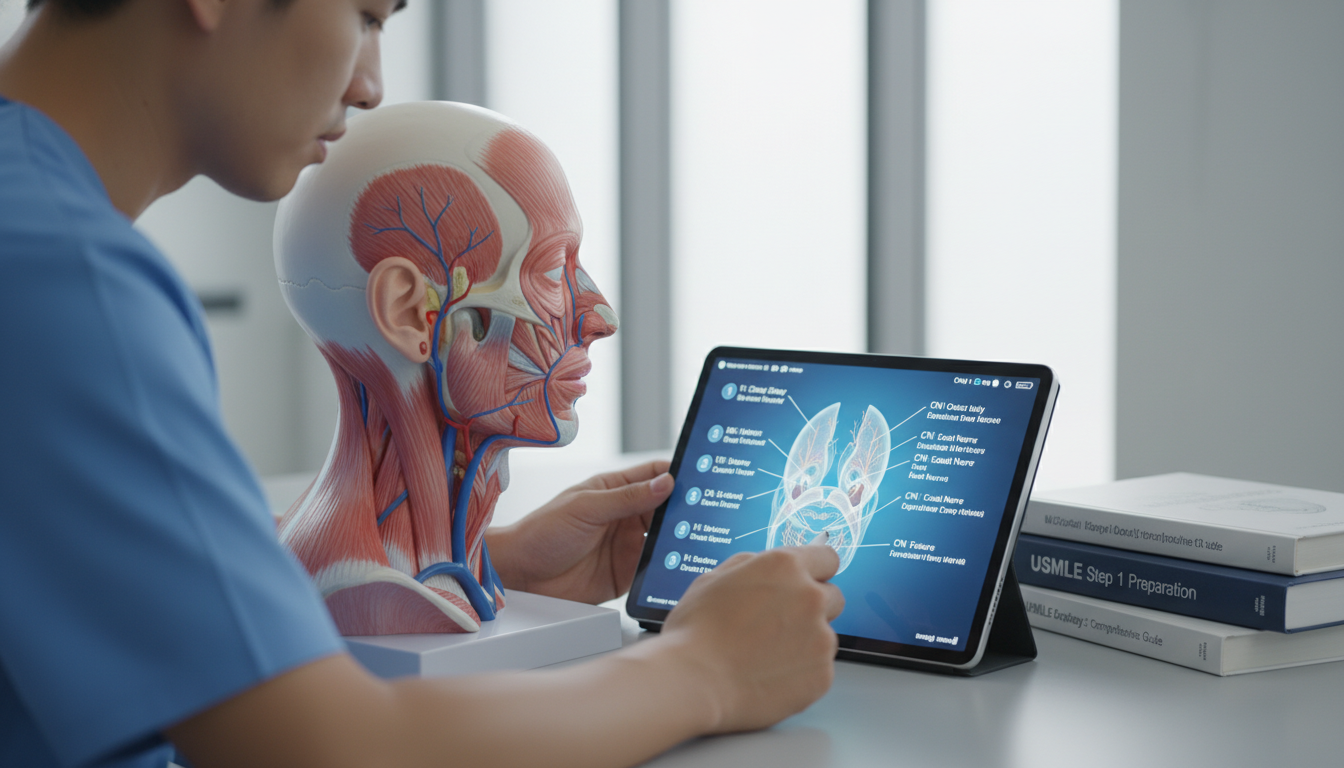
- Use 3D anatomy apps and cross-sectional imaging to visualize ENT structures
- Draw cranial nerve pathways repeatedly; link each lesion to a classic vignette
- Tie structures to real clinical cases you may have seen (e.g., a patient with Bell’s palsy, a child with recurrent otitis media)
2. Neuroanatomy and Neurophysiology
ENT intersects heavily with neurology and neurosurgery, especially around the skull base and cranial nerves.
Key Step 1 areas to master:
- Brainstem anatomy: midbrain, pons, medulla cross-sections
- Central pathways for hearing and balance:
- Cochlear nuclei to auditory cortex
- Vestibular nuclei and their connections to cerebellum, ocular motor nuclei, and spinal cord
- Motor and sensory tracts:
- Corticospinal, spinothalamic, dorsal columns
- How lesions at different levels produce distinct patterns
- Autonomic pathways:
- Parasympathetic innervation of salivary glands and lacrimal glands
- Horner syndrome and sympathetic chain lesions
Your future as an ENT surgeon will often require correlating imaging findings with neuroanatomy. Step 1 is your first rigorous checkpoint for this skill.
3. Microbiology and Infectious Disease Relevant to ENT
Infection is central to ENT practice. Step 1 vignettes frequently test pathogens associated with the ear, nose, throat, and neck.
High-yield pathogens and conditions:
Upper respiratory infections:
- Streptococcus pyogenes (pharyngitis, rheumatic fever, PSGN)
- Corynebacterium diphtheriae (pseudomembranous pharyngitis, toxin-mediated disease)
- Haemophilus influenzae (epiglottitis)
Otitis media and otitis externa:
- Streptococcus pneumoniae, Haemophilus influenzae, Moraxella catarrhalis
- Pseudomonas aeruginosa (malignant otitis externa in diabetics)
Sinusitis:
- Viral vs. bacterial patterns
- Complications: meningitis, brain abscess, cavernous sinus thrombosis
ENT-related systemic infections:
- Lemierre’s syndrome (Fusobacterium necrophorum)
- Peritonsillar and deep neck space abscesses
- Oral flora and anaerobes in head and neck infections
Approach these not just as Step 1 facts, but as building blocks of the infections you’ll manage daily in ENT residency.
4. Pathology and Oncology Foundations
You’re likely to encounter numerous questions about malignancies involving ENT structures.
Key Step 1 pathology topics:
- Head and neck squamous cell carcinoma
- Risk factors: tobacco, alcohol, HPV (especially oropharyngeal)
- Basic molecular pathways and histologic features
- Thyroid pathology (though more endocrine, still frequently in ENT practice):
- Papillary, follicular, medullary, anaplastic carcinoma
- Graves’ disease, multinodular goiter
- Salivary gland tumors:
- Pleomorphic adenoma, Warthin tumor, mucoepidermoid carcinoma
- Nasopharyngeal carcinoma (EBV-associated, endemic regions)
Even if Step 1 does not go into surgical detail, knowing the pathology and systemic manifestations from the beginning makes ENT literature more digestible later.
5. Physiology of Respiration, Swallowing, and Phonation
ENT practice involves airway, breathing, and voice.
Key physiologic areas for Step 1 and ENT:
- Upper vs. lower airway resistance
- Control of breathing: brainstem centers and cranial nerves
- Swallowing phases and coordination: oral, pharyngeal, esophageal
- Laryngeal function:
- Vocal fold mechanics
- Innervation and impact of recurrent laryngeal nerve injury
- Sleep-related breathing disorders (tie-in with obstructive sleep apnea)
Link these concepts to Step 1-style clinical scenarios (e.g., post-thyroidectomy hoarseness, aspiration after stroke).
Choosing and Using the Best Step 1 Resources for an ENT Trajectory
Your core resources will look like most students’, but your emphasis may differ slightly to support your long-term ENT goals.
Core Step 1 Resources
First Aid for the USMLE Step 1
- Use it as a content map, not as your only resource
- Mark ENT-relevant pages (neuroanatomy, head and neck, ENT infections) for extra passes
Question Banks (UWorld, AMBOSS, etc.)
- Your primary tool for both learning and self-assessment
- Filter or tag questions related to ENT systems (neuro, ENT infections, head and neck anatomy)
Anatomy Resources
- Gray’s Anatomy Review, Netter’s atlas, or digital 3D models
- A neuroanatomy/brainstem resource you find intuitive
USMLE Step 1 Study Platforms
- Online study schedules (e.g., Cram Fighter or similar)
- Spaced-repetition flashcards (Anki decks, especially those with robust neuro and anatomy sections)
ENT-Relevant Supplemental Resources
- Dedicated neuroanatomy texts or video series focused on:
- Cranial nerve lesions
- Brainstem cross-sections
- ENT-oriented clinical resources for curiosity and early exposure:
- Intro chapters from an otolaryngology textbook
- ENT clinic shadowing to visualize anatomy in real patients
Use these as enrichment—not as a distraction from the main USMLE Step 1 study plan.

Practical Study Plan: Integrating ENT Focus into Step 1 Preparation
A successful USMLE Step 1 preparation plan for future ENT residents doesn’t require a fundamentally different structure—just subtle shifts in emphasis and reflection.
Weekly Study Structure
1. Daily Q-Bank Practice (Anchor of Your Day)
- Aim for 40–80 questions/day during dedicated
- Mix systems, but periodically:
- Emphasize neuro, head/neck, and microbiology blocks
- Keep a log of ENT-related weaknesses (e.g., “confused by brainstem lesion localization”)
2. Systematic Content Review
Rotate through the major organ systems with extra care for:
- Neurology and special senses
- Respiratory system
- Cardiovascular (for vascular supply to head/neck)
- Microbiology and immunology (ENT infections, immune responses in mucosal tissues)
Use First Aid, structured review videos, or lecture notes, but constantly tie facts to USMLE-style clinical scenarios.
3. Dedicated ENT-Anatomy Time (2–3x/week)
Each week, spend focused blocks on:
- Skull base and cranial nerves
- Ear and vestibular system
- Pharynx, larynx, and neck compartments
During these sessions:
- Use visual resources (3D models, atlases, CT/MRI slices)
- Draw schematics and label structures
- Teach the material aloud, as if teaching a junior student
Example: One-Week Micro-Plan for an ENT-Bound Student
Monday–Friday
- Morning:
- 40 UWorld questions (mixed)
- Review explanations thoroughly, create Anki cards for missed items
- Afternoon:
- 2–3 hours of system-based review (e.g., neuro, micro, respiratory)
- Evening (2–3 days/week):
- 1 hour dedicated to cranial nerves and head and neck anatomy
- One focused topic per session (e.g., “CN VII lesions,” “inner ear physiology”)
Saturday
- 80-question block (simulating exam conditions)
- Review and categorize weaknesses
- Brief anatomy review or short ENT clinic visit if possible (during pre-dedicated phase)
Sunday
- Lighter, high-yield review
- Focus on summary tables, flowcharts, and flashcards
- Reflect on Step 1 preparation progress and how your growing knowledge ties into ENT
Monitoring Progress and Adjusting
ENT applicants should pay special attention to:
- Performance trends in neuro and special senses blocks
- Confidence with clinically oriented anatomy
- Ability to integrate pathways (e.g., “brainstem lesion → cranial nerve deficit → specific clinical signs”)
If you consistently miss ENT-relevant questions—such as cranial nerve lesions, vestibular disorders, or ENT infections—build short “repair blocks” into your schedule focused solely on those areas.
Bridging Step 1 Success to a Strong ENT Residency Application
USMLE Step 1 preparation is one piece of a multi-year journey toward an otolaryngology match. How you study now can set a tone for the rest of your medical training.
Using Step 1 Knowledge on Clinical Rotations
After passing Step 1:
- On ENT rotations, consciously link every patient to Step 1 physiology and pathology:
- Acoustic neuroma → CN VIII anatomy, Schwann cells
- Chronic otitis media → microbiology, Eustachian tube anatomy
- Thyroid nodules → thyroid pathology foundation
- Volunteer to present short chalk talks that blend Step 1-level science with clinical ENT topics:
- “Approach to unilateral facial paralysis”
- “Microbiology of pediatric otitis media”
This demonstrates to faculty that you built a strong preclinical foundation and can apply it clinically.
Step 1 Preparation as Rehearsal for Step 2 CK
Programs now often weigh Step 2 CK more heavily, especially for competitive fields like ENT. Your Step 1 habits should:
- Teach you how to master large volumes of material efficiently
- Develop your question-bank discipline
- Build your conceptual understanding, not just memorization
Students who treat Step 1 as a comprehensive learning experience—not just a hurdle—tend to find Step 2 CK less daunting, which is an important advantage in the otolaryngology match.
Showcasing Your Commitment to ENT
While Step 1 itself is pass/fail, you can still reflect your dedication to ENT in related ways:
- Choose preclinical selective or honors projects involving head and neck anatomy or ENT-related physiology
- Pursue early research or case reports in otolaryngology
- Pair Step 1 topics with ENT shadowing experiences (e.g., reading about vestibular pathways and then observing a patient with vertigo)
These steps signal to residency programs that you’ve been thinking about ENT from early in medical school—and that your USMLE and basic science preparation were aligned with this goal.
FAQs: Step 1 Preparation for Aspiring Otolaryngologists
1. Does Step 1 still matter for an ENT residency if it’s pass/fail?
Yes. While programs won’t see your numeric score, they will see whether you passed on the first attempt and how you perform on Step 2 CK. Strong USMLE Step 1 preparation builds the foundational knowledge (especially in anatomy and neurophysiology) that helps you excel later. Failing Step 1 can be a significant obstacle in the otolaryngology match, so treating it seriously remains crucial.
2. Should I study ENT-specific textbooks for Step 1?
Not for primary Step 1 preparation. Your time is better spent mastering high-yield Step 1 resources and question banks. However, if you’re highly motivated, reading short ENT textbook sections (e.g., on ear and skull base anatomy) can deepen your understanding of topics that also appear on Step 1, as long as it doesn’t detract from your core USMLE Step 1 study.
3. How can I balance Step 1 preparation and early ENT research?
Prioritize Step 1 during dedicated study time. Before and after that period, you can engage in ENT research with clear boundaries (e.g., a few hours per week). Communicate with your research mentors about exam timelines. Programs value research, but a compromised Step 1 performance or a fail is more harmful than delaying a manuscript by a few months.
4. What Step 1 resources are best if I struggle with anatomy, especially head and neck?
Combine multiple modalities:
- A concise anatomy review book or video series
- A high-quality atlas or 3D anatomy app (for spatial understanding)
- Question banks emphasizing clinically oriented anatomy
- Repeated, active drawing of cranial nerves, brainstem cross-sections, and ENT-related spaces
This multimodal approach reinforces memory and prepares you both for USMLE Step 1 and for the heavy anatomical demands of ENT residency.
By approaching USMLE Step 1 preparation with an eye toward your future ENT residency, you convert an exam requirement into a powerful investment in your specialty-specific knowledge and long-term success.