Understanding the Intersection of Step 1 and Global Health
USMLE Step 1 is often framed as a hurdle—an exam of biochemistry pathways and obscure enzymes. For applicants interested in global health and international medicine, however, Step 1 preparation can be a powerful foundation rather than a distraction. The knowledge base you build for USMLE Step 1—microbiology, pharmacology, physiology, epidemiology—can directly shape your future work with vulnerable populations, refugee care, and international health systems.
With Step 1 now pass/fail, it’s tempting to think the stakes are lower. In reality, the exam remains critical, especially for those planning a global health residency track:
- You must pass to continue in most programs.
- Faculty still view a solid pass as evidence of discipline and baseline medical knowledge.
- Strong Step 1 preparation positions you to excel in Step 2 CK, which is now more heavily weighted and still numeric.
- Many global health roles demand comfort with tropical and infectious diseases, epidemiology, and public health—topics embedded in Step 1 content.
This guide focuses on how to structure your USMLE Step 1 study so that it not only gets you a pass, but also builds the clinical reasoning and global health lens you’ll need for an international career.
We will cover:
- How Step 1 content aligns with global health practice
- A practical study strategy with a global health orientation
- Smart use of Step 1 resources for international medicine
- Integrating field experience, language skills, and ethics into your prep
- How to talk about Step 1 and global health in your residency application
How Step 1 Content Powers a Career in Global Health
USMLE Step 1 is not a global health exam, but many of its core domains are exactly what you need for an international medicine career. Viewing your USMLE Step 1 study through that lens helps the material feel more relevant and memorable.
Core Domains with Direct Global Health Relevance
1. Microbiology and Infectious Disease
Global health is filled with infectious disease challenges—HIV, TB, malaria, neglected tropical diseases, vaccine-preventable illnesses. Step 1 emphasizes:
- Bacteria: TB, cholera, typhoid, meningococcal disease
- Viruses: HIV, hepatitis viruses, arboviruses (dengue, Zika), measles, polio
- Parasites: malaria, helminths, protozoa like Giardia and Entamoeba
- Fungi: cryptococcus, histoplasma, coccidioides
These are exactly the pathogens you’ll encounter in international medicine and among immigrant and refugee populations in the U.S. Taking time during Step 1 preparation to understand:
- Transmission patterns (e.g., vector-borne vs waterborne)
- Global distribution and epidemiology
- Basic control strategies (vaccines, public health interventions)
…gives you an advantage when you engage in fieldwork or a global health residency track later.
2. Pharmacology with a Global Lens
Step 1 pharmacology feels overwhelming, but for global health it’s essential:
- Infectious disease drugs: antimalarials, anti-TB meds, antiretrovirals, antifungals, antibiotics
- Maternal and child health drugs: tocolytics, uterotonics, preeclampsia meds, pediatric dosing
- Public health–relevant medications: vaccines, antiparasitics, TB prophylaxis, mass drug administration regimens
Actionable tip: When you study a drug, ask:
- Is this on the WHO Essential Medicines List?
- Is it used in mass campaigns (e.g., ivermectin, albendazole)?
- Are there major resistance issues (e.g., artemisinin resistance in malaria)?
This builds a mental framework that stays useful long after the exam.
3. Pathology and Epidemiology
Step 1 pathology is more than memorizing slides. For global health:
- Understanding nutritional deficiencies (iron, vitamin A, iodine, folate) is vital in low-resource settings.
- Recognizing consequences of chronic infections (HBV/HCV and hepatocellular carcinoma, schistosomiasis and portal hypertension) is key in endemic regions.
- Mastering basics of epidemiology and biostatistics prepares you for program evaluation, research, and interpreting global health literature.
Why Strong Step 1 Preparation Matters for Global Health–Oriented Residents
Even though Step 1 is now pass/fail, a serious, structured approach benefits global health–minded students:
- Clinical credibility: Global health mentors and program directors look for trainees who are clinically strong. Solid Step 1 prep underpins clinical reasoning.
- Research opportunities: Many global health projects involve data and study design; your Step 1 biostatistics knowledge gives you a head start.
- Adaptability: International medicine often means practicing in resource-limited settings. Deep physiological understanding helps when advanced diagnostics are unavailable.
In short, think of USMLE Step 1 preparation as your first major investment in being the kind of physician who can practice safely and thoughtfully in diverse global contexts.

Designing a Step 1 Study Strategy with a Global Health Orientation
An effective Step 1 plan balances exam requirements with your broader goals. You still need a traditional foundation (systems-based, resources, Qbanks), but you can add a global health “layer” without overloading your schedule.
Phase 1: Foundation Building (8–10 Weeks)
During this phase, your aim is to build a systemic understanding using core Step 1 resources while subtly connecting content to global health.
Core Components
Primary Content Resource
- First Aid, UWorld lecture notes, Boards & Beyond, or equivalent.
- As you review each system, ask:
- How might this disease present differently in low-resource settings?
- Are there global variations in prevalence or risk factors?
Qbank Integration
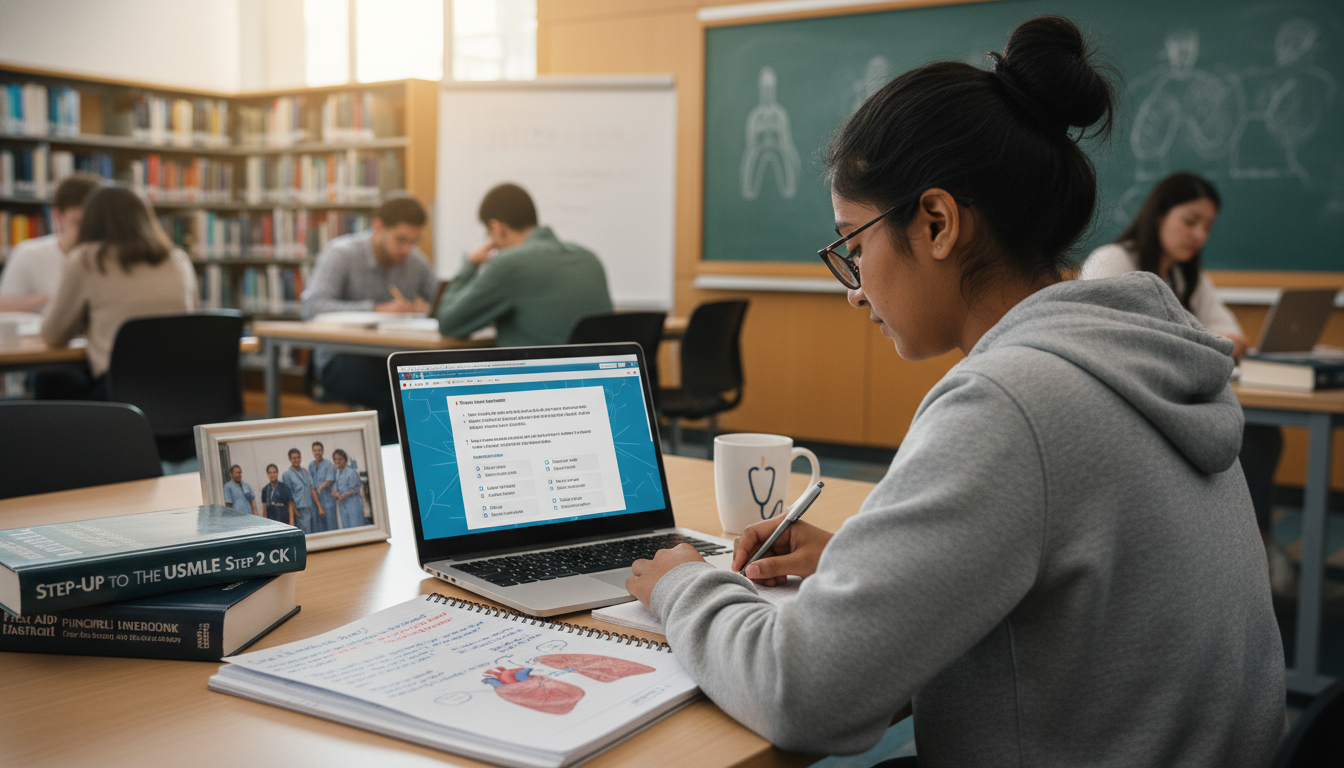
- Start USMLE Step 1 study questions early (UWorld, AMBOSS, or similar).
- Use tutor mode for learning; later you can switch to timed blocks.
- Tag or annotate questions that involve:
- Tropical diseases
- Infections common in low- and middle-income countries (LMICs)
- Underserved or immigrant populations
Micro & Pharm as Global Pillars
- Dedicate extra, scheduled blocks each week to microbiology and pharmacology.
- For each pathogen or drug, add a global note in your Anki or written flashcards:
- Region of highest prevalence
- Key prevention strategies (WASH, vaccines, vector control)
- WHO-recommended first-line therapies
Example Weekly Structure (During Pre-Dedicated Time)
- Monday–Friday
- 2–3 hours: Systems-based content (e.g., cardio, renal)
- 1–1.5 hours: Qbank (10–20 questions/day)
- 45–60 minutes: Review of global-health-heavy topics (infectious disease, epidemiology)
- Weekend
- 1 longer Qbank block (20–40 questions)
- 1–2 hours reviewing missed micro/pharm questions with global notes
Phase 2: Integration and Application (4–6 Weeks Dedicated)
In your dedicated period, you already know the basics. Now you apply and solidify them—this is where you can explicitly include global health perspectives.
Structured Daily Plan (Example)
Morning (3–4 hours)
- 2 timed Qbank blocks (40 questions total)
- Immediate review of rationales with emphasis on:
- Pathophysiology
- First- and second-line treatments
- Epidemiology and risk factors
Afternoon (3–4 hours)
- Focused review of weak systems (NBME or self-assessment guided)
- Targeted micro/pharm review
- Add global notes: e.g., “TB more common in HIV+ patients, especially in sub-Saharan Africa and parts of Asia.”
Evening (1–2 hours)
- Flashcards (Anki) with tagged global health topics
- Light reading on a global health theme occasionally (e.g., WHO fact sheets) to contextualize what you learned—without letting it overshadow core exam content.
Building a “Global Health Overlay” Without Burning Out
You do not need an entirely separate global health curriculum during Step 1 preparation. Instead:
- Use small contextual tags:
- “Cholera – major outbreaks in refugee camps; oral rehydration therapy is a cornerstone.”
- “Measles – elimination vs eradication; vaccination campaigns.”
- Associate each disease with an image or map of where it’s common. This can improve memory and understanding.
- Discuss complex global health–related cases in small study groups. Walk through how resource limitations would change management.
The key is to integrate, not add. Your primary goal remains: pass Step 1 confidently. The global framing simply enriches and cements your learning.
Choosing and Using Step 1 Resources for International Medicine
Standard Step 1 resources are still your backbone, but some are particularly helpful for global health–minded students.
High-Yield Core Resources
Qbanks (UWorld, AMBOSS, etc.)
- Prioritize one main bank and aim to complete at least 70–80% of it.
- Use filters to occasionally focus on:
- Microbiology/infectious disease
- Public health & epidemiology
- Mark international or migrant health–related questions as a “global health” tag.
Comprehensive Text/Video Resource
- Boards & Beyond, Pathoma, or similar.
- When covering infectious disease videos, pause to think:
- Where is this endemic?
- What social determinants drive its spread?
- How might diagnosis differ in a rural clinic vs academic center?
First Aid for the USMLE Step 1
- Use it as a map, not your sole resource.
- Annotate with:
- WHO guidelines (if relevant)
- Prevalence notes (“common in LMICs,” “high HIV co-infection”)
- Additional mnemonics linking disease to geography
Supplementary Global Health–Relevant Resources
These should never replace your high-yield Step 1 preparation, but can be incorporated lightly:
WHO and CDC Fact Sheets
- Use them sparingly: 10–15 minutes once or twice a week.
- Focus on diseases you keep encountering in Qbanks: TB, HIV, malaria, cholera, dengue.
Short Global Health Podcasts or Webinars
- Avoid long, time-consuming series during dedicated study.
- A brief podcast while commuting can reinforce concepts like:
- Vaccination campaigns
- Drug resistance
- Outbreak response
Case-Based Global Health Books or Articles
- Limit reading to occasional breaks.
- Look for case vignettes that parallel Step 1–type presentations in low-resource settings.
What to Avoid During Step 1 Prep
- Starting new intensive global health certificates or research projects during dedicated time.
- Long volunteer commitments that reduce daily study hours.
- Deep dives into policy or advanced epidemiology at the expense of core exam topics.
Remember: your future global health impact depends on being a competent clinician. The strongest strategy is to excel in USMLE Step 1 preparation first, then scale up your global health commitments afterward.
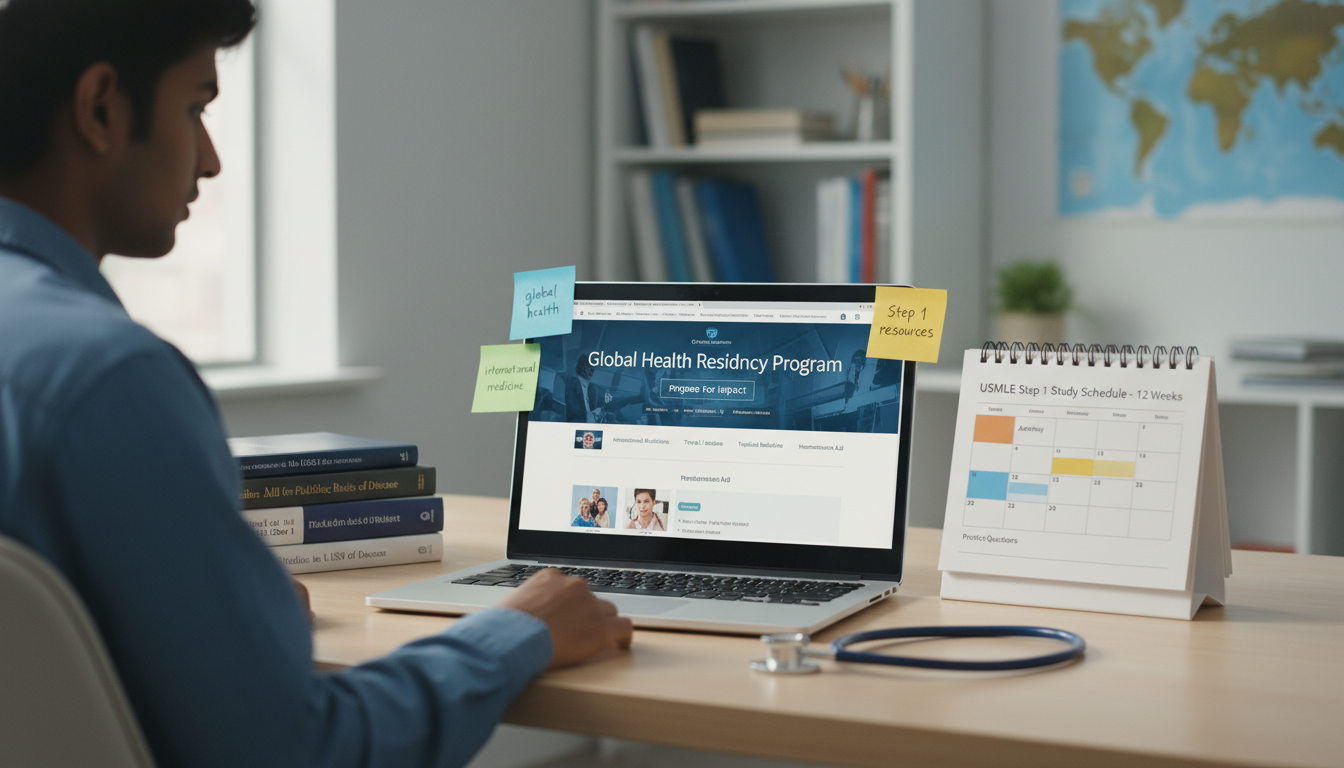
Linking Step 1 Preparation to Future Global Health Residency Paths
Passing Step 1 is only one step. If you’re targeting a global health residency track—whether in internal medicine, pediatrics, family medicine, or EM—you’ll want to translate your exam preparation into a competitive application.
How Programs View Step 1 in the Global Health Context
With pass/fail scoring, program directors focus on:
- Pass on first attempt – shows reliability and baseline competence.
- Step 2 CK score – now the main numeric metric.
- Trajectory and narrative – how you’ve aligned your training with global health.
Global health–oriented faculty care less about a three-digit Step 1 score and more about:
- Your commitment to underserved and international populations.
- Evidence of solid medical knowledge (clear from your later clinical performance and Step 2).
- Your understanding of ethics, equity, and health systems.
That said, weak or delayed performance on Step 1 can raise concerns about your capacity to handle demanding global health roles. A structured, successful USMLE Step 1 study period is therefore still an important foundation.
Using Step 1 Prep to Build Your Story
Here’s how to deliberately align your Step 1 journey with an international medicine narrative:
Reflective Framing
- After dedicated study, take time to reflect:
“How did this process change how I think about disease, systems, and populations?” - Keep a brief journal; it can later inform your personal statement.
- After dedicated study, take time to reflect:
Knowledge Translation
- If you’re involved in student groups (e.g., global health interest group), consider delivering a short session on:
- Tropical disease basics
- Rational antibiotic use
- This shows leadership and teaching skills grounded in your new knowledge.
- If you’re involved in student groups (e.g., global health interest group), consider delivering a short session on:
Targeted Electives (Post-Step 1)
- Use the post–Step 1 period to take electives in:
- Infectious disease
- Refugee/immigrant health clinics
- Travel medicine
- You’ll be surprised how much Step 1 microbiology and pharmacology support clinical decision-making in these rotations.
- Use the post–Step 1 period to take electives in:
Future Research and Fieldwork
- Understanding of biostatistics and epidemiology from Step 1 can:
- Prepare you for global health research projects.
- Help you critically read global health literature.
- Make you more useful to mentors running international studies.
- Understanding of biostatistics and epidemiology from Step 1 can:
Articulating Step 1 in Your Application
When you eventually write your personal statement or interview, do not dwell on Step 1 itself. Instead, emphasize:
- How Step 1 preparation deepened your understanding of diseases highly prevalent in low-resource settings.
- How it motivated you to learn more about:
- Antimicrobial resistance
- Vaccine-preventable diseases
- Malnutrition and maternal–child health
- How you intend to use that foundation within a global health residency track to deliver better care and support capacity-building abroad and domestically.
Practical Tips, Common Pitfalls, and Ethical Considerations
Practical Tips for Balancing Global Health Interests with Step 1
Use Global Health as a Motivation Tool
- On low-energy days, pick one pathogen or condition prevalent in LMICs and learn it thoroughly. Visualize the real communities affected; this can rekindle purpose.
Study Groups with a Global Focus
- Form a small group of peers interested in global health.
- Once a week, do a short “global case”:
- Example: “A 7-year-old in rural Uganda with fever and anemia. How do we approach diagnosis and treatment with limited tests?”
Language Learning Lite
- If you are learning a language (e.g., Spanish, French, Portuguese), keep it light during dedicated Step 1:
- Short daily Duolingo sessions or flashcards with medical terms.
- Do not let intensive language courses crowd out study hours.
- If you are learning a language (e.g., Spanish, French, Portuguese), keep it light during dedicated Step 1:
Use Breaks Wisely
- During breaks, briefly skim global health headlines or WHO dashboards. This keeps your long-term goals in sight without derailing your schedule.
Common Pitfalls for Global Health–Minded Students Studying for Step 1
Overcommitting to Fieldwork During Critical Study Periods
- Extended international trips right before dedicated time can throw off your timeline and mental bandwidth.
- If you must travel, plan Step 1 for after you return and give yourself proper lead time.
Neglecting High-Yield Exam Content in Favor of Niche Global Topics
- Not every global health disease is heavily tested.
- Focus on Step 1–relevant pathogens and pathologies; save more specialized learning (e.g., certain neglected tropical diseases) for later.
Underestimating Step 1 Because It Is Pass/Fail
- Global health work is demanding. Struggling with basic pathophysiology or pharmacology later can limit your impact.
- Prepare as if you were aiming for an excellent score—even though you only need a pass.
Ethical Reflection While You Study
A unique advantage of blending global health and USMLE Step 1 preparation is space for ethical reflection:
- When studying infectious disease outbreaks, think about:
- Vaccine equity
- Structural determinants of health
- Stigmatization of certain populations
- When reviewing pharmacology:
- Consider access to medications globally.
- Reflect on rational vs irrational prescribing practices.
You don’t need to turn Step 1 study into an ethics seminar. But integrating brief moments of reflection helps ensure your future global health work is grounded in humility and respect, not just technical knowledge.
FAQs: USMLE Step 1 and Global Health Preparation
1. Should I tailor my entire Step 1 study plan specifically to global health?
No. Your primary goal is to pass Step 1 on the first attempt with solid understanding. You should use global health primarily as a contextual frame and motivation, not as a separate curriculum. Emphasize high-yield exam topics first, then add global notes (epidemiology, public health implications) where they naturally fit.
2. Are there Step 1 resources specifically designed for global health or international medicine?
Most mainstream Step 1 resources are not branded as global health–specific, but they already contain the content you need: microbiology, infectious disease pharmacology, biostatistics. Supplement lightly with WHO/CDC materials and short global health articles, but avoid replacing high-yield Step 1 resources with niche global texts during your main prep.
3. How can I mention my Step 1 preparation when applying to a global health residency track?
You generally won’t focus on the exam itself. Instead, highlight how your USMLE Step 1 study:
- Deepened your understanding of diseases prevalent in low-resource settings.
- Motivated you to seek clinical and research experiences in global health.
- Prepared you to contribute meaningfully to international medicine initiatives.
Frame Step 1 as part of a broader pattern of disciplined learning and commitment to underserved populations.
4. I’m torn between more global health experiences now and more time for Step 1. What should I prioritize?
During your preclinical years, you can do some global health volunteering or short projects, but as Step 1 approaches, it’s wise to shift your priority to exam preparation. Passing Step 1 reliably enables you to progress to clinical rotations and ultimately a residency where you can engage more deeply in global health. Think of Step 1 as a foundation; meaningful, sustained global health work is usually more impactful later in your training.
A well-planned USMLE Step 1 preparation period is not at odds with a career in global health; it is one of its earliest building blocks. By approaching your USMLE Step 1 study with intention—using strong Step 1 resources, integrating a global health perspective, and maintaining focus on fundamentals—you set yourself up not only to pass the exam, but to become the kind of clinician global health truly needs.