



Understanding Step 1 in the Context of Cardiothoracic Surgery
For aspiring cardiothoracic surgeons, USMLE Step 1 is more than just a licensing exam—it is the academic foundation for your future heart surgery training. Although Step 1 is now reported as Pass/Fail, program directors in competitive specialties like cardiothoracic surgery residency still view basic science excellence as a strong signal of future performance in the OR, on ICU rotations, and on in‑service exams.
Cardiothoracic surgery sits at the intersection of anatomy, physiology, pathophysiology, and pharmacology. Step 1 is exactly where these disciplines are tested most rigorously. The stronger your foundation here, the easier it will be to:
- Excel in cardiovascular, pulmonary, and critical care clerkships
- Understand complex cardiopulmonary bypass physiology
- Master perioperative management of cardiac and thoracic patients
- Score highly on Step 2 CK and in-training exams
Why Step 1 Still Matters for Cardiothoracic Surgery (Even as Pass/Fail)
Even without a numeric score, your Step 1 preparation and performance still impact your cardiothoracic trajectory:
- Pass on first attempt: Multiple attempts raise concerns, especially in ultra-competitive specialties.
- Depth of knowledge: Reflected in clinical grades, letters of recommendation, and research productivity.
- Study discipline: Robust USMLE Step 1 study habits mirror the rigor demanded in cardiothoracic training.
- Board-style thinking: Heart surgery training is exam-heavy; early board-style reasoning pays dividends.
Program directors cannot see your numerical score, but they can see:
- Whether you passed on the first attempt
- Dean’s letter/MSPE narrative about basic science performance
- Trends in subsequent metrics: Step 2 CK, shelf exams, and clinical honors
Your goal is simple: pass comfortably while building a high-yield, durable foundation in cardiovascular and thoracic sciences.
Core Cardiothoracic Concepts Tested on Step 1
Step 1 is not a cardiothoracic surgery exam, but many high-yield topics map directly onto what cardiothoracic surgeons use daily. Organizing your studying around these systems helps you prepare more intentionally for your future specialty.

1. Cardiovascular System
This is arguably the single most important system for a future cardiothoracic surgeon.
Key anatomy and embryology:
- Cardiac chambers, valves, and coronary anatomy (including dominance patterns)
- Great vessels and their branches; anatomical relationships in the mediastinum
- Cardiac conduction system and blood supply
- Congenital heart disease basics: VSD, ASD, PDA, Tetralogy of Fallot, truncus arteriosus, transposition of the great arteries
- Embryologic origins of cardiac structures and common developmental errors
Key physiology:
- Cardiac output, stroke volume, preload, afterload, contractility, and ejection fraction
- Pressure-volume loops and their changes in disease states and with drugs
- Myocardial oxygen demand, coronary blood flow regulation
- Starling curves, venous return curves, and their modifiers
- Autonomic regulation of heart rate and contractility
Key pathology:
- Ischemic heart disease: stable vs unstable angina, MI, complications (papillary muscle rupture, ventricular septal rupture, aneurysm, etc.)
- Valvular disease: aortic stenosis/regurgitation, mitral stenosis/regurgitation, endocarditis
- Cardiomyopathies: dilated, restrictive, hypertrophic
- Pericardial diseases: effusion, tamponade, constrictive pericarditis
- Hypertension, atherosclerosis, aortic aneurysm and dissection
Pharmacology cross-link:
- Antianginals (nitrates, beta-blockers, calcium-channel blockers)
- Antiarrhythmics (classes I–IV), digoxin, adenosine
- Antihypertensives and heart failure medications (ACE inhibitors, ARBs, ARNI, diuretics, vasodilators)
- Anticoagulants and antiplatelet agents (heparin, DOACs, warfarin, aspirin, P2Y12 inhibitors)
These are the same concepts at the core of cardiac anesthesia and perioperative management—master them now, and you will be far ahead later.
2. Pulmonary System
Thoracic surgery depends on a detailed understanding of lung physiology and pathology.
Key physiology:
- Lung volumes and capacities, compliance, and elastic properties
- V/Q mismatch types (dead space vs shunt) and shunt fraction concepts
- Oxygen-hemoglobin dissociation curve and its shifts
- Gas transport (O2, CO2), alveolar gas equation, and A–a gradient
- Hypoxemia vs hypoxia: differential diagnosis and mechanisms
Key pathology:
- Obstructive lung diseases: COPD, asthma, bronchiectasis
- Restrictive lung diseases: ILD, pneumoconiosis, ARDS
- Lung cancer types, paraneoplastic syndromes, and staging principles
- Pleural effusion, pneumothorax, hemothorax, empyema
- Pulmonary embolism pathophysiology and consequences
These concepts are vital in cardiothoracic ICUs, as well as intraoperative ventilator management and post-lobectomy care.
3. Vascular Biology and Hemostasis
Surgery revolves around controlling bleeding and maintaining perfusion.
Key pathophysiology:
- Atherosclerosis and plaque rupture mechanisms
- Peripheral arterial disease, aneurysm formation, and dissection pathogenesis
- Venous thromboembolism and Virchow’s triad
- Shock states (hypovolemic, cardiogenic, distributive, obstructive)
Coagulation and hematology:
- Intrinsic and extrinsic pathways, interpretation of PT/PTT/INR
- Platelet function and antiplatelet medication mechanisms
- Hypercoagulable states and inherited thrombophilias
- Transfusion medicine basics, massive transfusion principles (even though Step 1 is less clinical, the underlying physiology is high-yield)
4. General Surgery and Critical Care Foundations
While Step 1 is not a surgical exam, many topics underpin perioperative cardiothoracic care:
- Inflammation and wound healing at the cellular and molecular level
- Sepsis and SIRS pathophysiology
- Acid-base disturbances and interpretation of ABGs
- Electrolyte imbalances (Na, K, Ca, Mg) and their cardiac effects
- Pharmacokinetics/pharmacodynamics of anesthetic and vasoactive drugs
Step 1 questions often disguise these topics in broader basic-science stems; learning them now will make your future ICU and OR rotations much smoother.
Building an Effective Step 1 Study Strategy with a Cardiothoracic Focus
While your primary objective is to pass Step 1 efficiently, aligning your USMLE Step 1 study with long-term cardiothoracic goals will pay long-term dividends.
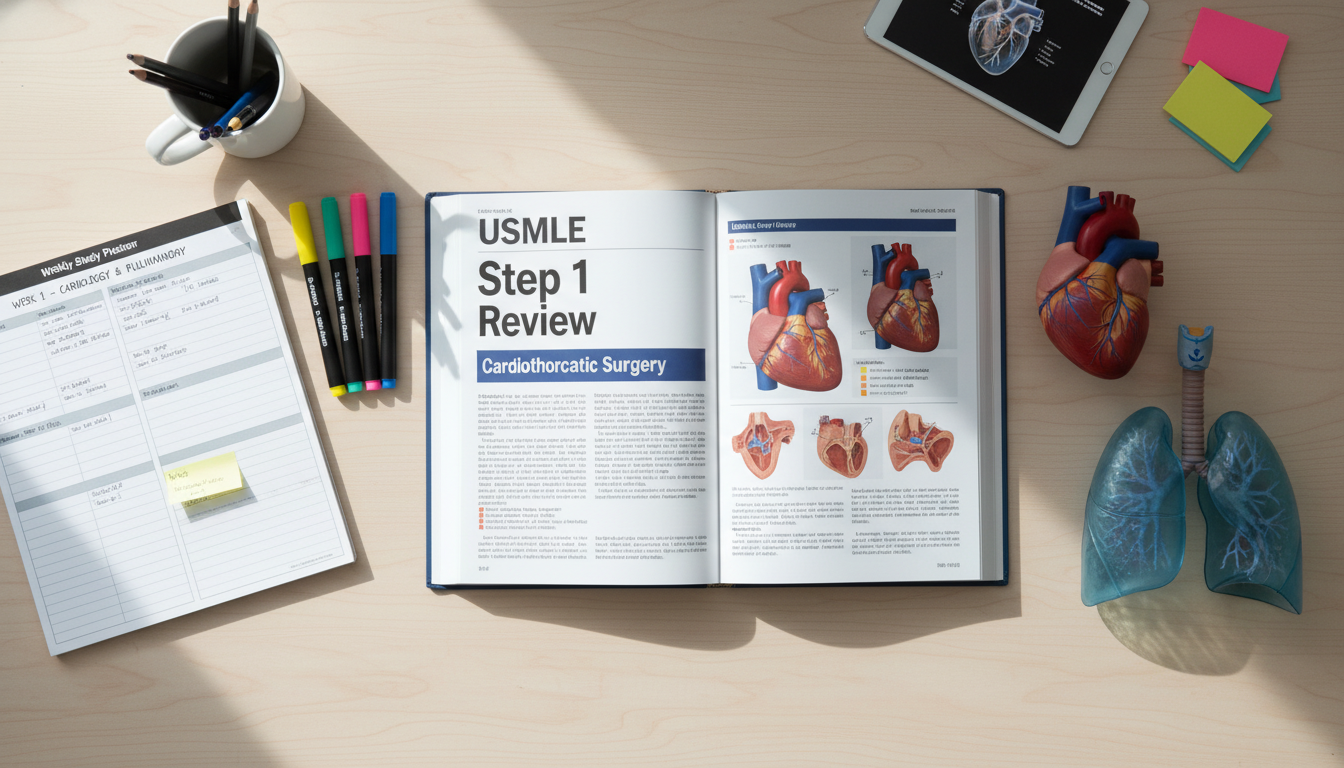
Step 1 Resources: Choosing the Right Tools
Many Step 1 resources exist, and it is easy to get overwhelmed. Focus on a small, high-yield core arsenal:
Core content review:
- First Aid for the USMLE Step 1 – essential as a master outline
- A comprehensive question bank (UWorld is the gold standard)
Supplemental cardiothoracic-relevant resources:
- Pathology: Pathoma or Boards & Beyond Pathology
- Physiology: BRS Physiology or Boards & Beyond videos for cardiovascular and pulmonary physiology
- Pharmacology: Sketchy or a concise review text (for cardiovascular and anticoagulant drugs in particular)
- Anatomy: High-yield cardiac and thoracic anatomy sources (e.g., selected sections from Netter’s, online 3D atlases)
Practice exams:
- NBME practice exams (especially those heavily featuring cardiopulmonary systems)
- UWorld self-assessments, if available and relevant
Limit your toolset to these core items; mastery of a few Step 1 resources beats superficial reading of many.
Designing a Cardiothoracic-Conscious Study Schedule
Your Step 1 preparation plan should address all subjects but deliberately weight cardiothoracic domains more heavily to build depth.
Example 10–12 week dedicated schedule (40–50 hrs/week):
Weeks 1–3: Systems-based approach
- Cardiovascular system: 7–10 days
- Pulmonary system: 5–7 days
- Daily UWorld blocks (40 questions/day) focusing on these systems
- Daily Anki or spaced repetition cards
Weeks 4–6: Remaining systems and integration
- Renal, GI, neuro, endocrine, etc.
- Still include cardiopulmonary mixed review blocks
Weeks 7–9: Mixed blocks and consolidation
- 2–3 UWorld blocks/day, mixed subjects
- Focus on reviewing incorrects and weak areas
- Revisit high-yield cardiac and pulmonary sections in First Aid
Weeks 10–12: Final review and exam readiness
- Practice NBMEs every 7–10 days
- Taper content review, emphasize question-based learning
- Maintain a short daily review of cardiac and pulmonary topics
If you are earlier in pre-clinicals, you might incorporate a “slow burn” Step 1 plan across 6–12 months, syncing with your school’s curriculum and starting with USMLE Step 1 study in cardiovascular and respiratory blocks.
Integrating Active Learning and Question-Based Practice
For future surgeons, learning by “doing” is crucial—this starts with your study approach:
Daily question practice: Treat each question as a mini-OR case:
- Identify the key problem (e.g., acute MI, tamponade, tension pneumothorax)
- Ask “what is the underlying physiology?” before choosing an answer
- Write brief teaching points and organize them by topic (e.g., “Aortic dissection – associations, presentations, imaging choices”).
Spaced repetition: Use Anki or similar tools to reinforce:
- Murmurs and lesion-hemodynamics relationships
- Drug mechanisms and side effects (especially cardiovascular and anticoagulant drugs)
- Congenital heart lesions and shunt physiology
- Pathologic descriptions of vascular and valvular disease
Teaching others: Explaining concepts like pressure-volume loops or V/Q mismatch to classmates is an excellent test of mastery, and mirrors the teaching you will do as a resident.
Deep Dive: Cardiothoracic-Related Topics to Master for Step 1
Your goal is not to over-specialize during Step 1 prep, but to ensure that topics that will recur throughout heart surgery training are rock-solid.
Cardiac Murmurs and Valvular Disease
For Step 1 (and eventually for the OR):
- Know where each murmur is best heard and how it changes with maneuvers (handgrip, Valsalva, inspiration, squatting).
- Understand the hemodynamics and downstream consequences:
- Aortic stenosis → LV hypertrophy, angina, syncope
- Mitral regurgitation → volume overload, LA dilation, AFib
- Mitral stenosis → pulmonary hypertension, right heart strain
- Memorize key etiologies and classic associations (rheumatic disease, bicuspid aortic valve, endocarditis).
Step 1 questions often embed these murmurs in pathophysiology stems; you want instant pattern recognition.
Congenital Heart Disease and Embryology
Cardiothoracic surgeons (especially those in congenital practice) live in this world daily, and Step 1 tests it at an embryologic and physiologic level:
- Left-to-right vs right-to-left shunts and Eisenmenger syndrome
- Tetralogy of Fallot features and “tet spells”
- PDA physiology and pharmacologic closure/maintenance (indomethacin vs PGE1)
- Embryologic origins of septa, vessels, and outflow tracts
Link each defect to its embryologic error (e.g., conotruncal abnormalities leading to truncus, transposition, TOF).
Shock and Cardiorespiratory Failure
Step 1 loves shock questions, and cardiothoracic surgeons frequently manage shock states:
- Recognize types of shock by clinical picture and hemodynamics
- Understand compensatory mechanisms (baroreceptors, RAAS)
- Connect to therapies (fluids, vasopressors, inotropes) at a mechanistic level
For your future in cardiac ICUs, a deep understanding of these states will be essential.
Cardiac Pharmacology and Antithrombotic Therapy
Heart surgery training is full of complex medication management. For Step 1:
- Learn drug classes, mechanisms, and clinical indications:
- Beta-blockers, ACEi/ARBs, calcium-channel blockers
- Nitrates, hydralazine, minoxidil
- Antiarrhythmics (with a special focus on adverse effects like torsades, lung toxicity)
- Anticoagulants and antiplatelets:
- Heparin vs LMWH vs DOACs vs warfarin: mechanisms and monitoring
- Aspirin vs P2Y12 inhibitors (e.g., clopidogrel): mechanisms and side effects
You will later use these to manage post-bypass patients, prosthetic valves, arrhythmias, and graft patency.
Pulmonary Function and Ventilation
Thoracic surgery and postoperative cardiac care hinge on ventilation strategies:
- Know FRC, TLC, RV and how diseases like COPD and restrictive lung disease alter them
- Understand A–a gradient interpretation and alveolar gas equation
- Recognize patterns of V/Q mismatch and their causes (e.g., PE, pneumonia, COPD, ARDS)
On Step 1, these appear in ventilation/perfusion ratio questions, blood gas interpretation, and hypoxemia mechanisms.
Linking Step 1 Preparation to a Future in Cardiothoracic Surgery
While your immediate goal is to pass Step 1, you can strategically connect your studying to your long-term cardiothoracic aspirations.
Building a Cardiothoracic “Lens” During Step 1 Prep
As you learn foundational material, consistently ask:
- “How would this disease look on a surgical service?”
- “What anatomic relationships would matter in the OR?”
- “How does this physiology change during anesthesia or cardiopulmonary bypass?”
Examples:
- When studying aortic dissection: visualize surgical repair, understand Marfan’s and hypertension associations, and think about implications for perfusion.
- When learning about ARDS: connect it to postoperative lung complications after bypass or thoracic surgery, and the principles of lung-protective ventilation.
- When reviewing coagulation: imagine intraoperative bleeding, reversal of anticoagulants, and managing heparin during bypass.
Early Exposure and Parallel Experiences
Parallel to your USMLE Step 1 study, if time permits:
- Attend cardiothoracic surgery conferences or grand rounds at your institution.
- Shadow in the OR for a few cases (even if rarely during dedicated, consider doing this earlier in pre-clinicals).
- Join or initiate simple cardiothoracic research projects (outcomes, case reports, or database studies).
These experiences will remind you why you are working so hard on Step 1 and help you connect abstract physiology to real patients.
Avoiding Pitfalls: Balance and Burnout
Cardiothoracic surgery attracts driven, high-achieving students, but perfectionism can backfire during Step 1 preparation:
- Do not aim to “know everything”; focus on high-yield topics and repeated testing.
- Avoid excessive subspecialty reading that distracts from core Step 1 content—there will be plenty of time later for detailed surgical texts.
- Protect sleep, exercise, and nutrition; long-term stamina matters more than heroically long single-day study sessions.
Think like a future surgeon: deliberate practice, consistent routines, and strategic rest.
Frequently Asked Questions (FAQ)
1. Does a Pass/Fail Step 1 still matter for cardiothoracic surgery residency?
Yes. While programs cannot see your numerical score, they care deeply about:
- Whether you passed on the first attempt
- Your clinical performance and Step 2 CK score
- Evidence of solid basic science understanding (seen in shelves, letters, and research productivity)
Strong Step 1 preparation supports every downstream metric and signals discipline and academic strength—essential in an intense field like cardiothoracic surgery.
2. How should I prioritize cardiothoracic topics during Step 1 prep without neglecting other subjects?
Use a “priority plus balance” approach:
- Allocate extra focus to cardiovascular, pulmonary, and hemostasis content (more questions, more spaced repetition).
- Still complete a full systems-based review to avoid weak links in non-cardiac areas tested on Step 1.
- During mixed question blocks, flag all cardiopulmonary questions for a second review to extract maximal learning from each.
3. Which Step 1 resources are best if I’m interested in cardiothoracic surgery?
For most students, an efficient setup includes:
- First Aid as a primary outline
- UWorld as your main question bank
- Pathoma (or Boards & Beyond) for pathophysiology
- A reliable physiology source (e.g., BRS Physiology) with a focus on the cardiovascular and pulmonary units
- Optional targeted anatomy resources (3D platforms or high-yield atlases) for thoracic and cardiac anatomy
The key is mastery of this lean set, not an ever-expanding list.
4. How can I connect my Step 1 studying to future heart surgery training in a practical way?
Try these strategies:
- Keep a small notebook or digital file titled “Future CT Surgery Notes” where you jot down particularly relevant concepts (e.g., “aortic dissection classification,” “tamponade vs constrictive pericarditis”).
- During cardio-pulmonary sections, look up one or two short surgical or radiology images/cases per week to visualize pathology in a real-world context.
- Discuss your cardiothoracic interest with faculty mentors; they can help you highlight particularly relevant material as you progress.
By aligning your USMLE Step 1 preparation with your long-term cardiothoracic goals, you not only increase your chance of passing comfortably but also lay a powerful foundation for your future role in the OR and ICU.




















