Why USMLE Step 1 Still Matters for Interventional Radiology
Despite the transition of USMLE Step 1 to pass/fail, it remains highly relevant if you are aiming for an interventional radiology residency (Integrated IR/DR or ESIR). Program directors know that IR is demanding—procedurally, intellectually, and emotionally—and they look for evidence that you can master complex foundational science.
Here’s how Step 1 specifically impacts an aspiring interventional radiologist:
- Gatekeeper function: You must pass Step 1 to continue to Step 2 CK and ultimately to graduate and match. A fail on Step 1 is a major red flag, especially in a competitive field like IR.
- Signal of discipline: Even without a numeric score, your performance on standardized exams is inferred from your Step 2 CK score and your overall application. A smooth pass on Step 1 (often reflected in strong Step 2 CK) reassures IR programs that you can handle board exams, physics requirements, and complex procedural thinking.
- Foundation for IR-relevant concepts:
- Vascular and interventional anatomy (hepatic, renal, neurovascular, peripheral)
- Coagulation, anticoagulants, and thrombolytics
- Contrast reactions, renal physiology, and contrast-induced nephropathy
- Oncology, immunology, and targeted therapies relevant to IR-oncology
- Radiation biology and physics basics (further emphasized later, but rooted in Step 1 sciences)
For a competitive IR match, treat USMLE Step 1 preparation as your first chance to demonstrate the work habits and cognitive discipline that IR demands—high attention to detail, pattern recognition, and comfort with complex anatomy.
Core Principles of Effective Step 1 Preparation for Future IR Residents
1. Build Systems, Not Just Knowledge
Interventional radiologists think in systems: vascular territories, organ function, and pathophysiologic cascades. Your USMLE Step 1 study should mirror that.
Instead of memorizing isolated facts, emphasize:
- Pathways and mechanisms: Coagulation cascade, RAAS, autonomic pharmacology, signal transduction.
- Structure–function relationships: How vascular anatomy drives procedural choices (e.g., collateral circulation, end-organ perfusion).
- Integration across disciplines: Link pathology, pharmacology, and physiology in every topic.
This is foundational for IR procedures such as:
- Embolization (understanding collateral blood flow and risk of ischemia)
- Thrombolysis (balancing clot dissolution with bleeding risk)
- TIPS procedures (portal-systemic hemodynamics, liver function, hepatic encephalopathy)
2. Focus on High-Yield, IR-Relevant Topics
You don’t need a separate “IR Step 1 curriculum,” but being intentional about certain systems gives you a double benefit: better exam performance and early IR readiness.
Key high-yield domains for future interventional radiologists:
- Cardiovascular
- Vascular anatomy (aorta, major branches, collateral circulation)
- Atherosclerosis, thrombosis, embolism, aneurysms, dissections
- Hemodynamics, shock states, and perfusion
- Hepatobiliary and GI
- Portal venous system anatomy and portal hypertension
- Biliary tree anatomy (critical for biliary interventions)
- GI bleeding sources and patterns
- Renal
- Renal blood flow and autoregulation
- Acute kidney injury, especially contrast-induced nephropathy
- Hypertension pathophysiology (renal artery stenosis, secondary causes)
- Hematology/Coagulation
- Coagulation cascade, anticoagulants, antiplatelets, and thrombolytics
- Thrombophilias and bleeding disorders
- Oncology
- Tumor biology and staging concepts
- Basic immunology and targeted therapies (helps later with IR-oncology: TACE, Y-90, ablations)
- Immunology & Infectious Disease
- Infection risk around foreign materials (stents, drains, ports)
- Sepsis and abscess formation
- Radiation and Physics (basic)
- Even if Step 1 doesn’t go deep into radiology physics, grounding in basic radiation biology and imaging principles will pay dividends later.
When you study these systems, ask: “How could this show up in a procedure?” That mental habit builds the IR mindset even during preclinical years.
3. Use Question-Based Learning as Your Primary Driver
Interventional radiologists are pattern-recognition experts; question-based learning builds that same skill.
Core approach:
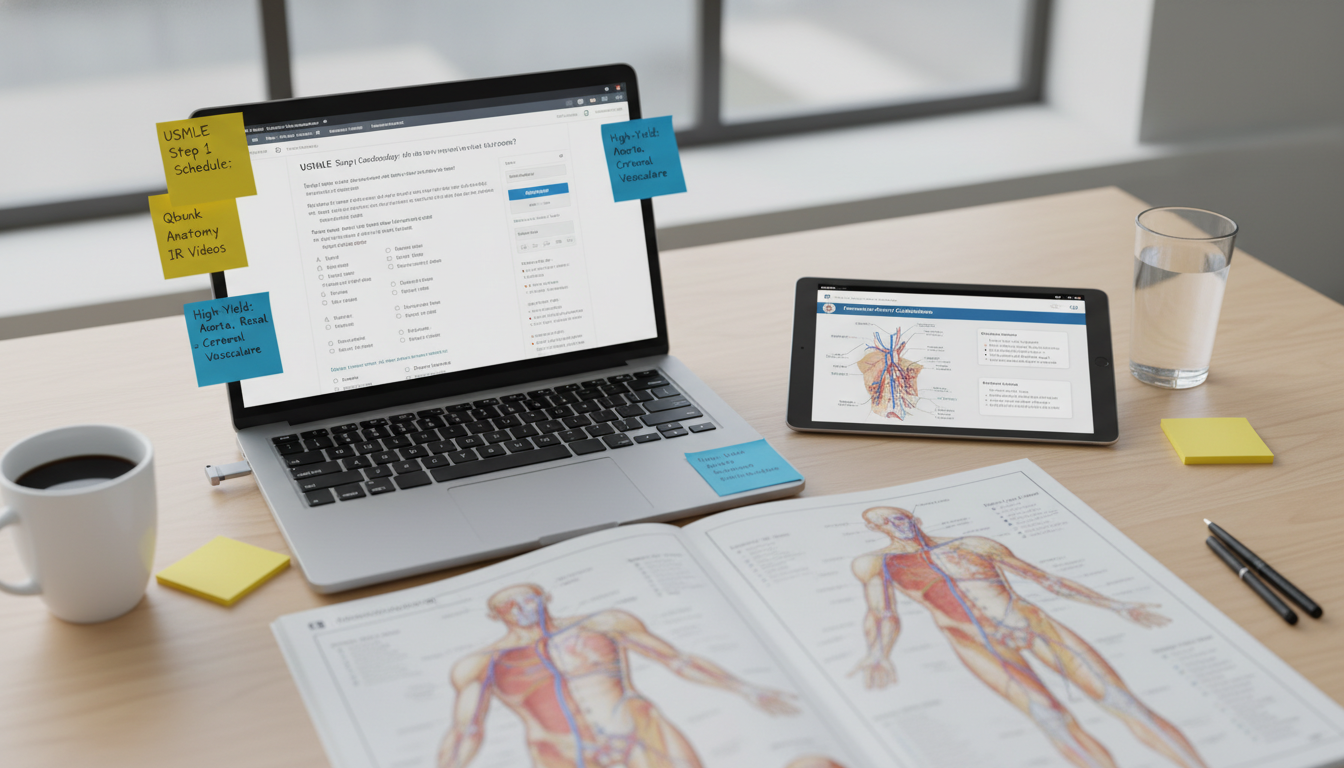
- Use UWorld as your primary Qbank, ideally completing 80–100% of questions deliberately.
- For each block, prioritize:
- Understanding why each answer choice is right or wrong
- Annotating a central resource (e.g., First Aid, Boards & Beyond notes)
- Recognizing recurring patterns in presentations
This approach:
- Reinforces clinical reasoning
- Reveals your weak systems early
- Prepares you for the style of vignettes in NBME/Step 1
Step 1 Study Timeline Tailored to Interventional Radiology Aspirants
Pre-Dedicated: Laying an IR-Oriented Foundation (MS1–MS2)
Think of the pre-dedicated period as building your “procedural tray” of concepts.
1. Integrate Board-Style Thinking with Your Courses
During your systems blocks:
- Immediately supplement lectures with:
- Boards & Beyond, Pathoma, or Sketchy (for micro/pharm)
- Anki decks (e.g., AnKing) tied to those resources
- Start USMLE Step 1 study questions early:
- Begin with system-based questions that match your current curriculum.
- Aim for 10–15 questions/day during lighter weeks, increasing during breaks.
For IR relevance, pay extra attention in:
- Cardiology
- Renal
- Hepatobiliary/GI
- Hematology/Oncology
- Vascular and musculoskeletal anatomy
2. Use Anatomy Like an Interventionalist
In anatomy:
- Spend more time on:
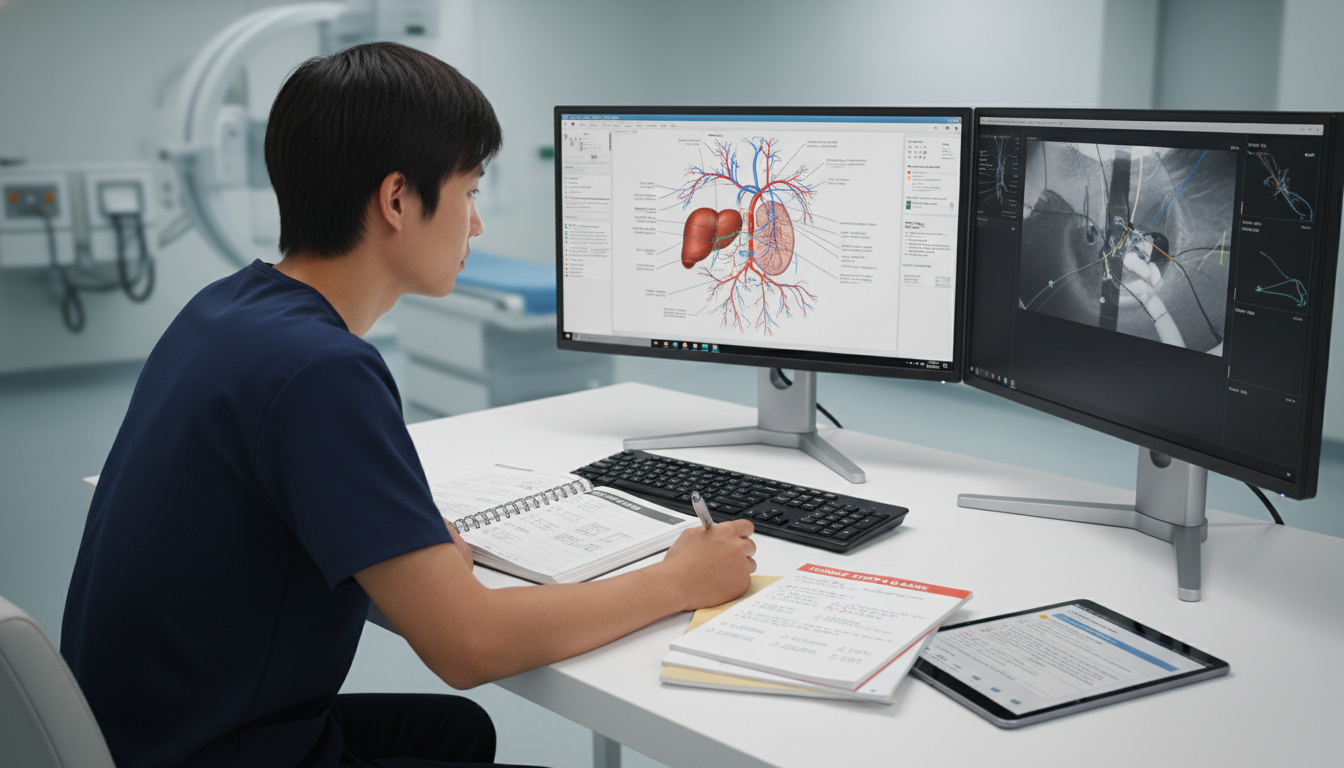
- Vascular anatomy: aorta and its branches, portal circulation, lower extremity vessels, carotids, vertebral arteries
- Cross-sectional anatomy: axial, coronal, and sagittal images (CT/MRI slices when available)
- Whenever anatomy is taught with radiologic images, treat it as an early radiology rotation:
- Identify organs and vascular structures on CT and MR images.
- Correlate with cadaveric/atlas views.
This mindset shift will distinguish you early when you start speaking with IR attendings and residents.
3. Pre-Dedicated Routine Example (MS1/MS2)
Light systems block week:
- 1–2 hours: Review videos (Boards & Beyond/Pathoma) aligned with lectures
- 30–60 minutes: Anki flashcards for spaced repetition
- 10–15 UWorld questions (or a beginner Qbank) with review
- 15 minutes: Quick look at cross-sectional imaging corresponding to your anatomy topic
Exam-heavy week:
- Focus on course material but:
- Maintain at least 10–20 minutes of Anki
- Do 5–10 questions on the weekend to keep board-style thinking active
Dedicated Period: Converting Knowledge into a Passing Performance
For most students, dedicated study is 4–8 weeks. As an IR-focused applicant, your goal is not just to pass—it’s to:
- Pass comfortably on the first attempt
- Build a strong base that will help you score competitively on Step 2 CK, which is more visible for IR programs
Core Step 1 Resources (Streamlined, High-Yield)
To avoid overload, limit your main Step 1 resources to:
- UWorld Qbank – Non-negotiable
- First Aid for the USMLE Step 1 – As a spine/reference
- Anki (e.g., AnKing) – For spaced repetition
- Pathoma – Especially for pathology-heavy systems
- One video resource (if needed) – Boards & Beyond or equivalent
You do not need multiple competing Qbanks, three different video series, and several textbooks. Focus on depth with a few core tools.
Example 6-Week Dedicated Study Plan
Weekly goals:
- ~350–450 UWorld questions/week (50–75 questions/day, 6 days/week)
- Daily Anki review (30–60 minutes)
- Systems-based content review aligned with weaknesses
- One NBME practice exam every 1–2 weeks
Daily structure (10–11 hours total, modifiable):
Morning (4–5 hours)
- 40-question timed UWorld block
- 2–3 hours detailed review and annotation
Early Afternoon (3–4 hours)
- Another 40-question timed block (or 20–40 based on your stamina)
- Review and notes
Late Afternoon/Evening (2–3 hours)
- Anki review
- Targeted reading (First Aid, Pathoma, or videos) on:
- Cardio, renal, hepatobiliary, heme/onc, or any weak system
- Quick review of vascular anatomy or cross-sectional anatomy 2–3 times/week
NBME and Practice Exams
- Take a baseline NBME 3–6 weeks before your planned exam date.
- Repeat NBME exams or UWorld self-assessments every 1–2 weeks.
- Use practice scores to:
- Identify weak systems and question patterns
- Adjust your daily focus (e.g., more renal, less neuro if already strong)
If your practice scores are borderline, prioritize a safe pass on first attempt over rushing to maintain an arbitrary date. For IR, avoiding a Step 1 failure is more impactful than taking Step 1 two weeks earlier.
Strategic Use of Step 1 Resources with an IR Lens
UWorld: Your Primary Training Ground
Treat UWorld like the lab where you train to “see” patterns:
- Always do questions timed, not tutor mode, once you’re comfortable:
- IR is time-pressured; building decision-making under pressure is essential.
- Tag questions by system/topic:
- Especially track weak areas relevant to IR: renal, vascular, hepatobiliary, heme/onc.
- After each block, ask:
- “What mechanism did I miss?”
- “What anatomy or physiology concept underlies this question?”
- Maintain a simple error log:
- Topic, why you missed it (knowledge vs. misread vs. second-guessing), and the corrected concept.
Anki and Spaced Repetition
Spaced repetition mirrors the incremental, cumulative skill-building of IR training.
- Keep your daily Anki routine sacred:
- Even 30–45 minutes/day during busy periods is powerful.
- Focus on:
- Pharmacology (anticoagulants, antiplatelets, contrast agents, antihypertensives)
- Vascular, renal, and hepatic physiology
- Classic pathologies: DVT/PE, portal hypertension, atherosclerosis, tumors
If your deck feels overwhelming:
- Suspend ultra-obscure cards.
- Re-prioritize decks or tags that map to high-yield systems and IR-related content.
Step 1 Content Integration with Early IR Exposure
If your school offers:
- Shadowing in IR
- IR interest group activities
- IR elective during preclinical or early clinical years
Use these to reinforce your Step 1 learning:
- When you see:
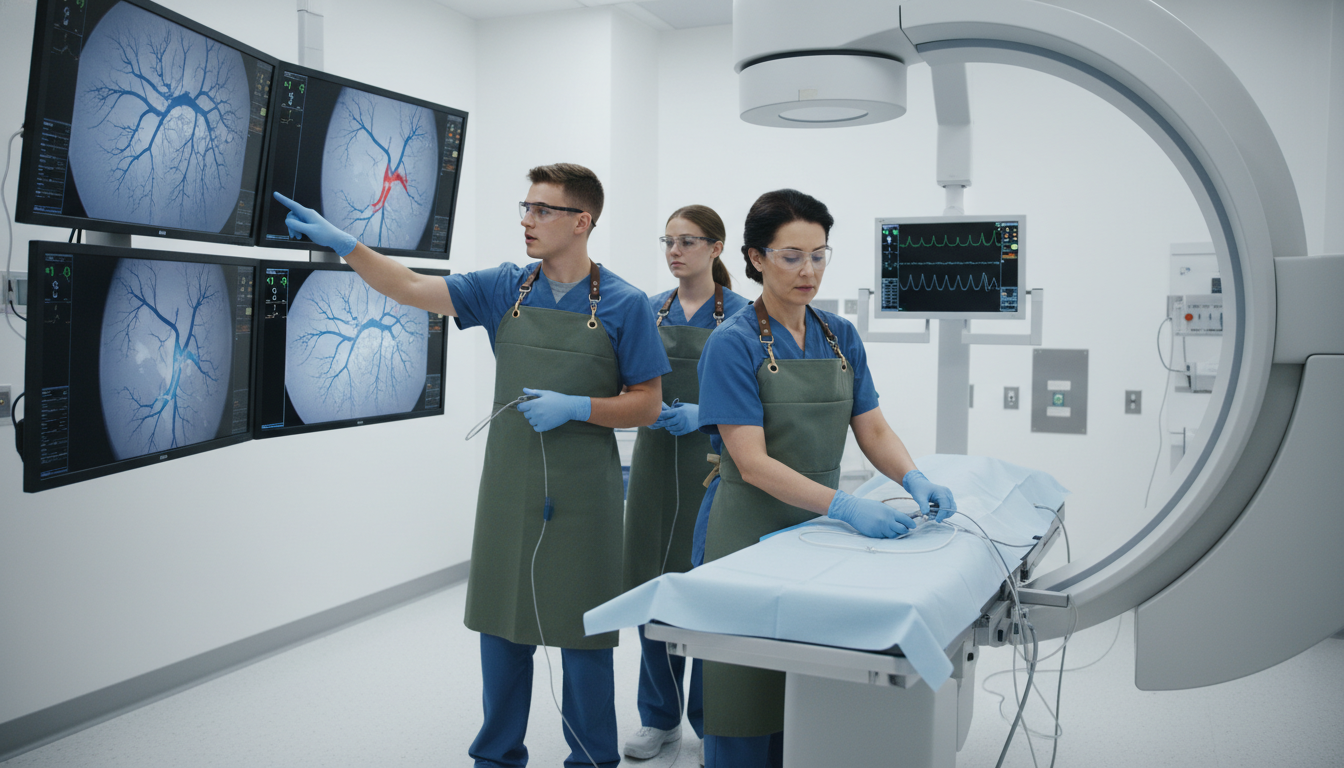
- A TIPS procedure → revisit portal circulation and liver physiology
- A uterine fibroid embolization → review uterine and pelvic vascular anatomy
- A thrombectomy or thrombolysis → review coagulation and thrombolytics
Ask IR residents/attendings which Step 1 topics they found most relevant. This not only deepens learning but also builds early mentorship for the future IR match.
Balancing Step 1 Prep with Building a Competitive IR Application
1. Protect Step 1—But Don’t Neglect IR Exposure
As IR grows more competitive, residency programs look for:
- Evidence of genuine interest in IR
- Demonstrated work ethic and mastery of fundamentals
- Ability to perform under pressure
Step 1 is foundational, but don’t let it completely eclipse IR-related activities over 2–3 years.
A practical balance:
- MS1–early MS2:
- Prioritize strong adjustment to medical school and Step 1 preparation.
- Attend IR interest group meetings and 1–2 shadowing sessions per term.
- Late MS2–early MS3:
- Intensify board prep.
- Start identifying IR faculty mentors and potential research opportunities.
- MS3–MS4:
- Focus heavily on clinical performance, Step 2 CK, and IR-specific experiences (electives, away rotations).
2. Step 1 → Step 2 CK: Leveraging Your Foundation for the IR Match
Program directors in interventional radiology increasingly focus on Step 2 CK to differentiate applicants. A disciplined Step 1 process sets you up to do well on CK.
Carry these habits forward:
- Question-first approach (UWorld, NBME, other CK banks)
- Daily Anki or spaced repetition
- Systems-based review with clinical emphasis
By the time you apply for IR:
- Your Step 1 pass should be clean (no failures or irregularities).
- Your Step 2 CK should ideally be at or above your school’s average, preferably higher for IR.
- You should be prepared to discuss in interviews:
- How your Step 1/Step 2 preparation reflects your work ethic
- How your understanding of physiology, pathology, and anatomy informs your interest in IR
3. Mental Health, Burnout Prevention, and Sustainable Studying
IR is a high-intensity specialty; resilience and self-regulation are essential. Show that you can prepare intensely without burning out.
Strategies for sustainability during Step 1 prep:
- Fixed off-time daily:
- 1–2 hours in the evening where you do not study.
- Weekly rest block:
- At least one half-day off to reset.
- Exercise:
- Even 20–30 minutes of walking, yoga, or light lifting most days.
- Sleep:
- Aim for 7–8 hours consistently; chronic sleep deprivation will erode learning and test performance.
View Step 1 prep as your first “mini-fellowship” in time management and self-care—skills you’ll need as an IR resident doing long procedures and emergent cases.
Practical Tips and Common Pitfalls for IR-Oriented Step 1 Preparation
High-Yield Practical Tips
Anchor everything to anatomic and physiologic “maps.”
When you study a disease, ask:- What vascular territories are involved?
- How would this look on imaging (CT, MRI, angiography)?
- How might an interventional radiologist help diagnose or treat this?
Use cross-sectional imaging whenever available.
If your school or resources include radiology images:- Pause and identify structures.
- Debrief with peers or a mentor: “If this were a bleed, where could it be coming from?”
Practice “mini-oral exams” with friends.
For example:- Friend: “A patient presents with hematemesis and portal hypertension. Walk me through the anatomy and pathophysiology.”
- You: Explain portal circulation, varices, and the concept of TIPS (even if not tested on Step 1 in detail).
Early, honest self-assessment.
If your NBME practice scores are weak:- Seek help early from advisors or tutors.
- Adjust study time, resources, and maybe your test date before it becomes a crisis.
Common Pitfalls to Avoid
Resource overload.
Using 6+ primary resources leads to superficial coverage. Choose a lean set of Step 1 resources and go deep.Ignoring anatomy because “it’s just memorization.”
For future interventional radiologists, anatomy—especially vascular—is your bread and butter.Underestimating Step 1 because it’s pass/fail.
A failure or marginal performance may force you into aggressive remediation just as you should be building your IR portfolio and preparing for Step 2 CK.Neglecting well-being.
Overcaffeinated, sleep-deprived cramming produces poor retention and models unhealthy patterns for residency.
FAQs: USMLE Step 1 Preparation for Aspiring Interventional Radiologists
1. With Step 1 now pass/fail, how important is it really for an interventional radiology residency?
For IR, Step 1 is still very important as a threshold exam. Programs may not see your numeric score, but they absolutely see:
- Whether you passed on the first attempt
- The trajectory of your subsequent exams, especially Step 2 CK
A clean Step 1 pass plus a strong Step 2 CK score helps reassure IR program directors that you can handle the academic demands of a combined diagnostic and interventional radiology residency.
2. Should I study differently for Step 1 if I know I want to do IR?
The core USMLE Step 1 preparation strategy is the same for everyone: strong foundation, question-based learning, and focused resources. As a future interventional radiologist, you should:
- Pay special attention to vascular, renal, hepatic, and heme/onc topics
- Take anatomy—especially vascular and cross-sectional anatomy—more seriously
- Use any opportunity to link pathophysiology to potential radiologic or interventional management
But you do not need a completely different “IR-specific” Step 1 curriculum.
3. How early should I start Step 1-focused studying if I’m aiming for IR?
Start integrating board-style learning during MS1, not as a separate “Step 1 year.” Practical timeline:
- MS1: Light question practice aligned with your courses, start Anki.
- MS2: Increase Qbank usage, refine high-yield systems, schedule dedicated study.
- Dedicated: Full-time, structured USMLE Step 1 study (4–8 weeks) focused on question blocks, review, and practice exams.
Early, consistent exposure is more effective—and kinder to your mental health—than trying to cram everything into a short dedicated window.
4. What if I fail Step 1? Can I still match into interventional radiology?
A Step 1 failure makes the IR match significantly more challenging but not impossible. If this occurs:
- Work closely with your dean’s office and academic support.
- Remediate thoroughly and pass on the second attempt with a strong performance.
- Double down on:
- Strong Step 2 CK score
- Excellent clinical evaluations
- Research, mentorship, and advocacy from IR faculty
- Be prepared to address the failure honestly in your application and interviews, emphasizing what changed in your approach and habits.
However, the best strategy is prevention: treat Step 1 as a serious, non-negotiable milestone and use early NBME assessments to ensure you are truly ready.
By approaching USMLE Step 1 preparation with discipline, a systems-based mindset, and a touch of IR-focused intentionality, you’re not just aiming for a pass—you’re laying the intellectual and professional foundation for a demanding, dynamic career in interventional radiology residency.