



Understanding Step 1 in the Context of Medicine-Psychiatry
USMLE Step 1 has evolved from a high-stakes, three-digit score exam to a pass/fail assessment, but for applicants to med psych residency (combined Internal Medicine–Psychiatry), it remains critical. Not because programs are comparing scores to the decimal point, but because:
- It signals your mastery of biomedical sciences
- It predicts your ability to handle complex, integrated thinking—exactly what medicine-psychiatry combined programs demand
- It often shapes your clinical confidence in both internal medicine and psychiatry rotations
Medicine-psychiatry combined training emphasizes biopsychosocial integration—the intersection of physiology, pharmacology, and neurobiology with behavior, cognition, and social context. A thoughtful USMLE Step 1 study plan can set you up not only to pass the exam but to build a foundation that directly supports your future as a med-psych physician.
Why Step 1 Matters for Medicine-Psychiatry Applicants
Even in the pass/fail era, Step 1 still matters for you in several ways:
- Residency screening: Many combined medicine-psychiatry programs want reassurance you can handle the rigorous dual curriculum. A first-time pass without needing to repeat Step 1 sends a strong signal.
- Rotations and letters: Strong foundational knowledge shows up in your medicine and psychiatry clerkships, where attendings write the letters that truly matter for this specialty.
- Future exams: A solid Step 1 foundation makes Step 2 CK and your eventual board exams in both psychiatry and internal medicine more manageable.
For a future med-psych physician, Step 1 isn’t just a hurdle; it is your first structured opportunity to think like an integrative clinician.
Building a Medicine-Psychiatry–Focused Step 1 Strategy
Your overall Step 1 goal is to pass. Your medicine-psychiatry goal is higher: to emerge with a deep, durable understanding of how the body and brain intersect. This shifts how you design your study plan and choose your Step 1 resources.
Step 1 Content Domains Most Relevant to Med-Psych
Certain Step 1 topics map especially well to a future medicine-psychiatry practice. These deserve extra emphasis in your USMLE Step 1 study schedule:
Neuroanatomy and Neurophysiology
- Cortical and subcortical structures (prefrontal cortex, limbic system, basal ganglia)
- Neurotransmitter systems (dopamine, serotonin, GABA, glutamate)
- Reward pathways, executive function, and behavior
Psychiatry and Behavioral Science
- Major psychiatric disorders (mood, psychotic, anxiety, trauma-related, neurocognitive disorders)
- Substance use disorders and intoxication/withdrawal syndromes
- Psychological defense mechanisms, personality traits and disorders
- Epidemiology, biostatistics, and ethics—core to both medicine and psychiatry
Pharmacology with Dual Medicine–Psychiatry Relevance
- Antipsychotics, antidepressants, mood stabilizers, anxiolytics, hypnotics
- Cardiometabolic side effects (QT prolongation, weight gain, diabetes)
- Interactions with cardiovascular, endocrine, and other internal medicine drugs
Neurology/Neuro-pathology
- Seizure disorders, neurodegenerative conditions, demyelinating diseases, CNS infections
- Delirium vs dementia vs primary psychiatric disorders
- Stroke and its behavioral/cognitive sequelae
Core Internal Medicine Systems
- Cardiovascular, pulmonary, renal, endocrine, and infectious diseases
- Immunology and rheumatology (autoimmune encephalitis, CNS vasculitis, lupus, etc.)
- Electrolyte disorders and metabolic encephalopathies mimicking psychiatric syndromes
Example: Thinking Like a Med-Psych Clinician in Step 1
A typical Step 1 question:
A 54-year-old man with schizophrenia presents with rigidity, hyperthermia, confusion, and elevated CK levels. He is taking haloperidol.
A basic answer: Neuroleptic Malignant Syndrome.
A medicine-psychiatry lens adds:
- Recognize this as a medical emergency caused by a psychiatric medication
- Anticipate complications: rhabdomyolysis, renal failure, arrhythmias
- Integrate management: ICU-level care, dantrolene or bromocriptine, hydration, monitoring
When you review questions, always ask:
“How does this pathology or medication cross the border between mind and body?” That mindset prepares you uniquely well for med psych residency.
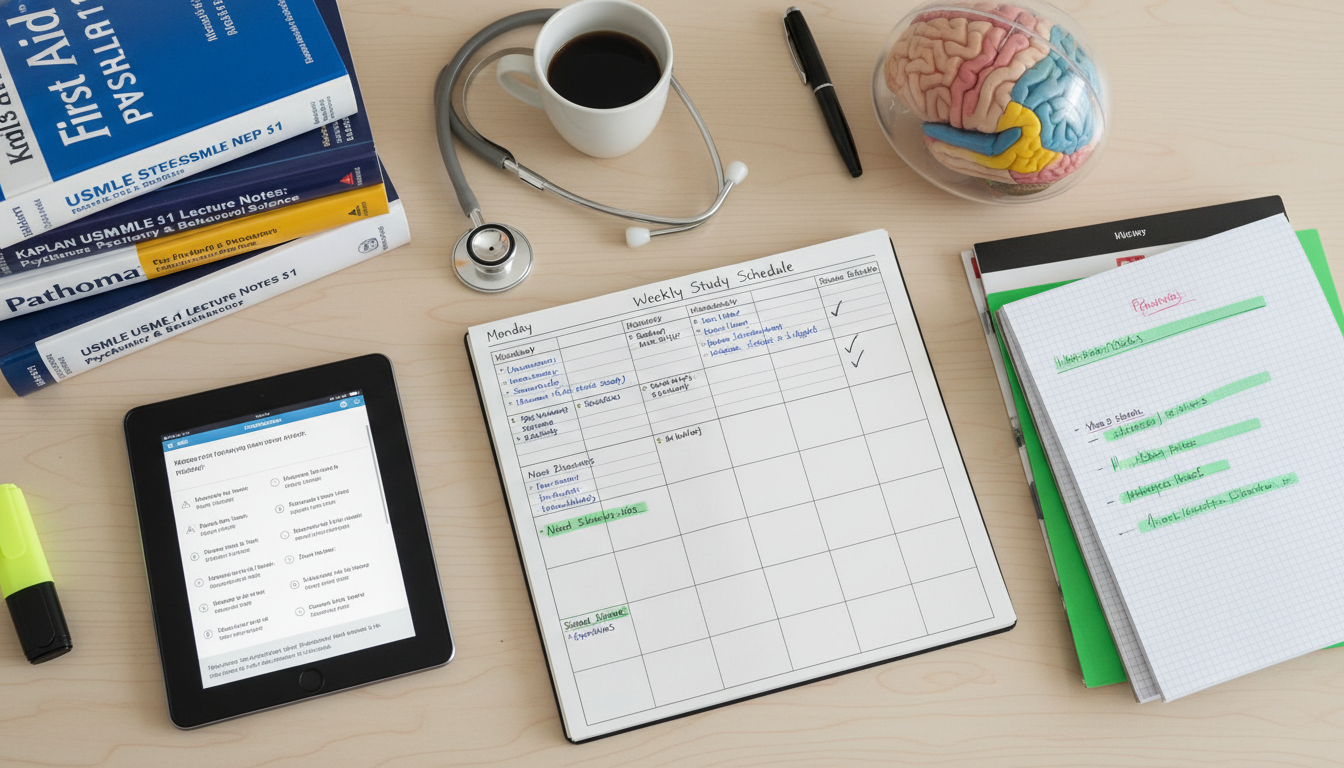
Core Step 1 Resources and How to Use Them as a Med-Psych Applicant
Most students use similar Step 1 resources, but how you prioritize and integrate them can reflect your medicine-psychiatry focus.
Essential Resources
Comprehensive Review Text
- First Aid for the USMLE Step 1: Still the backbone reference.
- Strategy: Use it as a roadmap not a textbook—annotate with pearls from question banks and lectures, especially in psych, neuro, and pharm sections.
Question Banks (Qbanks)
- UWorld USMLE Step 1 Qbank (primary)
- Amboss Qbank (excellent secondary or for targeted review)
- For med-psych focus:
- Do all psychiatry, neurology, and pharmacology questions more than once
- Tag questions involving endocrine, cardiology, infectious disease cases with psychiatric or cognitive symptoms
Video Lecture Series
- Boards & Beyond, Pathoma, Sketchy, or similar
- Prioritize:
- Behavioral science, biostats, ethics modules
- Neurology and psychiatry-related modules
- Pharmacology series for CNS drugs and systemic side effects
Anki or Another Spaced-Repetition System
- Premade decks (e.g., AnKing variants) can be helpful if you manage them judiciously.
- Focus your cards on:
- CNS drugs’ mechanisms and side-effect profiles
- Neuropathology and neuroanatomy
- Classic psychiatry vignettes and criteria
Helpful Supplemental Resources (Especially for Med-Psych)
- Kaplan or NBME self-assessments for temperature checks on readiness
- Psychiatry-specific high-yield review (e.g., short Step 1 psych/behavioral review books or question sets)
- Biostatistics/epidemiology modules—critical for psychiatry research literacy and evidence-based practice
How to Integrate Resources Efficiently
A sample integration for a typical week:
- Morning (2–3 hours):
- Do 40 timed, random UWorld questions.
- Thoroughly review explanations, tagging or annotating anything with psych, neuro, or systemic side effects of psych meds.
- Midday (1–2 hours):
- Watch video lectures for weak areas identified from Qbank performance (e.g., neurodegenerative diseases, psych pharmacology).
- Afternoon/Evening (1–2 hours):
- Review Anki cards, focusing on:
- Today’s topics
- High-priority psych/neurology/internal medicine overlap content
- Skim relevant First Aid sections and annotate.
- Review Anki cards, focusing on:
The goal isn’t to “over-psych” your prep at the expense of other systems, but to capitalize on your interest and ensure depth where med-psych overlap is greatest.
Designing a Step 1 Study Schedule with a Med-Psych Lens
Your actual schedule will depend on whether you have a dedicated study period (often 4–8 weeks) or are studying during pre-clinical years. The following outlines a typical 6–8 week dedicated plan tailored for a future medicine-psychiatry resident.
Phase 1 (Weeks 1–2): Foundation and Orientation
Focus:
- Reacquaint yourself with all systems
- Identify weak areas via a baseline NBME or self-assessment
Daily structure:
- 40–80 Qbank questions (untimed or tutor mode initially)
- Focused video review (2–3 hours)
- 1–2 hours of Anki/spaced repetition
Med-psych emphasis:
- Strong refresh of:
- CNS, psych, and behavioral science
- Pharmacology of psychotropics and major internal medicine drug classes
- Begin a personal “Med-Psych Integration Notebook” with pages for:
- “Medical causes of psychiatric symptoms” (e.g., hyperthyroidism → anxiety)
- “Psych medication side effects with medical impact” (e.g., clozapine → agranulocytosis, myocarditis)
Phase 2 (Weeks 3–5): System Integration and Timed Practice
Focus:
- Shift toward timed, random blocks simulating exam conditions
- Consolidate cross-system links
Daily structure:
- 80–120 timed, random Qbank questions/day in 2–3 blocks
- 2–3 hours reviewing all questions and explanations
- 1–2 hours of high-yield video + Anki
Med-psych emphasis:
- After each block, identify:
- Any question where a psychiatric symptom was secondary to a medical condition
- Any medication question involving both mental and physical side effects
- Create “case patterns”:
- Elderly patient with confusion → delirium vs dementia vs primary psych
- Young adult with palpitations and anxiety → panic disorder vs hyperthyroidism vs substance use
- Make a habit of asking, for each psych-related vignette:
- “What labs would I order?”
- “How would I medically clear this patient in the ED?”
- “What systemic illnesses could masquerade as this syndrome?”
Phase 3 (Weeks 6–7): Final Consolidation and Self-Assessments
Focus:
- Exam-readiness and stamina
- Fill last knowledge gaps without cramming
Weekly structure:
- 2–3 full-length self-assessments (NBMEs and/or UWorld self-assessments), spaced out
- On non-exam days:
- 40–80 targeted Qbank questions (weaker systems)
- 3–4 hours of focused review (weak topics, Anki, rapid-fire First Aid review)
Med-psych emphasis:
- Review all high-yield tables:
- Antipsychotic side effects (metabolic, neurologic, cardiac)
- Antidepressant mechanisms and adverse effects
- Anxiety and sleep medication effects on respiratory drive, sedation, fall risk
- Revisit your “Med-Psych Integration Notebook”:
- Ensure you can rapidly list:
- Medical mimics of depression, psychosis, anxiety, and cognitive impairment
- Psychotropic drugs with cardiac, metabolic, hepatic, and renal implications
- Ensure you can rapidly list:
Phase 4 (Final Days): Light Review and Mental Preparation
Focus:
- Sleep, mental health, and confidence
- High-yield “touch up” rather than new learning
Activities:
- Short, untimed mixed question sets (20–40/day)
- Skim high-yield psych, neuro, and pharm sections
- Low-intensity Anki review
Avoid:
- Starting new resources
- All-night cramming—counterproductive for memory and emotional resilience
As a future med-psych resident, how you manage stress and self-care now is already part of your professional identity development.

Protecting Your Own Mental Health During Step 1 Preparation
Pursuing medicine-psychiatry suggests you care about mental health—not only for patients but ideally for yourself. Step 1 preparation can be an emotionally intense period; how you navigate it can sharpen your empathy and clinical insight.
Recognizing Common Stress Patterns
Common experiences among Step 1 test-takers:
- Imposter feelings (“Everyone else knows more than I do”)
- Catastrophic thinking (“If I fail Step 1, I’ll never match in med psych residency”)
- Burnout symptoms (insomnia, irritability, difficulty concentrating, emotional numbing)
Use your budding psychiatric knowledge on yourself:
- Notice cognitive distortions (all-or-nothing thinking, overgeneralization)
- Challenge them with evidence-based counterstatements:
- “My practice scores have been improving.”
- “Programs evaluate my entire application, not just Step 1.”
- “Many residents and attendings I respect struggled at some point too.”
Concrete Strategies for Preserving Mental Health
Structured Breaks
- Use the Pomodoro technique or similar focused-work intervals
- Build non-negotiable daily breaks (walks, meals away from the desk, short social connection)
Sleep as a Non-Negotiable Resource
- Target 7–8 hours/night, especially in the final 2 weeks
- Avoid late-night question marathons; retention plummets with sleep deprivation
Graded Exposure to Anxiety Triggers
- Simulate exam conditions gradually:
- Start with shorter timed blocks
- Work up to full-length practice exams
- This desensitizes test anxiety and shows you can tolerate discomfort—a core CBT principle you’ll use with future patients.
- Simulate exam conditions gradually:
Professional Support if Needed
- If you experience persistent low mood, suicidality, panic attacks, or severe functional impairment:
- Reach out to student health or a mental health professional
- Seeking help enhances, not diminishes, your credibility as a future psychiatrist
- If you experience persistent low mood, suicidality, panic attacks, or severe functional impairment:
Values-Based Perspective
- Periodically remind yourself:
- Why you chose medicine-psychiatry
- How the material you’re learning will help you treat complex patients
- Reconnecting with values improves motivation and buffers stress.
- Periodically remind yourself:
Turning Your Experience into Future Empathy
Your Step 1 preparation journey can become:
- A real-time lesson in anxiety, perfectionism, and coping
- A foundation for understanding future patients struggling with:
- Academic pressure
- Performance anxiety
- Burnout and depression in high-achieving environments
Reflecting briefly (even journaling 5 minutes/week) on your emotional process now will deepen your empathy and clinical skill later.
Positioning Your Step 1 Prep for a Strong Med-Psych Residency Application
With Step 1 now pass/fail, how you use your preparation matters as much as the result itself.
How Step 1 Prep Feeds into Clinical Excellence
Your USMLE Step 1 preparation directly reinforces:
Stronger medicine rotations
- Confidently diagnosing and managing metabolic syndromes, electrolyte disturbances, delirium, and systemic diseases
- Recognizing when psychiatric symptoms might be medically driven or worsened by pharmacotherapy
Stronger psychiatry rotations
- Thorough understanding of psychotropic pharmacology and medical comorbidities
- Facility with neuroanatomy, neurology, and behavioral science during consults and inpatient care
When attendings describe you in letters as:
- “Clinically sound in both systems-based and behavioral thinking”
- “Able to integrate medical and psychiatric considerations seamlessly”
—they’re essentially confirming you’re a strong candidate for medicine-psychiatry combined programs.
Conveying Your Foundational Knowledge in Applications
You won’t write, “I studied very hard for Step 1,” on your personal statement. Instead, show how that preparation shaped you:
- In your personal statement, you might mention:
- A specific concept (e.g., the neurobiology of addiction, inflammatory pathways in depression) that fascinated you during Step 1 prep and influenced your career interest
- In interviews, be prepared to discuss:
- How you came to appreciate the overlap between internal medicine and psychiatry
- Examples of cases on rotations where your Step 1 foundation helped you identify a medical mimic of a psychiatric condition
Red Flags and Risk Management
If Step 1 does not go as planned (e.g., you fail on the first attempt):
- This does not automatically end your path to med psych residency. Programs will look for:
- Clear, honest explanation (when appropriate) and evidence of growth
- Subsequent strong performance on Step 2 CK
- Solid clinical evaluations and letters
Build a plan immediately:
- Meet with your dean or academic advisor
- Adjust your Step 2 CK strategy to emphasize:
- Your ability to integrate behavioral and medical care
- Improved test-taking and time-management strategies
Your Step 1 journey—smooth or bumpy—can become part of a larger story of resilience and commitment to caring for patients whose lives are equally complex.
FAQs: USMLE Step 1 Preparation for Medicine-Psychiatry Applicants
1. Do I need an exceptionally strong Step 1 performance to match into a medicine-psychiatry combined program?
You primarily need a pass on the first attempt. With the transition to pass/fail, the presence or absence of a Step 1 failure often matters more than your underlying score. Medicine-psychiatry programs tend to care more about:
- Strong clinical evaluations in both internal medicine and psychiatry
- Step 2 CK performance
- Letters of recommendation, especially from med-psych or consult-liaison psychiatry attendings
- Evidence of genuine interest in integrated care (e.g., research, electives, advocacy work)
A thoughtful, robust Step 1 preparation process that leaves you clinically strong will benefit you more than chasing a hypothetical score.
2. How should I balance psychiatry content with other systems in my Step 1 study?
Don’t over-focus on psychiatry at the expense of other systems. Instead:
- Treat psychiatry, neurology, and behavioral science as priority areas, but not exclusive ones.
- Make sure you have solid command of:
- Cardiology, pulmonology, nephrology, endocrinology, infectious disease
- Focus particularly on the interfaces:
- Depression vs hypothyroidism vs medication side effect
- Psychosis vs delirium vs substance use
- Anxiety vs arrhythmia vs hyperthyroidism
Remember: Being a good med-psych applicant means being a strong internist and psychiatrist—Step 1 is your base layer.
3. Are there any med-psych–specific Step 1 resources I should be using?
There aren’t widely used resources marketed specifically for “med psych residency” applicants at the Step 1 level. Instead, adapt general resources with a med-psych lens:
- Standard Step 1 Qbanks and First Aid as your foundation
- Psychiatry/behavioral science review books or question sets for extra depth
- Neurology and neuroanatomy-focused resources if these are weaker areas
- Biostatistics and ethics modules for future psychiatry research literacy
Your unique value comes from how you connect internal medicine and psychiatry content, not from specialty-branded materials.
4. How early should I start thinking about medicine-psychiatry while doing Step 1 prep?
You do not need to have committed to medicine-psychiatry before Step 1, but if you’re considering it:
- Use Step 1 prep to:
- Notice what excites you—do you enjoy neuro, psych, and complex internal medicine questions?
- Build a mental framework that integrates brain and body
- After Step 1:
- Seek out rotations or electives with strong med-psych mentorship
- Look for consult-liaison psychiatry services or integrated primary care–behavioral health experiences
Even if you ultimately choose a different specialty, integrated thinking from your Step 1 preparation will strengthen you as a physician.
By approaching USMLE Step 1 preparation not just as a test to survive but as a launchpad for integrated care, you’re already thinking like a future medicine-psychiatry resident. Use your study time to master the science, protect your mental health, and cultivate the biopsychosocial mindset that defines this unique and rewarding specialty.




















