
Understanding Step 1 in the Context of Pathology
USMLE Step 1 is no longer a three‑digit score exam; it is now reported as Pass/Fail. But for anyone considering a pathology residency, how you prepare for Step 1—and especially how you engage with pathology content—still matters a great deal.
Pathology is the “language” of medicine. Almost every Step 1 question ultimately tests whether you understand:
- What is going wrong at the cellular or tissue level (mechanism)
- How that abnormality produces clinical signs, symptoms, and lab findings
- How to recognize classic patterns in images or gross descriptions
Doing well on Step 1 preparation in pathology:
- Lays the foundation for strong performance on Step 2 CK
- Builds the vocabulary and pattern recognition you’ll need in pathology residency
- Signals to program directors (through strong clinical reasoning, letters, and later exams) that you think like a pathologist
This guide focuses on USMLE Step 1 preparation through a pathology lens: how to learn pathology deeply, integrate it with other disciplines, and use that knowledge to strengthen both your exam performance and future pathology residency application.
Core Framework for USMLE Step 1 Pathology Mastery
Before diving into books and question banks, you need a framework for learning pathology in a way that translates to Step 1 questions and, later, clinical practice.
1. Think in Mechanisms, Not Memorization
Most students start by trying to memorize lists: tumor markers, stain names, cytokines. But Step 1 questions—and pathology residency—reward mechanistic understanding.
For any disease, train yourself to ask:
- Etiology – What causes it? (Genetic mutation, infection, autoimmunity, toxin)
- Pathogenesis – What actually happens at the cellular/molecular level?
- Morphology – What does it look like? (Gross + microscopic)
- Clinical manifestations – What symptoms, signs, and lab findings result?
- Complications – What happens if untreated or advanced?
- Pathologic diagnosis – What biopsy, slide, or study confirms it?
Example: Acute Myocardial Infarction
- Etiology: Coronary artery atherosclerotic plaque rupture → thrombosis
- Pathogenesis: Ischemia → myocyte necrosis → inflammation → scarring
- Morphology: Time‑dependent changes (wavy fibers → neutrophils → macrophages → granulation tissue → scar)
- Clinical: Chest pain, diaphoresis, elevated troponins, ST changes
- Complications: Arrhythmias, rupture, heart failure, aneurysm
- Diagnosis: Clinical + EKG + troponin + (in pathology) necrotic myocardium on histology
When you can reconstruct this chain from memory without staring at a page, you’re thinking like a pathologist—and like a high‑performing Step 1 examinee.
2. Integrate Basic Sciences Around Pathology
USMLE Step 1 no longer tests “stand‑alone” facts. Instead, it integrates:
- Pathology
- Physiology
- Pharmacology
- Microbiology
- Biochemistry and genetics
- Immunology
For USMLE Step 1 study, treat pathology as the central node and connect others to it:
- Start with pathology of a disease
- Ask which physiologic processes are altered
- Identify which drugs fix or worsen that pathology
- Recall which microbes or immunologic errors can cause it
- Connect to biochemical pathways (e.g., enzyme deficiencies, metabolic diseases)
Example: Nephrotic Syndrome
- Pathology: Podocyte injury → massive protein loss
- Physiology: Decreased plasma oncotic pressure → edema
- Pharmacology: ACE inhibitors to lower intraglomerular pressure; diuretics
- Immunology: Minimal change disease → T‑cell cytokines; membranous nephropathy → immune complexes
- Biochemistry: Hyperlipidemia from compensatory hepatic lipoprotein production
When planning your Step 1 preparation, consistently build these cross‑disciplinary “webs” from pathology outward.
3. Understand What “Pass/Fail” Really Changes
Pathology residency programs can no longer use a three‑digit Step 1 score. However:
- Failing Step 1 is still a major red flag
- Strong Step 2 CK scores now carry more weight
- Deep pathology understanding helps you excel on Step 2, clerkships, and pathology rotations
- Your study habits for Step 1 prepare you for in‑service exams and Board exams in pathology later
So your aim is not just to “squeak by.” For someone eyeing a pathology residency, aim to:
- Pass comfortably
- Develop exam‑ready pathology reasoning
- Build durable knowledge that will make Step 2 CK and pathology rotations feel much more manageable
Building a High‑Yield Pathology Study Plan for Step 1
1. Choose the Right Pathology‑Focused Step 1 Resources
There are many Step 1 resources, but not all are equally valuable for pathology or for the current exam format. Prioritize quality over quantity.
Foundational Text/Video (Pick 1 Main Source):
Pathoma
- Strengths: Clear, exam‑oriented, strong focus on mechanisms and classic images
- Best used: During organ system courses and again in dedicated Step 1 prep
- Approach: Watch videos with the book open; annotate First Aid or your master outline
Goljan Rapid Review Pathology (less common now but still solid)
- Strengths: Deep explanations, integrated physiology and lab correlations
- Best used: For students who enjoy more detailed reading and have time
Board and Beyond / Sketchy Pathology (if available)
- Strengths: Strong for visual learners, integrates across disciplines
- Best used: To reinforce and review high‑yield disease mechanisms and patterns
Core Question Bank:
- UWorld Step 1 QBank
- Non‑negotiable. This is your single most important USMLE Step 1 study tool.
- High‑value for pathology:
- Clinical vignettes that force integration of micro, pharm, and phys
- Explanations with images, tables, and pathophysiologic reasoning
Supplemental Pathology‑Focused QBank (Optional):
- AMBOSS
- Great for additional pathology cases, with good image integration
- Use as second‑line after completing a large portion of UWorld
Atlases and Visual References (As Needed):
- An online histology or pathology image bank (e.g., WebPath, institution resources)
- A basic pathology atlas if you struggle with pattern recognition
The key is not to collect more Step 1 resources, but to use a few very well—especially UWorld and one strong pathology foundation resource.
2. Structuring Your Study: Pre‑Dedicated vs. Dedicated
During Pre‑Clinical Years (Pre‑Dedicated Phase)
This is where you lay the groundwork for Step 1 and for a future pathology residency.
During Each Organ System Block:
- Combine your school’s lectures with:
- Pathoma (or equivalent) chapters for that system
- Selected UWorld questions for topics you’ve covered
- After learning a disease in lecture:
- Watch the Pathoma/video section
- Draw a quick diagram showing etiology → mechanism → morphology → clinical features
- Do 5–10 UWorld questions to see how it appears in exam format
Weekly Goals:
- 1–2 hours of dedicated Step 1 pathology review per week (beyond regular studying)
- 10–20 UWorld questions per week, limited to material already covered
- Create or review Anki cards for:
- Distinguishing features between similar pathologies (e.g., nephritic vs nephrotic, obstructive vs restrictive lung disease)
- Must‑know markers (e.g., CD markers, tumor markers) with clinical context
Dedicated Step 1 Study Period (4–10+ weeks)
During dedicated, pathology remains your central anchor.
Core Daily Structure (Example for 8–10 hours/day):
Morning (3–4 hours): UWorld Blocks
- 2 timed blocks of 40 questions (80 total)
- Mixed systems or system‑based depending on your phase
- Thoroughly review explanations with special focus on:
- Pathophysiology diagrams
- Pathologic images
- Why wrong answers are wrong (path patterns you might confuse)
Midday (2–3 hours): Pathology Content Review
- Review Pathoma/primary pathology resource sections related to your missed questions
- Fill in gaps in your master notes or First Aid
- Create a “Differential Table” for any confusion (e.g., vasculitides, leukemias, glomerular diseases)
Afternoon/Evening (2–3 hours): Anki + Focused Weak Area Review
- Spaced repetition for pathology pathways, histo‑diagnostic clues, and classic Step 1 buzz phrases
- Short sessions using image banks or digital slides:
- Try to diagnose based on pattern (e.g., granulomas, necrosis type, cellular injury)
- Watch selected video explanations for topics you consistently miss
Key Principle: Every missed question should trigger a quick mental checklist:
- Did I miss the pathology mechanism?
- Did I misinterpret the image?
- Did I confuse two similar disease entities?
- Did I miss an integrated concept (e.g., pharm effect on a path condition)?
Over time, your error log becomes a high‑yield pathology review document.
High‑Yield Pathology Themes for USMLE Step 1
Not all pathology topics are tested equally. Align your Step 1 preparation with themes that appear frequently.
1. Inflammation, Neoplasia, and Cell Injury
These are “foundational” chapters that USMLE exam writers love to integrate.
High‑Yield Areas:
- Types of necrosis (coagulative, liquefactive, caseous, fat, fibrinoid)
- Apoptosis pathways and mitochondrial injury
- Free radical injury and antioxidants
- Acute vs chronic inflammation; key cytokines
- Granulomatous inflammation (e.g., TB vs sarcoidosis)
- Hallmarks of cancer, oncogenes vs tumor suppressors
- Paraneoplastic syndromes and tumor markers (with associated cancers)
- Staging vs grading concepts, metastasis mechanisms
Study Tip: For each necrosis type or neoplasm, create a mini‑mind map: cause → morphology → classic settings → associated labs.
2. Hematology and Oncologic Pathology
Blood and malignancy are heavily tested and central to pathology as a specialty.
High‑Yield Themes:
- Anemias: microcytic vs macrocytic vs normocytic
- Iron deficiency vs anemia of chronic disease vs thalassemias vs sideroblastic
- Hemolysis: intravascular vs extravascular; G6PD, hereditary spherocytosis
- Leukemias and lymphomas:
- Acute vs chronic, myeloid vs lymphoid
- Classic translocations (e.g., t(9;22), t(15;17), t(14;18))
- Immunophenotyping markers (high‑yield for pathology mindset)
- Coagulation disorders:
- Hemophilias vs vWD vs vitamin K deficiency vs DIC vs HIT
- Myeloproliferative neoplasms (e.g., CML, polycythemia vera, JAK2)
For each, practice recognizing:
- Key lab patterns (CBC, smear, coag panels)
- Classic histologic patterns (e.g., Auer rods, Reed‑Sternberg cells)
- Pathophysiologic connections (e.g., BCR‑ABL and tyrosine kinase activity)
3. Renal, Cardiac, and Pulmonary Pathology
System pathology is where integration really comes alive.
Renal Pathology:
- Nephritic vs nephrotic syndromes: key clinical and histologic differences
- Specific glomerular diseases:
- Minimal change, FSGS, membranous nephropathy, IgA nephropathy, PSGN
- Acute vs chronic kidney injury; pre‑renal vs intrinsic vs post‑renal
- Tubulointerstitial nephritis, pyelonephritis vs cystitis
Cardiac Pathology:
- Atherosclerosis, stable vs unstable angina, MI time course
- Cardiomyopathies (dilated, hypertrophic, restrictive)
- Valvular lesions: classic murmurs plus underlying pathology
- Infective endocarditis, rheumatic heart disease
Pulmonary Pathology:
- Obstructive vs restrictive lung diseases (COPD, asthma, fibrosis)
- Pneumonia types (lobar vs bronchopneumonia vs atypical)
- Pulmonary embolism and infarction
- Lung cancers: cell types, paraneoplastic syndromes, associations
Actionable Step 1 Prep Strategy:
Make comparison tables for:
- Nephritic vs nephrotic
- Obstructive vs restrictive
- Small vs non‑small cell lung cancers
- Left vs right heart failure
Then reinforce them through UWorld questions and Anki cards that test differentiation.
4. GI, Liver, and Pancreatic Pathology
Frequently tested, with rich pathology content.
Focus On:
- Peptic ulcer disease: H. pylori vs NSAID vs Zollinger‑Ellison
- Inflammatory bowel disease: Crohn vs ulcerative colitis
- Liver disease:
- Alcoholic vs non‑alcoholic fatty liver disease
- Viral hepatitis: acute vs chronic vs carrier states
- Cirrhosis: complications and portal hypertension
- Tumors: HCC risk factors, metastases
- Pancreatitis: acute vs chronic, causes and complications
- GI neoplasia progression sequences (e.g., adenoma‑carcinoma sequence)
Pathology Mindset: Always relate the gross/histo picture to specific complications (e.g., cirrhosis → portal hypertension → esophageal varices → risk of fatal GI bleed).
5. Immunopathology, Autoimmunity, and Hypersensitivity
These topics often appear in “systems” questions but are rooted in pathology.
Key Concepts:
- Hypersensitivity types I–IV with classic disease examples
- Autoimmune diseases:
- SLE, RA, Sjögren, scleroderma, mixed connective tissue disease
- Immunodeficiency patterns:
- B‑cell defects vs T‑cell vs combined vs phagocytic vs complement
- Transplant rejection types and graft‑versus‑host disease
For each disease, link:
- Autoantibodies (e.g., ANA, anti‑dsDNA, RF, anti‑CCP, anti‑Jo‑1)
- Organ‑specific vs systemic features
- Pathologic findings (e.g., “wire‑loop” lesions in SLE nephritis)
How to Use Step 1 Resources Effectively for Pathology
1. UWorld: Not Just Answers, but Pathology Lessons
Many students race to “finish” UWorld. For pathology mastery—and future pathology residency—how you review is more important than raw question count.
For each question:
- Identify the core pathology concept:
- Is it cell injury, inflammation, neoplasia, or organ‑specific disease?
- Note the key discriminating feature:
- What clue pointed to diagnosis A vs B?
- Extract at least one “take‑home sentence”:
- Example: “Minimal change disease is the most common cause of nephrotic syndrome in children and shows effacement of foot processes on EM, but normal LM.”
Build a running document or margin notes organized by system:
- “UWorld Pathology Pearls – Renal”
- “UWorld Pathology Pearls – Heme/Onc” This becomes a powerful rapid‑review resource.
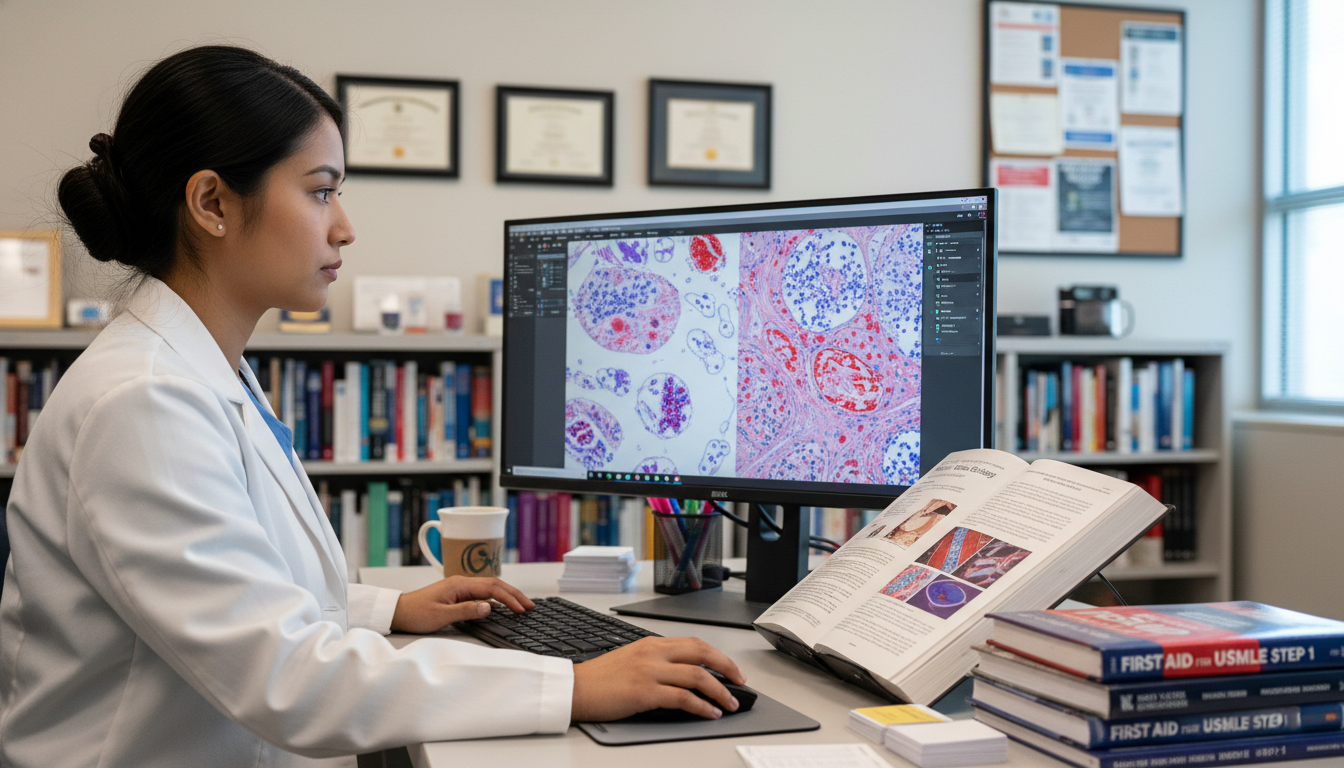
2. Step 1 Resources for Visual Pattern Recognition
A future pathologist must recognize visual patterns—histology, gross specimens, radiographs. Step 1 integrates these more than ever.
Practical Strategies:
- When a question includes an image:
- Spend 10–15 seconds trying to interpret it before reading the answer choices.
- Ask: “What organ is this? What’s the main abnormality?”
- Maintain a small “image deck”:
- Screenshot (where allowed) or list classic findings (e.g., ‘psammoma bodies,’ ‘Orphan Annie eye nuclei,’ ‘small, blue, round cells’)
- Use institutional digital slide libraries or free web resources to quiz yourself weekly
You do not need to become a pathologist by Step 1, but you should enjoy pattern recognition and want to get better at it if you’re considering pathology residency.
3. Anki and Spaced Repetition for Pathology
Spaced repetition is ideal for USMLE Step 1 study because pathology involves many recurring patterns and key associations.
High‑value card types:
- “Which findings separate Disease A from Disease B?”
- “What histologic feature characterizes X?”
- “What is the most common cause of Y in Z demographic?”
- “Which neoplasm is associated with this translocation/marker?”
Avoid:
- Pure “buzzword memorization” with no context
- Extremely long cards that you’ll be tempted to skip
Aim for well‑structured, clinically oriented cards that reinforce:
- Mechanism → morphology → manifestations → complications
- Distinguishing patterns (e.g., vasculitis types, glomerulonephritides)
Connecting Step 1 Pathology Preparation to Pathology Residency Goals
If you are strongly considering a pathology residency, how you approach Step 1 can shape your future success.
1. Build Durable Knowledge, Not Just Exam Tricks
In pathology residency, you will face:
- In‑service training exams
- Board certification exams
- Daily sign‑out with complex biopsy and cytology cases
The habits you develop now—diagramming mechanisms, integrating lab data with morphology, using precise language—will directly translate to residency training.
Mindset Shift:
Study pathology not just to “pass Step 1,” but to:
- Speak pathology fluently
- Understand why certain diseases behave as they do
- Appreciate the logic behind diagnostic criteria and staging
2. Use Step 1 Era to Confirm (or Question) Your Interest in Pathology
Ask yourself during Step 1 prep:
- Do I enjoy learning how diseases look and behave at a tissue level?
- Do pathology questions feel satisfying rather than tedious?
- Am I drawn to understanding mechanisms more than memorizing treatment algorithms?
If yes, consider:
- Doing a pathology elective or selective after Step 1
- Joining your school’s pathology interest group
- Seeking mentored research or case reports with pathology faculty
- Attending tumor boards or autopsy conferences (if available)
Program directors in pathology will care far more about:
- Your letters of recommendation
- Performance on pathology rotations
- Curiosity and fit for the specialty
But your Step 1 preparation can be the first major step toward thinking like a pathologist.
3. Step 2 CK and Beyond
Because Step 1 is now Pass/Fail:
- Step 2 CK often becomes the main standardized metric
- Deep pathology knowledge from Step 1 prep will:
- Make disease recognition easier
- Improve your differential diagnoses
- Help you interpret labs and imaging more efficiently
Pathology is not “left behind” after Step 1; it underpins every clinical decision. Thoughtful Step 1 pathology study will continue to pay dividends in clerkships, Step 2 CK, and, ultimately, pathology residency.
Frequently Asked Questions (FAQ)
1. How important is pathology specifically for passing USMLE Step 1?
Pathology is arguably the single most central discipline on Step 1. Nearly every question hinges on understanding what is wrong at the tissue, cellular, or molecular level. Even when questions appear to test pharmacology or microbiology, they typically do so in the context of a specific pathologic process. Strong pathology knowledge dramatically increases your chances of passing comfortably and sets you up for success in future exams.
2. Which single resource is best for pathology on Step 1?
For most students, the best “single” pathology resource is a combination of:
- Pathoma (or a comparable structured pathology course) for conceptual understanding, plus
- UWorld for application of those concepts in exam‑style questions.
If forced to pick only one, UWorld is irreplaceable because it reflects real exam style, but pairing it with Pathoma or similar content is the most effective approach.
3. How many times should I go through my primary pathology resource?
A realistic and effective goal is:
- Once thoroughly during organ systems (pre‑clinical)
- Once quickly but actively during dedicated Step 1 prep
On the second run, focus on:
- Weak topics identified from UWorld performance
- Sections that integrate multiple systems (e.g., systemic autoimmune diseases, malignancies)
- Tables and figures summarizing mechanisms and key findings
More than two full passes is rarely necessary if you’re doing plenty of questions and active recall.
4. Does strong performance in pathology on Step 1 help my pathology residency application?
While Step 1 is now Pass/Fail and programs won’t see a subspecialty breakdown, strong pathology preparation:
- Improves your performance on pathology electives and Sub‑I’s
- Makes you more comfortable discussing cases and mechanisms during interviews
- Helps you excel on Step 2 CK, in‑service exams, and later Board exams
Program directors will see a candidate who understands disease deeply, asks sophisticated questions, and has a genuine interest in the field—all of which are rooted in the careful pathology‑driven study habits you develop for Step 1.
By treating pathology as the organizing framework of your USMLE Step 1 preparation, you not only increase your chances of passing the exam but also lay a strong foundation for clinical training and a future pathology residency. Focus on mechanisms, integrate across disciplines, use high‑yield Step 1 resources deliberately, and let your curiosity about disease guide your study—not just your fear of the exam.