
Understanding Step 1 in the Era of Pass/Fail – Why It Still Matters for Pediatrics
USMLE Step 1 has shifted to pass/fail, but it remains a gatekeeper exam—and it still plays an important role in pediatrics residency applications.
Why Step 1 still matters for pediatrics residency
For pediatrics residency programs, Step 1 is:
A basic competency screen
Programs need to know you have sufficient foundational science knowledge to handle complex pediatric pathology and developmentally changing physiology.A predictor of Step 2 CK and in‑training exam performance
Pediatric programs care greatly about board pass rates. A strong USMLE Step 1 preparation process typically predicts better performance on Step 2 CK and the American Board of Pediatrics (ABP) certifying exam.Evidence of professionalism and work ethic
Your approach to Step 1—organization, consistency, and resilience—signals how you will approach residency demands and pediatric board preparation.
The pediatric twist: Why pediatricians care about your basic science
Pediatrics is uniquely tied to development and physiology:
- Changing normal values (vital signs, lab ranges, pharmacokinetics) by age
- Genetics, congenital disorders, and metabolic diseases are highly represented
- Immunology and infectious disease are central (vaccination schedules, immune deficiencies, neonatal infections)
Solid Step 1 foundations in embryology, genetics, immunology, microbiology, and pharmacology translate into better pediatric clinical reasoning, especially in neonatology, pediatric cardiology, and heme‑onc.
Bottom line: Even though Step 1 is pass/fail, you cannot treat it as “just pass somehow”—especially if your goal is a strong pediatrics residency match (peds match) at academic or competitive programs.
Core Principles of Effective USMLE Step 1 Study for Future Pediatricians
1. Start from a systems-based, child-centered mindset
The USMLE Step 1 blueprint is not specialty-based, but you can subtly orient your studying to pediatric-relevant systems:
- Cardiovascular: Congenital heart disease, rheumatic fever, Kawasaki disease (overlaps with pediatric pathology)
- Respiratory: Bronchiolitis, asthma pathophysiology, cystic fibrosis, neonatal respiratory distress
- GI: Malrotation, Hirschsprung disease, necrotizing enterocolitis, biliary atresia
- Endocrine: Type 1 diabetes, growth disorders, congenital hypothyroidism, CAH
- MSK/Connective tissue: Juvenile idiopathic arthritis, osteogenesis imperfecta, rickets
- Neuro/Developmental: Seizure syndromes, developmental milestones (more Step 2 CK, but normal vs abnormal development builds on Step 1 neuroanatomy)
As you go through standard Step 1 resources, repeatedly ask:
“How would this disease present in a child or adolescent?”
That habit makes later pediatric rotations much easier and ties your studying to your future specialty.
2. Integrate high-yield pediatrics while building fundamentals
For Step 1, you’re not expected to be a pediatric expert, but many classic “Step 1 diseases” are pediatric:
- Congenital heart lesions (e.g., VSD, Tetralogy of Fallot, transposition)
- Inborn errors of metabolism (e.g., PKU, galactosemia, glycogen storage diseases)
- Genetic syndromes (e.g., Down, Turner, Fragile X, Williams)
- Immunodeficiencies (e.g., SCID, DiGeorge, CGD, IgA deficiency)
- Pediatric tumors (e.g., neuroblastoma, Wilms tumor, retinoblastoma, medulloblastoma)
Align your USMLE Step 1 study with these high-yield pediatric entities. They’re heavily tested and will recur in clerkships, sub‑I’s, and residency.
3. Emphasize physiology and pathophysiology over memorization
Pediatrics requires comfort with:
- Physiology that changes with age (e.g., fetal vs adult circulation, neonatal renal function)
- Unique pediatric pharmacology (drug dosing per kg, toxicity thresholds)
- Dynamic immune system (neonatal vs toddler vs adolescent)
When using Step 1 resources, go beyond “what is the answer” and ask:
- “Why does this defect cause these symptoms specifically in infants or children?”
- “How do developmental changes in organ function modify the disease presentation?”
This deep approach reduces the volume you need to brute-force memorize and forms a durable base for pediatric practice.

Building a Step 1 Study Plan with Pediatrics in Mind
Step 1 preparation timeline for future pediatricians
Your exact timeline depends on curriculum and personal needs, but a common structure:
Pre-clinical years (M1–early M2)
- Lay strong foundations in anatomy, physiology, and pathology.
- Begin light USMLE Step 1 resources: flashcards (e.g., Anki), relevant question bank blocks for each course.
Dedicated study period (4–10 weeks, depending on school)
- Full-time Step 1 preparation focused on integration, practice questions, and self-assessments.
- Begin to connect content to pediatric presentations.
Lead-up to clinical rotations
- Reinforce pediatric-heavy Step 1 topics; review child-specific conditions before starting pediatrics clerkship.
Structuring your dedicated study day
A balanced daily schedule during dedicated USMLE Step 1 study:
Morning (4–5 hours)
- 2–3 timed blocks of 40 questions (UWorld or primary QBank)
- Thorough review of explanations, especially:
- Congenital disorders
- Genetics and metabolism
- Infectious disease and immunology questions with pediatric patients
Afternoon (3–4 hours)
- Targeted content review using your main text (e.g., First Aid) and videos
- Emphasize sections overlapping heavily with pediatrics: immunology, microbiology (especially viruses and vaccine-preventable diseases), congenital anomalies, pediatric tumors
Evening (1–2 hours)
- Spaced repetition (Anki or similar)
- Light review of visual memory aids (e.g., microbiology mnemonics, congenital heart lesion diagrams)
Adapt the hours to your endurance and responsibilities, but maintain consistency. Pediatrics residency selection committees value persistence and reliability—traits you build during Step 1 prep.
Sample 6-week dedicated plan (pediatric-focused emphasis)
Weeks 1–2: Foundations + high-yield systems
- Cover: Cardio, Respiratory, Renal, Heme/Onc
- Pediatric lens:
- Congenital heart diseases and fetal circulation
- Cystic fibrosis, bronchiolitis, asthma pathophysiology
- Hemolytic disease of the newborn, sickle cell (pediatric complications), common childhood malignancies
Tasks:
- 40–80 questions/day with full review
- Daily Anki (minimum 200–300 cards, adjusted to your deck volume)
- 2–3 hours/day of content review
Weeks 3–4: Neuro, Endocrine, GI, Immunology, Genetics
Pediatric lens:
- Seizure disorders in infants/children, neurocutaneous syndromes
- Type 1 diabetes, congenital adrenal hyperplasia, growth hormone disorders
- Inborn errors of metabolism, malabsorption in infants, biliary atresia
- Primary immunodeficiencies, vaccine-preventable diseases, HIV in pediatrics
- Chromosomal and single-gene disorders affecting children
Tasks:
- 60–80 questions/day
- One NBME practice exam per week
- Focused review of any subject that consistently appears in pediatric vignettes
Weeks 5–6: Integration + weak areas + full practice tests
- Increase timed, mixed blocks (all systems)
- Take 2–3 full-length practice exams (NBME, UWSA) spaced ~4–7 days apart
- Focus on:
- Final reinforcement of congenital, genetic, and immunologic themes
- Test-taking strategy, stamina, and anxiety management
Your goal is a steady progression in practice scores and a feeling of conceptual clarity rather than rote memorization.
Best Step 1 Resources – With a Pediatric Emphasis
While there is no “pediatrics-only” Step 1 resource, many standard USMLE Step 1 resources can be used in a way that supports your interest in pediatrics.
Core Step 1 resources
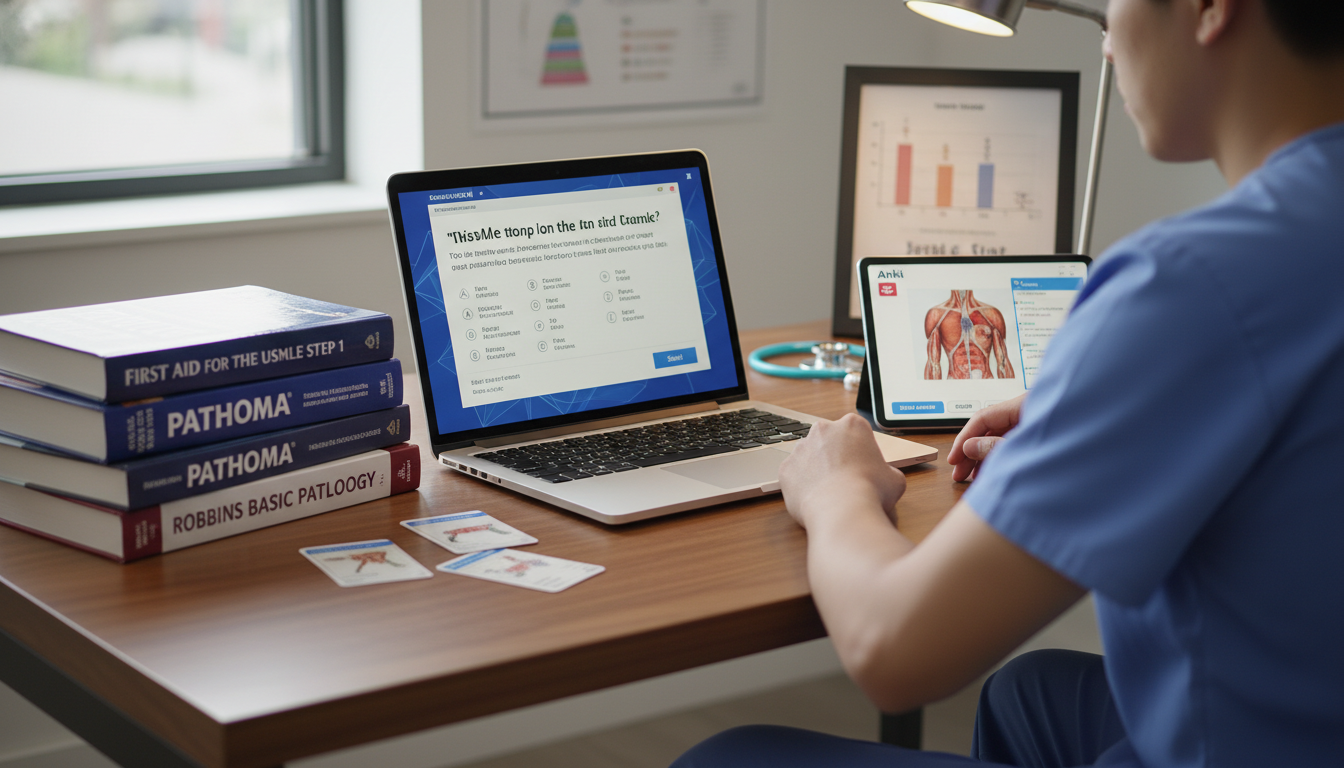
First Aid for the USMLE Step 1
- Use as your primary outline.
- Flag pediatric-relevant sections: genetic syndromes, immunodeficiencies, congenital anomalies.
- Add margin notes whenever you see links to pediatric conditions (“common in infants,” “presents age <2,” etc.).
Pathoma or similar pathology video course
- High yield for pathophysiology.
- Pay close attention to:
- Developmental and pediatric tumors
- Renal pathologies in childhood (e.g., minimal change disease)
- Hematologic disorders and hereditary conditions
Question banks (QBank) – UWorld (primary), +/- Amboss, Kaplan
- The single most important part of USMLE Step 1 study.
- Filter or tag pediatric vignettes: neonates, infants, children, adolescents.
- Keep a notebook or digital log named “Peds-Pearls from Step 1 Questions” to revisit before your pediatrics rotation and before applying to pediatrics residency.
Anki (or other spaced-repetition flashcards)
- Use a comprehensive Step 1 deck (e.g., AnKing, Lightyear) but suspend low-yield or irrelevant cards if overwhelmed.
- Star/flag cards involving:
- Congenital heart disease
- Genetic disorders
- Inborn errors of metabolism
- Pediatric infections
- These cards will remain high value beyond Step 1 and into clerkships.
Supplemental Step 1 resources valuable for future pediatricians
Microbiology + Immunology visual resources
- Sketchy (or equivalent) for microbiology and immunology
- Especially high yield for:
- Vaccine-preventable pathogens (e.g., Neisseria meningitidis, H. influenzae, pertussis, measles)
- Congenital infections (e.g., TORCH infections)
- Pediatric meningitis and pneumonia organisms by age
Embryology and congenital anatomy resources
- Short, high-yield embryology videos focused on:
- Cardiac, GI, renal, neural tube, craniofacial development
- Make sure you can connect:
- Structural defect → altered physiology → neonatal presentation
- Short, high-yield embryology videos focused on:
Basic pediatric references (brief, optional)
- A concise pediatric handbook (e.g., BRS Pediatrics, or a short clinical manual) is not necessary for Step 1 but can:
- Help you contextualize diseases in real pediatric practice
- Provide age-appropriate presentations to anchor your Step 1 knowledge
- A concise pediatric handbook (e.g., BRS Pediatrics, or a short clinical manual) is not necessary for Step 1 but can:
Use supplemental resources strategically. For a strong peds match, Step 1 preparation should prioritize mastery of a few key resources rather than sampling everything.
Strategies, Common Pitfalls, and How They Impact Your Pediatrics Path
Smart Step 1 study strategies for future pediatricians
Actively track pediatric-style vignettes
When you encounter a child patient in a USMLE question:- Note age-specific clues (e.g., 3-day-old vs 7-year-old vs 15-year-old).
- Ask yourself: “How would this case change in an adult?”
This builds age-based diagnostic reasoning that is central in pediatrics.
Link basic science to developmental concepts
For example:- While studying congenital heart disease, review fetal circulation and transitional circulation at birth.
- While studying pharmacology, pay attention to changes in volume of distribution, renal clearance, and hepatic metabolism in neonates vs older children.
Practice explaining concepts in simple language
One underrated skill for pediatrics: explaining complex pathophysiology to worried parents and children.- Take one Step 1 topic each day and rephrase it as if you were explaining it to a parent:
- E.g., “DiGeorge syndrome means your child’s immune system and some organs didn’t develop normally in the womb because of a small missing piece of a chromosome…”
- This dual processing enhances memory and prepares you for counseling in pediatrics residency.
- Take one Step 1 topic each day and rephrase it as if you were explaining it to a parent:
Balance depth with wellness
Step 1 study can be draining. Pediatrics demands emotional resilience and the ability to cope effectively with stress.- Schedule “non-negotiable” breaks (short walks, exercise, brief social connection).
- Maintain sleep as a priority; cognitive performance and memory consolidation suffer dramatically with sleep loss.
Common Step 1 pitfalls that can hurt your pediatrics trajectory
Underestimating Step 1 because it’s pass/fail
Programs still see:- Whether you passed on your first attempt
- Patterns of academic concern, such as leaves or delayed tests
A fail raises concerns about your ability to pass pediatric boards and may limit interview offers. Treat your USMLE Step 1 study as seriously as if it were scored.
Ignoring weak foundational subjects
Areas like biochemistry, immunology, and genetics are the groundwork of many pediatric disorders.
If you “skip” or rush through them, you’ll struggle with:- Pediatric immunodeficiencies
- Inborn errors of metabolism
- Complex congenital syndromes
Overloading on resources and underusing practice questions
The most common error in USMLE Step 1 preparation is stacking too many Step 1 resources instead of mastering a focused set and doing thousands of high-quality questions.Neglecting mental health
Pediatricians must model healthy coping for families and handle emotionally intense situations (e.g., chronic illness, child abuse, terminal diagnoses).
If Step 1 preparation leaves you burnt out and disengaged, your transition to clinical years and pediatrics rotations will be harder.
Consider:- Peer support groups
- Talking with advisors or mental health professionals if anxiety or low mood escalates
- Honest communication with your dean’s office if you need schedule adjustments
Step 1 performance and your peds match strategy
Once you pass Step 1:
Strong Step 1 performance + strong Step 2 CK
- Positions you well for competitive pediatrics programs (children’s hospitals, academic centers, combined med-peds programs).
- Use this foundation to seek research or leadership experiences in pediatrics.
Borderline Step 1 or fail-then-pass
- Compensate with:
- Clearly improved Step 2 CK
- Honors in pediatrics rotation
- Strong letters from pediatric faculty
- Evidence of growth and resilience
- Be prepared in future interviews to discuss what changed in your approach to studying and life balance.
- Compensate with:
From Step 1 to Pediatrics Residency: Connecting the Dots
Your USMLE Step 1 study does more than get you a “Pass” result; it sets the intellectual and professional base for your entire pediatrics career.
How Step 1 preparation shapes your future as a pediatrician
Clinical reasoning in children
- Understanding normal vs abnormal development requires strong neuro and endocrine foundations.
- Recognizing subtle signs of serious pathology in infants requires knowledge of pathophysiology and age-specific presentations.
Comfort with rare diseases
- Pediatrics sees a disproportionate share of genetic and metabolic disorders.
- The dense “zebra” content of Step 1 (e.g., mitochondrial disorders, peroxisomal diseases) is more clinically relevant in pediatrics than in many other specialties.
Lifelong learning habits
- The discipline of constructing a study schedule, using spaced repetition, and doing iterative question-based learning directly mirrors pediatric board preparation and CME.
Positioning your Step 1 experience in residency applications
When you reach the ERAS application and pediatric interviews, you can frame your Step 1 experience as:
- Evidence that you value strong foundations in science to provide safe, evidence-based care to children.
- A demonstration of your ability to persist through large, complex tasks—a proxy for your ability to handle residency.
- A time when you learned key lessons about self-care, time management, and resilience, which you now apply to clinical responsibilities.
In interviews, if the topic arises, you might say:
“During USMLE Step 1 preparation, I realized how important it is to link basic science concepts to real children and families. When I studied congenital heart disease, for example, I consciously thought about how I would explain that physiology to parents. That habit has stayed with me on the wards and is one reason I’m especially drawn to pediatrics.”
This kind of reflection converts a standardized exam experience into a meaningful narrative aligned with your future role in the peds match.
FAQs: USMLE Step 1 Preparation for Future Pediatricians
1. Do I need a “high” Step 1 performance to match into pediatrics now that it’s pass/fail?
You primarily need to pass on the first attempt. Many pediatrics residency programs are more concerned with:
- Your Step 2 CK score
- Clinical performance (especially pediatrics rotation)
- Letters of recommendation
- Commitment to pediatrics (research, electives, advocacy, volunteer work)
However, a strong Step 1 preparation process will help you do well on Step 2 CK and the pediatrics in‑training exam, which programs care deeply about. You don’t need a “top percentile” performance, but you do need a solid pass built on real understanding, not last-minute cramming.
2. Should I use pediatrics-specific books for Step 1 study?
Pediatrics-specific texts (e.g., Nelson’s, large pediatric handbooks) are not necessary for USMLE Step 1 and can actually distract you. Instead:
- Focus on core Step 1 resources (First Aid, QBank, Anki, Pathoma, etc.).
- While using those, pay special attention to pediatric-relevant topics: congenital disorders, genetic syndromes, metabolic diseases, pediatric tumors, immunodeficiencies, vaccine-preventable infections.
You might keep a short pediatric handbook on hand purely to reinforce how these diseases present clinically, but it should not replace standard Step 1 resources.
3. How many practice questions should I complete for Step 1?
Most successful test-takers aim to complete:
- All of UWorld (or your primary QBank) at least once, with thorough review
- Many students also complete a second QBank partially or fully (e.g., Amboss) if time allows
A rough target is 2,000–3,000+ total questions. For someone leaning toward pediatrics:
- Do not skip pediatric vignettes or “weird” genetic/metabolic cases—they are high yield.
- Use challenging pediatric-style questions as opportunities to strengthen weak foundational areas.
4. How do I balance Step 1 preparation with building my pediatrics CV?
During pre-clinical years, your priority is to build strong academic foundations:
- Focus first on your courses and USMLE Step 1 study.
- Add one or two focused pediatrics-related activities rather than many scattered ones:
- A small pediatric research project
- Volunteering with children’s health organizations or school health programs
- Early mentorship with a pediatrician
As you move past Step 1 and into clinical years, you can expand into:
- More active pediatrics research
- Leadership roles in pediatric interest groups
- Electives in pediatric subspecialties
But your first responsibility is to ensure a successful Step 1 outcome, because it underpins your ability to advance and be a competitive applicant in the peds match.
By treating USMLE Step 1 preparation as the first major test of your pediatric knowledge and habits—not just a hurdle—you’ll enter your pediatrics rotations and, later, residency with confidence, deeper understanding, and a mindset aligned with lifelong learning for the children and families you’ll serve.