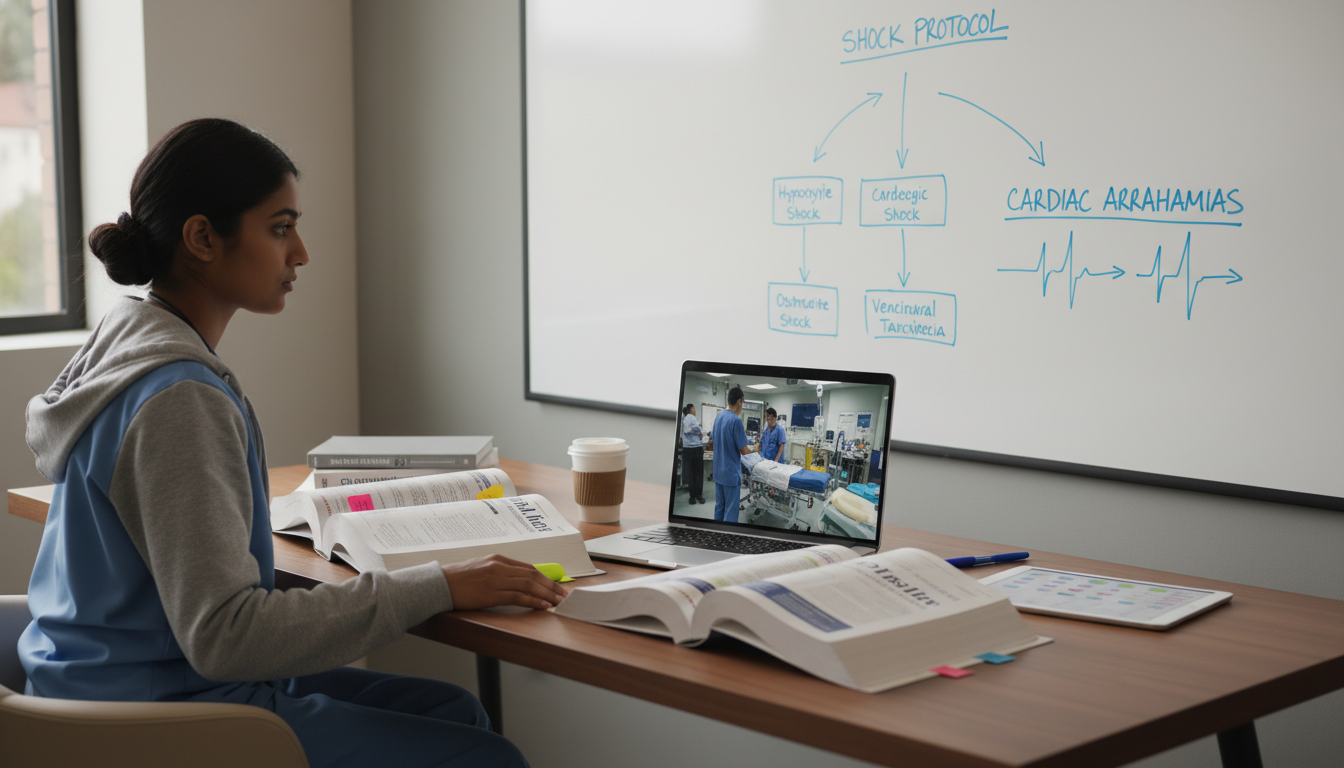
Preparing for USMLE Step 1 is one of the first major academic hurdles on the road to an emergency medicine residency. While Step 1 is now pass/fail, it still plays a critical role in your foundation of medical knowledge and in your EM match competitiveness—especially when combined with Step 2 CK, clerkship performance, and letters of recommendation.
This guide focuses on how to approach USMLE Step 1 preparation strategically if you are interested in emergency medicine residency, with an emphasis on building clinically relevant understanding rather than short‑term memorization.
Understanding Step 1 in the Context of Emergency Medicine
Even in the pass/fail era, Step 1 matters for future emergency physicians for several reasons:
1.1 Why Step 1 Still Matters for EM Applicants
Gatekeeper examination
You must pass Step 1 to be eligible to apply for residency, including emergency medicine. A failure can delay graduation, compress your study time for Step 2 CK, and may require explanation on your ERAS application.Foundation for Step 2 CK and clinical performance
Emergency medicine is a specialty of breadth and acuity. You will constantly draw on:- Cardiovascular physiology to interpret shock and arrhythmias
- Pulmonary and renal physiology in the crashing patient
- Pharmacology in high-risk medications (antiarrhythmics, thrombolytics, sedatives)
Strong Step 1 preparation translates into better performance on Step 2 CK, EM clerkships, and EM shelf exams—all of which are heavily weighed in the EM match.
Signal of academic reliability
Many program directors now rely more heavily on Step 2 CK scores but still care whether applicants demonstrated consistent academic performance. A first-attempt Step 1 pass, combined with a strong Step 2 CK score, reassures programs you can handle the cognitive load of residency.
1.2 How EM Programs View Step 1 Now
Current trends among EM program directors:
- Step 1: Pass/fail but important to pass on the first attempt.
Multiple attempts or a late pass can raise concerns. - Step 2 CK: Often used as a primary quantitative metric.
Many EM programs screen applications with Step 2 CK cutoffs. - Holistic review:
Because Step 1 no longer provides a numeric score, EM programs place even more emphasis on:- EM clerkship grades and narrative comments
- Standardized letters of evaluation (SLOEs)
- Research, leadership, and volunteering (especially EM-related)
- Evidence of resilience and teamwork
The takeaway: you don’t need a massive Step 1 score—because it no longer exists—but you do need a solid pass driven by real understanding that will support a strong Step 2 CK and clinical performance.
Core Strategy for USMLE Step 1 Preparation
2.1 Step 1 as a Clinical Foundation, Not Just an Exam
If you are aiming for emergency medicine residency, treat USMLE Step 1 study as:
- Your “language course” in clinical medicine: learning physiology, pathophysiology, and pharmacology so that you can understand any patient who rolls into the emergency department.
- A platform to make future EM reading easier: trauma, toxicology, cardiology, infectious disease, and neurology all feel much more manageable with strong Step 1 basics.
This mindset shift will change how you use Step 1 resources: from memorizing facts to truly integrating concepts.
2.2 Key Principles for an Effective Step 1 Plan
Active learning > passive review
- Do daily question blocks (UWorld or equivalent).
- Use spaced repetition (e.g., Anki) for high-yield and weak topics.
Integrate physiology and pathology
- For EM, deep understanding of cardiovascular, respiratory, renal, and neuro is critical.
- Don’t just memorize “what” happens—focus on “why”.
Build a sustainable schedule
Emergency medicine demands endurance and rapid thinking; train similarly:- Mix intensive blocks of study with shorter review periods.
- Plan “mock ED days” when you do long question blocks with time pressure.
Prepare early for the transition to Step 2 CK
Use Step 1 prep to:- Learn frameworks for acute presentations: chest pain, shortness of breath, altered mental status, sepsis.
- Practice interpretation skills: labs, EKG diagrams, imaging descriptions.
Structuring Your Step 1 Prep: Phases and Timelines
Every school’s curriculum and calendar differ, but most students follow three broad phases.
3.1 Phase 1: Preclinical Integration (MS1–MS2)
Goal: Build strong conceptual understanding as your school covers basic sciences.
How to approach this phase:
Align your USMLE Step 1 study with your current block.
Example: During a cardio block:- Read the corresponding sections in First Aid or a similar Step 1 text.
- Do a small number of UWorld or NBME-style questions weekly on cardiovascular topics.
- Use Anki for foundational facts (e.g., autonomic receptors, antiarrhythmic classes).
Start early exposure to EM-relevant systems:
- Shock physiology and hemodynamics
- Respiratory failure and blood gas interpretation
- Renal failure, electrolyte disturbances
- Neuro emergencies: stroke, seizures, increased intracranial pressure
- Toxicology basics (e.g., acetaminophen toxicity, salicylate poisoning)
Practical example:
During your respiratory block, after learning about asthma:- Ask yourself: “How would this look in the ED?”
- Review:
- Pathophysiology of bronchoconstriction
- Mechanism and adverse effects of beta-agonists, steroids, anticholinergics
- Blood gas patterns in mild vs. severe asthma exacerbations
This dual approach makes the material stick and makes future EM reading intuitive.
3.2 Phase 2: Dedicated Study Period
Most students get 4–10 weeks of “dedicated” Step 1 time.
Core components of a successful dedicated period:
Daily schedule structure
Example of a 6–8 week dedicated schedule:
Morning (3–4 hours):
- 1–2 UWorld question blocks (40–80 questions) in timed mode, mixed subjects.
- Review every question thoroughly.
Afternoon (3–4 hours):
- System or subject-focused review using your primary Step 1 resources (e.g., First Aid, Boards & Beyond, Pathoma).
- Target weak areas from the morning’s questions.
Evening (1–2 hours):
- Anki / spaced repetition.
- Light review of images, diagrams, or short videos.
Weekly:
- 1 NBME or school-provided practice exam to gauge progress.
- Half-day for rest or light review to prevent burnout.
Question-based learning
For emergency medicine–oriented learners:
Treat each question vignette like a mini ED case:
- What is the chief complaint?
- What are the key vital signs?
- What is the life-threatening diagnosis I cannot miss?
- What is the immediate next step?
Even if the question is basic science–heavy, frame it around:
- “How would this present clinically?”
- “What would I do first in the ED?”
This makes you faster at pattern recognition.
Focused system reviews with EM relevance
While you must study everything, some systems deserve extra attention for future EM work:
Cardiovascular:
- Ischemia, arrhythmias, heart failure, shock states.
- Pharmacology: anti-hypertensives, anti-arrhythmics, anticoagulants, thrombolytics.
Respiratory:
- Asthma, COPD exacerbation, PE, pneumothorax, pneumonia.
- Ventilation/perfusion, gas exchange, oxygen content.
Renal and electrolytes:
- AKI etiologies, acid-base disturbances, sodium/potassium disorders.
- Understanding how to correct sodium and potassium safely.
Neuro:
- Stroke, TIA, seizures, CNS infections, mass lesions.
- Localization strategies and imaging indications.
Endocrine:
- DKA vs. HHS, thyroid storm, adrenal crisis—classic ED emergencies.
Infectious disease & sepsis:
- Mechanisms of shock, antibiotics, host responses.
Toxicology & pharmacology:
- Overdose patterns, antidotes, and adverse drug reactions.
Assessments and readiness
- Track your NBME practice scores and question bank performance.
- Watch for stability and improvement over 2–3 weeks.
- Combine exam data with your own sense of mental readiness and burnout risk.
3.3 Phase 3: Post-Step 1 Transition to Clinical EM
Once you pass Step 1:
- Reflect on what felt weak during Step 1 study; plan to reinforce those topics early in clerkships.
- Start integrating EM-specific reading:
- Intro emergency medicine textbooks
- Online FOAMed (Free Open Access Medical Education) resources
- ECG and radiology basics, especially chest X-ray and CT head interpretation
- Position yourself for a strong Step 2 CK and EM clerkship performance—the metrics now most critical for the EM match.

Choosing and Using Step 1 Resources Strategically
The sheer number of Step 1 resources can be overwhelming. For EM-focused students, the key is depth and integration, not volume.
4.1 Core Resource Categories
Comprehensive content review
- Boards & Beyond
- Pathoma
- Sketchy (micro & pharm) or other visual mnemonics resources
High-yield consolidation
- First Aid for the USMLE Step 1 (or similar concise review book)
Question banks
- UWorld USMLE Step 1 (primary)
- AMBOSS USMLE Step 1 (supplemental or alternative)
Spaced repetition
- Anki decks (e.g., Lightyear, AnKing) or a personal deck.
4.2 How to Prioritize if You’re EM-Oriented
No need for EM-specific textbooks yet for Step 1, but:
- When a question or concept is clearly related to ED care (e.g., DKA, PE, status epilepticus), pause and imagine:
- First step in management
- Most dangerous potential complication
- Time-sensitive decisions you’d make in the ED
- When a question or concept is clearly related to ED care (e.g., DKA, PE, status epilepticus), pause and imagine:
Maximize physiology and pharmacology understanding.
- EM physicians routinely use vasoactive meds, sedatives, anticoagulants, and antibiotics in dynamic, high-risk settings.
- During USMLE Step 1 study, don’t just memorize drug lists—understand:
- Mechanism
- Onset and duration
- Major adverse effects
- Relevant interactions (e.g., anticoagulant + trauma)
4.3 Example: Making a Question “EM-Relevant”
Suppose you see a Step 1 question:
A 63-year-old man presents with chest pain; EKG shows ST-segment elevation in leads II, III, aVF…
The exam might ask about:
- The affected coronary artery, or
- The pathophysiology of myocardial necrosis.
To connect this to EM:
Ask yourself:
- What is the immediate ED management sequence?
- What contraindications to thrombolytics or PCI would I need to check?
- What complications should I monitor for (e.g., heart block, papillary muscle rupture)?
Then answer the basic science question.
This habit turns passive exam prep into early EM training.
EM-Focused Study Tactics During Step 1 Prep
5.1 Prioritizing High-Yield EM-Relevant Topics
While Step 1 is broad, you can still emphasize areas that will serve you especially well later:
Shock and hemodynamics
- Different types: hypovolemic, cardiogenic, distributive, obstructive.
- Pathophysiology of each; classic USMLE Step 1 territory.
- Link to ED practice: fluid resuscitation vs. vasopressors vs. emergent procedures.
Electrolytes and acid-base
- Metabolic acidosis/alkalosis, respiratory acidosis/alkalosis.
- Winter’s formula and compensation.
- ED perspective: DKA, salicylate poisoning, COPD exacerbation.
Neuroanatomy and localization
- Stroke syndromes and brainstem lesions.
- EM link: rapid localization guides imaging and treatment in acute stroke.
Respiratory physiology
- Ventilation/perfusion mismatch, shunt, dead space.
- Oxygen-hemoglobin dissociation curve.
- ED link: ARDS, PE, pneumonia, asthma/COPD.
Toxicology
- Common poisons: acetaminophen, salicylates, opioids, TCA, benzodiazepines, alcohols.
- Mechanism, clinical presentation, and antidotes.
Infectious disease
- Sepsis and septic shock pathophysiology.
- CNS infections, pneumonia pathogens, UTI/pyelo.
- Antibiotic classes and mechanisms.
5.2 Building “Clinical Frameworks” While Studying Basic Science
Organize your Step 1 knowledge into symptoms and frameworks EM doctors use daily:
Chest pain framework
- Life-threatening: MI, PE, aortic dissection, tension pneumothorax, esophageal rupture.
- Step 1 angle: structural pathology, vascular biology, clotting cascades.
Shortness of breath framework
- Obstructive vs. restrictive vs. vascular vs. cardiac vs. neuromuscular.
- Step 1 angle: understand each system’s normal function and disruptions.
Altered mental status framework
- AEIOU-TIPS (Alcohol, Endocrine, Infection, Opiates, Uremia, Trauma, Insulin, Psych, Stroke/Seizure).
- Step 1 angle: metabolic, infectious, structural, and toxicologic basics.
As you go through USMLE Step 1 study, repeatedly ask:
“Where does this concept fit into an ED differential?”
Over time, you’ll naturally start thinking like an emergency physician while still mastering exam content.

Common Pitfalls and How EM-Bound Students Can Avoid Them
6.1 Overemphasizing Memorization at the Expense of Understanding
- Pitfall: Relying solely on premade Anki decks and trying to brute-force every card.
- Risk: You pass Step 1, but your conceptual understanding is fragile, making Step 2 CK and EM rotations harder.
Fix:
- Use Anki primarily to reinforce concepts already learned from questions or videos.
- Regularly pause to ask:
- “Why is this true?”
- “How would this show up in a real patient?”
6.2 Ignoring Clinical Context Until After Step 1
- Pitfall: Treating basic sciences as separate from patient care.
- Risk: Big jump needed later when starting clerkships; slow start in EM rotations.
Fix:
- During Step 1 prep, always tie facts back to patient presentations:
- What symptoms would this cause?
- What vital sign changes would I expect?
- What is the worst possible complication?
6.3 Burnout from Unsustainable Schedules
The intensity of emergency medicine as a specialty can attract high-achieving, high-pressure students. Many overdo it during Step 1.
Warning signs:
- Difficulty sleeping or concentrating
- Emotional exhaustion
- Cynicism about studying or medicine
Prevention strategies:
- Plan scheduled breaks into your calendar.
- One half-day off per week at minimum during dedicated.
- Incorporate exercise, short walks, or stretching blocks.
- Consider study groups if you find collaboration energizing.
6.4 Underestimating the Impact of a Step 1 Failure on EM Match
One failure does not end your EM dreams, but it complicates them:
- You may need:
- A strong Step 2 CK score to compensate
- Extra research or EM involvement
- Honest explanation in your personal statement or during interviews
Prevention:
- Take NBME practice exams seriously.
- Postpone if all indicators suggest you’re not ready, and if your school and circumstances allow.
- Seek early help from academic support or mentors if you’re consistently underperforming.
Positioning Your Step 1 Prep for a Successful EM Match
7.1 How Strong Step 1 Fundamentals Help You Later
A thoughtful USMLE Step 1 preparation strategy sets up:
Better Step 2 CK performance
- Step 2 CK questions build directly on Step 1 concepts but demand more clinical application.
- EM program directors heavily weigh Step 2 CK scores.
Higher quality EM clerkship performance
- Faster, more accurate differential diagnoses.
- Comfort with interpreting labs, imaging, and EKGs.
- More meaningful conversation with attendings and residents.
Stronger letters of recommendation (SLOEs)
- Attendings notice students who:
- Recognize subtle pathophysiology.
- Anticipate management steps.
- Understand “why” behind decisions.
- Attendings notice students who:
Your EM match competitiveness depends on these clinical and academic skills just as much as raw exam performance.
7.2 Integrating Mentorship Early
Even during Step 1 study:
Reach out to EM faculty or residents at your institution:
- Ask about their training path and perspective on exams.
- Seek advice on balancing Step 1 with early EM shadowing or research.
Join your school’s EM interest group:
- You’ll gain peers who share your goals.
- Many run board-review or question-review sessions that align with your USMLE Step 1 study.
Early mentorship provides:
- Realistic expectations about EM training
- Emotional support during demanding exam prep
- Guidance on aligning Step 1, Step 2, rotations, and application timing
Frequently Asked Questions (FAQ)
1. Does Step 1 really matter for emergency medicine now that it’s pass/fail?
Yes, but in a different way than before. Programs no longer compare numeric Step 1 scores, but they still care that you:
- Pass on the first attempt, and
- Build a strong foundation that supports high Step 2 CK performance and strong clinical rotations.
A first-attempt pass plus a robust Step 2 CK score and good EM evaluations is a strong platform for the EM match.
2. How should an EM-bound student balance Step 1 preparation with early EM experiences?
In preclinical years, prioritize Step 1 preparation but:
- Attend occasional EM interest group events.
- Shadow in the ED once in a while, especially on lighter academic weeks.
- Use EM experiences to make basic science concepts feel real, not to replace formal study time.
During dedicated Step 1 study, most students significantly reduce clinical activities to focus on the exam, then increase EM exposure afterward.
3. What are the best Step 1 resources if I want to go into emergency medicine?
For EM, the best Step 1 resources are largely the same as for any specialty, but you’ll use them differently:
- UWorld (and/or AMBOSS): question-based learning with clinical framing.
- Boards & Beyond, Pathoma, Sketchy: strong conceptual and visual foundations.
- First Aid or similar: succinct summary and cross-referencing tool.
- Anki (especially for pharm and micro): reinforce high-yield details.
The “EM angle” comes from how you constantly tie basic science content to acute clinical presentations and emergent management.
4. If I struggle with basic science, can I still become a competitive EM applicant?
Yes, but it requires honesty, strategy, and early intervention:
- Seek help from academic support services or tutors.
- Prioritize understanding over memorization.
- Use Step 1 as a chance to shore up weaknesses before clinical rotations.
- Later, demonstrate strength in:
- Step 2 CK
- EM clerkships
- SLOEs and teamwork-based activities
Many excellent EM physicians were not “perfect” Step 1 test-takers, but they built solid fundamentals and excelled later in clinical training.
Thoughtful, concept-driven USMLE Step 1 study is one of the best investments you can make for a future in emergency medicine. By treating Step 1 as the start of your EM journey—not just an exam—you’ll set yourself up for success on Step 2 CK, on your EM rotations, and ultimately in the fast-paced, intellectually demanding world of the emergency department.