Preparing for USMLE Step 1 is one of the most significant milestones in your path to a med peds residency. While many of the core strategies are universal, applicants targeting medicine-pediatrics have unique considerations: you are building a foundation for both adult and pediatric care, you’re often drawn to complex chronic disease across the lifespan, and your eventual competitiveness in the medicine pediatrics match will rely in part on how you’ve handled high‑stakes exams.
This guide walks through an integrated, practical approach to USMLE Step 1 preparation tailored to future Med-Peds physicians. You’ll learn how to design an efficient study plan, choose high‑yield Step 1 resources, leverage your med-peds interests to stay motivated, and avoid the most common pitfalls.
Understanding Step 1 in the Context of Medicine-Pediatrics
USMLE Step 1 is designed to assess whether you can apply basic science concepts to the practice of medicine. While the exam is now reported as Pass/Fail, it still matters—especially for those interested in competitive pathways like med peds residency.
Why Step 1 Still Matters for Med-Peds (Even as Pass/Fail)
Even though programs do not see a three‑digit score:
Screening and risk assessment
- Programs want reassurance that you can pass high‑stakes exams (Step 2 CK, specialty boards).
- Some institutions still pay attention to multiple attempts or marginal performance notes in the MSPE.
Signal of foundational knowledge
Medicine-pediatrics residents care for patients across the lifespan—from premature neonates to frail elders. A strong Step 1 foundation makes later rotations in both internal medicine and pediatrics safer and more efficient.Downstream impact on Step 2 CK
Step 2 CK is now a major differentiator in the medicine pediatrics match. Strong USMLE Step 1 study habits correlate with better Step 2 CK performance, which programs do weigh heavily.Residency culture fit
Med-Peds programs often emphasize complex, multi-organ disease, congenital conditions carried into adulthood, and transitions of care. Deep understanding of physiology, genetics, and immunology—tested heavily on Step 1—aligns with this focus.
Unique Step 1 Angles for Future Med-Peds Physicians
While Step 1 is not a specialty exam, there are natural links to your future work:
Developmental and genetic conditions
Diseases like cystic fibrosis, sickle cell disease, congenital heart disease, inborn errors of metabolism, and primary immunodeficiencies are classic Step 1 topics that also define much of Med-Peds practice.Chronic disease across the lifespan
Conditions that start in childhood and extend into adulthood—juvenile idiopathic arthritis, type 1 diabetes, congenital adrenal hyperplasia—require understanding of pediatric and adult physiology and pharmacology.Preventive medicine and vaccines
Immunology and microbiology concepts link to vaccine schedules and public health—core elements of both pediatrics and internal medicine.
Keeping these connections in mind can make USMLE Step 1 study feel less abstract and more aligned with your long‑term goals in med peds residency.
Building a High-Yield Step 1 Study Plan
A well‑designed plan is more important than any single resource. For medicine pediatrics applicants, the goal is strong conceptual mastery that you can later apply in Step 2 CK, clerkships, and ultimately residency.

Step 1 Preparation Timeline
The exact timing varies by school, but a common pattern is:
Preclinical years (M1–early M2)
- Focus: Solidifying foundational sciences.
- Approach: Integrate Step 1 resources lightly with coursework.
Dedicated study period (typically 4–10 weeks before the exam)
- Focus: Intensive USMLE Step 1 study with high‑yield review and heavy question practice.
Example Timelines
If you have 8 weeks of dedicated:
- Weeks 1–2: Systems review (cardio, pulm, renal) with heavy question bank use.
- Weeks 3–4: Remaining systems (GI, endocrine, repro, neuro, MSK, psych).
- Weeks 5–6: Micro, immunology, biochemistry, behavioral, statistics.
- Weeks 7–8: Comprehensive review, practice exams, targeted weak area remediation.
If you only have 4 weeks of dedicated:
- Week 1: Systems with highest yield (cardio, pulm, renal, neuro).
- Week 2: Remaining systems + micro/immunology.
- Week 3: Behavioral sciences, biostatistics, pharm, biochem.
- Week 4: Practice exams, rapid review, refining weak topics.
Principles for Effective USMLE Step 1 Study
Early integration with coursework
During systems blocks, align your USMLE Step 1 study with what you are learning:- Use Step 1 question banks after each lecture block.
- Review First Aid or your preferred outline chapter as you cover each organ system.
Question-first learning
For Step 1, active learning wins:- Start each day with a block of timed questions (e.g., 40 questions).
- Review every question (correct and incorrect) in detail.
Regular assessment
Use NBME practice exams or UWorld Self Assessments every 1–2 weeks during dedicated to:- Identify weaknesses (e.g., renal phys, immunodeficiencies).
- Adjust your plan, not just your confidence.
Balanced system focus for Med-Peds
Since your future practice spans age groups and organ systems, avoid neglecting:- Developmental biology and genetics.
- Immunology, microbiology, and vaccines.
- Endocrine and metabolic pathways (e.g., inborn errors, diabetes).
Making Space for Med-Peds-Relevant Topics
Within your Step 1 schedule, deliberately carve out time for topics central to medicine-pediatrics:
- Genetics and congenital conditions (e.g., trisomies, Marfan, DiGeorge).
- Inborn errors of metabolism (maple syrup urine disease, PKU, urea cycle disorders).
- Immunology and immunodeficiency syndromes (SCID, CGD, Wiskott-Aldrich).
- Chronic pediatric diseases that extend into adulthood (CF, sickle cell, CHD).
This not only boosts your Step 1 performance (these are classic test favorites) but also builds a conceptual library you will draw from extensively in med peds residency.
Choosing and Using High-Yield Step 1 Resources
The number of Step 1 resources can be overwhelming. For med peds residency applicants, depth matters more than breadth. Use a focused core set of tools very well rather than superficially skimming everything.
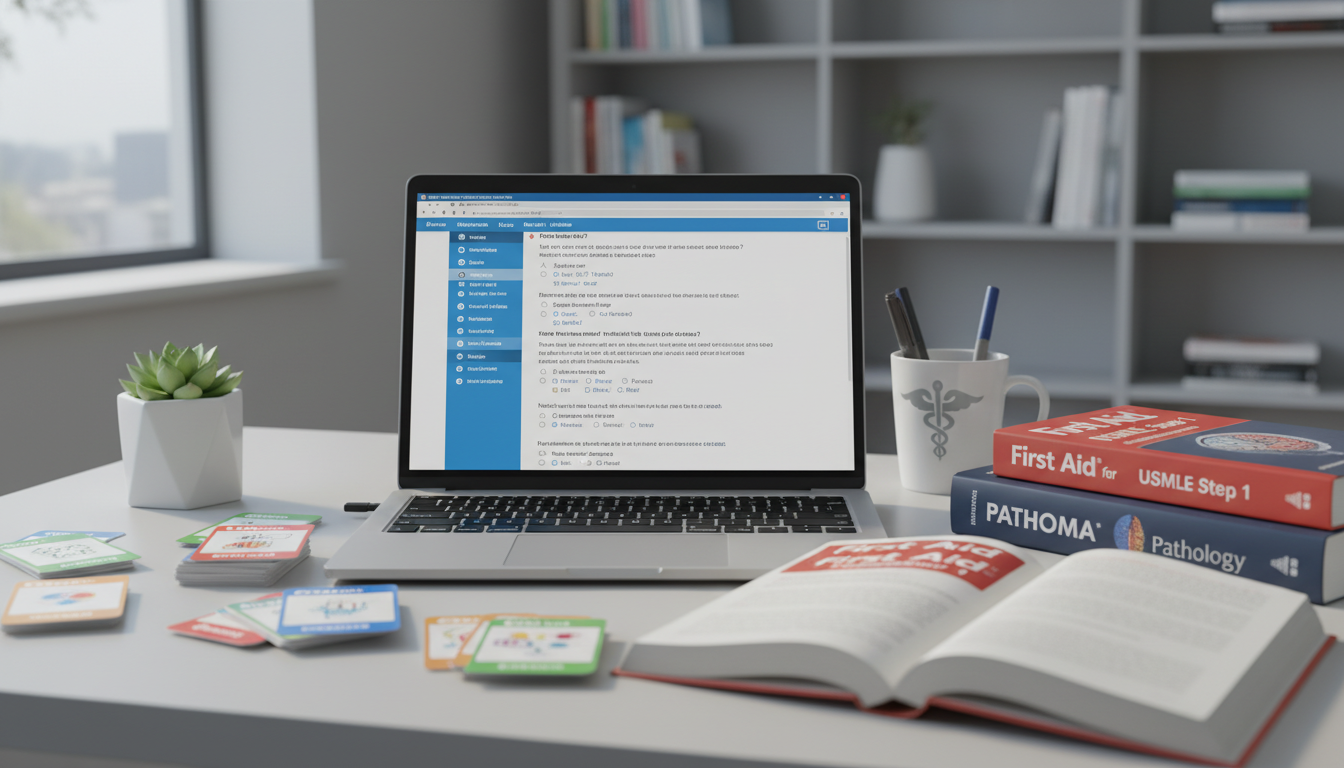
Core Step 1 Resources (Recommended for Most Students)
Primary Question Bank (QBank)
- Examples: UWorld, Amboss, or similar.
- Strategy:
- Aim to complete the full bank at least once; 1.5x is ideal if time allows.
- Use timed, random, mixed blocks as you get closer to test day.
- Treat question review as your main learning event: read explanations, consult external resources for unclear concepts.
Comprehensive Outline Text (e.g., First Aid)
- Purpose: Organizes exam content in a condensed way.
- Use it to:
- Anchor your study schedule by chapter/system.
- Summarize key facts and associations.
- Mark pages for Med-Peds-relevant topics you want to revisit repeatedly (e.g., immune deficiencies, congenital heart disease).
Pathology Resource (e.g., Pathoma, Goljan audio)
- For Med-Peds applicants, understanding pathology across age groups is crucial:
- Many pediatric conditions have a strong pathophysiologic basis (e.g., congenital malformations, metabolic diseases).
- Strategy:
- Watch videos aligned with your school’s pathology course.
- During dedicated, speed up playback (1.5x–2x) and integrate with QBank review.
- For Med-Peds applicants, understanding pathology across age groups is crucial:
Anki or Other Spaced Repetition System
- Particularly useful for:
- Pharmacology.
- Microbiology.
- Biochemistry pathways and genetic diseases.
- For medicine pediatrics:
- Make or tag cards related to pediatric pathologies and congenital syndromes to keep them active in your memory.
- Particularly useful for:
Supplementary Resources (Use Strategically)
Depending on your learning style and weaknesses:
Videos (e.g., Boards & Beyond, Sketchy)
- Sketchy Micro/Pharm: Exceptional for long‑term retention of microbes and drugs—both key for Med-Peds.
- Boards & Beyond: Great for bridging physiology and pathology, especially in systems like cardio, renal, and endocrine.
Organ-specific Review Tools
- Neuroanatomy, cardiology, or renal resources if you have known weaknesses.
Biostatistics/Behavioral Sciences Resources
- Particularly helpful if you struggle with ethics or epidemiology questions, which are high-yield on Step 1 and cornerstone for evidence‑based medicine in both internal medicine and pediatrics.
Resource Management: Avoiding Overload
To keep your USMLE Step 1 study manageable:
- Pick one primary QBank, one main outline (e.g., First Aid), one pathology resource, and one SRS tool (e.g., Anki).
- Add at most 1–2 supplementary resources for weak areas.
- Avoid chasing every new platform—you’re training your clinical reasoning, not collecting subscriptions.
Daily and Weekly Study Structures That Work
A structured routine is critical for consistency and mental stamina, both of which you’ll need in med peds residency.
Example Daily Schedule During Dedicated Study
Morning (3–4 hours) – Question Blocks and Review
- 8:00–10:00: 40–46 timed, random questions (simulating exam conditions).
- 10:00–12:00: Review each question thoroughly:
- Why is the correct answer right?
- Why are the others wrong?
- Identify pattern recognition relevant to Med-Peds (e.g., infant with failure to thrive + recurrent infections → possible immunodeficiency).
Afternoon (3–4 hours) – Content Review and Weak Areas
- 13:00–15:00: Focused review of the system or topic you missed most in the morning’s block (e.g., renal phys, lysosomal storage diseases).
- 15:00–17:00: Watch a relevant video segment (Pathoma/Boards & Beyond/Sketchy) + review First Aid pages.
Evening (1–2 hours) – Light Review and Retention
- 18:00–19:00: Anki or flashcards (pharm, micro, congenital syndromes).
- 19:00–20:00: Quick skim of summary sheets or high-yield images (rashes, murmurs, metabolic disorders).
Adjust based on your stamina and personal productivity peaks.
Weekly Structure
- 5–5.5 “full” study days with:
- 60–80 questions/day.
- 5–7 hours of focused learning.
- 1 “light” day for:
- 20–40 questions.
- Catching up on Anki.
- Short review of a challenging subject.
- 0.5–1 day truly off (at least a half-day) to prevent burnout.
Incorporating Med-Peds Motivation into Your Routine
Staying motivated can be easier when you connect Step 1 content to the future med peds residency role:
- Once per week, spend 30–45 minutes:
- Reading a Med-Peds resident blog or program website.
- Reviewing case reports on conditions like cystic fibrosis or DiGeorge syndrome.
- Watching a short Med-Peds clinical case video.
This reframes Step 1 preparation as the first step in your medicine pediatrics match journey, not just a hurdle.
Common Pitfalls and How to Avoid Them (Med-Peds Perspective)
Even strong students run into predictable issues during USMLE Step 1 study. Being aware of them helps you course-correct early.
Pitfall 1: Overemphasizing Adult Pathology, Ignoring Peds-Focused Content
Because much of medical education is adult-centric, students sometimes underprepare pediatric‑leaning Step 1 content:
- Examples of underemphasized areas:
- Congenital infections (TORCH).
- Neonatal jaundice and metabolic errors.
- Pediatric tumors (neuroblastoma, Wilms tumor, retinoblastoma).
- Developmental milestones and pediatric reflexes.
Fix:
- Make a checklist of pediatric-heavy topics and schedule explicit review sessions.
- Use pediatric cases in your QBank as anchor points for deeper review.
Pitfall 2: Passive Learning Without Sufficient Questions
Some students spend too many hours reading or watching videos without practicing what they’ve learned.
Fix:
- Set minimum daily question targets (e.g., 60/day during dedicated).
- Only use videos and reading to clarify questions you missed or concepts you can’t explain.
Pitfall 3: Neglecting Wellness and Burnout Prevention
Med-Peds residency is intense; you don’t want to start it exhausted from the pre‑residency years. Burnout during Step 1 prep can erode performance and well‑being.
Fix:
- Build non-negotiable rest into your schedule:
- At least one half-day per week with no Step 1 work.
- Daily movement (20–30 minutes) and structured sleep times.
- Use brief, deliberate breaks (5–10 minutes every 60–90 minutes).
Pitfall 4: Not Calibrating With Practice Exams
Students sometimes rely only on their QBank percentage and skip NBME practice tests.
Fix:
- Take a baseline NBME early in dedicated (even if your score is low).
- Schedule additional practice tests every 1–2 weeks.
- Use the results to refine your focus (e.g., if biostats is weak, block off 4–6 hours to fully relearn core concepts and formulas).
Strategically Connecting Step 1 to the Medicine Pediatrics Match
While Step 1 itself is now pass/fail, the habits you build for this exam can strengthen your overall med peds residency application and performance.
Step 1 Skills That Translate Directly to Med-Peds
Pattern Recognition Across Age Groups
- Recognizing how cystic fibrosis presents in a toddler vs. an adult with bronchiectasis and pancreatic insufficiency.
- Identifying chronic kidney disease progression from pediatric congenital anomalies to adult renal failure.
System-Based Thinking
- Many Med-Peds patients involve multiple organ systems simultaneously (e.g., lupus, congenital heart disease, metabolic disorders).
- The Step 1 emphasis on physiology and pathophysiology trains you to think in systems, not silos.
Comfort With Rare and Genetic Diseases
- Med-Peds physicians often manage rare disorders as patients transition from pediatric to adult care.
- Step 1 is one of the few exams where you will repeatedly encounter rare syndromes.
How to Showcase Your Step 1 Preparation in Your Application (Indirectly)
You won’t be writing essays about your USMLE Step 1 study, but you can demonstrate the outcomes:
Strong Step 2 CK score
- A thoughtful, disciplined Step 1 preparation sets you up for a high Step 2 CK score—now a key metric in the medicine pediatrics match.
Clerkship Performance
- A deep Step 1 foundation lets you excel on both IM and Pediatrics core rotations, which translates into:
- Strong narrative evaluations.
- Honors grades.
- Great letters of recommendation from both internal medicine and pediatrics faculty.
- A deep Step 1 foundation lets you excel on both IM and Pediatrics core rotations, which translates into:
Meaningful Med-Peds Clinical Experiences
- Use your content foundation to engage in:
- Med-Peds clinics focused on transition care.
- Rotations in complex care, CF clinics, congenital heart programs.
- You can then highlight these experiences in your personal statement and interviews.
- Use your content foundation to engage in:
Frequently Asked Questions (FAQ)
1. How early should I start USMLE Step 1 preparation if I know I want a med peds residency?
You should begin integrating Step 1 resources with your medical school coursework from the first year. That does not mean doing 100 questions a day from day one, but:
During M1:
- Align basic physiology, biochemistry, and anatomy with light QBank use (e.g., 10–15 questions several times a week).
- Start Anki decks for pharm and micro early.
During M2:
- Intensify integration—many students ramp up to 20–40 QBank questions per day before dedicated.
- Use this period to solidify topics particularly relevant to medicine pediatrics (immunology, genetics, congenital diseases).
2. What are the most important Step 1 resources if I have limited time?
If time is tight, prioritize:
- A high-quality Question Bank (e.g., UWorld or Amboss) – non‑negotiable.
- First Aid (or similar outline) as your content skeleton.
- A pathology resource (Pathoma or equivalent).
- Anki or another SRS system for pharm, micro, and genetic/metabolic diseases.
Everything else is optional. It’s better to know a small set of resources deeply than to skim many superficially.
3. How does pass/fail Step 1 affect my med peds residency chances?
While Step 1 is now Pass/Fail, it still affects your med peds trajectory indirectly:
- A pass on the first attempt plus a strong Step 2 CK score is usually sufficient from a testing standpoint.
- Your Step 1 preparation helps make you more competitive by:
- Boosting clerkship grades.
- Strengthening your Step 2 CK performance.
- Making you a more confident and competent med student on both pediatrics and internal medicine rotations.
Residency programs in medicine-pediatrics will primarily focus on:
- Step 2 CK.
- IM and Pediatrics clerkship performance.
- Letters of recommendation.
- Fit with Med-Peds, as reflected in your personal statement and interviews.
4. Are there Step 1 topics that are especially high-yield for future Med-Peds physicians?
Yes. While you must cover the full exam blueprint, students heading toward med peds residency should pay extra attention to:
- Immunology and immunodeficiencies.
- Genetics and congenital syndromes.
- Inborn errors of metabolism (especially those presenting in infancy/childhood).
- Pediatric oncology (e.g., neuroblastoma, ALL, Wilms tumor).
- Endocrine and metabolic disease across the lifespan (type 1 diabetes, congenital adrenal hyperplasia).
- Microbiology with attention to respiratory infections, GI pathogens, and vaccine‑preventable diseases.
Mastering these areas not only boosts Step 1 performance but also gives you a running start for the types of complex, longitudinal patients you will see as a Med-Peds resident.
Preparing for USMLE Step 1 is your first major test of the habits you’ll need for a successful medicine pediatrics match and a career in Med-Peds. By choosing focused Step 1 resources, building a disciplined but sustainable study plan, and intentionally connecting what you learn to the realities of med peds residency, you’re not just passing an exam—you’re building the knowledge base you’ll rely on for years across both internal medicine and pediatrics.