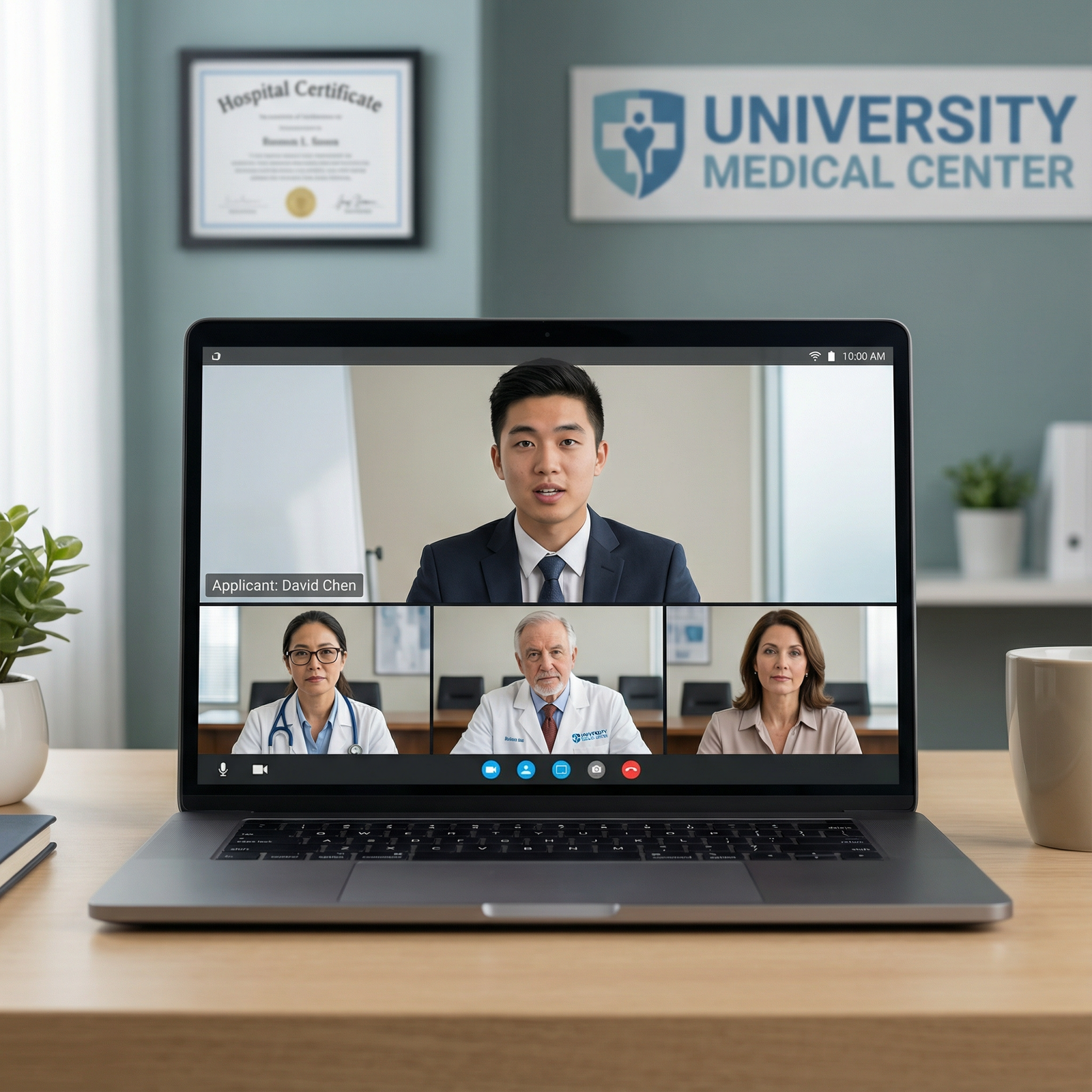
Preparing for USMLE Step 1 as an aspiring orthopedic surgeon is both a scientific and strategic challenge. While Step 1 is now reported as Pass/Fail, it still plays a critical role in your ortho match prospects—particularly in demonstrating that you can handle the intellectual rigor of an orthopedic surgery residency and that you’ve laid a strong foundation for Step 2 CK.
This guide walks you through how to approach USMLE Step 1 preparation with an eye toward orthopedic surgery: what matters, how to study efficiently, how to integrate ortho-relevant material, and how to leverage your Step 1 performance in the orthopedic surgery residency application process.
Why Step 1 Still Matters for Orthopedic Surgery
Orthopedic surgery remains one of the most competitive specialties. Even with Step 1 now Pass/Fail, your preparation and outcome still influence your candidacy in several ways.
1. Program directors still use Step 1 as a filter
While they no longer see a numeric score, many program directors still:
- Confirm you passed on the first attempt
- Note the timing of your exam (delays can raise questions)
- Informally infer your preparation quality from Step 2 CK performance and your overall academic record
For competitive fields like orthopedic surgery residency, a first-attempt pass with solid Step 2 CK and strong clinical performance is often the baseline expectation.
2. Strong Step 1 preparation boosts Step 2 CK
The most direct impact of Step 1 on your ortho match prospects is indirect:
- Step 1 lays the biomedical foundation for Step 2 CK.
- Applicants aiming for orthopedic surgery typically need a strong Step 2 CK score to stand out.
- The same disciplined approach to USMLE Step 1 study and the same Step 1 resources will help you master clinically oriented content later.
Think of Step 1 preparation as Phase 1 of your ortho-focused exam strategy. Poor Step 1 habits usually repeat on Step 2 CK.
3. Orthopedic surgery is deeply grounded in basic science
Ortho is not just drills and hardware. Programs value residents who understand:
- Bone and cartilage biology
- Fracture healing and biomechanics
- Neurovascular anatomy related to extremities and the spine
- Microbiology of orthopedic infections
- Pharmacology of pain control, anticoagulation, and antibiotics
A disciplined, concept-focused Step 1 prep shows you can handle the complex, physiology- and anatomy-heavy nature of ortho.
4. Professionalism signal
For ortho programs, your Step 1 trajectory reflects:
- Time management
- Resilience under pressure
- Professionalism (taking the exam on time, avoiding multiple attempts)
- Ability to handle a demanding, exam-heavy training environment
Your Step 1 preparation and outcome become one early demonstration of how you’ll perform under the demands of orthopedic surgery residency.
Step 1 Fundamentals: What Orthopedic-Bound Students Must Get Right
Regardless of specialty, there are universal fundamentals for USMLE Step 1 preparation. For future orthopedic surgeons, some areas deserve extra emphasis.
Core Step 1 Content Domains You Can’t Neglect
Even if your heart is set on orthopedics, you must be safe and competent across all disciplines. Every ortho resident is, first, a physician. Key content domains:
- Pathology – central to nearly every question:
- General pathology (cell injury, inflammation, neoplasia)
- Systemic pathology (especially musculoskeletal, rheumatologic, and infectious)
- Physiology – particularly:
- Cardiovascular and respiratory physiology (perioperative medicine)
- Renal and acid–base (fluids, contrast, trauma resuscitation)
- Pharmacology – high-yield for inpatient and perioperative settings:
- Analgesics (opioids, NSAIDs, acetaminophen)
- Antibiotics (coverage for skin, bone/joint, prosthetic infection)
- Anticoagulants and reversal agents
- Steroids, osteoporosis medications, DMARDs
- Microbiology & Immunology – especially:
- Staph aureus, MRSA, coagulase-negative staph, Pseudomonas
- Anaerobes, gram-negative rods, biofilm-forming organisms
- Immune responses relevant to prosthetic implants and chronic infection
- Anatomy & Neuroanatomy – crucial for an ortho-minded student:
- Limbs, spine, brachial and lumbosacral plexus
- Common nerve injuries and corresponding deficits
- Biostatistics & Ethics – heavily tested and often under-studied:
- Sensitivity, specificity, likelihood ratios, study design
- Consent, capacity, confidentiality, resource allocation
Orthopedic-Relevant High-Yield Areas Within Step 1
While Step 1 is not “orthopedics-heavy,” several content threads align tightly with your future specialty:
- Bone and joint pathology
- Osteomyelitis (hematogenous vs contiguous spread)
- Septic arthritis (organisms by age and risk factor)
- Osteoporosis, osteomalacia, Paget disease
- Bone tumors (osteosarcoma, Ewing sarcoma, osteoid osteoma, chondrosarcoma)
- Connective tissue and rheumatology
- Rheumatoid arthritis vs osteoarthritis (pathology and radiologic features)
- Seronegative spondyloarthropathies
- Gout and pseudogout (pathophysiology and management)
- SLE and vasculitides (ortho-relevant complications)
- Musculoskeletal anatomy
- Rotator cuff muscles, innervation, functions
- Common fracture patterns and associated nerve/vessel injuries
- Compartment syndrome, Volkmann ischemic contracture
- Trauma-related systemic concepts
- Shock physiology
- Coagulopathy
- Fat embolism syndrome
- DVT/PE risk and prevention
You do not need to “study ortho” specifically for Step 1, but when these topics appear, pay attention—they build the conceptual base you’ll use daily as a resident.
Building an Ortho-Focused Step 1 Study Plan
Your plan should satisfy two goals: (1) pass comfortably and safely, and (2) create a strong base for Step 2 CK and orthopedic surgery residency training.
1. Map your timeline backward from your exam date
Typical frameworks:
- Dedicated period: 4–8 weeks (full-time study)
- Pre-dedicated phase: Started 6–12 months before, during systems blocks
For each phase, define:
- Primary goals (e.g., first pass through content vs intensive question practice)
- Daily question goals (e.g., 40–80 UWorld questions/day during dedicated)
- Content review targets (e.g., finish one full pass of a primary text before dedicated)
For ortho-bound students, it’s wise to avoid pushing Step 1 too late. A delayed exam can compress your Step 2 CK timeline, which is critical in the ortho match.
2. Choose high-yield Step 1 resources strategically
Use a lean, high-yield core plus selective supplements:
Core USMLE Step 1 resources:
- A comprehensive text (e.g., First Aid-style or equivalent outline resource)
- A major question bank (UWorld is the most common choice)
- Anatomy and pathology videos or texts as needed
Ortho-relevant supplements (optional, not mandatory):
- An additional anatomy resource focused on extremities and neurovascular structures
- Short, case-based pathology or musculoskeletal sections in review books
- Clinical ortho exposure (optional) to contextualize what you’re learning
Avoid using too many Step 1 resources. Over-collecting and under-using them is a common trap, even among high-performing, ortho-bound students.
3. Sample weekly schedule during dedicated (Orthopedic-focused variation)
Example for a 6-week dedicated period:
- Morning (3–4 hours)
- 40 UWorld questions (timed, random, mixed)
- Full review of every question, even the ones you got correct
- Midday (2–3 hours)
- Targeted content review based on UWorld misses
- Short video review of weak systems (e.g., immunology, biostats)
- Afternoon (2–3 hours)
- Focused anatomy review:
- One limb or region per day
- Emphasize nerve lesions, muscle actions, and clinical correlations
- Pathology consolidation (slides, images, path tables)
- Focused anatomy review:
- Evening (1–2 hours)
- Light review: flashcards or spaced repetition (e.g., Anki)
- 10–20 extra questions if energy allows
One day per week should be slightly lighter for rest and cumulative review.
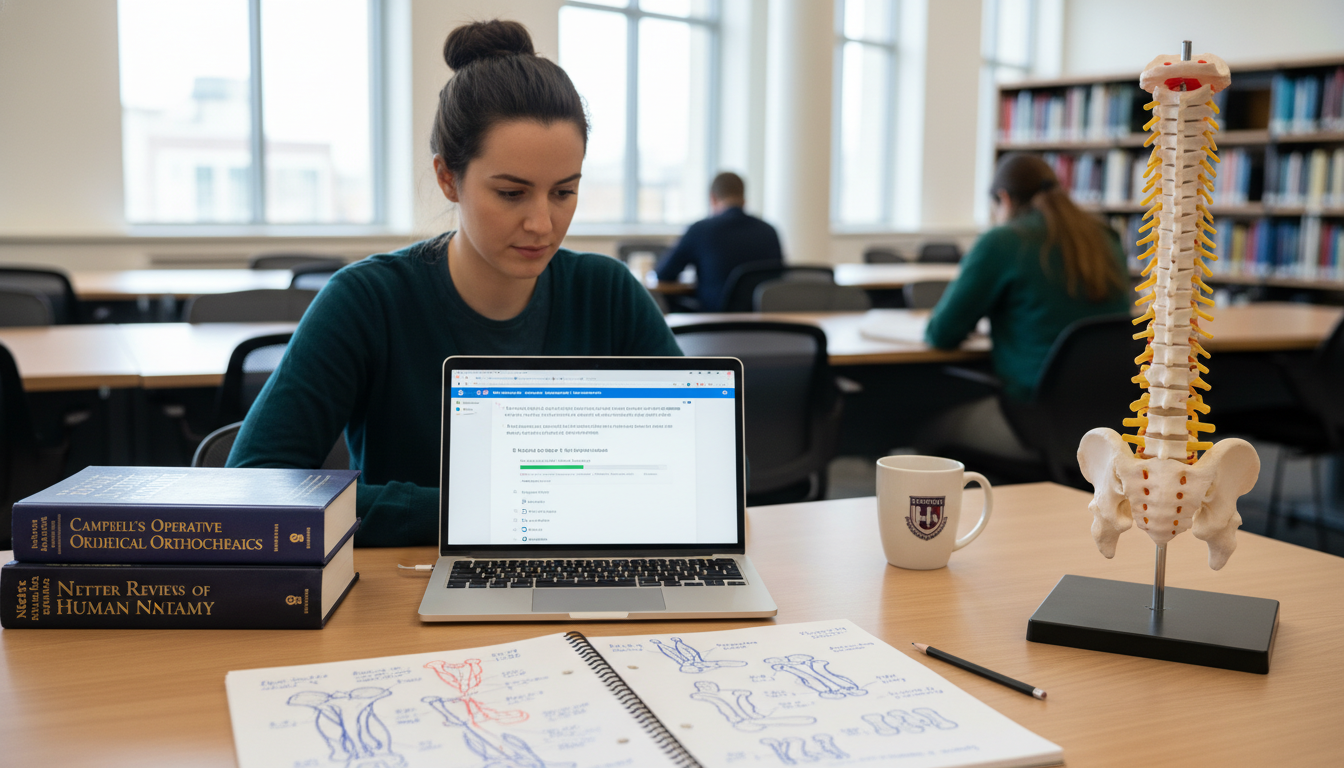
Step 1 Resources and Strategies for Ortho-Oriented Learners
The key to USMLE Step 1 study is how you use resources, not how many you own. For ortho match–minded students, two categories take center stage: question banks and targeted concept reinforcement.
1. Question banks (Qbanks): Your primary engine
For USMLE Step 1, Qbanks are the closest simulation of the real exam and an essential part of Step 1 preparation.
Recommended strategy:
- Start 6–12 months before test day with tutor mode, system-based
- Switch to timed, random mixed blocks 6–8 weeks before the exam
- Aim to complete 100% of one major Qbank, ideally with 1x full pass plus partial second pass for weak areas
In your question review:
- Build a “why” log:
- Why the correct answer is right
- Why each wrong choice is wrong
- Track repeated themes:
- Nerve injuries
- Bone pathologies
- Infectious patterns (e.g., Staph aureus in osteomyelitis)
As an ortho-bound student, review MSK-related Qbank questions with special care. Ask: “How would this present as a case on the wards?” That mindset bridges Step 1 content with future orthopedic surgery residency training.
2. Step 1 content review: Depth vs breadth
For an ortho applicant, depth matters more than breadth in key areas (anatomy, pathology, pathophysiology). Suggested approach:
- Systems-based review:
- Use a concise text or outline to get the big picture
- Supplement only where you feel weak or repeatedly miss questions
- Visual learning:
- Use radiology images or muscle/nerve diagrams (many Step 1 resources have these)
- Sketch nerve pathways and common injuries to solidify retention
Avoid reading multiple dense textbooks cover to cover. The exam is not designed to reward that level of raw memorization.
3. Anatomy and neuroanatomy strategy for future orthopods
You don’t need to be a full surgeon anatomist for Step 1, but you do want above-average command, particularly in:
- Upper limb:
- Brachial plexus, axillary/radial/median/ulnar nerves
- Rotator cuff and shoulder stabilizers
- Lower limb:
- Femoral, obturator, sciatic, tibial, peroneal nerves
- Major muscle groups involved in gait and stance
- Spine and neuro:
- Dermatomes and myotomes
- Major spinal cord tracts and consequences of lesions
Practical techniques:
- Draw one region each day (e.g., brachial plexus branches and terminal nerves)
- Pair drawings with clinical vignettes (e.g., humeral shaft fracture → radial nerve palsy → wrist drop)
- Revisit high-yield arterial and venous supply (e.g., femoral triangle, popliteal fossa)
This approach not only helps on Step 1 but also shortens your learning curve when you enter orthopedic surgery residency.
4. Integrating Step 1 preparation with ortho research and clinical interests
Many ortho-focused students are involved in:
- Orthopedic research projects
- Specialty interest groups
- Shadowing with orthopedic surgeons
To balance:
- Dedicate set blocks of time weekly to research or mentorship; treat them like a class.
- Use clinical exposure to anchor Step 1 concepts:
- When you see a fracture in clinic, revisit bone healing physiology.
- When you see a joint infection, revisit osteomyelitis and septic arthritis.
Your Step 1 study and orthopedics exposure should reinforce each other, not compete.
From Step 1 to the Ortho Match: Positioning Yourself Strategically
Passing Step 1 is one early step on the long road to an orthopedic surgery residency. How you use this period can set you up for the rest of your application.
1. Step 1 outcome and your ortho match narrative
Program directors know Step 1 is now Pass/Fail, so they look at the whole academic trajectory:
- Step 1: Passed on first attempt, taken on time
- Step 2 CK: Strong score (critical in the ortho match)
- Clinical grades: Especially surgery and medicine
- Class rank or honors (if reported)
If Step 1 preparation went smoothly and you pass comfortably:
- Use this success as a confidence and skills foundation for Step 2 CK.
- Continue your Step 1-style discipline with more clinically focused resources.
If you struggled or barely passed:
- Reflect honestly on why:
- Time management?
- Question strategy?
- Inefficient Step 1 resources?
- Correct those issues before starting intense Step 2 CK prep.
- Seek mentorship from faculty or advisors who know orthopedic surgery residency expectations.
2. Coordinating Step 1 with orthopedic research and letters of recommendation
The ortho match strongly values:
- Objective achievements: Step 2 CK, clerkship honors, research output
- Subjective evaluations: Strong letters from orthopedic surgeons
Use your Step 1 study year to:
- Plan research timelines so that major deadlines don’t conflict with your dedicated study.
- Start or continue longitudinal projects that can produce:
- Abstracts or posters by your application year
- Manuscripts, if feasible
- Build relationships so that by the time you apply, attending physicians can comment on:
- Your clinical reasoning (rooted in good basic science)
- Your work ethic (evident in how you approached exams like Step 1)
- Your professionalism and reliability
3. Protecting your mental health and resilience
Orthopedic surgery residency demands resilience, and how you navigate Step 1 is an early test.
To preserve your stamina:
- Set realistic daily goals and track progress (questions completed, topics reviewed).
- Build small, daily wins into your schedule (e.g., finishing an anatomy region or mastering a weak topic).
- Maintain basic non-negotiables:
- Sleep (6–8 hours)
- Short physical activity (even 20–30 minutes walking or light exercise)
- Brief, scheduled breaks from study and screens
- Monitor for burnout signs:
- Poor concentration
- Growing cynicism or hopelessness
- Marked anxiety around practice exams
If needed, talk with school support services, mentors, or mental health professionals. Protecting your well-being improves performance and models the professional behavior expected in a surgical specialty.
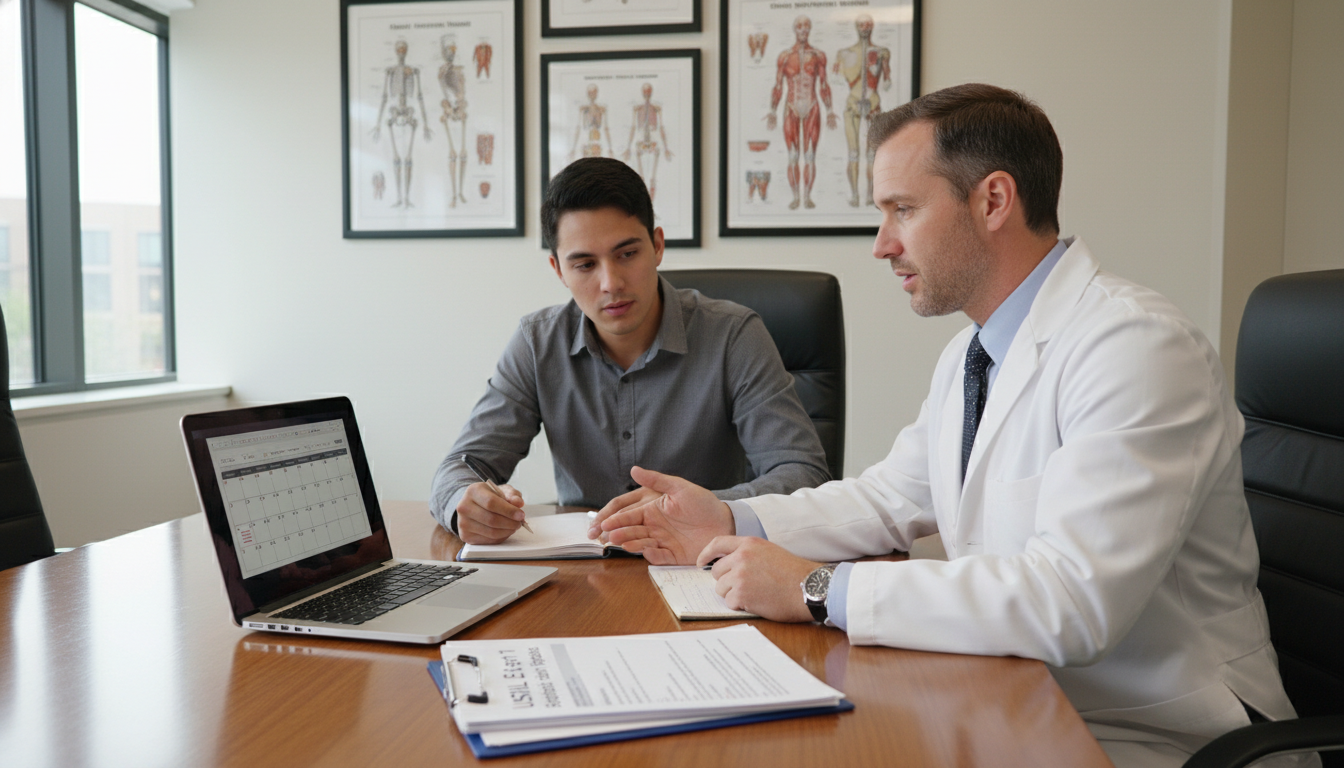
Common Mistakes in Step 1 Preparation for Ortho Applicants—and How to Avoid Them
Even strong students fall into predictable traps that can affect both their USMLE Step 1 study and longer-term ortho aspirations.
1. Overemphasizing orthopedics at the expense of core Step 1 content
While it’s tempting to dive deep into fracture classifications or implant types, remember:
- Step 1 tests fundamental biomedical sciences, not subspecialty surgical minutiae.
- Learning operative details at this stage does little to improve your score or pass chances.
Solution:
- Prioritize exam-relevant foundational sciences.
- Let your ortho interest guide extra attention to MSK anatomy and pathology, not replace your broader study plan.
2. Ignoring weak non-ortho areas (biostats, behavioral, ethics)
Many ortho-minded students gravitate to anatomy and pathology and neglect:
- Biostatistics and epidemiology
- Behavioral science and psychiatry
- Ethics and communication
But these areas are:
- High-yield on Step 1
- Critical for functioning as a physician, regardless of specialty
Solution:
- Do targeted, high-yield review in these domains.
- Practice enough questions to feel comfortable with calculations and interpretation.
3. Using too many Step 1 resources and not enough active practice
Ambitious students often accumulate:
- Multiple large review books
- Several Qbanks
- Extensive video series
Yet they:
- Fail to complete any resource fully
- Leave too little time for spaced repetition and consolidation
Solution:
- Choose one main content resource and one main Qbank.
- Add only limited supplemental resources to target specific weaknesses.
- Spend most of your time doing and reviewing questions.
4. Not connecting Step 1 preparation to future Step 2 CK and clinical performance
Seeing Step 1 as an isolated hurdle is shortsighted.
Instead:
- Recognize that good Step 1 habits become good Step 2 CK habits.
- Use Step 1 prep to:
- Learn how to dissect clinical vignettes
- Develop systematic problem-solving approaches
- Build a spaced repetition system that can extend into clerkships
This continuity is especially valuable when you’re aiming for a competitive field like orthopedic surgery.
FAQs: USMLE Step 1 Preparation for Future Orthopedic Surgeons
1. Does Step 1 still matter for orthopedic surgery residency now that it’s Pass/Fail?
Yes. While programs no longer see a numeric score, they do see:
- Pass/Fail status
- Number of attempts
- Timing in relation to your curriculum
A timely first-attempt pass is expected. More importantly, a strong foundation from your Step 1 preparation will help you perform well on Step 2 CK, which is heavily weighted in the orthopedic surgery match.
2. Should I tailor my Step 1 studying specifically to orthopedics?
To a point. You should:
- Pay extra attention to musculoskeletal anatomy, bone and joint pathology, and neurovascular structures.
- Make sure you understand physiology and pathology that frequently intersects with ortho (e.g., infections, DVT/PE, osteoporosis).
But do not ignore or underweight other systems. Step 1 is a general medical exam, and failing or barely passing because you over-specialized will hurt your ortho match chances.
3. How many practice questions should I do before Step 1?
There is no magic number, but a common target is:
- Completing 100% of a major Qbank (e.g., UWorld), often 2,000–3,000+ questions.
- Some students add a second Qbank or reuse incorrect questions, but depth of review matters more than absolute volume.
For ortho-bound students, ensure you thoroughly review every question, especially MSK and neuroanatomy vignettes.
4. If I struggle on Step 1, is orthopedic surgery residency still possible?
Possibly, but you need a strategic plan:
- First, ensure you ultimately pass Step 1, ideally on the next available attempt.
- Analyze why you struggled and change your approach before Step 2 CK.
- Aim for a strong Step 2 CK score, honors in core clerkships, robust orthopedic research, and excellent letters of recommendation.
Seek early advice from mentors, an ortho interest group, or a student affairs dean who understands the current ortho match landscape. Many applicants have less-than-perfect early exams but match successfully after they demonstrate clear improvement and commitment.
Positioning yourself for an orthopedic surgery residency starts long before you scrub into the OR. Thoughtful, disciplined USMLE Step 1 preparation builds the scientific foundation, work habits, and resilience you’ll need—not just to pass the exam, but to excel on Step 2 CK, during clinical rotations, and eventually in the demanding world of orthopedic surgery.