Understanding Step 1 in the Era of Pass/Fail – Why It Still Matters for PM&R
USMLE Step 1 is now officially pass/fail, but for a competitive PM&R residency applicant it still holds significant weight. While program directors no longer see your exact score, your pass status, timing, and exam history remain visible and influential.
How Step 1 Influences a PM&R Residency Application
For a PM&R residency, Step 1 serves several important functions:
Baseline knowledge check
- PM&R is heavily rooted in neuroanatomy, musculoskeletal anatomy, and physiology.
- A strong USMLE Step 1 study foundation sets you up for:
- PM&R clerkships
- Step 2 CK (still scored and very important for the physiatry match)
- PM&R in-service exams and board exams
Red flag vs. reassurance
- Pass on first attempt: Reassuring signal you can handle difficult board exams.
- Fail on first attempt: Not an automatic deal-breaker, but:
- Requires an explanation in your application
- Increases pressure to perform well on Step 2 CK
- May narrow options in more competitive programs or locations
Timing matters
- Delayed Step 1 (e.g., multiple leaves, repeated practice exam failures) can raise concerns about:
- Test-taking ability
- Reliability under academic pressure
- On-time completion with a clean pass keeps your record “low-risk” to PDs.
- Delayed Step 1 (e.g., multiple leaves, repeated practice exam failures) can raise concerns about:
Indirect effect on physiatry match outcomes
- With Step 1 pass/fail, programs lean more heavily on:
- Clinical grades and letters of recommendation
- Step 2 CK scores
- Research, leadership, and specialty commitment
- Solid Step 1 preparation helps you crush Step 2 CK, which is a major selection factor for PM&R programs.
- With Step 1 pass/fail, programs lean more heavily on:
Bottom line: You don’t need to “gun for a 260” anymore, but you absolutely do need to pass comfortably and build a foundation that supports a strong Step 2 CK and a convincing PM&R profile.
PM&R-Specific Lens on USMLE Step 1 Content
While USMLE Step 1 is not tailored to PM&R, certain content domains overlap heavily with physiatry. Framing your USMLE Step 1 study through a PM&R lens can improve both engagement and long-term relevance.
High-Yield Systems for Future Physiatrists
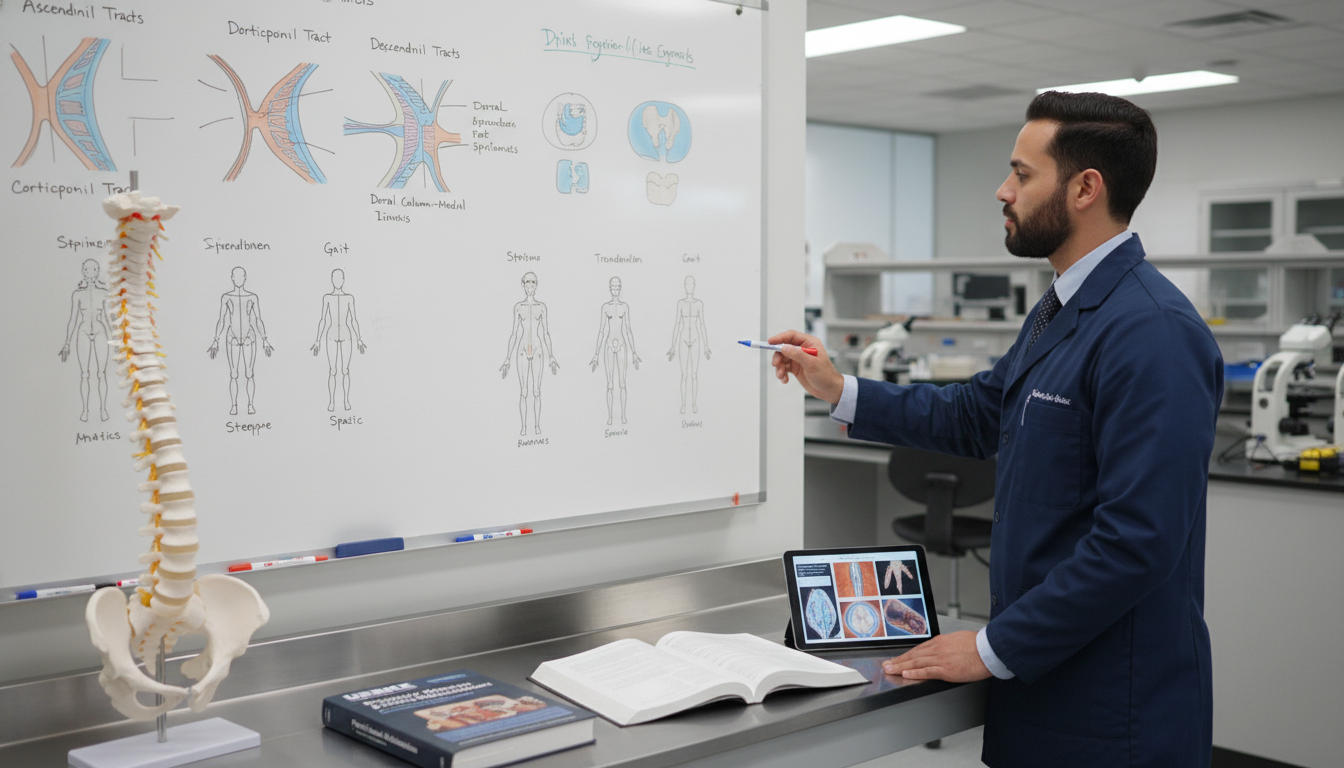
Neuroanatomy & Neuroscience PM&R is the specialty of functional recovery, particularly after neurologic injury. Key Step 1 topics that map directly to PM&R practice include:
- Spinal cord tracts and lesions:
- Anterior cord, Brown-Séquard, central cord, posterior cord syndromes
- Relationship of lesion level to motor/sensory loss and bowel/bladder function
- Brainstem and cranial nerves:
- Localizing lesions in stroke, demyelinating disease, tumors
- Peripheral nerve anatomy:
- Common entrapment neuropathies (carpal tunnel, cubital tunnel, peroneal neuropathy at fibular head)
- Neuromuscular junction & muscle disorders:
- Myasthenia gravis
- Lambert-Eaton
- Muscular dystrophies and myopathies
- Spinal cord tracts and lesions:
Musculoskeletal Anatomy and Physiology PM&R physicians are often the “movement experts” on a care team. From Step 1 perspective:
- Joint anatomy:
- Shoulder, hip, knee, spine—ligaments, tendons, major muscle groups
- Gait and biomechanics:
- Nerve root levels and corresponding muscle actions (e.g., L4 vs L5 vs S1 findings)
- Bone physiology:
- Bone remodeling, osteoporosis, osteomalacia, Paget disease
- Connective tissue disorders:
- Rheumatologic conditions that cause functional impairment (RA, SLE, scleroderma)
- Joint anatomy:
Neurophysiology & Motor Control
- Motor unit physiology
- Reflex arcs and lesion localization (UMN vs LMN features)
- Autonomic nervous system and its role in:
- Neurogenic bladder
- Autonomic dysreflexia in spinal cord injury
Rehab-Relevant Pathology
- Stroke subtypes and vascular territories
- Traumatic brain injury basics: diffuse axonal injury vs focal lesions
- Spinal cord injury classification (ASIA concepts, even if not tested explicitly)
- Peripheral neuropathies (diabetic, toxic, hereditary)
PM&R Mindset While Studying
When you encounter a Step 1 topic, ask yourself:
- “If this patient survives the acute phase, what functional problems will they have?”
- “What impairments will affect activities of daily living (ADLs), mobility, communication, or cognition?”
- “How might a PM&R team help this patient long term?”
For example:
- A question on MCA stroke:
- Beyond lesion localization, think: contralateral weakness, aphasia/neglect, gait issues, and need for rehab goals in speech, occupational, and physical therapy.
- A spinal cord injury question:
- Think about likely wheelchair needs, bowel and bladder management, and spasticity treatment.
This approach bridges your USMLE Step 1 study with your future role as a physiatrist, making material more memorable and clinically meaningful.
Building an Effective Step 1 Study Plan with a Physiatry Focus
Your USMLE Step 1 preparation should still follow general best practices, but with strategic emphases that benefit your PM&R trajectory. Think of your plan in three phases: Foundation, Integration, and Test Readiness.
Phase 1: Foundation (2–8 Weeks, Depending on School Curriculum)
During this phase, you’re usually still in pre-clinical coursework. Your goals:
Master core explanations, not just memorization
- Use a primary resource (e.g., First Aid, Boards & Beyond, Pathoma) as your backbone.
- Focus on:
- Neuroanatomy pathways
- Musculoskeletal structure and function
- Physiology of nerve, muscle, bone
Link content to function and disability
- When you learn about a disease, ask:
- What impairments will this cause?
- How might this affect mobility, communication, self-care?
- Example: In Guillain–Barré syndrome, beyond pathophysiology:
- Think: acute flaccid paralysis, respiratory risk, eventual need for PT/OT, orthotics, assistive devices.
- When you learn about a disease, ask:
Introduce Step 1 questions early
- Even in foundation phase, start with:
- 10–15 questions/day from a reputable Step 1 resources question bank (e.g., UWorld).
- Focus on:
- Understanding why each answer choice is right or wrong.
- Noting patterns in neuro and MSK questions.
- Even in foundation phase, start with:
Phase 2: Integration (Dedicated Study Period, Typically 4–8 Weeks)
This is where your USMLE Step 1 study becomes full-time. Design your schedule around:
Daily Structure (Example 8–10 Hour Day)
- 2–3 blocks of 40 mixed questions (UWorld or similar)
- 2–3 hours of content review (videos, First Aid annotations)
- 1–2 hours of high-yield topics (weakness review, especially in:
- Neuroanatomy
- Musculoskeletal anatomy
- Pharm & micro relevant to neuromuscular/rehab populations)
- 30–60 minutes for spaced repetition (Anki or similar)
Weekly Benchmarks
- Take 1 practice exam (NBME or UWSA) every 1–2 weeks.
- Use results to:
- Identify weak systems (e.g., repeatedly missing neuro questions).
- Refocus time: if you’re going into PM&R, neuro and MSK should be relative strengths, not liabilities.
Build a “PM&R-Relevant Errors” Notebook
- Keep a notebook or digital document just for:
- Neuroanatomy mistakes
- MSK anatomy/physiology errors
- Stroke, spinal cord, neuromuscular, rheumatology questions
- For each error, record:
- The concept
- Why you missed it (knowledge gap vs rushing vs misreading)
- One rehab-related clinical implication to anchor the memory
- Keep a notebook or digital document just for:
Phase 3: Test Readiness (Final 1–2 Weeks)
You are now focused on stability and retention:
Solidify high-yield neuro and MSK
- Rapid neuroanatomy reviews:
- Spinal cord levels and lesions
- Brainstem cross-sections
- Major pathways (corticospinal, spinothalamic, dorsal column)
- Review common peripheral nerve entrapments with:
- Key symptoms
- Associated anatomy
- Clinical tests
- Rapid neuroanatomy reviews:
Simulate the real test
- At least 1–2 full-length practice days:
- 7 blocks of questions with realistic breaks
- Wear similar clothing, use same snacks/hydration plan
- Goal: mental endurance and pacing.
- At least 1–2 full-length practice days:
Fine-tune anxiety and logistics
- Confirm:
- Test center location, ID, acceptable items
- Start time and transport plans
- Practice short mindfulness or breathing exercises you can use during the exam.
- Confirm:
Choosing Step 1 Resources as a Future Physiatrist
You don’t need PM&R-specific resources for Step 1, but you can subtly prioritize tools and strategies that strengthen rehab-relevant domains.
Core Step 1 Resources to Consider
Comprehensive Content Review
- Boards & Beyond, Lecturio, or similar:
- Use especially for neuro, MSK, physiology.
- First Aid for the USMLE Step 1:
- Table-heavy, high-yield summaries
- Use as the “map,” not your only study tool.
- Boards & Beyond, Lecturio, or similar:
Pathology
- Pathoma:
- High-yield pathology review
- Pay attention to neurologic and rheumatologic chapters that overlap with PM&R practice.
- Pathoma:
Question Banks (Qbanks)
- UWorld Step 1:
- Treat this as non-negotiable—arguably the single most valuable USMLE Step 1 study tool.
- Do all questions once; review incorrects, and ideally mark and revisit difficult ones.
- Supplemental Qbanks (AMBOSS, Kaplan) if time allows:
- Use these especially to drill weak areas like neuroanatomy or MSK.
- UWorld Step 1:
Spaced Repetition
- Anki (or similar SRS):
- Use curated Step 1 decks if compatible with your learning style.
- Tag or flag:
- Neuroanatomy
- MSK
- Rehab-relevant diseases (stroke, SCI, MS, myopathies)
- Anki (or similar SRS):
Optional PM&R-Adjacent Enrichment (Low Priority, High Interest)
These are not Step 1 resources per se, but if you have extra time or want to stay motivated:
Intro PM&R textbooks or handbooks (e.g., Braddom for reference, concise PM&R handbooks):
- Skim introductory chapters on:
- Stroke rehab
- SCI
- TBI
- Neuromuscular disorders
- This can help you anchor Step 1 pathology in real-world rehab scenarios.
- Skim introductory chapters on:
Podcasts/Webinars from PM&R societies
- Listen casually on commutes or workouts to maintain specialty enthusiasm while grinding Step 1 content.
Practical Study Strategies and Example Schedules
Different students need different approaches, but a few universal principles help almost everyone preparing for Step 1, especially those targeting a successful physiatry match.
Core Strategies for Effective Step 1 Preparation
Active, not passive, learning
- Replace “just reading” with:
- Doing questions
- Teaching a concept aloud to a friend (or to yourself)
- Drawing diagrams (e.g., nerve root innervation maps, spinal tracts)
- Replace “just reading” with:
Emphasize retrieval and spaced repetition
- Frequent review of high-yield cards (Anki)
- Self-testing with mini-quizzes you design from your notes
Track performance, not just hours
- Monitor:
- Qbank percentages over time
- Practice test progression
- Adjust focus where deficits persist (don’t neglect areas just because you “like” them).
- Monitor:
Integrate PM&R motivation
- When burnout hits, remind yourself:
- “If I understand this stroke lesion now, I’ll be able to design better rehab plans later.”
- Connecting content to future PM&R practice helps with long-term memory and resilience.
- When burnout hits, remind yourself:
Example 6-Week Dedicated Study Schedule (Adaptable)
Weeks 1–2: Heavy Qbank Intro + Content Synthesis
- 1–2 Qbank blocks (40 questions each) per day, timed + tutor review.
- 2–3 hours targeted content review based on missed questions.
- Daily Anki or flashcards (30–60 minutes).
- Extra neuro/MSK review sessions 3x/week (videos, notes, or whiteboard diagrams).
Weeks 3–4: Full-Length Simulation and Refinement
- 2 Qbank blocks most days.
- 1 practice NBME at the beginning of Week 3, another at end of Week 4.
- Deep dive into:
- Neuroanatomy, gait, nerve lesions
- Rheumatology, neuromuscular disease
- Start one “PM&R problem list” per major disorder (e.g., for MS: vision issues, spasticity, mobility, fatigue).
Weeks 5–6: Polishing and Test Readiness
- 1–2 Qbank blocks per day, focusing on weak systems.
- 1–2 full-length practice days (7 blocks back-to-back).
- Condensed review of:
- High-yield charts from First Aid
- Neuro/MSK mini-lectures or summaries
- Light activity the day before exam; no new content cramming.
Wellness, Mindset, and Long-Term Planning for the Physiatry Match
Preparing for USMLE Step 1 is demanding, but it’s just one piece of the path to a PM&R residency. Balancing intensity with sustainability is essential.
Managing Stress and Avoiding Burnout
Protect sleep as a performance tool
- 7–8 hours per night improves memory consolidation and test performance.
- Chronic sleep debt will hurt more than an extra 30 Qbank questions help.
Build physical activity into your schedule
- Even 20–30 minutes of walking or light exercise:
- Enhances mood and focus
- Models the healthy lifestyle you’ll later prescribe to patients
- Even 20–30 minutes of walking or light exercise:
Use structured breaks
- Pomodoro-style studying (e.g., 50 minutes on, 10 minutes off).
- Step away from screens during breaks—stretch, hydrate, or do brief mindfulness.
Normalize setbacks
- Practice tests that don’t go as hoped are data points, not verdicts.
- Reframe: “This exam shows me what I can fix now, not what I’m doomed to score.”
Connecting Step 1 to Your PM&R Narrative
Even though Step 1 is now pass/fail, you can still leverage your preparation story in your PM&R application:
- If you struggled early but improved:
- Highlight this in personal statements or interviews as evidence of resilience, self-assessment, and growth.
- If neuro/MSK became a strength:
- Mention your growing interest in neurorehab or musculoskeletal medicine.
- If you failed Step 1 but passed on a retake:
- Emphasize:
- Specific changes you made to your study strategies
- Subsequent success on Step 2 CK or clerkships
- How the experience improved your empathy for patients facing setbacks.
- Emphasize:
Planning Ahead: After Step 1
Once you pass Step 1:
Shift focus to clinical excellence and Step 2 CK
- Step 2 CK is highly valued in PM&R residency selection.
- Strong medicine, neurology, and surgery performance will also support your application.
Pursue PM&R exposure
- PM&R electives and sub-internships
- Shadowing physiatrists in inpatient rehab, clinic, or EMG lab
- Participation in research or quality improvement with a rehab focus
Begin building your PM&R portfolio
- Join PM&R interest groups and national organizations (AAPMR, AAP, etc.).
- Seek mentors who can guide your trajectory and eventually write letters of recommendation.
FAQs: USMLE Step 1 Preparation for Future Physiatrists
1. Does Step 1 still matter for PM&R residency if it’s pass/fail?
Yes. While programs no longer see a numeric score, they do see pass/fail status, attempts, and timing. A first-attempt pass with no delays is reassuring. Step 1 performance also strongly influences Step 2 CK readiness, which remains a major factor in PM&R residency selection.
2. How much should I focus on neuro and musculoskeletal topics for Step 1?
You should learn all tested systems, but as a PM&R-bound student, neuro and MSK should ideally become relative strengths. These domains are central to PM&R practice and will carry into Step 2 CK, clerkships, and PM&R training. Don’t ignore other areas, but do invest extra time to master neuroanatomy, spinal cord and peripheral nerve lesions, gait, and joint anatomy.
3. Which Step 1 resources are best if I’m interested in PM&R?
Use the standard, high-yield Step 1 resources (UWorld, First Aid, Pathoma, video lectures). No PM&R-specific Step 1 prep is required. Instead, while using these resources, intentionally connect neurology, MSK, and pathology content to functional outcomes and rehabilitation. Optional PM&R reading can enrich your understanding but should not replace core Step 1 materials.
4. If I failed Step 1 once, can I still match into a PM&R residency?
Yes, many applicants with a prior failure have successfully matched into PM&R, especially when they:
- Pass on the next attempt with clear improvement
- Score well on Step 2 CK
- Demonstrate strong clinical performance, research or scholarly work, and PM&R commitment
- Explain the failure candidly and constructively in their application and interviews
A failure is a setback, not an endpoint, but it does require a deliberate plan and strong subsequent performance.
By approaching your USMLE Step 1 preparation with both strategic discipline and a PM&R-focused mindset, you’ll not only pass the exam but also lay a durable foundation for Step 2 CK, your physiatry match, and ultimately, a satisfying career as a rehabilitation physician.